Press Release

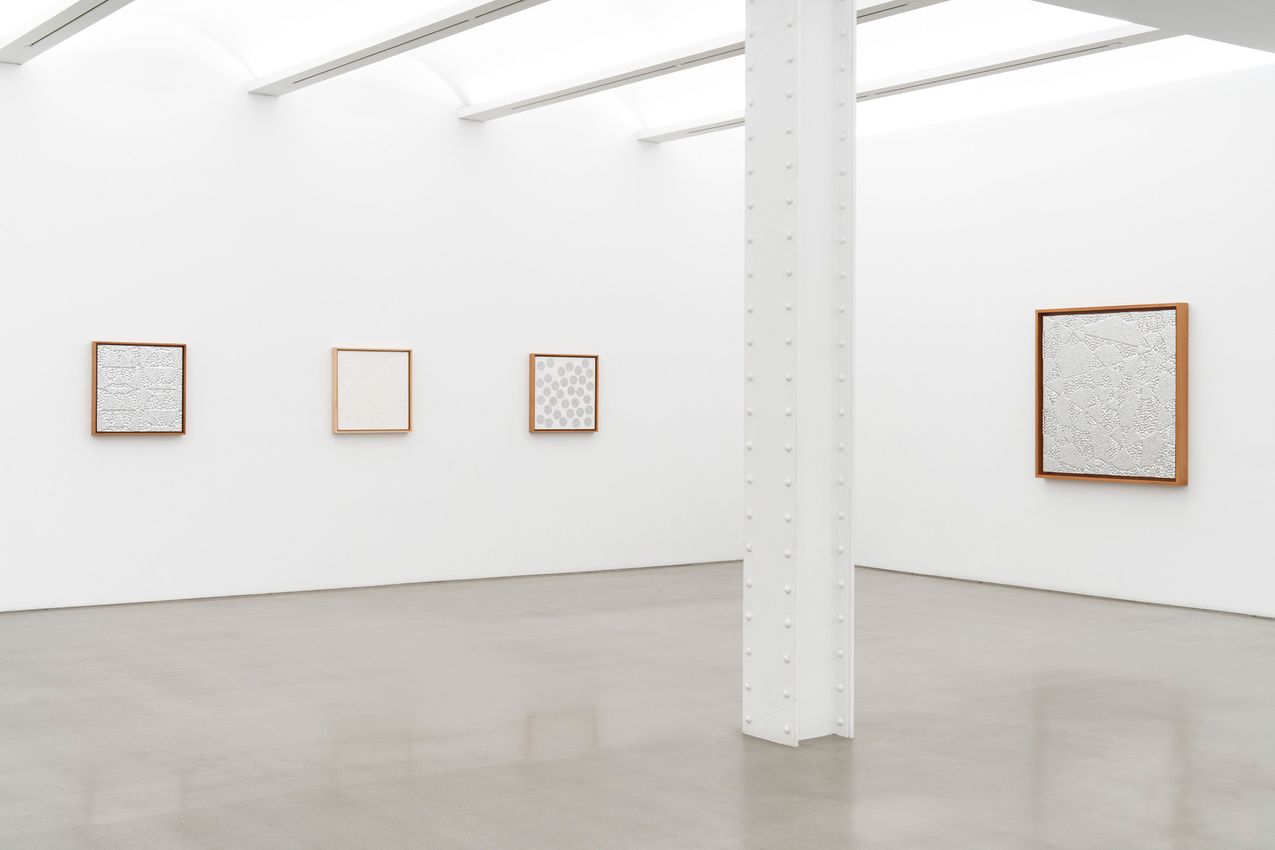
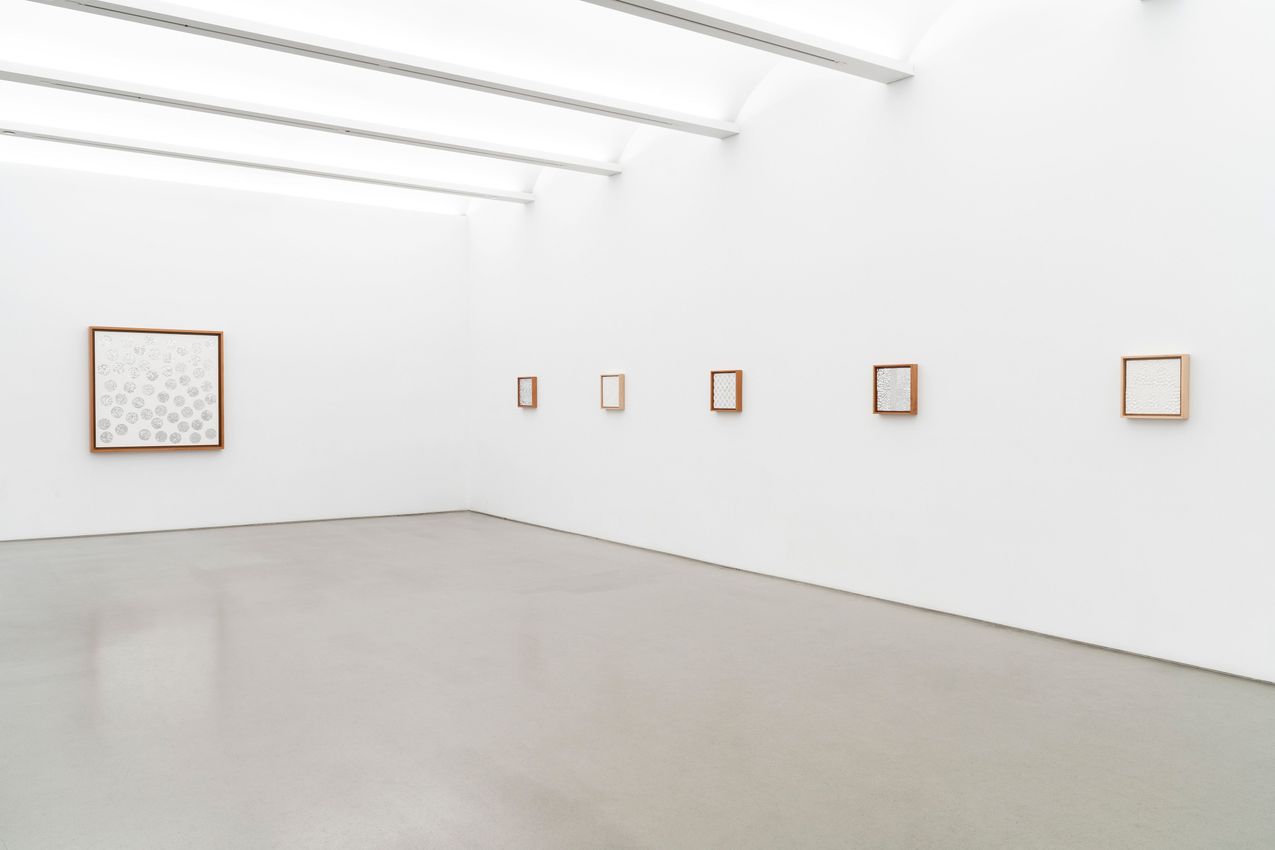
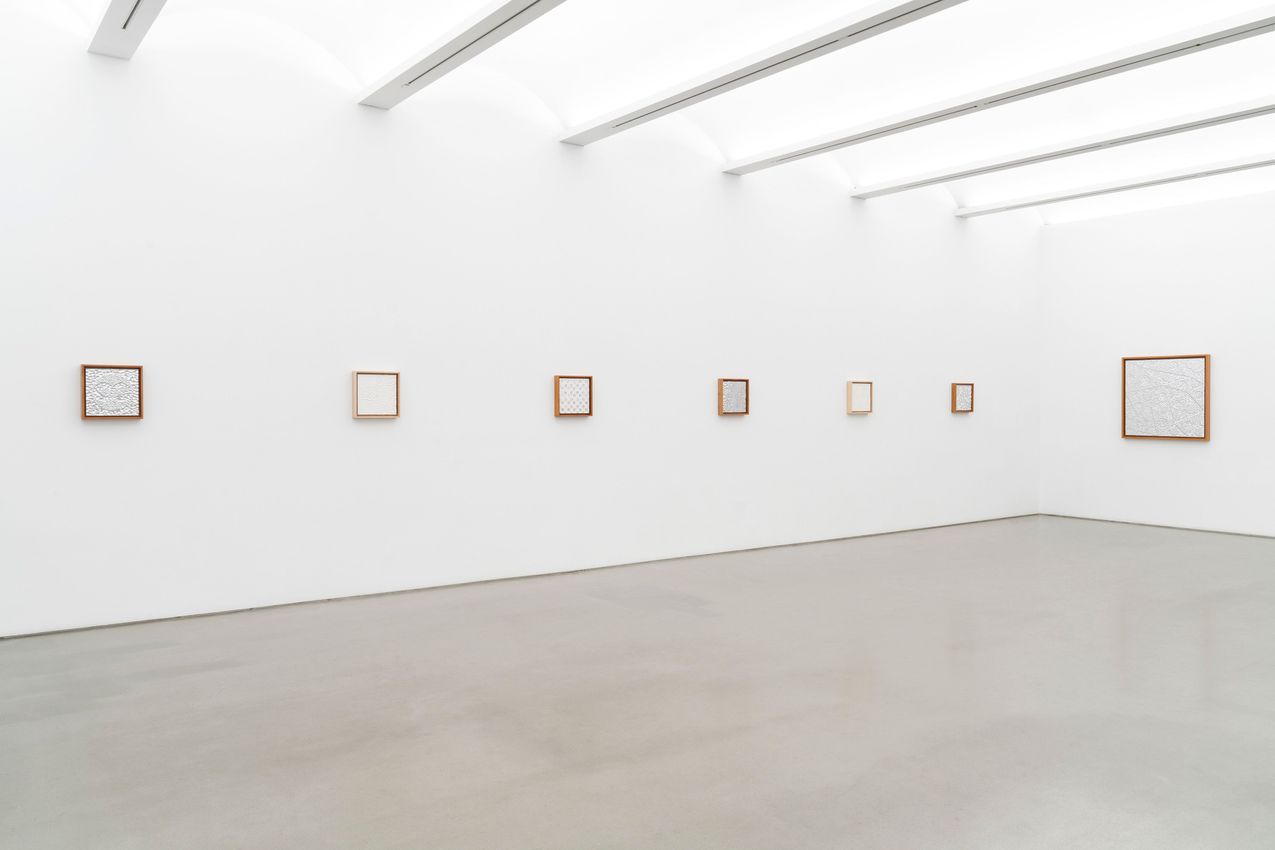
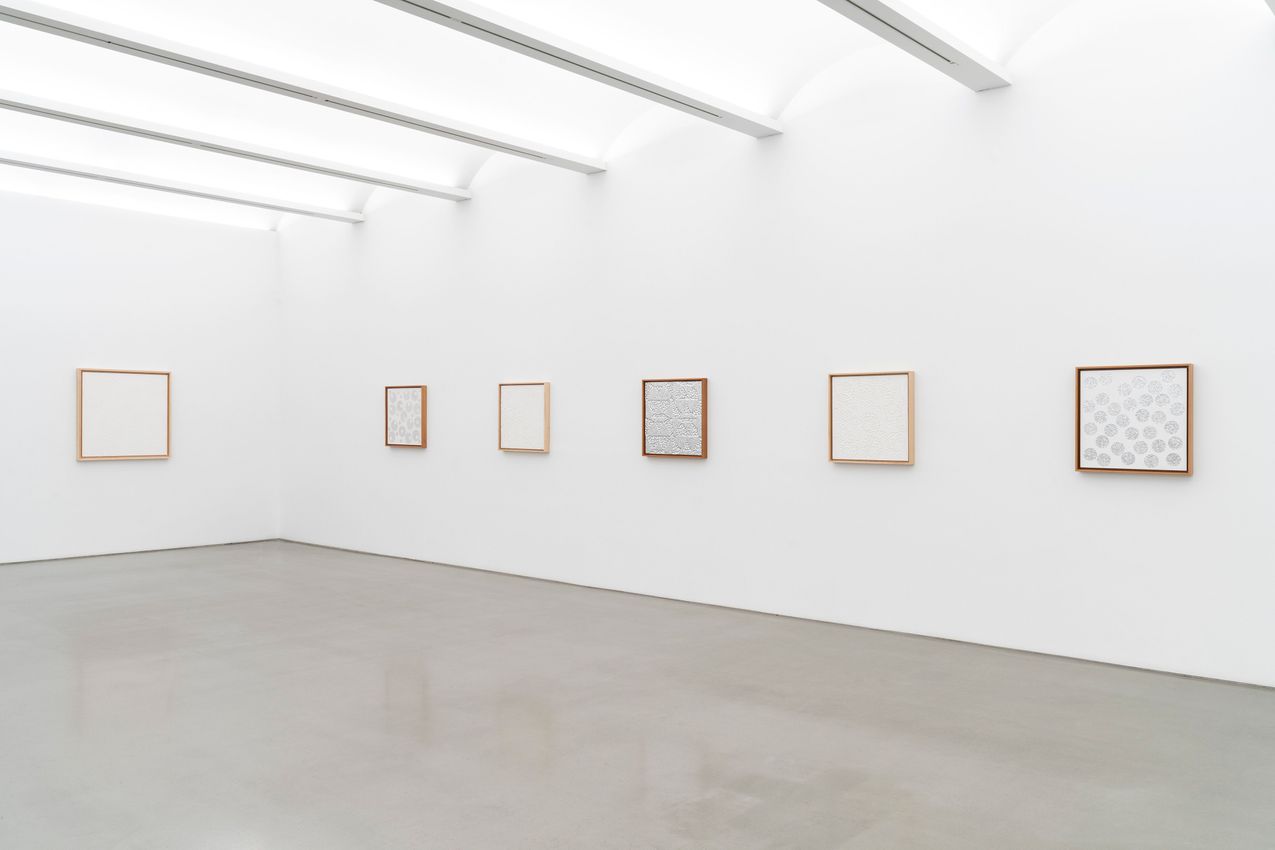
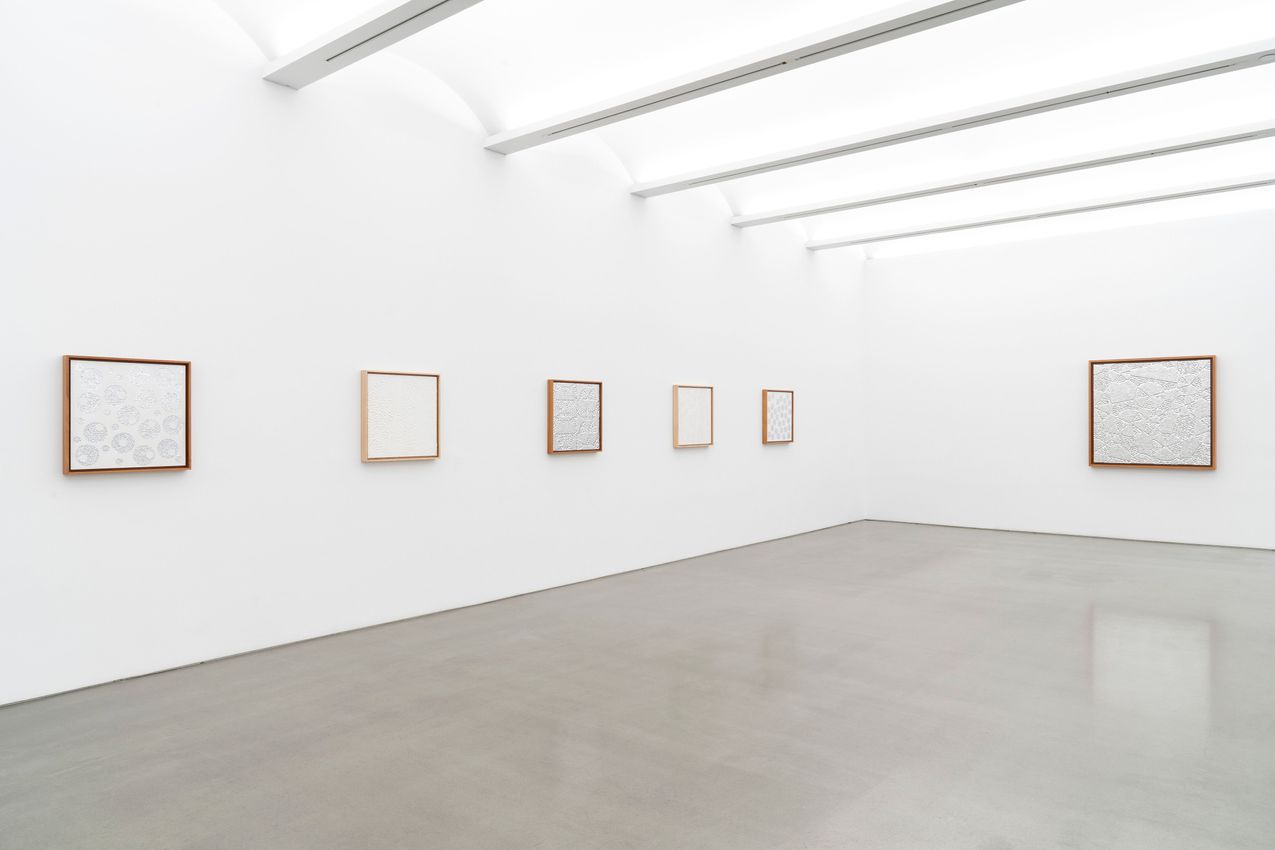
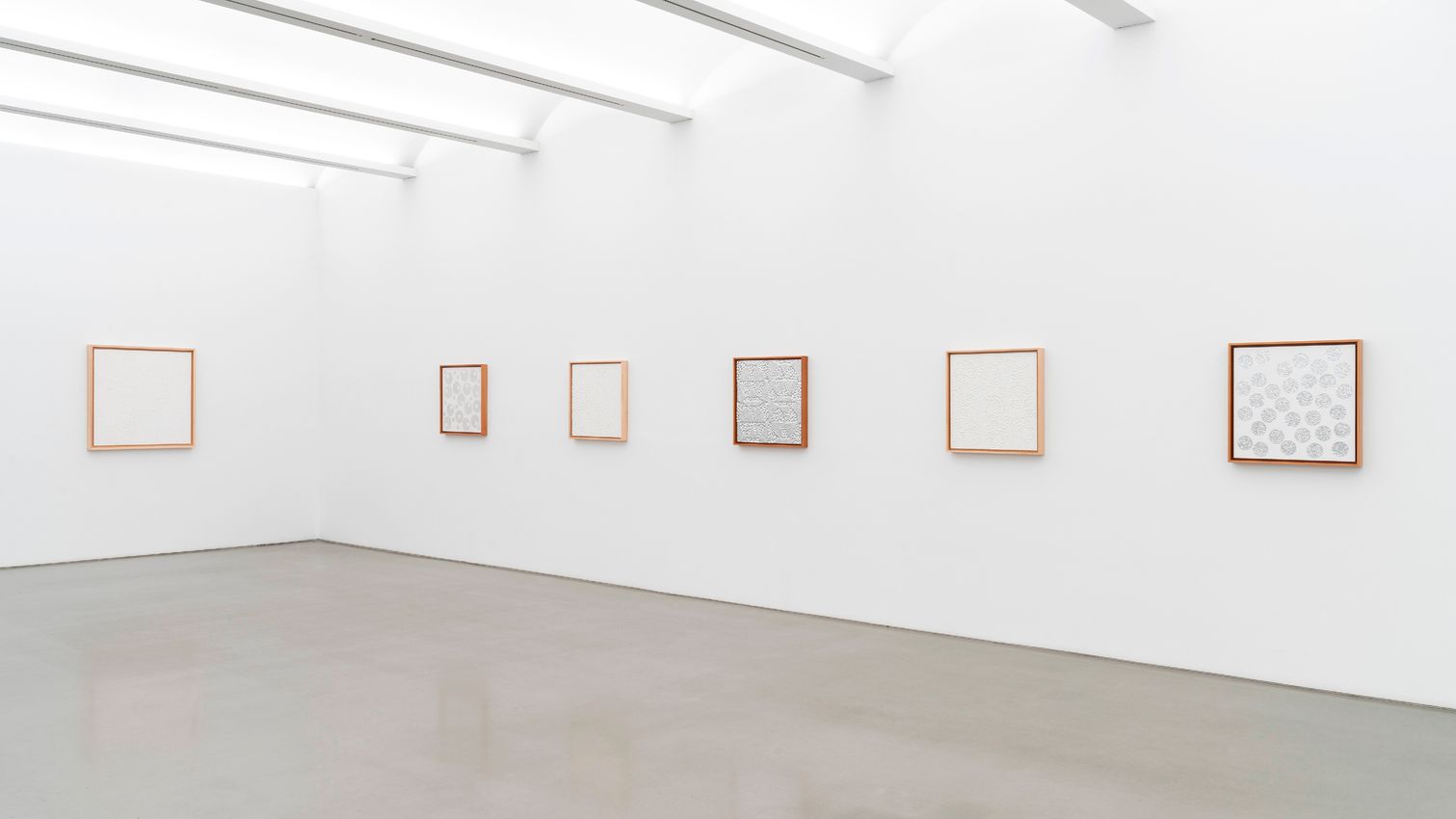
Perrotin is pleased to present Repeated Original by Gabriel de la Mora. Throughout his career, the artist has developed an exploration of painting without paint: planes that retain pictorial qualities but dispense with the pigments traditionally associated with the medium. In this pursuit, he has worked with materials taken directly from nature—human hair, butterfly wings, bird feathers, obsidian, andesite—as well as repurposed materials—shoe soles, bicycle inner tubes, glass microscope slides. Far from neutral, these materials carry histories, whether embedded in their DNA, in their chemical composition, or the marks left by use and wear.

Gabriel de la Mora returns to one of the materials with which he initiated his investigation into painting without paint in 2012: eggshell, present in his_CaCO₃_ series—named after the chemical formula for calcium carbonate, the shell’s main component. At that time, the artist sought a minimal expression of painting: a white monochrome surface that could only be achieved, paradoxically, through an exhaustive process of fragmenting, selecting, and arranging thousands of eggshell fragments across a plane.

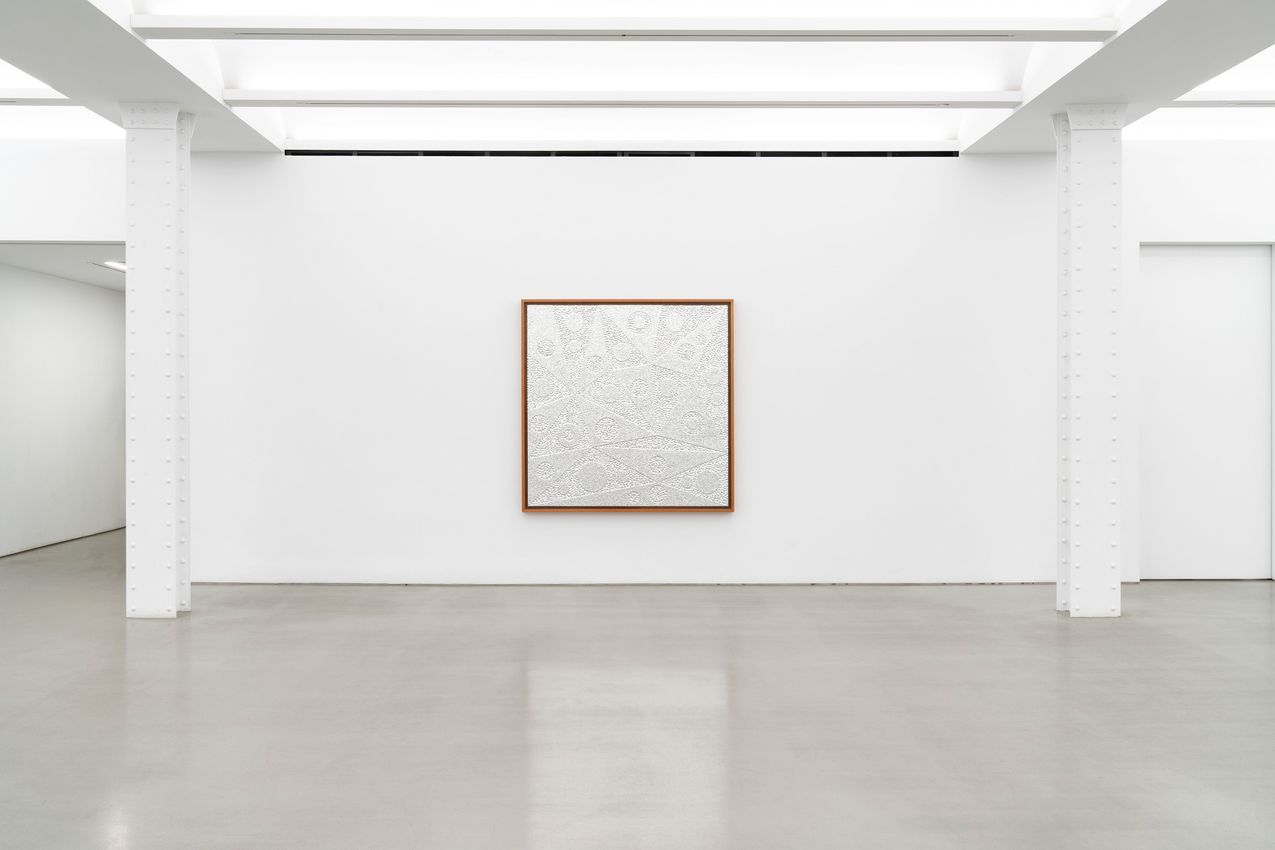
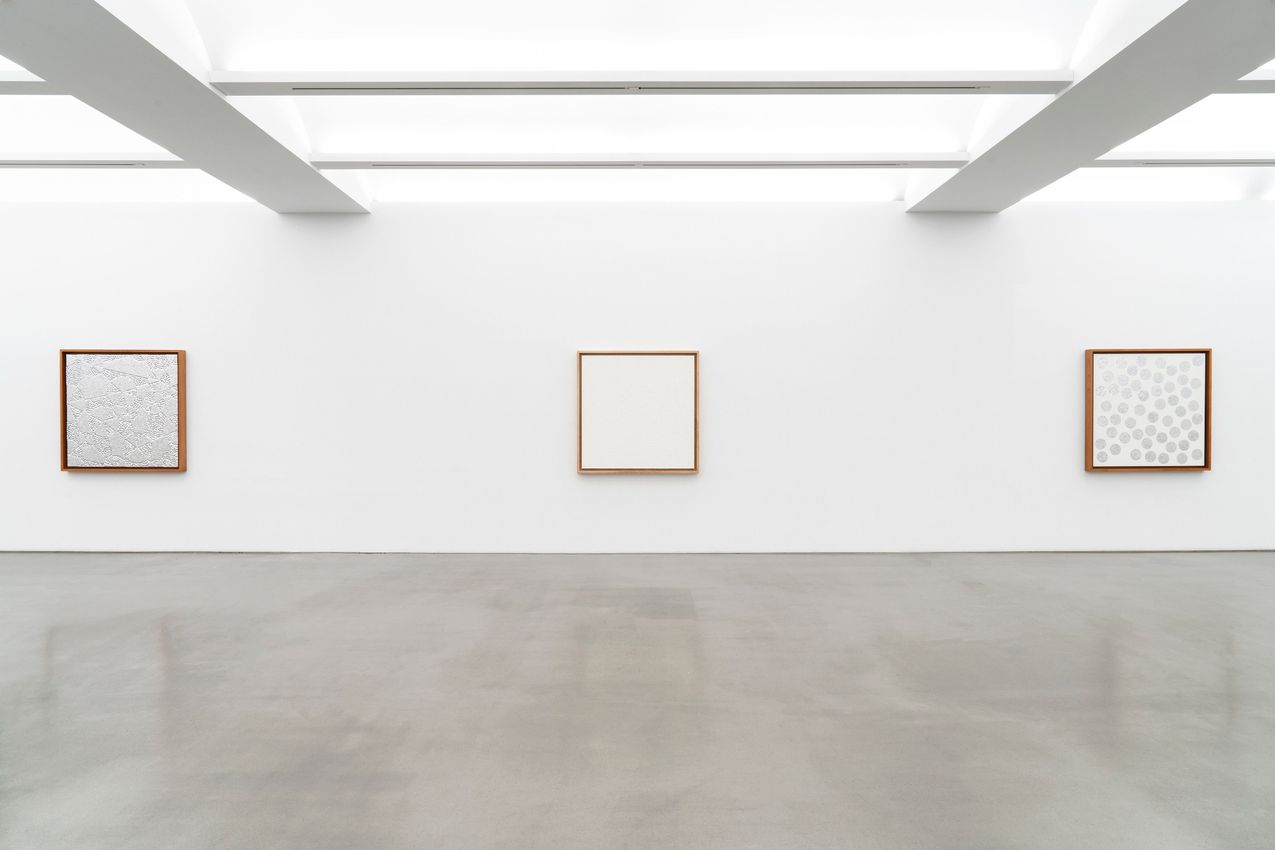
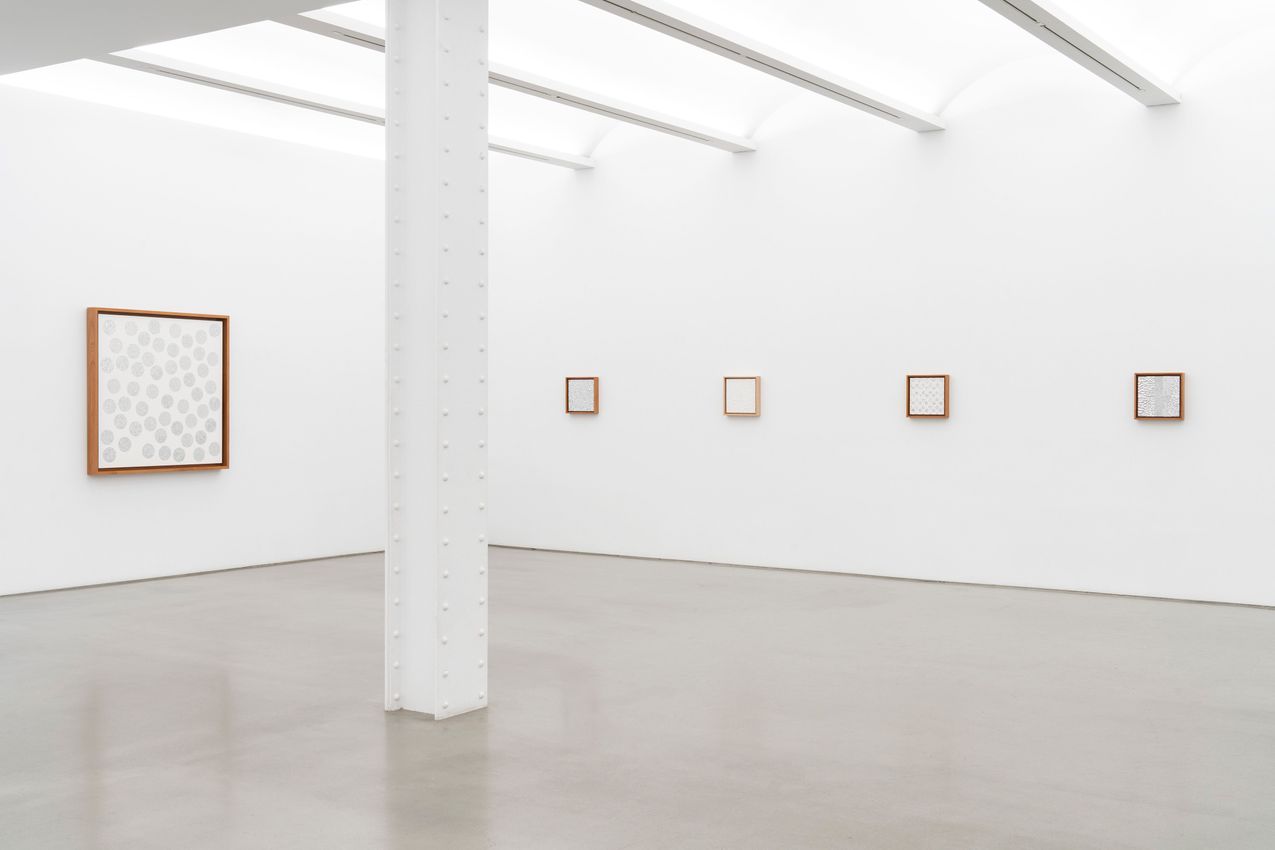
The works gathered in _Repeated Original _exemplify a practice grounded in repetitive processes, understood as a form of active meditation. Repetition here is continuity and, at the same time, transformation: it does not operate as a style, but as an evolutionary mechanism, as if each series were a species undergoing change. The original series gradually moved beyond monochrome to incorporate geometric patterns that intersperse eggshell fragmentsof varying sizes and tonalities, as seen in 2,155 (666 concave and 1489 convex eggshell fragments). In 2019, the artist began a new series, Between What I Reflect and What I See, replacing eggshells with spherical aluminium-coated glass.

This material shift also entails an optical turn. While eggshell disperses light in a diffuse and disordered manner, aluminized glass reflects it specularly, producing recognizable, albeit unstable, images. By working with concave and convex surfaces, De la Mora introduces distortions that generate an illusion of depth and a fragmentation of the visual field. Reflections move in opposing directions, a phenomenon the artist refers to as visual dyslexia, in which the image appears decentered, inverted, or fractured. These series evolve toward a hybrid configuration that brings eggshell and glass together, as in 11,973 (8,570 eggshell fragments,1,939 concave and 1,464 convex glass fragments), where both modes of light reflection coexist.

Due to their scale, some of these work create an immersive experience—such as 10,132 (5,113 convex and 5,019 concave eggshell fragments) or _27,798 _(9,307 concave and 18,491 convex glass fragments). The glass pieces generate a kind of self-portrait in which the viewer takes the place of the artist. The resulting image is far removed from a selfie, that omnipresent genre of our time: it is a multiplicity of fragments that alternating sections of glass invert and separate, creating planes that produce a sense of estrangement, akin to the moment of first encountering one’s reflection in a mirror.

The curvature of the fragments in CaCO₃ and Between What I Reflect and What I See produces a tangible volume upon the pictorial plane, from which the artist moves toward three-dimensionality. The plane closes in on itself, as if under the pressure of an irrational gesture, as seen in 1,514 (522 glass fragments and 922 eggshell fragments). As the form of the works change, so too does their visual regime: these pieces inhabit an intermediate territory between surface and object, where painting and sculpture coexist. The image fragments, multiplies, or dissolves depending on the angle from which it is observed.

Situated between monochrome and geometric abstraction, between image and object, these series invite us to consider the image from a perspective that moves beyond traditional debates around color, abstraction, or representation. Instead, they propose a reflection on the very nature of images and, ultimately, on how we perceive them. From this perspective, the image is not the object itself, but the state of light after it has interacted with its surface. De la Mora makes evident that images belong neither to the object nor to the viewer; they are a transient state of light, a precarious and mutable phenomenon that emerges—and dissolves—at the encounter between matter and gaze.

—Eric Nava Muñoz

Courtesy Perrotin.

Read More

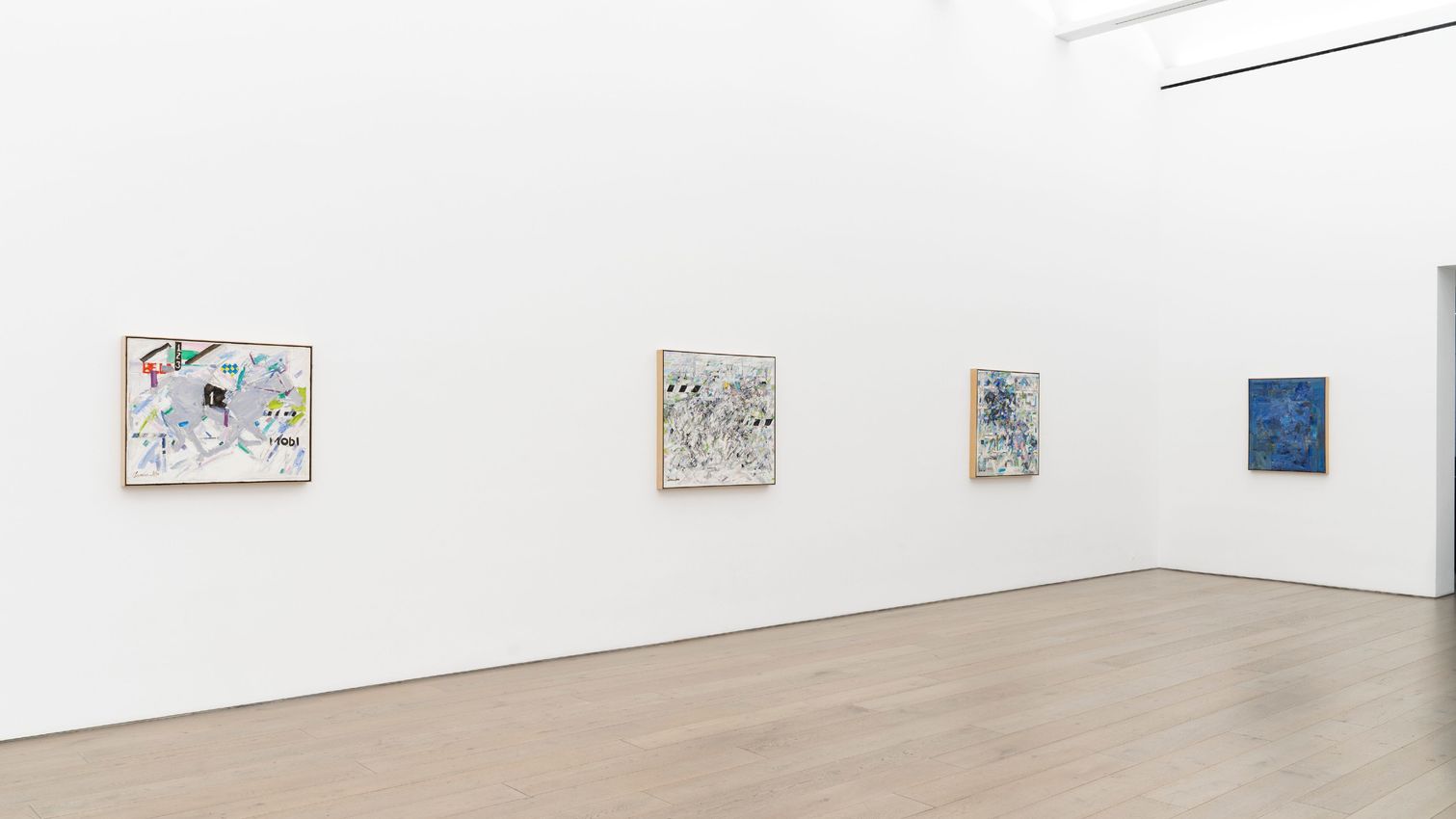
Installation Views

About the Artist

Gabriel de la Mora, born in 1968 in Mexico City where he currently lives and works, is best known for constructing visual works from found, discarded, and obsolete objects. In an obsessive process of collecting and fragmenting materials—eggshells, shoe soles, speaker screens, feathers—the Mexican artist creates seemingly minimal and often monochrome-looking surfaces that belie great technical complexity, conceptual rigour, and embedded information.

View Artist Profile

Also Exhibiting at Perrotin

About the Gallery
Emmanuel Perrotin founded his first gallery in 1989 at the age of 21. He has opened since then over 17 different spaces, with the aim of continuing to offer increasingly vibrant and creative environments to experience artists work. He has worked closely with his roster of artists, some since more than 25 years, to help fulfill their ambitious dreams and projects. The gallery is now based in New York, Paris, Hong Kong, Seoul, Tokyo, and participates in all the significant worldwide art fairs each year (Art Basel (Hong Kong, Miami, Basel), Frieze (London, New York), FIAC (Paris), Dallas Art Fair, Art Cologne, Art Stage Jakarta, Expo Chicago, Art021 & West Bund Art & Design, Shanghai, Zona Maco Mexico, amongst others).
View Gallery Profile
Address
130 Orchard Street
New York
United States
Opening Hours
Tuesday – Saturday
10am – 6pm
(1)
New York 130 Orchard Street
Perrotin
130 Orchard Street, New York, United States
+1 212 812 2902
http://www.perrotin.com

Opening hours
Tuesday – Saturday
10am – 6pm
The art world in focus