Press Release

‘A painting must be alive - luminous - contain its own inner life.’ Anna-Eva Bergman’s notebook, October 17, 1946

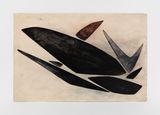
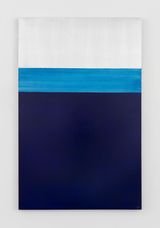
Perrotin New York is pleased to present the first survey exhibition in the United States of the late Norwegian-born painter Anna-Eva Bergman (1909–1987), entitled Revelation, and opening on September 7th, 2022. Despite Bergman’s colourful life and strikingly original creative output, there has yet to be such a spotlight on this talent—a situation that is soon to change, given a major pair of retrospectives set to open at the Musée d’Art Moderne de Paris and the National Museum of Oslo in 2023.

Bergman was a fascinating polymath with an insatiable curiosity. She began her career as an illustrator, journalist, and author before focusing on a passionate, quasi-mystical concern: to reveal, through painting, the elemental and invisible forces that govern the universe.

In the wake of World War II, she experimented tirelessly, engaging in radical experiments that produced a deceptively simple vocabulary of motifs. These non-figurative images are at once cosmic and telluric, otherworldly yet intensely connected to the here-and-now. Later works, from the 1960s onward, begin to integrate gold or silver sheet metal in subtly remarkable ways. There are glimmers of Mark Rothko or Barnett Newman contemporaries of Bergman’s whose paths she crossed—but also of Fra Angelico, Gustav Klimt, or her Norwegian elder, Edvard Munch.

Bergman’s oeuvre would be astounding on its own, had she lived a simple and unremarkable life. But the work achieves a new resonance through the prism of her biography: the journey of a singular woman through the trials and tribulations of the 20th century.

The artist spent her childhood in Norway ‘under the sign of fear,’ as she once wrote. An upbringing in an unstable household was harsh; art was an early salvation. Bergman left Norway to sharpen her skills in Vienna and Paris, where she would marry Hans Hartung at the age of 20 (the couple would divorce eight years later, only to remarry in 1957).

Bergman’s life was punctuated with struggle, suffering, and activism. The Nazi occupation of Norway, the ravages of the Holocaust, and the blistering violence of atomic war shocked her to her core. As with many of her contemporaries, her art would unconsciously reflect a ‘Return to Zero,’ to borrow a phrase from Barnett Newman: a formal paring down, signifying a rebirth following the calamity of the war. While Bergman’s work may at first glance appear completely divorced from any historical or political concerns, it’s deeply embedded in the tumult and tragedy of the 20th century.

Around 1950, Bergman began to turn a socially conscious eye on the northern landscapes of her native Norway. She had an almost paroxysmal sensitivity to the mineral purity of this terrain, home to the indigenous Sami people, whose forced Westernisation deeply revolted her—at a time when much of society was indifferent to this community. Indeed, visits to the ruins of post-war Germany would further affect the artist, deepening her cynicism toward the supposedly ‘civilised’ nature of the West.

This stage of Bergman’s career was a laboratory of forms, an alchemical process of translating the intangibles of the Norwegian landscape—the drama of cliffs, stones, steles, water, air—into an archetypal, elementary lexicon. Far more than a simple aesthetic evolution of her own practice, this was Bergman’s attempt to reconceive the entire universe, in miniature, and reflect on the relationship that human beings have with the natural world.

These grand ambitions would swell from the late 1940s to her passing in 1987. Bergman’s goal was nothing less than escaping the limitations of the human scale, to confront the micro- and macroscopic elements of the cosmos—to the point of actually merging with them. ‘We must be one with what we paint....’ she wrote in her notebook late in 1948. ‘We must be both the motif to be painted and the one who paints it. It is then that we create something.’

On one hand, this could be considered a metaphorical process, but it’s one that Bergman undertook with the utmost seriousness and gravity. As with Swedish painter Hilma af Klimt, the creative act achieved the quality of the spiritual, akin to a shamanic ritual. The result was an aesthetic of rhythm, a type of passage—two terms that Bergman herself often used to describe her process.

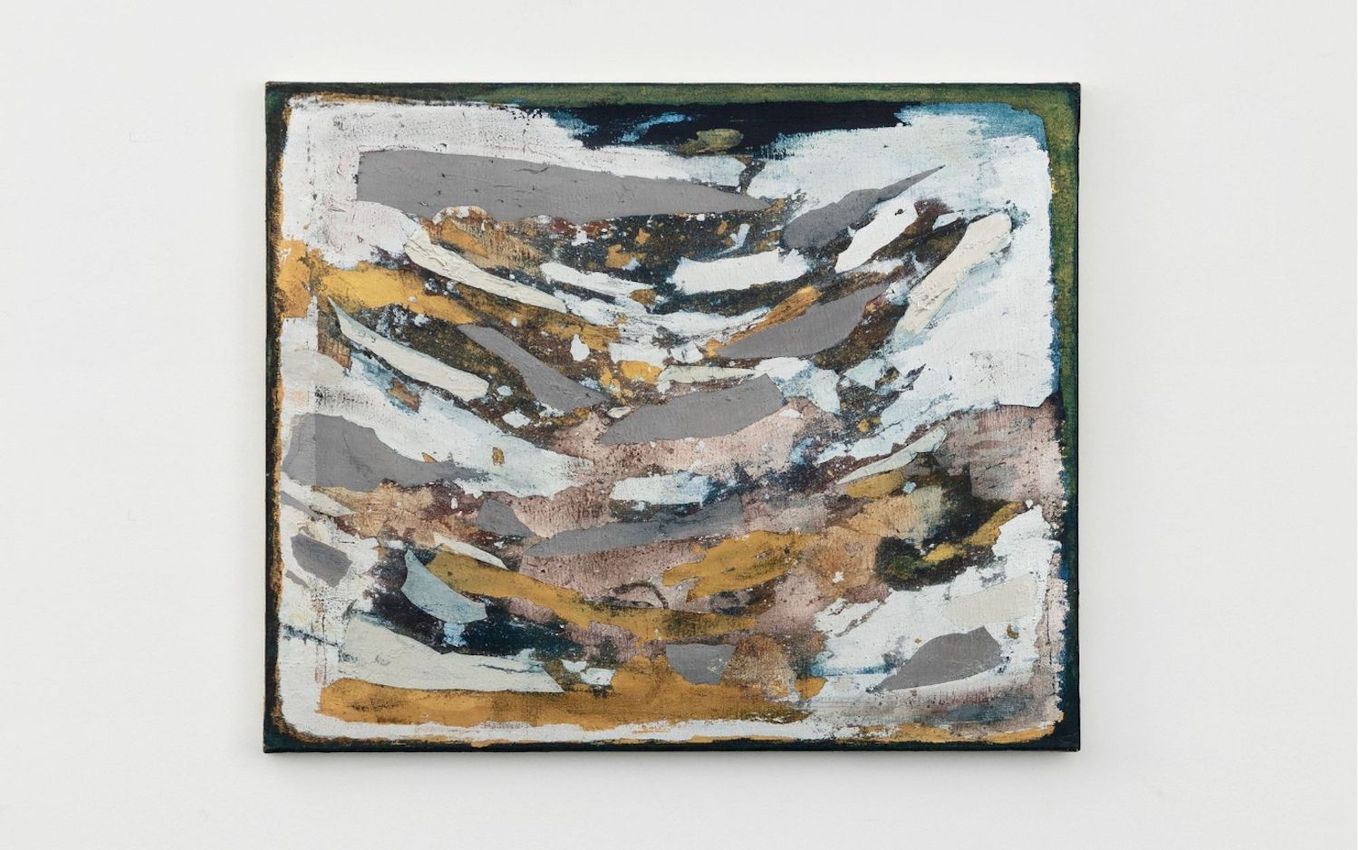
This sense of flux and mobility, what we might call their metamorphic dynamic, is always present in Bergman’s work. There is a movement between themes, via subtle formal games; an enthralling shift between the microscopic and macroscopic; and an erosion of the typical sense of scale, meant to rupture any anthropocentric reading of the images. From the 1950s, but even more so from the 1960s onwards, Anna-Eva Bergman explored an uncommon material to represent her vision: sheet metal in gold or silver, pure or oxidised, smooth or torn. This brought a new luminescence to her paintings, which became living organisms, mirrors absorbing the surrounding light, portals to the immaterial.

Bergman’s formal explorations with the aesthetic potentials of sheet metal nodded to countless cultures and eras, from the Byzantine tradition to the French miniaturists, Mesoamerican art, and the Viennese avant-gardes of Klimt and Schiele.

Bergman’s formal techniques and fluency with innovative materials was always in the service of something greater: a re-enchantment of the world, a renewal of the spiritual tenor of art. A painting, according to the artist, was more than an object to be admired; indeed, it must always make the viewer ‘feel the interior silence that one feels when one enters a cathedral.’

Anna-Eva Bergman will be the subject of two retrospectives in 2023, at the Museum of Modern Art in Paris and the National Museum of Oslo. A biography of the artist will be published by Gallimard in November 2022.

Read More
About the Artist

Anna-Eva Bergman was born in Stockholm on May 29, 1909 to a Norwegian mother and a Swedish father. Her parents separated six months after she was born and her mother brought her to Norway where she later studied at the Academy of Fine Arts in Oslo (1927) and at the School of Applied Arts in Vienna (1928). Bergman’s writings and drawings show her sense of humor and observation, and demonstrate a virtuosic talent for drawing. Later, she would prove herself as an illustrator and journalist.In April 1929 she moved to Paris and enrolled at the André Lhote Academy where she met Hans Hartung. They got married the same year in Dresden. From 1933 to 1934, the couple lived on the island of Menorca in the Balearic Islands. The paintings and watercolors of this period show Bergman’s interest in the golden ratio and architecture, and foreshadow the simple, constructed forms of her future work.After divorcing Hartung in 1938, Bergman returned to Norway where, up to 1945, she devoted herself mainly to illustration and writing. In 1946, she committed wholeheartedly to painting again and since then she began to paint with a non-figurative approach. Line and rhythm became fundamental. This period marks a major turning point in her artistic creation: she was inventing and building a singular universe little by little. She produced her first painting in gold leaf and definitively abandoned illustration.During the summer of 1950, Bergman took a boat trip along the Norwegian coast, visiting the Lofoten Islands and Finnmark. This trip was decisive in the evolution of her painting. With the tempera technique, she rediscovered the transparency of the landscapes and the light of the midnight sun. In 1951, following several summers spent in Citadelløya (southern Norway), Bergman produced paintings and drawings depicting the structure of rocks worn by the sea. From this series, which she called Fragments of an Island in Norway, came her first motif: stone (1952). This is a major transition in her work. Her painting then evolved towards the search for a limited number of simple motifs.In 1952, Bergman moved to Paris and found Hans Hartung again. They remarried in 1957.In 1958, in a series of works on paper of the same format, in tempera and metal leaf, Bergman used for the first time in painting the repertoire of forms that she had developed in her work since 1952: stone, moon, star, planet, mountain, stele, tree, tomb, valley, ship, prow and mirror. These archetypal forms inspired by Scandinavian nature and the powerful Nordic light would become the central elements of Bergman’s work.In 1964, Bergman and Hartung traveled by boat along the Norwegian coast, past the North Cape. For several years, Bergman would use the sketches and photographs from this trip to in her work.The couple moved to Antibes in 1973 where together they designed their house and studios which later became the Hartung-Bergman Foundation. Bergman’s work evolved towards increasingly simpler forms and a restricted color palette. She abandoned the construction of her paintings based on the golden ratio and added two themes to her vocabulary of forms: waves and rain.Anna-Eva Bergman died on Friday, July 24, 1987 at the hospital in Grasse.The latest solo exhibitions were held at the Museo Nacional Centro de Arte Reina Sofía, Madrid, in 2021, at the Musée des Beaux-Arts, Caen, France, in 2020, and at the Museum der bildenden Künste, Leipzig, Germany, in 2018. She had many solo exhibitions in Norway, such as in 1969 at the museums of Oslo and Bergen, in 1979 at the Henie-Onstad Foundation and also in Sweden, Finland and Italy, at the Museo Civico of Turin in 1967; in the Biennial of São Paulo in 1969; in Germany, at the Kunsthalle of Düsseldorf in 1981–82; in Paris, at the Galerie de France where she exhibited regularly from 1958 to 1977 and at the musée d’Art moderne de la Ville de Paris with a retrospective in 1977–78; in Antibes at the Picasso Museum in 1986, etc.

View Artist Profile

Also Exhibiting at Perrotin

About the Gallery

Emmanuel Perrotin founded his first gallery in 1989 at the age of 21. He has opened since then over 17 different spaces, with the aim of continuing to offer increasingly vibrant and creative environments to experience artists work. He has worked closely with his roster of artists, some since more than 25 years, to help fulfil their ambitious dreams and projects.

View Gallery Profile
Address
76 rue de Turenne
Paris
France
Opening Hours
Tuesday – Saturday
10am – 6pm
(1)
Paris 76 rue de Turenne
Perrotin
76 rue de Turenne, Paris, France
+33 1 42 16 79 79
http://www.perrotin.com

Opening hours
Tuesday – Saturday
10am – 6pm
The art world in focus