


To mark the tenth-year anniversary of Pilar Corrias Gallery in London, Philippe Parreno presents three new major works, Fraught Times, FZRA January, 1998 (2018), Anywhen (2018) and Wallpaper, Marilyn (2018).
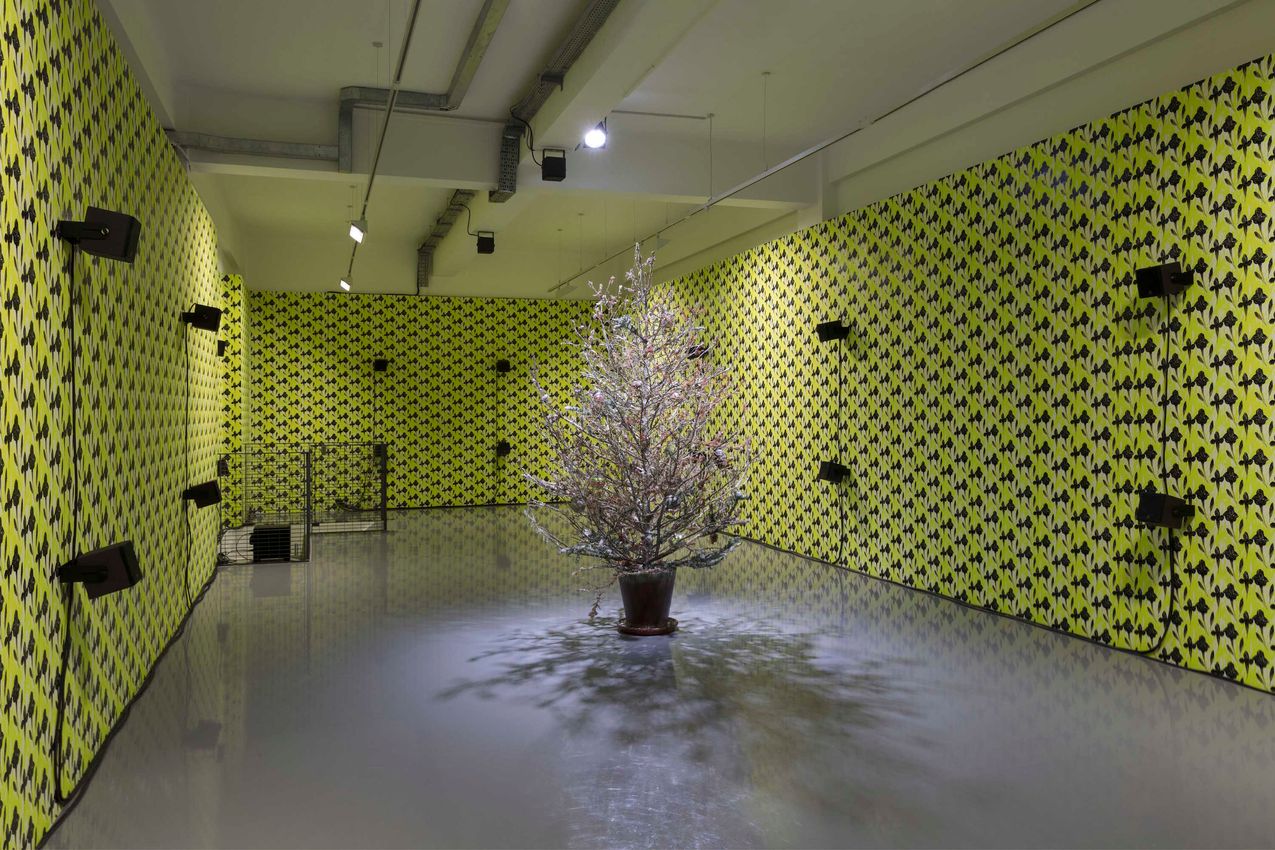
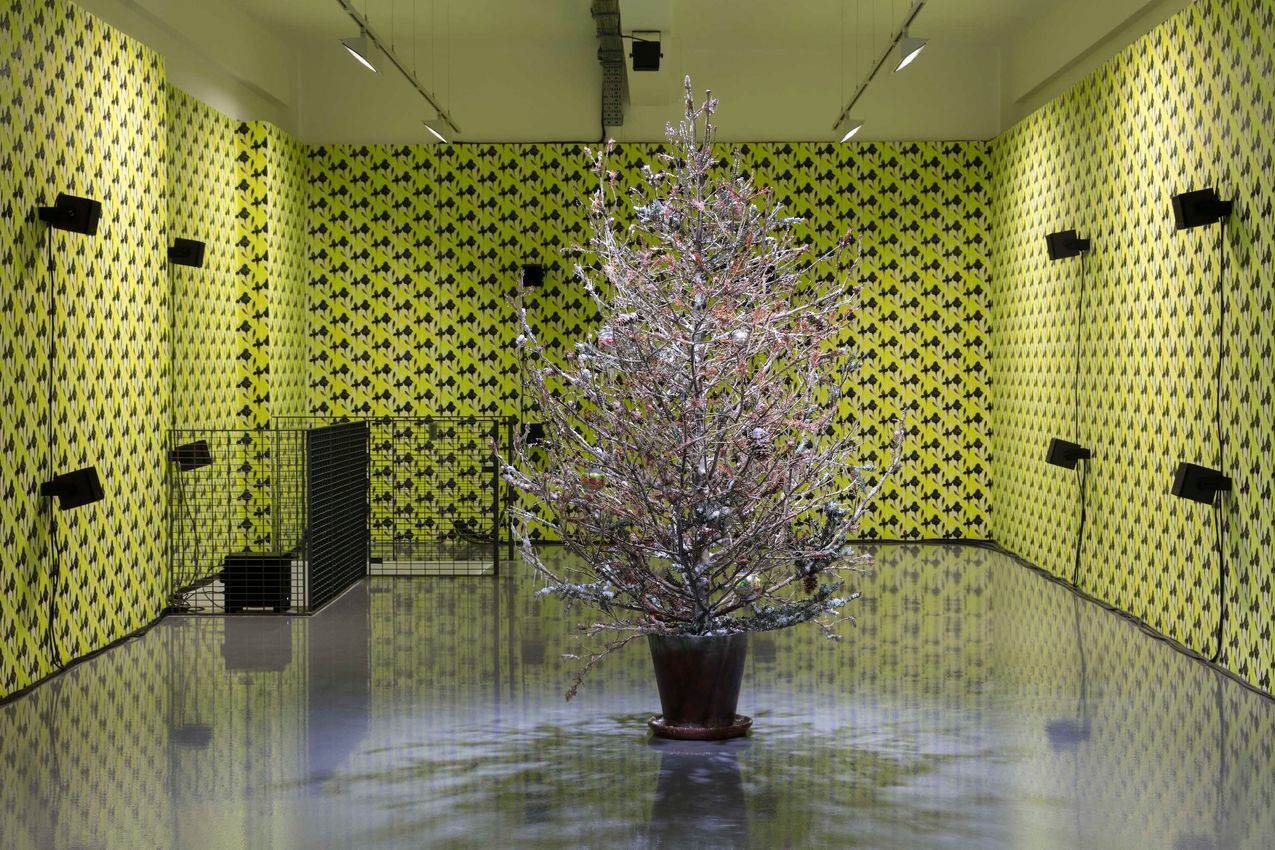
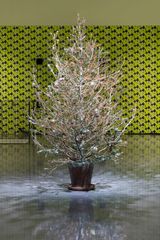
Recalling the gallery’s inaugural exhibition in October 2008 when Parreno created the first surreal Christmas tree, Fraught Times: For Eleven Months of the Year it’s an Artwork and in December it’s Christmas (October) (2008), part of what would become his ‘Fraught Times’ series, the artist now presents a new sculpture in the exact same spot at the centre of the gallery, returning the gallery space to its original state.
Cast in hyperreal detail, Fraught Times, FZRA January, 1998 (2018) is a polychromic sculpture representing, in raw METAR terms, a lifeless, frozen pine tree. FZRA is a Raw METAR code, one of the most commonly used formats for the transmission of observational weather data around the world. 20 years ago, in January 1998, a freezing rain lasting 6 entire days coated the provinces of Ontario and New Brunswick in Canada with 7–11cm of ice. The reproduction of one event echoes another; the opening of a gallery 10 years ago against one of the worst ice storms in Canada 20 years ago.
Parreno’s first Christmas tree in 2008 was cartoon-like and celebratory. The new tree is no longer cartoon-like but deadly frozen. The object changed over time and the ritual has been corrupted. We are entering into an uncanny valley where realistic representation becomes a disturbing attraction. The celebration is uncertain.
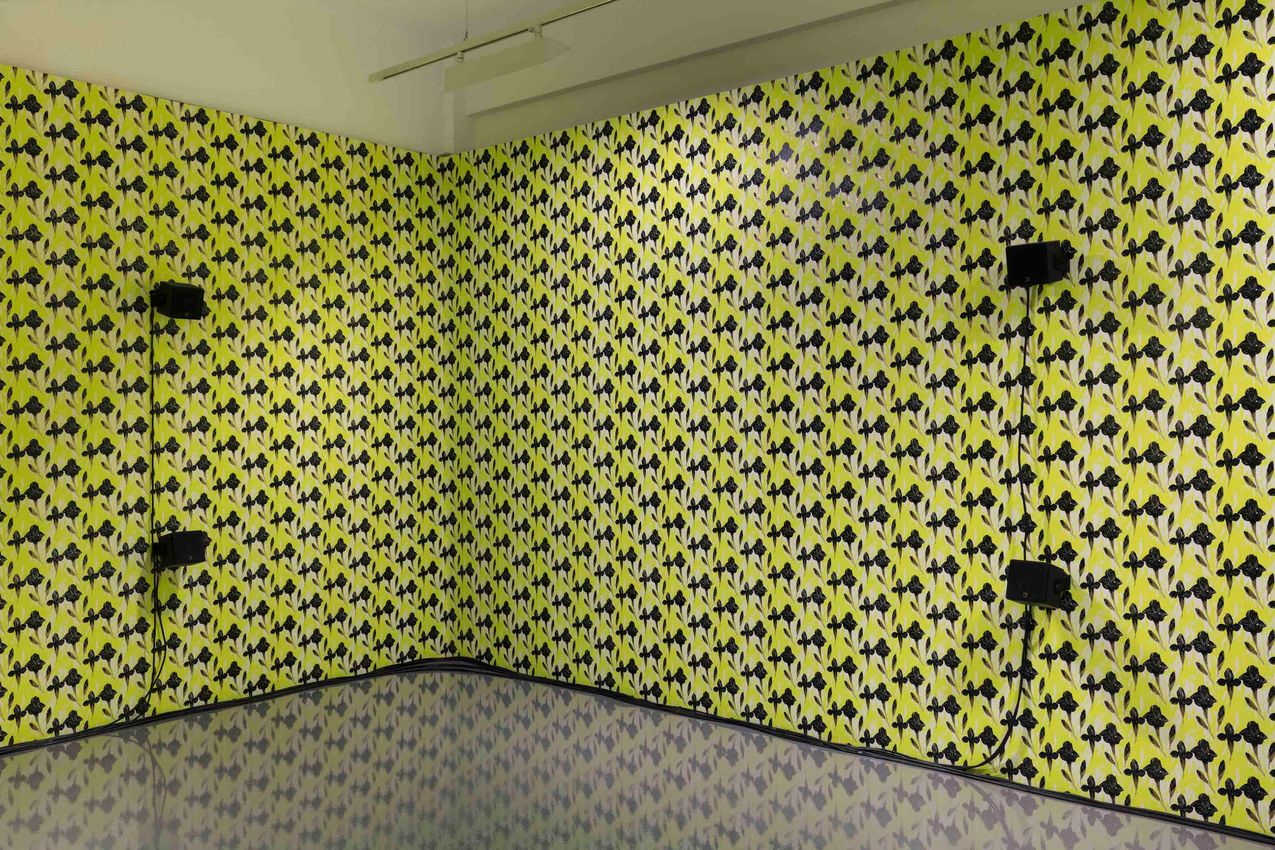
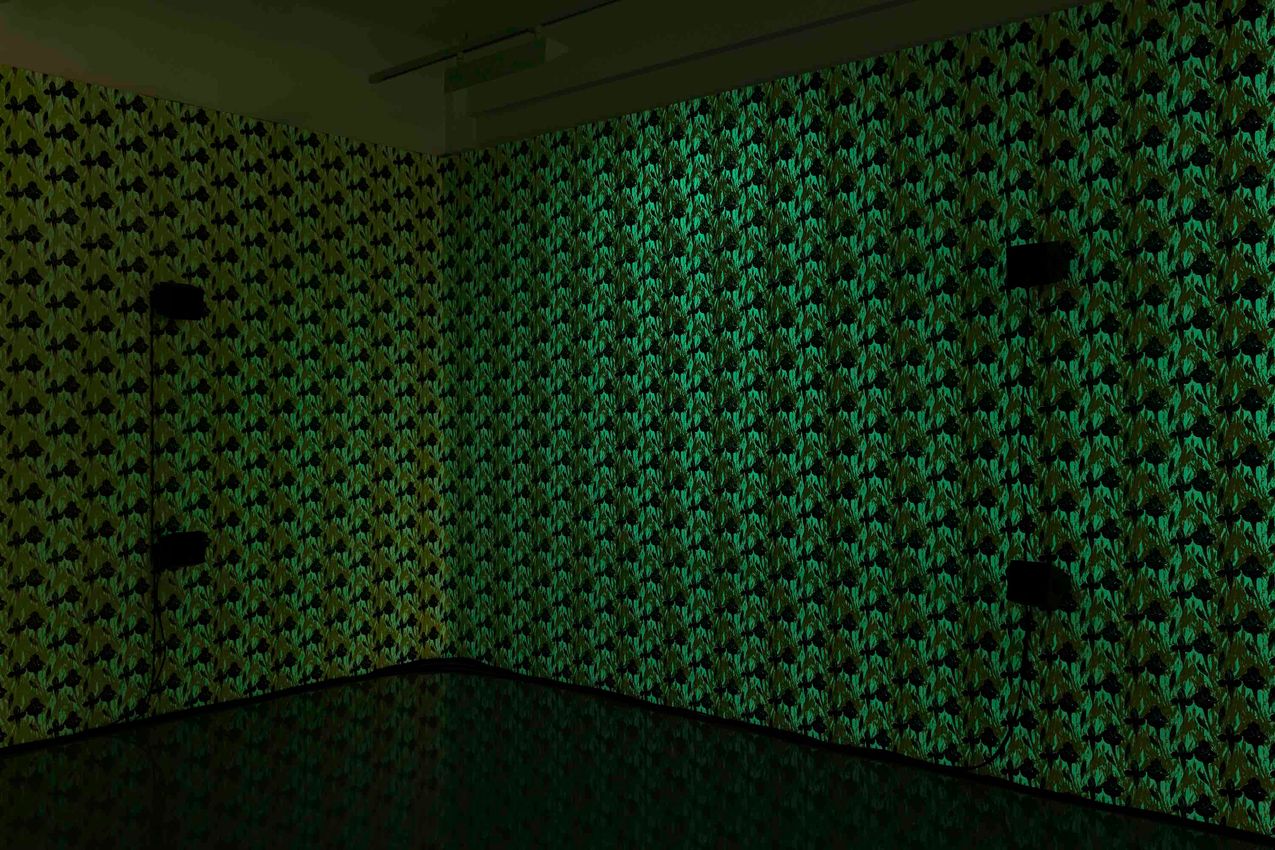
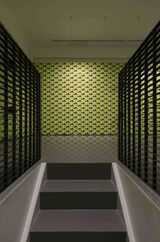
Surrounding the sculpture and lining the walls of the gallery is a phosphorescent, patterned wallpaper, providing a landscape for the tree. The black and yellow floral motif was first produced–but not used–for Parreno’s seminal film Marilyn (2012), and is now brought to life, from out of the artifice of the film set and into the exhibition space.
The 1950s iris flower design, made for Marilyn Monroe’s suite at the Waldorf Astoria, reappears as a ghostly apparition, representing a signature blurring of the lines between the past and present, the real and unreal, by bringing the past of the hotel and the film set into the gallery. By day, it contributes to the disorienting mise-en-scene of the dynamic and multi-sensory exhibition. By night, in the darkness of the gallery, it glows by itself. Unveiled as part of Parreno’s major solo exhibition at Martin Gropius Bau in Berlin earlier this year, it will be the first time the work has been seen in London.
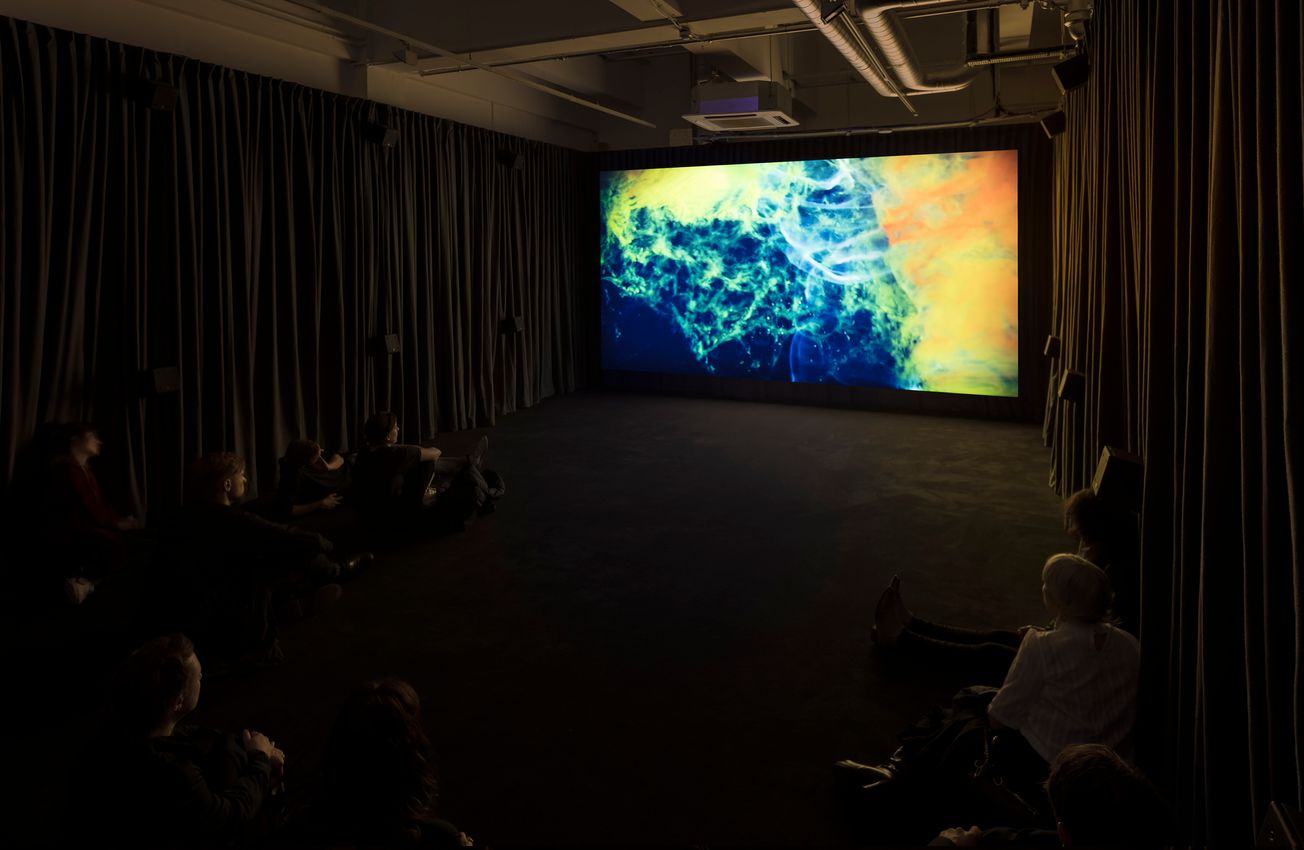
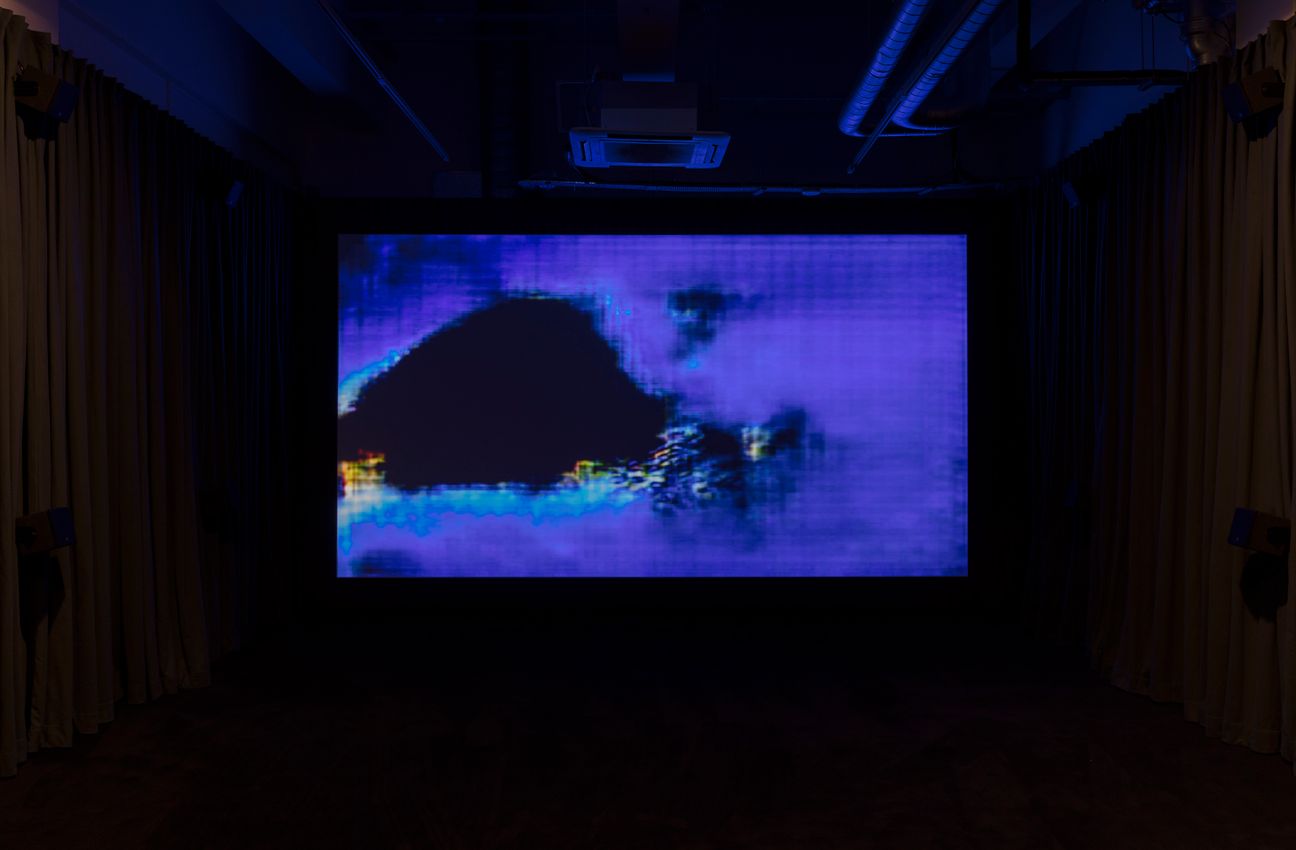
Downstairs, the second exhibition space shows a new edit of the film Anywhen, first shown during Philippe Parreno’s 2016 Hyundai Commission for Tate Modern’s Turbine Hall. As with the Fraught Times series, Parreno’s work changes with the passage of time and is recreated and re-edited, interacting to its new environment. Anywhen (2018) explores the porousness of communication; through the voice of comedian and ventriloquist Nina Conti a monologue written by Parreno is heard from the body of a cuttlefish, representing the embodiment of another being inside her and presenting a non-symbolic language as seen on the dynamic skin patterns belonging to these fantastic, otherworldly creatures via camouflage.
The most complex of the Mollusca, cephalopods have evolved a sophisticated system of neurally and hormonally driven dermal units that produce variable body patterns. They have achieved the ultimate art form in which they can turn themselves into the very thing they want to communicate. Their cells, whose walls are permeable and are therefore at one with the world, become, through osmosis, that which surrounds them. These beings suggest alternative forms of communication and lead us to reflect upon the limits of language.
A compact grid of speakers covers the walls of both gallery spaces to create a holophonic spatial display in an attempt to reproduce binaural hearing; an acoustic hologram made using sound from the film.
Echoing the compression of time between 1998 to 2018 inherent in all of the works, these images and sounds anachronistically combine the most advanced technology, with the replication of an obsolete and dated analogue medium; VCR. Recalling a time when videocassette recorders needed rewinding after each view, illuminating a room with bright static, Parreno will, at the end of each showing of Anywhen allow a series of Artificial Intelligence Deep Learning programs to attempt to re-remember and reproduce the film. Whilst Anywhen rewinds, the artificial intelligence will take over.
Philippe Parreno creates artworks that question the boundaries between reality and fiction, exploring the nebulous realm in which the real and the imagined blur and combine. Working in a diverse range of media including sculpture, drawing, film, and performance the internationally acclaimed French artist seeks to expand our understanding of duration, inviting us to radically re-evaluate the nature of reality, memory, and the passage of time. Central to Parreno’s practice is his quest for an ultimate form of communication capable of transcending language.


A respected voice in contemporary art discourse.
Focusing on ambitious storytelling and insightful art-world commentary. Ocula Magazine publishes in-depth interviews, critical essays and timely analysis on the artists, exhibitions and ideas driving the global art world.
Learn more about Ocula Magazine
Showcasing the best of the art world.
Ocula partners with galleries from around the world to highlight their artists, artworks and exhibitions. Gallery membership is by application and invitation, with each member vetted by an independent panel.
Learn more about Ocula Membership

Specialises in the sale of major artworks.
Led by a team with deep ties to the world’s leading auction houses, galleries and collectors. Ocula’s advisory team offers bespoke services to high-net-worth clients from around the world who are looking to acquire the best of contemporary and modern art.
Learn more about our team and services