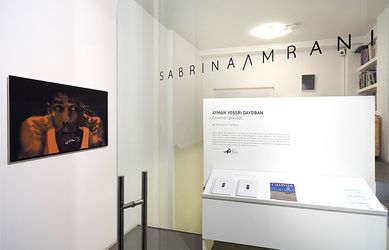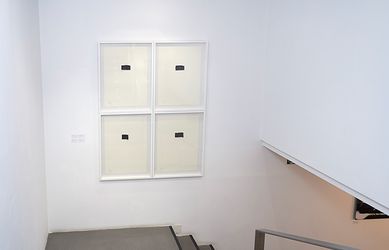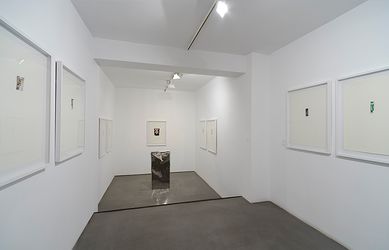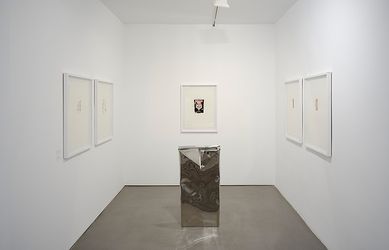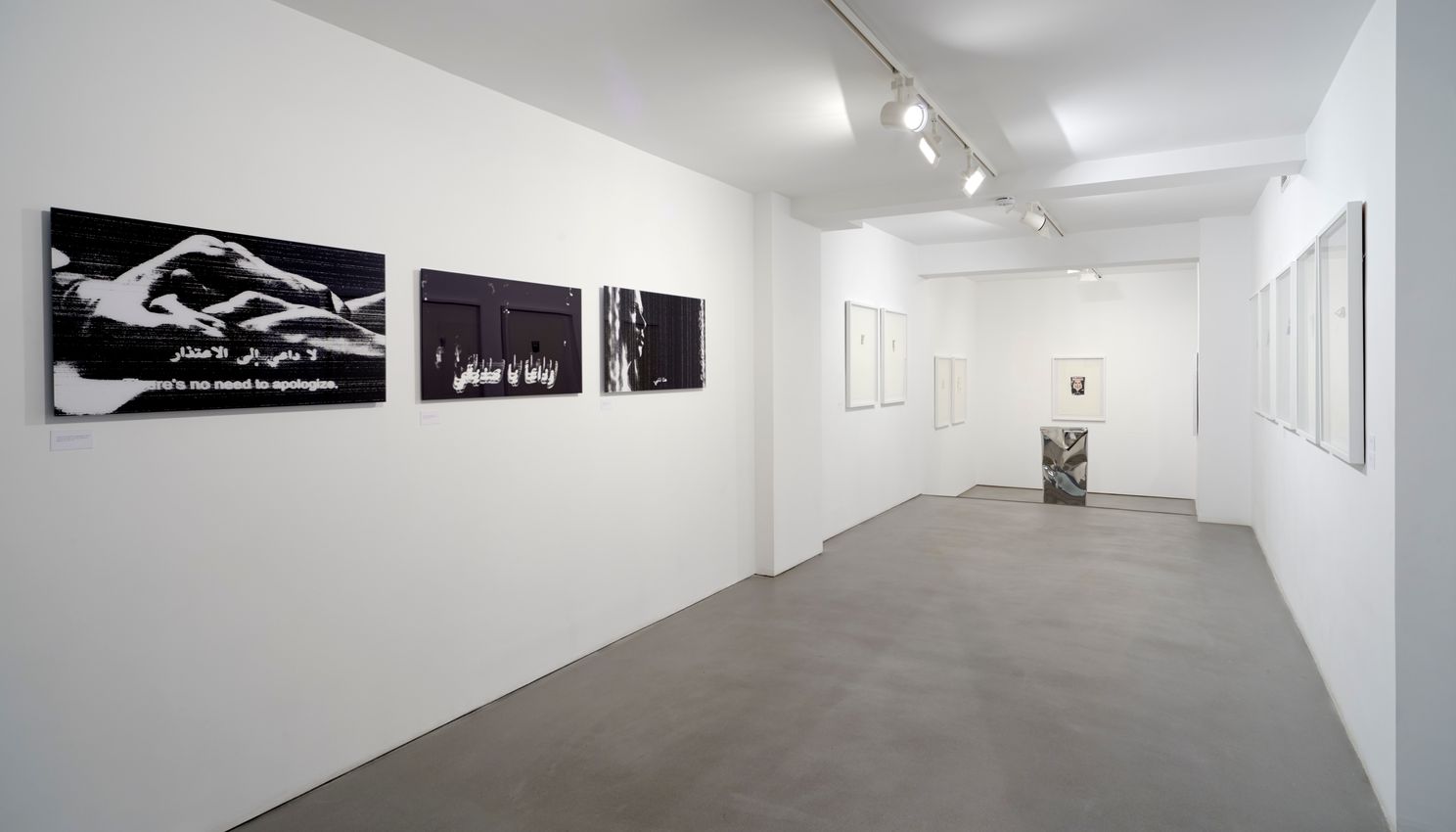
Sabrina Amrani welcomes the new year with ‘Common Grounds’, an exhibition by Saudi artist Ayman Yossri Daydban, who has never beenshown in Spain before. Born in 1966, Ayman Yossri has lived almost all his life in Jeddah and he identifies himself with Saudi Arabia and its idiosincrasy but is in fact of Palestinian origin with a Jordanian nationality. This sense of national dislocation has an effect on his artistic production. The exhibition gathers the latest body of works Ayman has produced over the last five years, presenting selected works from four different series.
Ayman Yossri works in all kinds of media and tackles the subjects of identity, and social shared memories. His studio in Jeddah could stand alone as a work of art. It is the monument to the marginal and eccentric artist. Yossri’s work is characterized by his desire to create situations rather than produce commodities designed to be hung, bought and sold.
The show welcomes the visitor with the Flag series, a body of work that the artist has made out from found objects, ranging from Prozac packages to soda or detergent labels, that he folds in a way that make the resulting shape resemble the Palestinian flag.
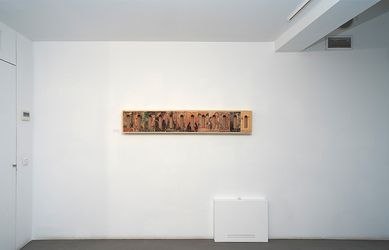
The exhibition continues with the piece Sharq B, from the Maharem series, which originated from the tissue box that middle to lower income families exhibit in their sitting room for their guests’ convenience. These boxes are lavishly decorated with velvet and kitchy gold rims and are considered decorative masterpieces, a source of pride to the lady of the house.
The artist’s initial manipulation of the tissue box was to rip the box from the comfort of the velvet coating, using the roughness of wood andthe sharpness of the language, through printed popular sayings, proverbs and riddles, thus changing the functionality of the object from utilitarian to a source of ideas. Daydban was later enticed to introduce prints from essentially Egyptian movies that shaped his childhood and contributed to his emotional development.
The tissue drawn from its box is a tribute to a culture where emotionsare impulsively revealed, exhibited and shared, particularly within the extended circle of family and friends. For the artist, his interaction withthe outside world (outside Saudi Arabia) was exclusively through twomediums: extended family and movies. The movies revealed theoutside world while the family acted as the protector and shield. Theartist has frequently shed tear while watching these movies and thetissues he drew are witness to a humanity shared. In Ayman’s words:“The Middle Eastern man is an emotional man, primarily driven byfeelings and often governed by them ... We are not materialistic, ouremotions take over”.
One of the most well known works by Ayman Yossri, the Subtitleseries, are also present in ‘Common Grounds’. The artist uses stillsfrom Western and foreign movies with subtitles in Arabic. The basicfunction for the Arabic language associated with a foreign languagefilm shown on the screen is translation. It works in the context of thefilm as a narration of the story and an explanation of the action thataccompanies it. And thus the meaning of the picture precedes that ofthe language and specifies it.
The language, when deducted from its cruel context and re-exportedwith the image of the new still captured photo, changes its functionfrom confirming the meaning to producing it, by transforming itself to aunique source of new mental images with no past or function.
The fourth series of works in the show is ‘Reflections’, a powerfulgroup of pieces made of stainless steel folded by the artist to resemblethe Palestinian flag and in which the viewer can see their owndistorted and fragmented reflection.


Ayman Yossri Daydban is an established Saudi-Palestinian artist whose multidisciplinary practice centers upon the critical examination of national narratives. The artist’s last name translates into English as ‘watchman’ or ‘guard’, and Yossri Daydban adopts the observant eye of this persona in his acute analysis of identity, existence, and belonging as they relate to cultural heritage, national integration, and the complex interrelation of East/West influences.


A respected voice in contemporary art discourse.
Focusing on ambitious storytelling and insightful art-world commentary. Ocula Magazine publishes in-depth interviews, critical essays and timely analysis on the artists, exhibitions and ideas driving the global art world.
Learn more about Ocula Magazine
Showcasing the best of the art world.
Ocula partners with galleries from around the world to highlight their artists, artworks and exhibitions. Gallery membership is by application and invitation, with each member vetted by an independent panel.
Learn more about Ocula Membership

Specialises in the sale of major artworks.
Led by a team with deep ties to the world’s leading auction houses, galleries and collectors. Ocula’s advisory team offers bespoke services to high-net-worth clients from around the world who are looking to acquire the best of contemporary and modern art.
Learn more about our team and services