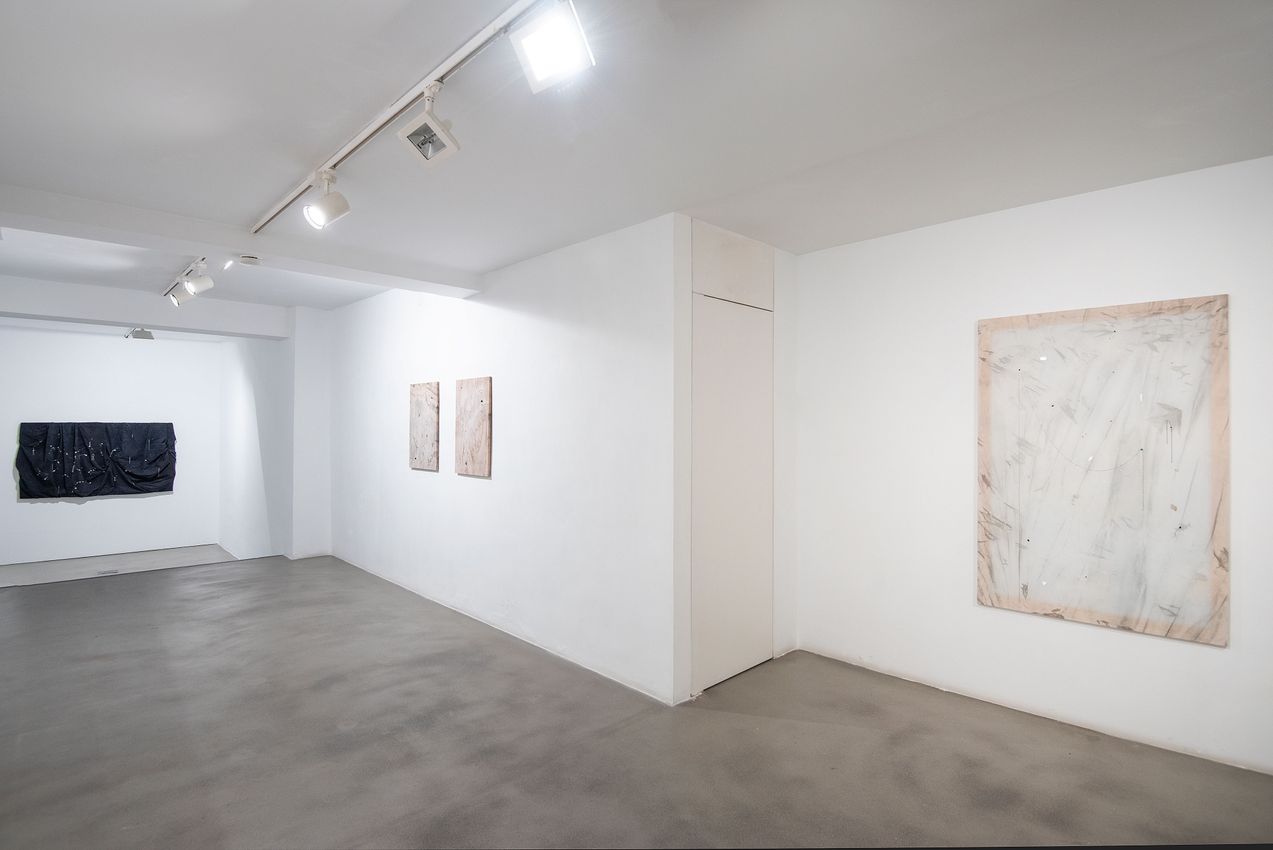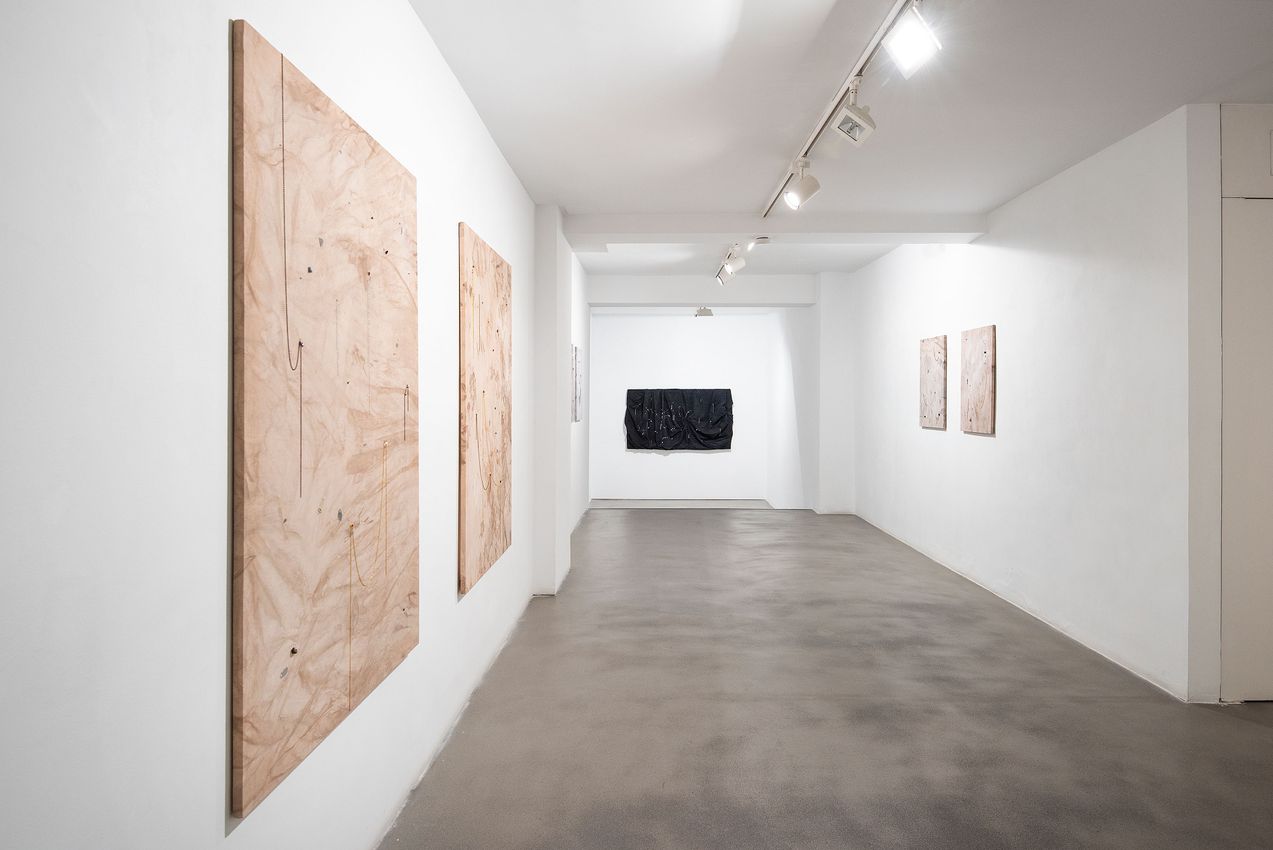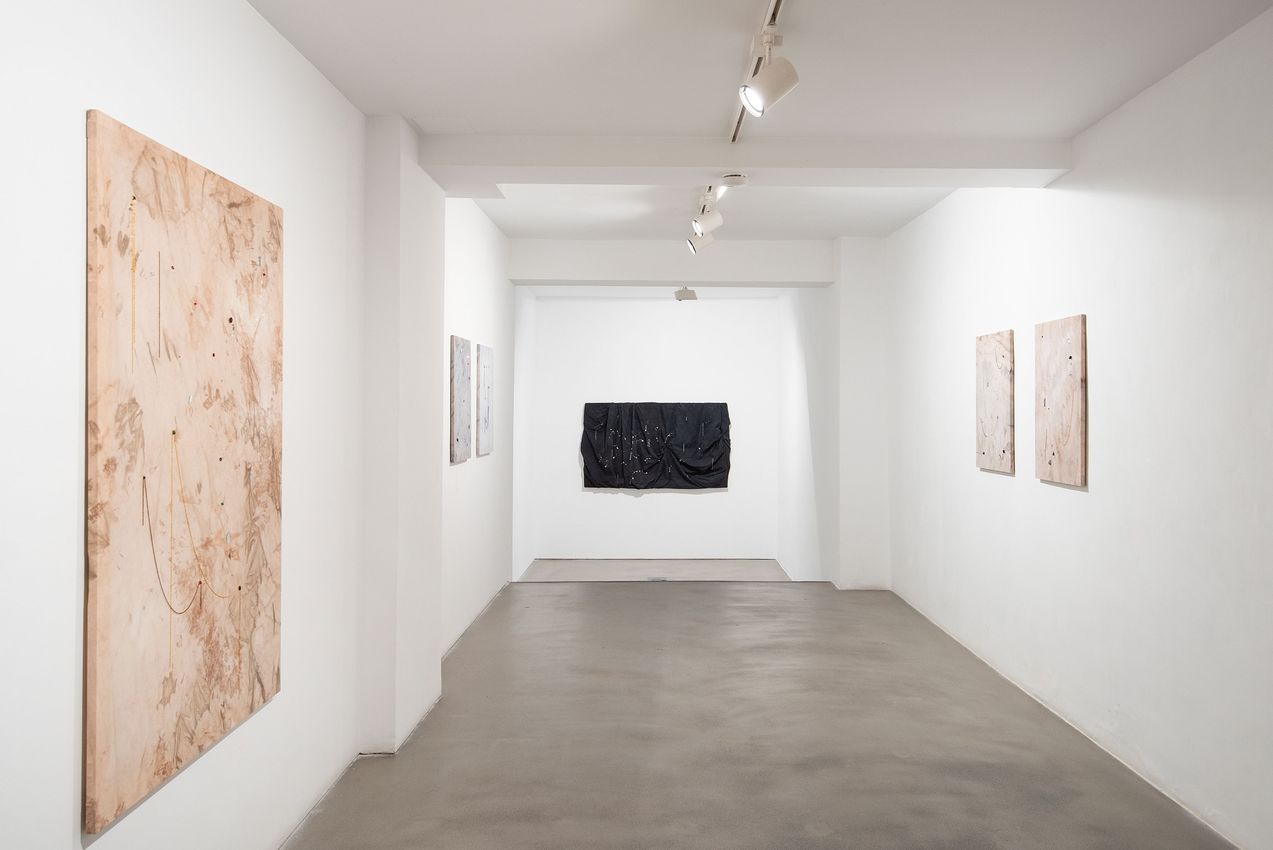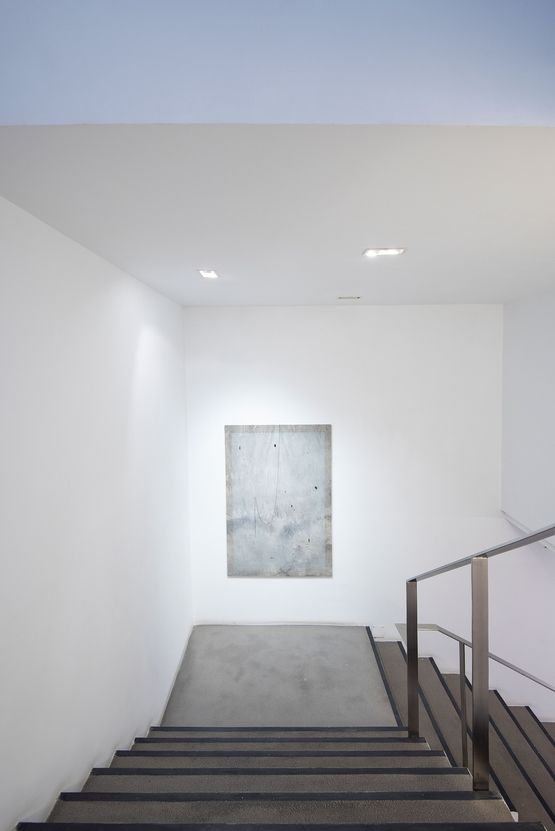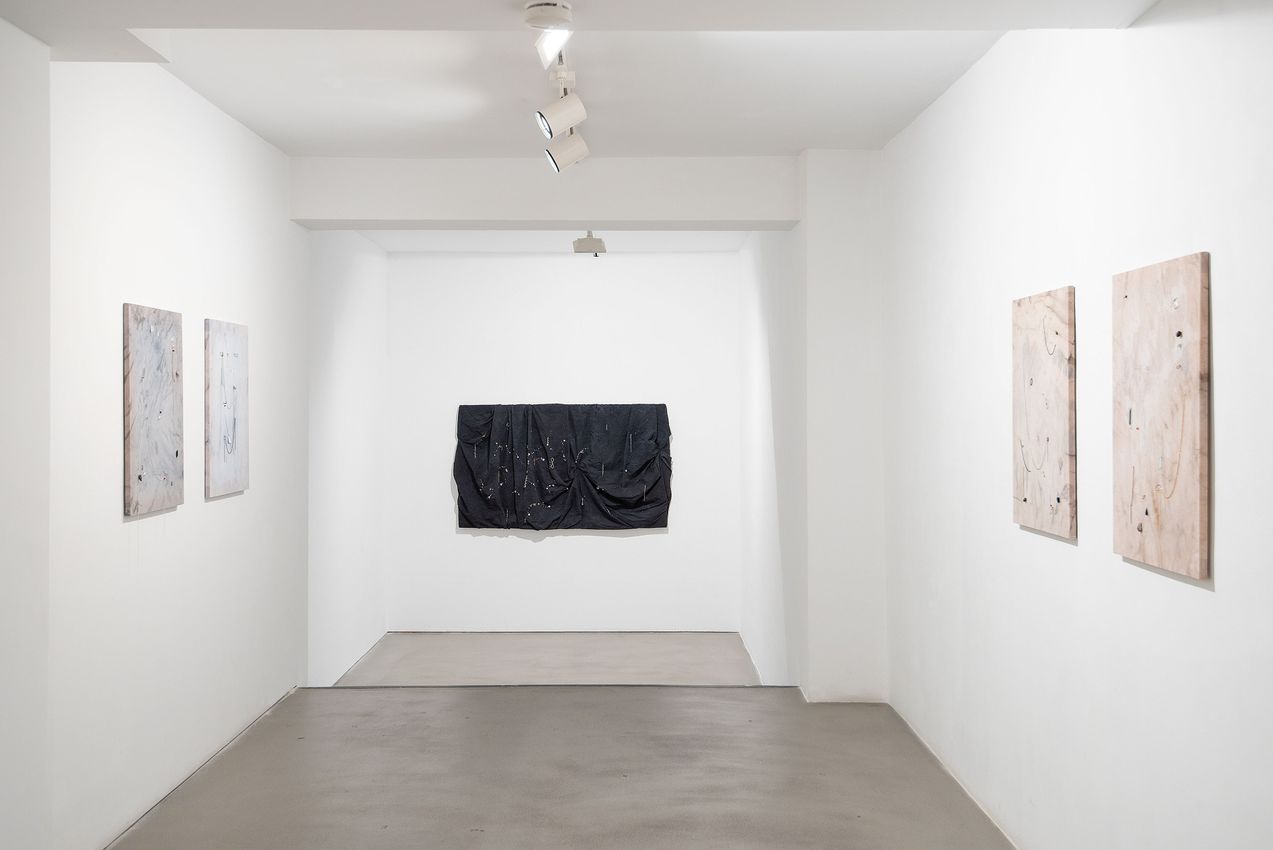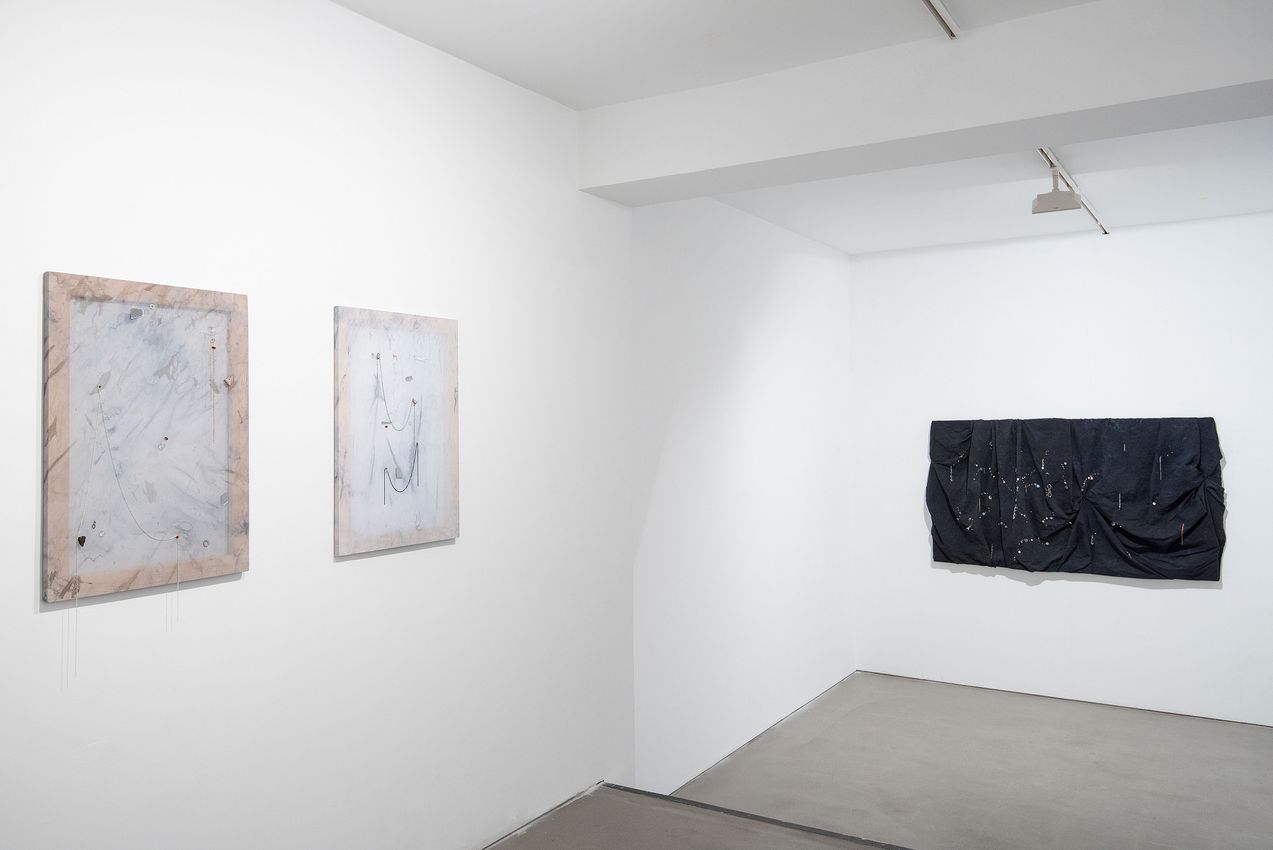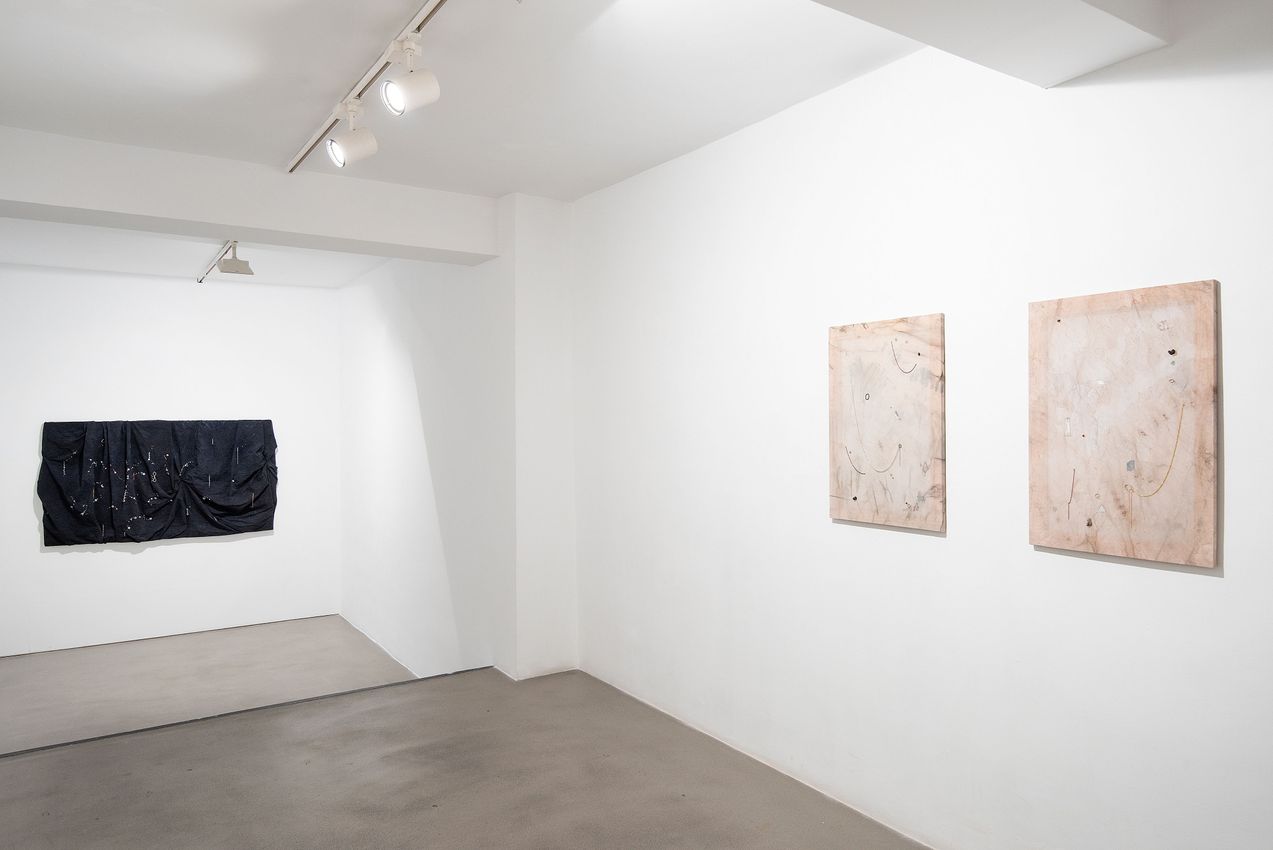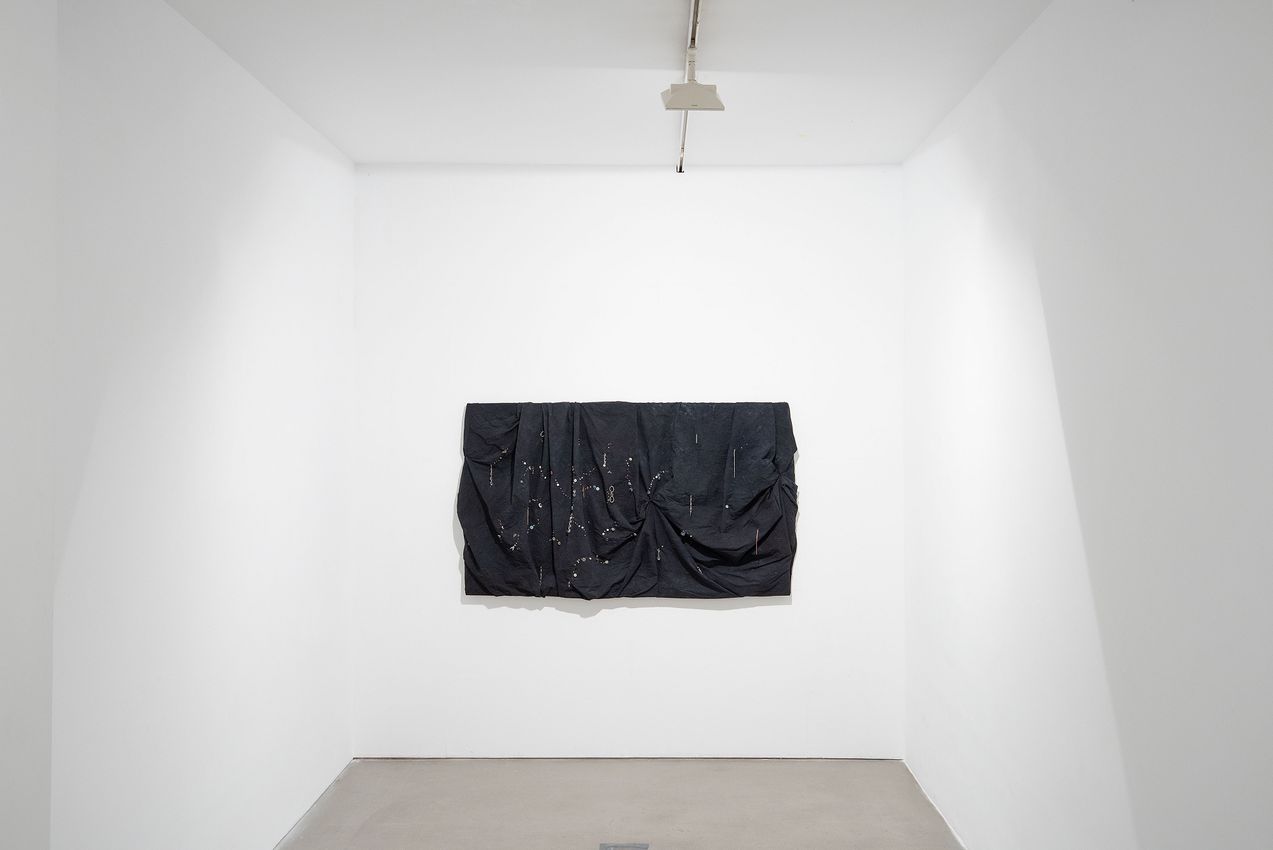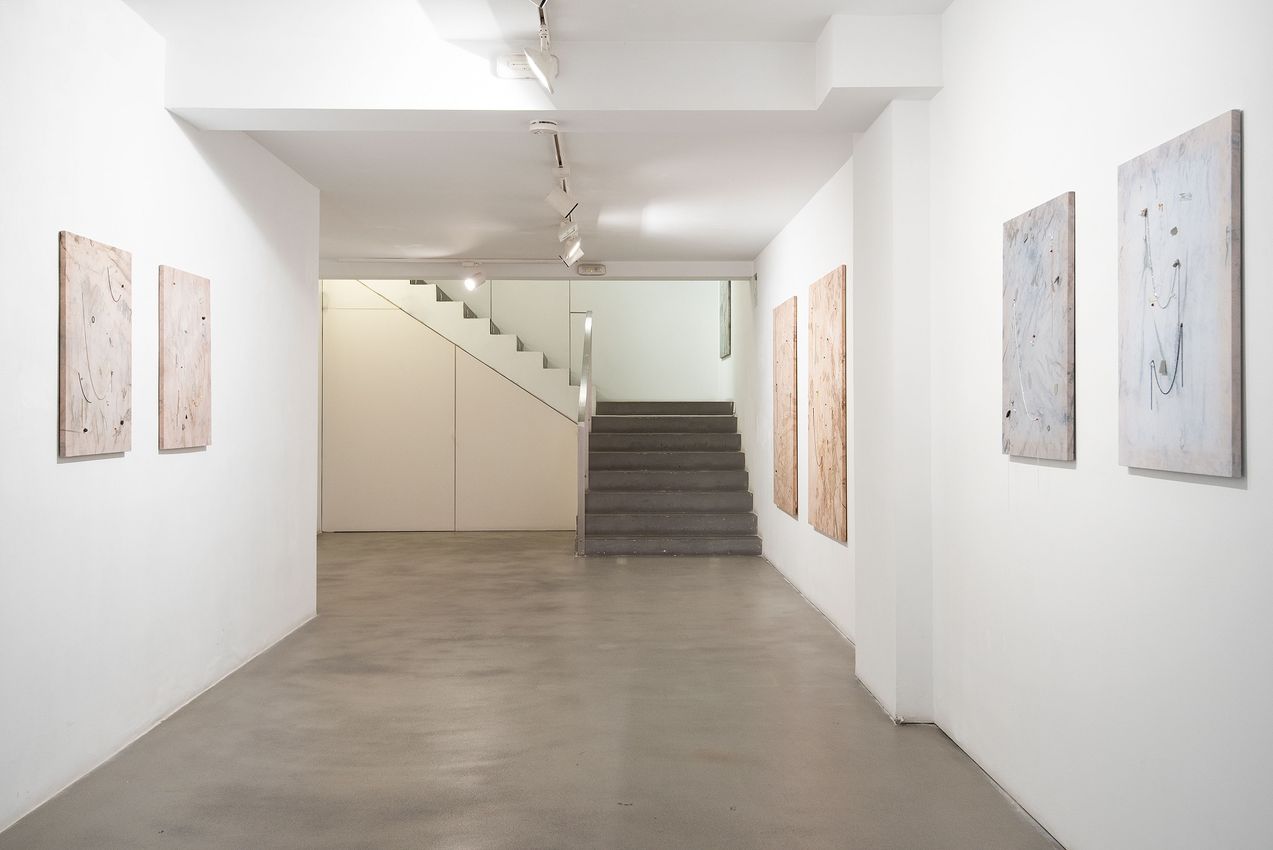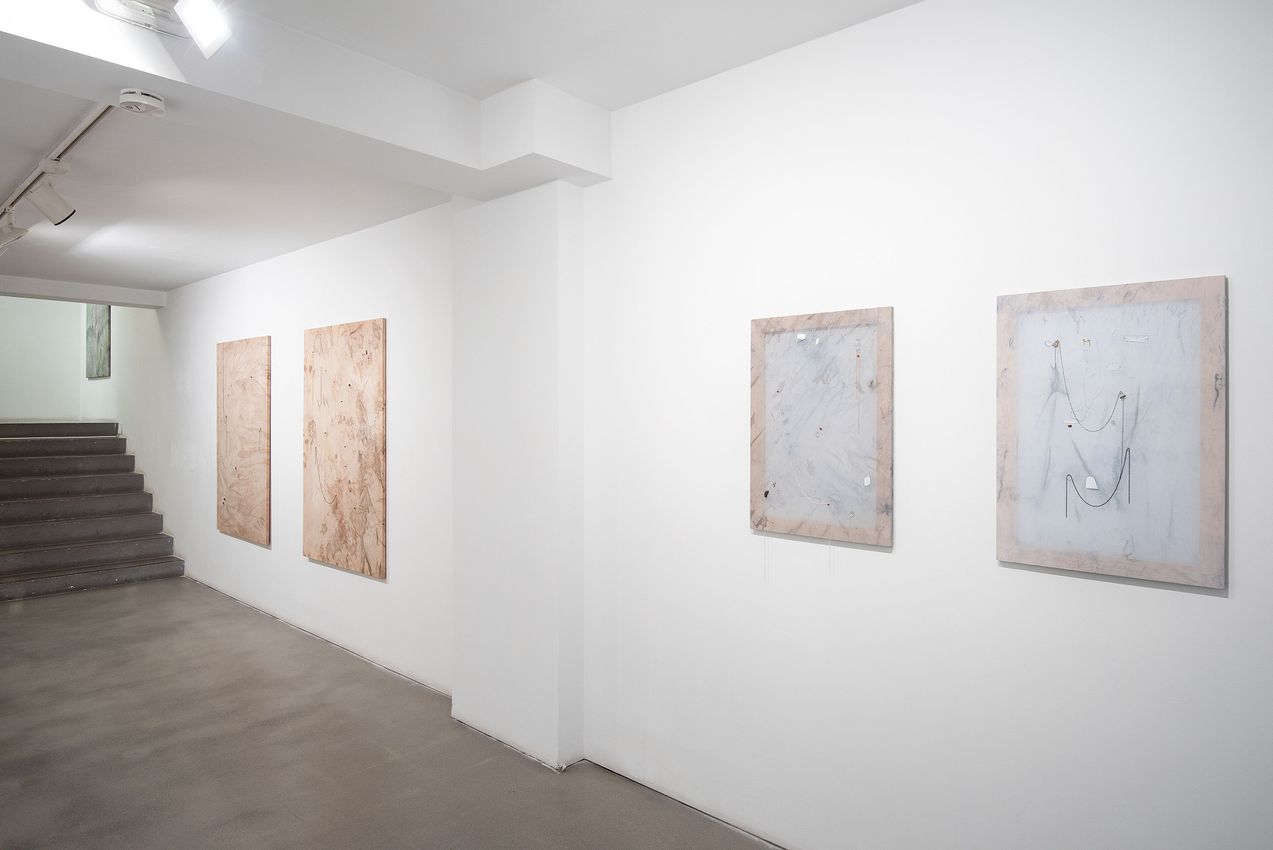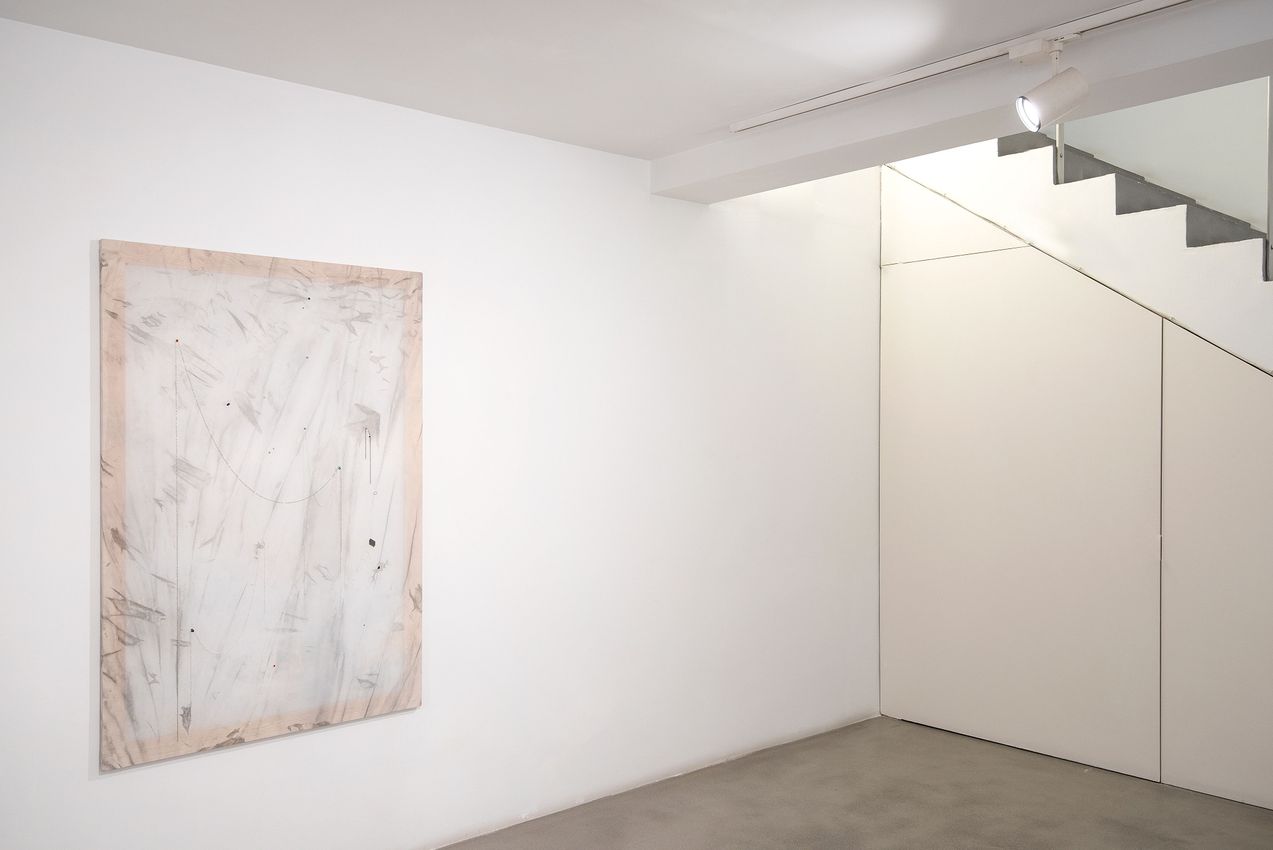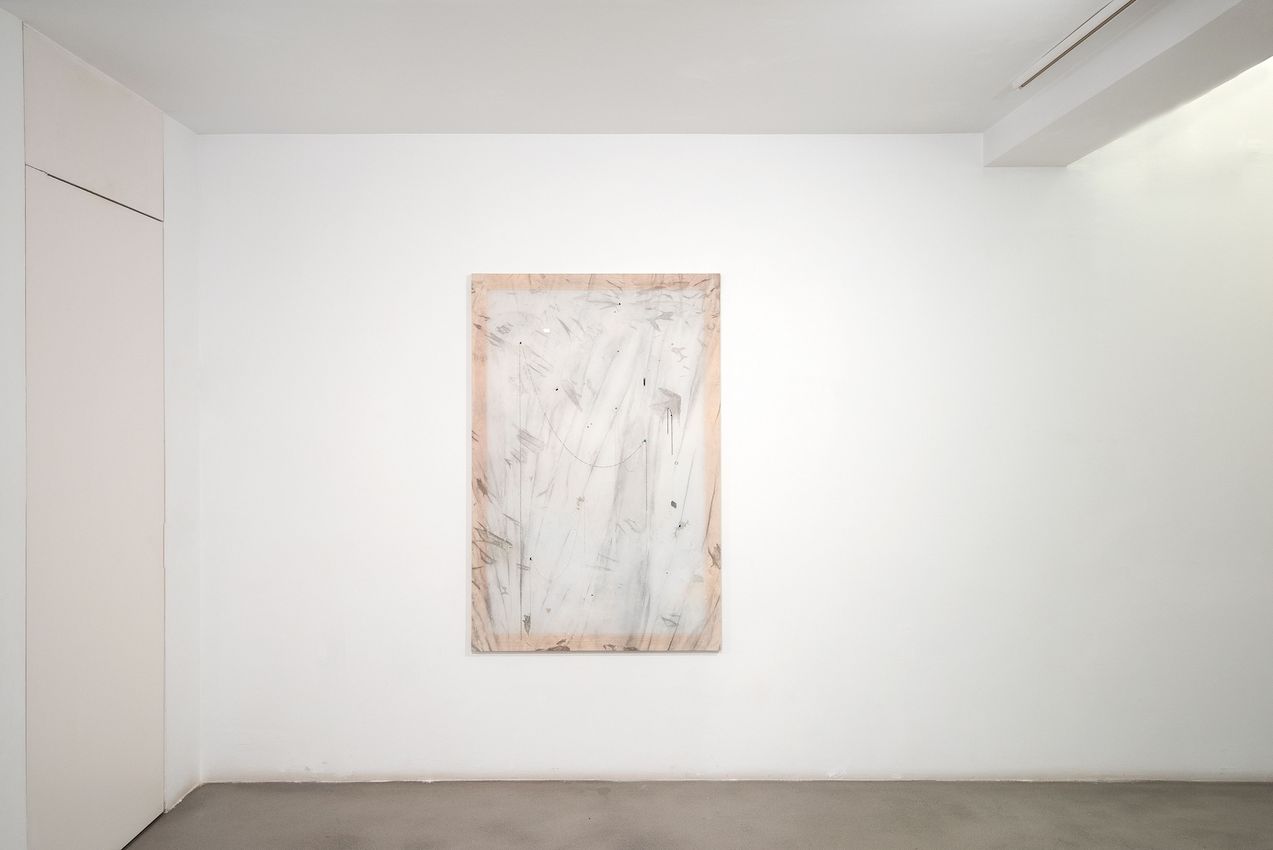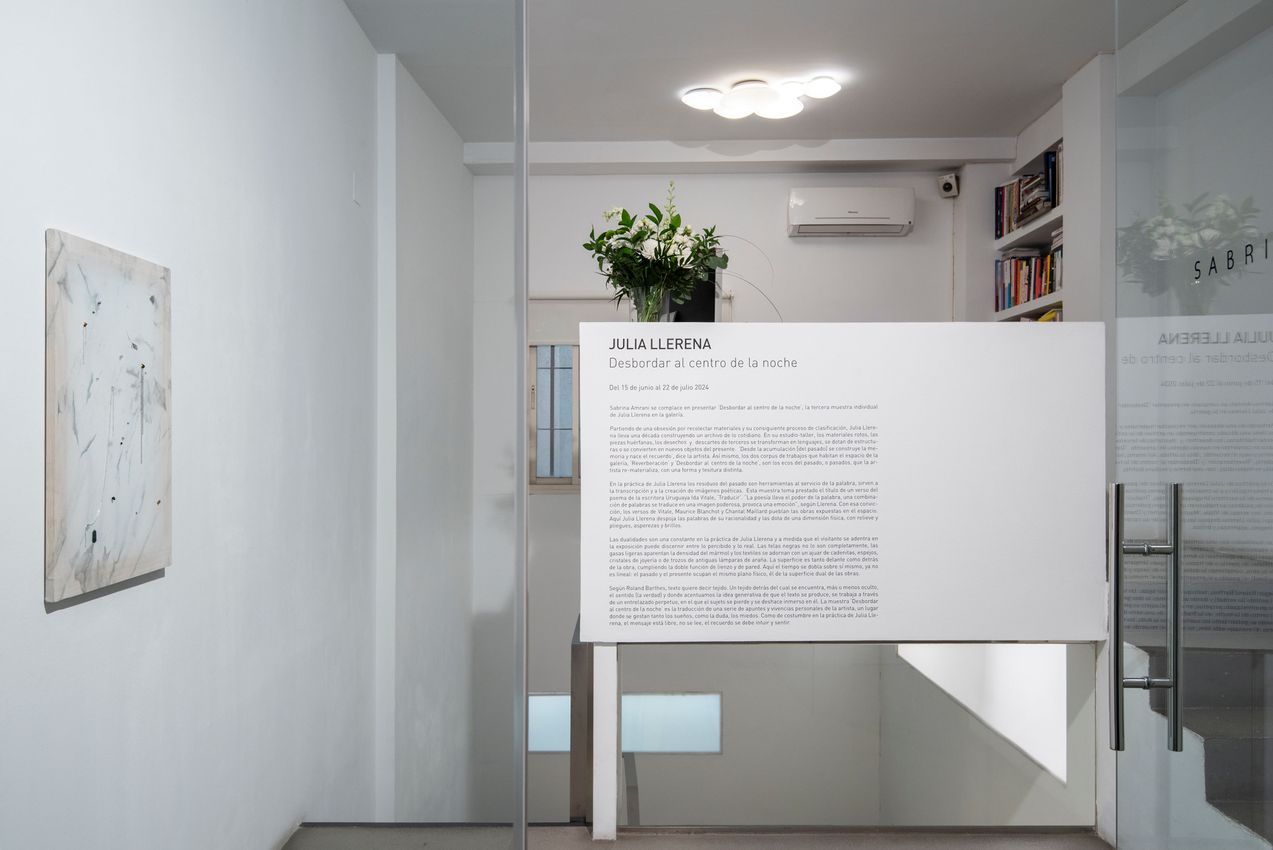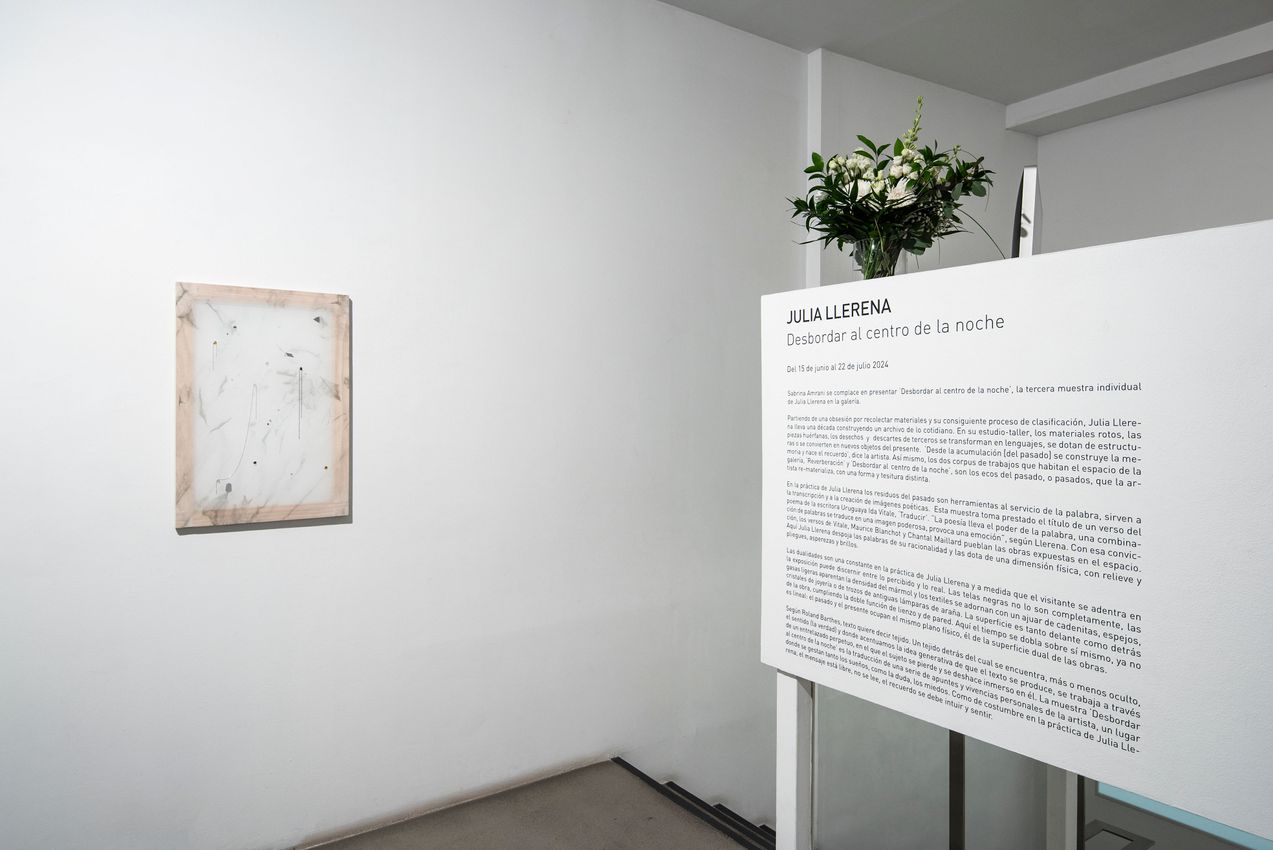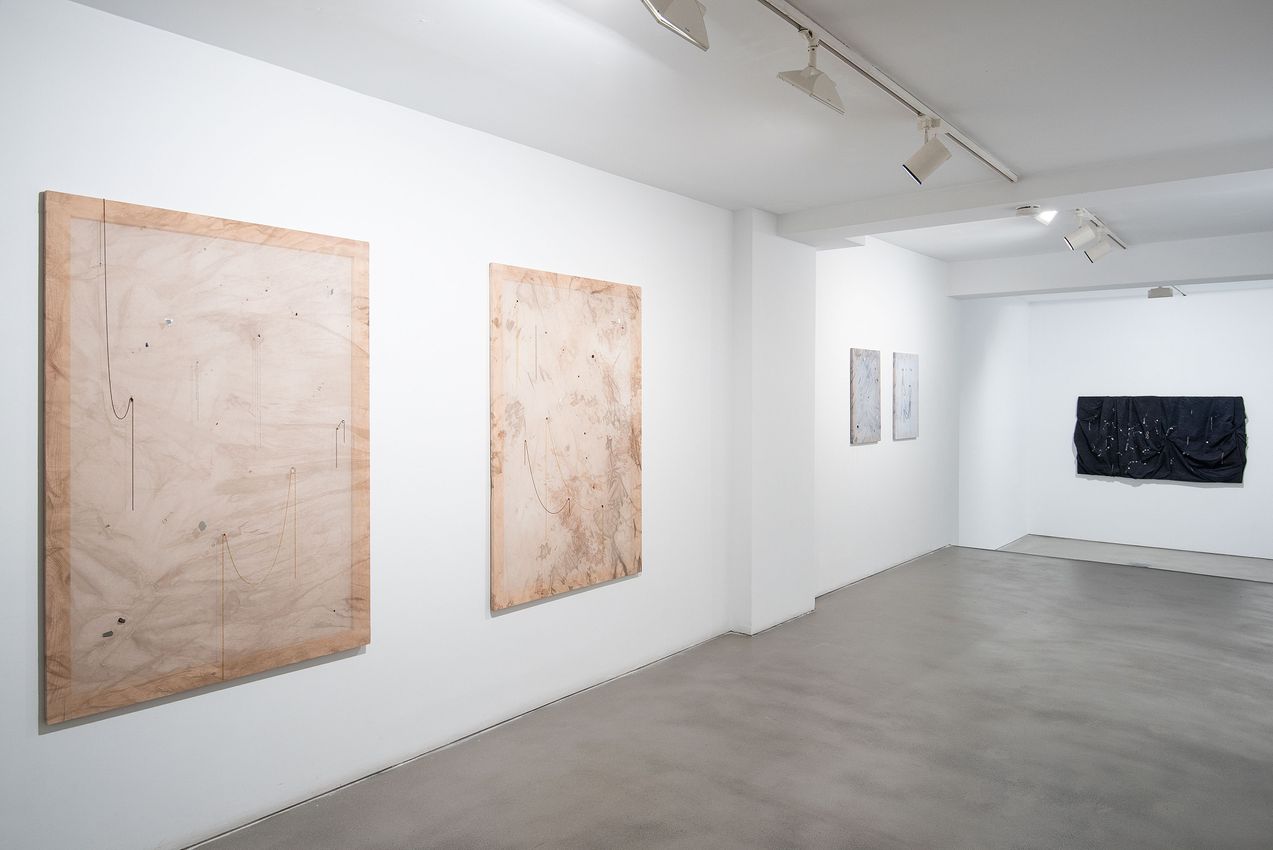
Sabrina Amrani is pleased to present Desbordar al centro de la noche, Julia Llerena’s third solo exhibition at the gallery.
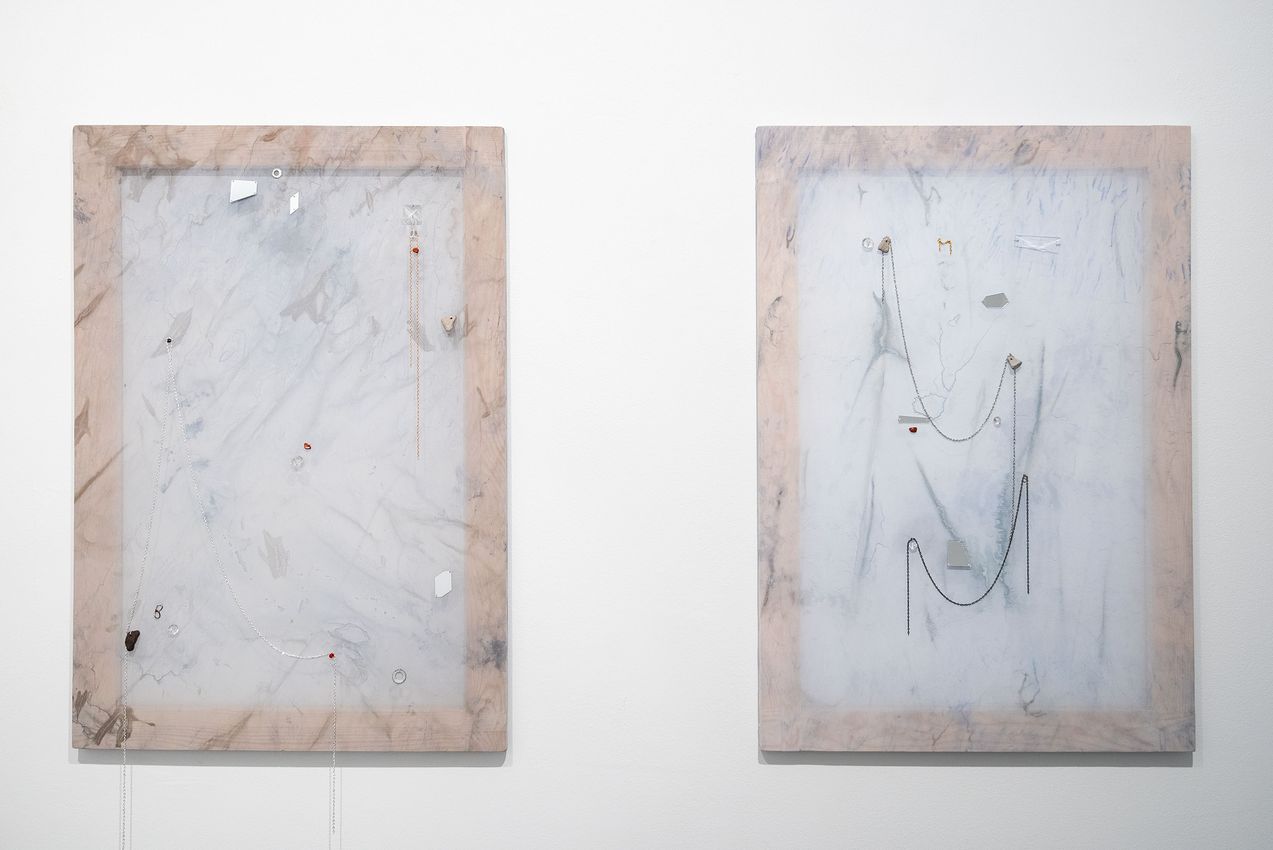
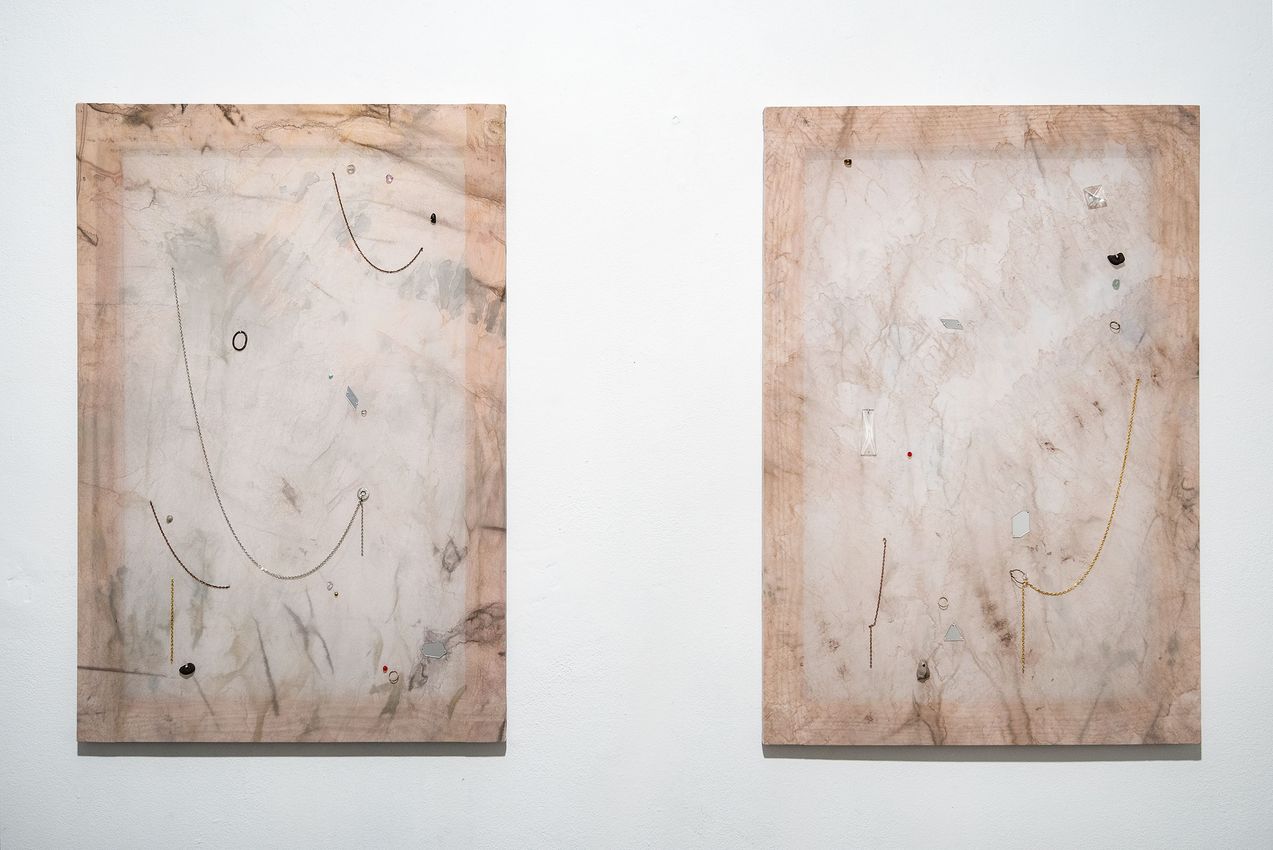
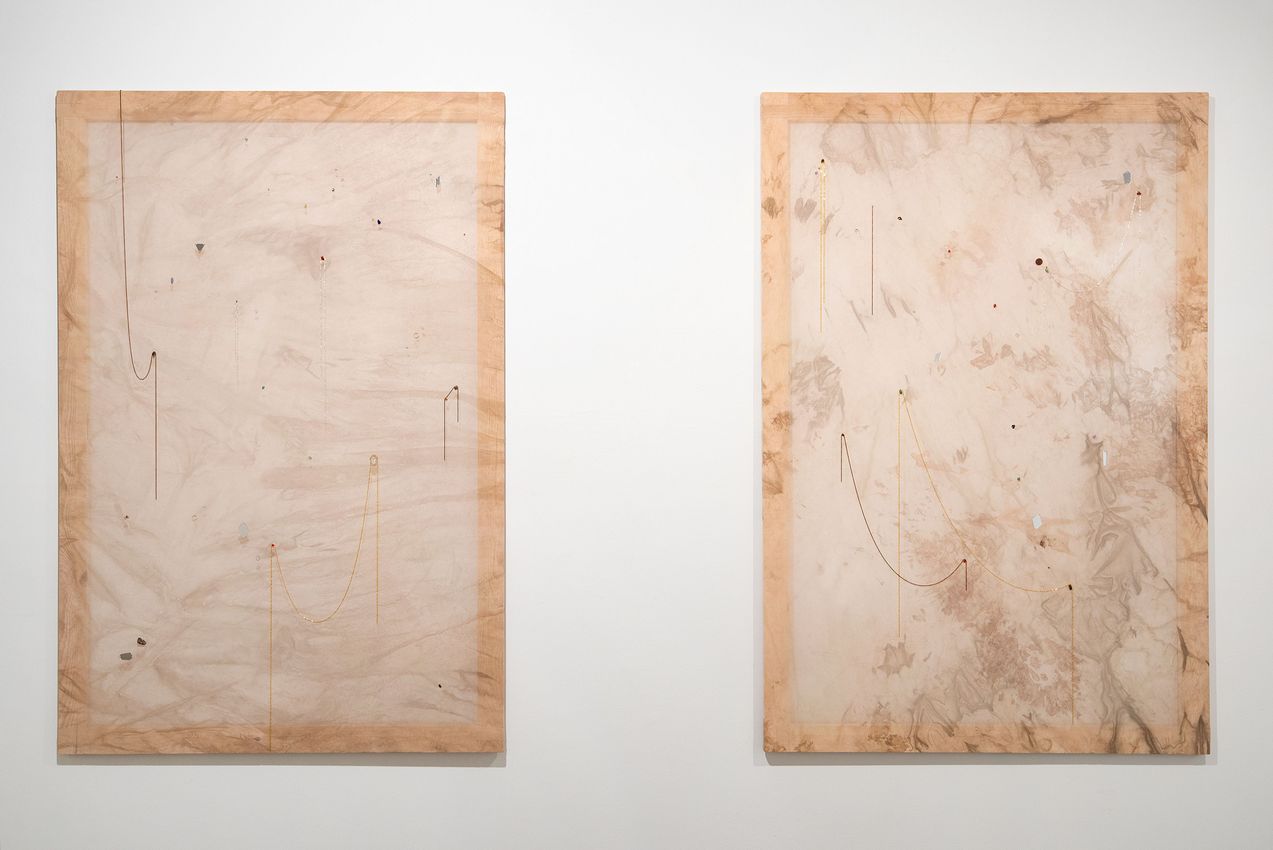
Starting from an obsession with collecting materials and their subsequent classification process, Julia Llerena has been building an archive of everyday life for a decade. In her studio-workshop, broken materials, orphan pieces, waste and discards from third parties are transformed into languages, given structures or converted into new objects of the present. ‘From the accumulation [of the past] memory is built and memories are born,’ says the artist. Likewise, the two bodies of work that inhabit the gallery space, Reverberación del verbo and Debordar al centro de la noche, are the echoes of the past, or pasts, that the artist re-materialises, with a different form and tessitura.
In Julia Llerena’s practice, the residues of the past are tools at the service of the word, they serve the transcription and the creation of poetic images. This exhibition borrows the title from a verse from the Uruguayan writer Ida Vitale’s poem, ‘Translate’ (1). Poetry carries the power of the word, a combination of words translates into a powerful image, it provokes an emotion,’ according to Llerena. With that conviction, the verses of Vitale, Maurice Blanchot and Chantal Maillard populate the works exhibited in the space. Here Julia Llerena strips the words of their rationality and gives them a physical dimension, with relief and folds, roughness and shine.
Dualities are a constant in Julia Llerena’s practice and as the visitor enters the exhibition they can discern between what is perceived and what is real. The fabrics are not completely black, the light gauzes appear as dense as marble and the textiles are decorated with an array of chains, mirrors, jewellry crystals or pieces of old chandeliers. The surface is both in front and behind the work, fulfilling the double function of canvas and wall. Here time doubles on itself, it is no longer linear: the past and the present occupy the same physical plane, that of the dual surface of the works.
According to Roland Barthes, text means fabric. A fabric behind which the meaning (truth) is found, more or less hidden, and where we accentuate the generative idea that the text is produced, is worked through a perpetual interweaving, in which the subject is lost and undoes immersed in it (2).
The exhibition ‘Overflow into the centre of the night’ is the translation of a series of notes and personal experiences of the artist, a place where dreams, doubts, and fears are born. As usual in Julia Llerena’s practice, the message is free, it is not read, the memory must be intuited and felt.
1. ‘Translate’ by Ida Vitale, ‘The Writing of Disaster’ by Maurice Blanchot, ‘There is no such thing as infinity’ (Killing Plato) and ‘The Wound on the Tongue’ by Chantal Maillard. 2. Extract from a text by Raquel G. Ibáñez about the practice of Julia Llerena (May 2021), reference to Roland Barthes (The pleasure of the text and inaugural lesson 1973).

A respected voice in contemporary art discourse.
Focusing on ambitious storytelling and insightful art-world commentary. Ocula Magazine publishes in-depth interviews, critical essays and timely analysis on the artists, exhibitions and ideas driving the global art world.
Learn more about Ocula Magazine
Showcasing the best of the art world.
Ocula partners with galleries from around the world to highlight their artists, artworks and exhibitions. Gallery membership is by application and invitation, with each member vetted by an independent panel.
Learn more about Ocula Membership

Specialises in the sale of major artworks.
Led by a team with deep ties to the world’s leading auction houses, galleries and collectors. Ocula’s advisory team offers bespoke services to high-net-worth clients from around the world who are looking to acquire the best of contemporary and modern art.
Learn more about our team and services