Press Release

In the era of the anthropocene, change stands as the sole constant. There is an undeniably human aspect to our desire for stability in our surroundings.When faced with external forces threatening to disrupt the status quo, we are driven to question and yearn for a return to familiar realities.

Shifting Sands Still, delves into the diverse approaches artists employ to navigate environmental changes. From preserving fleeting spaces to constructing new ones, they navigate the delicate balance between nature and urbanisation. Yet, amidst this group of artists, there is a shared longing for betterment.

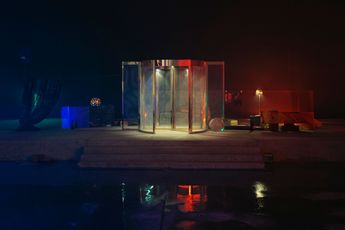
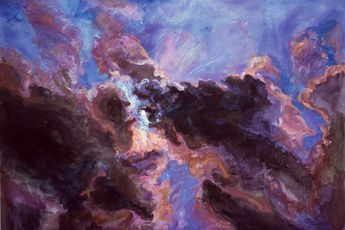
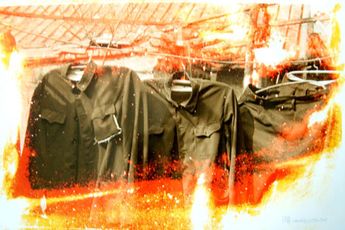
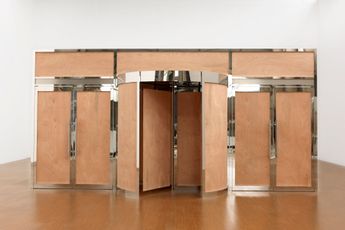
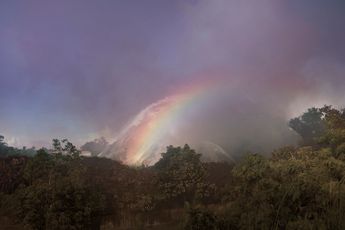
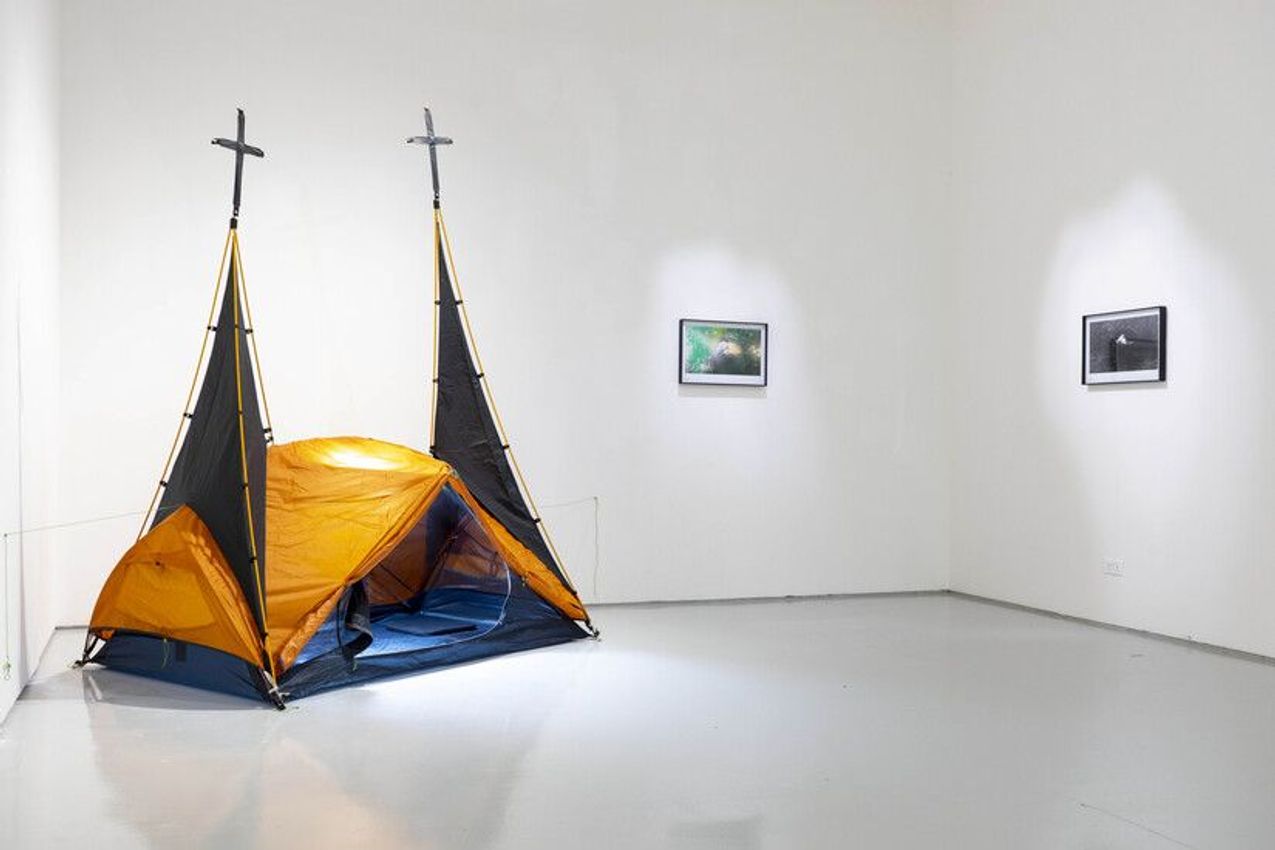
The experience of ‘新村’ (New Villages), characterised by the modernization process involving the demolition and displacement of low-income neighbourhoods, has been a significant influence on the work of many artists. Birdhead captures the vanishing aspects of their childhood town through spontaneous, impulsive snapshots, while Liu Weijian and Chen Wei chase scenes from an abandoned city relegated to memories, through paint and elaborately staged photographs. Wang Youshen finds himself ensnared in a tragic cycle of eviction due to gentrification, his fragmentary documentation reflecting the short-lived nature of his tenancies. These artists underscore the significance of memory in shaping a space’s identity and the erasure that accompanies urbanisation. Robert Zhao offers a reprieve from anthropocentrism by highlighting the non-human casualties of urbanisation. A discarded garbage bin amidst a jungle transforms into the core of a burgeoning ecosystem, serving as a vital water source for its new inhabitants. Contrasted against this is a colony of displaced bats in a foreign land, their original habitat disrupted by deforestation. The human drive to mould the world to fit our desires emerges as both a destructive force and a minor obstacle that nature will inevitably overcome. Xu Zhen explores the concept of space-making on a more abstract level. He challenges the notion of spirituality as an inherent quality anchored to physical location, by asserting our ability to consecrate mass-produced spaces. If the loss of spatial identity is inevitable, could these unconventional paths offer salvation?

Read More

Artists Exhibiting

Also Exhibiting at ShanghART

About the Gallery

When ShanghArt Gallery opened its doors in Shanghai in 1996, it was one of the first contemporary art galleries in China. Today, the gallery operates from two spaces in the city (West Bund and Putuo District), with additional locations in Beijing and Singapore.

View Gallery Profile
Address
9 Lock Road, 02–22
Gillman Barracks
Singapore
Singapore
Opening Hours
Wednesday – Sunday
11am – 7pm
Closed on Monday, Tuesday and Public Holidays
(1)
Singapore 9 Lock Road, 02–22, Gillman Barracks
ShanghART
9 Lock Road, 02–22, Gillman Barracks, Singapore, Singapore

Opening hours
Wednesday – Sunday
11am – 7pm
Closed on Monday, Tuesday and Public Holidays
The art world in focus