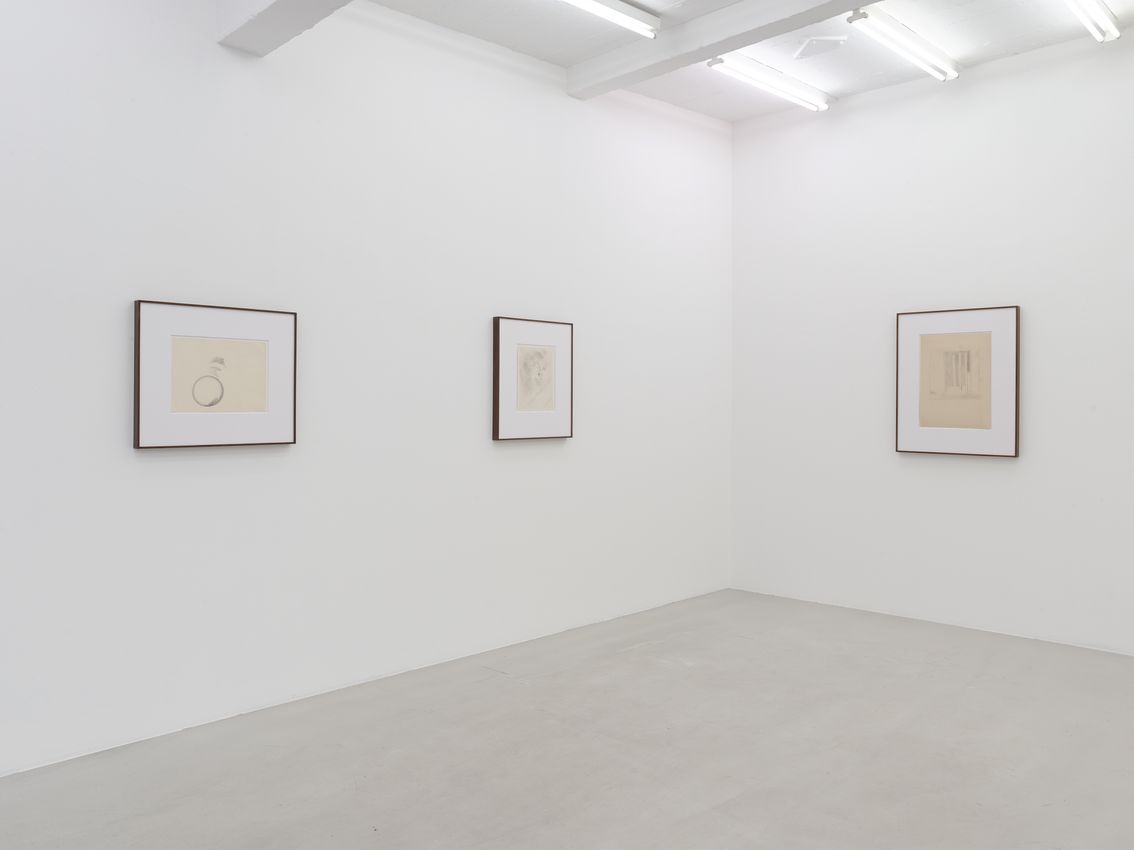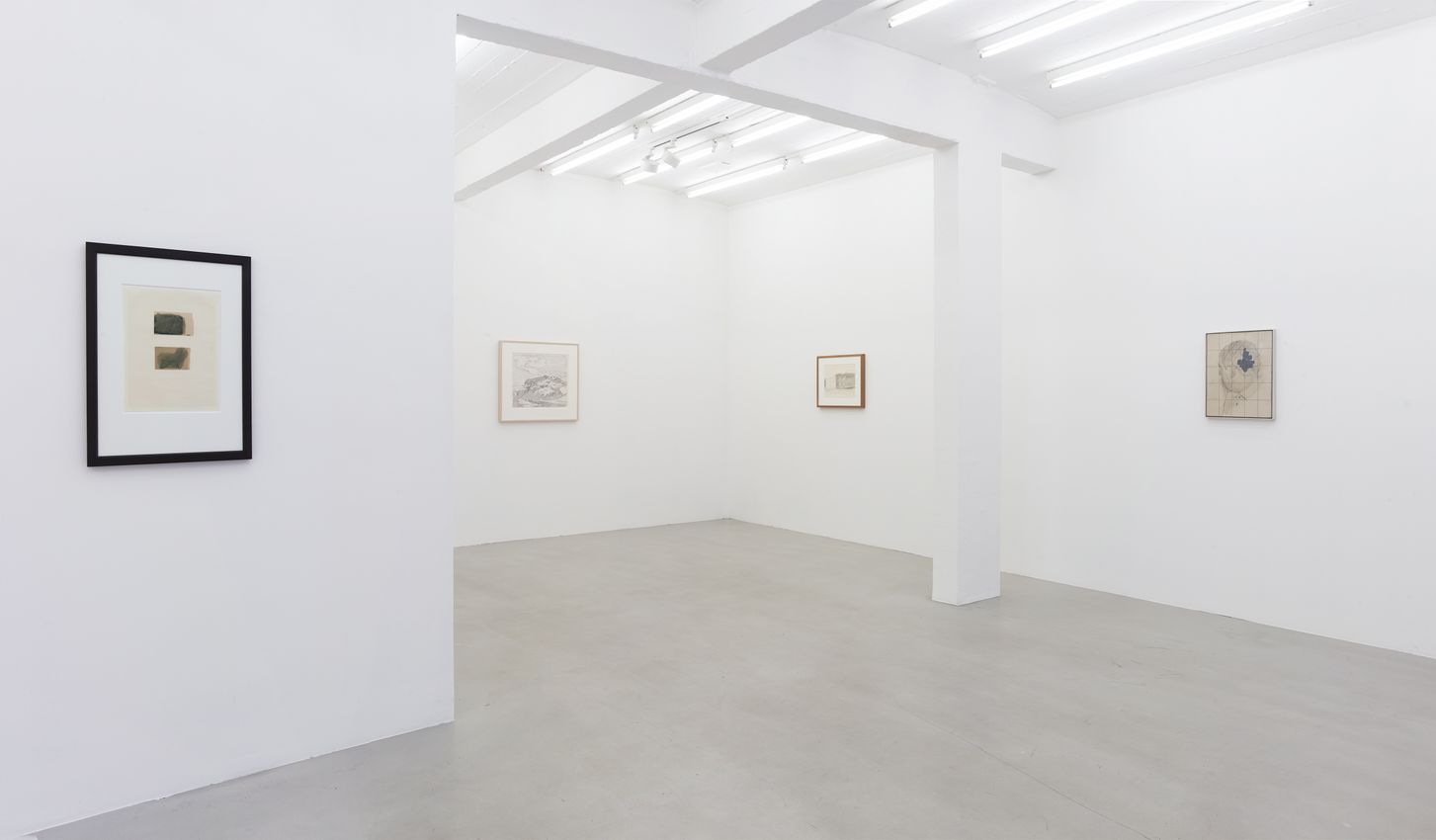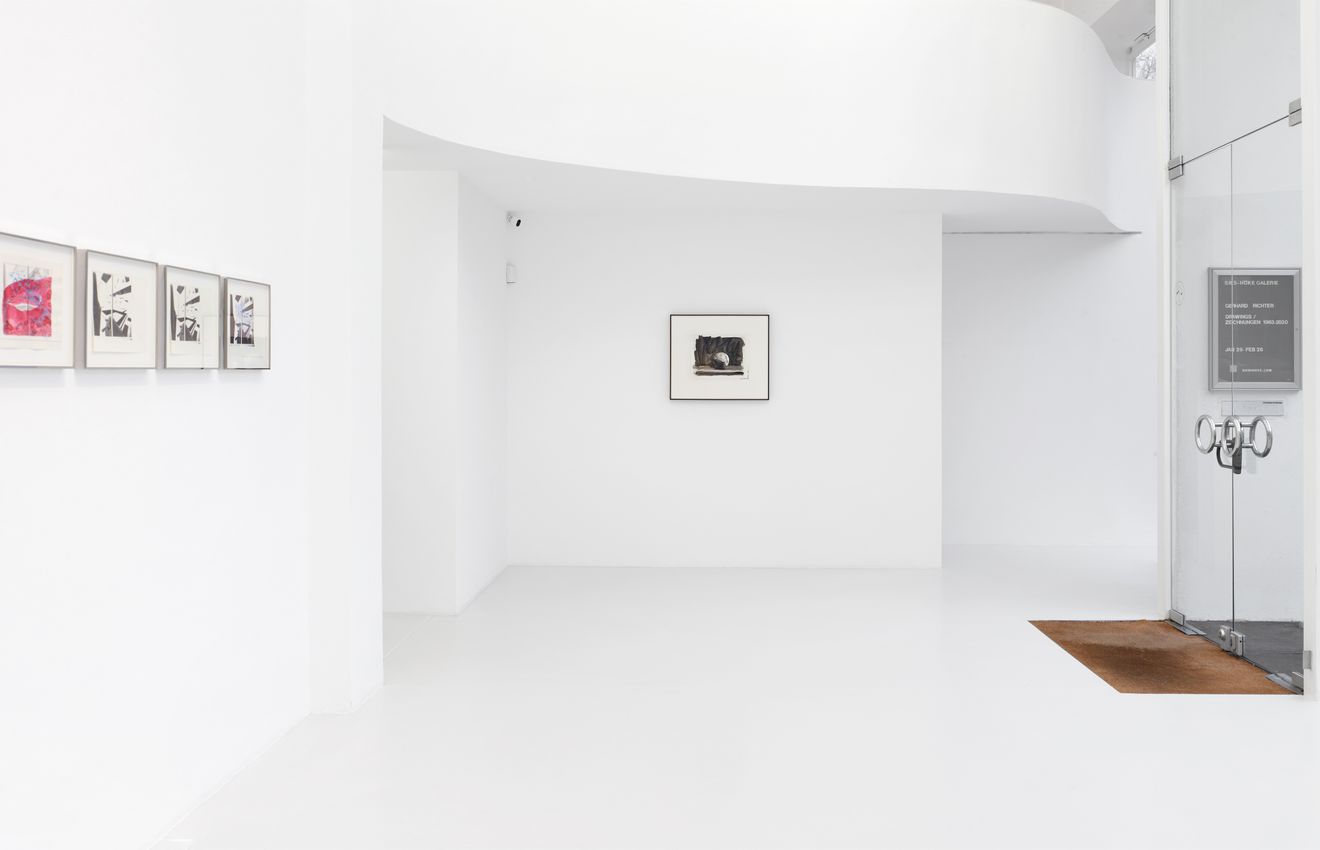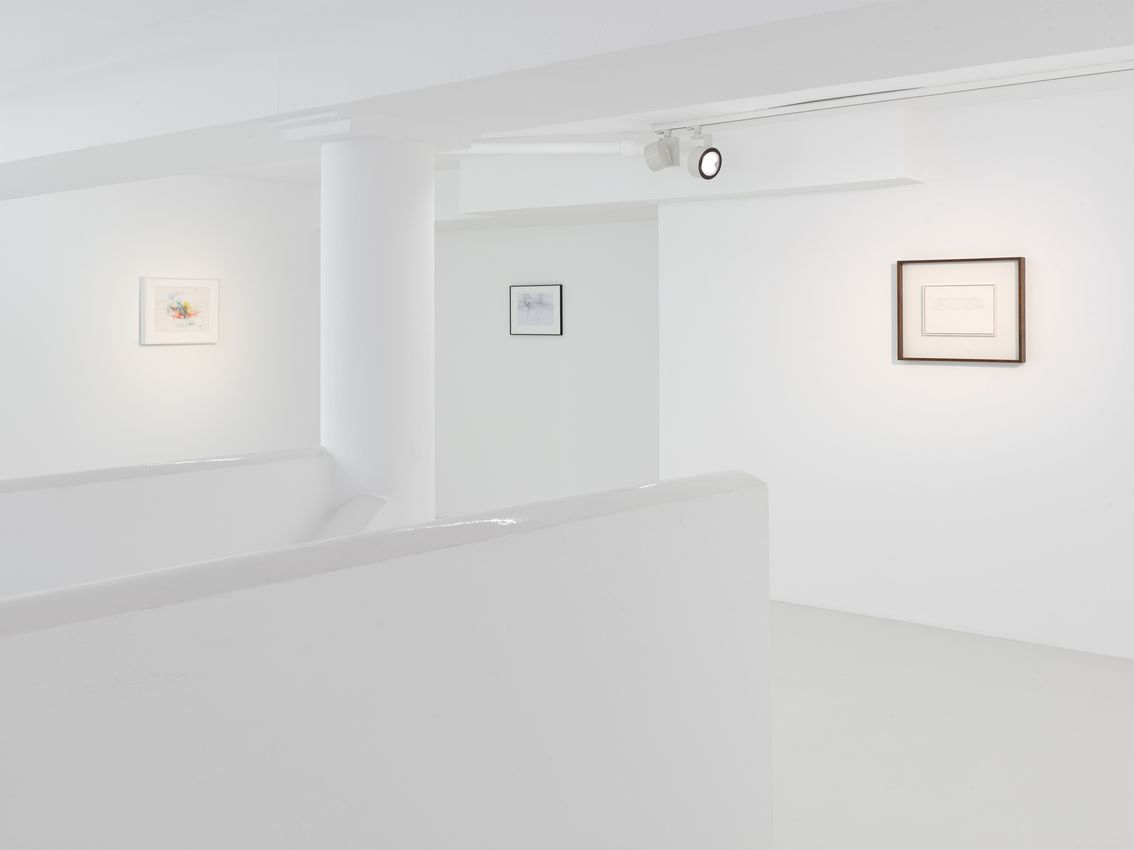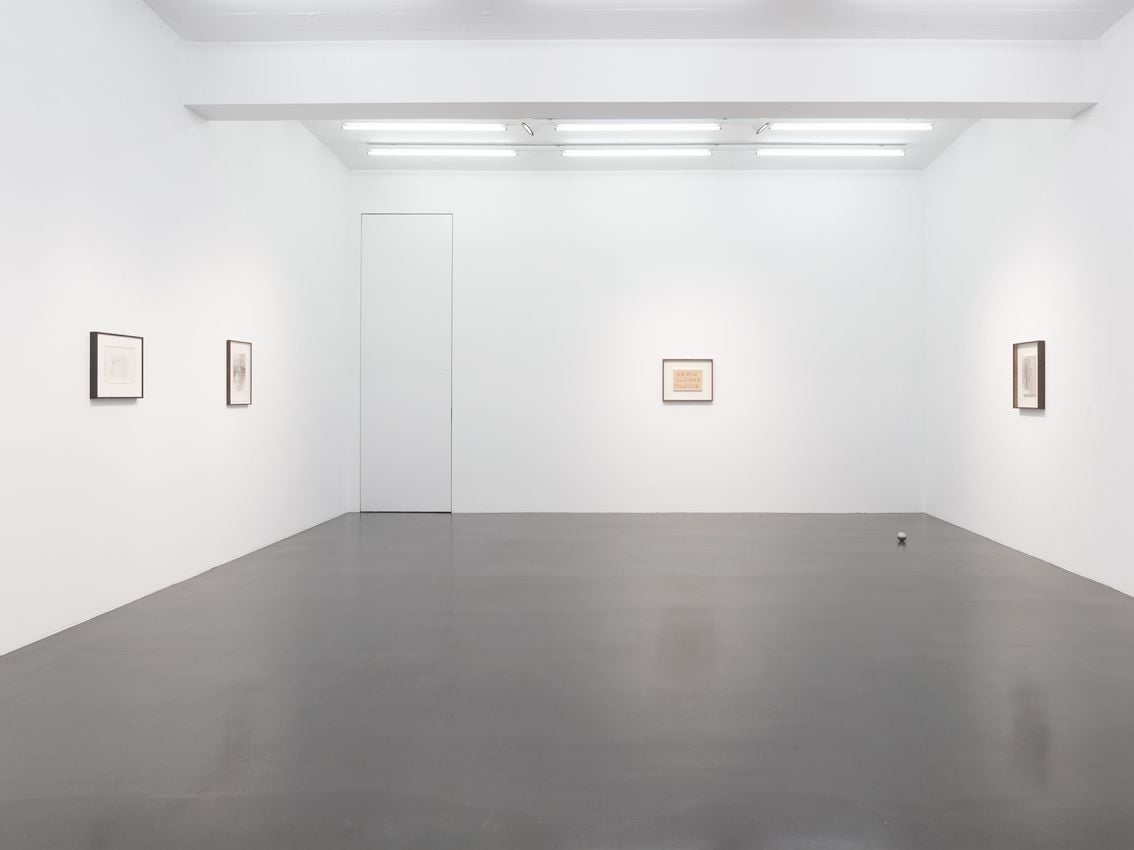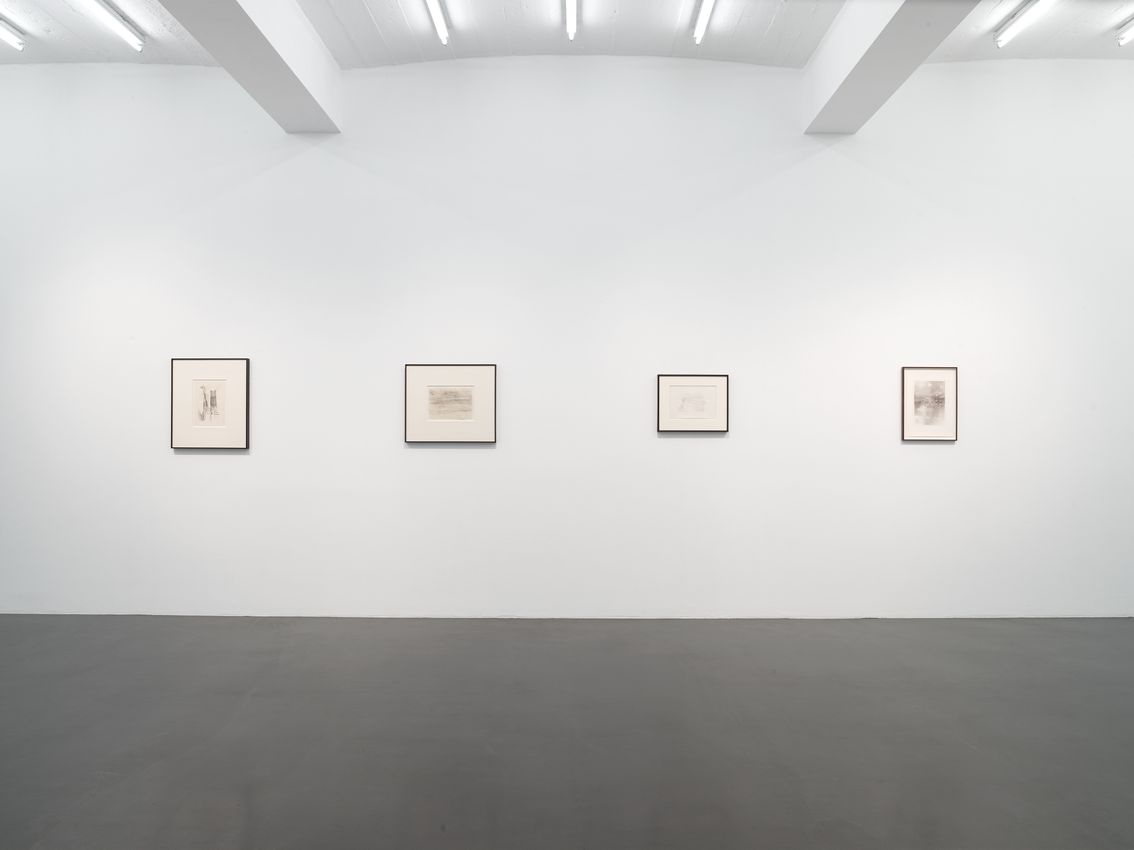



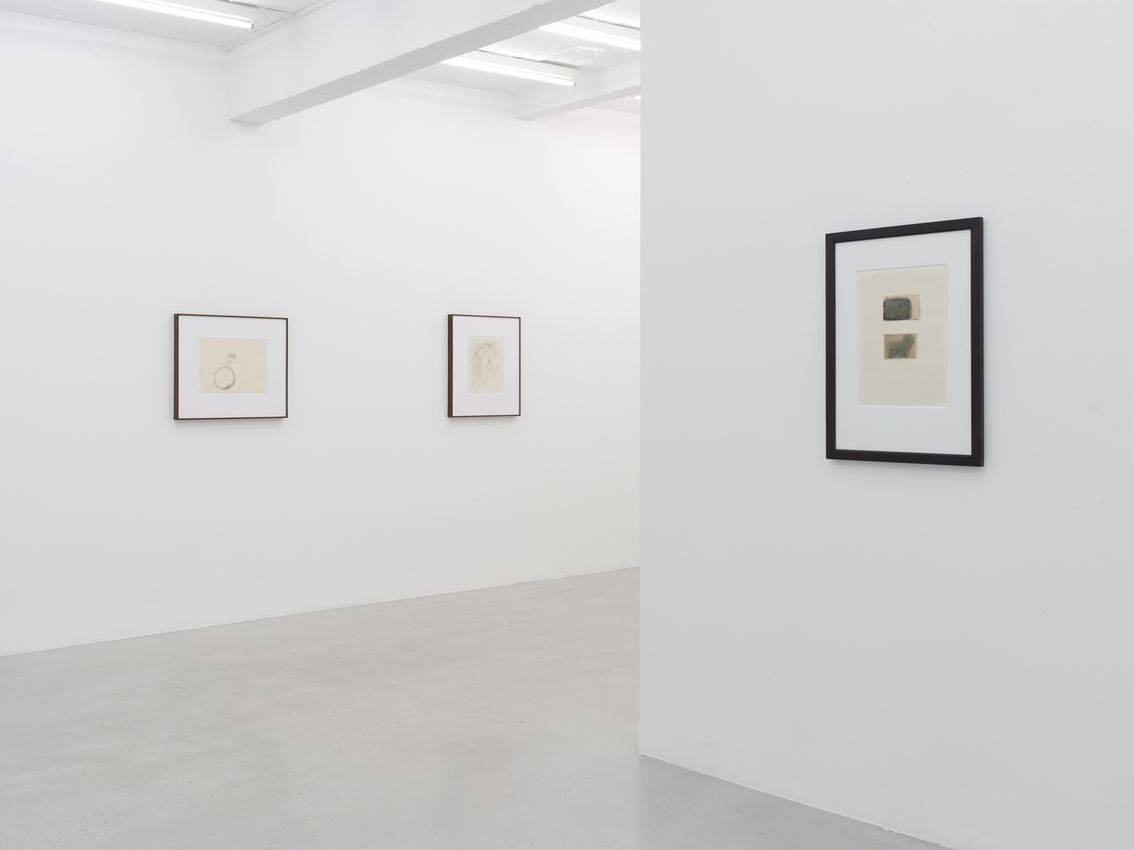
On the occasion of Gerhard Richter’s 90th birthday on February 9, 2022, Sies + Höke presents a monographic exhibition of the artist’s drawings, comprising around 60 works created over seven decades. The exhibition will be accompanied by an extensive catalogue with a text by Dieter Schwarz, who edited the catalogue raisonné of Gerhard Richter’s drawings.
Gerhard Richter’s work is characterised by his enduring search for a new and unparalleled artistic approach. The tension between figuration and abstraction, meaning and banality, that defines his painterly work is just as evident in his diverse drawings. Here, too, Richter works against pictorial norms, while the restrained approach towards colour in most of his drawings causes a reduction to the essentials. In this way, Richter used drawing as a space for trying out ideas and experiments over many decades. The resulting works exemplify the artist’s process of pictorial invention across media.
Spanning works from 1963 to 2020, the exhibition presents a spectrum of Gerhard Richter’s drawings, which has not been exhibited in comparable scope and richness until now. The earliest work in the exhibition, Ohne Titel (Stuhl) [Untitled (Chair)], dates back to 1963 and is one of the very first works in Richter’s official oeuvre. He used solvents on found visual material to smudge the representation in a painterly way – already at this early stage, he anticipated many of his later methods of image production. Similarly experimental is an untitled work from 1967 in which Richter attached a pencil to a manipulated drill, thus stepping back from his own role as an artist and ceding the execution of the drawing to a mechanical process. The anti-artistic intention of the Fluxus Movement is as evident here as the critical potential of Duchamp (cf. Schwarz).
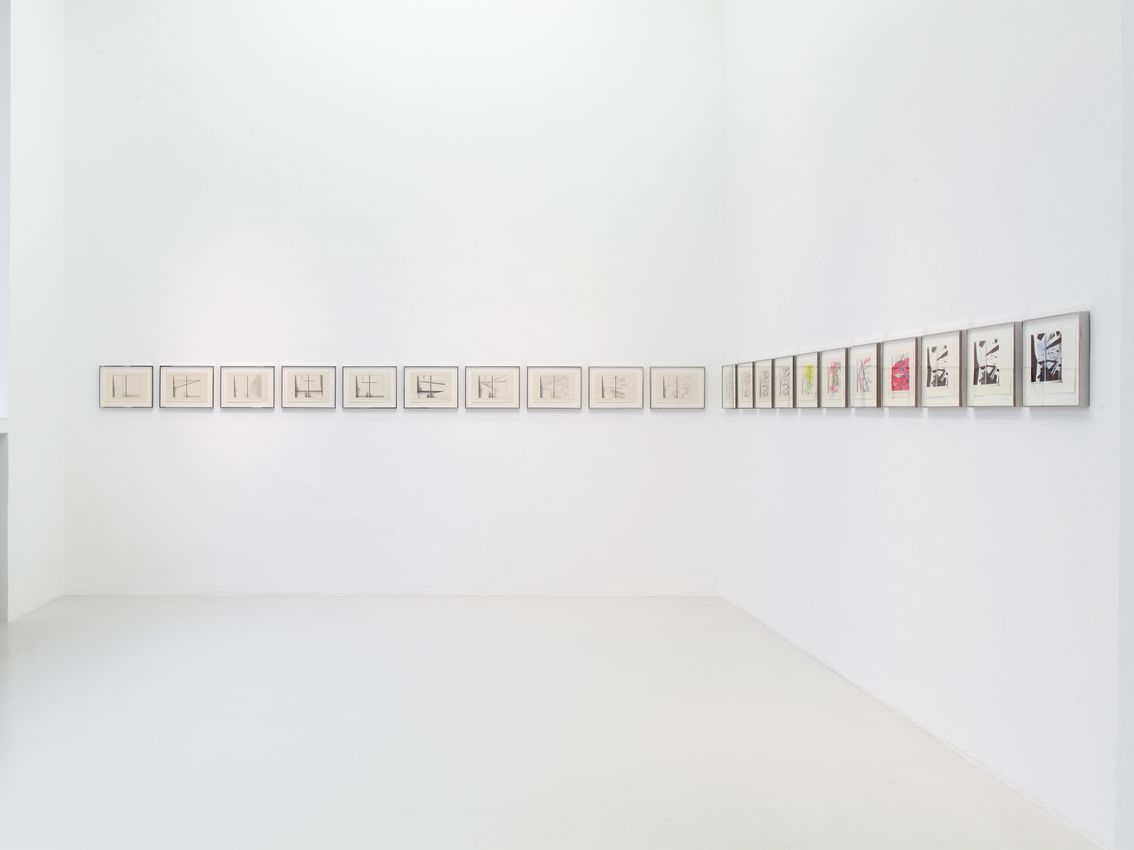
Amongst the exhibition’s most spectacular works is a previously unknown group of 21 individually signed drawings from 1986, which radically illustrate Richter’s working method regarding large-format abstract paintings. With one exception from the same year, these are the only studies of this kind that the artist made accessible to the public (cf. Schwarz). The drawings can be subdivided into several series, each of which builds upon a xeroxed template. Richter refined the layout step by step using pencils, oil pastels, and watercolours. He then transferred the final result onto the monumental 320 x 400 cm painting SDI (1986), only to make it partially unrecognisable again with his squeegee technique, thus distancing himself even further from subjective image creation.
The principle of easing and overpainting found in Richter’s abstract paintings is mirrored by his drawings from the 1990s, some of which were structurally reworked with an eraser. Throughout the many decades of his practice, there were periods when drawing was a more active component of Richter’s work, and others when it was less so. Using pencil or ink – on rare occasions, colour – Richter created landscapes, portraits, still lifes, and abstractions on paper that convey completely different formulas for drawing. After Richter decided to give up painting for good in 2017, he soon started drawing more – Schwarz describes it as a conscious decision to replace painting with drawing. Since then, Richter has increasingly used oil pastels and larger paper formats. Two works from 2020 – one monochrome in graphite, the other intensely colourful and multi- layered – convey something of an analogy to the abstract paintings and, at once, the breaking of abstraction necessary for Richter.
“The selection of Richter’s drawings brought together here spans seven decades, and in the end one might very well ask whether such diverse works yield any coherent whole. (...) Throughout his oeuvre, Richter made much effort to avoid getting boxed into any contemporary categories, and therein lies one of the great qualities of his oeuvre. Instead of explicitness, he relies on ambivalence, and not without reason, for he feels committed to tradition and at the same time follows a path that could be understood as a contradiction of it.” (Dieter Schwarz)
Gerhard Richter is a renowned German painter and one of the most influential contemporary artists of the 20th and 21st centuries, celebrated for both his abstract paintings and photorealistic works. Over a career spanning more than six decades, Richter has explored how photography and painting borrow from, contradict, and reinvent each other, making him a key figure in postwar and contemporary art


Sies + Höke is one of the leading contemporary art galleries in Germany. The gallery represents over 25 established and emerging artists from Europe, the United States and Latin America. In addition to the gallery program, Sies + Höke has developed a distinguished legacy over the years by showcasing well-researched historical exhibitions.

A respected voice in contemporary art discourse.
Focusing on ambitious storytelling and insightful art-world commentary. Ocula Magazine publishes in-depth interviews, critical essays and timely analysis on the artists, exhibitions and ideas driving the global art world.
Learn more about Ocula Magazine
Showcasing the best of the art world.
Ocula partners with galleries from around the world to highlight their artists, artworks and exhibitions. Gallery membership is by application and invitation, with each member vetted by an independent panel.
Learn more about Ocula Membership

Specialises in the sale of major artworks.
Led by a team with deep ties to the world’s leading auction houses, galleries and collectors. Ocula’s advisory team offers bespoke services to high-net-worth clients from around the world who are looking to acquire the best of contemporary and modern art.
Learn more about our team and services