





GLENN LIGON
b. 1960, United StatesGlenn Ligon is a pioneering American conceptual artist whose powerful works across text, painting, neon, print, and installation explore race, language, identity, and American history through the lens of contemporary art.
Early Years
Born in the Bronx, New York, in 1960, Glenn Ligon was raised by a single mother who emphasised education. He attended the prestigious Walden School and later earned a BA from Wesleyan University in 1982. While initially pursuing literature, he transitioned into visual art in the mid-1980s, training at the Whitney Museum Independent Study Program—an incubator for critical, politically engaged artists. Ligon continues to live and work in New York City.
Artworks
Glenn Ligon’s contemporary artworks engage with the politics of identity, race, and language, transforming literary and historical references into visually charged art. His multidisciplinary practice incorporates painting, print, neon, installation, and video to explore how Black identity is framed and fractured in American culture.
Language and Identity
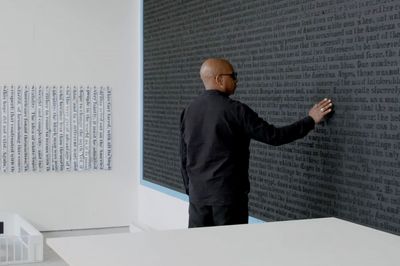
Ligon’s breakthrough came with his text-based paintings in the late 1980s and early 1990s, which feature stencilled passages from African American writers including James Baldwin, Zora Neale Hurston, and Ralph Ellison. In works like Untitled (I Am a Man) (1988), Ligon borrowed the slogan from striking Memphis sanitation workers, rendering the statement in thick, black oil stick across a stark white surface. The piece not only nods to civil rights protest imagery but also interrogates how language constructs subjectivity.
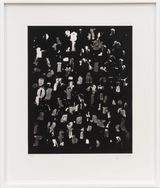
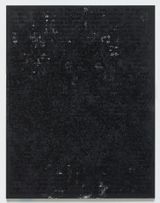
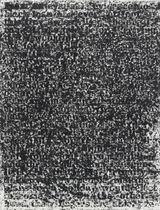
Later paintings, such as Untitled (Stranger in the Village #11) (1998), use Baldwin’s reflections on race in Europe to create heavily layered surfaces where letters blur into abstraction. By repeating text to the point of visual collapse, Ligon exposes the instability of meaning and the strain of being seen—or unseen—through the lens of racial difference. These contemporary artworks are both legible and illegible, beautiful and uncomfortable, inviting the viewer into a space of contemplation and disorientation.
Neon and Double Entendre
In the early 2000s, Ligon began working with neon, a medium associated with commercial signage and popular culture. His neon artworks are often based on found language, manipulated to unsettle meaning. Warm Broad Glow (2005), for example, spells out “Negro Sunshine”, a phrase borrowed from Gertrude Stein, in white neon against a black painted background. The juxtaposition of tone and form plays with expectations of brightness and visibility while alluding to the loaded history of racialised language.
Many of Ligon’s neon works are deliberately altered—painted over, reversed, or partially obscured—emphasising the fragility of representation. Works like Double America (2012), which displays the word “America” mirrored and flipped, speak to the nation’s dualities: visibility versus invisibility, inclusion versus exclusion. These artworks destabilise the viewer’s gaze, reinforcing Ligon’s wider practice of interrogating how Black bodies are seen in contemporary art and culture.
American History and Repetition
Ligon’s work is deeply embedded in the historical trauma and complexity of American society. His series Runaways (1993), for instance, consists of lithographs designed to mimic 19th-century fugitive slave advertisements. Each print features a description of Ligon written by friends and colleagues, transforming the artist into a fugitive through the lens of collective memory. These conceptual artworks raise questions around freedom, authorship, and the persistent legacies of slavery.
The triptych neon work A Small Band (2015), displayed during the Venice Biennale, consists of the words “blues blood bruise”—a phrase taken from the testimony of Daniel Hamm, a member of the Harlem Six beaten by police in 1964. By presenting these words in minimalist form, Ligon compresses complex racial histories into sparse but emotionally resonant statements. Repetition and reduction become tools for distillation and critique.
Awards and Accolades
- American Academy of Arts and Letters Member (2021)
- Archives of American Art Medal (2017)
- United States Artists Fellowship, Los Angeles (2010)
- Skowhegan School of Painting & Sculpture, Skowhegan Medal for Painting, New York (2006)
- Academy Awards in Art, American Academy of Arts and Letters, New York (2006)
- Guggenheim Fellowship, New York (2003)
Exhibitions
Glenn Ligon has been the subject of both solo and group exhibitions at important institutions. A selection of important exhibitions are provided below.
Solo Exhibitions
- Glenn Ligon: All Over the Place, The Fitzwilliam Museum, Cambridge (2024)
- Des Paris__iens Noirs, Musée d’Orsay, Paris (2019)
- Glenn Ligon: Selections from the Marciano Collection, Marciano Art Foundation, Los Angeles (2019)
- Glenn Ligon: Call and Response, Camden Arts Centre, London (2014)
- America, Whitney Museum of American Art, New York. Travelled to Los Angeles County Museum of Art, Los Angeles; Modern Art Museum of Fort Worth, Fort Worth (2011)
- Glenn Ligon – Some Changes, The Power Plant Center for Contemporary Art, Toronto. Travelled to: Contemporary Art Museum Houston, Houston; The Andy Warhol Museum, Pittsburgh; Wexner Center for the Arts, Columbus; Morris and Helen Belkin Art Gallery, University of British Columbia, Vancouver; Mudam— Musée d’Art Moderne Grand-Duc Jean, Luxembourg (2005)
Group Exhibitions
- Edges of Ailey, Whitney Museum of American Art, New York (2024)
- This Morning, This Evening, So Soon: James Baldwin and the Voices of Queer Resistance, National Portrait Gallery, Washington D.C (2024)
- Going Dark: The Contemporary Figure at the Edge of Visibility, Solomon R. Guggenheim Museum, New York (2023)
- Afro-Atlantic Histories, National Gallery of Art, Washington, D.C (2022)
Website and Instagram
Glenn Ligon’s website can be found here, and Glenn Ligon’s Instagram can be found here.
Critical Reception
Glenn Ligon’s work has been widely discussed in publications including ArtReview, Ocula, The Financial Times, and The Guardian.
Ocula | 2025













Explore Glenn Ligon's Exhibitions



Glenn Ligon in Ocula Magazine








Explore and Follow Artists Shaping Contemporary Art
A respected voice in contemporary art discourse.
Focusing on ambitious storytelling and insightful art-world commentary. Ocula Magazine publishes in-depth interviews, critical essays and timely analysis on the artists, exhibitions and ideas driving the global art world.
Learn more about Ocula Magazine
Showcasing the best of the art world.
Ocula partners with galleries from around the world to highlight their artists, artworks and exhibitions. Gallery membership is by application and invitation, with each member vetted by an independent panel.
Learn more about Ocula Membership
Specialises in the sale of major artworks.
Led by a team with deep ties to the world’s leading auction houses, galleries and collectors. Ocula’s advisory team offers bespoke services to high-net-worth clients from around the world who are looking to acquire the best of contemporary and modern art.
Learn more about our team and services