





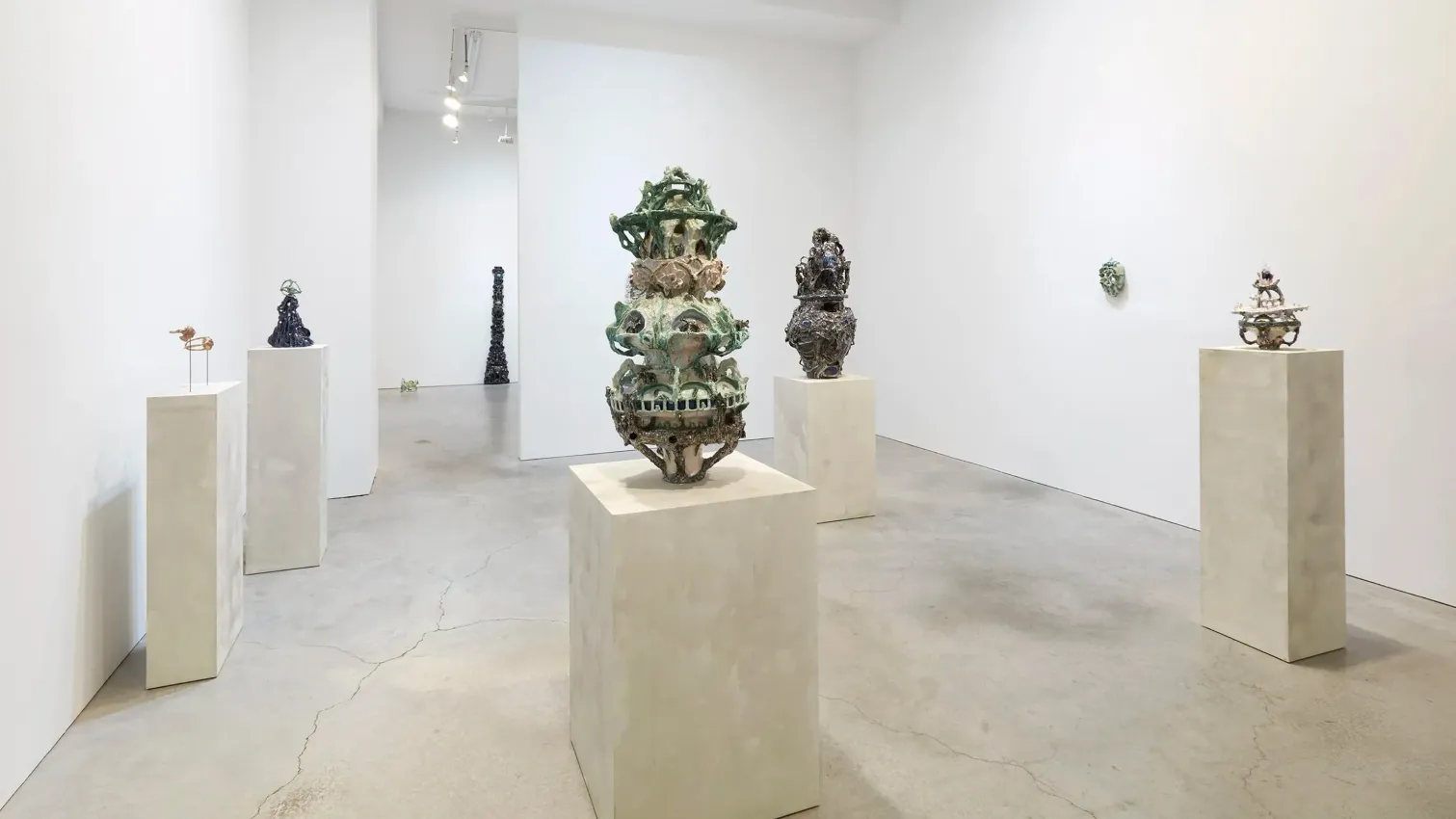
HEIDI LAU
b. 1987, ChinaHeidi Lau’s sculpture practice views clay as the ideal conduit to explore the malleability and materiality of time. Ranging in size from intimately-scaled figures to site-responsive installations, Lau’s ceramics trace the “landscape experience” often found in traditional Chinese paintings. Her hand-built formations of clay meld a zoomorphic sensibility with the totemic presence of ritual items and primordial monuments: stacked tiers evoke an architectural column or the spine of a massive creature, while various earthen surfaces of green, white, and blue glazing recall the likeness of overgrown ruins or coral structures. Drawing upon mythological, historical, and environmental source narratives, Lau’s work suggests anti-categorical, pluralistic imaginings of material and space, channeled through personal memory.
Vessels, for Lau, are a type of world-building and world-holding. Since 2020, Lau has worked on an ongoing body of sculptural figures influenced by mingqi—ancient Chinese burial goods that first came into prevalence during the Han Dynasty (206 BC–220 AD). Made with a combination of glazed clay, glass, and bronze, Lau’s vessels are a chimeric embodiment of mythic landscapes, funerary objects, and spiritual relics. They elude a simplistic appeal to an intangible—and perhaps imagined—natural order, but rather capture the cyclical, resonant conditions of growth, decay, grief, and remembrance.
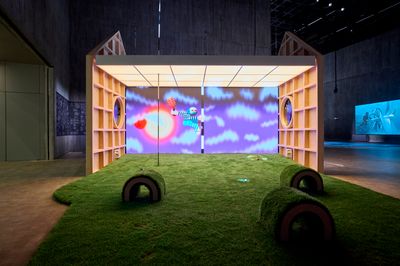
Heidi Lau grew up in Macau and lives and works in New York. She is one of six artists shortlisted for the M+ Museum’s Sigg Prize 2025, and her installation Pavilion Procession is currently featured in the museum’s group exhibition alongside the other finalists.





Explore and Follow Artists Shaping Contemporary Art
A respected voice in contemporary art discourse.
Focusing on ambitious storytelling and insightful art-world commentary. Ocula Magazine publishes in-depth interviews, critical essays and timely analysis on the artists, exhibitions and ideas driving the global art world.
Learn more about Ocula Magazine
Showcasing the best of the art world.
Ocula partners with galleries from around the world to highlight their artists, artworks and exhibitions. Gallery membership is by application and invitation, with each member vetted by an independent panel.
Learn more about Ocula Membership
Specialises in the sale of major artworks.
Led by a team with deep ties to the world’s leading auction houses, galleries and collectors. Ocula’s advisory team offers bespoke services to high-net-worth clients from around the world who are looking to acquire the best of contemporary and modern art.
Learn more about our team and services