





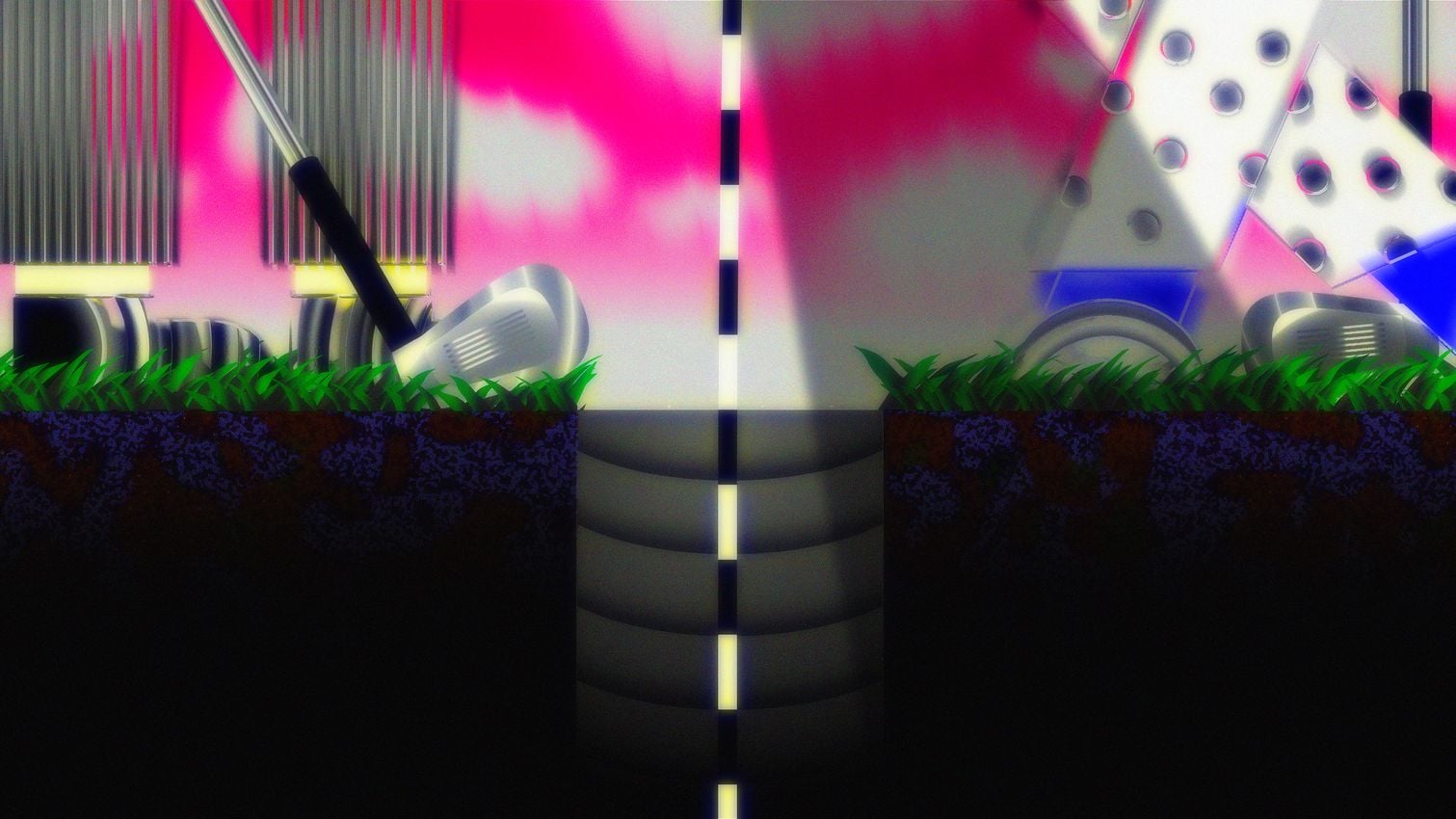
Meet Wong Ping and Heidi Lau, Joint Winners of the 2025 Sigg Prize
The artists were picked for their ‘emotionally resonant’ and ‘mesmerising’ work from the youngest group of finalists to date. Save to My OculaFor the first time since its inception, the Sigg Prize has been awarded to two recipients: Hong Kong-based artist Wong Ping (b. 1984) and Heidi Lau (b. 1987), who works in both New York and Macau, where she was born.
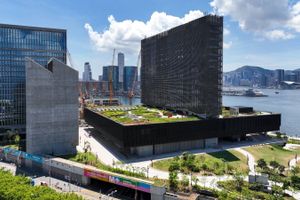
First awarded by Hong Kong’s M+ museum in 2020, the biennial prize is of the most significant awards recognising artistic practices from the Greater China region and its diasporas, with Wong and Lau each receiving 300,000 HKD. Each cycle, an international jury nominates a shortlist of artists in recognition of the development of their creative practice over the preceding two years. This year’s shortlist, which also includes Bi Rongrong (b. 1982), Ho Rui An (b. 1990), Hsu Chia-Wei (b. 1983), and Pan Daijing (b. 1991), forms the youngest group of finalists to date, with the group presenting their work at M+ until 4 January 2026.
Ocula speaks to the winning artists about their Sigg-nominated works, inspiration and creative practices.
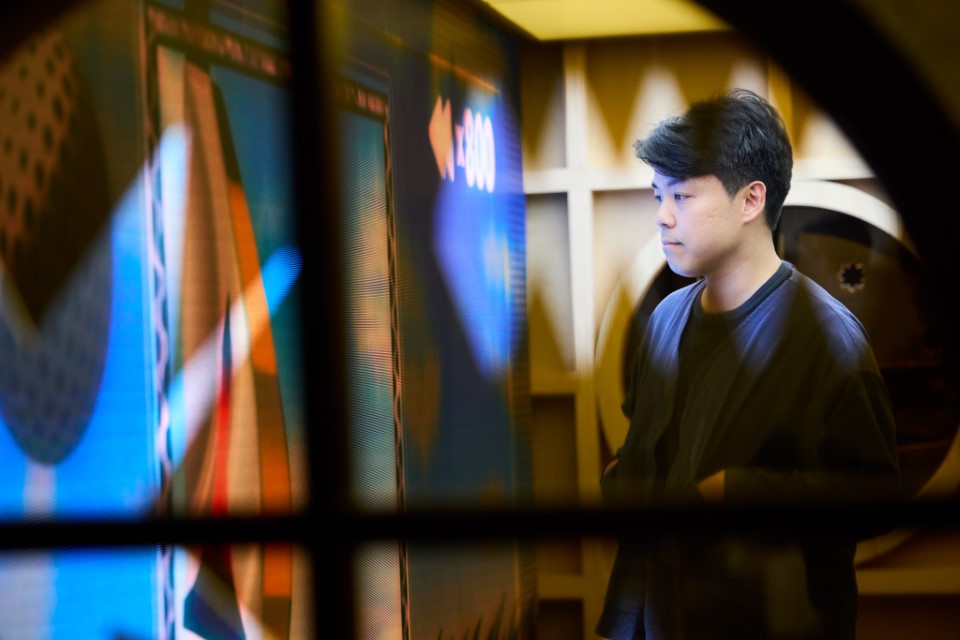
Wong Ping Likes to Ask Questions
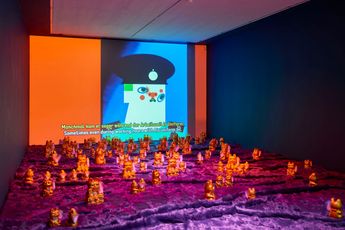
Wong’s winning work Debts in the Wind (2025), described by the jury as a ‘sophisticated blend of mesmerising visuals and dark humour that informs his acute observation and sensitivity to mundane life’, is a large-scale video installation staged within a semi-open, luminous wooden structure with two circular windows. The hut houses a wide-format screen and a five-metre-tall flagpole that pierces the roof, snapping violently at its tip (Wong describes this as ‘almost an act of protest’). Artificial turf extends from the structure into the surrounding space, evoking the contours of a miniature golf course.
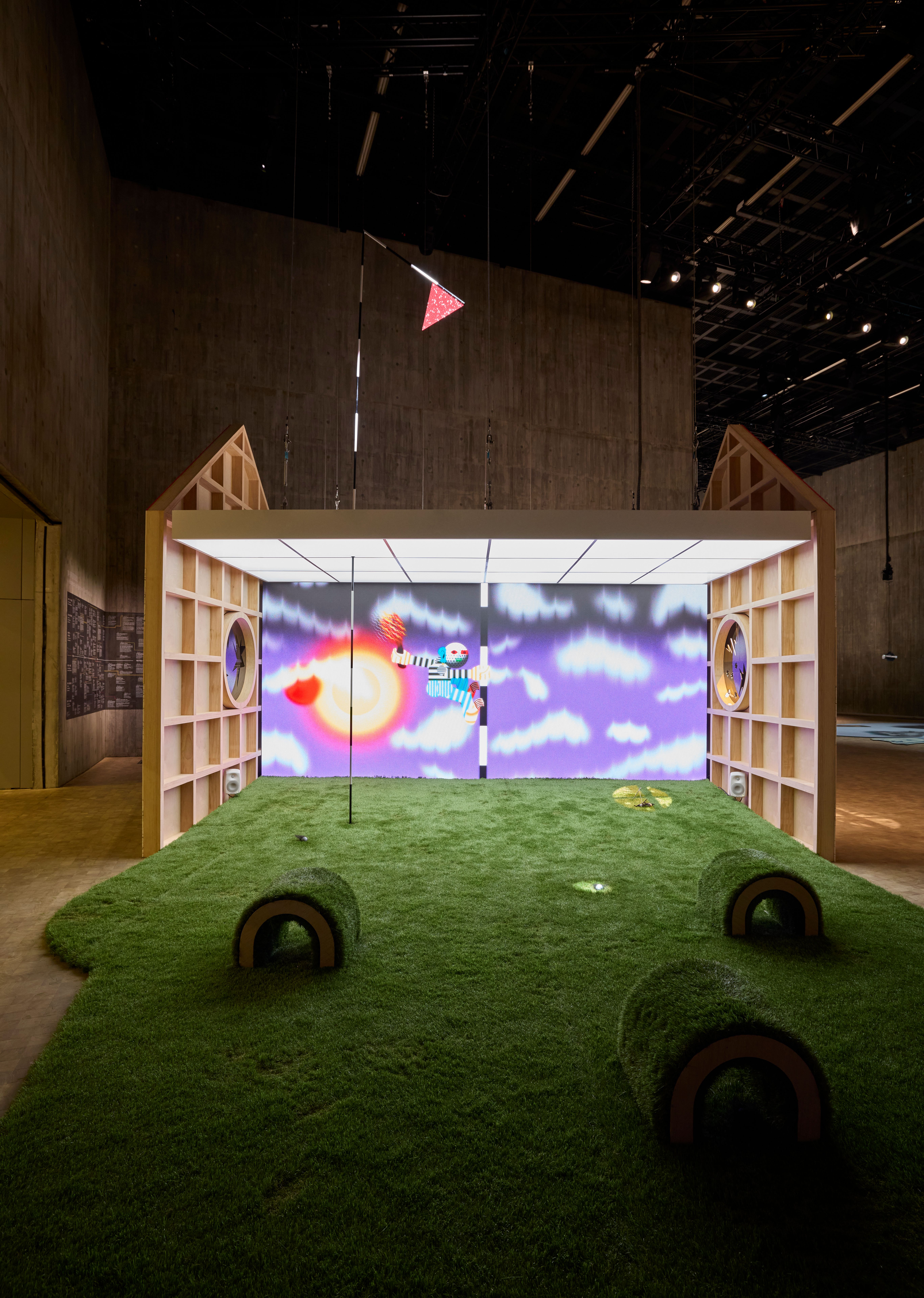
Standing before this ambitious installation, it’s difficult to imagine that it was only a decade ago that Wong began making mischievous short animations and posting them online. His earlier works often revolve around narratives saturated with vulgarity and sexual innuendo: a voyeur in a sweltering subdivided flat (Stop Peeping, 2014); an impotent husband observing his unsatisfied wife having an affair with a policeman (Jungle of Desire, 2015), or a man attempting to re-enter his mother’s womb (Who’s the Daddy, 2017). Rendered in fluorescent, volumetric imagery and propelled by absurdist storytelling, these works expose social anxieties and deeply private desires with disarming directness.
Since then, Wong’s works have expanded in duration, conceptual ambition, and material form. The 23-minute video within Debts in the Wind resists linear narration, composed of cult-film-like transitions, lo-fi electronic sound, and geometric forms that translate voiceovers into visuals. Ten narrators—among them a security guard, a resident living at the bottom of a deep golf hole, a robot vacuum cleaner, and a mischievous old tree—are each voiced by Wong in his distinct deadpan tone.
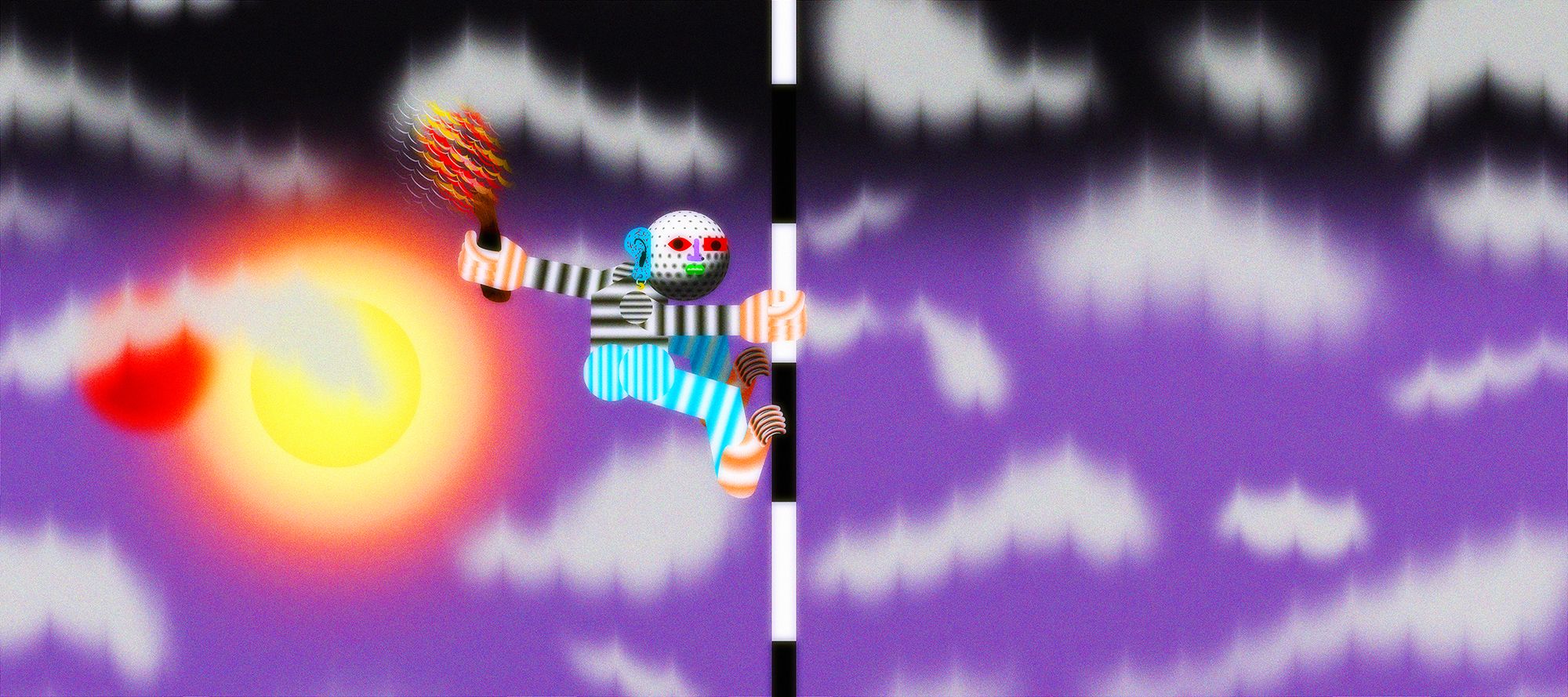
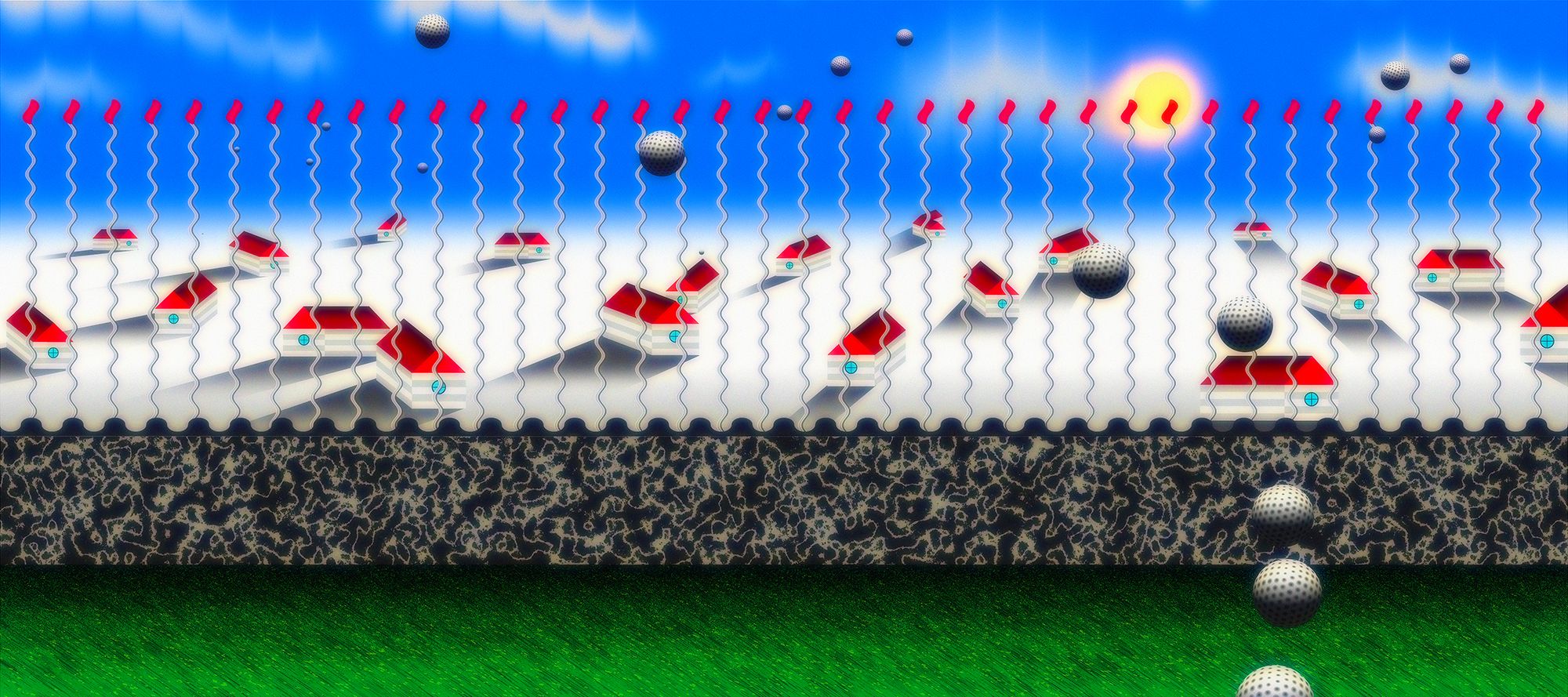
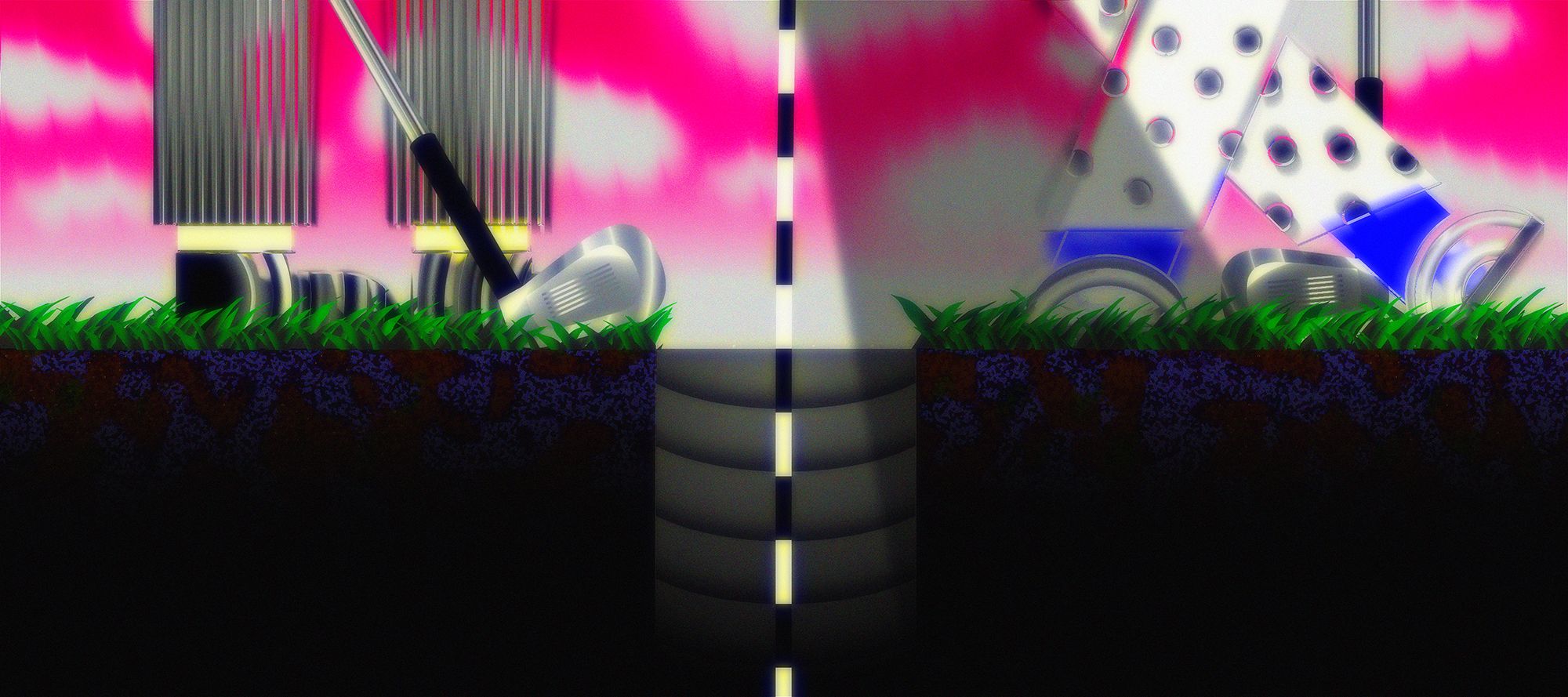
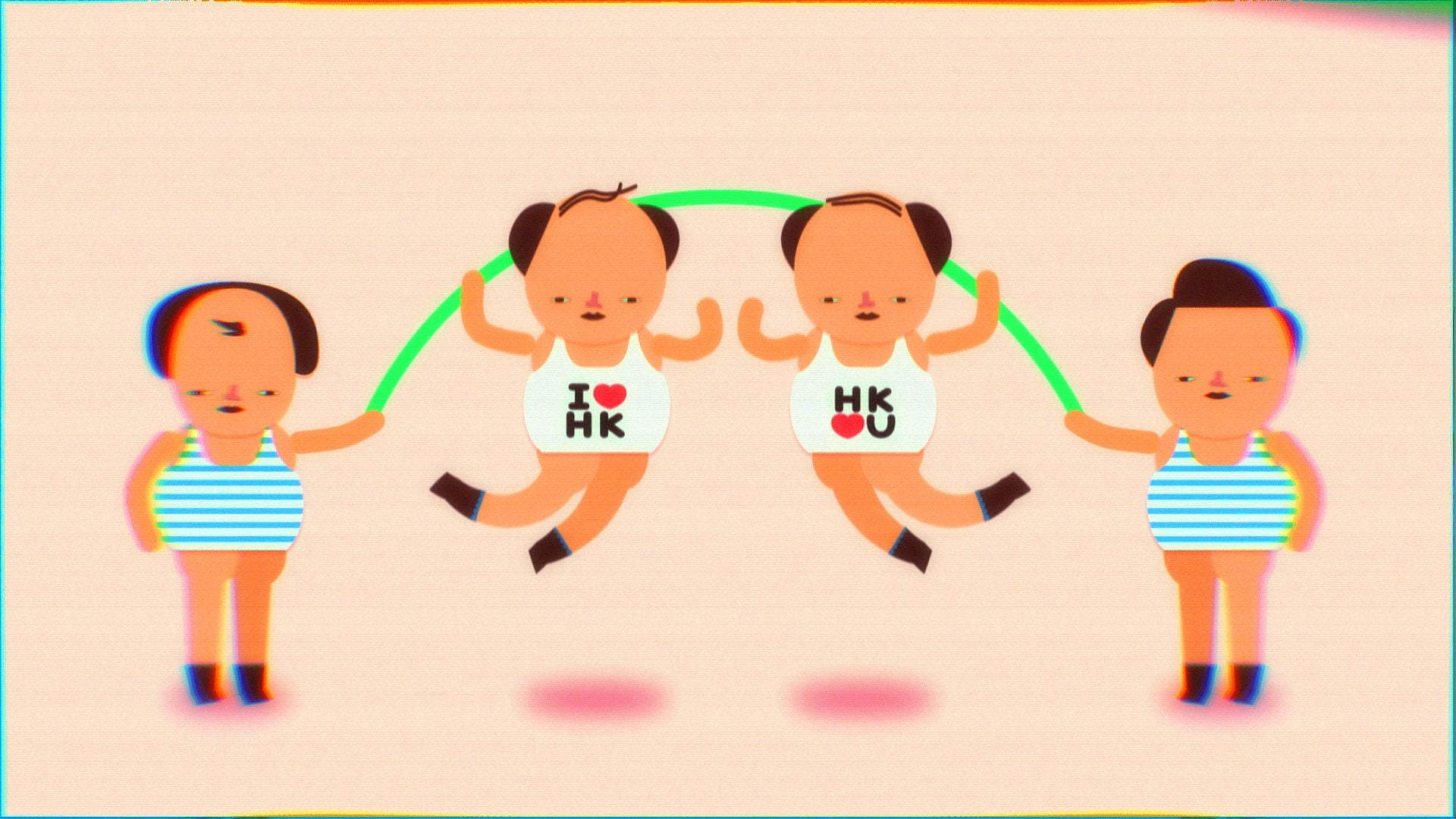
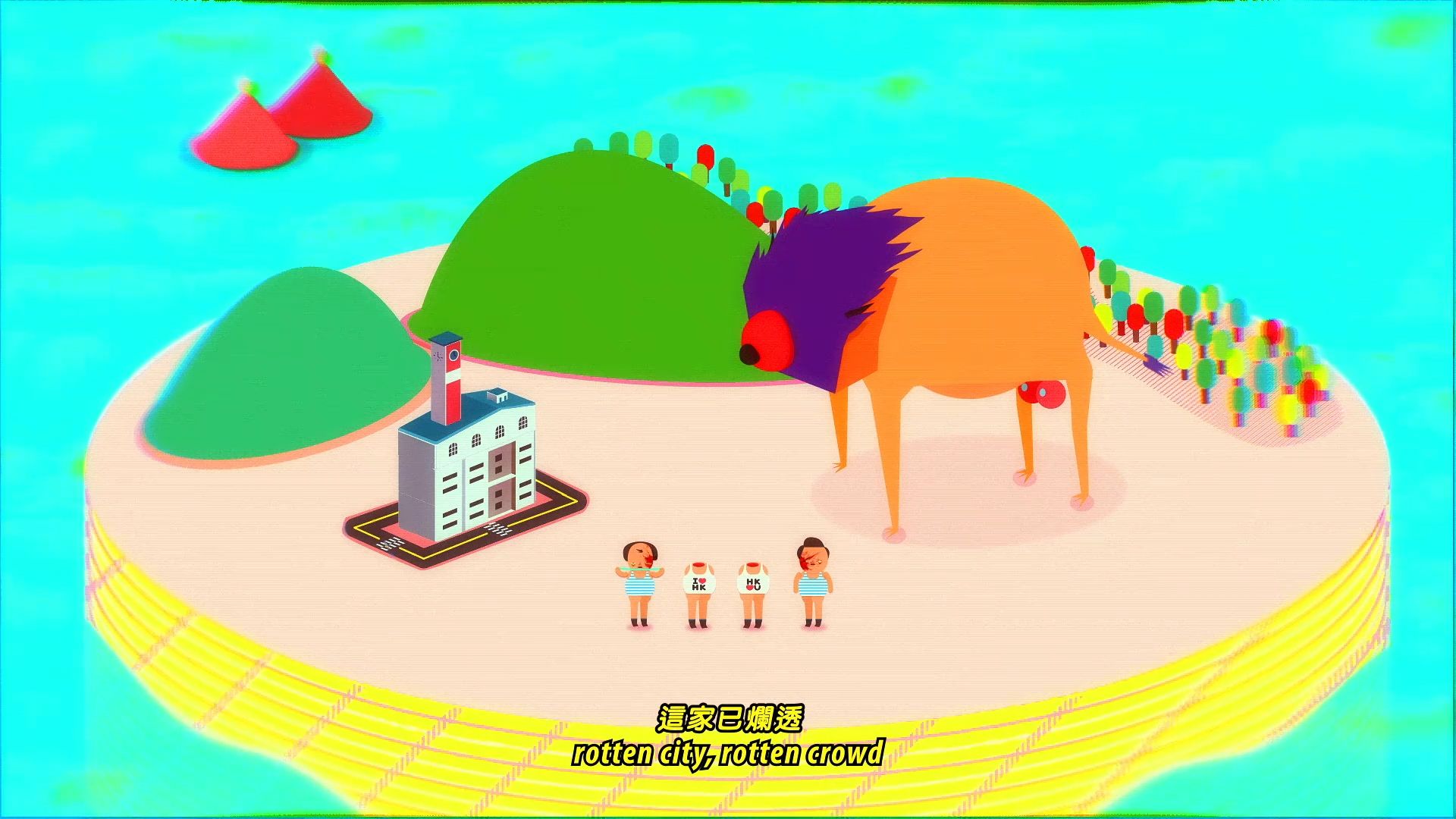
‘I always use a deliberately impersonal voice to tell even the most personal stories,’ Wong explains to me. As his works circulate internationally, he has become increasingly aware that for most audiences, Cantonese functions as little more than ‘background noise without meaning’.
Instead, the video’s ten voices articulate fleeting desires, anxieties, losses and class distinctions that quietly accumulate in the hidden corners of a golf course—a site that, for Wong, is simply ‘a field where things happen’.
‘In earlier works like Jungle of Desire, I began by writing toward a specific situation,’ Wong says. ‘In this new work, the structure is more like a mind map—full of side paths that don’t necessarily lead anywhere. It may not have an ending at all.’
Wong has previously referenced The Velvet Underground’s 1967 song I’ll Be Your Mirror, describing his works less as vehicles of meaning than as containers or reflective surfaces. ‘I joke about the world, but I also joke about myself through that mirror,’ he says. ‘That’s how I begin to understand what’s around me. Whether it’s a dry laugh, a bitter smile, or self-mockery, questions would emerge afterward. I’m not interested in providing answers—I’m interested in asking questions.’
Heidi Lau Trusts Her Hands
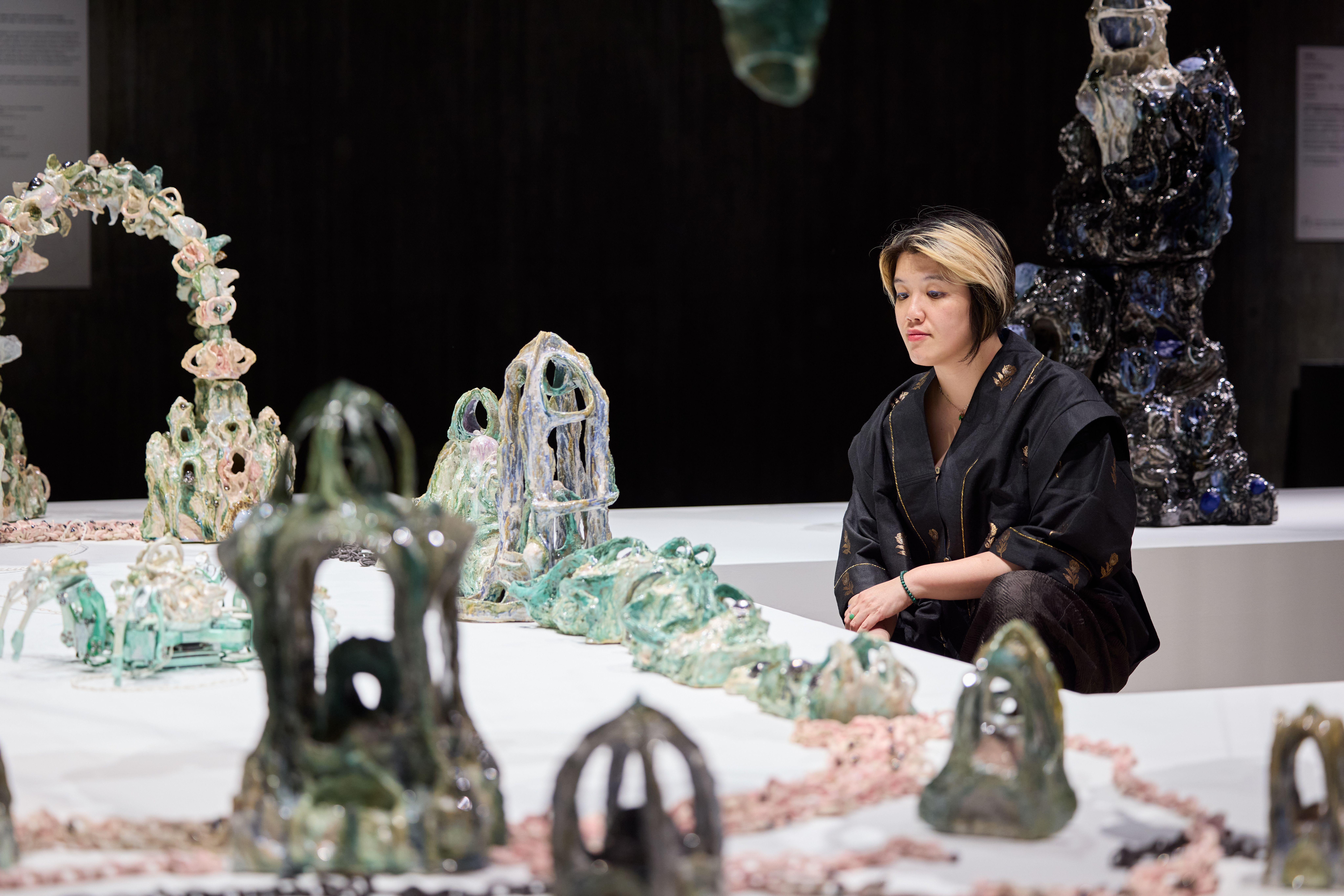
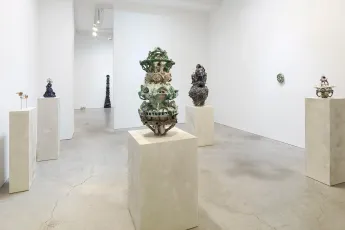
Macau-raised artist Heidi Lau presents an enigmatic ‘shrine’ composed of freestanding and suspended mint-green ceramic sculptures. Titled Pavilion Procession (2025), the work references Shanhaijing (山海经, The Classic of Mountains and Seas), the ancient compendium of mythical geographies, creatures and medicines. The jury called the work ‘both emotionally resonant and conceptually rigorous’, describing it as ‘compelling reflection on the human capacity to embrace sorrow and grief as a powerful source of creativity’.
Chinese mythology and philosophy have long informed Lau’s practice—an interest stemming from ‘a desire to understand my family tree’. Weaving together family history, grief, and fantastical hybrid forms, Lau constructs an imagined world poised between decay and rebirth, with porous, richly layered structures that evoke a pavilion, a Taihu stone, a spine, or a creature coming into being.
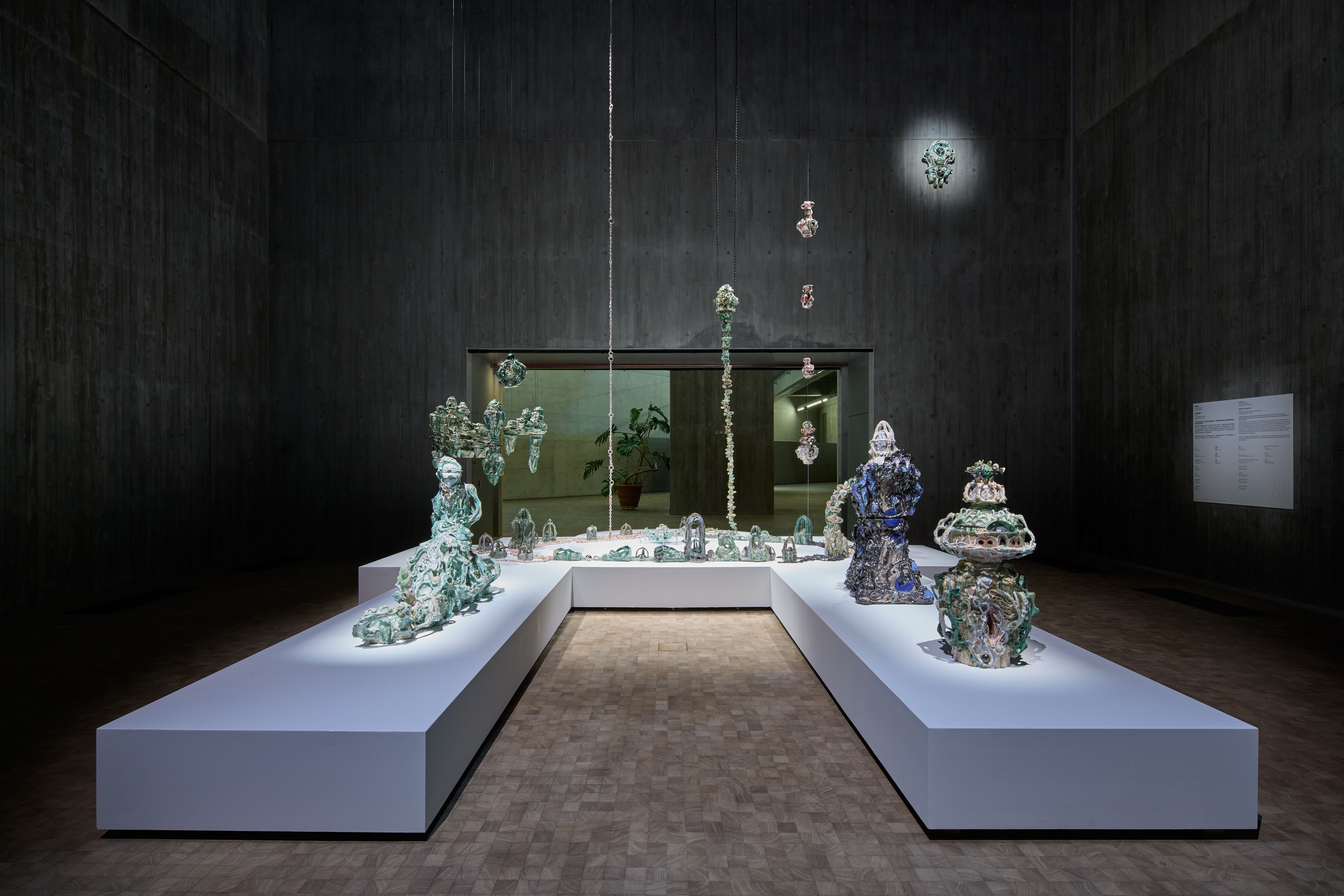
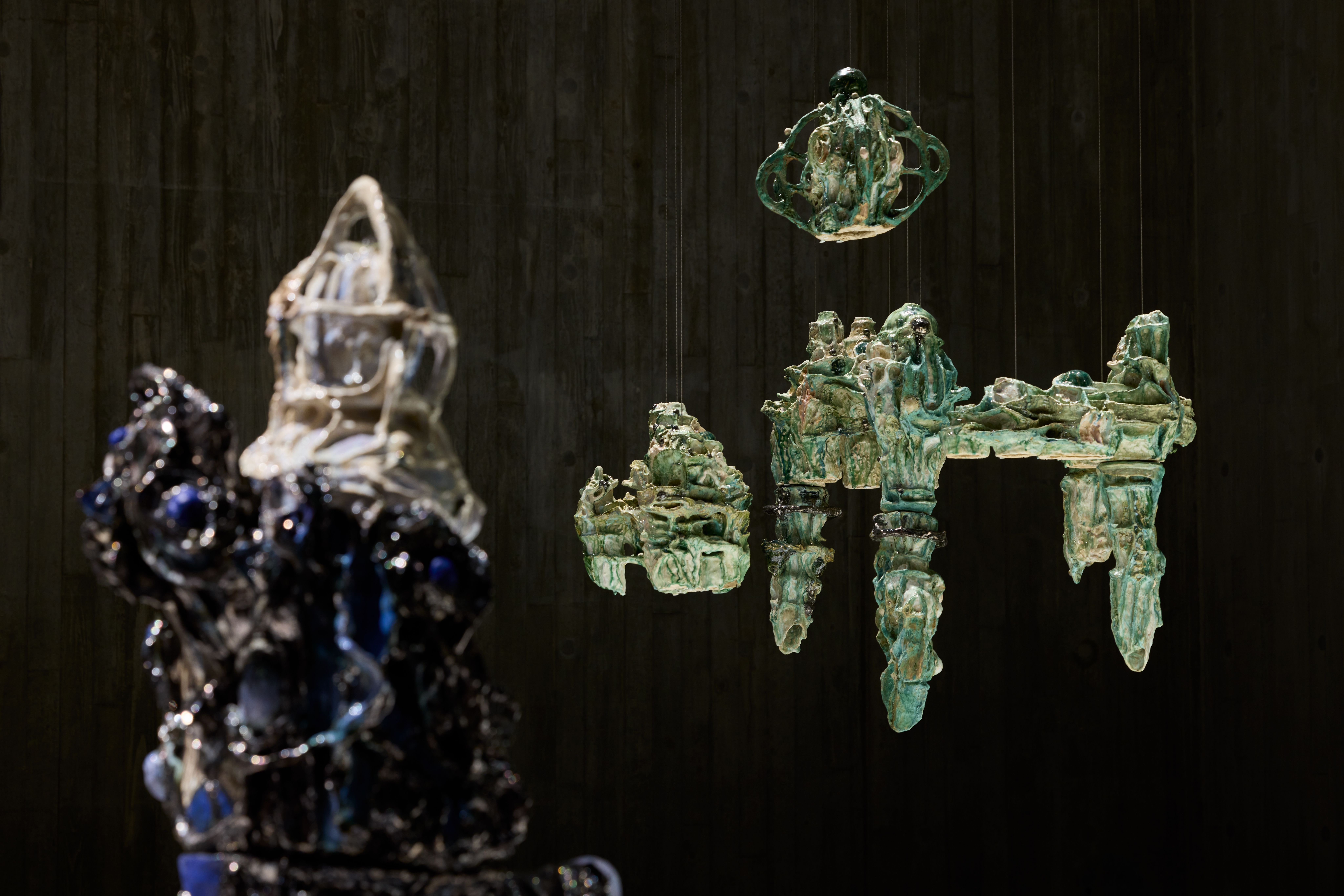
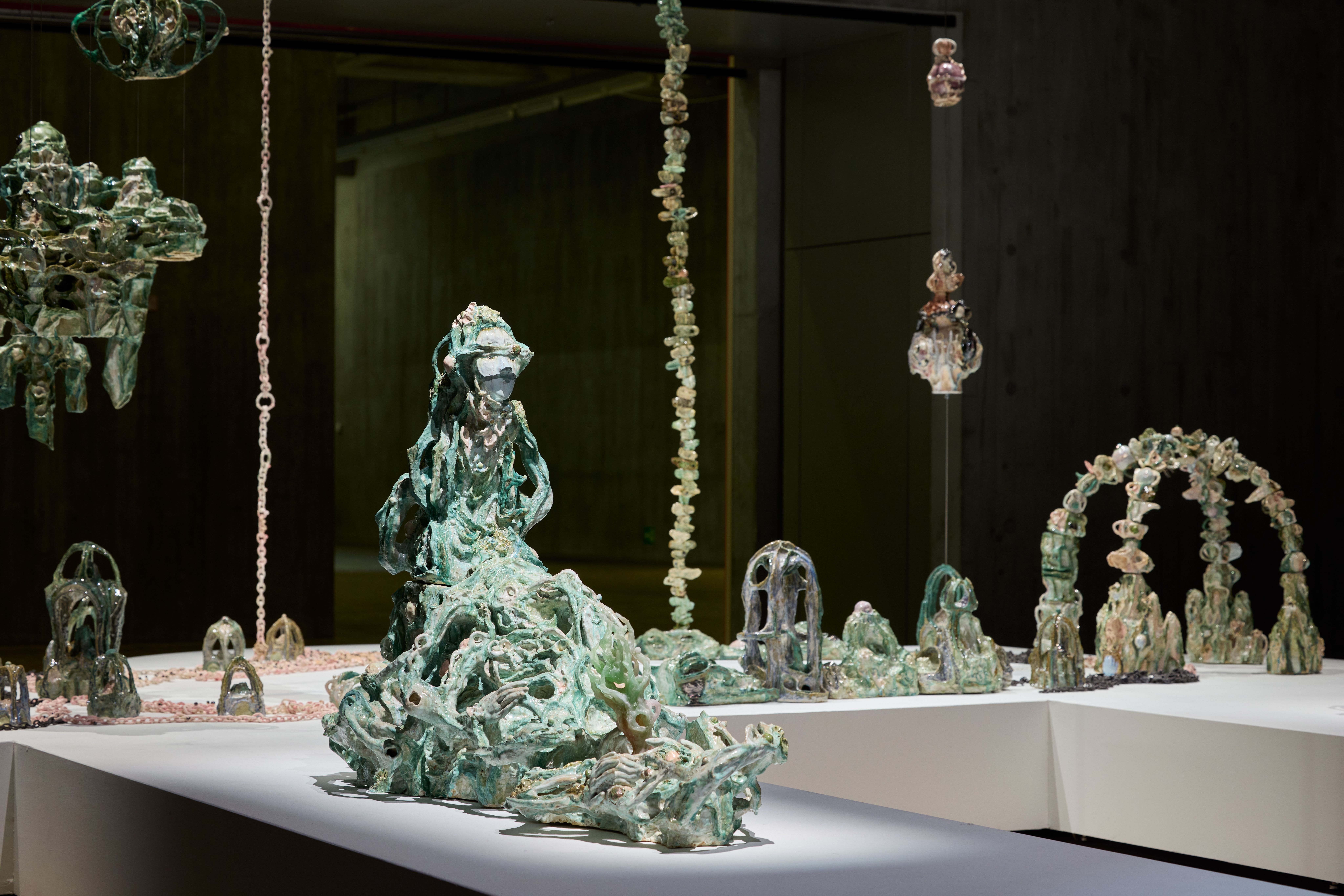
The element of play is a loose point of resonance between the two Sigg prizewinners. While Wong deploys play through satire—treating content with levity, humour, or self-ridicule—Lau extends play beyond the experimental handling of clay, invoking a Taoist notion of roaming: ‘A kind of voluntary exile both physically and mentally away from my place of origin.’
Originally trained in printmaking and painting, Lau began working with clay around ten years ago and immediately felt an innate connection to the medium. She works without moulds or preliminary drawings. ‘It’s usually a very intuitive process,’ Lau says. ‘I often have an idea about the general form that I start with, but then I really trust my hands to do both the sculpting and thinking… It starts holding non-verbal memory, from the maker’s touch, emotions to the environment, so much is imprinted forever into the material and transformed.’
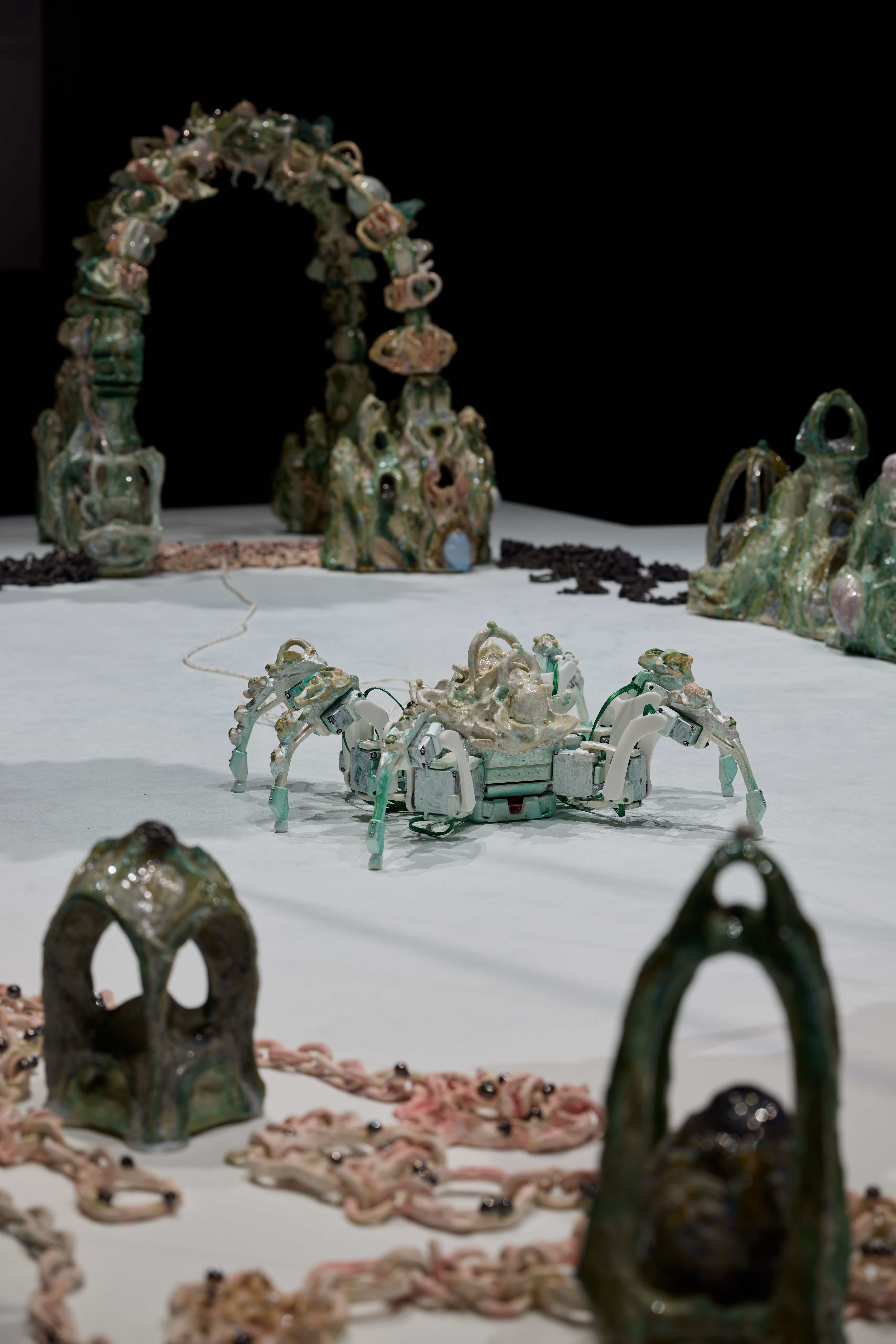
For Lau, working with clay is partly a chance to yield her authorship and instead collaborate with time, heat and gravity. ‘Because of the often uncertain or mysterious nature of colouring with different minerals and chemicals, and one truly cannot predict what might come out after a kiln firing, it feels like painting—both in the moment and for the future.’
The process of giving form to raw material closely resembles the invention of myths or the generation of life itself. In Kinetic Being (A Walk in the Cenotaph) (2025), Lau introduces for the first time her own ‘living being’: a robotic spider that wanders, hesitates, and limps within a circular arrangement of ceramic structures, appearing to bridge an ancient cosmology with a speculative technological future.
Lau’s works do not resolve themselves at the point of completion. Where Wong disperses meaning into fragments and questions, Lau delays it altogether. ‘Sometimes the “meaning” of my work does not reveal itself to me for a few weeks, or even a few years,’ she says. ‘But my rational brain eventually catches up.’ —[O]
The Sigg Prize 2025 exhibition is on view at M+ in Hong Kong until 4 January 2026.
Main image: Wong Ping, Debts in the Wind (2025) (still, detail). Commissioned by M+, Hong Kong. Courtesy © Wong Ping.









A respected voice in contemporary art discourse.
Focusing on ambitious storytelling and insightful art-world commentary. Ocula Magazine publishes in-depth interviews, critical essays and timely analysis on the artists, exhibitions and ideas driving the global art world.
Learn more about Ocula Magazine
Showcasing the best of the art world.
Ocula partners with galleries from around the world to highlight their artists, artworks and exhibitions. Gallery membership is by application and invitation, with each member vetted by an independent panel.
Learn more about Ocula Membership
Specialises in the sale of major artworks.
Led by a team with deep ties to the world’s leading auction houses, galleries and collectors. Ocula’s advisory team offers bespoke services to high-net-worth clients from around the world who are looking to acquire the best of contemporary and modern art.
Learn more about our team and services