Press Release

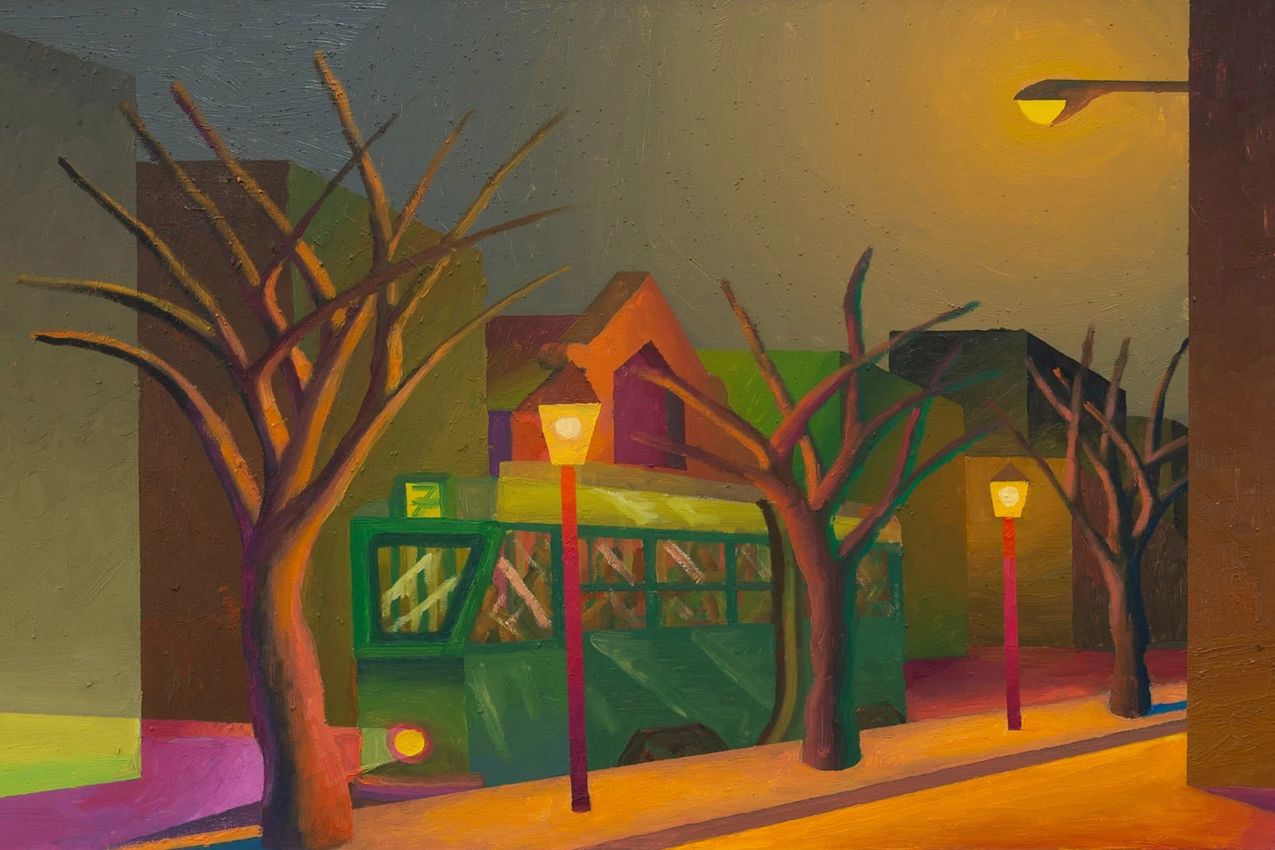
Monika Sprüth and Philomene Magers are pleased to present Inside Out, AndreasSchulze’s first solo exhibition in Asia. A key figure in contemporary painting since the1980s, Schulze has developed a visual language all his own between abstraction andfiguration, in which domestic spaces and scenic landscapes take on attitudes andproportions that are humorous, unnerving, and always unique.

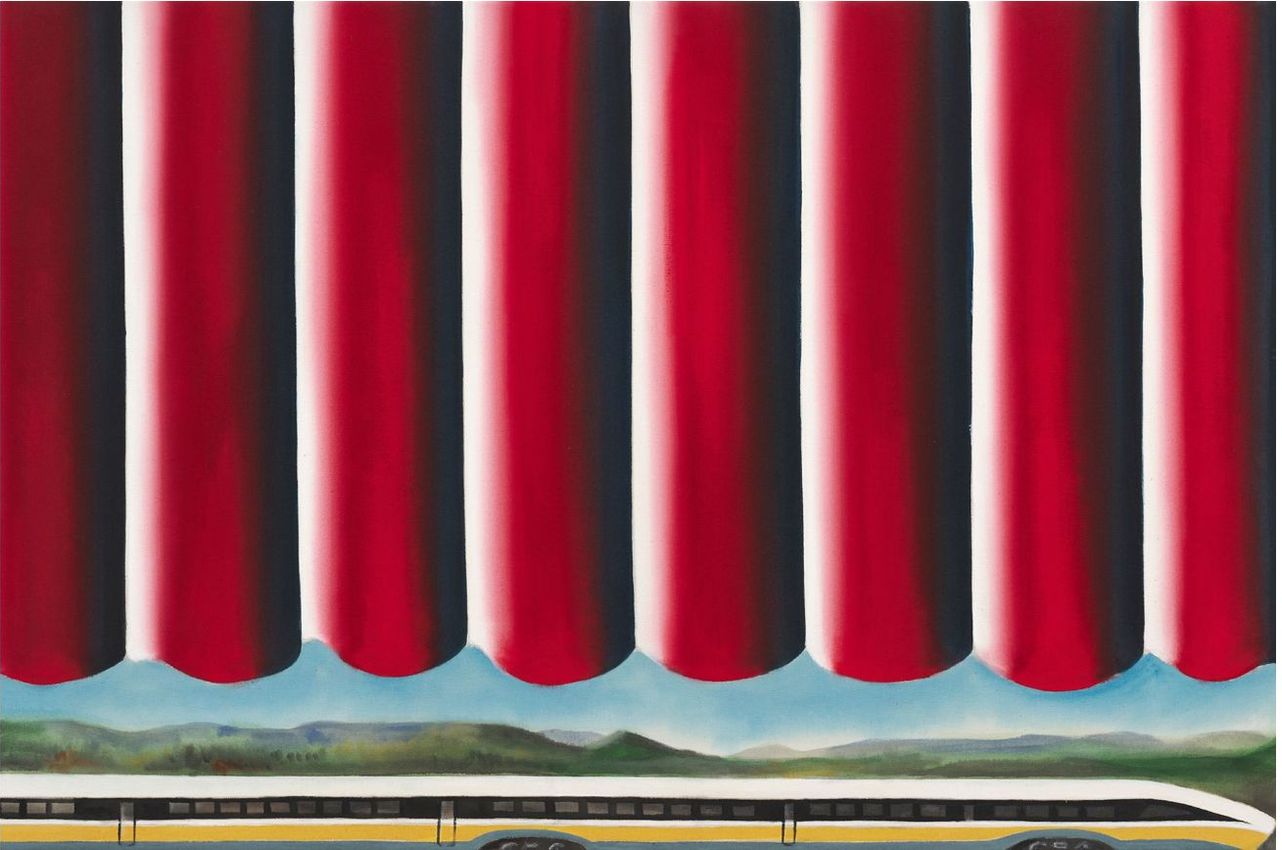
With its precisely composed installation, Inside Out offers a bold statement ofSchulze’s painterly ideas in two and three dimensions and illuminates the core ideasand vocabulary of forms that drive his incomparable oeuvre. Freely adopting paintingstyles derived variously from Surrealism, Naive Art, Pop Art and AbstractExpressionism, interiors filled with chairs, curtains, windows and other everydayarchitectural features interact playfully with the actual architecture of the space; whileexterior scenes depicting cars, brick walls, clouds and other outdoor elements createexuberant processions along the gallery walls.

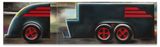
Entering the exhibition, viewers encounter two divided yet interconnected worlds. Onwalls of light green, canvases that depict outside realms reveal from the startSchulze’s clever interplay between depicted and physical space, as well as his balanceof banal imagery with otherworldly feeling. Untitled (Demande au bouleau) (2022)opens up the view to a city park that contains a simple bench, lamppost, tree trunk andballoons, yet one has blown away toward a surreal burst of smoke that seems toovertake the painting. Driving around the corner nearby, Untitled (Rolling Stonetouring) (2020) illustrates one of Schulze’s many recurring motifs, the automobile,whose boxy body and over-decorated hubcaps give way to another, more ominoussmoke cloud in Untitled (High cloud / autostrada) (2020).

Schulze’s lyrical, if also comic, positioning of his paintings guides visitors to theexhibition’s second zone: the inside. Installed on walls painted a rich, chocolate brown,Untitled (Interieur with barrier) (2023) and Untitled (Interieur with hairstyle) (2023)brilliantly demonstrate the artist’s handling of space and the theatrical stage-likeinteriors for which he is so well known. In Untitled (Interieur with barrier)—whosebrown walls and doorway mirror those of the gallery itself—a chair and a spiralingstaircase surround a traffic sign and barriers, which seem to invade from the exteriorworld and generate an abrupt moment of abstraction. Untitled (Interieur with hairstyle) also includes abstract paintings-within-a-painting, this time joined by tufts of hair,curtains and even potted flowers, whose pink bursts echo the canvas behind it

At another architectural juncture is the historical work Dirt corner (1985), whichtogether with the car on the opposite side of the gallery, neatly brackets the exhibitionspace. Here, Schulze continues his examination of the interior, pointing out overlookedbut fundamental architectural elements such as the corner. Using a domestic materialand concept—carpet and dirt—he creates a curious metaphysical portal intoterritories unknown, which is picked up once more in the pierced darkness of Untitled(Beijing tunnel) (2024). Across the joining wall, a series of canvases and objectsproduce a ‘modular’ painting, whose imagery of curtains, mirrors, trains and carsfurther emphasizes the thematics of staging, movement and immersion that runthroughout the exhibition

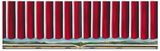
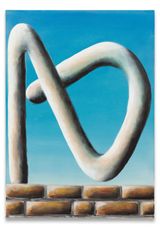
At the core of Inside Out, a central wall connects both areas of the exhibitionphysically and conceptually, using another crucial motif in Schulze’s visual lexicon, thewindow. On one side of the wall, four of the artist’s window paintings offer a view fromthe outside to the inside. On the other side, the wall seems to literally open up into apanoramic window; painted wallpaper forms the frame and directs the view from theinside to the outside. A group of small paintings appears in the framed field—eachwork depicts twisting white shapes that suggest sculptural bodies in action andrepose, perched atop Schulze’s characteristic brick walls. Their titles refer to sportingactivities like gymnastics, yoga and wrestling, rendering the static moment of sculptureinto a dynamic process while, at the same time, linking to the urban environment wheresuch exercises are often practiced outdoors in public parks.

By emphasizing the window, Schulze gestures in part to the concept of painting as a ‘window onto the world’ dating back to Renaissance art. His windows, however, refuseany obvious, idealized view; instead, they keep viewers engaged in a back-and-forthexploration of inside and out, reality and fantasy, past and present. Moving through thisspace, with all its recognizable human features, we unconsciously understand thatSchulze’s magical world is our world, our life, inside and out. Bodies are absent,heightening our presence even further—we complete Schulze’s pictures. Even throughthe humor and levity of his iconography, Schulze is always suggesting deeper levels ofpsychological depth and inquiry.

Read More
About the Artist

Andreas Schulze first came to prominence in the early 1980’s, as a pivotal figure in the explosive flourishing of creativity which centred around Monika Sprüth’s gallery in Cologne. Schulze has since been recognised as an inventor of new pictorial worlds, having developed an autonomous and unmistakable visual language with which to explore various interior views of society. A fundamental theme in the artist’s work is the power of painting to create illusion, giving multifaceted treatment to the theme of the interplay between being and appearance, reality and staging in the medium of painting. An independent and anti-hierarchical use of traditional styles of painting links his work with the Avant Garde movements of the early twentieth century, above all Dada, Surrealism and Symbolism, yet his cool, analytical compositions and his independent themes allow Schulze to retain a unique position within the context of contemporary art.

View Artist Profile

Also Exhibiting

About the Gallery

Sprüth Magers has expanded from its roots in Cologne (Germany) to become an international gallery dedicated to exhibiting the very best in groundbreaking modern and contemporary art. With galleries located in Berlin Mitte, London’s Mayfair and the Miracle Mile in Los Angeles–as well as an office in Cologne and an outpost in Hong Kong–Sprüth Magers retains close ties with the studios and communities of the German and American artists who form the core of its roster.

View Gallery Profile
Address
Gallery Weekend Beijing
Opening Hours
Tuesday - Saturday
11am - 6pm
(1)
Berlin Oranienburger Straße 18
Sprüth Magers
Oranienburger Straße 18, Berlin, Germany
+49 302 888 4030
http://www.spruethmagers.com

Opening hours
Tuesday - Saturday
11am - 6pm
The art world in focus