



Astrid Klein, one of Germany’s most distinguished conceptual artists, has played acrucial role as a European counterpart to the American Pictures Generation since thelate 1970s and is considered a female pioneer of large-scale photography.Underpinned by the formal and aesthetic principles of collage, Klein’s practiceexamines, deconstructs, and renews the relationship between image and text toquestion prevailing power structures and modes of perception and representation. Inher multilayered works, she combines artistic source material drawn from philosophy,literature, political discourse, and film to establish fresh links of meaning. SprüthMagers is pleased to present Astrid Klein’s first solo exhibition in New York, whichfocuses on two historical bodies of work: early “photoworks” (1979) alongsidecanvases from her White Paintings (1988–93) that together showcase the core ideasof her alluring and complex oeuvre.
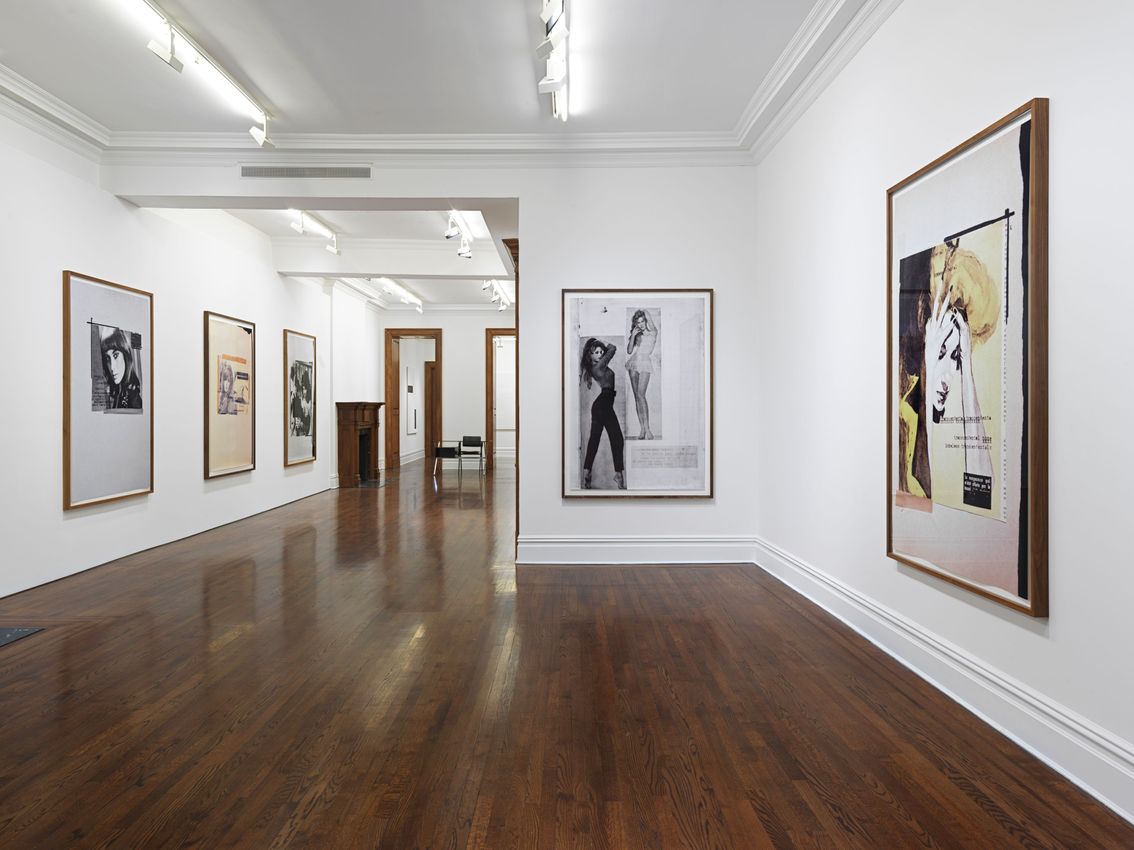
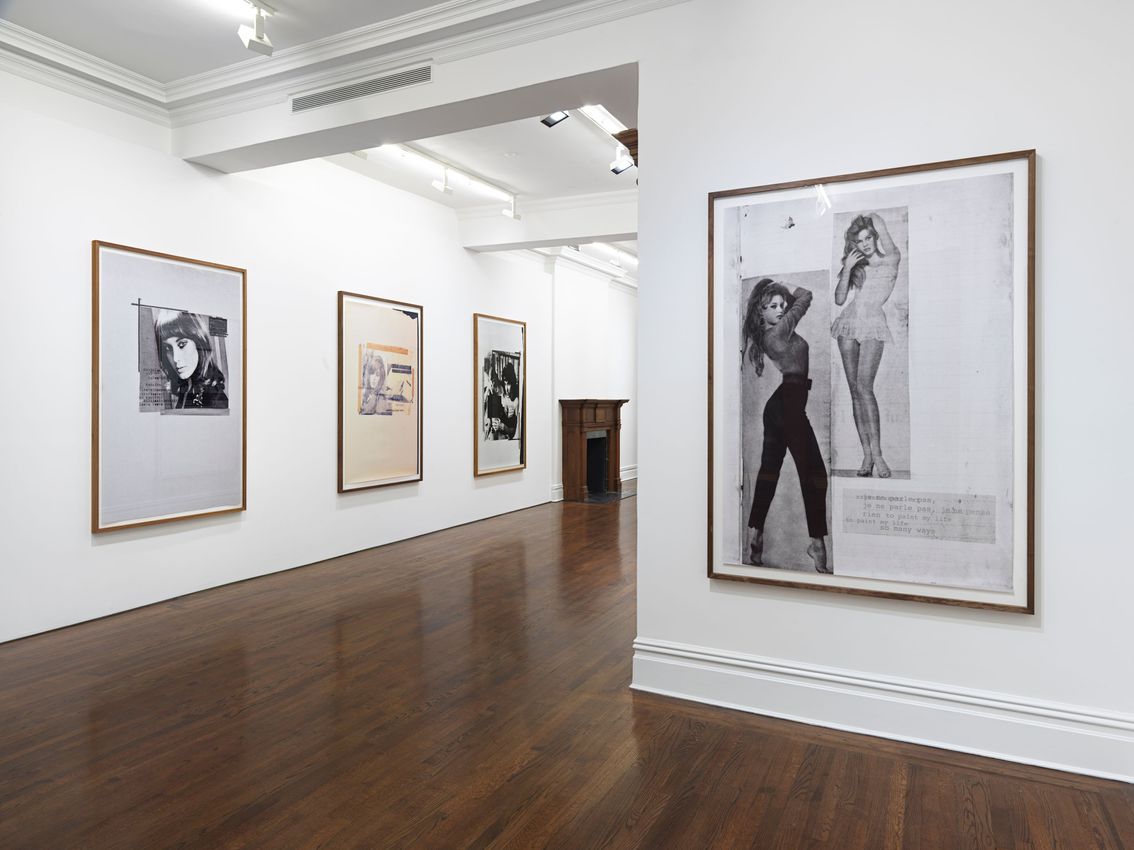
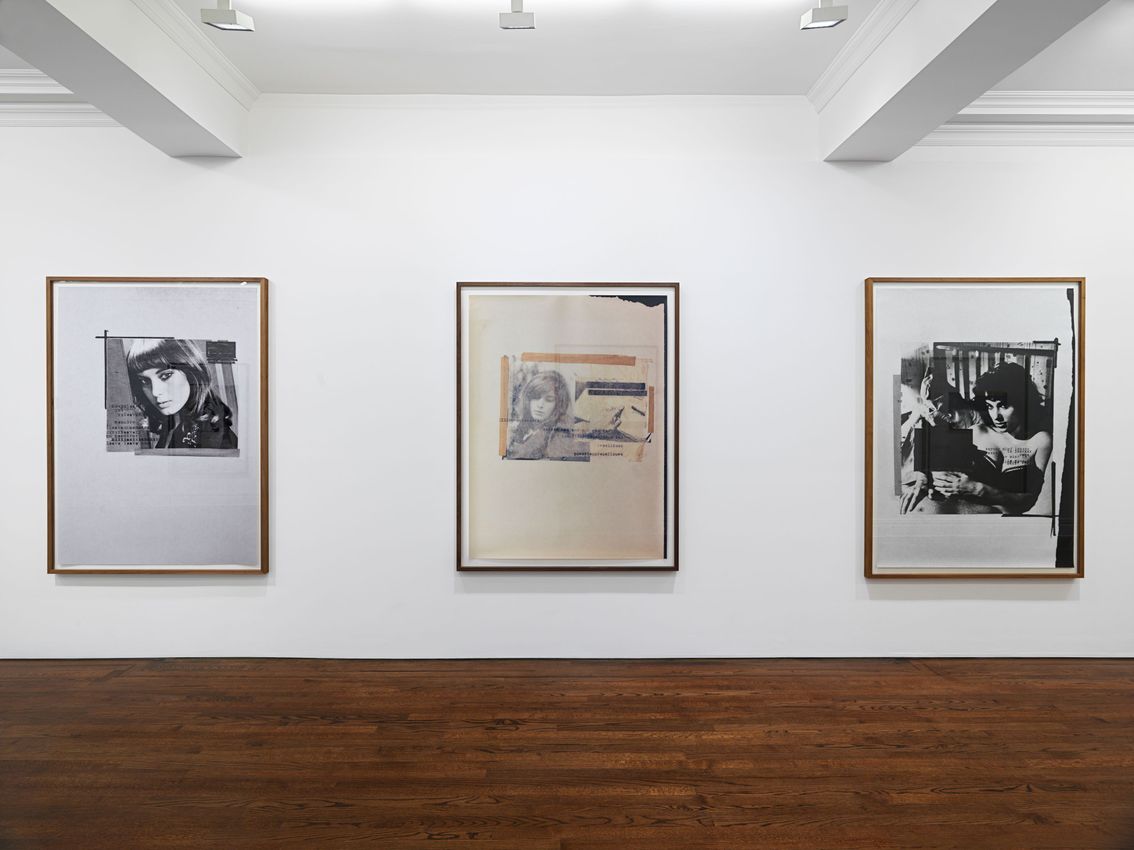
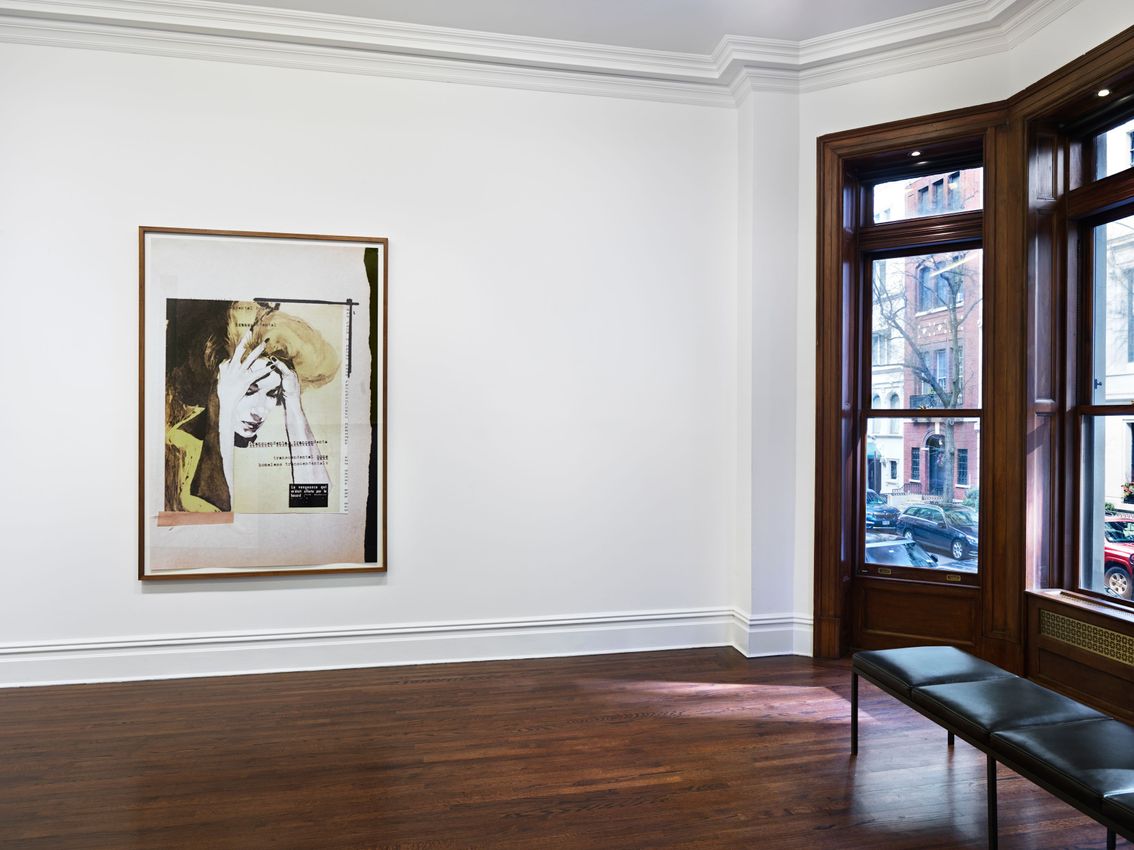
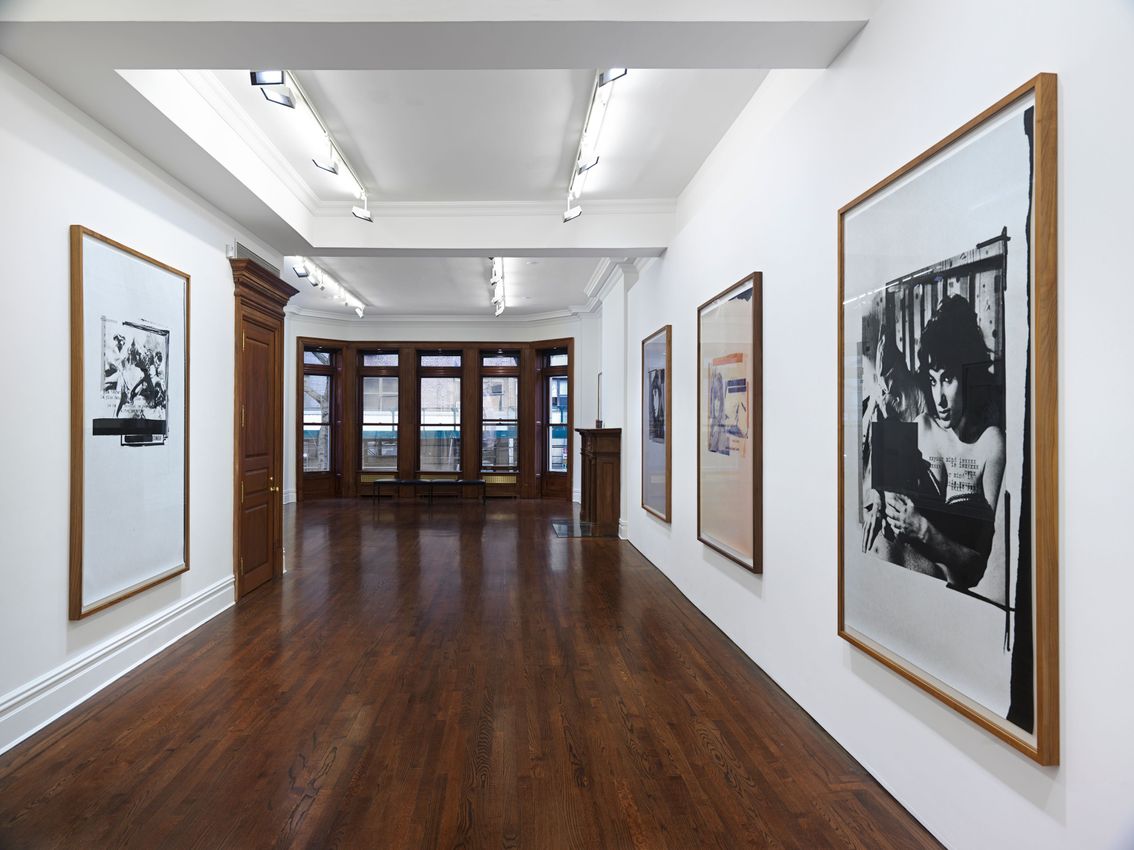
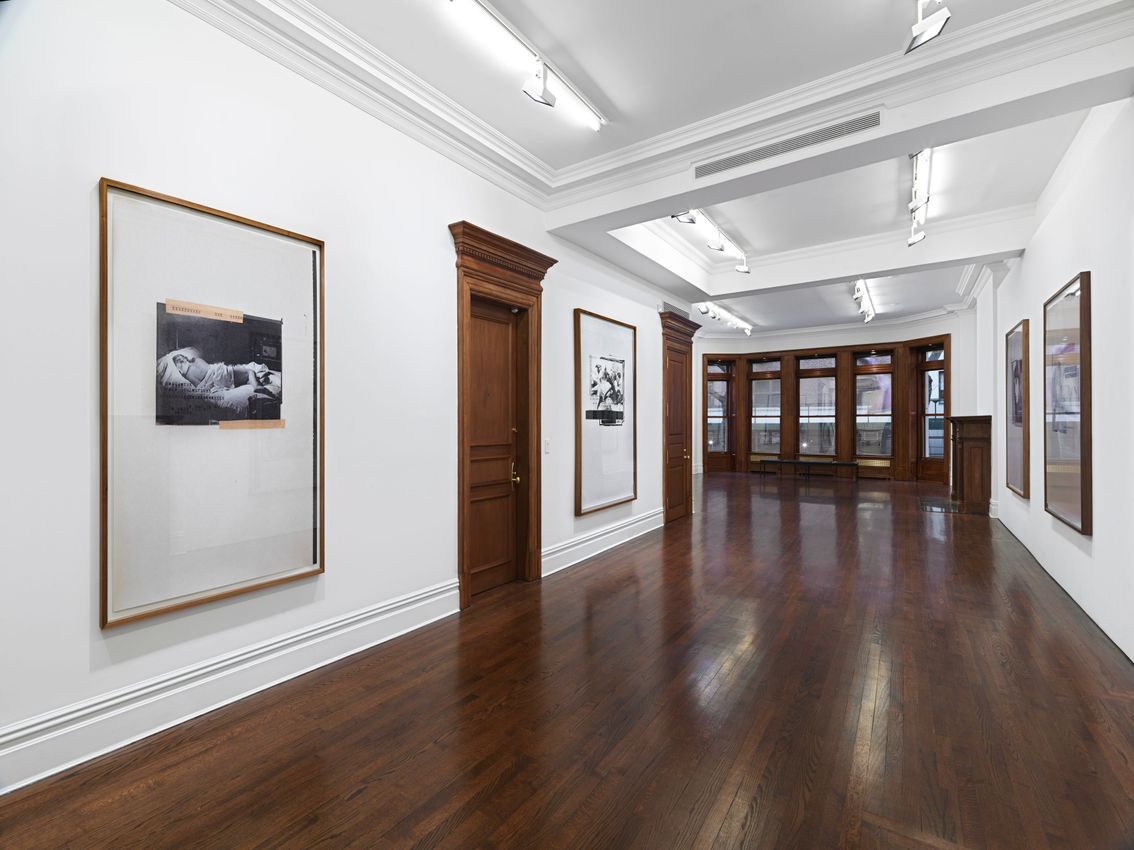
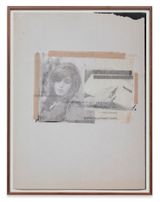
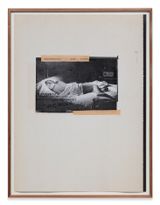
Entering the gallery, visitors encounter well-known faces: the glamorous women of1960s and 1970s French New Wave and Italian cinema. Klein has detached them fromtheir original context in film and mass media and merged them into new pictorialworlds by overlaying them with text fragments, adhesive tape elements, and penmarkings. The process results in photographed collages, so-called photoworks, allshown for the first time in the US.
The women depicted are distinguished by their sensual femininity and eroticappeal. Many played female leads in culture-defining films, often performing as objectsof desire but, above all, portrayed as sexually emancipated characters. Klein’sphotoworks deliberately emphasize this paradoxical characterization, but also thewomen’s inherent strength. By isolating them as independent figures, she highlightsthat their power originates from within and is not contingent on externalcircumstances—their beauty is an aspect of their identity rather than dictated bysocietal expectations.
A striking example is Untitled (je ne parle pas, ...) (1979), featuring two depictions ofBrigitte Bardot. One faces the viewers frontally, while the other twists around, castinga coquettish glance over her right shoulder. This bodily torsion creates a sculptural,multi-perspectival quality and emphasizes the curvy female attributes, while the innerrotation presents the figure as a dynamic and autonomous entity. At the same time,both figures maintain direct eye contact with the viewers, generating a quiveringtension between the women’s allure and subtle distance. The work has a palpablesense of movement, bringing the dynamic nature of film into the static medium ofphotography. Klein’s characteristic overlay of text in Courier font, reminiscent oftypewritten film scripts or manuscripts, further underscores an allusion to cinematicstorytelling. The letter X has been a recurring symbol in her work from the start,expressing the pictorial nature of language within its manifold meaning, as it stands forunderlining, crossing out, a placeholder or, through its visual association with a cross-stitch, for the principle of montage.
Klein challenges conventional modes of perception. Her motifs instinctively captivateus, while also making us complicit with the male gaze upon the female body. These1970s photoworks therefore reflect the shifting perspectives of that time, influencedby the second-wave feminist movement. Yet the artist does not admonish; she rathershows by skillfully utilizing ubiquitous, fundamental elements of societal constructs todraw attention to facets of the human experience. In a highly sensual manner, Kleinemploys her deeply conceptual approach to unveil hidden structures.
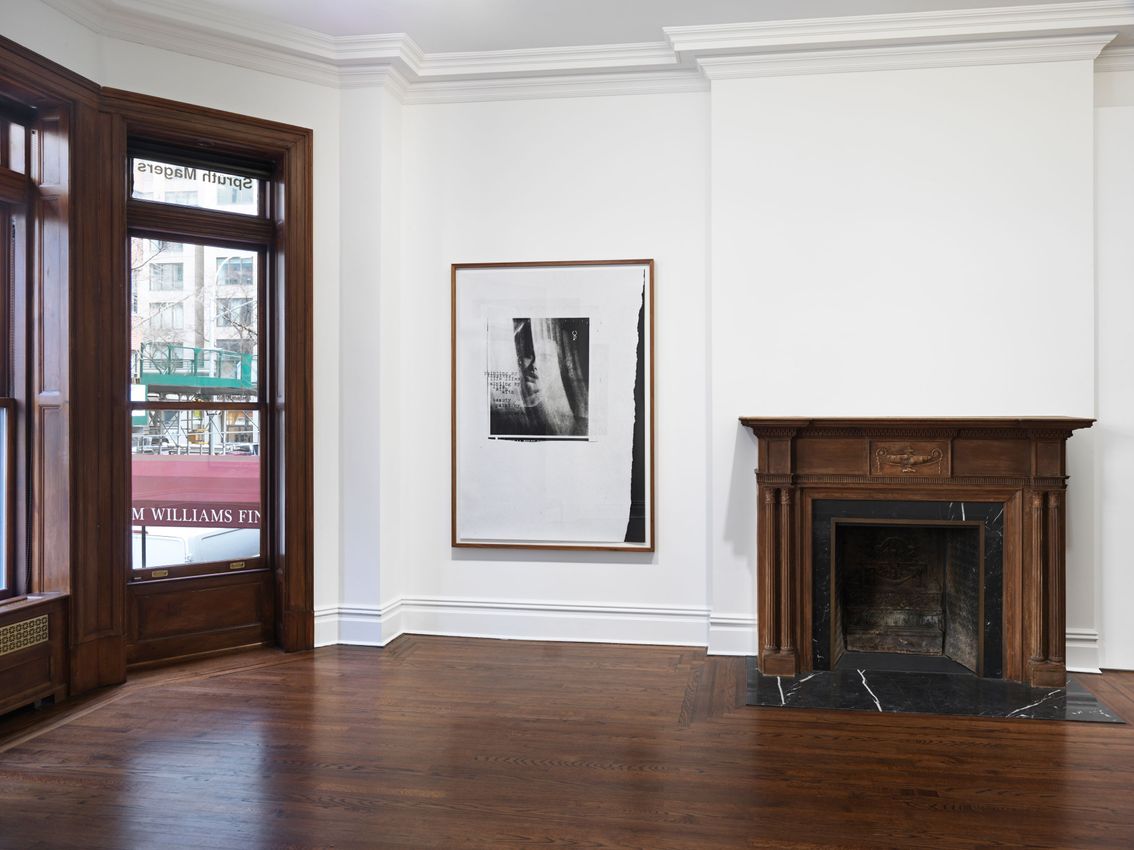
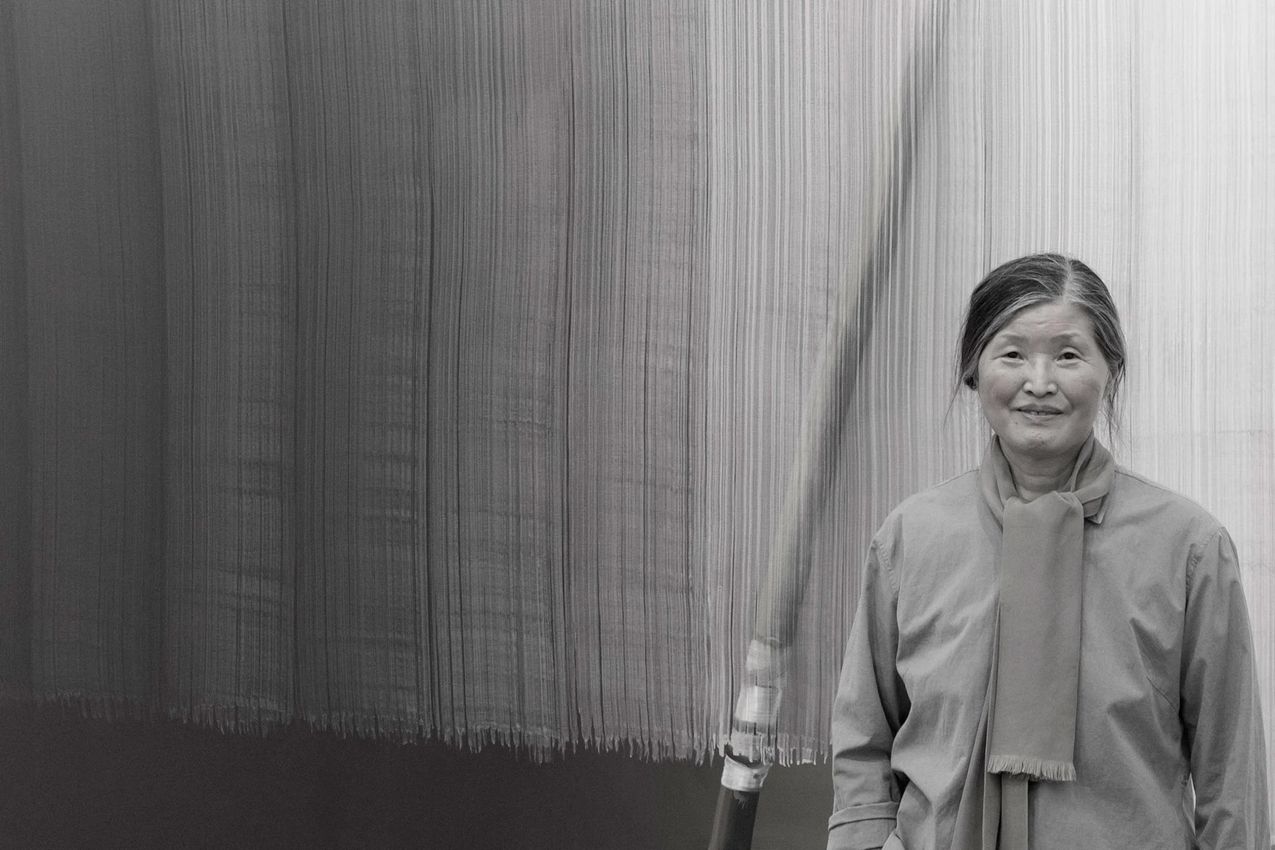
Alongside the photoworks, visitors encounter the tranquil atmosphere of several large-scale White Paintings (1988–93). Drawing inspiration from artists such as AgnesMartin, Piero Manzoni, and Robert Ryman, Klein extends their minimal approach andcombines white-on-white painting with textual elements, tape, and, in some cases,silver-colored foil that acts as a mirror of sorts—an unreliable one that fails to return asteady reflection. The resulting nuanced layers imply depth that echoes the intricaciesof cognition, perception, memory, and forgetting. Like an orchestrated collection offragmented thoughts, these works persistently confront us, inviting us into a momentof ambiguity and contemplation where unanswered questions intertwine with theimagination. Also painted with alabaster, the canvases evoke a sculptural dimension,essentially demonstrating that the artist conceives her works not in a two-dimensionalbut in a three-dimensional, spatial manner. In Untitled (tragicmagic) (1988/93), forexample, painted shapes resemble a curtain that merges into the white background,an invitation to imagine a space beyond.
These two historical bodies of work illustrate the fundamental importance of collageto Astrid Klein’s practice, the versatility of her thinking and her innovativereinterpretation of the image, particularly through the incorporation of text. Atestimony to her works’ intellectual acuity and lasting relevance, Klein’s dialogue withsocial and political developments, and her engagement with themes such as theconstruction of identity and sexuality, remain as current today as ever.
Astrid Klein (*1951, Cologne) lives and works in Cologne. Selected solo exhibitionsinclude Fuhrwerkswaage, Cologne (through January 2024), Sammlung Falckenberg,Deichtorhallen Hamburg (2018), The Renaissance Society, Chicago (2017), KWInstitute for Contemporary Art, Berlin (2005), Contemporary Art Center, Vilnius(2003), Hamburger Bahnhof, Berlin (2002), Neues Museum, Nuremberg (2001),Kunsthalle Bielefeld (1989), travelling exhibition by the Kestnergesellschaft, Hanover;ICA, London; Vienna Secession and Forum Stadtpark, Graz (all 1989), and the Museumof Contemporary Art, Seoul (1981). Klein participated in the 14th Sharjah Biennial(2019), documenta 8 (1987), and the 42nd Venice Biennale (1986). Her works are incollections such as SF MoMA, Tate, National Museum of Art Osaka and MuseumLudwig, Cologne.
Since the 1970’s, Astrid Klein has been at the forefront of artistic developments regarding the handling of a diverse range of media and the utilisation of a variety of complex techniques, centred around an on-going investigation into the confrontational relationship between image and text. Through painting, collage, photography and installation, Klein encodes, reduces, and reproduces individual figures and fragments out of extensive textual and pictorial material, creating images which relate to themes such as religion, social role models and power structures in society. The artist’s textual sources, in addition to her own texts, reflect a preoccupation with literary, philosophical and scientific writings, and are incorporated in the Schriftbilder (script image) in a way that the form and visual appearance of the text plays as important a role as its content, if not more so. Klein’s compositions are unique in their exploration of a highly original aesthetic, based on the reduction of colour to black and white, and references to popular mass media imagery, symptomatic of post-modern art. Spanning over thirty years, Klein’s œuvre includes not only collage, but paintings such as the white paintings, 1988–1993, carpet and filmic works (Installation at the Hamburger Bahnhof, Berlin, 1999/2000) neon sculptures and light installations, through which the artist pushes the boundaries of visibility and the idea of rendering the invisible visible and presenting the unpresentable.


A respected voice in contemporary art discourse.
Focusing on ambitious storytelling and insightful art-world commentary. Ocula Magazine publishes in-depth interviews, critical essays and timely analysis on the artists, exhibitions and ideas driving the global art world.
Learn more about Ocula Magazine
Showcasing the best of the art world.
Ocula partners with galleries from around the world to highlight their artists, artworks and exhibitions. Gallery membership is by application and invitation, with each member vetted by an independent panel.
Learn more about Ocula Membership

Specialises in the sale of major artworks.
Led by a team with deep ties to the world’s leading auction houses, galleries and collectors. Ocula’s advisory team offers bespoke services to high-net-worth clients from around the world who are looking to acquire the best of contemporary and modern art.
Learn more about our team and services