




LOUISE BOURGEOIS
1911-2010, FranceFrench-American artist Louise Bourgeois (1911–2010) explored complex themes in her paintings, sculptures and installations that were driven by her own personal struggles and experiences. During a career spanning seven decades, she examined sexuality, gender, the unconscious, desire, the female body, motherhood and identity. Often raw and deeply honest, her work was commissioned in public places around the world.
Early Years
Louise Bourgeois was born on Christmas Day 1911 in Paris, the child of gallery-owning parents who specialised in selling and restoring tapestries. While her mother suffered from ill health, her father had a series of affairs, including with the family’s British au pair. Bourgeois studied maths and philosophy at the Sorbonne, yet after the death of her mother—and her father’s alleged mockery of her grief—she switched to studying art. Unsupported by her father, she paid for courses by becoming a guide at the Louvre. Although starting with painting, she moved into sculpture. Bourgeois met and married art historian Robert Goldwater in 1938, moving to New York, becoming a mother yet also taking part in the city’s avant-garde art scene.
Louise Bourgeois: Artworks
Bourgeois began to consider themes of the female body and feminism when she first lived in New York City as a wife and mother. The 1946–7 series of drawings and paintings Femme Maison, bring architectural structures into her work, demonstrating how the home and domesticity could be a trap as well as a refuge.
The Personages series (1946–1955) was inspired by friendship. Wooden sculptures, arranged in groups, represented the relationships she had left behind in France. One example is Knife Couple (1949), two wood and copper abstract figures on a stainless steel base, whereas in Quarantania (1947–1953) Bourgeois herself is represented by the object in the middle of the piece. Bourgeois used the roof of her New York City apartment as a space to work on Personages.
The 1960s saw Bourgeois begin to experiment with new sculptural materials, producing organic forms from marble, latex, rubber and bronze. Cumul I (1968) is a marble sculpture featuring rounded growths, which could be clouds, or more sensuous human body parts (breasts, testicles, phalluses).
Bourgeois explored themes of patriarchy in her 1974 work The Destruction of the Father, an installation inviting viewers to spectate at a tableau allegedly based on a childhood fantasy in which a family, worn down by the father’s arrogance, murder and eat him. This was the first piece in which Bourgeois used soft materials on a large scale, casting on-the-bone hunks of meat in plaster, which she covered with latex.
The 1980s marked a resurgence in Bourgeois’ career when she was given a retrospective at MoMA. At this point, she also moved her studio to a bigger space in Brooklyn and began work on large-scale installations: Cells, representing different types of pain and often featuring found objects, wire cages or wood.
Hands became an important theme in her work: for example, Nature Study (1986) is a small bronze sculpture where hands emerge from wound hair. Hands without arms may suggest an idea of loss or disembodiment.
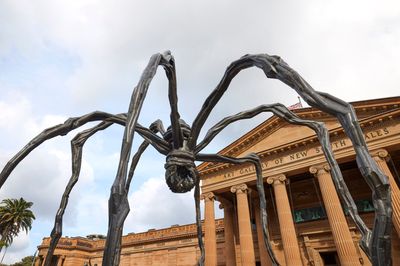
Bourgeois may perhaps be best known for her large-scale spider sculptures, Mamans, which have been installed at locations around the world including the National Gallery of Canada and the Mori Art Museum in Tokyo. The spider can be seen as simultaneously predatory and vulnerable, and the name comes from the French word for “mummy”, a tribute to Bourgeois’ own mother.
Louise Bourgeois: Select Public Commissions
- Facets of the Sun, Federal Building, Manchester, New Hampshire (1978)
- The Welcoming Hands, Jardin des Tuileries, Paris (1996)
- Maman, Guggenheim Museum, Bilbao (1999)
- I Do, I Undo, I Redo, Tate Modern, London (2000)
- Father and Son, Olympic Sculpture Park, Seattle (2005)
Select Awards and Accolades
- Grand Prix National de Sculpture, French Ministry of Culture (1991)
- Lifetime Achievement Award, International Sculpture Centre, Washington DC (1991)
- National Medal of Arts, President of the United States (1997)
- Golden Lion for Lifetime Achievement, Venice Biennale (1999)
- Praemium Imperiale (Sculpture), Japan Art Association (1999)
- Wolf Prize in the Arts, Wolf Foundation, Israel (2002–2003)
- Legion of Honour (Légion d’honneur), President of France (2008)
- Induction, National Women’s Hall of Fame, Seneca Falls, New York (2009)
Louise Bourgeois: Select Exhibitions
Select Solo Exhibitions
- Louise Bourgeois: Gathering Wool, Hauser & Wirth, New York City (2025)
- Louise Bourgeois: I have been to hell and back. And let me tell you, it was wonderful, Mori Art Museum, Tokyo (2024)
- Louise Bourgeois. Unconscious Memories, Galleria Borghese, Rome (2024)
- Artist Rooms: Louise Bourgeois, Aberdeen Art Gallery (2024)
- Louise Bourgeois: Has the Day Invaded the Night or Has the Night Invaded the Day?, Art Gallery of New South Wales, Sydney (2023)
- Louise Bourgeois; Once There Was a Mother, Hauser & Wirth, New York City (2023)
- The Woven Child, Hayward Gallery, London (2022)
- Louise Bourgeois: Paintings, The Metropolitan Museum of Art, New York City (2022)
- Louise Bourgeois: The Eternal Thread, Long Museum, Shanghai (2018)
- Louise Bourgeois: No Exit, National Gallery of Art, Washington DC (2015)
- Louise Bourgeois: Petite Maman, Museo del Palacio de Bellas Artes (Mexico City (2013)
- Louise Bourgeois: The Fabric Works, Fondazione Vedova, Venice (and travelled) (2010)
- Louise Bourgeois: Retrospective, Tate Modern, London (and travelled) (2007)
- Louise Bourgeois: Back and Forth, Kunsthalle Wien, Vienna (2005)
- Louise Bourgeois: Emotions Abstracted, works 1941–2000, Daros Collection, Zurich (2004)
- Louise Bourgeois: Le Jour La Nuit Le Jour, Palais de Tokyo, Paris (2002)
- Louise Bourgeois: Spiders, Public Art Fund and Rockefeller Center, New York City (2001)
- Louise Bourgeois: The Insomnia Drawings, Tate Modern, London (2000)
- Louise Bourgeois: Homesickness, Yokohama Museum of Art, Yokohama (1997)
- Louise Bourgeois: Works on Paper 1939–1988, Museum Overholland, Amsterdam (1988)
- Louise Bourgeois: Nature Study, Serpentine Gallery, London (1985)
- Louise Bourgeois: Retrospective, MoMA, New York City (1982)
Select Group Exhibitions
- 13 Women Artists, Zürcher Gallery, New York City (2026)
- Scientia Sexualis, ICA Los Angeles (2024)
- Unravel: The Power and Politics of Textiles in Art, Barbican Centre Art Gallery, London (and travelled) (2024)
- Louise Bourgeois and Pablo Picasso: Anatomies of Desire, Hauser & Wirth, Zurich (2019)
- WACK! Art and the Feminist Revolution, Museum of Contemporary Art, Los Angeles (and travelled) (2007)
- American Pavilion, 45th Venice Biennale (1993)
Further reading
- The Easton Foundation, established by Louise Bourgeois during the 1980s and now maintaining her archive
- An extensive biography from The London List (2020)
- A 2007 interview from The Guardian
- Article in Selvedge __magazine (2022) about Bourgeois’ use of tapestry
- A 2021 article from The New York Times examining Louise Bourgeois’ psychological trauma (behind paywall)
- The Louise Bourgeois Archive on Instagram
Louise Bourgeois FAQs
Was Louise Bourgeois an Abstract Expressionist?
Not really, although because her work wasn’t figurative it was sometimes grouped with Abstract Expressionists. Her works were notable for their biographical symbolism and psychological motifs.
What do the spiders in Louise Bourgeois’ art mean?
Spiders are a recurring theme in Louise Bourgeois’ art. She began to draw spiders during the 1940s—by the 1990s they were a central tenet of her work. The spider is “an ode to my mother” (a weaver) yet spiders also represent contradictory aspects of motherhood: spiders are strong yet fragile; their silk makes webs but also secures prey. At around nine metres tall, Bourgeois’ 1999 Maman bronze, marble and steel sculpture embodies both awe and vulnerability.
What are the main themes in Louise Bourgeois’ work?
Much of Louise Bourgeois’ work concerns childhood trauma—her father’s infidelities and caring for her ill mother (who died when she was only 22), as well as fears and anxieties brought about by the First World War, which began when she was three. Her parents’ relationship and their different character traits (a passionate father, a logical mother) also manifest themselves in Janus Fleuri (1968) where two forms are joined yet seem to be pulling away from one another.
What materials did Louise Bourgeois use?
Louise Bourgeois stated her artistic career painting and printmaking. Moving into sculpture, she worked with marble, bronze, fabric (from tapestries evoking her childhood to more delicate garments), rubber, wood, stone and found objects.
Ocula

View Louise Bourgeois' Artworks

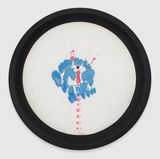

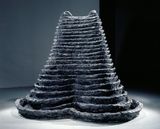


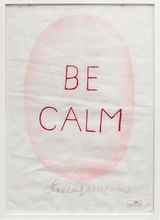










Explore Louise Bourgeois' Exhibitions






Louise Bourgeois in Ocula Magazine








Explore and Follow Artists Shaping Contemporary Art
A respected voice in contemporary art discourse.
Focusing on ambitious storytelling and insightful art-world commentary. Ocula Magazine publishes in-depth interviews, critical essays and timely analysis on the artists, exhibitions and ideas driving the global art world.
Learn more about Ocula Magazine
Showcasing the best of the art world.
Ocula partners with galleries from around the world to highlight their artists, artworks and exhibitions. Gallery membership is by application and invitation, with each member vetted by an independent panel.
Learn more about Ocula Membership
Specialises in the sale of major artworks.
Led by a team with deep ties to the world’s leading auction houses, galleries and collectors. Ocula’s advisory team offers bespoke services to high-net-worth clients from around the world who are looking to acquire the best of contemporary and modern art.
Learn more about our team and services