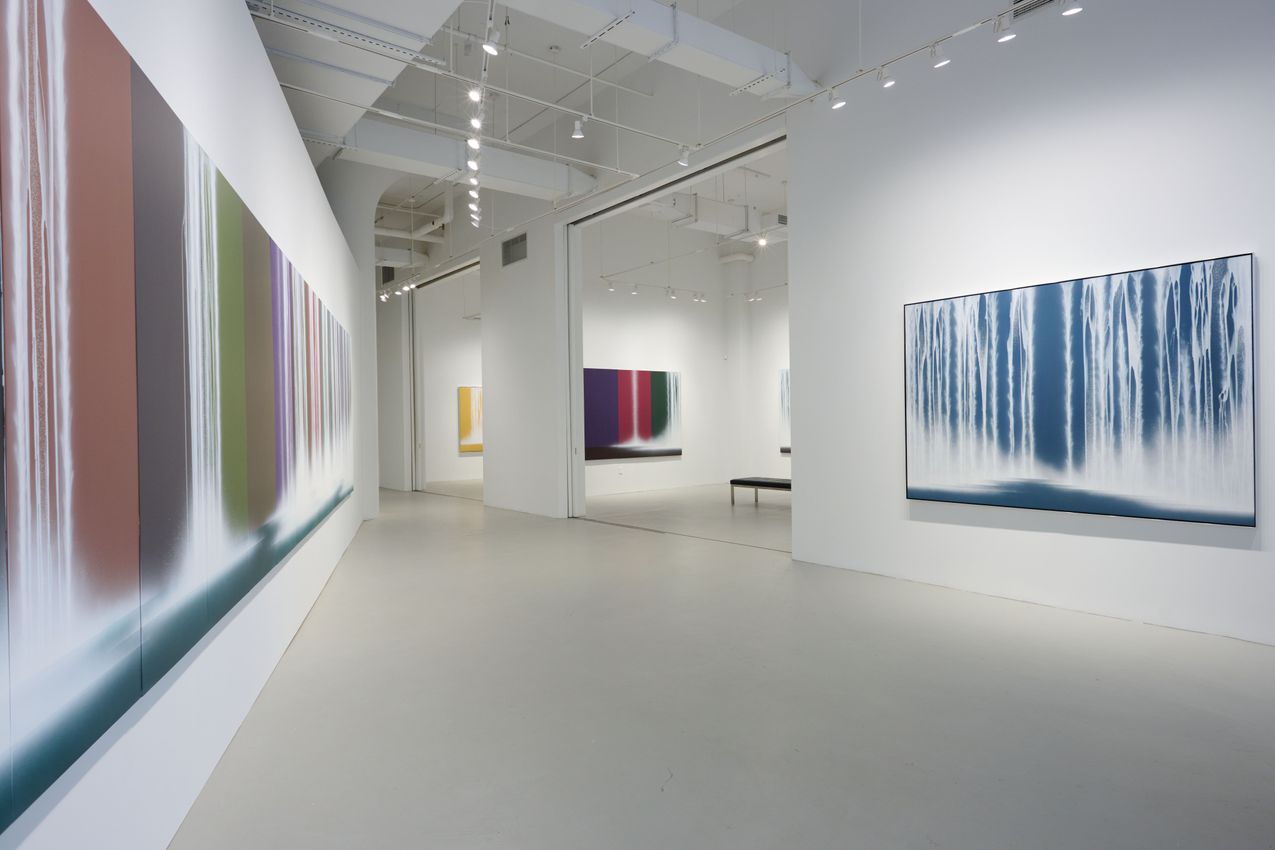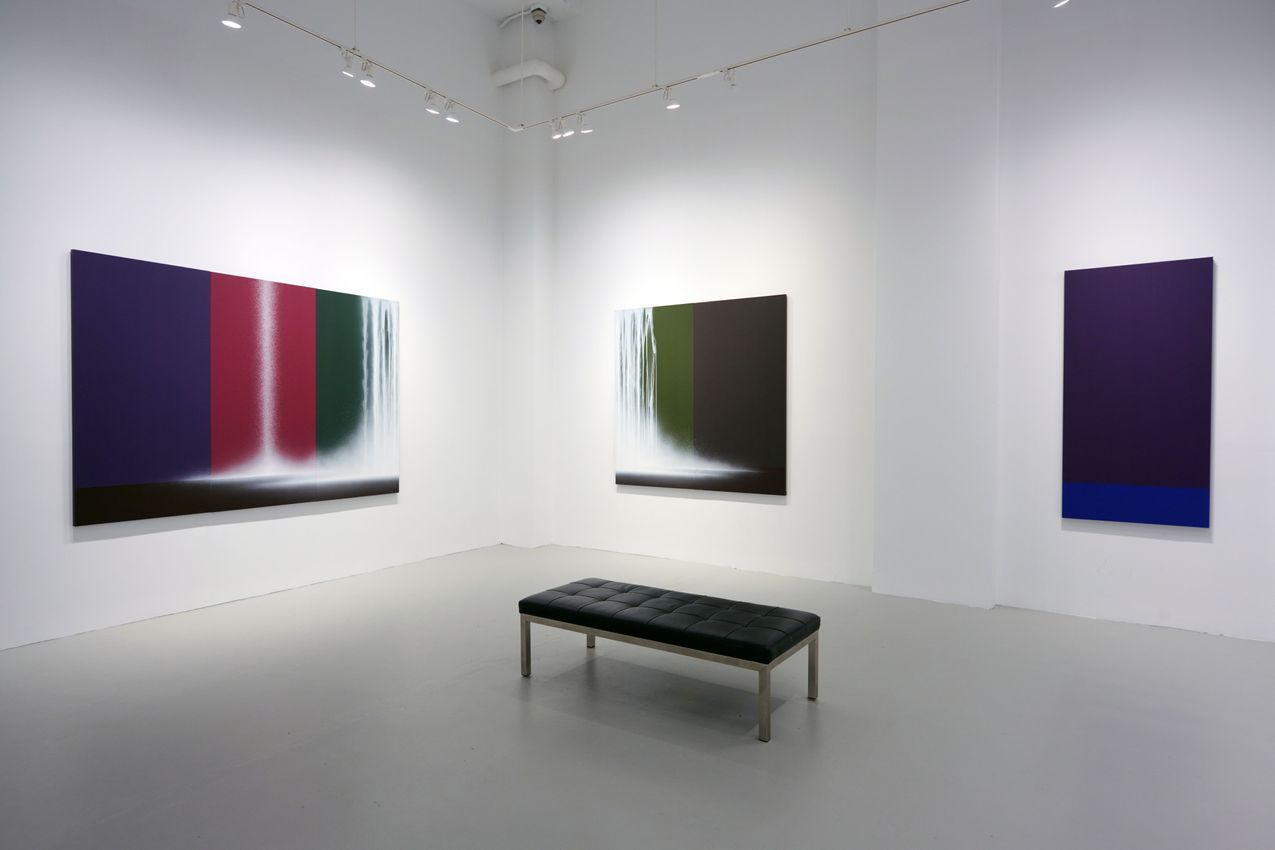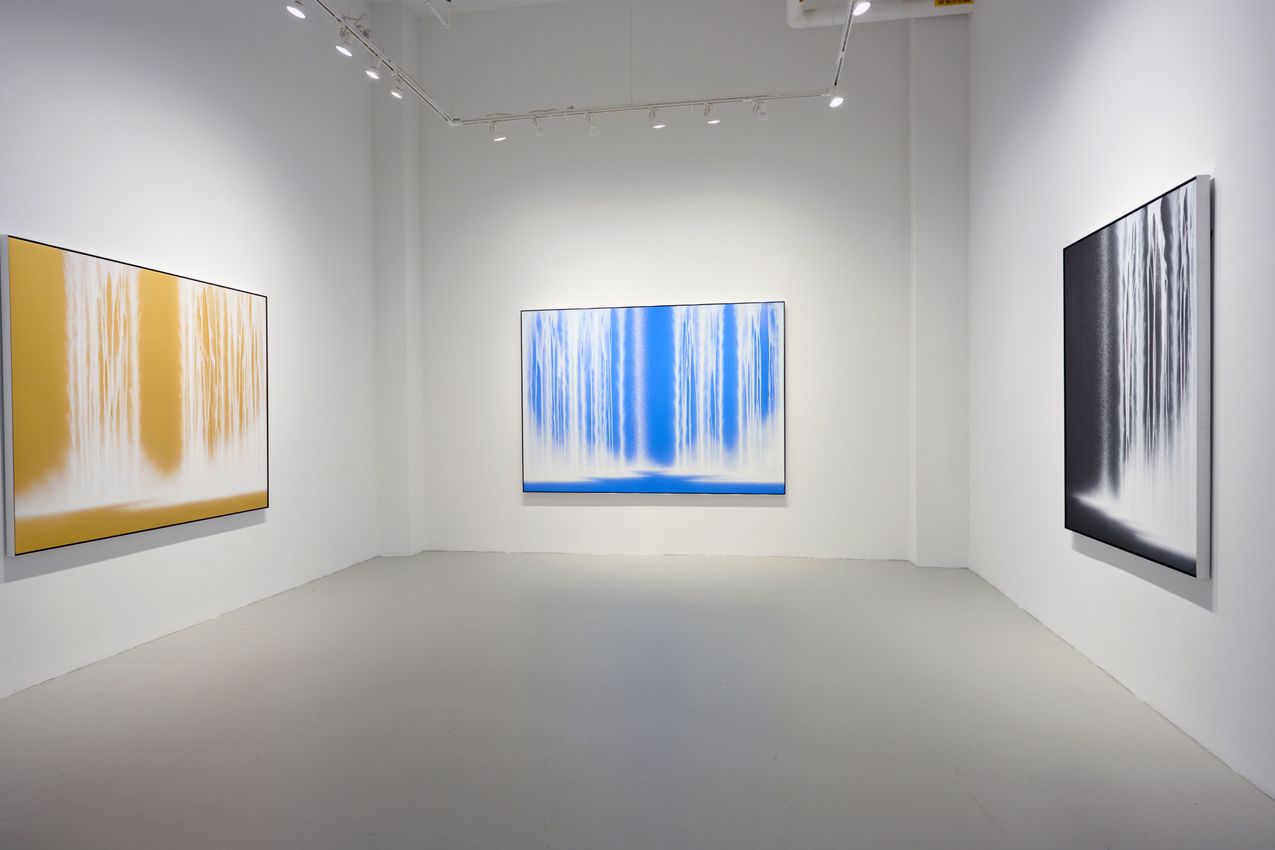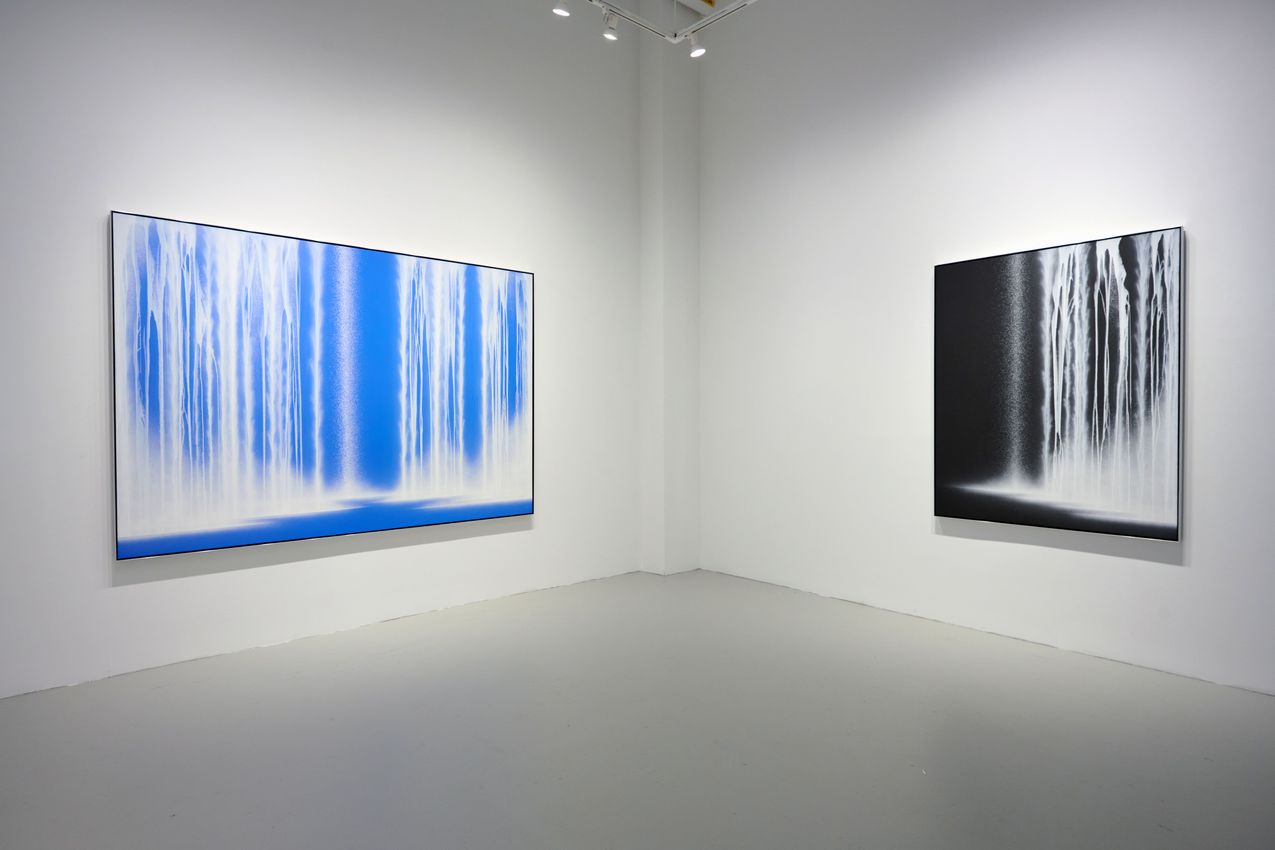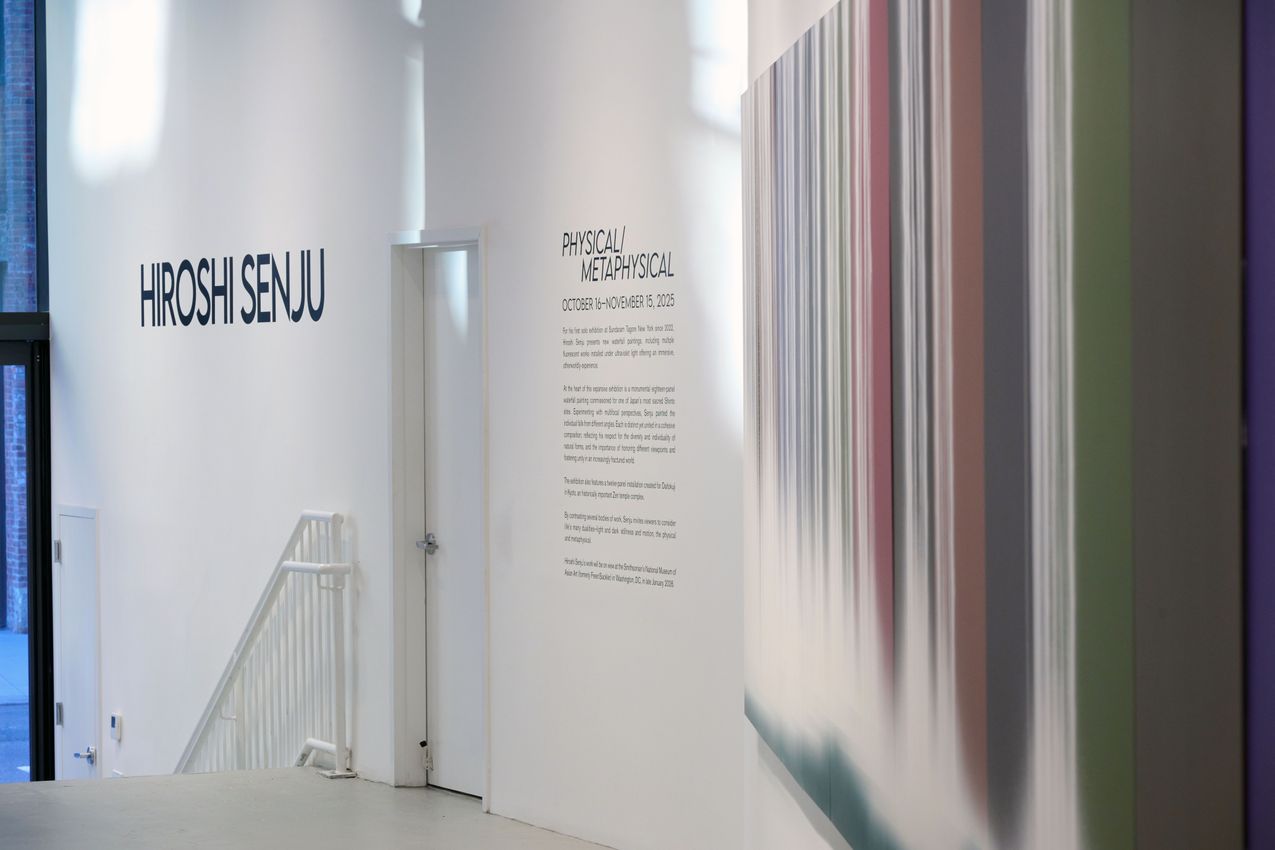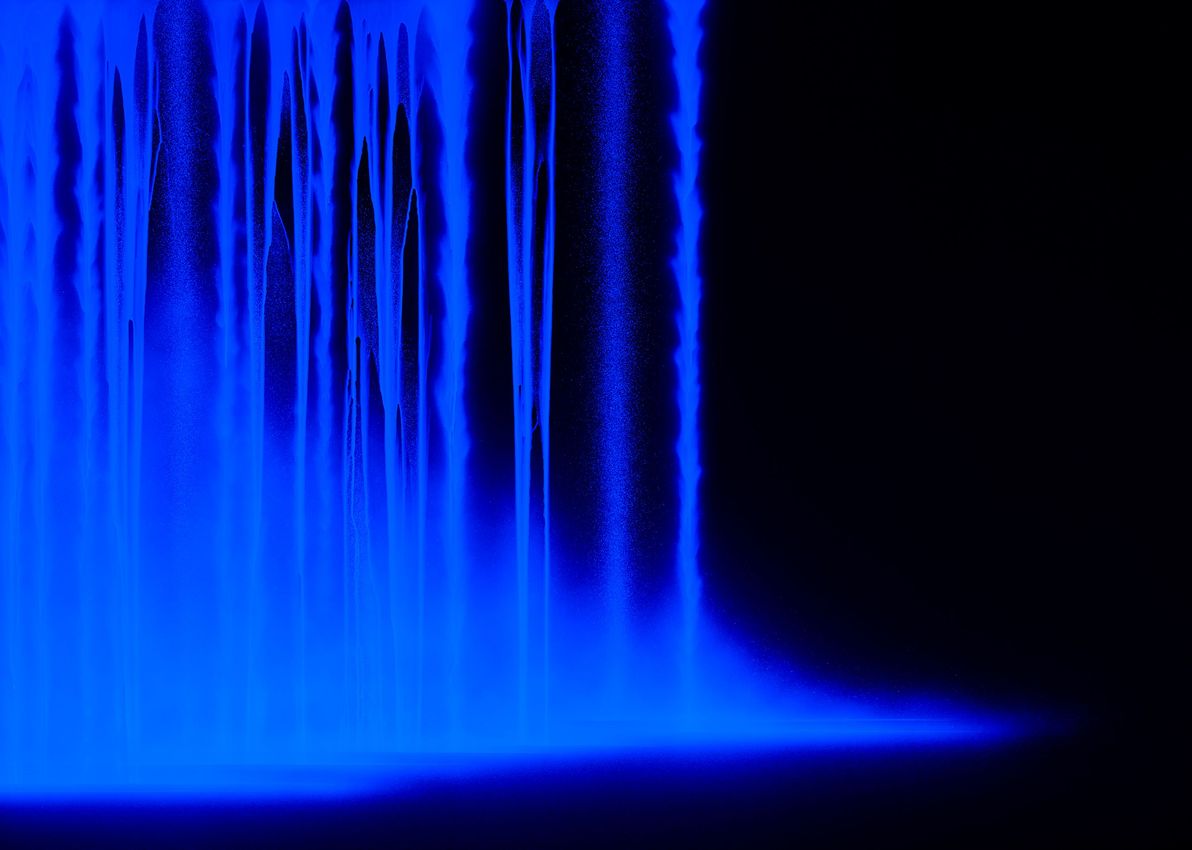
Known for his ability to fuse traditional Japanese painting techniques with a minimalist, contemporary visual language, Hiroshi Senju explores the sacredness of nature and the human condition through his masterful treatment of water and light.
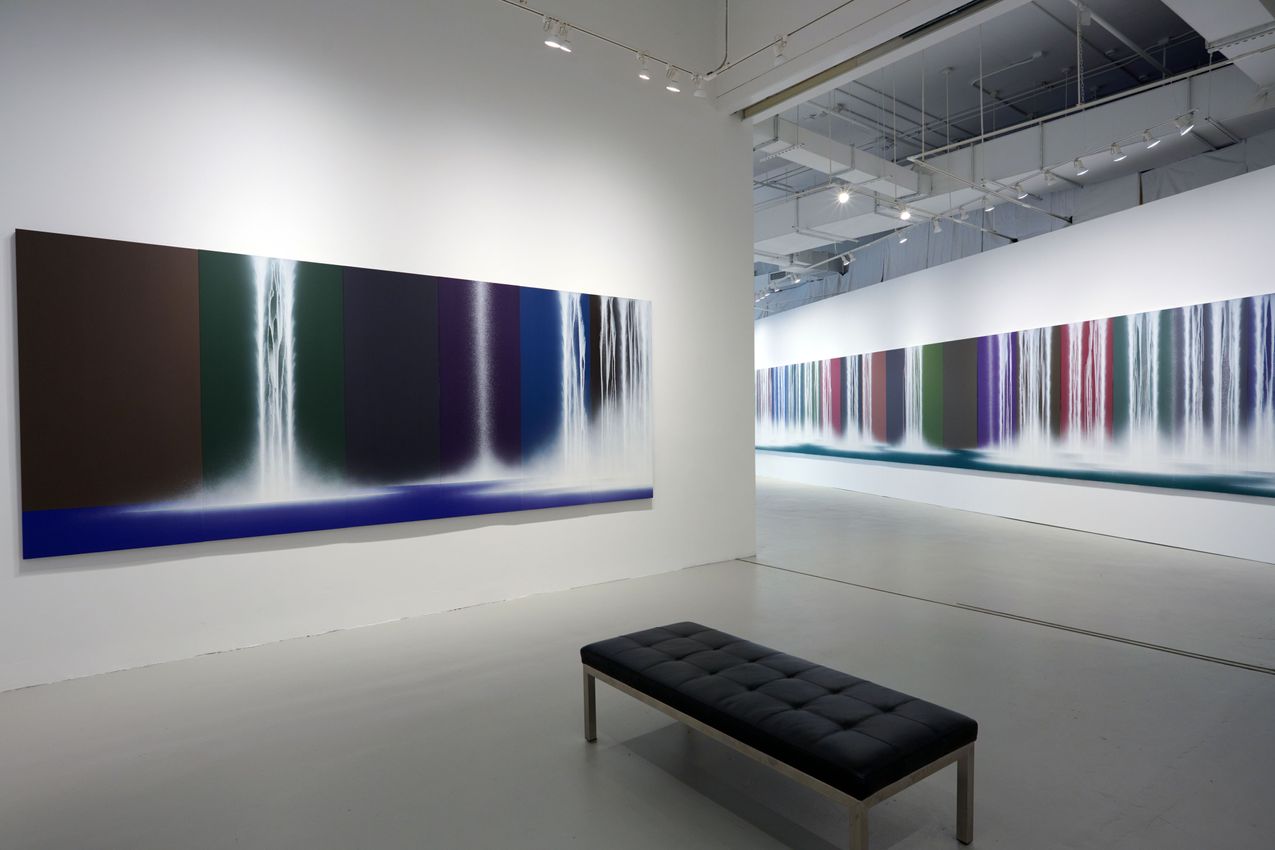
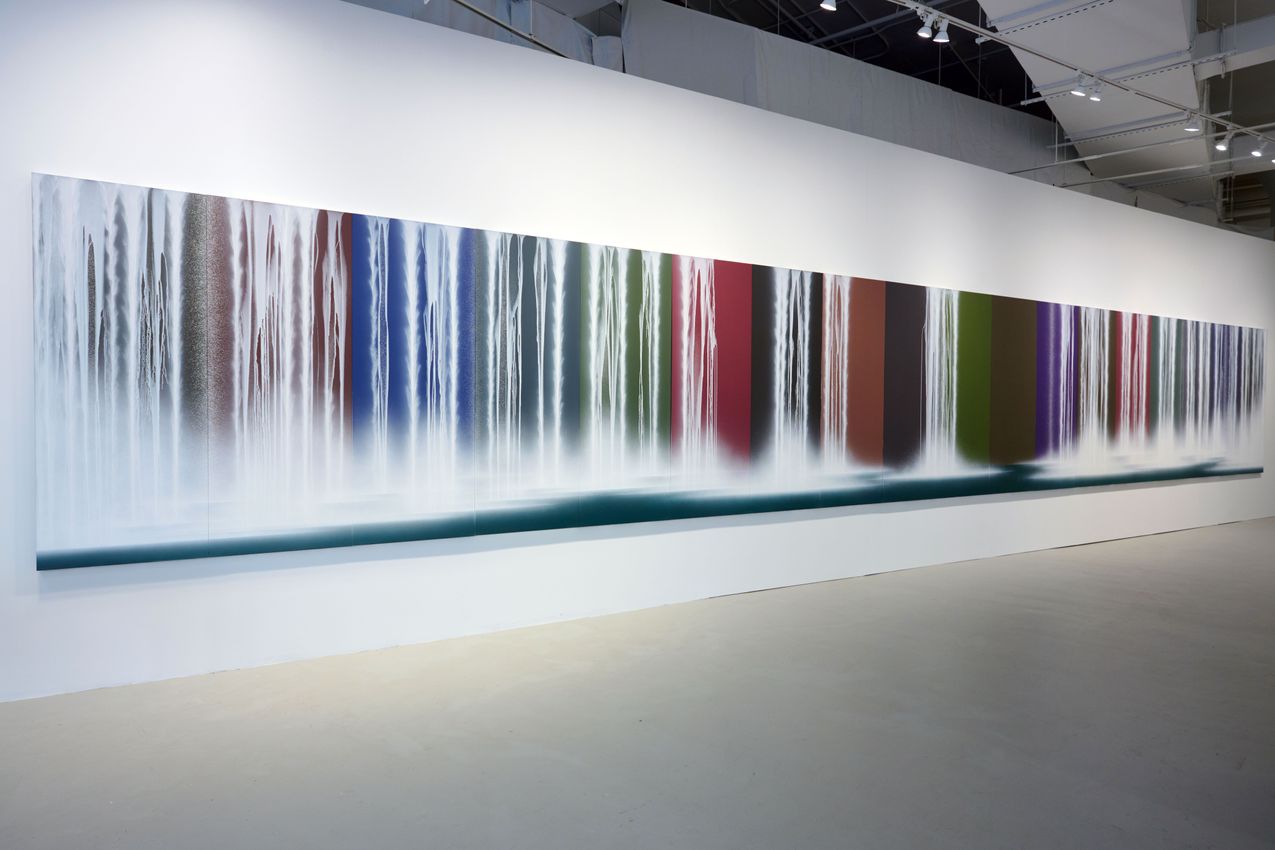
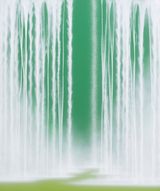
At the heart of this exhibition is a monumental eighteen-panel waterfall painting commissioned for the Ise Shrine, one of Japan’s most sacred Shinto sites. During visits to Ise, Mie Prefecture, about 200 miles southwest of Tokyo, Senju was deeply moved by the atmosphere created by an ancient, unnamed pond. He sought to translate the profound sense of time and place he experienced onto canvas, creating waterfalls that cascade into the pond’s deep-green waters.
As he painted, an intensely physical process, the work evolved organically into a cycle of some thirty separate waterfalls. Experimenting with multifocal perspectives, Senju painted the individual falls from different angles. Each is distinct yet united in a cohesive composition, reflecting his respect for the diversity and individuality of natural forms, and the importance of honoring different viewpoints and fostering unity in an increasingly fractured world.
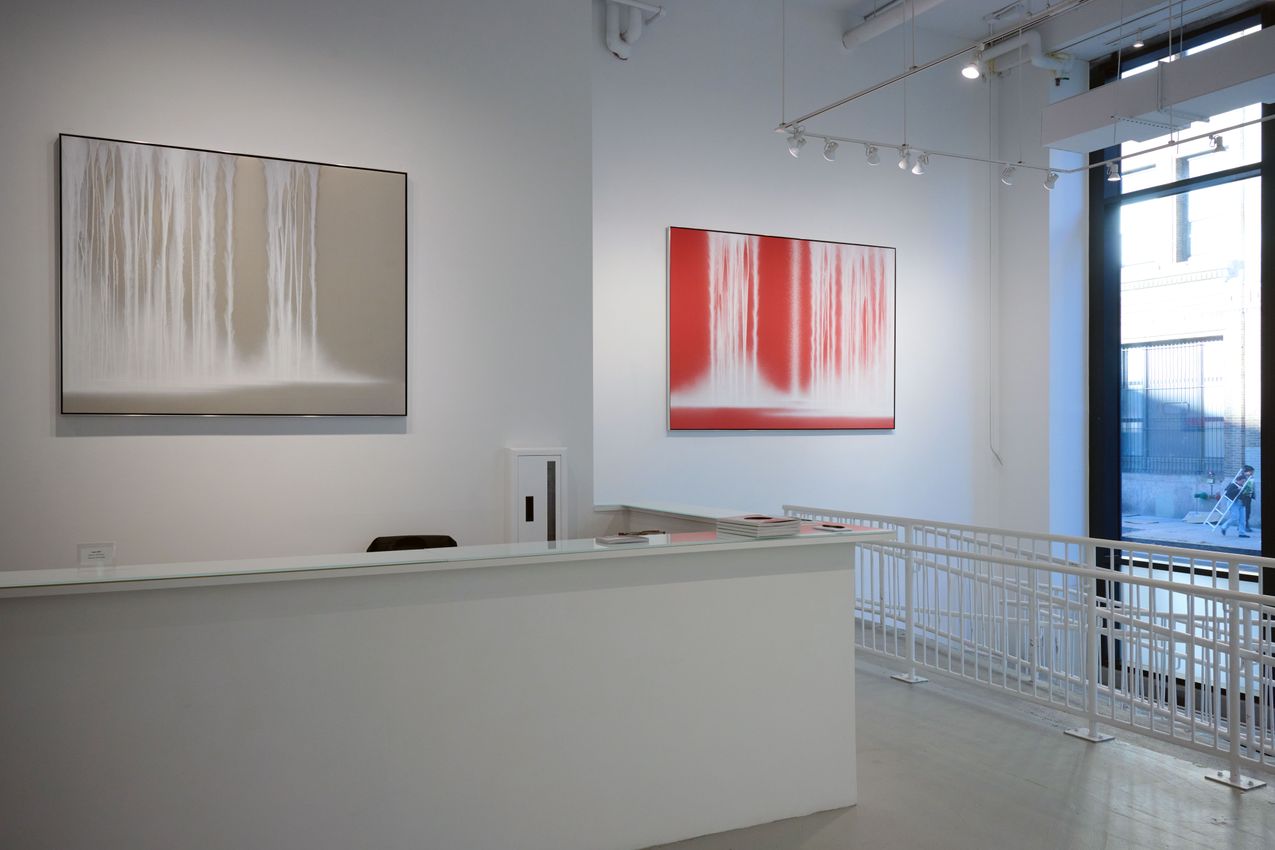
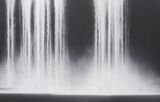
The exhibition also includes a twelve-panel installation created for Juko-in Kitakata, a sub-temple of Daitokuji in Kyoto, an historically important Zen temple complex in Japan. Here Senju turns to the philosophical tenets of Zen, seeking to express ku (emptiness) and mu (selflessness)—states of mind that invite stillness, renewal, and the realignment of the self. The paintings embody the spiritual depth of Zen practice, offering viewers a meditative space that transcends the physical world.
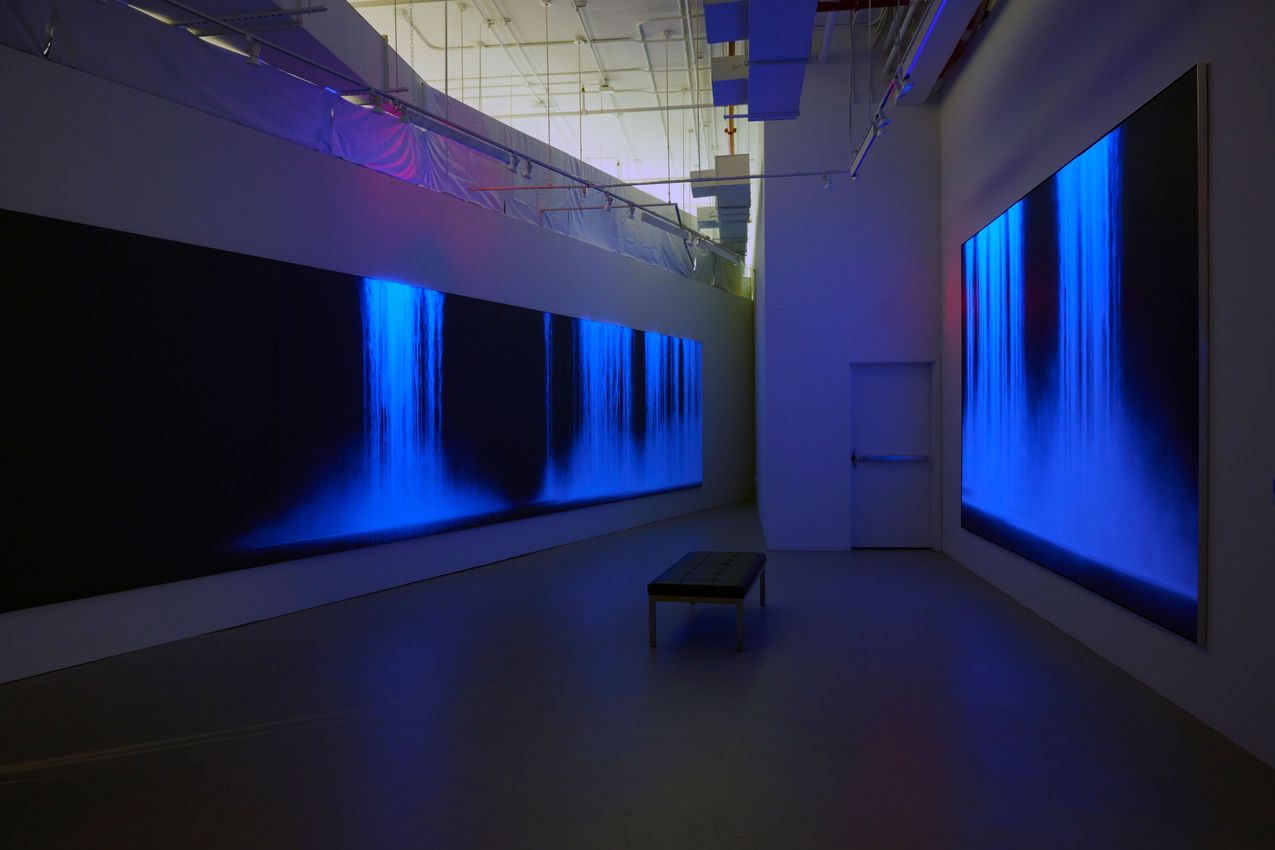
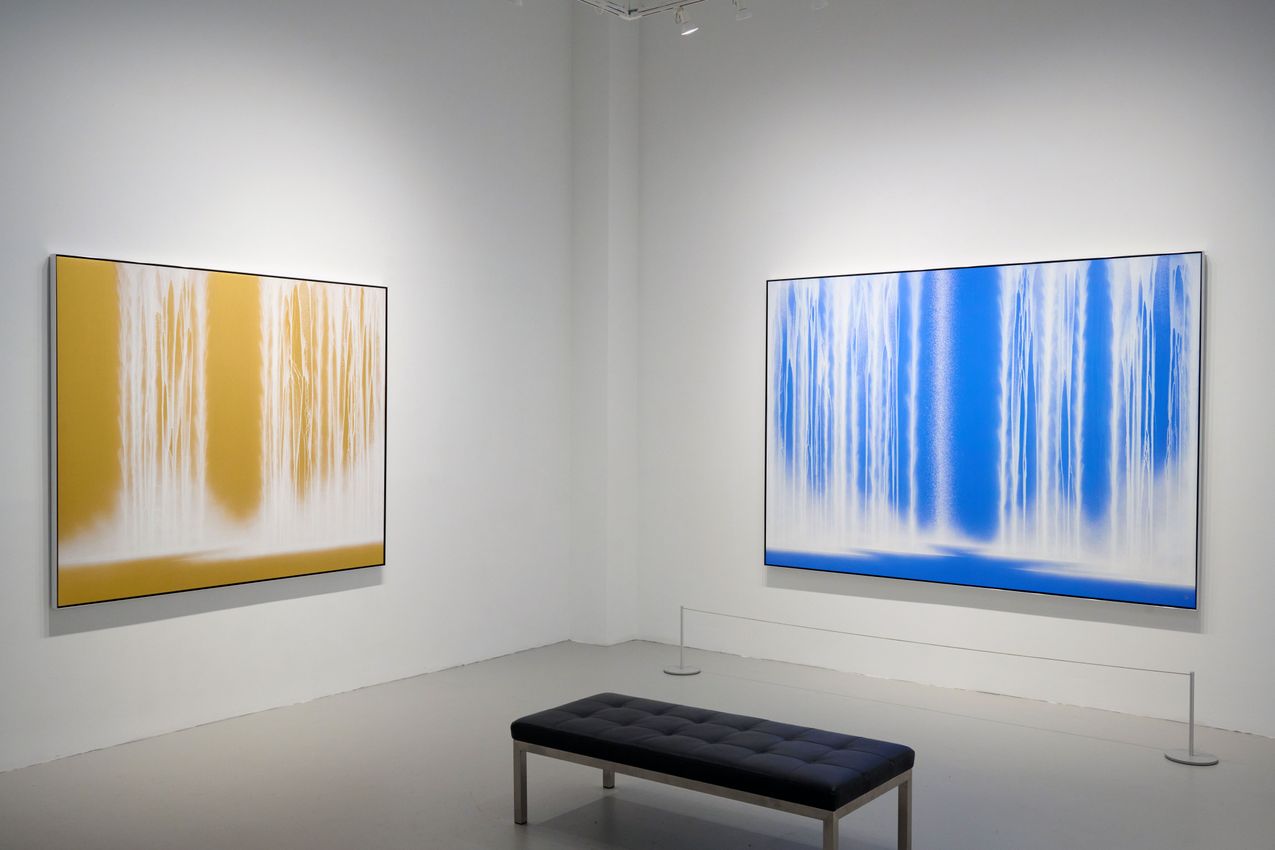
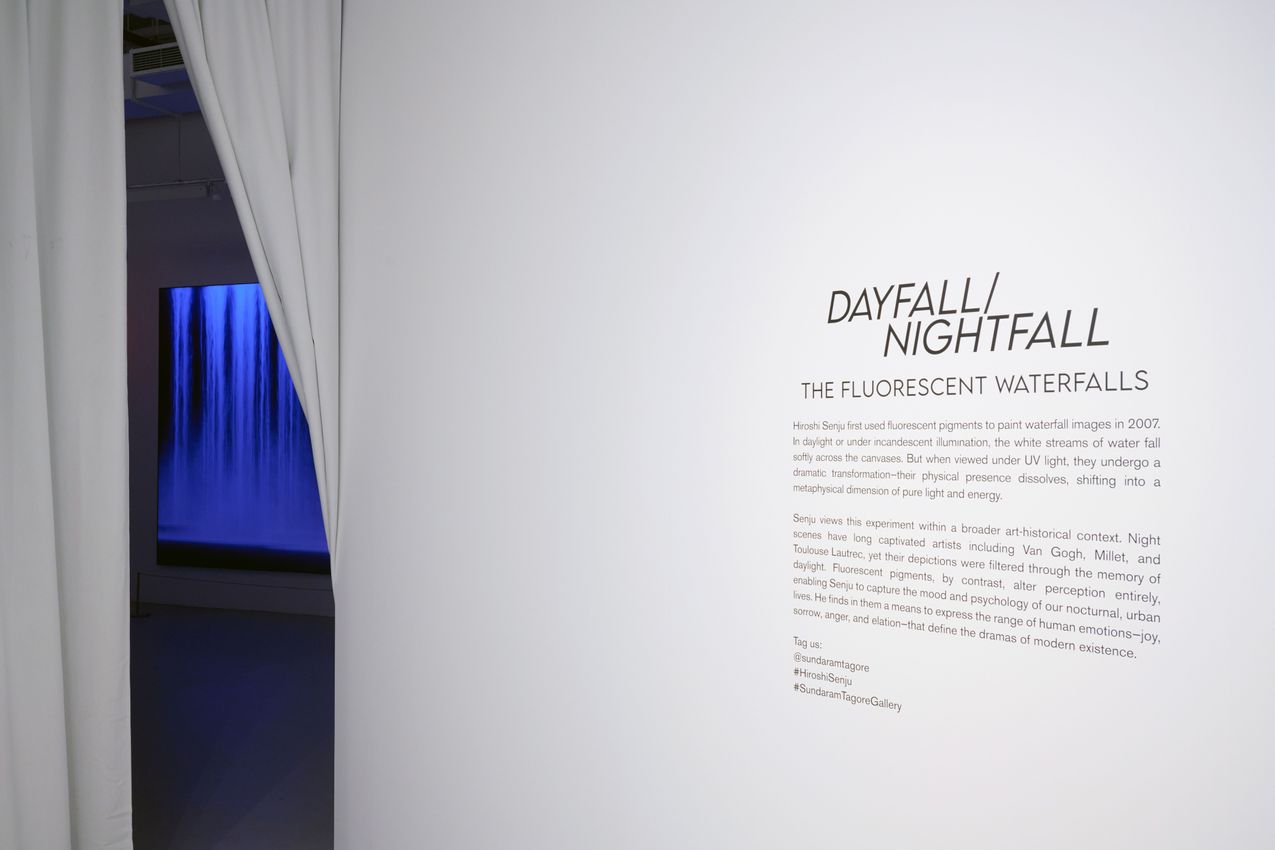
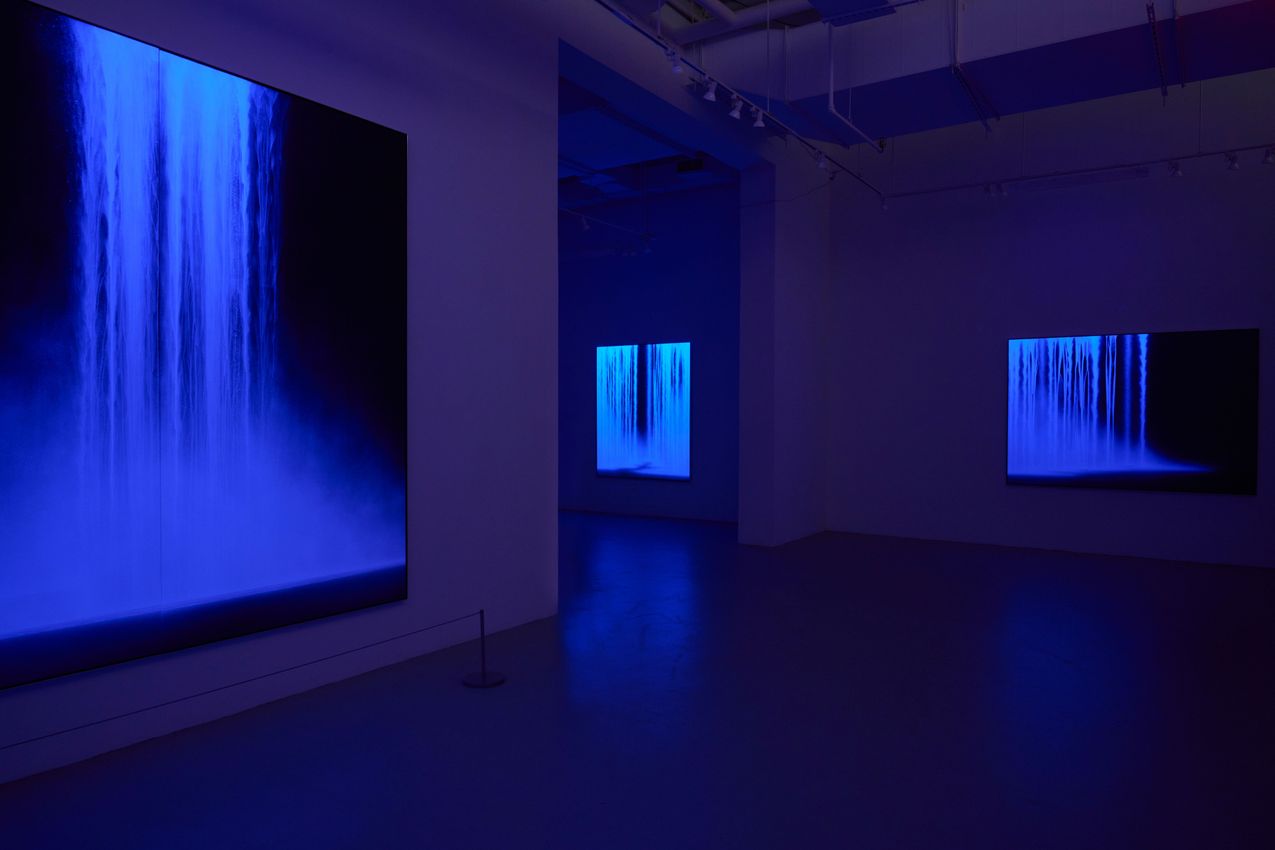
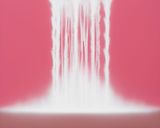
Alongside these two large-scale installations, Senju presents a series of waterfall works painted with fluorescent pigments, a radical extension of his exploration of perception and experience. He was inspired by the reality of contemporary life, in which much of our existence unfolds beneath artificial light. Under normal illumination, the white streams of water fall softly across the canvases. But when viewed under ultraviolet light, they undergo a dramatic transformation—their physical presence dissolves and shifts into an otherworldly, metaphysical dimension of pure light and energy.
Senju views this experiment within a broader art-historical context. Night scenes have long captivated artists including Van Gogh, Millet, and Toulouse-Lautrec, yet their depictions were filtered through the memory of daylight. Fluorescent pigments, by contrast, alter perception entirely, enabling Senju to capture the mood and psychology of our nocturnal, urban lives. He finds in them a means to express the range of human emotions—joy, sorrow, anger, and elation—that define the dramas of modern existence.
By contrasting these two bodies of work, Senju invites viewers to consider life’s many dualities—light and dark, stillness and motion, the physical and metaphysical.


Japanese-born painter Hiroshi Senju combines a minimalist visual language rooted in Abstract Expressionism with ancient painting techniques unique to Japan. The New York-based artist combines pigments derived from natural materials such as minerals, seashells and coral in a medium of animal-hide glue, and then applies this paint to Japanese mulberry paper. He is noted worldwide for his sublime waterfall and cliff images, often monumental in scale, many of which are featured in prominent public spaces.


Established in 2000 in New York City, Sundaram Tagore Gallery represents established and emerging artists from around the globe, specialising in work that is aesthetically and intellectually rigorous, infused with humanism and art historically significant. The gallery was founded with a mission to show that some of the best and most meaningful art was being created by artists deeply engaged in cross-cultural explorations. Our international roster of artists cross cultural and national boundaries, synthesising Western visual language with forms, techniques and philosophies from Asia, the Subcontinent and the Middle East. More than twenty years later, we continue to champion artists, particularly women and those from underrepresented cultures, whose work exemplifies our interconnectedness.

A respected voice in contemporary art discourse.
Focusing on ambitious storytelling and insightful art-world commentary. Ocula Magazine publishes in-depth interviews, critical essays and timely analysis on the artists, exhibitions and ideas driving the global art world.
Learn more about Ocula Magazine
Showcasing the best of the art world.
Ocula partners with galleries from around the world to highlight their artists, artworks and exhibitions. Gallery membership is by application and invitation, with each member vetted by an independent panel.
Learn more about Ocula Membership

Specialises in the sale of major artworks.
Led by a team with deep ties to the world’s leading auction houses, galleries and collectors. Ocula’s advisory team offers bespoke services to high-net-worth clients from around the world who are looking to acquire the best of contemporary and modern art.
Learn more about our team and services