Press Release

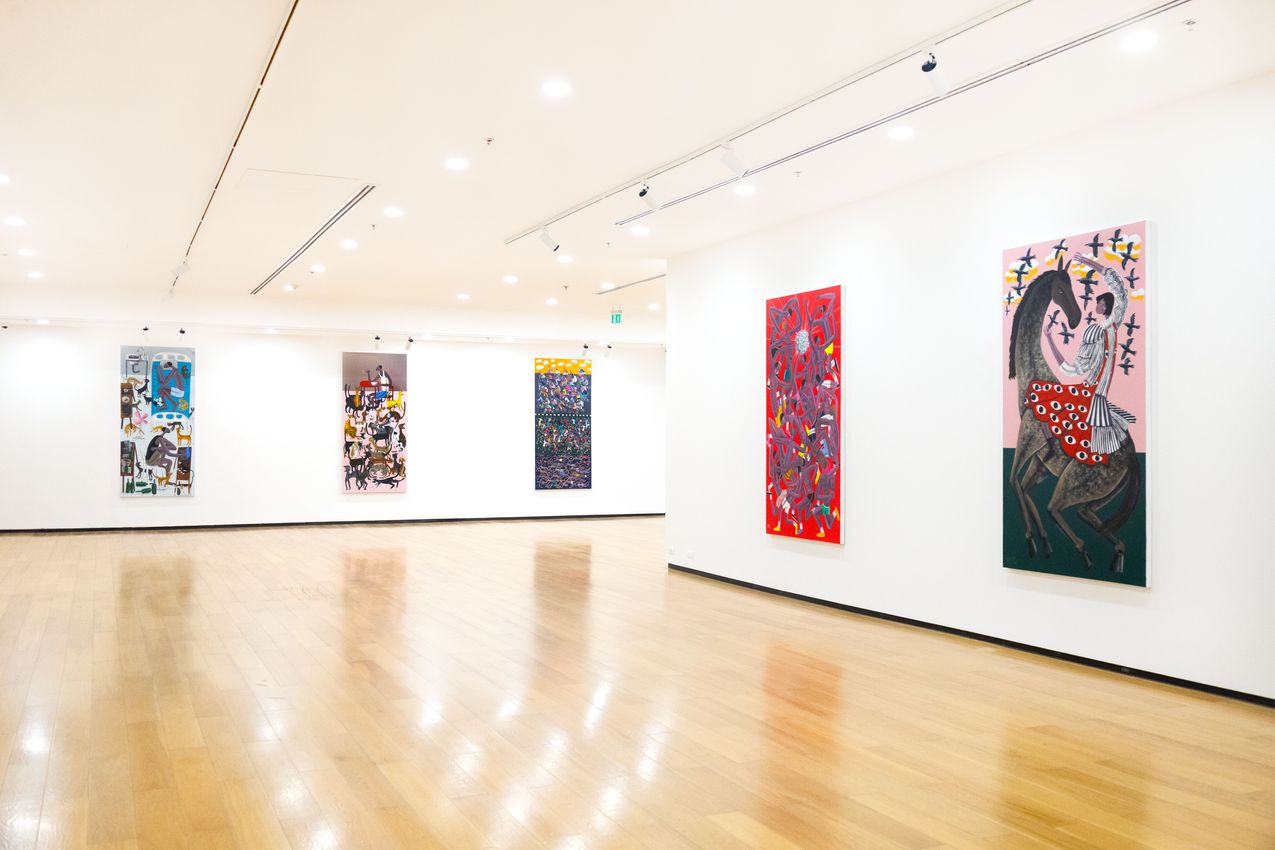
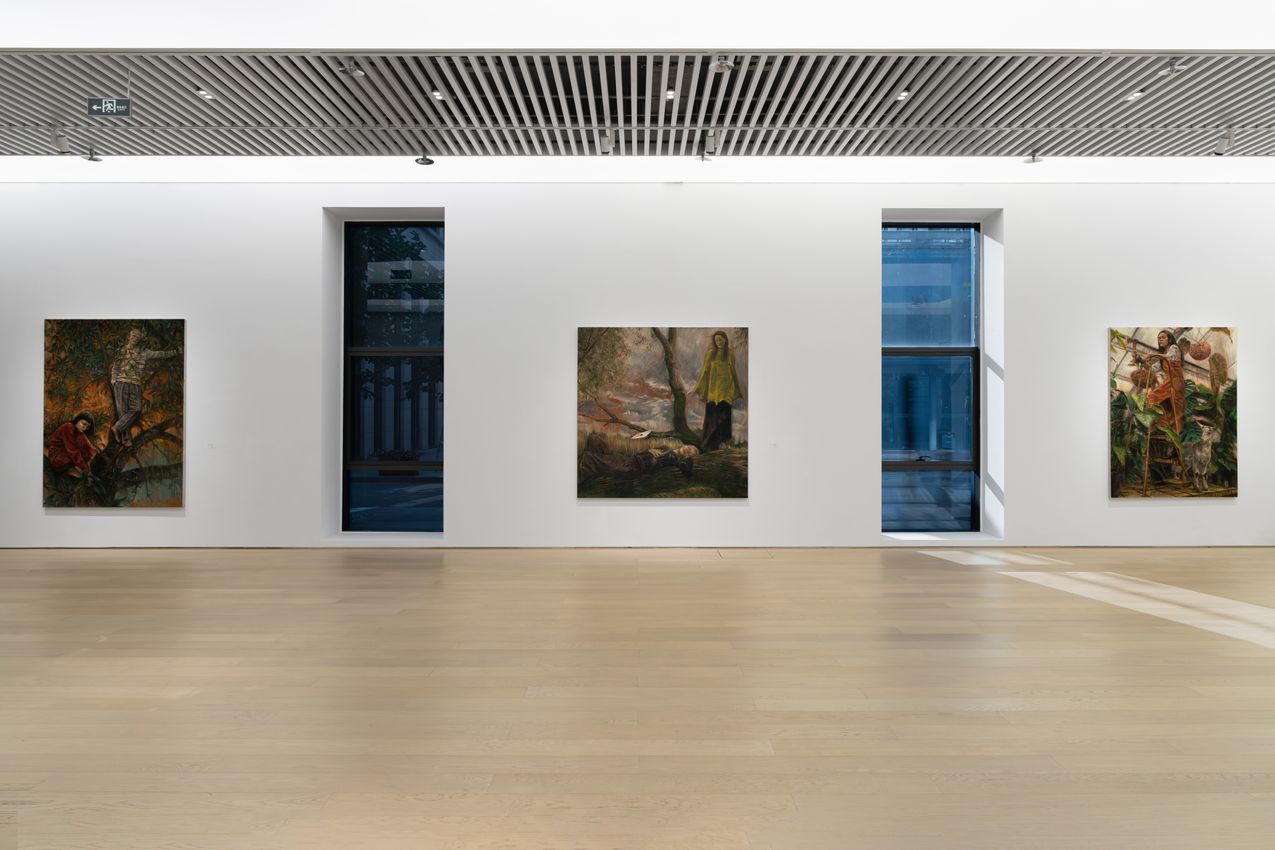
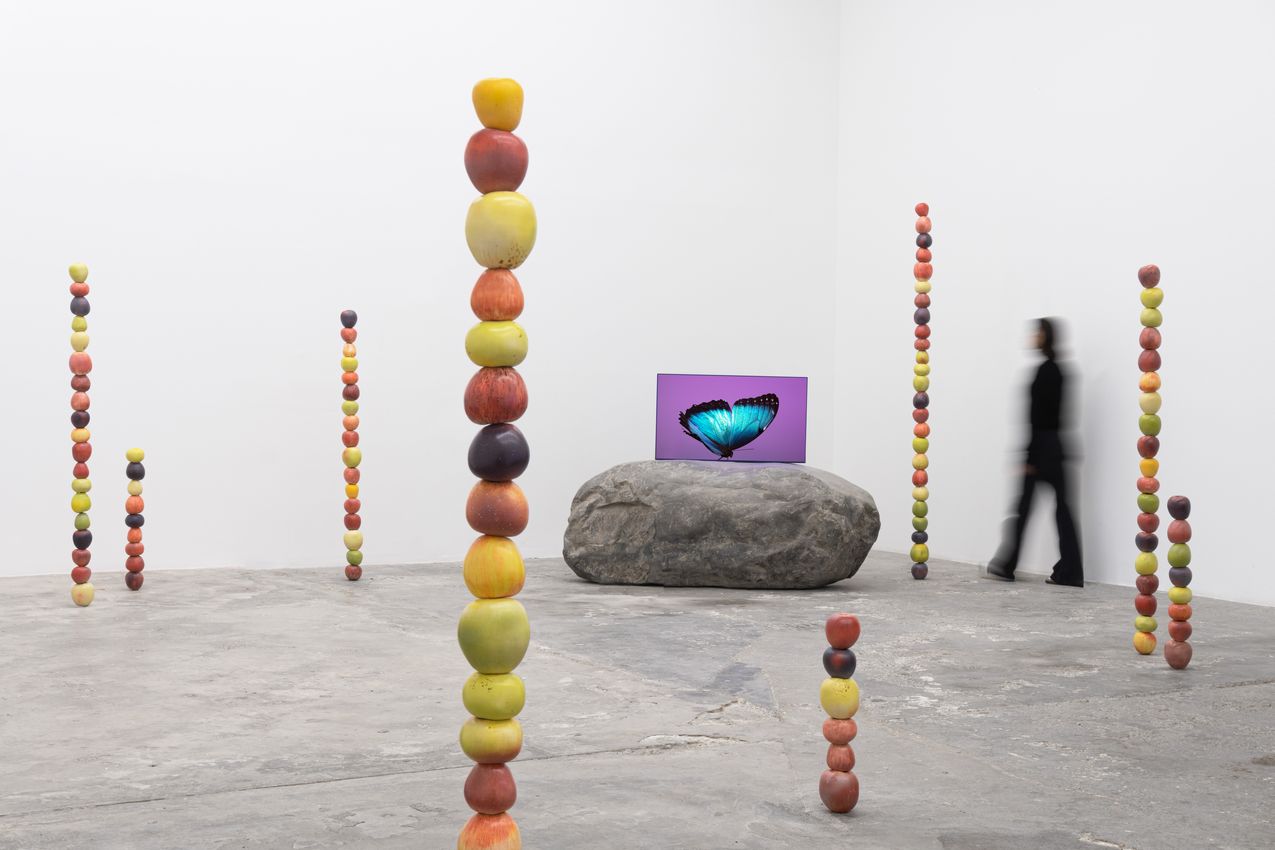
In the discourse of contemporary art, the body is always placed in the central position of being watched, written, and projected. From Foucault’s investigation of corporeal discipline, Deleuze and Guattari’s concept of ‘body without organ’ (Corps sans organs), all the way to Merleau-Ponty’s ‘sense experience’, the body is constantly placed in the crossing point of political, sensual, and semiotic frameworks. Two artists born in the 1980s, Shi Yanliang and Sun Yu, approach the body respectively from the stretch marks of social structure and the mechanism of painterly production, making it into a space of appearance, disappearance, and re-construction. From personal emotion to societal parable, they construct a multi-narrative space about the body.

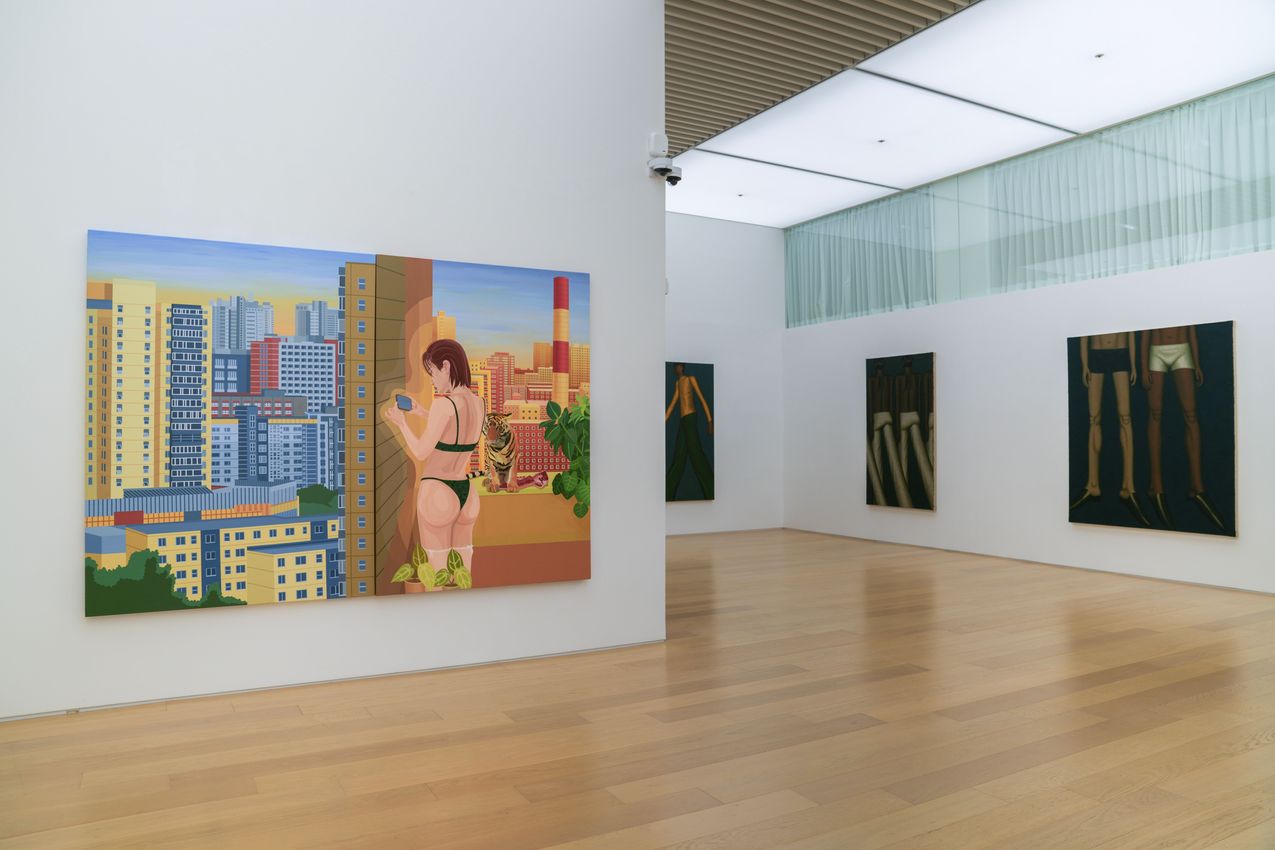
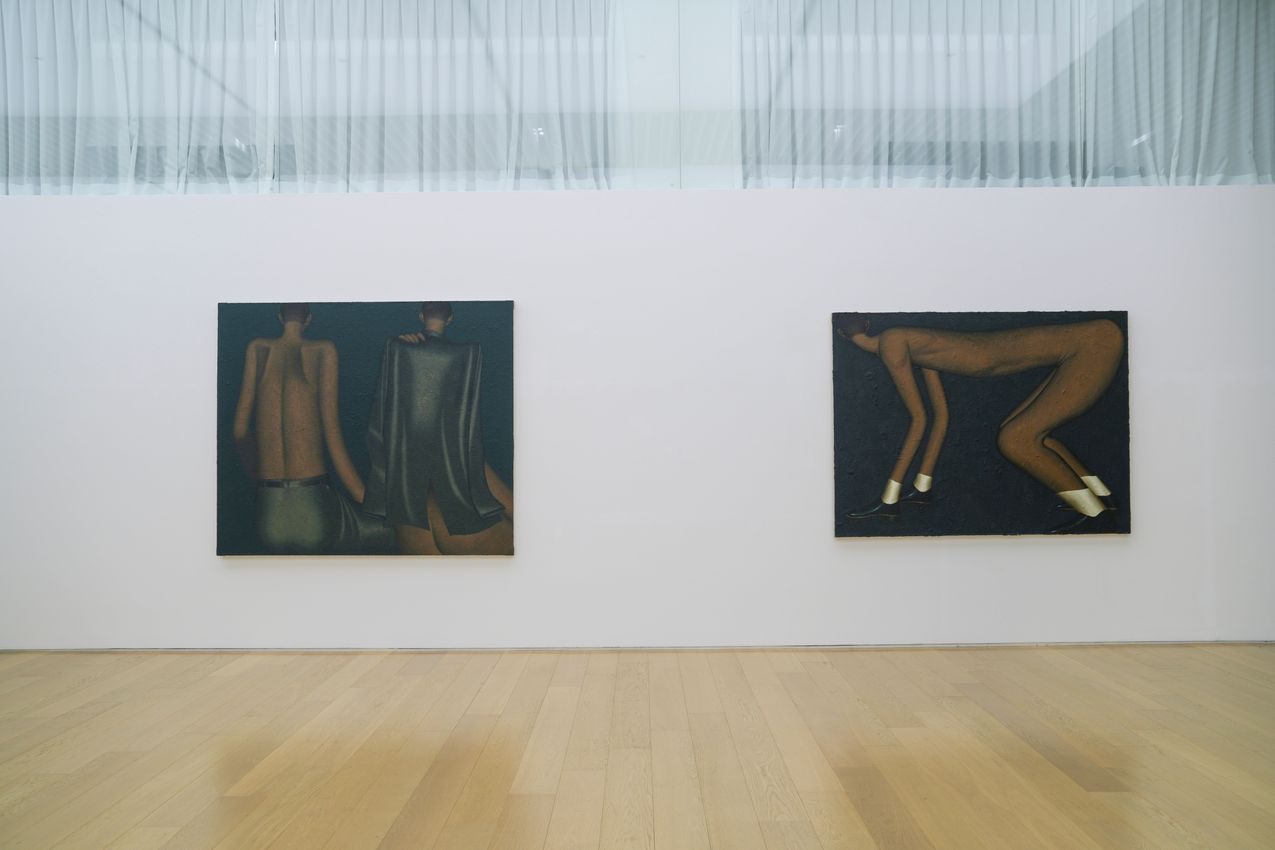
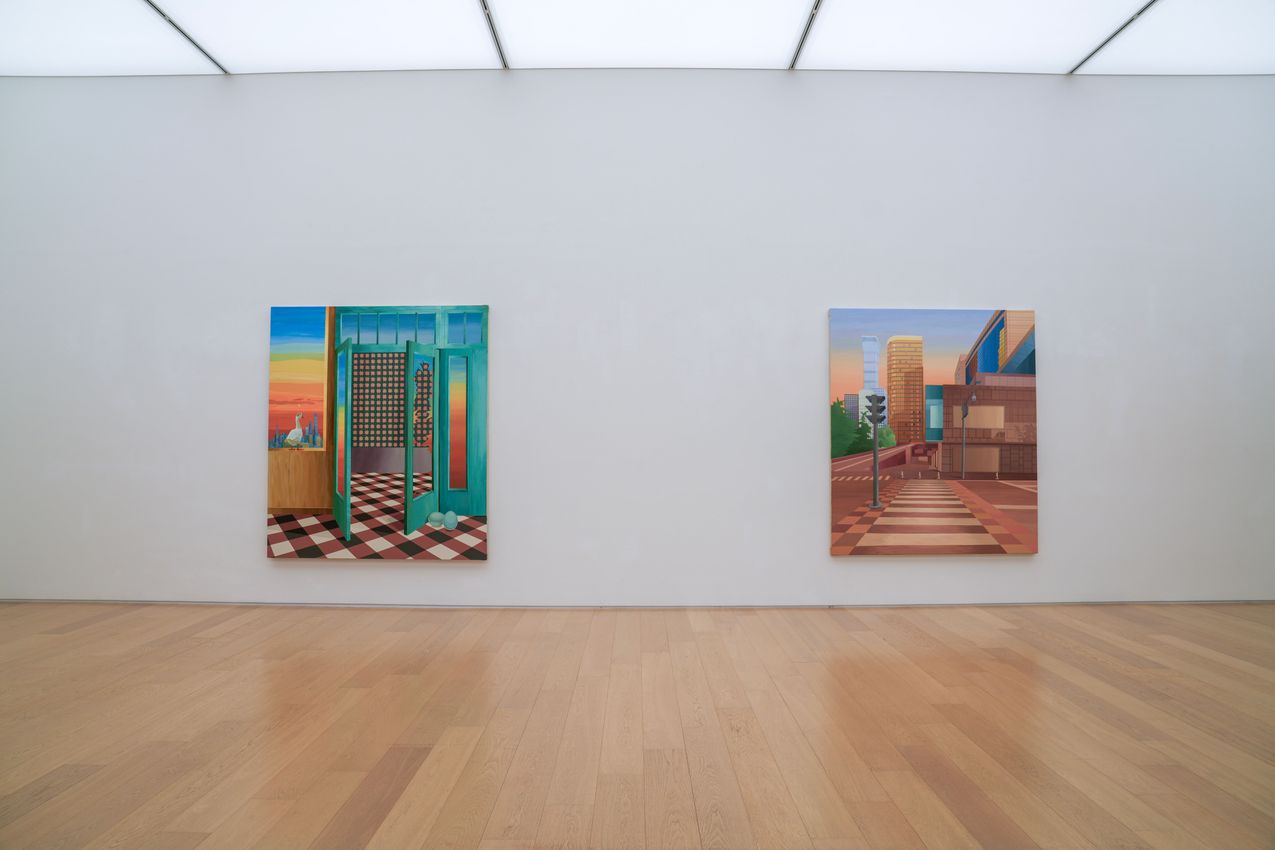
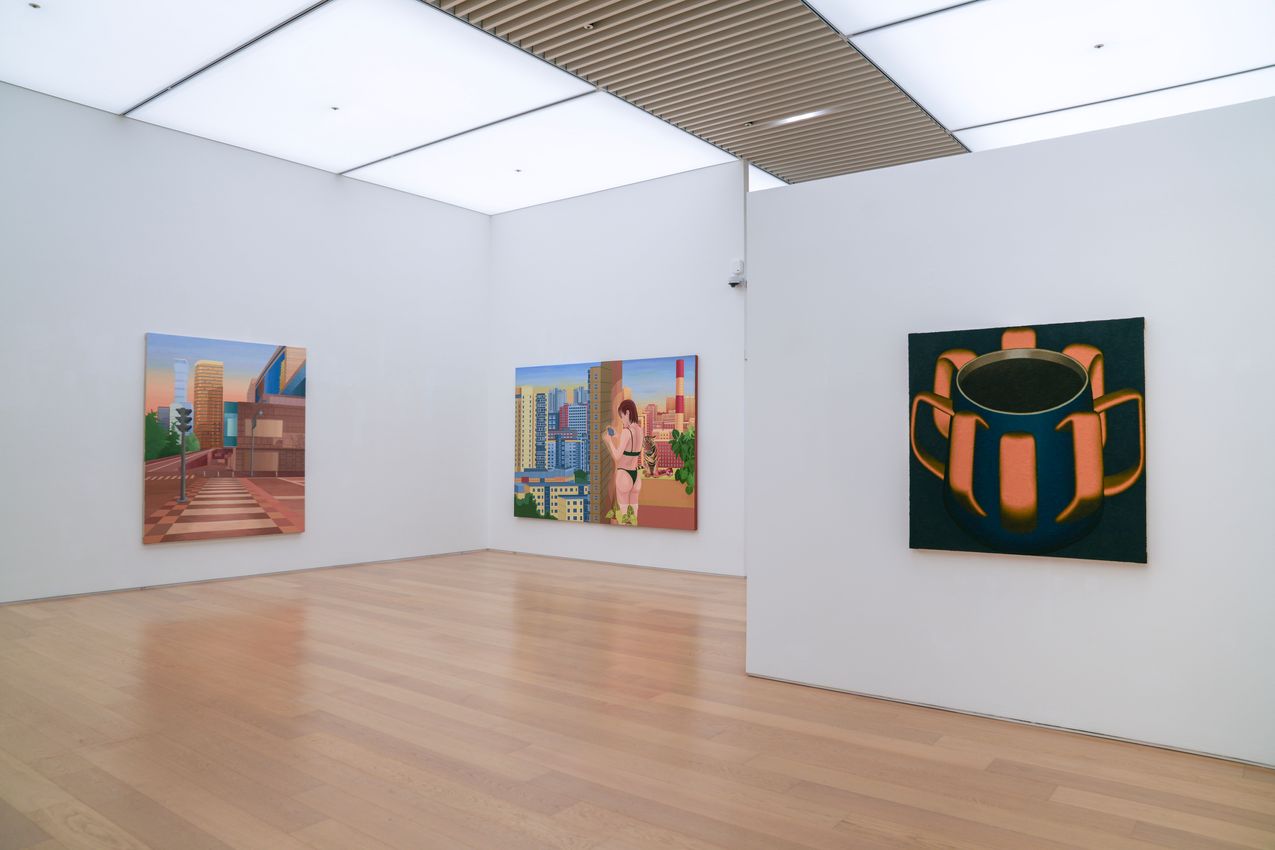
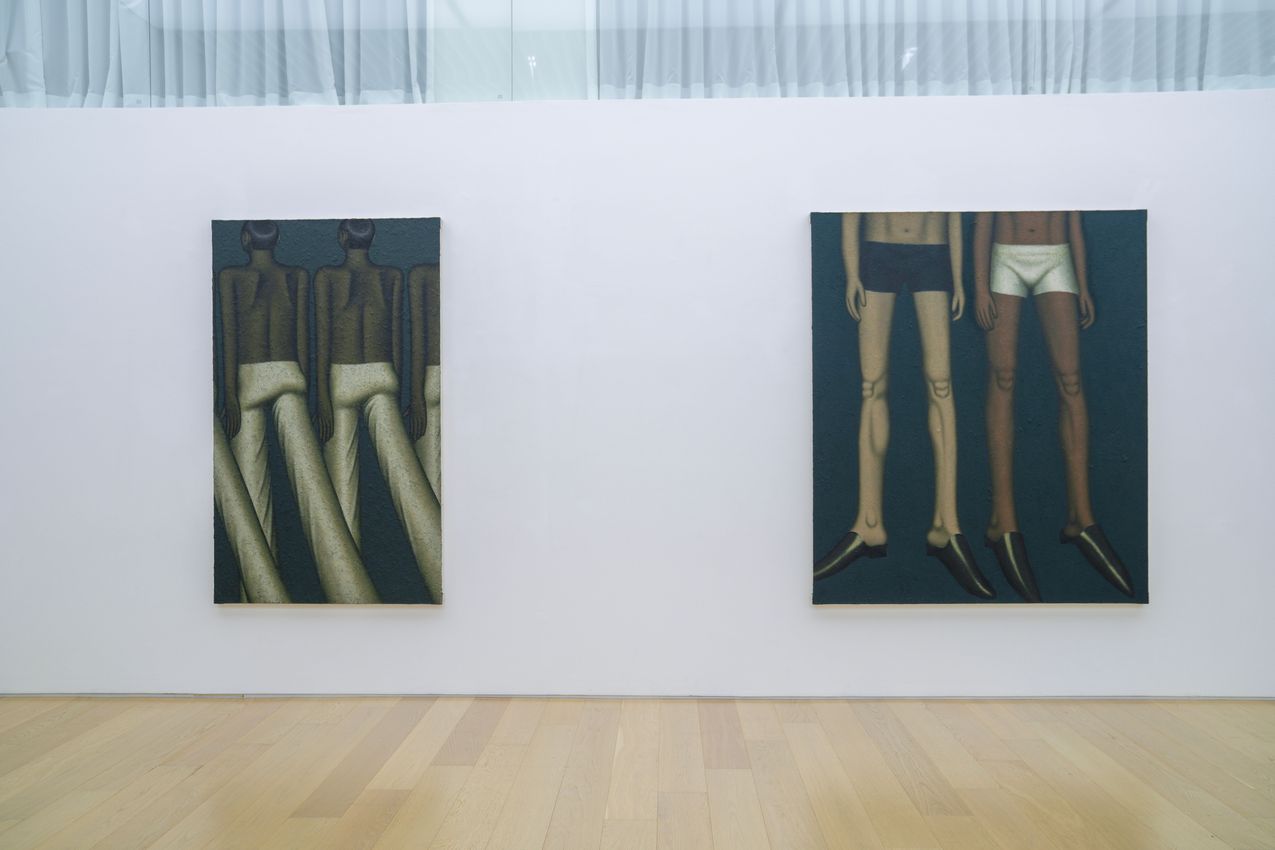
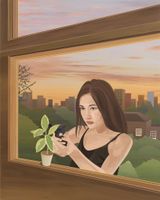
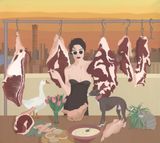
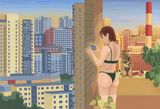
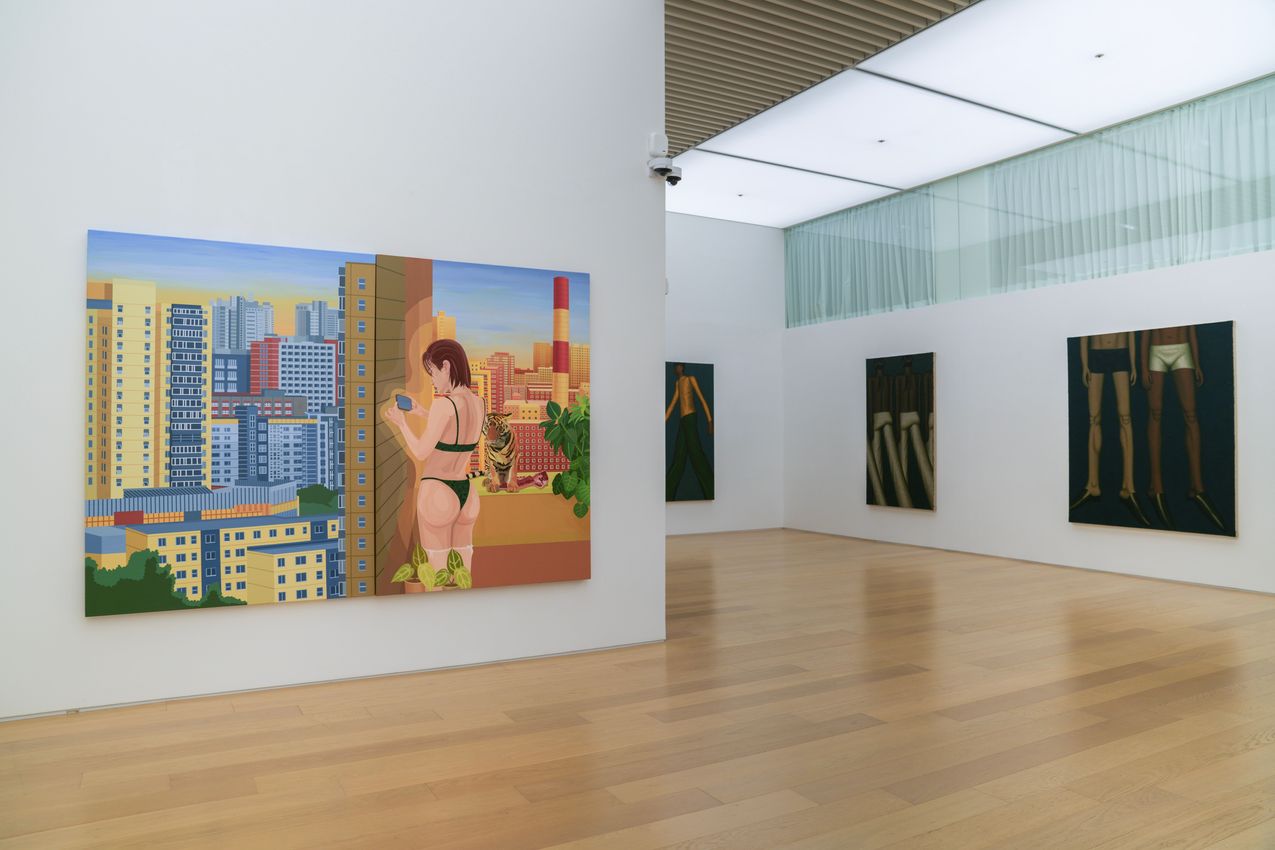
Through Deleuze’s take of Leibniz’s ‘fold’, the body is not a concrete subject but rather a fold under the power of time. To a certain degree, Shi’s work can be interpreted as the imagery precipitation of societal structure. The pictorial body suspends into a state of half-symbol and half-metaphor. A relationship of distortion and suspension constantly emerges in-between human and object, animal and narrative. These images are not emotional narratives but patent marks left by societal experiences on the individuals. Through a highly sensitive gaze of reality, Shi puts body into the spiritual landscape of China’s societal metamorphosis.

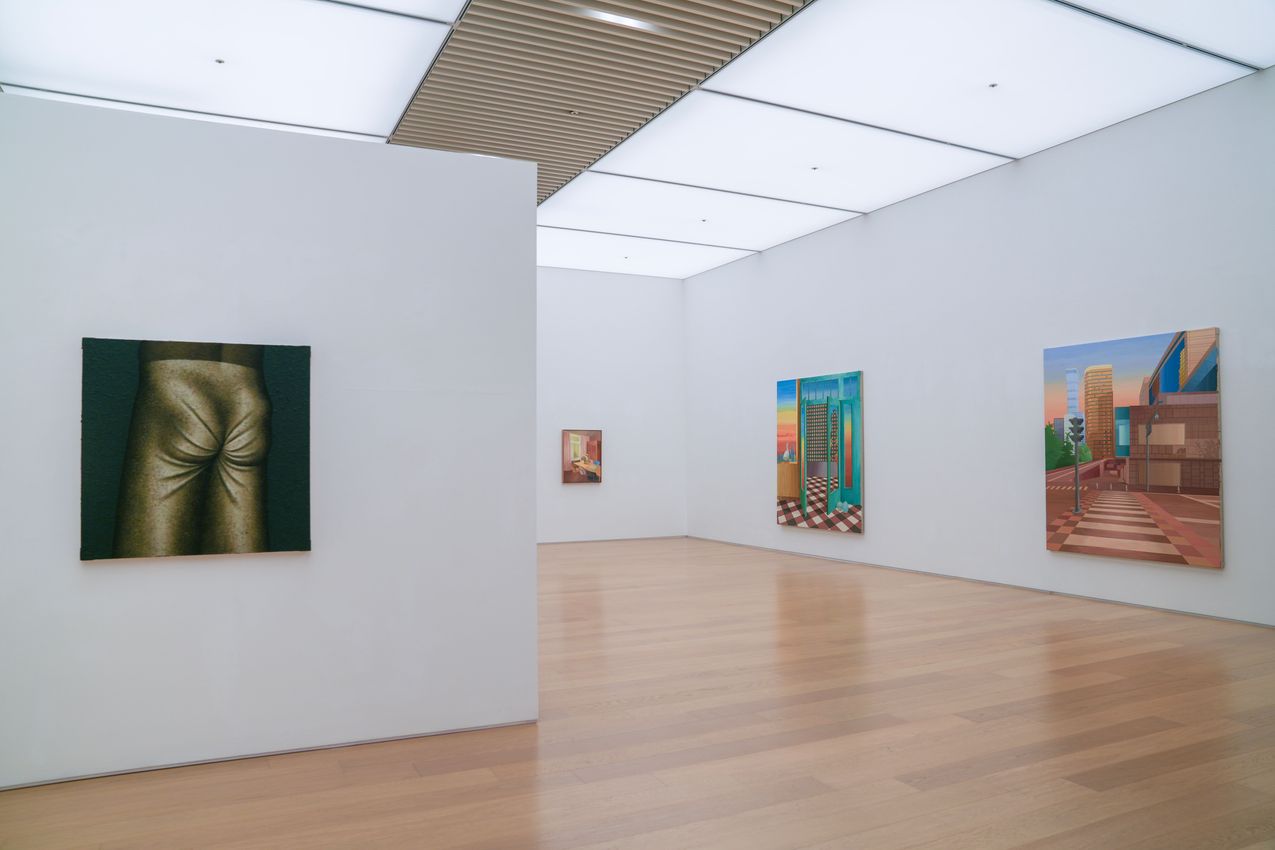
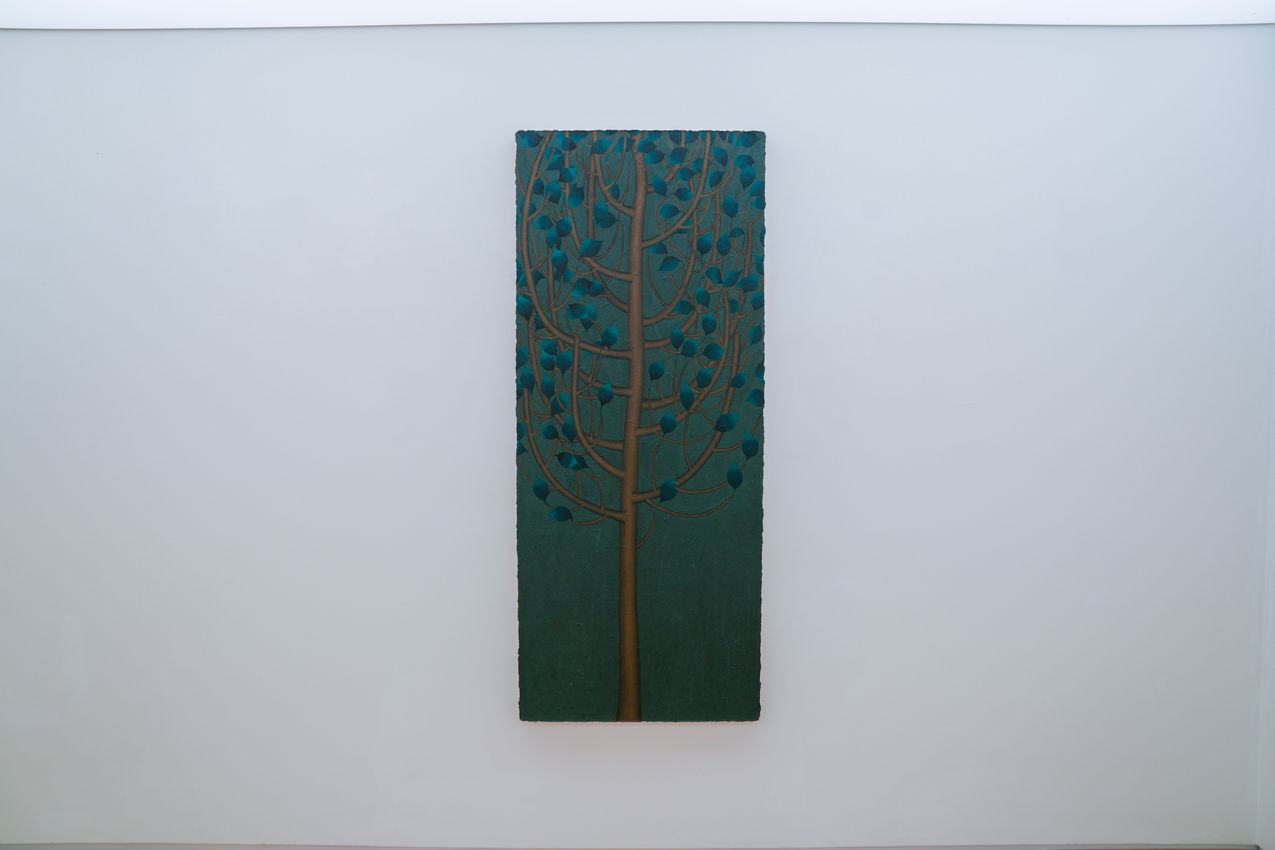
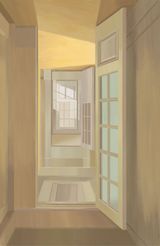
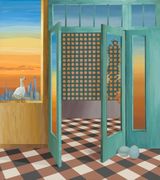
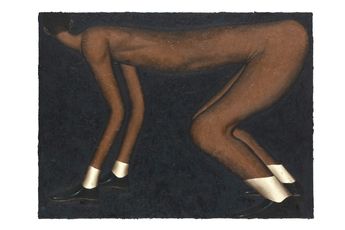
Shi’s pictorial space does not rely on narrative integrity. Through the compounded relationship among symbols, fables, and structural omission, he puts pictorial images in a compressed space. The relationship among light, background, and subject is distant as well as tense, presenting a static tension. Heart Tigers explores the tension between internal desire and external discipline through the juxtaposition of body and animal. Feast No.5 distills the sense of group identity and generational ceremony though the static image of pictorial objects. Corridor is not only a spatial structure but more so a metaphoric ally where the body enters, leaves, stays, and passes through, echoing to Shi’s aesthetic pursuit of ‘omission’ in his new series. As a key optical language, omission places the body into a state of suspension. Its blurring combination of presence and an absence suggests the state of ambiguity and revolt in real life.

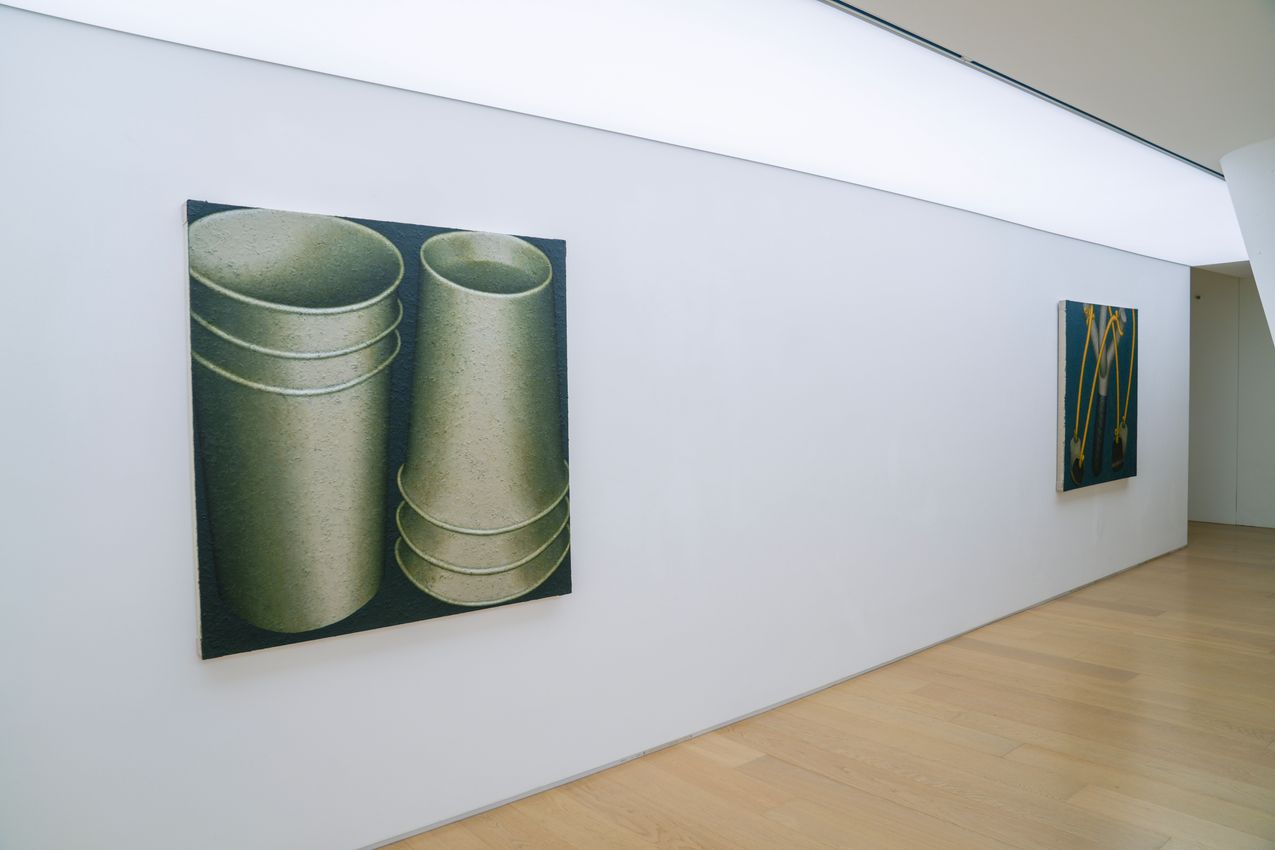
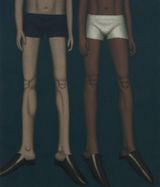
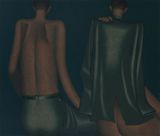
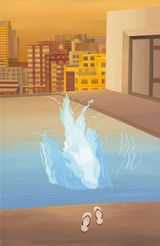
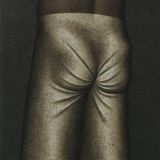
Different from Shi’s gaze of societal reality, Sun’s artistic creativity originates from the interior logic of painting. He does not anticipate the pictorial image but paints freely on the canvas, waiting for the image to emerge from ambiguity, therefore giving visualization to emotions and memories. This creative method of ‘body before mind’ itself is already a bodily presence. In works like Beauty’s Peak, Small Waist, and Tactical Contraction, bodily parts are condensed into visual and emotional formal symbols. The canvas is no longer the medium of paint but more so the ‘container of mind’, holding within itself the unspoken experiences hidden beneath one’s consciousness.

Sun’s pictorial body is a self-forming ecology. For instance, Mutual Effect, as well as Drink Together presents the body’s coordination and confrontation in societal relations. Its postures are abstracted into symmetry, contortion, and centripetal force through the collision of lines, colors, and structures. By rewriting the bodily structure, these abstractions become the node points of rhythm, directions of power, and kinetic centers of pictorial structure. In the pictorial plane, this kind of body is not ‘being seen’ but ‘being made’.

The two artists together put the body as the theatre of metaphor. While Shi Yanliang presents the situation of the body amid societal metamorphosis through concrete symbolism and narrative omission, Sun Yu unveils the body’s deeper structure in memory and emotion. Their works also make an interesting contrast: a double gaze towards the corporeal ‘external world’ and ‘internal structure. One observes from the exterior into the interior, withholding the marks of time; the other develops from the interior to the exterior, originating from the unconscious and the emotional. Together they build a metaphoric space of discourse, lighting up not only the weight of reality but also the depth of imagination.

Read More

Installation Views

Selected Works

Loading...

Artists Exhibiting

Also Exhibiting at Tang Contemporary Art

About the Gallery

Tang Contemporary Art was established in 1997 in Bangkok, and now institutes over 48,000 square feet of gallery spaces in Bangkok, Beijing, Hong Kong, and Seoul. The gallery has also recently opened its headquarters space in Beijing, covering a building of 6 storeys. Tang Contemporary Art is fully committed to curating critical projects and exhibitions, as well as collaborating with other art museums and institutions, to promote Chinese contemporary art regionally and worldwide, and encourage a dynamic exchange between Chinese artists and those abroad.

View Gallery Profile
Address
B2
6, Apgujeong-ro 75-gil
Gangnam-gu
Seoul
South Korea
Opening Hours
Tuesday – Saturday
10:30am – 6pm

Closed on Public Holidays.
(1)
Seoul B2, 6, Apgujeong-ro 75-gil
Tang Contemporary Art
B2, 6, Apgujeong-ro 75-gil, Gangnam-gu, Seoul, South Korea
+82 (0)2 3445 8889
http://www.tangcontemporary.com

Opening hours
Tuesday – Saturday
10:30am – 6pm

Closed on Public Holidays.
The art world in focus