Press Release

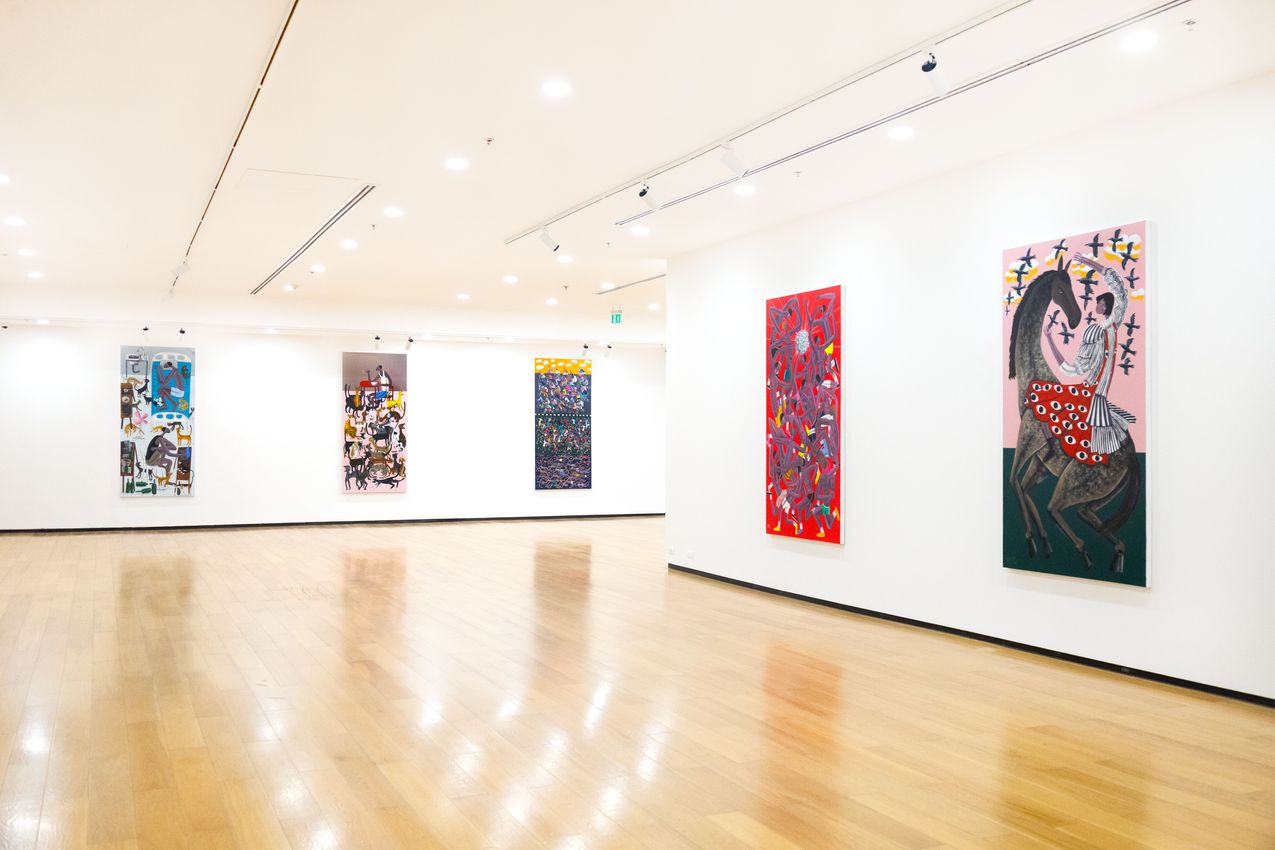
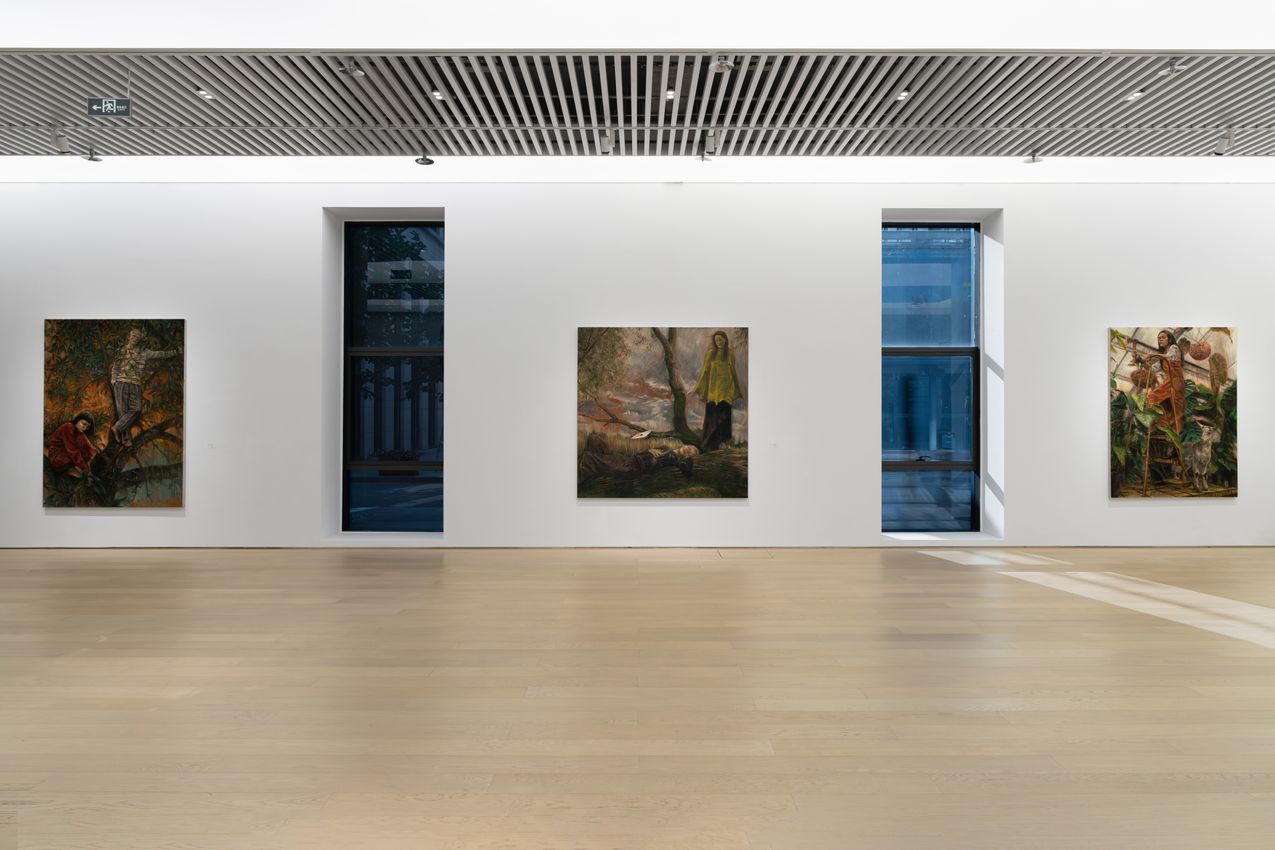
Tang Contemporary Art is pleased to announce the launch of artist Leng Guangmin’s solo exhibition, “Vertical Wound”, on 19 October at 4pm at its Beijing 2nd Space. Curated by Wang Min’an, the exhibition will feature 35 works based on Leng Guangmin’s latest working approaches and works from 2023-2024.

Vertical Wounds: On Leng Guangmin’s Paintings

By Wang Min’an

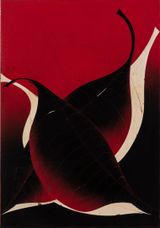
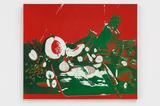
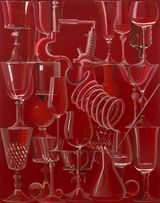
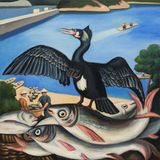
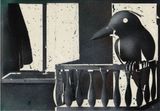
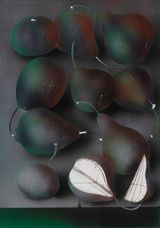
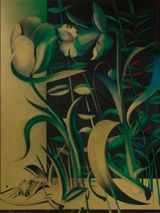
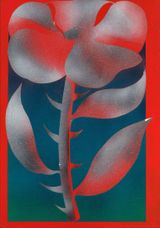
Compared to his earlier works, Leng Guangmin’s recent paintings have become more intricate. On one hand, the subjects in his compositions have grown more varied, including birds, poker card pattern, iconic figures from both Chinese and Western art, the sea, objects, organs, and bodies, as well as ambiguous images. On the other hand, his canvases have become more densely packed, filled to the point where there are no longer gaps or empty spaces.

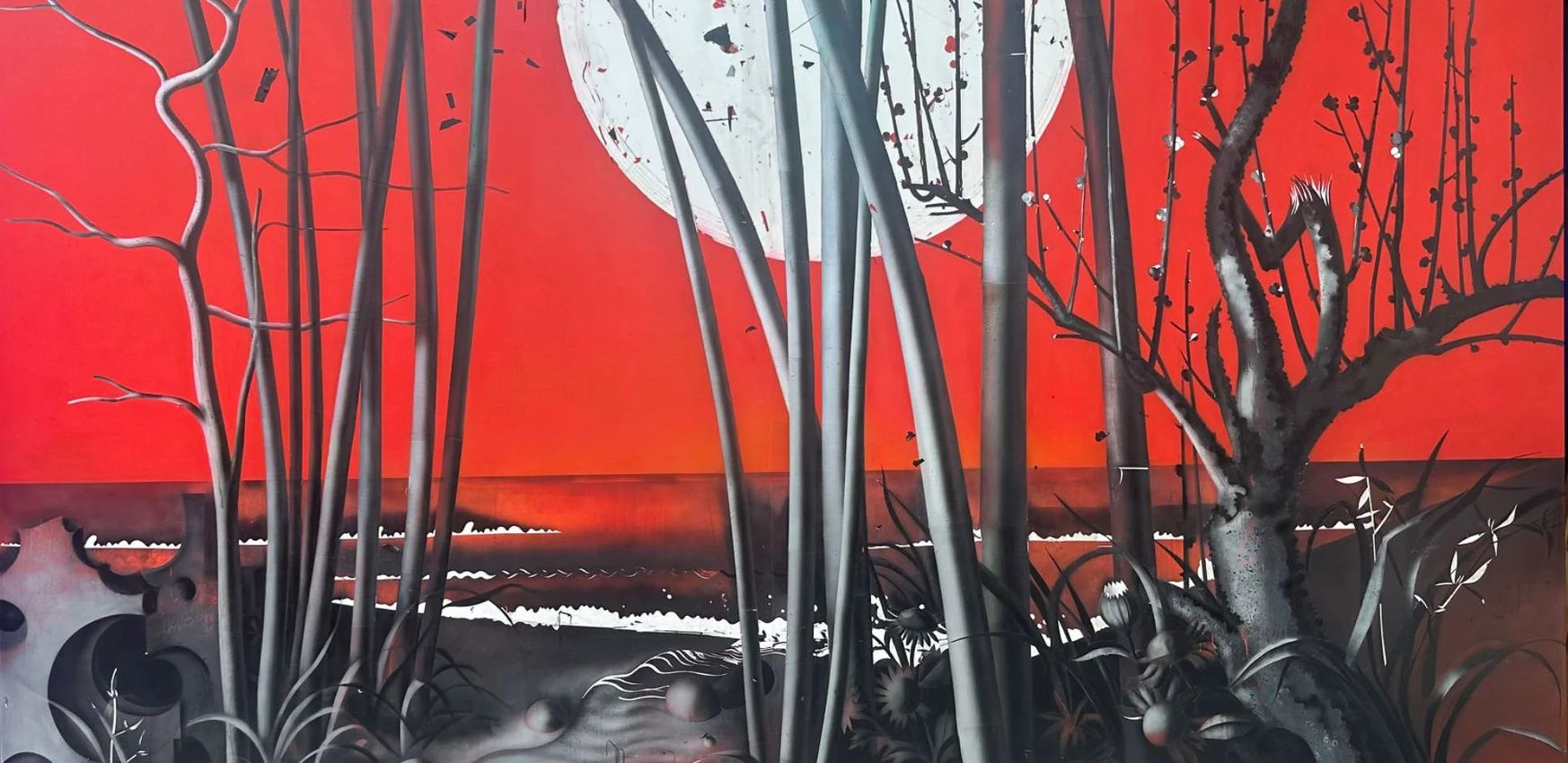
Yet despite this fullness, the paintings do not feel overly compact. Leng Guangmin introduces cracks and fissures into the composition, as though cutting apart what would otherwise be integral image or composition. This disrupts the sense of realism and continuity in the work, leaving the surface scarred with gaps, fractures, and fragments. There is a tendency towards disintegration and dislocation, affecting both the human bodies and the birds, seas, and objects he depicts. Paradoxically, these cuts also lend the works a sense of assembly or collage, as if the disjointed elements—figures, birds, seas, and objects—are being reassembled. Thus, fragmentation and collage are two sides of the same coin in Leng’s style: he seems to use collage to create fragmentation, and fragmentation to collage. The paintings constantly break apart while being assembled, and are assembled as they break apart. This paradox is a defining feature of his work—assembly is disassembly, collage is fragmentation, and the reverse is also true. His works play with the relationship between construction and deconstruction.

This ambiguity explains why Leng’s works occupy a space between fragmentation and wholeness. They exist in a state of liminality, neither fully broken apart nor fully cohesive. In other words, they are fragmented wholes or cohesive fragments. By attempting to collage and assemble, Leng seems to draw his work toward reality, yet through disintegration and deconstruction, he simultaneously distances it from reality. His work inhabits a space between surrealism and realism. It avoids both the total collapse of reality seen in abstract painting and the strict replication of reality found in realism, charting a unique third path.

Many artists have sought this third path between realism and abstraction. A common approach is to slightly distort or alienate reality without completely destroying its recognisability. In these slight distortions, the figures remain clearly recognisable. This approach began with the late Impressionists and was later advanced by artists like Bacon and Freud - though their methods of balancing realism and abstraction vary significantly. A different approach, developed by the Surrealists, features hyperrealistic details within a dreamlike, non-realist collage, leading to a total break from reality. Leng has chosen a unique path distinct from these two approaches, one that merges assembly and fragmentation into a unified process. He pieces together various fragments in an attempt to achieve wholeness, yet this very act of assembly also leads to disintegration. Collage becomes a form of deconstruction. In this fusion, assembly and separation, approaching and distancing from reality, are intriguingly intertwined.

Leng achieves this effect through his use of paper. His technique involves pasting paper onto canvas or wood panels and then painting on it. The use of paper allows him to easily cut and manipulate the surface, giving his work the visual effect of fragmentation. This freedom to cut enables his art to oscillate between cohesion and disintegration, between assembly and deconstruction.

But why break totality into fragments? Why disassemble bodies, birds, horses, seas, and objects? In fact, Leng’s painted images are derived from existing visuals. He depicts motifs from poker cards, iconic works in art history—such as Li Gonglin’s horses and Ingres’ nudes—as well as various bird images. These can be described as images about images, representing Leng’s meta-images. Typically, people seek to connect images with reality, striving to establish a relationship between the two. However, Leng’s meta-images, which treat images as their subject, detach from reality. While the works of classical artists like Ingres or Li Gonglin are always intended to reference or reproduce reality—widely regarded as exemplary portrayals of women or horses—Leng’s images ultimately erase any connection to reality. There is no reality behind his images; rather, his images become his reality.

Therefore, Leng’s paintings are not dealing with reality but with the classical images he paints. He fragments and deconstructs these images precisely because of their inherent completeness and self-coherence. Classical art and even poker cards designs possess a seamless, unquestionable coherence, both aesthetically and conceptually. This coherence creates a formal and aesthetic myth that Leng seeks to dismantle through cutting and tearing. He displaces body parts, fragments whole forms, abruptly halts flowing lines, or slashes across the surface with horizontal cuts. This breaks the original images’ coherence and shatters the aesthetic or conceptual myths they carry. In this sense, Leng’s fragmentation is a form of negation.

Furthermore, this cutting and assembly aim to achieve a geometric effect. Leng transforms existing fluid natural images—precisely imitating original reality, as exemplified by the works of Ingres and Li Gonglin in both Western and Eastern realism—into a calm, geometric treatment. Whether depicting birds, waves, bodies, or specific objects, these images are composed of squares, rectangles, straight lines, and regular curves. However, these geometric forms are flat rather than three-dimensional; they are applied with a smooth finish (this aspect is related to the use of paper, which lends his paintings a quality reminiscent of paper cutting.) This normative flatness of the geometric shapes erases the impulsive passion of the original images—the passion of humanity, horses, birds, and the sea. The flatness also diminishes the dynamic folds and undulations associated with three-dimensionality. Even when the colours on the canvas are striking, they convey an indifferent geometric coolness, a sense of smooth coolness. In fact, the more vibrant the colours shine, the more pronounced the erasure of passion becomes. In this context, both the images and the emotions are rendered highly flat, devoid of fluctuations, ripples, or undulations—neither in form nor in feeling.

However, this flat disintegration and fragmentation paradoxically reveal a sense of verticality. Cutting the paper results in both superficial ruptures and an exposure of depth. Leng’s works often consist of multiple layers of paper, applied one over the other, using lightweight sheets that create a covering effect and conceal depth and thickness. This layering produces a pattern of assembly. Yet, by cutting into the pasted paper, he exposes the layers beneath, rendering the overall image fragmented while simultaneously revealing a subtle sense of verticality and depth that is not easily perceived. Within this verticality, however, lies a flatness; the base of the verticality ultimately returns to the flat surface. This creates a persistent struggle between verticality and flatness: smoothness is consistently interrupted by verticality, yet verticality cannot fundamentally conquer smoothness. In this way, the painting transforms into a play between smoothness and verticality. Thus, Leng’s paintings engage in multiple layers of play: the interplay of disintegration and assembly, the contrast between fragments and wholeness, and the tension between smoothness and verticality. If we consider his works on paper, we can even identify an additional layer of interaction: the relationship between paper cutting and painting—don’t those birds resemble cut-out patterns? The meticulous act of cutting serves as the final touch in completing these pieces. By painting on paper and then cutting it, he creates a double game of painting and cutting, oil painting and paper cuts, canvas and paper. Isn’t this a double game between two distinct crafts?

Through this multifaceted interplay, Leng complicates the very nature of painting. Yet, isn’t this complexity a reflection of the intricacies of contemporary existence? People seek totality, but every saturated totality is fragmented into disarray. In their pursuit of depth and stability, they often find themselves trapped on the surface, confronted with flatness and superficiality. They are drawn to smoothness—be it visual, emotional, or experiential—but even in that quest, they encounter ruptures, disintegration, and wounds. Ultimately, they turn to established classics and traditional myths for solace, only to be met with a pervasive sense of lethargy, widespread dislocation, and chaotic scattering. At a deeper level, individuals yearn for passion and meaning; however, what they often encounter is indifference—a plastic simulacrum, a rigid geometric facade devoid of true substance and vitality.

Read More

Also Exhibiting at Tang Contemporary Art

About the Gallery

Tang Contemporary Art was established in 1997 in Bangkok, later establishing galleries in Beijing and Hong Kong. Tang Contemporary Art is fully committed to producing critical projects and exhibitions to promote Contemporary Chinese art regionally and worldwide, and encourage a dynamic exchange between Chinese artists and those abroad.

View Gallery Profile
Address
B01, 798 Art District
No.2 Jiuxianqiao Road
Chaoyang District
Beijing
China
Opening Hours
Tuesday – Sunday
11am – 5:30pm
(1)
Beijing B01, 798 Art District, No.2 Jiuxianqiao Road
Tang Contemporary Art
B01, 798 Art District, No.2 Jiuxianqiao Road, Chaoyang District, Beijing, China

Opening hours
Tuesday – Sunday
11am – 5:30pm
The art world in focus