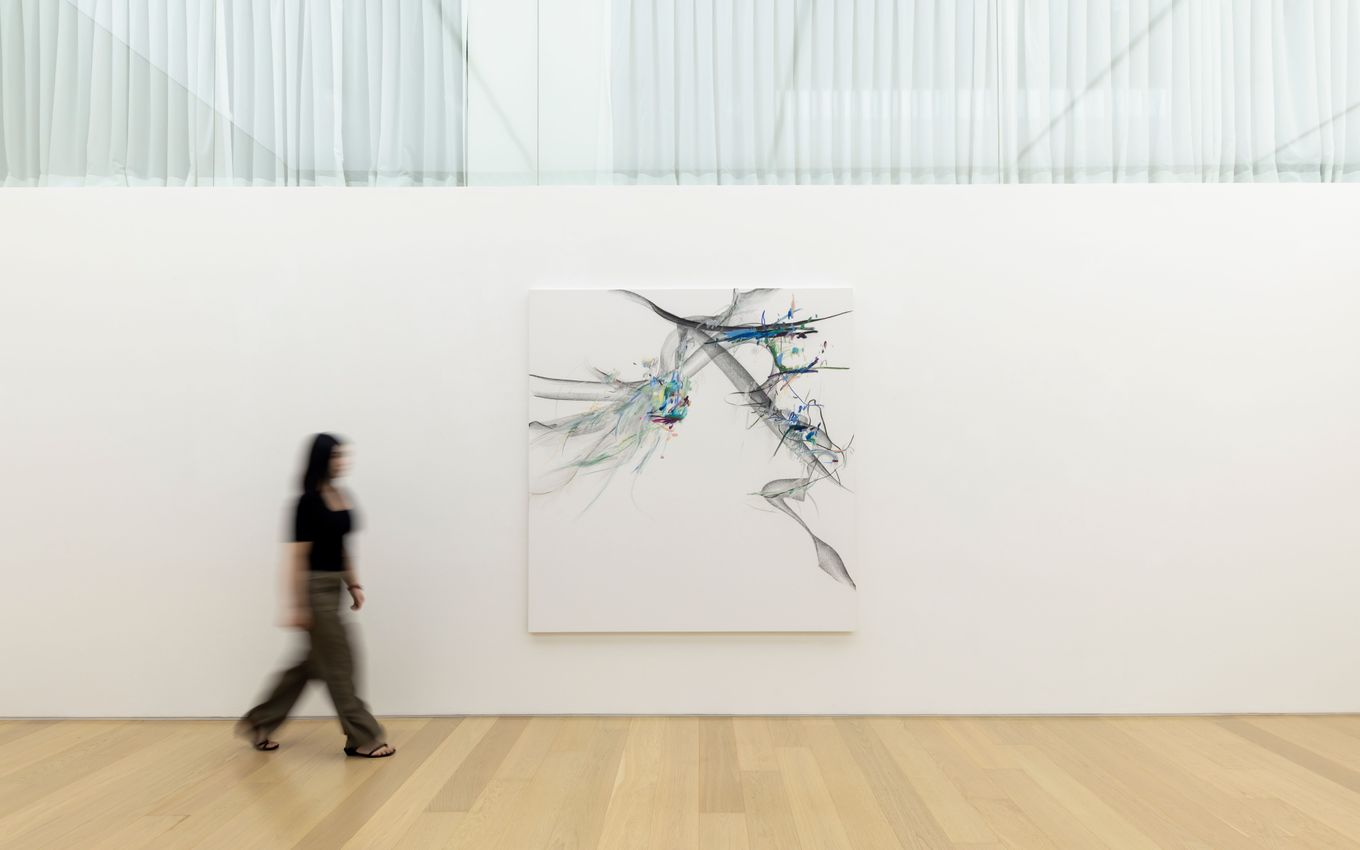
Imagine the flight of a bird skimming the ground, and the ascent of a shadow springing from branches stretched towards the sky. The moment when a bird, once perched on a tree, suddenly soars into the air is utterly ordinary. It is merely a subtle shift in the landscape, barely catching the eye amid the rush of daily life. Yet what if this simple movement belongs not only to the bird but also to its shadow? The scene changes entirely, for the shadow, though stripped of wings, does not cease to fly.
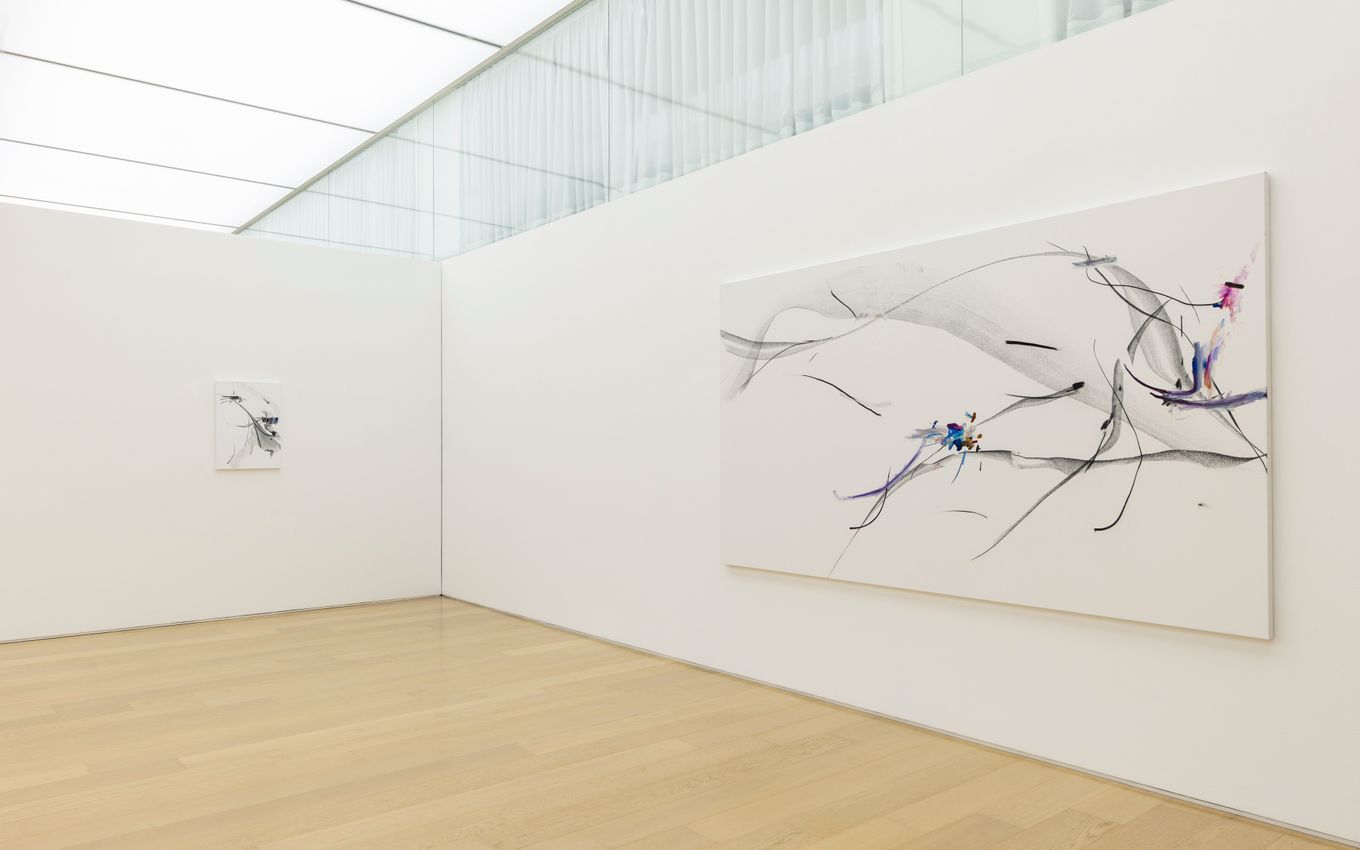
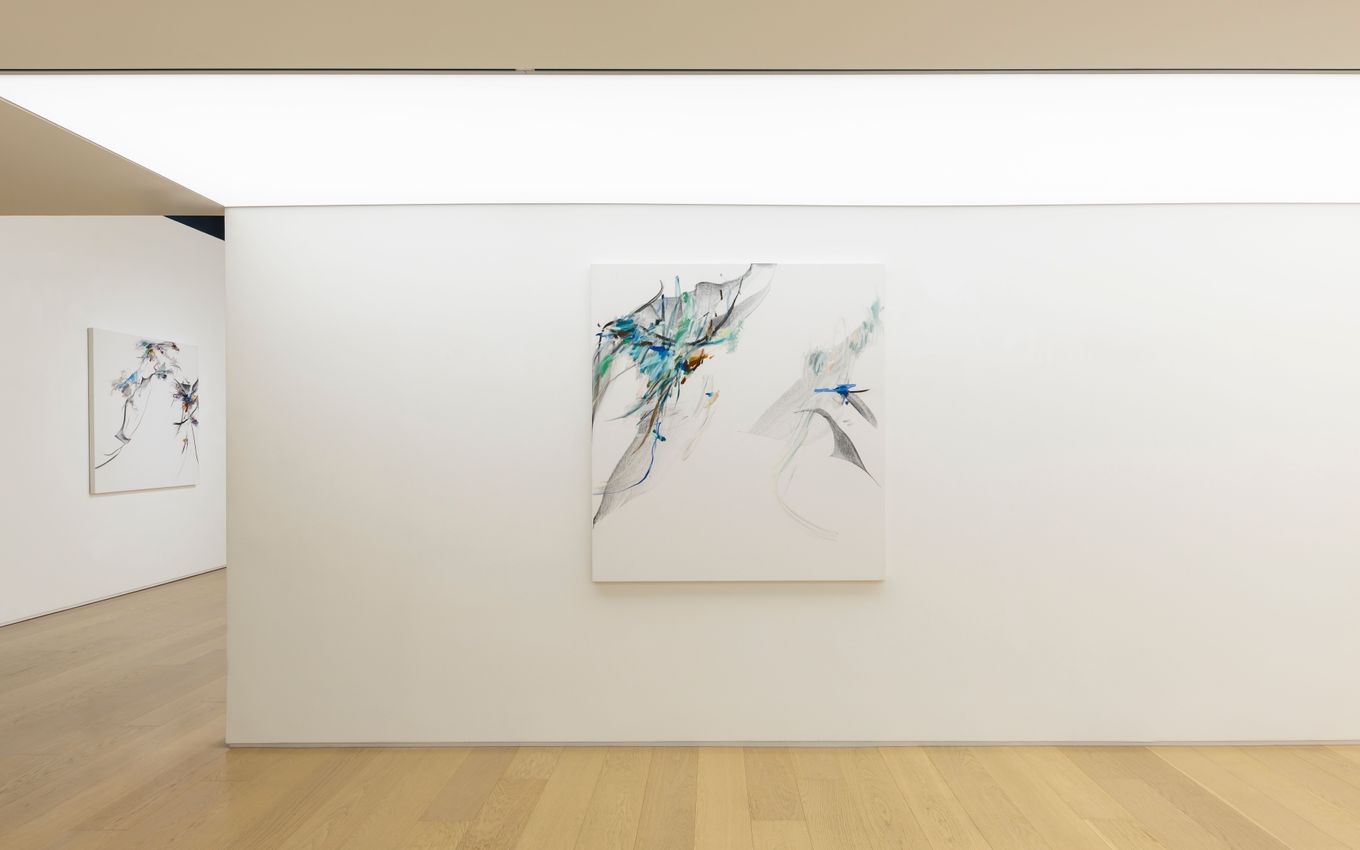
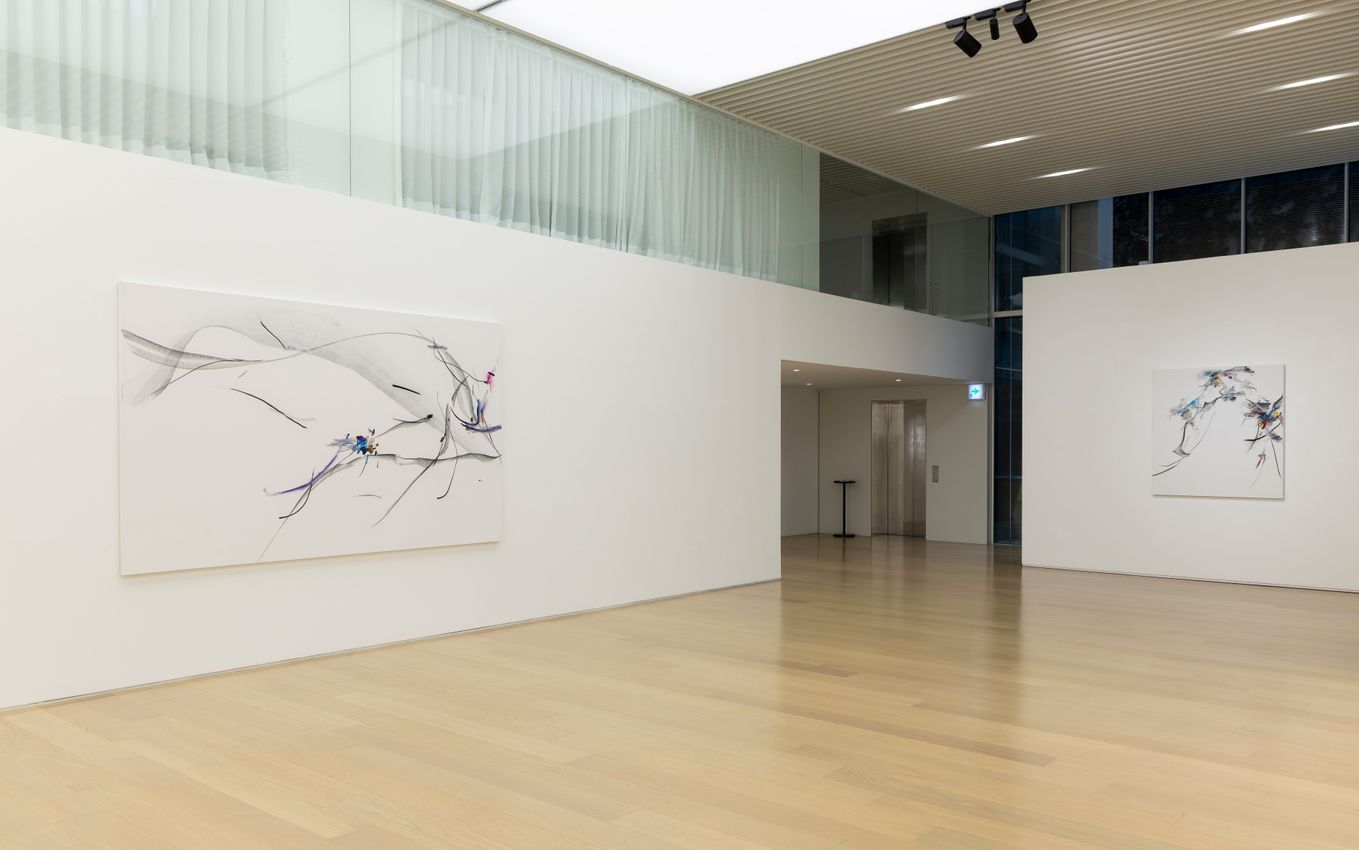
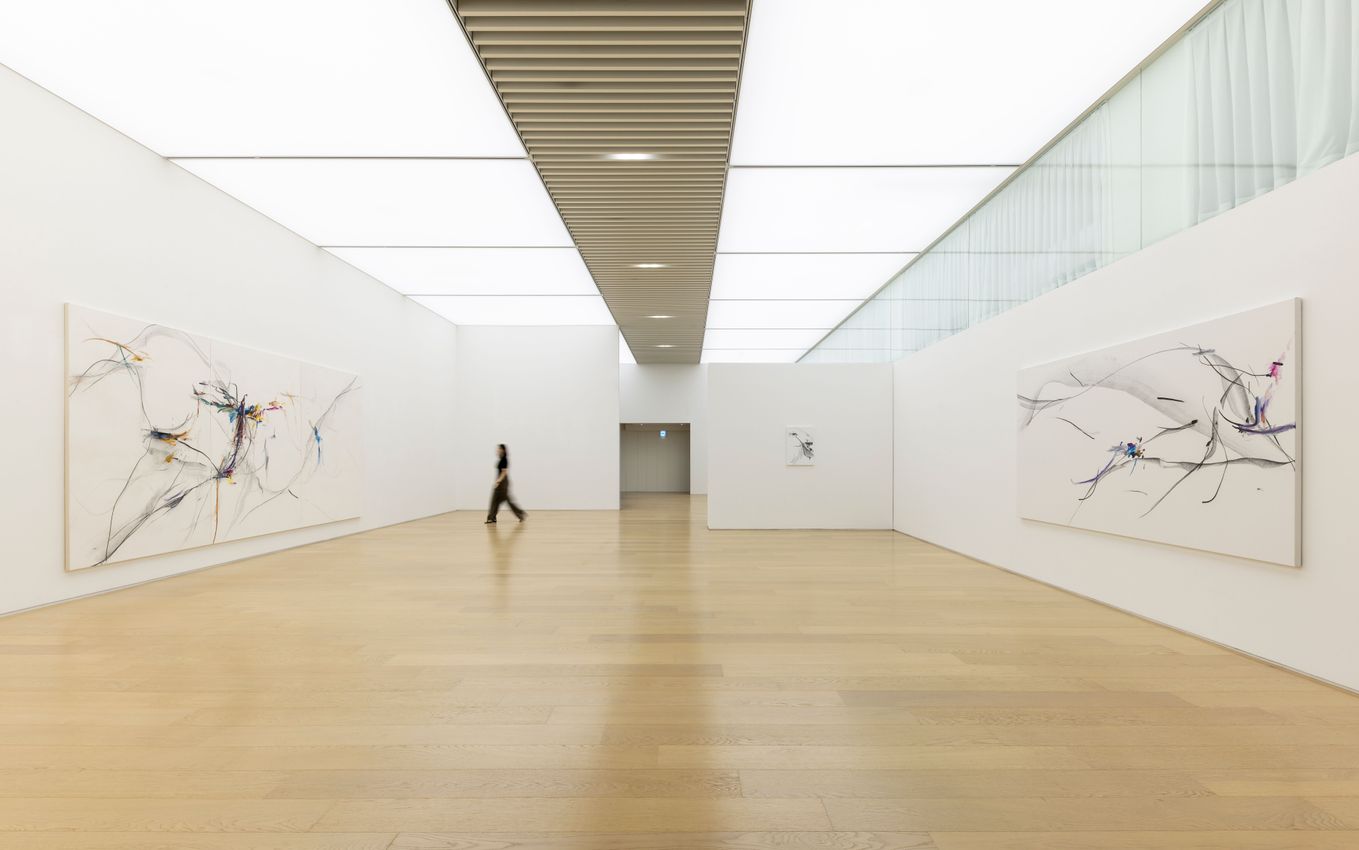
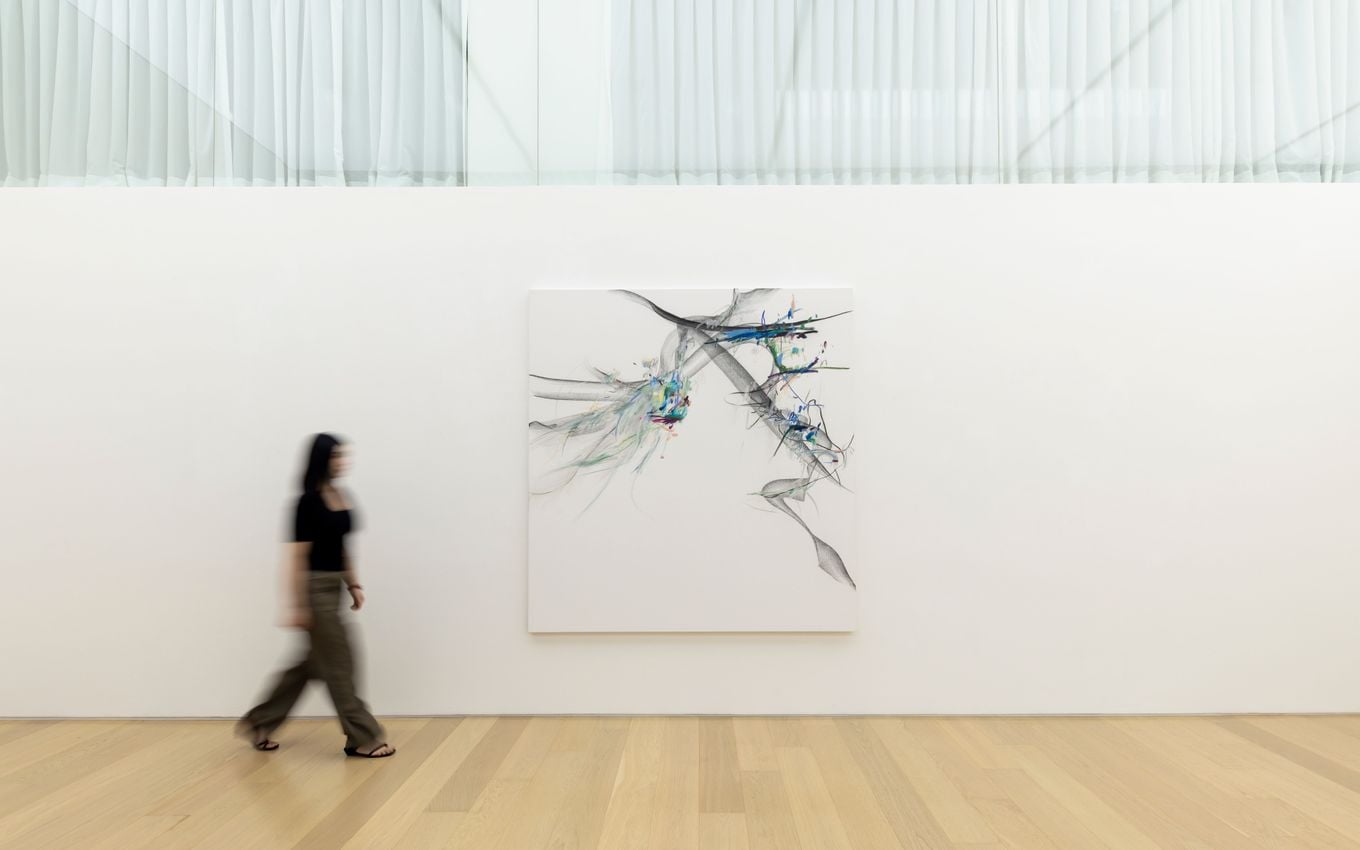
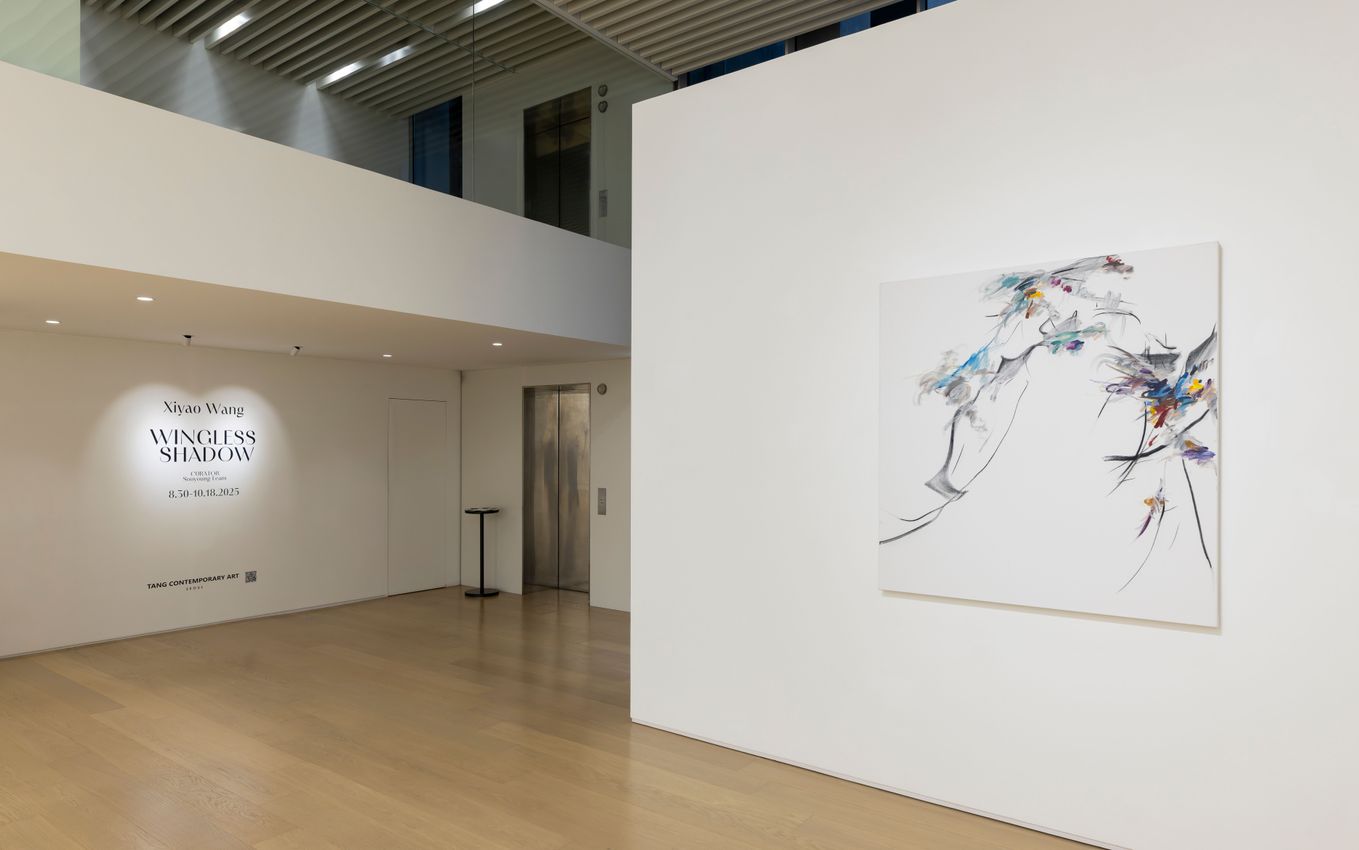
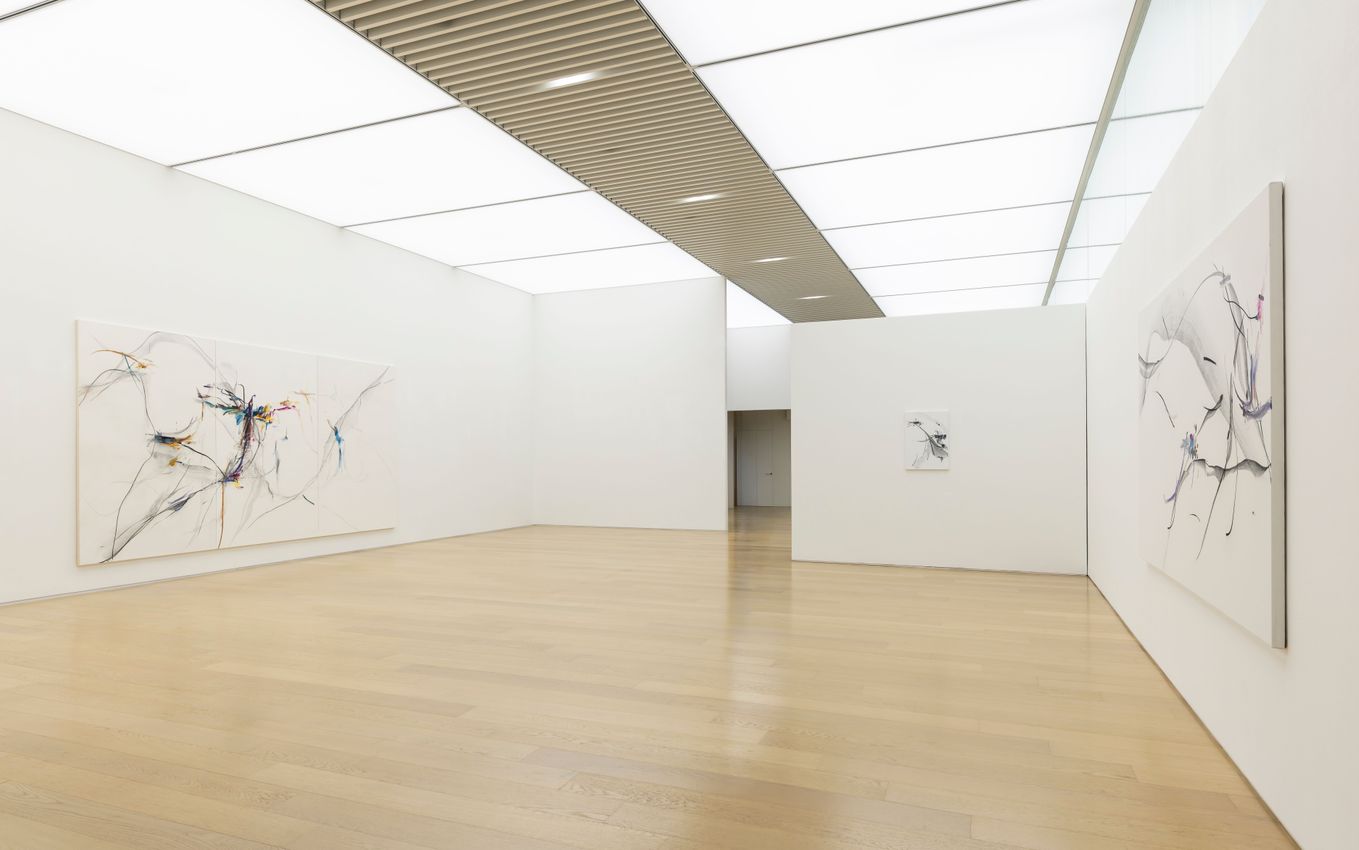
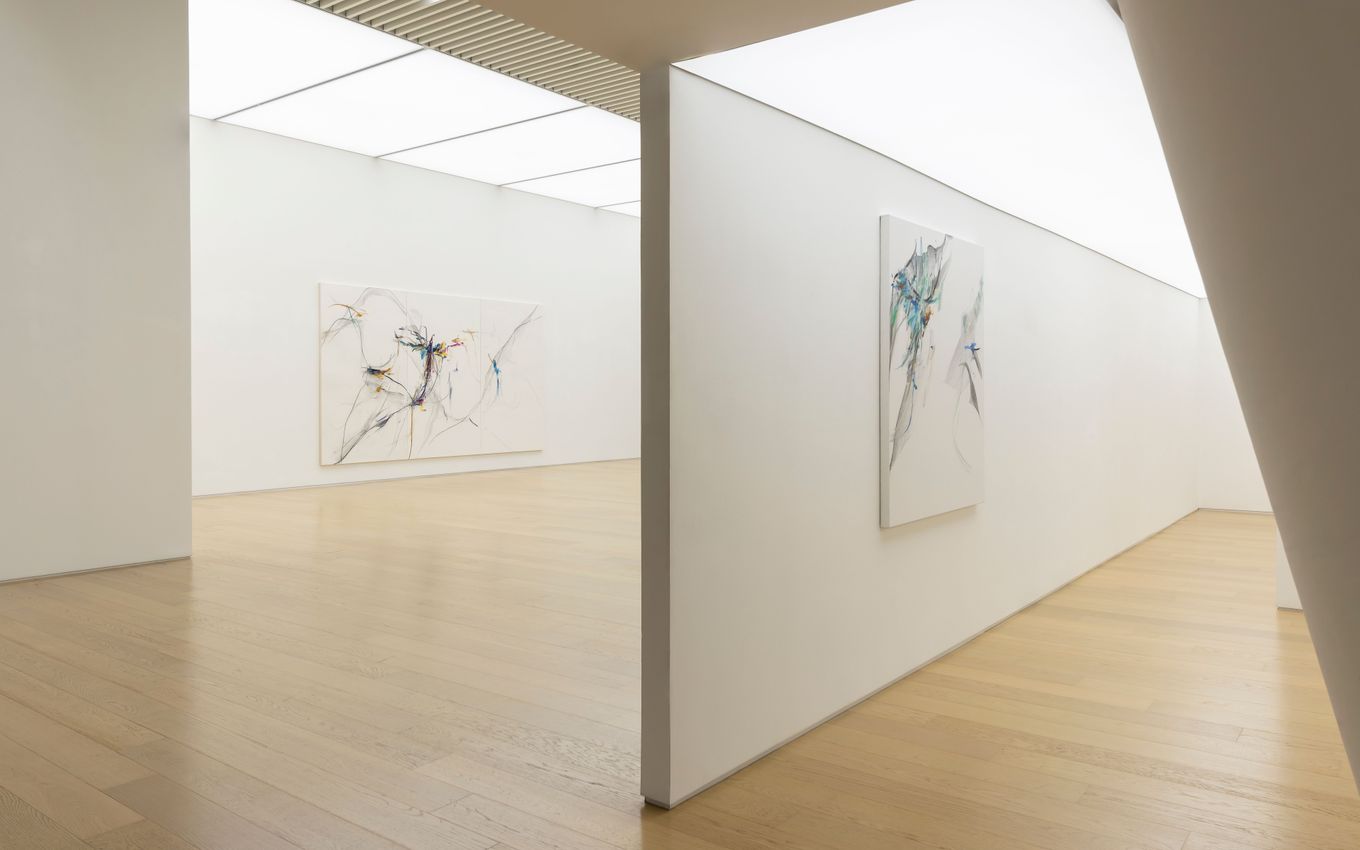
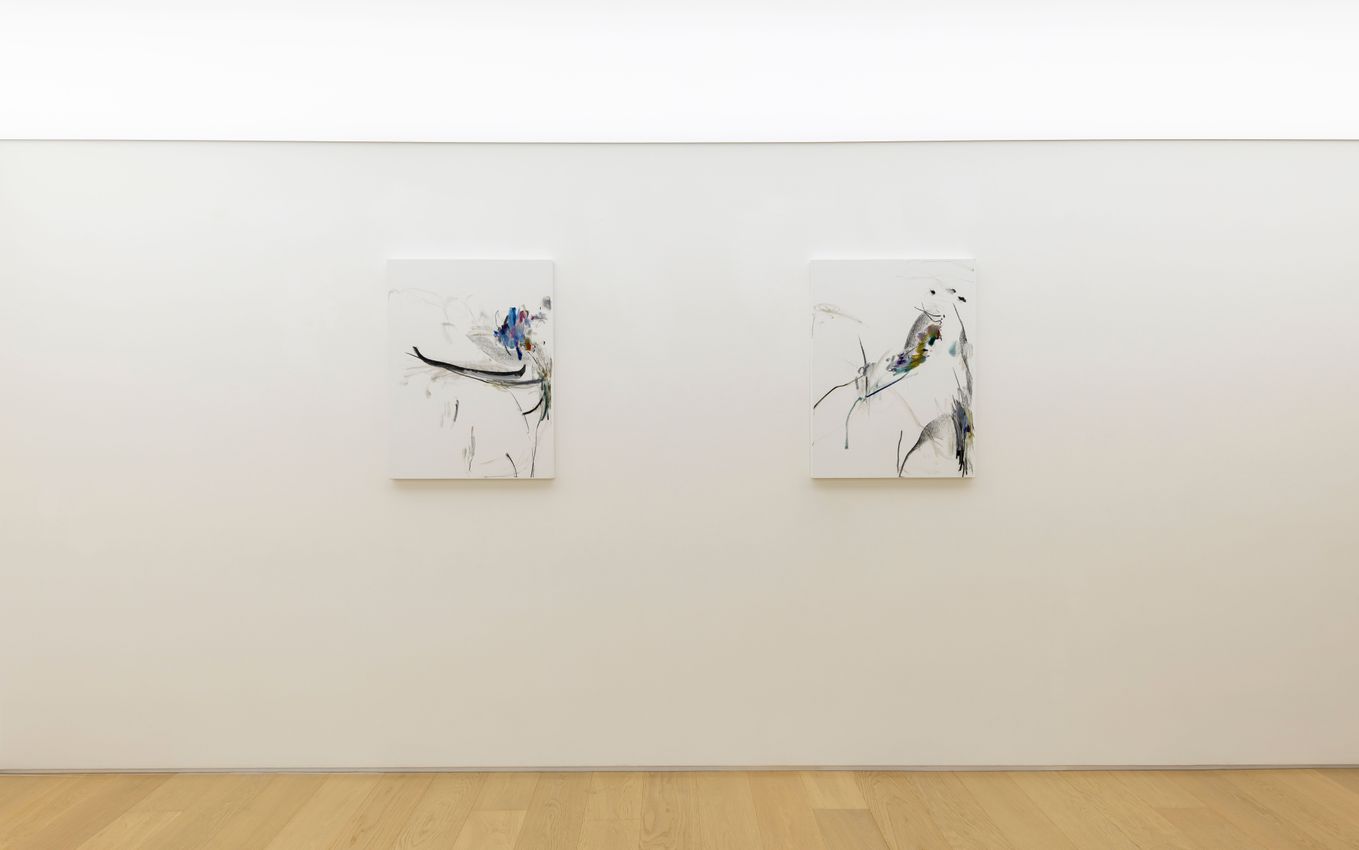
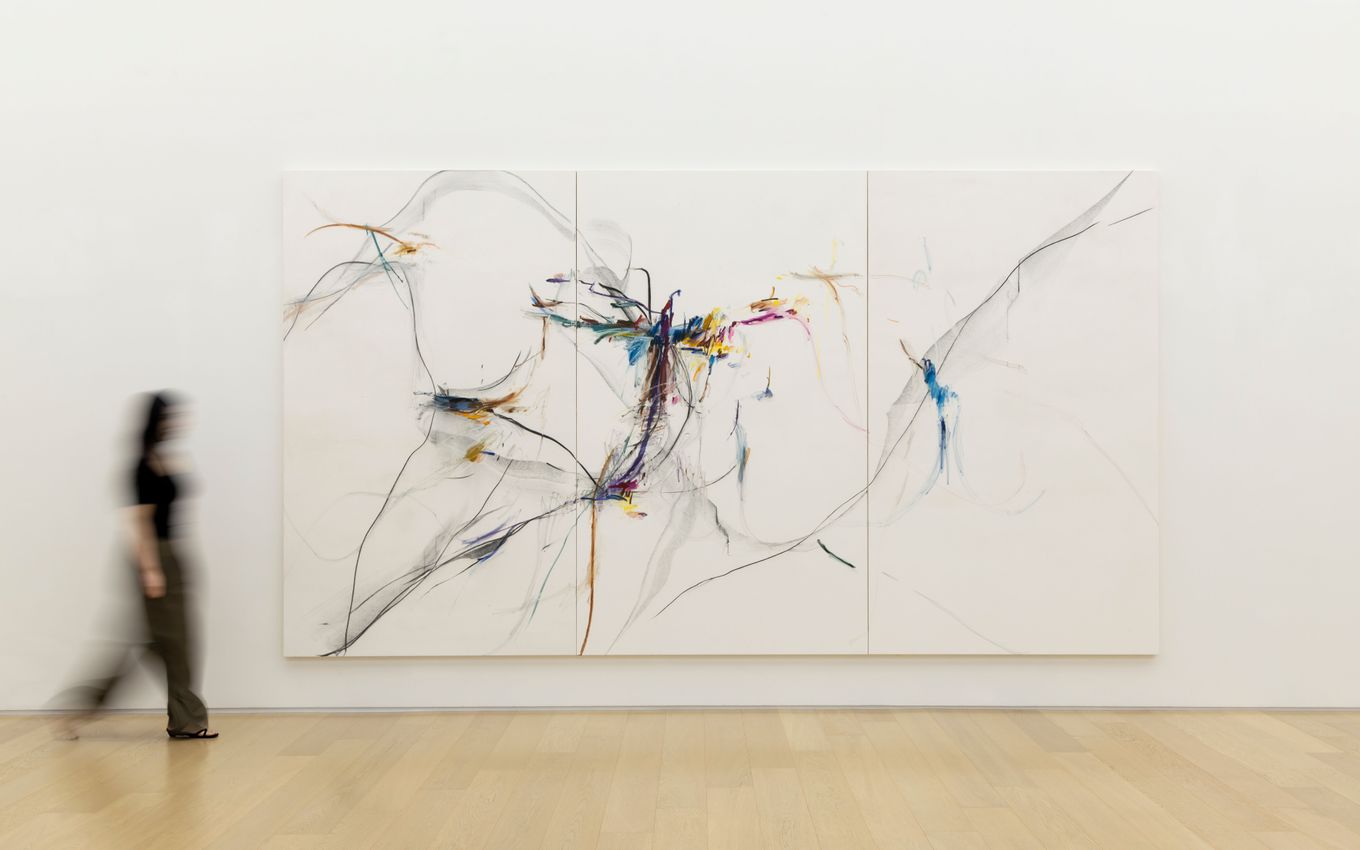
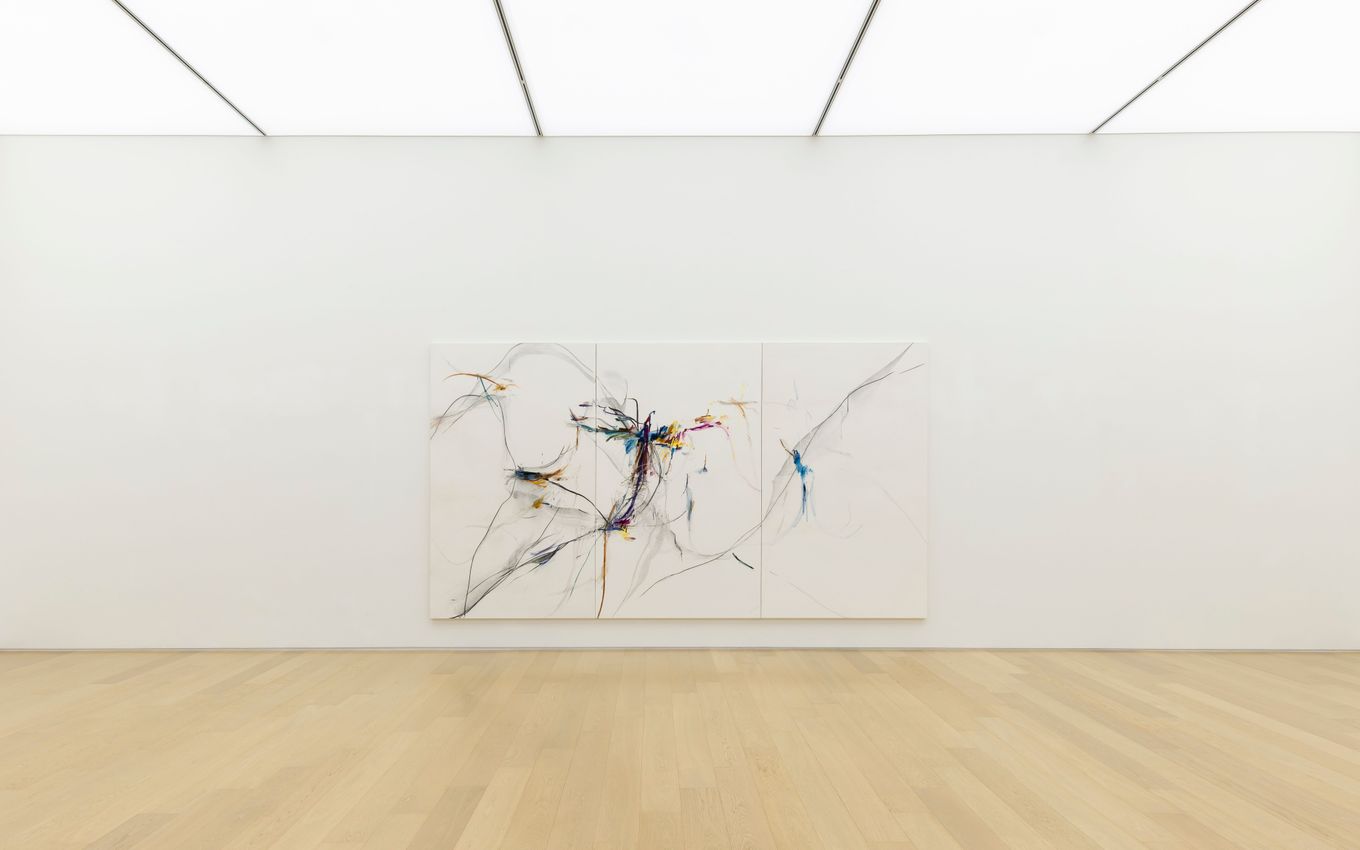
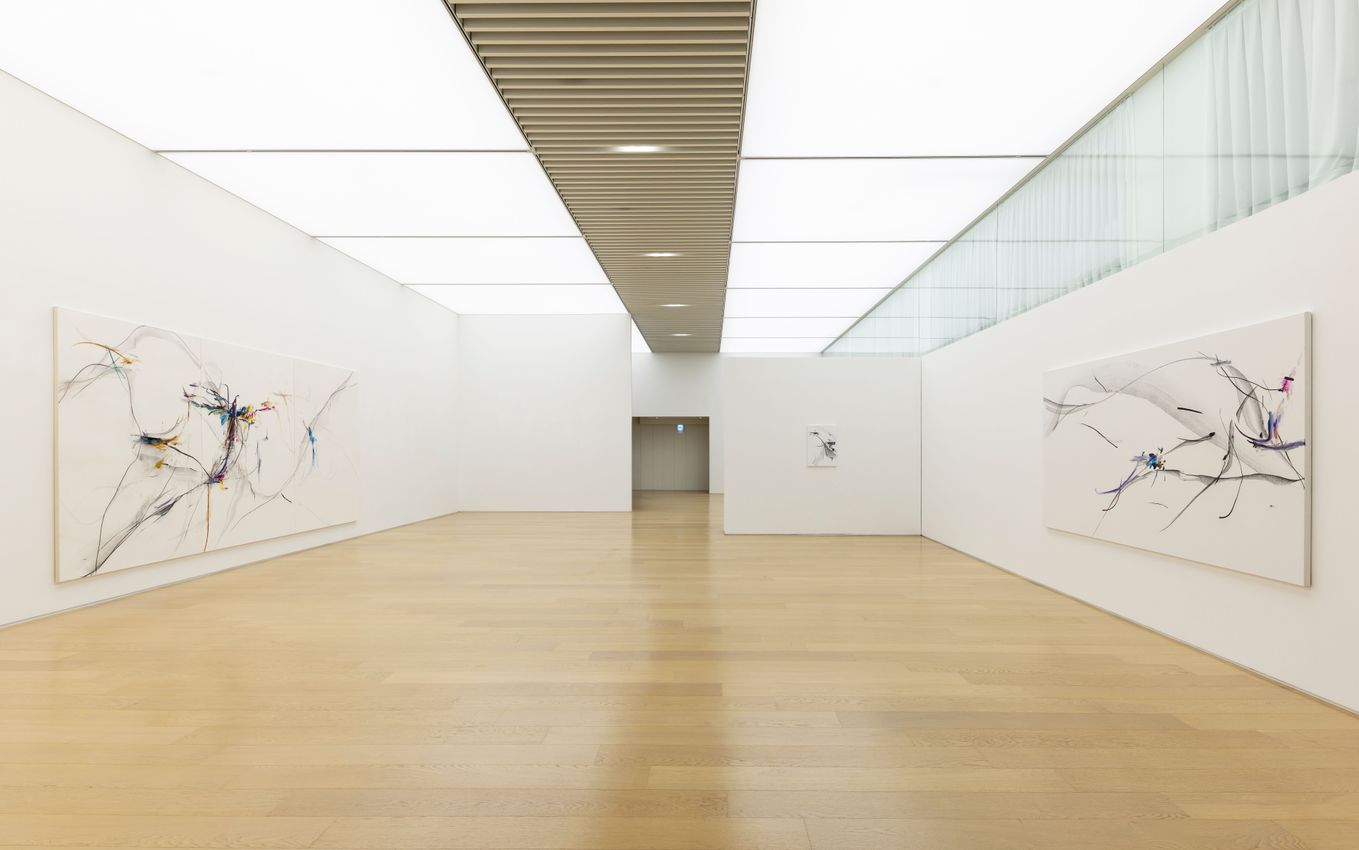
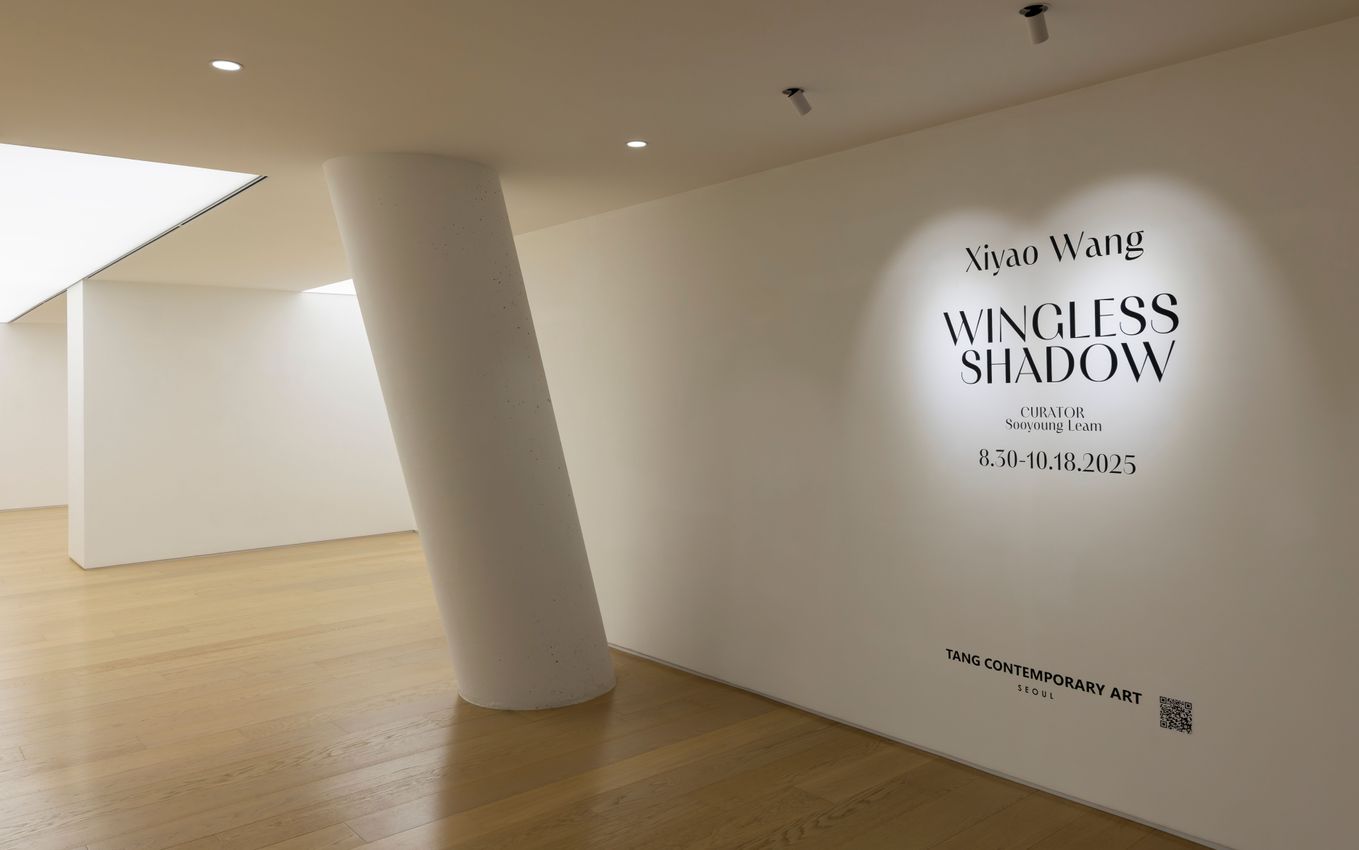
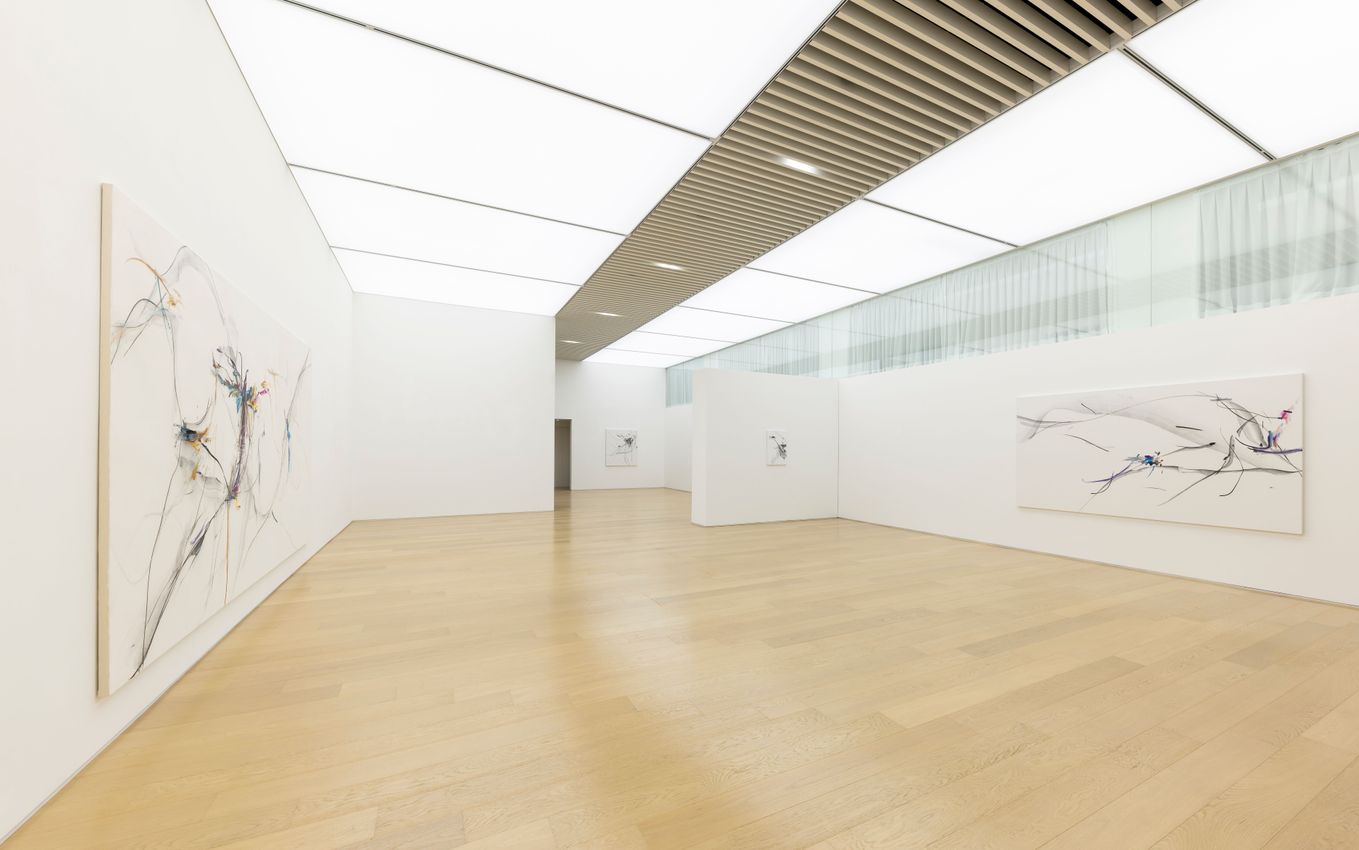
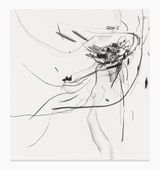
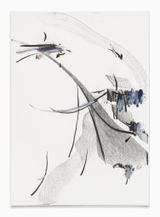
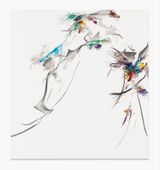
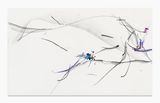
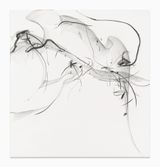
The paintings of Xiyao Wang, born in Chongqing, China and now based in Berlin, are imbued with the dynamic rhythm and movement that, like her own life’s crossings, refuse to remain fixed. Yet, paradoxically, the surfaces she creates in black charcoal and vivid oil sticks appear still and silent. One might think of the speed of lines that fade softly as they traverse the smooth expanse of canvas, only to return with renewed solidity; of strokes drawn in singular directions and the varying degrees of their blurred edges, as traces of movement. They might be seen as afterimages of the hand, arm, and body gestures that once cut across the void and scored the surface. In this sense, each work serves merely as an index of the actions activated in a specific time and place. However, Wingless Shadow, Xiyao Wang’s solo exhibition at Tang Contemporary Art, Seoul, focuses on the way her art moves beyond such traces or indices to fully embody and reveal the totality of physical and inner movement, presenting ten works on canvas.
Xiyao Wang’s practice has long interwoven, and at times dismantled, the Chinese ink painting tradition of liubai (the art of emptiness) with the structural language of Western abstraction. She approaches painting not as the reproduction of an image but as an event in which body and mind act in convergence. For her, the event of painting is not something that manifests only in the finished work; rather, it arises in the ‘time of preparation’ and in the very process of making. Wang likens the act of facing a blank canvas and painting it to ‘flying or swimming in a weightless and boundless space.’ Like a dancer who, after gathering every breath, every ounce of energy and mental focus, releases them into the act of movement, Xiyao Wang channels the concentrated flow of her sensations, awareness, and thought into the infinite space-time of painting. Indeed, for Wang— who trained in ballet and plays the guqin, the ancient Chinese zither favoured by Daoist philosophers—there is no distinction between ‘before’ and ‘after’ the act of painting, or between ‘preparing’ and ‘completing’ a work. Art unfolds as a continuous circulation along the extension of body and mind.
The pictorial ‘event’ is therefore less an isolated moment breaking through the strictures of pattern and control, and more akin to a ‘quiet transformation’ unfolding within the flow of time. The artist encounters these moments, continuous and fluid yet outwardly calm and still, through an additive and subtractive process, overlaying and removing concept, form, material, and meaning. This practice aligns with the Daoist notion of wuwei (non-action), which extends beyond creation itself to a more fundamental rethinking of one’s relationship with the world. It is a practice of releasing oneself from anthropocentric thought and artificial hierarchies.
The poet Oh Kyu Won (1941–2007), whose words form the title and thematic foundation of this exhibition, perceived the world in much the same way. Through his verse, he sought to remove the subject’s mediation between things, allowing each to exist in its own right whilst remaining interconnected. If poetry often hungers to be filled with meaning, his aimed to empty itself until it could become what he called a ‘raw image-poem.’ In Bird and Wings, carved from language honed and pared back, what emerges is not a final message, concept, or theme, but possibility. The ‘wingless shadow’ continues to move, even in the absence of its source, the bird. In this way, the shadow is not just a reflection but a being itself, where subject and object, time and space, birth and death circulate and meet again.
Xiyao Wang’s paintings similarly conjure a state of coexistence. However, the lines that appear in her work are not boundaries that demarcate territories, straight paths connecting one point to another, or vertical axes of growth. These lines sometimes become part of the void, at others the surface itself, only to yield their position whenever a black charcoal is drawn or a stroke of oil stick adds colour. According to anthropologist Tim Ingold, who argues that everything in the world is made up of a ‘parliament of lines,’ these are also decolonial lines. He defines colonial line-making as ‘not the imposition of linearity upon a non-linear world, but the imposition of one kind of line on another [...] converting the pathways along which life is lived into boundaries in which it is contained, and then by joining up these now enclosed communities, each confined to one spot, into vertically integrated assemblies.’ The titles of the works in this exhibition act as clues to the way Xiyao Wang’s art renders visible the cycles, transformations, and movements of coexistence, while anchoring them in concrete, everyday experiences. For instance, The Tree in Front of My Home (2025) contemplates the temporality of nature, prompted by the daily sight of a tree planted outside the artist’s home.
The Wave No.1 (2024), draws from a deep sense of connection with nature and the universe Wang experienced while visiting Europe’s coasts last summer. Meanwhile, A Day on the Drifting Island (2025) references the fluidity of all things, which was inspired by her encounter with the floating islands of Switzerland. And as the title Do You Hear the Waterfall? No.6 (2023) suggests—evoking the sound of guqin and cascading rush of water—Wang invites the viewers to share these experiences and reflections that might otherwise remain solely her own.
The Daoist idea of wuwei, the path to the most natural state through non-intervention, has held particular resonance not only in post-war Korean literature but also at critical junctures in the search for the identity of abstract art. In Korean art discourse, the so-called ‘quality of non-action’ has expanded to embrace notions ranging from performative repetition to dematerialisation and even the erasure of authorial presence. Daoist thought has served both as an East Asian perspective on nature to counter the ‘modernist worldview of the West’ and as a source of regional identity, contributing to the shaping of a distinctively Korean abstract art. Encountering Xiyao Wang’s paintings in Korea today calls to mind artistic experiments of the recent and distant past grounded in Daoist understandings of nature. Yet her work, in depicting states where beginning and end, centre and periphery, fullness and emptiness coexist without a fixed order, resonates not only with the past but also waits to be fully experienced here and now, in the depths of everyday life.


Wang Xiyao was born in 1992 in Chongqing, China. The young artist lives and works in Berlin. Wang’s abstract painting can best be described as movement captured on canvas, as expressing a feeling of boundlessness and unbridled life energy. She combines various techniques such as oil and acrylic painting, chalk, graphite and oil sticks. Although her expressive lines draw on the tradition of Asian masters, she works without the classic materials of her homeland.


Tang Contemporary Art was established in 1997 in Bangkok, and now institutes over 48,000 square feet of gallery spaces in Bangkok, Beijing, Hong Kong, and Seoul. The gallery has also recently opened its headquarters space in Beijing, covering a building of 6 storeys. Tang Contemporary Art is fully committed to curating critical projects and exhibitions, as well as collaborating with other art museums and institutions, to promote Chinese contemporary art regionally and worldwide, and encourage a dynamic exchange between Chinese artists and those abroad.

A respected voice in contemporary art discourse.
Focusing on ambitious storytelling and insightful art-world commentary. Ocula Magazine publishes in-depth interviews, critical essays and timely analysis on the artists, exhibitions and ideas driving the global art world.
Learn more about Ocula Magazine
Showcasing the best of the art world.
Ocula partners with galleries from around the world to highlight their artists, artworks and exhibitions. Gallery membership is by application and invitation, with each member vetted by an independent panel.
Learn more about Ocula Membership

Specialises in the sale of major artworks.
Led by a team with deep ties to the world’s leading auction houses, galleries and collectors. Ocula’s advisory team offers bespoke services to high-net-worth clients from around the world who are looking to acquire the best of contemporary and modern art.
Learn more about our team and services