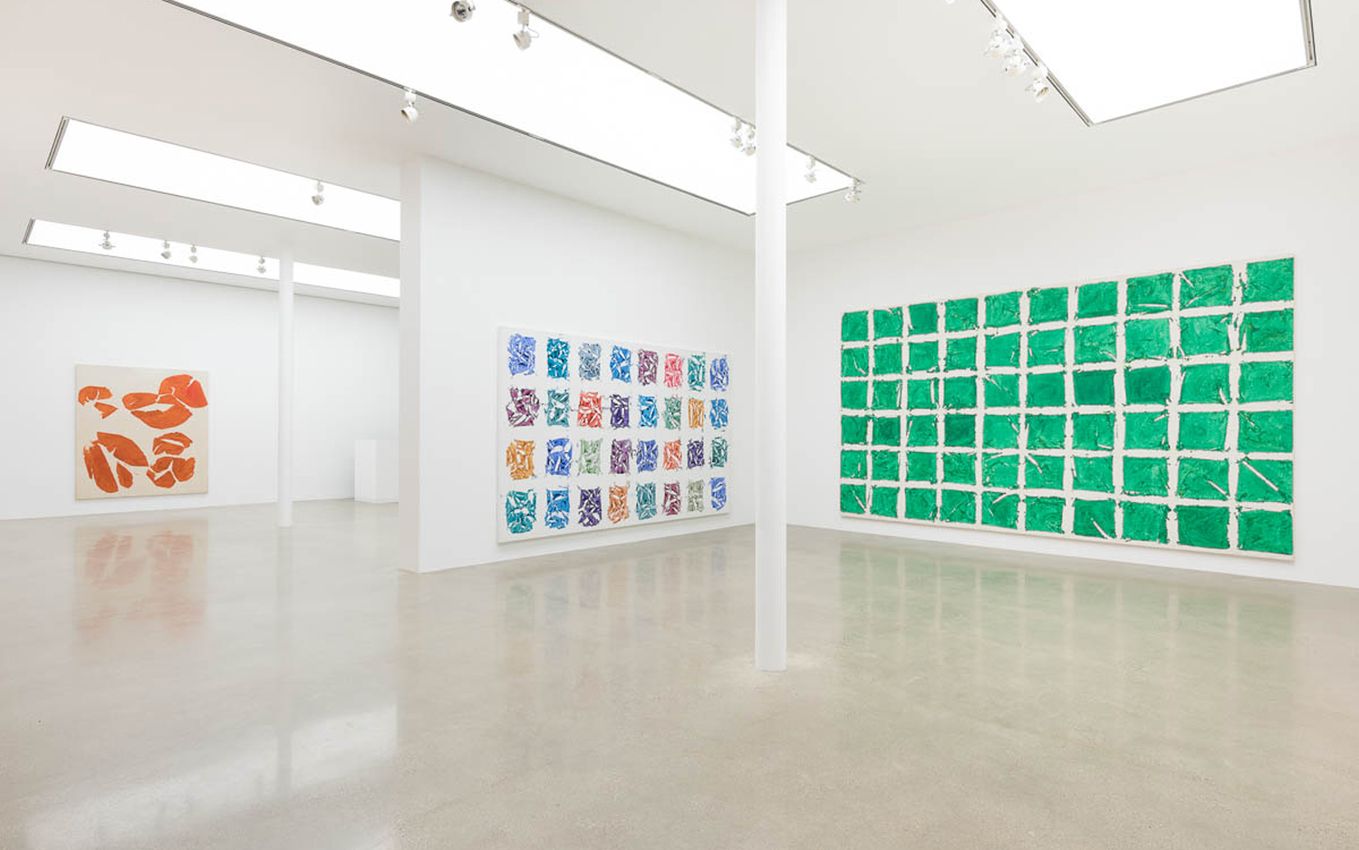
When Simon Hantaï unlocked his now renowned pliage method in 1960, the Hungarian-born, Paris-based artist achieved such overwhelming success in France that it would eventually force him to completely withdraw from the art world. Often referred to as ‘a silence’–or, as Alfred Pacquement more accurately described, a ‘critical silence’–Hantaï’s exit was less a retirement than a period of reflection and intellectual consolidation. From 1982 onwards he made no new paintings and would seldom exhibit, despite consistent invitations from dedicated curators. Hantaï died in 2008.
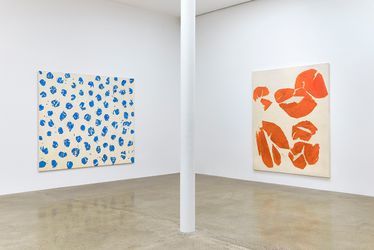
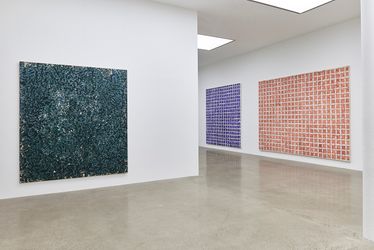
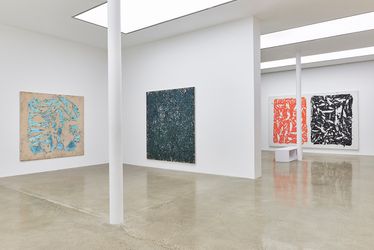
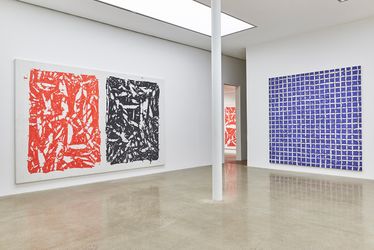
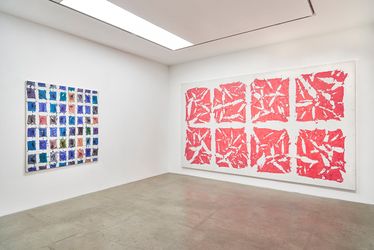
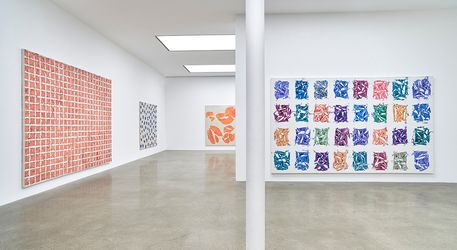
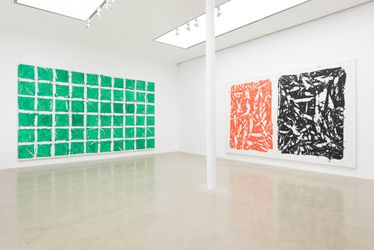
In 2013, the Centre Pompidou, Paris, mounted a major retrospective that introduced Hantaï’s significant artistic contribution to a new and responsive audience. Timothy Taylor subsequently brought the artist’s work to the London public through a group exhibition at the end of that year and has since followed this in greater depth through the presentation of fifteen paintings across two exhibitions; the first of these took place at Frieze Masters in October, 2015, with a now larger exhibition at Timothy Taylor’s Mayfair gallery, 22 January until 5 March 2016.
When Hantaï arrived in Paris in 1948 from Soviet-occupied Budapest, Surrealism was in full swing. He quickly connected to one of the movement’s main proponents, André Breton, who became an immediate supporter. In the late 1950s, however, under the influence of Jackson Pollock, Hantaï departed from his figurative Surrealist paintings and began to experiment with unconventional painting instruments, and with writing, as gesture.
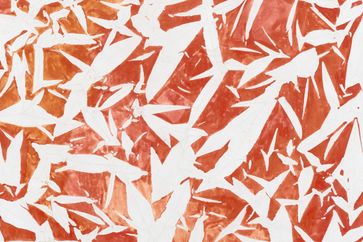
In 1960 Hantaï made a break with form, beginning his first pliage paintings, which would provide the critical basis of his work until his death. The technique of folding, knotting, painting, and unfolding the canvas allowed Hantaï to develop an ‘automatic’ process, producing paintings that juxtaposed the naked material against bright colours, to create striking, sumptuous images.
Since the start of the 1980s a number of collections of Hantaï’s work have been assembled that incorporate examples from each of his key series. The most well- known of these collections was gifted by Hantaï to the Centre Pompidou in 2003 and was drawn upon as part of the 2013 retrospective. A second collection, acquired privately in the early 1980s has since remained in storage, with only one of the fifteen works having been exhibited in the artist’s lifetime. Timothy Taylor is honoured to bring this remarkable collection to public attention.
A fully illustrated catalogue with new commissioned texts by Jason Farago and Dr. Anna Lovatt, designed by Zak Group, will be published on the occasion of this exhibition.


Simon Hantaï contradicted the negation of painting, instead liberating the support from a passive role to an active one, helping to push art forward by means of new processes in order to rethink the act of painting. In 1960, inspired by Jackson Pollock and Henri Matisse, Hantaï initiated his ‘pliage’ or folded canvas method of working, an entirely new painting technique that dominated his entire career and creative output.

A respected voice in contemporary art discourse.
Focusing on ambitious storytelling and insightful art-world commentary. Ocula Magazine publishes in-depth interviews, critical essays and timely analysis on the artists, exhibitions and ideas driving the global art world.
Learn more about Ocula Magazine
Showcasing the best of the art world.
Ocula partners with galleries from around the world to highlight their artists, artworks and exhibitions. Gallery membership is by application and invitation, with each member vetted by an independent panel.
Learn more about Ocula Membership

Specialises in the sale of major artworks.
Led by a team with deep ties to the world’s leading auction houses, galleries and collectors. Ocula’s advisory team offers bespoke services to high-net-worth clients from around the world who are looking to acquire the best of contemporary and modern art.
Learn more about our team and services