Press Release

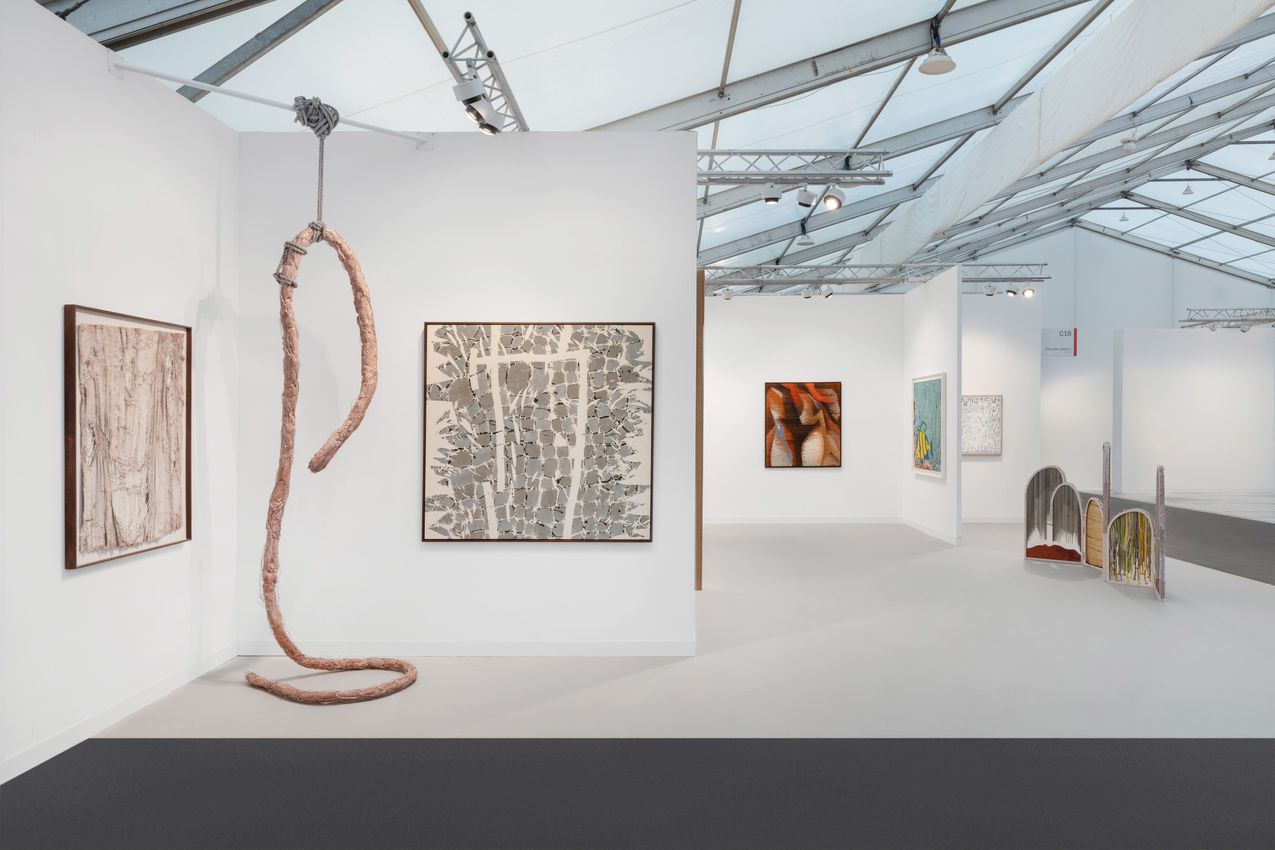
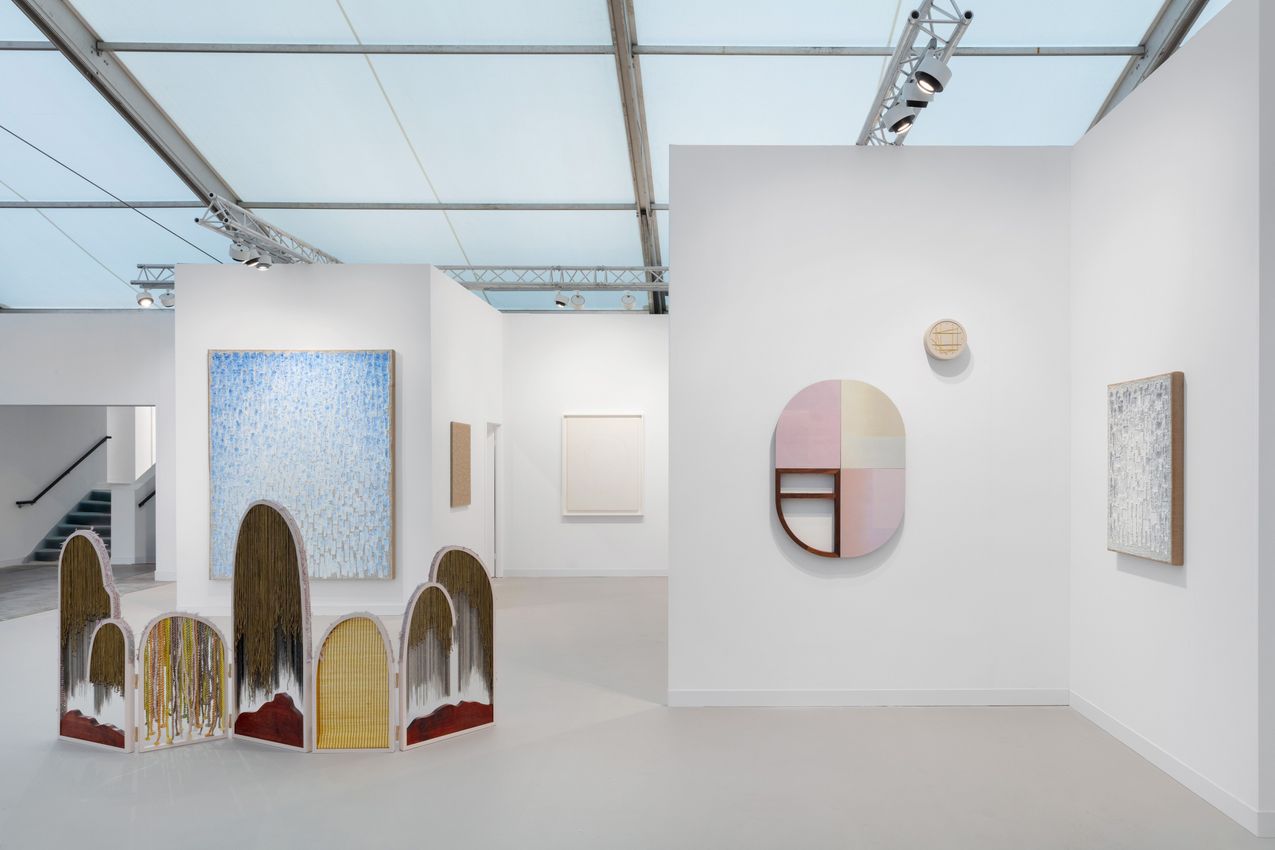
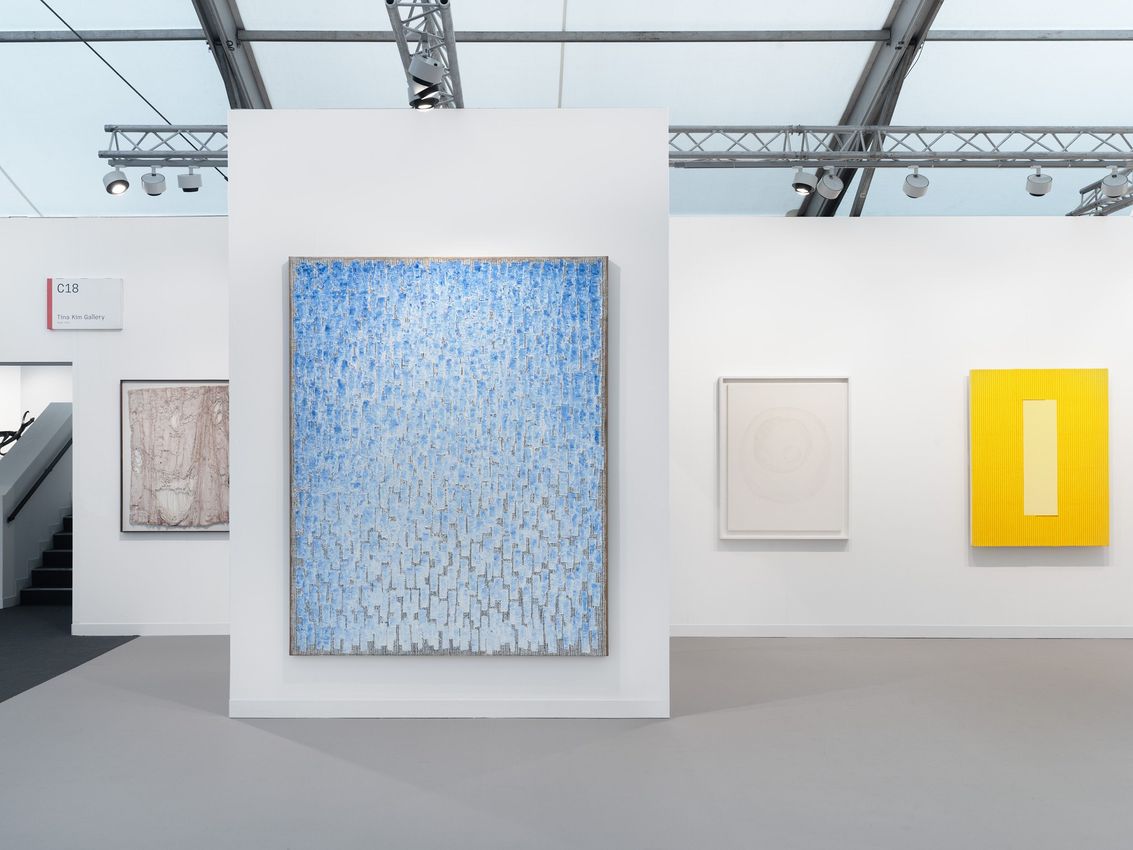
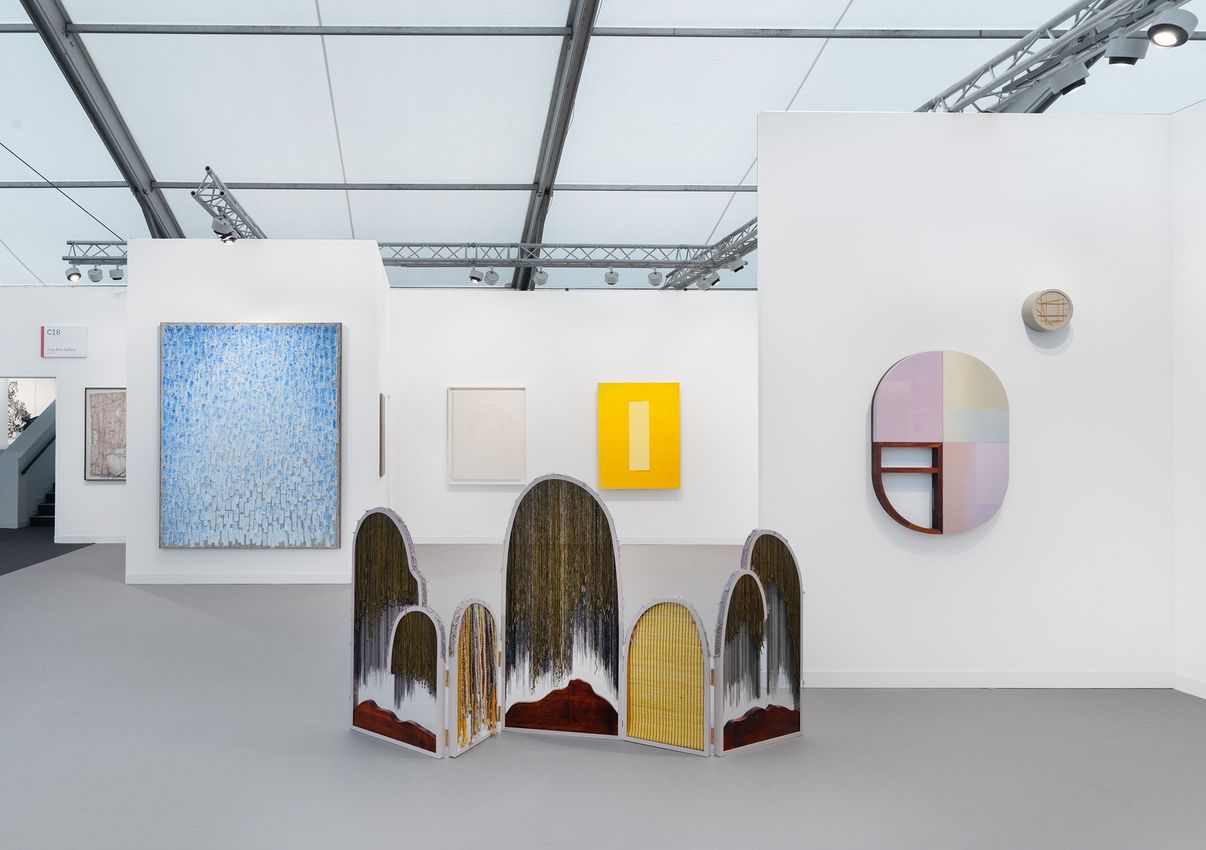
Tina Kim Gallery returns to Frieze London at the Regent’s Park, October 15–19, with a presentation highlighting artists across our roster who expand the boundaries of their mediums. Across painting, sculpture, textile, and process-based practices, the works on view explore how material experimentation can hold cultural memory, reframe tradition, and destabilize our understanding of identity and perception.

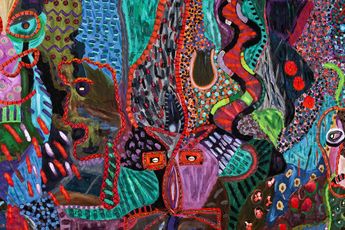
Pacita Abad is best known for her “trapuntos,” mixed-media assemblages that combine painting, hand-stitching, and found objects like buttons, mirrors, shells, and sequins. Inspired by the vibrant craftsmanship she encountered during her travels, she fused these diverse materials and influences into works that range from bold abstractions to vivid depictions of marine life. A comprehensive retrospective of Pacita’s work recently toured North American museums, opening at the Walker Art Center in 2023 and concluding at the Art Gallery of Ontario earlier this year.

Throughout her career, Egyptian-born artist Ghada Amer has long explored the expressive possibilities of textile art through embroidery and appliqué. Reworking these gendered traditions—embroidery associated with women in Egypt, and appliqué practiced by male tentmakers—she situates her practice in the broader historical struggle for women’s artistic autonomy. Amer often incorporates feminist texts, with recent works arranging Arabic script into patterns that resemble QR codes, a distinctly modern form of communication.

The sculptures of Mexican artist Tania Pérez Córdova are crafted from a variety of materials, often found objects imbued with personal meaning. On hold (2014) features a borrowed SIM card embedded and rendered inert in porcelain, while Colocasia Black Coral (2022) threads a gold chain through an artificial leaf that hangs delicately on the wall. These unexpected combinations draw attention to the unstable identity of the objects that surround us.

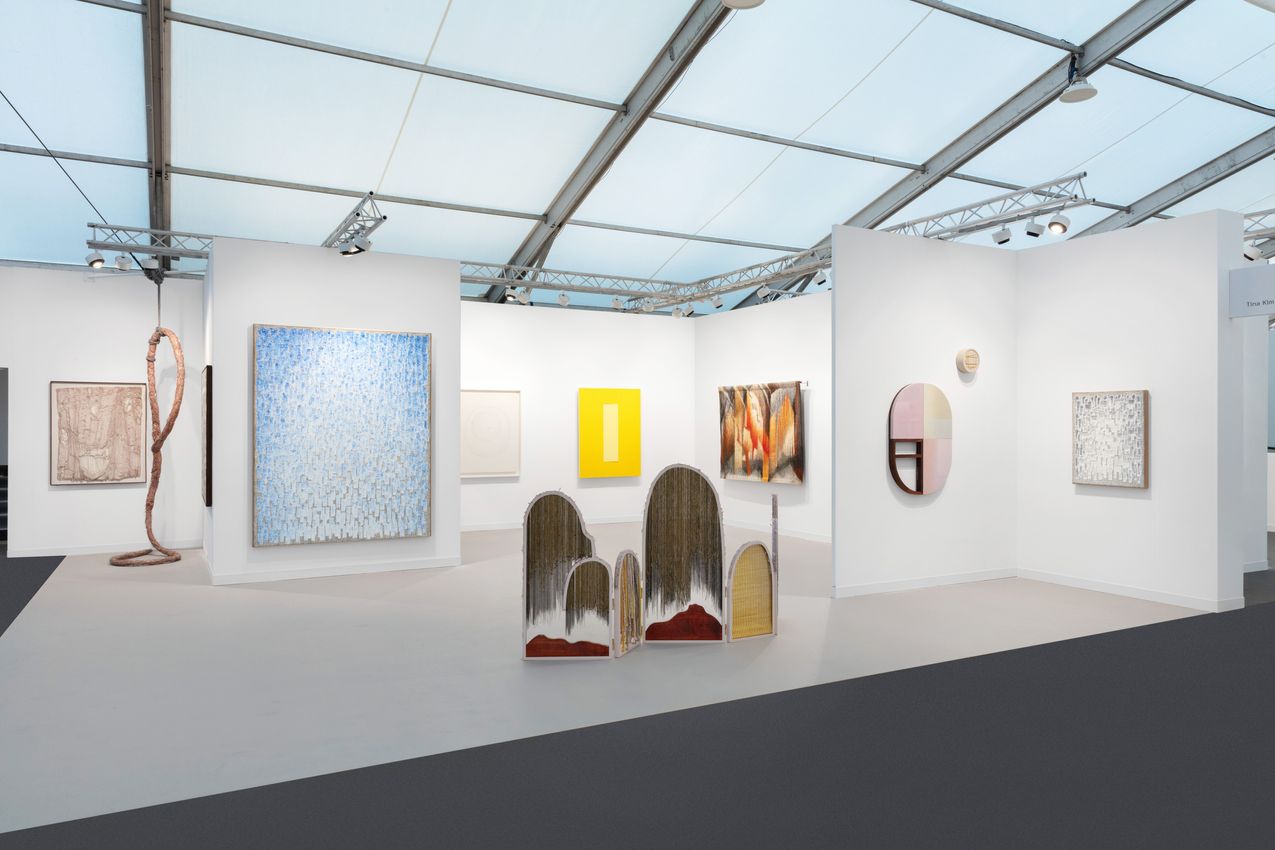
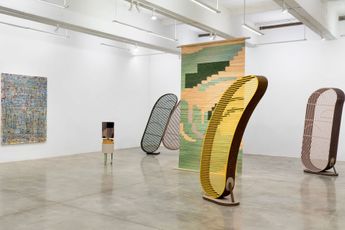
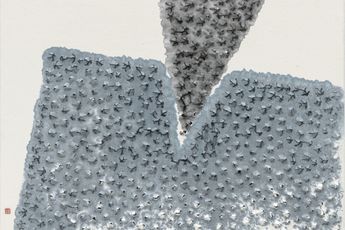
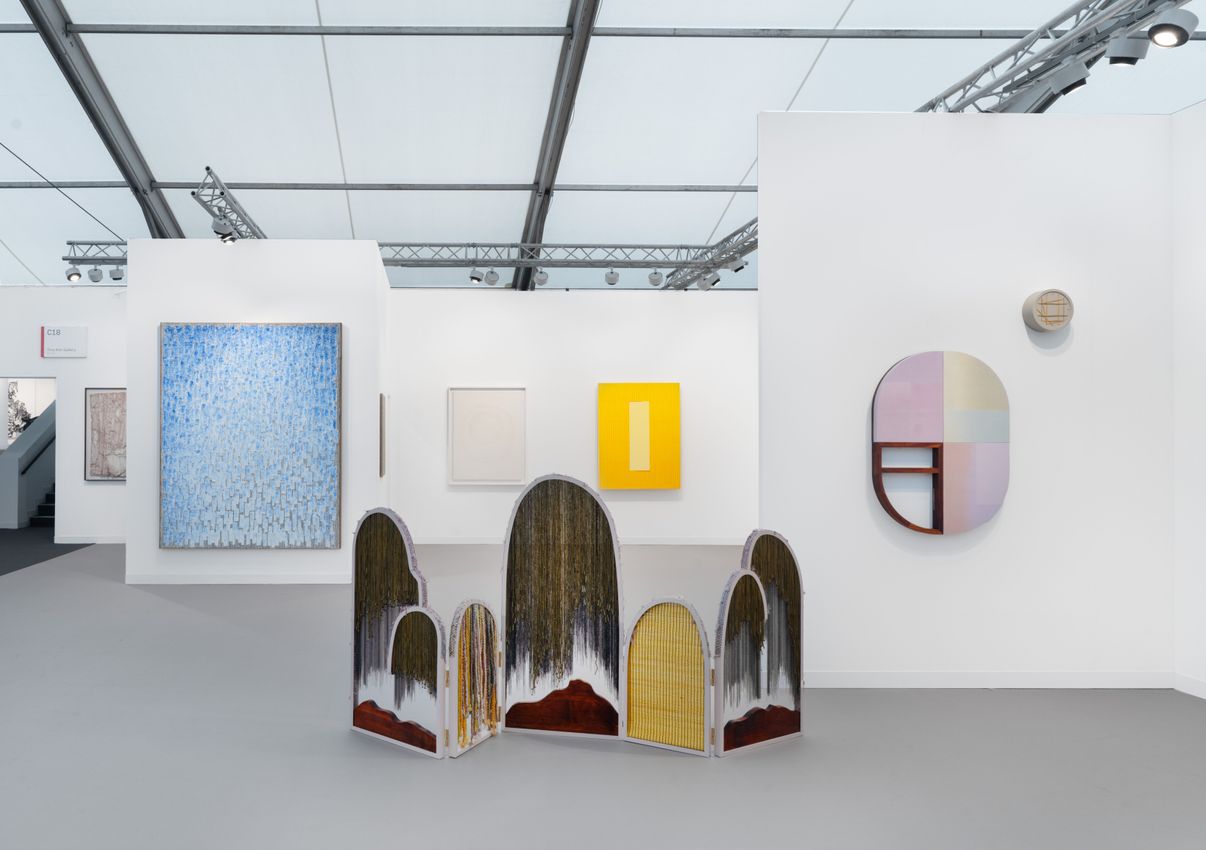
The late Korean artist Suki Seokyeong Kang is celebrated for innovative engagement with tradition, reinterpreting historical art forms in a contemporary context. Her practice invites interaction with modular sculptures, activating materials like painted steel, colored thread, and woven mats through human presence and subjectivity. We will be presenting a large- scale sculpture from Kang’s Mountain series—first unveiled in her 2023 survey exhibition at the Leeum Museum—which reflects her background in Eastern ink painting and explores the relationship between the human body and geographic forms.

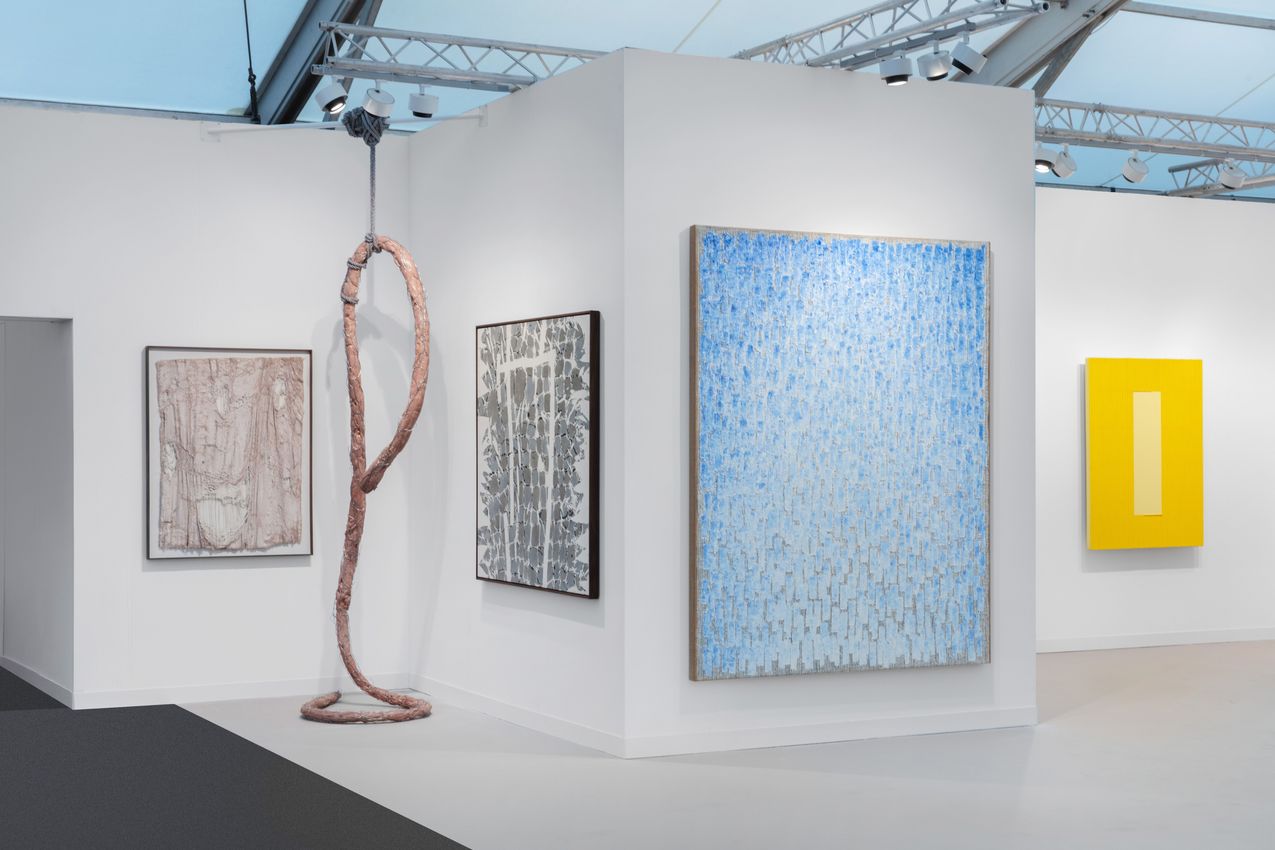
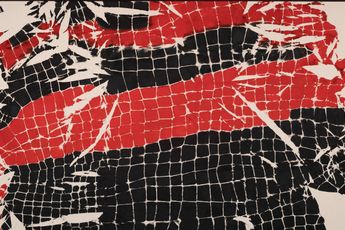
Maia Ruth Lee, born in Korea and raised in Nepal, has lived across the US and is now based in California’s Bay Area. Her lifelong experience of relocation informs her practice, using visual metaphors to capture feelings of displacement. In Lee’s Bondage Baggage paintings, she ties bundled canvases with rope, dyes them with ink, and then unfastens them to reveal radiating patterns. These images of release—created through restraint—draw from the rope- binding techniques used by Nepali migrant workers to secure their belongings. Lee recently published her first major monograph with Radius Books, titled Bondage Baggage.

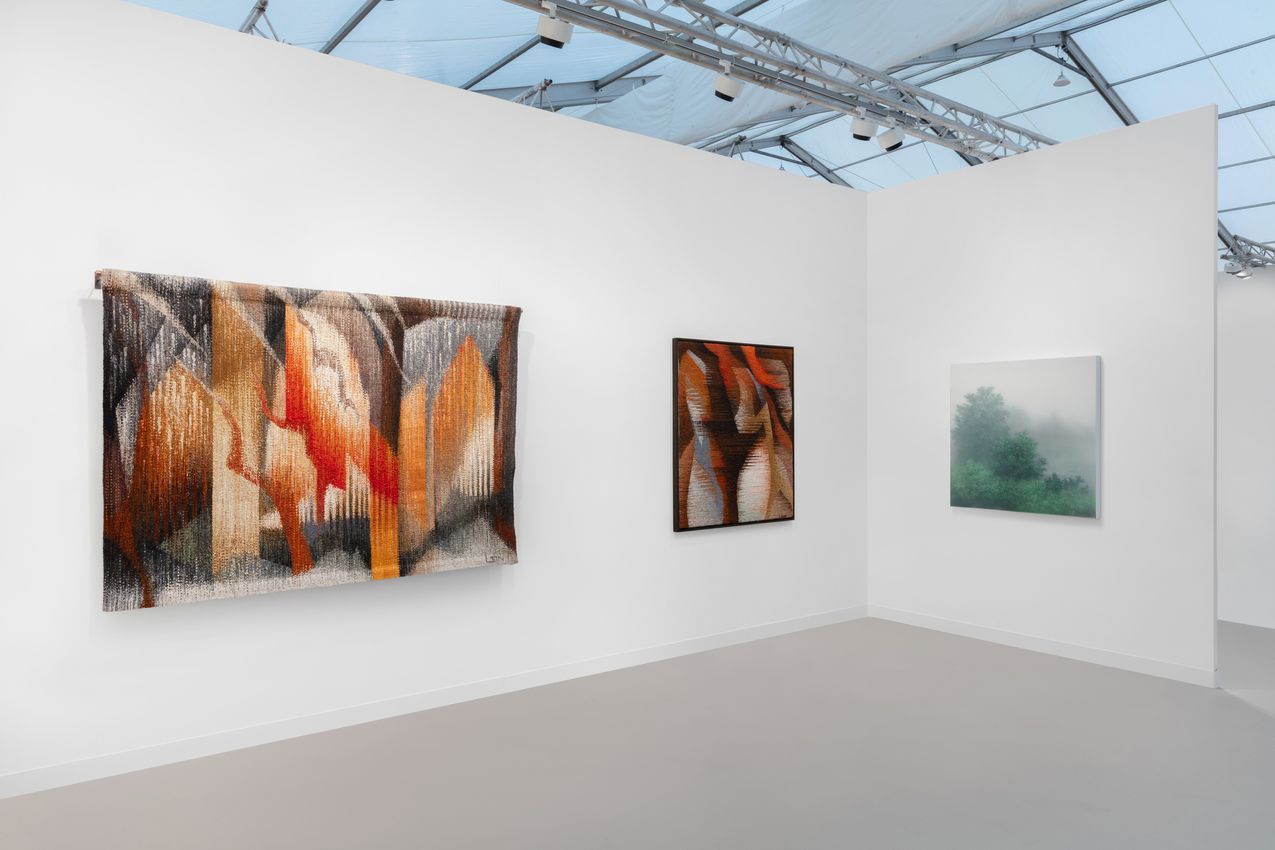
Korean artist Kibong Rhee creates multi-dimensional paintings of foggy landscapes, layering transparent fabric over his canvases to emulate the shifting light of mist. With a restrained palette of gray and green, the works play with depth and perception, so that forms seem to change as the viewer moves. This optical instability mirrors the experience of looking through fog, where vision itself feels uncertain and contradictory.

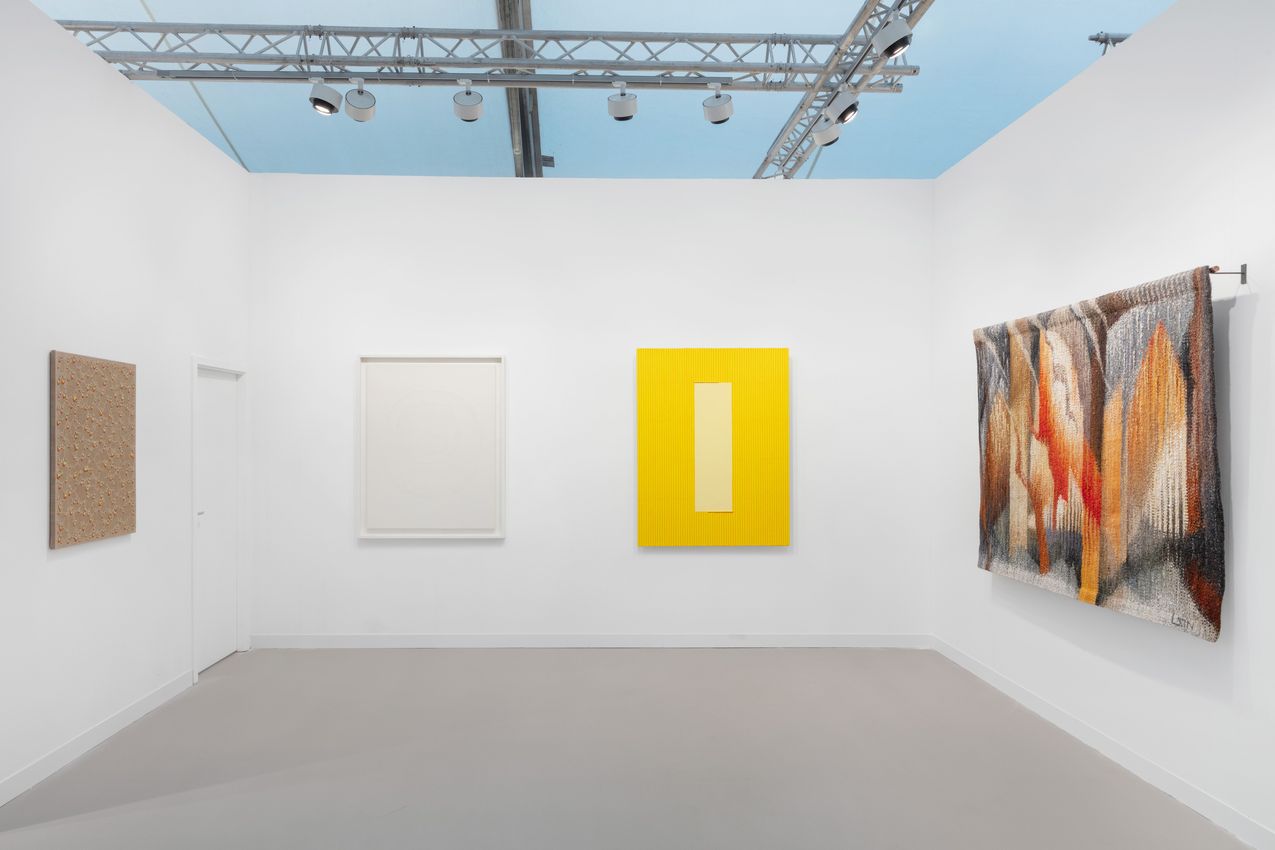
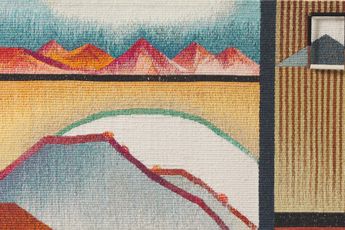
The tapestries of Korean fiber artist Lee ShinJa deploys thread as both line and structure, offering a distinct perspective on geometric abstraction by expanding the formal possibilities of weaving. Her later works incorporate metal rods wrapped in thread, anchoring the compositions with their linear forms. Lee’s first North American retrospective, Drawing with Thread, is on view at BAMPFA in California through February 1, 2026.

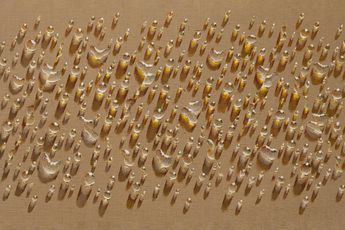
The late Korean painter Kim Tschang-Yeul is best known for his waterdrop paintings. Developing the motif into a lifelong practice, the drops became a formal vehicle for Kim to explore both the contemplative practice of repetition and the illusionistic properties of light and shadow, occasionally rendering the drops as though the water had directly soaked into the canvas. The calligraphic characters that appear in a number of his works underscore the disciplined rigor of his practice as well as the influence of Eastern philosophy on his art. The first major retrospective of Kim’s work since his passing in 2021is currently on view at the National Museum of Modern and Contemporary Art (MMCA), Seoul through December 21.

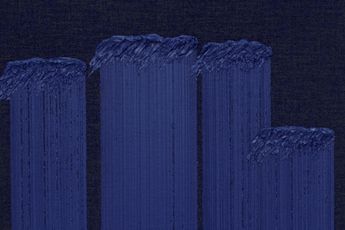
Our booth will include paintings from Ha Chong-Hyun’s Conjunction series, one of the most acclaimed bodies of work within the Dansaekhwa movement. Begun in the 1970s, the series takes its name from Ha’s uniquely tactile process of “conjoining” oil paint with hemp canvas. By pushing the paint through the verso side of the canvas, the pigment extrudes through the weave to produce a textured surface. Earlier this September, the Ha Chong-Hyun Art Center opened in Paju, just outside Seoul. Spanning across four stories, the center showcases the artist’s extensive oeuvre—from his early Informel pieces to the groundbreaking Conjunction series. This fall also saw the release of two major publications dedicated to Ha: a monograph published by Rizzoli and Light Into Color, the catalog for his 2025 exhibition at Château La Coste.

Another leading figure in the Dansaekhwa generation, Kwon Young-Woo made hanji— traditional Korean paper—his primary material. Kwon treated the paper as both ground and medium: layering, ripping, and incising its surface, he would also apply ink or gouache into these tears. Through these methods, he expanded the textural possibilities of painting. Similarly, Park Seo-Bo used hanji in his Ecriture series to transform his canvases into sculptural surfaces. In these works, the paper pulp is molded into vertical columns and grooves, a formal motif that also extends into his ceramic paintings, where wet clay is shaped into repeating ridges.

Read More

Installation Views

Artists Exhibiting

Also Exhibiting at Tina Kim Gallery

The art world in focus