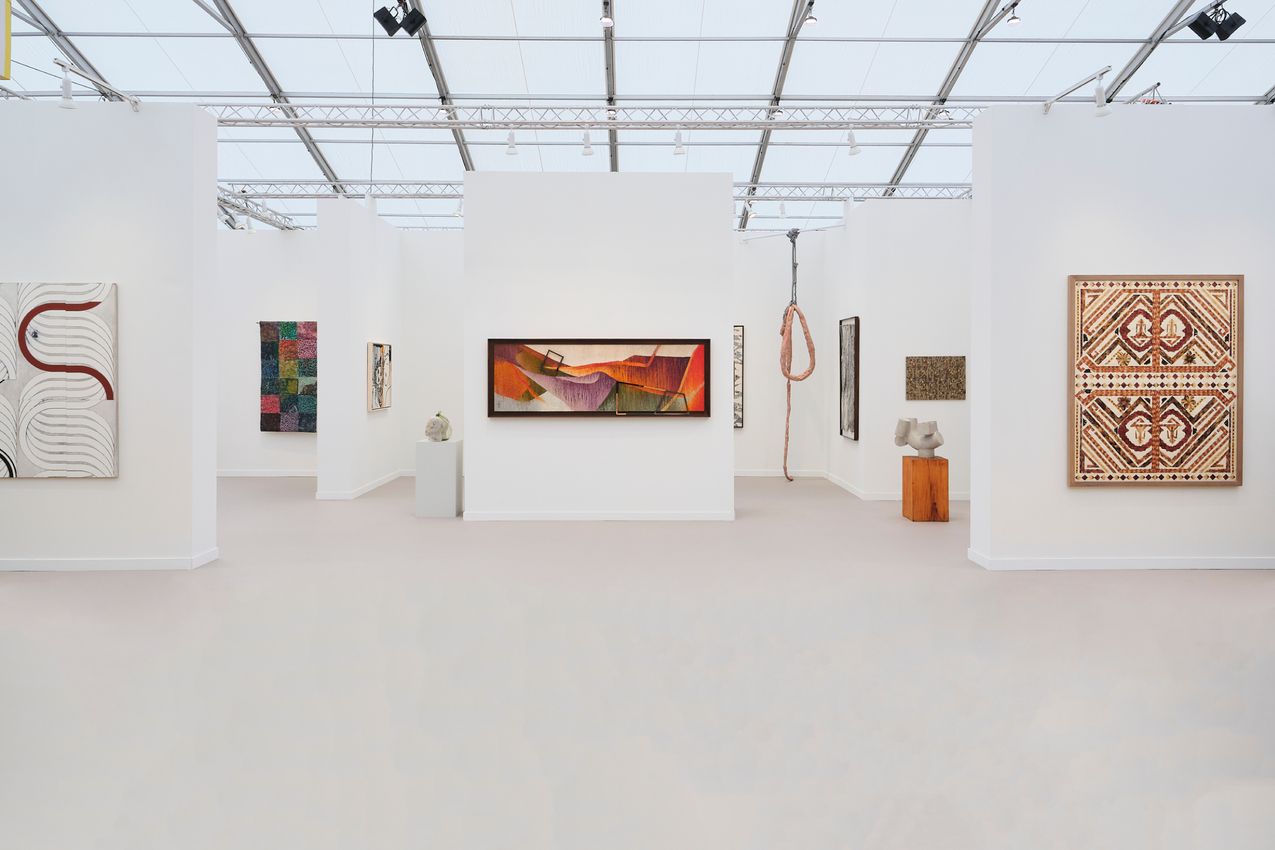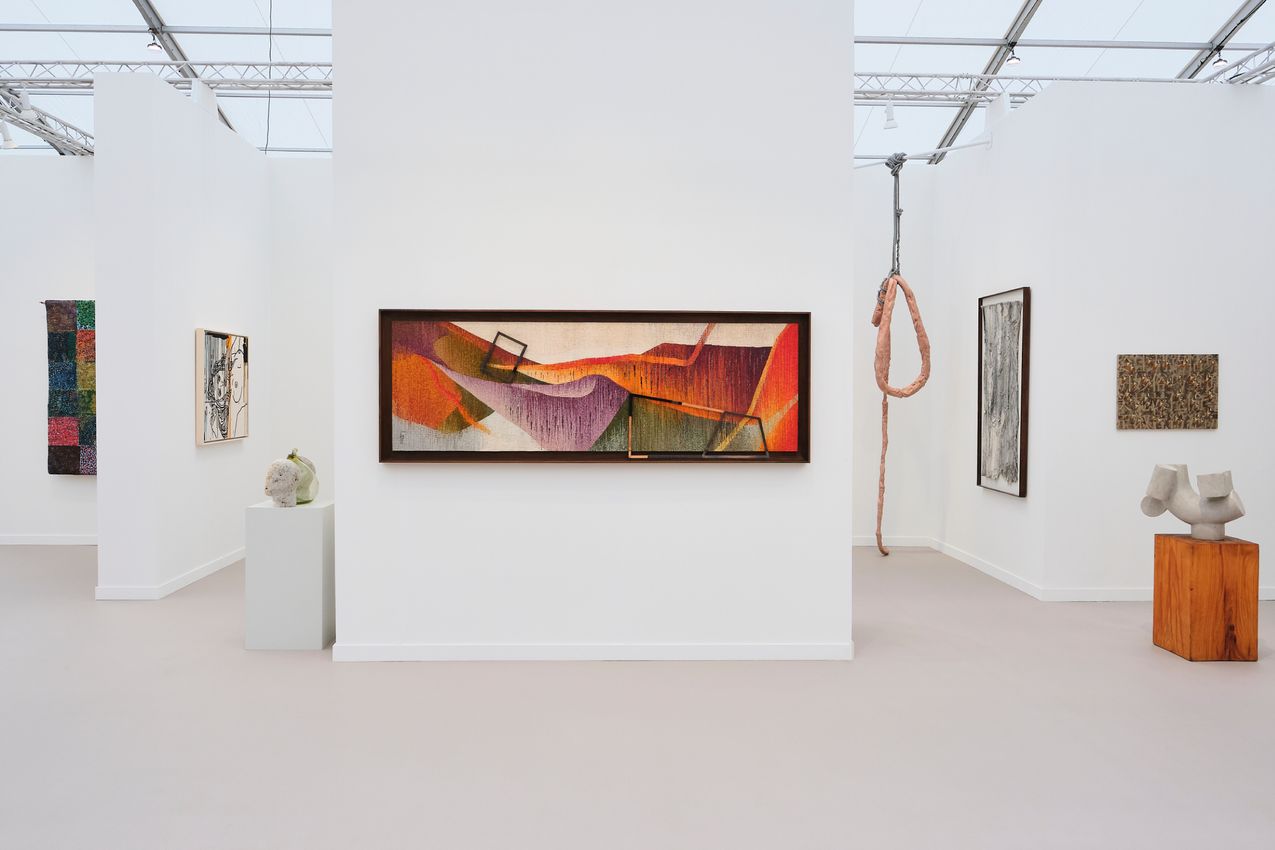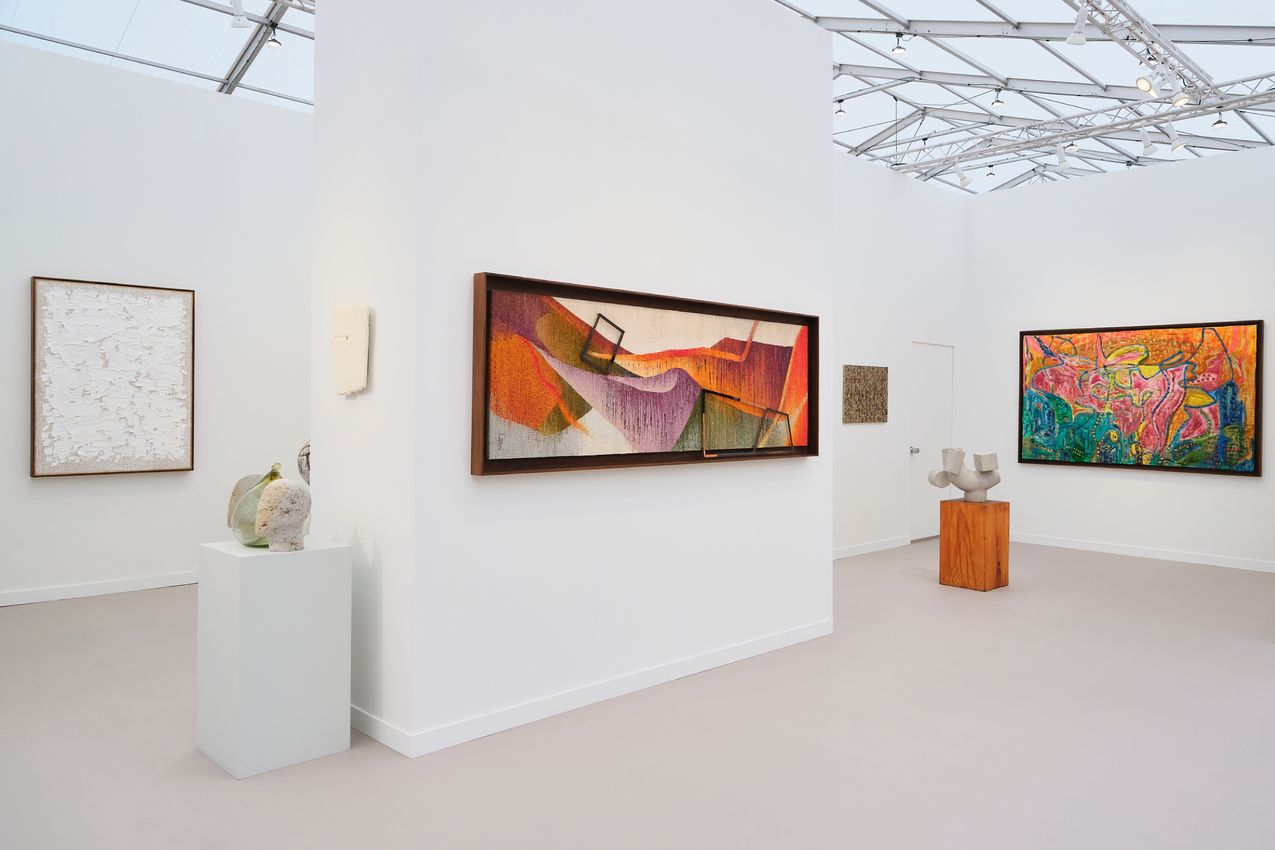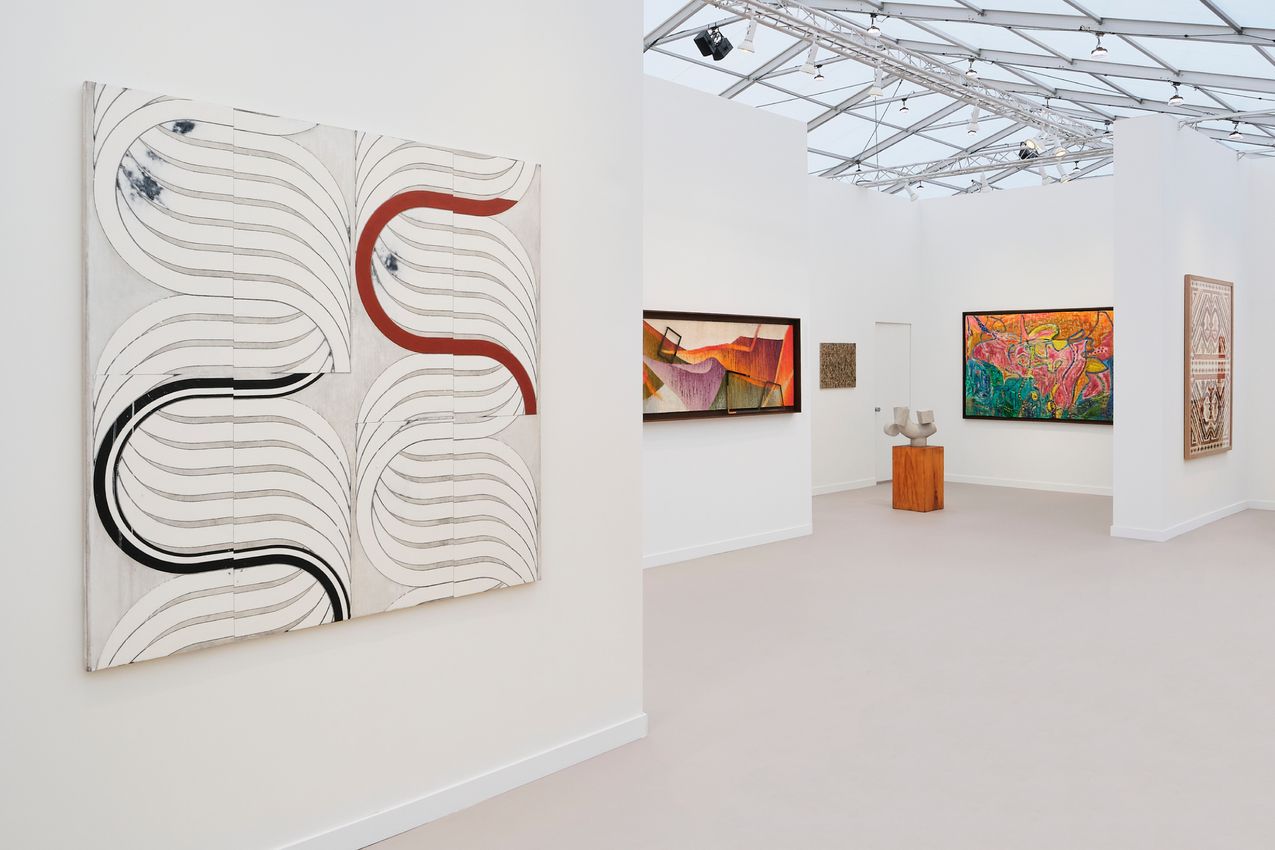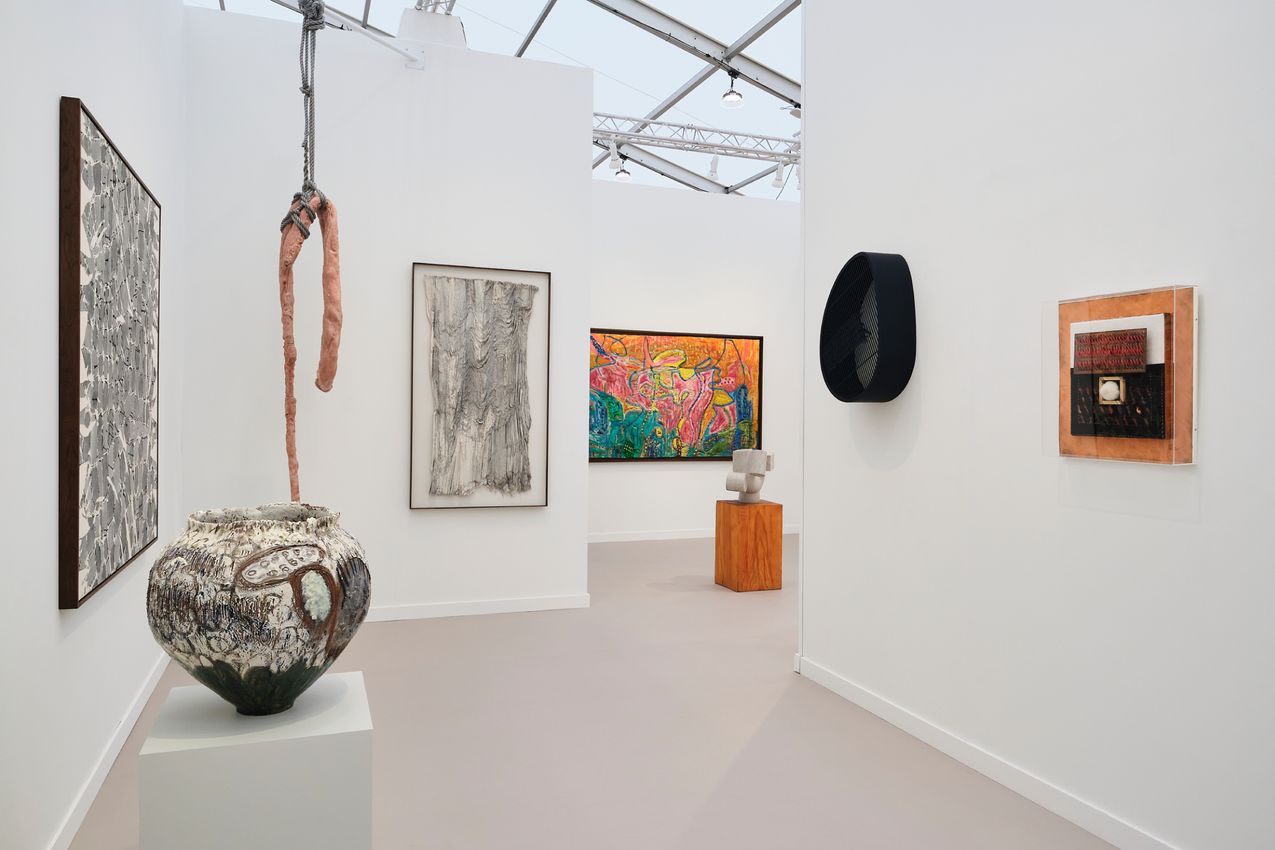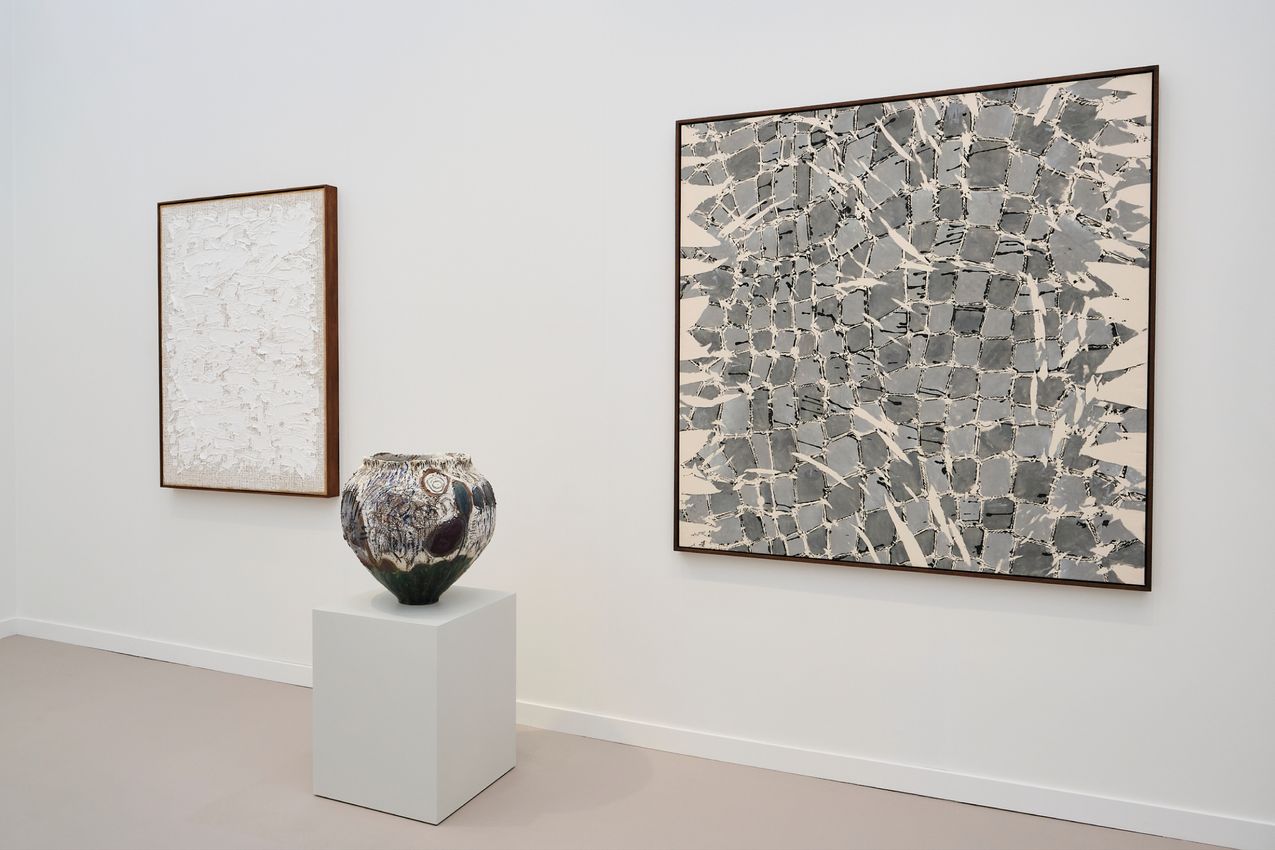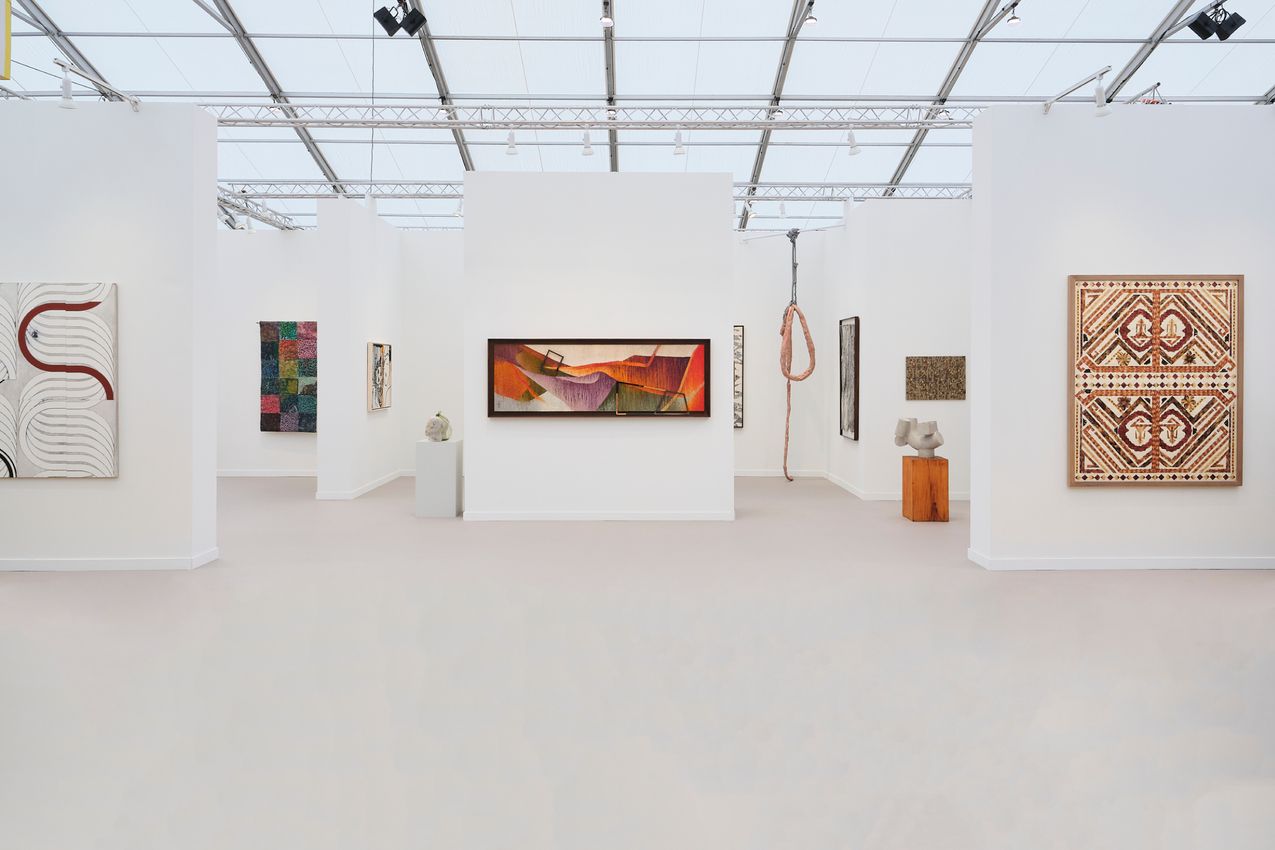
Tina Kim Gallery returns to Frieze Los Angeles with a focused presentation of artists from around the world whose work explores the intersections of cultural identity, collective memory, and formal experimentation, realized through painting, sculpture, and textile-based works.
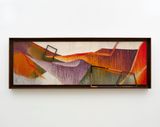
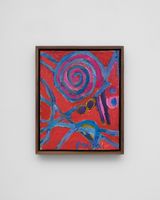
The late Pacita Abad was a Filipina American artist known for her vibrant multimedia works inspired by her travels through Asia, Africa, and the Americas, as well by the sociopolitical conditions affecting these regions. We will present two major large-scale trapuntos—her signature form of stitched and padded paintings—alongside smaller-scale abstract works. Her work is currently included in the 2026 Diriyah Biennale, and the gallery will present its third solo exhibition of the artist in May 2026.
On view will be works adapted from Mire Lee’s 2024 Tate Turbine Hall commission, Open Wound, showcasing the artist’s distinctive use of industrial and construction materials to evoke visceral, corporeal forms. The original installation brought together membranous fabric “skins” and silicone tentacle sculptures suspended around a large rotating turbine. A solo exhibition of Lee’s work will open at the Secession, Vienna in June.
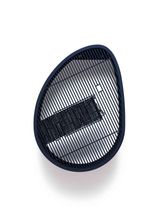
Originally trained in traditional ink painting, the late Korean artist Suki Seokyeong Kang used sculpture to explore how the individual inhabits the world, creating three-dimensional works that combine industrial materials like steel and aluminum with silk, thread, and woven grass. Sculptures on view at our booth transpose floor materials—such as wool carpet and hwamunseok mats—into a wall-mounted format. The gallery will present a solo exhibition of Kang’s work opening March 12, commemorating the one-year anniversary of the artist’s passing.
Born in Busan, raised in Nepal, and now based in the Bay Area, Maia Ruth Lee draws on her experiences of migration and displacement, creating works inspired by the packing methods used by Nepali migrants to protect their belongings in transit. The artist applies pigment to a canvas bound in cords and fabric; once released, the canvases open into radiating fields of color marked by the bindings. This past fall, Lee released her first major monograph, Bondage Baggage, with Radius Books. The gallery will present its second solo exhibition with Lee this coming September.
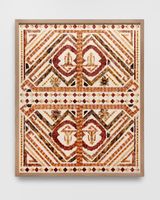
Dutch Indonesian artist Jennifer Tee similarly engages themes of migration and diasporic memory; her Tampan Tulips collages fuse tulip petals with designs inspired by ceremonial Indonesian cloths, reflecting the artist’s mixed heritage.
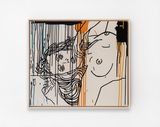
Shaped by her upbringing in France and Egypt, Ghada Amer’s textile-based practice foregrounds questions of women’s liberation and offers a comparative reflection on gender and sexuality across Arab Muslim societies and the West. Amer’s embroidered paintings feature graphic, stylized depictions of nude women appropriated from pornographic magazines, while her text-based works convey pithy feminist statements through stitched thread.
The late Korean artist Kang Seok Ho painted closely cropped images of torsos that function as anonymous portraits, focusing not on the sitter’s face but on the texture of fabric and the effects of light on skin. Painted after photographs drawn from social media and film stills, these works examine intimacy and distance shaped by the production and consumption of mass-media images. The gallery presented its second solo exhibition of Kang’s work this past year.
Sculptures by Mexican artist Tania Pérez Córdova destabilize conventional definitions of object, place, and memory. Using borrowed objects that reference people, locations, or experiences not physically present, her work conjures images of other times and places.
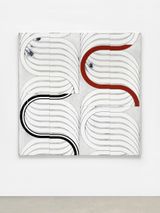
Italian-born painter Davide Balliano’s minimalist geometry is built on a motif of flowing arches and curves that appear to extend beyond the canvas. The shapes are formed using plaster and gesso, recalling the ancient architecture found in the artist’s native Turin, Italy. His recent works incorporate color for the first time, including paintings on view featuring deep reds paired with the artist’s signature grayscale palettes. A solo exhibition of Balliano’s work is currently on view at the gallery through March 7.
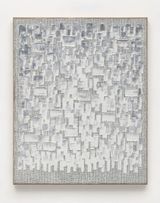
Our presentation includes artists associated with the Dansaekhwa movement, a group of Korean painters who pioneered a distinct form of abstraction in the postwar period. Park Seo-Bo first developed his Écriture series in the late 1960s, with paintings etched into by pencils; in later iterations, he began using the pulp of hanji paper to create vertical ridges and then moved into using vivid colors in the 2000s. His peer Ha Chong-Hyun is known for his distinctive bae-ap-bub (“back-pressure”) technique, in which thick oil paint is pushed through the weave of burlap—used in place of a linen canvas—reversing conventional methods of painting.
A contemporary of the Dansaekhwa group, Kim Tschang-Yeul distinguished his practice by relocating to Paris, where he devoted himself to the motif of the water droplet. In his Recurrence series, droplets are juxtaposed with passages from classical Chinese texts, reflecting the influence of his grandfather’s calligraphic practice. This series will be the focus of Kim’s solo exhibition at Tina Kim Gallery this coming November, the artist’s third at the gallery.
Also from the same generation, Korean fiber artist Lee ShinJa has recently gained long-overdue recognition for her seven-decade career as an artist, educator, and community leader. Her techniques encompass dyeing, felting, and embroidery, with weaving at the core of her practice. Our booth will include a rare wearable work by Lee that embodies the sculptural possibilities of fiber art. The artist’s first North American survey recently closed at the Berkeley Art Museum and Pacific Film Archive, where it received critical acclaim.
Also on view is an abstract granite sculpture by the late Japanese American artist Minoru Niizuma, created shortly after he immigrated to the United States in 1959; a vessel by Brooklyn-based ceramicist Jane Yang D’Haene, offering a contemporary take on the Korean moon jar; and a playful cement sculpture by Korean artist Gimhongsok.


A respected voice in contemporary art discourse.
Focusing on ambitious storytelling and insightful art-world commentary. Ocula Magazine publishes in-depth interviews, critical essays and timely analysis on the artists, exhibitions and ideas driving the global art world.
Learn more about Ocula Magazine
Showcasing the best of the art world.
Ocula partners with galleries from around the world to highlight their artists, artworks and exhibitions. Gallery membership is by application and invitation, with each member vetted by an independent panel.
Learn more about Ocula Membership

Specialises in the sale of major artworks.
Led by a team with deep ties to the world’s leading auction houses, galleries and collectors. Ocula’s advisory team offers bespoke services to high-net-worth clients from around the world who are looking to acquire the best of contemporary and modern art.
Learn more about our team and services