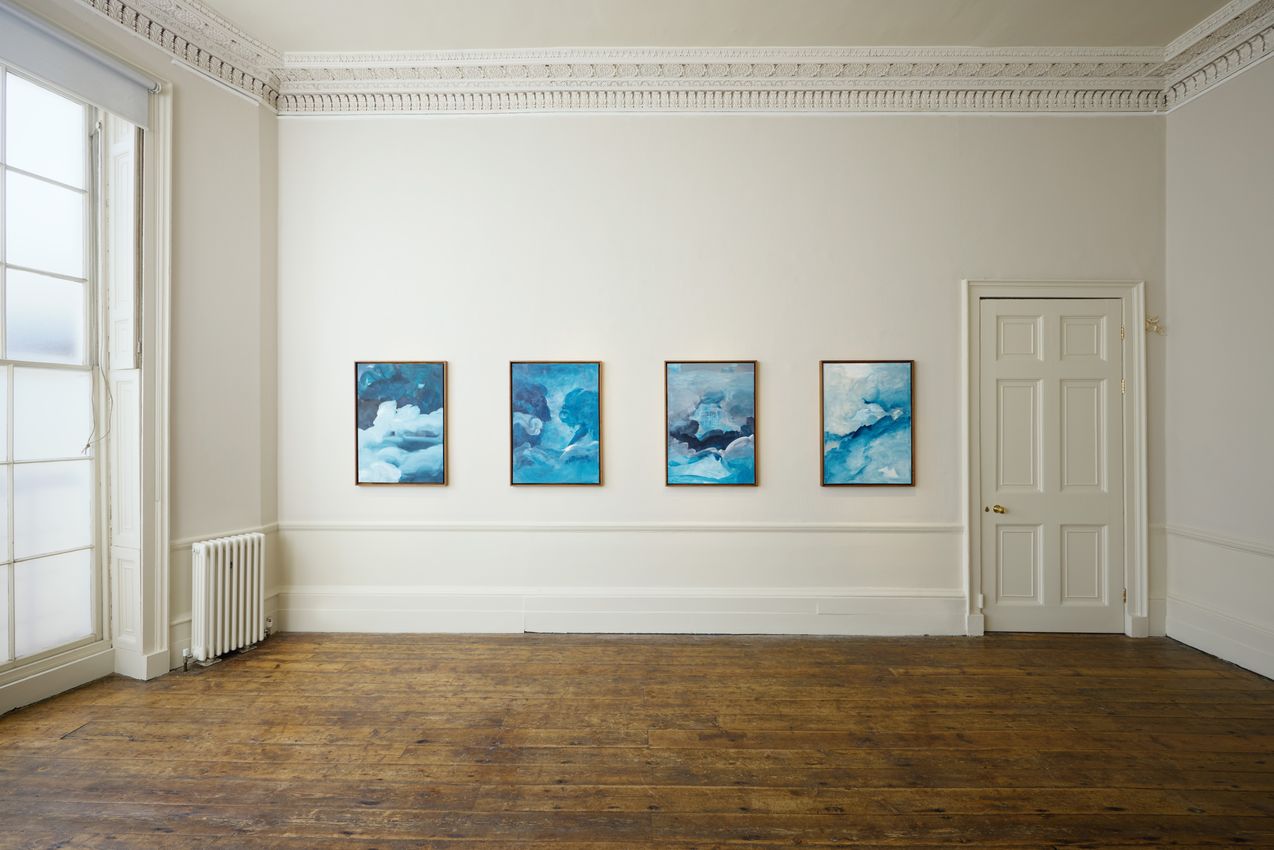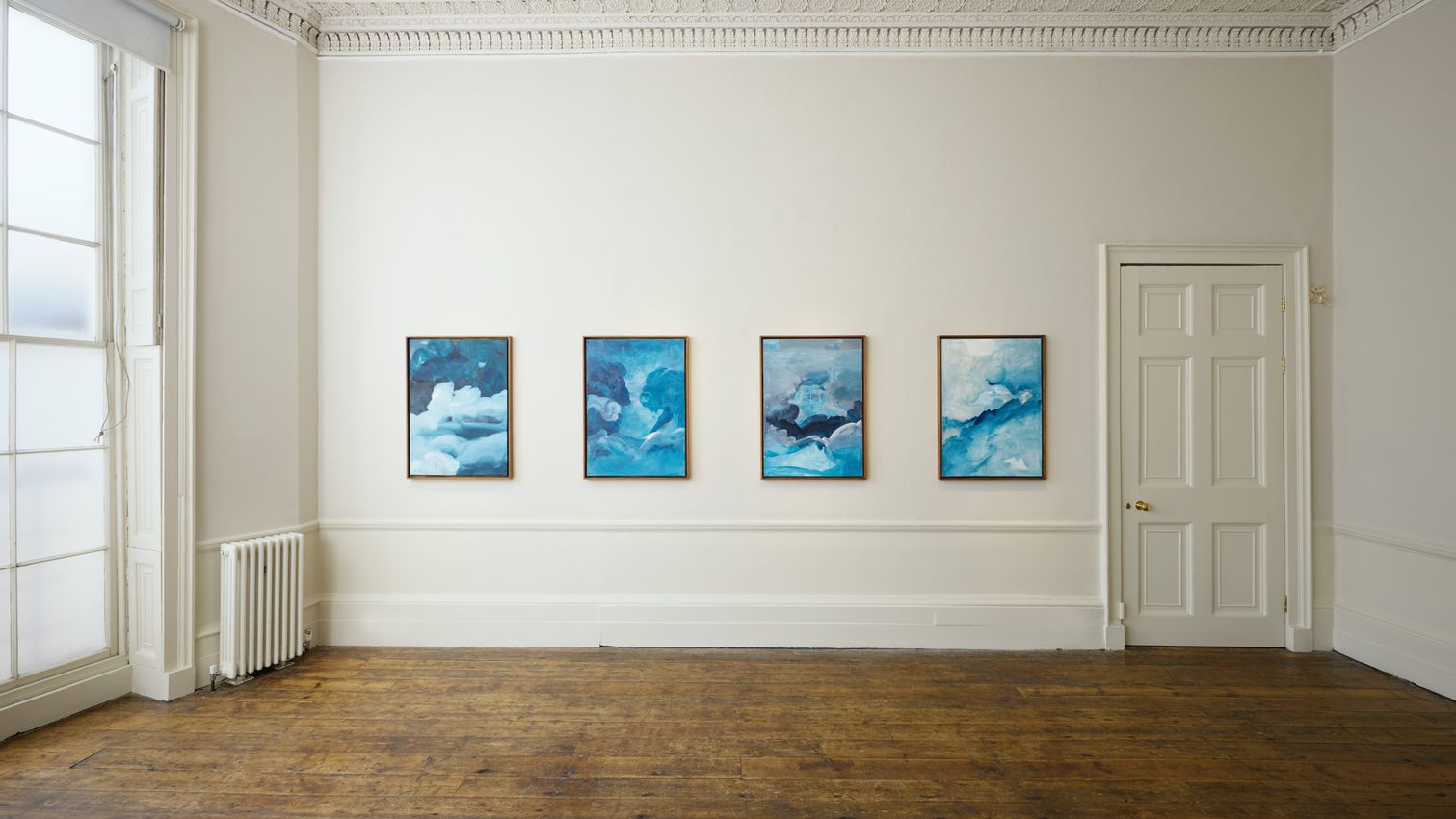
An engulfing cloud of lilac drifts through a shifting dark sky—an image that captures the essence of Leila Bartell’s upcoming exhibition, Memory Fields. In this latest body of work, Bartell uses moving cloudscapes to mirror the instability of the natural world around us, emphasising the transient and unpredictable nature of both landscape and memory. Drawing on a tradition deeply rooted in landscape painting, she re-imagines the genre through a contemporary lens, exploring how our perception of nature adapts amid an ever-changing environment.
At the heart of this series is a direct engagement with the legacy of John Constable, particularly his iconic skies. While Constable sought to capture a timeless, idealised vision of the English landscape, Bartell reinterprets this tradition through the lens of contemporary experience. She disrupts Constable’s romantic, pastoral serenity by introducing elements that speak to the instability of the present. Acidic yellows and synthetic greens shock the skies in an attempt to evoke digital interference, atmospheric distortion, or ecological imbalance. These chromatic intrusions reflect how digital technologies and climate anxieties affect our perception of the natural world.
These colours serve as a metaphor for how our collective image of nature is increasingly shaped by screens or digital representations, rather than authentic, sensory interactions with the world around us. Bartell’s work does not simply update Constable’s skies; it interrogates what it means to look at the sky today, in a world where our connection to nature is so distant.
In a moment defined by environmental instability, climate change, and the rise of digital technologies, Memory Fields addresses the profound shift in how we experience nature today. The clouds and landscapes depicted here are not just representations of the world as it is, but reflections of how nature is increasingly affected, altered, and even threatened. As we grapple with the instability of the present moment, Bartell’s work challenges us to reconsider the ways in which we engage with the world around us and to reflect on how our perceptions of nature have been reshaped by the complexities of modern life.


Founded in 2009, Tristan Hoare Gallery is based in a Grade I listed Georgian townhouse in Fitzroy Square. The gallery represents a diverse group of international artists working across painting, ceramics, textiles, photography, and design, including Kaori Tatebayashi, Alessandro Twombly, Peter Schlesinger, Sydney Albertini, Vipeksha Gupta and Sussy Cazalet.

A respected voice in contemporary art discourse.
Focusing on ambitious storytelling and insightful art-world commentary. Ocula Magazine publishes in-depth interviews, critical essays and timely analysis on the artists, exhibitions and ideas driving the global art world.
Learn more about Ocula Magazine
Showcasing the best of the art world.
Ocula partners with galleries from around the world to highlight their artists, artworks and exhibitions. Gallery membership is by application and invitation, with each member vetted by an independent panel.
Learn more about Ocula Membership

Specialises in the sale of major artworks.
Led by a team with deep ties to the world’s leading auction houses, galleries and collectors. Ocula’s advisory team offers bespoke services to high-net-worth clients from around the world who are looking to acquire the best of contemporary and modern art.
Learn more about our team and services