Press Release

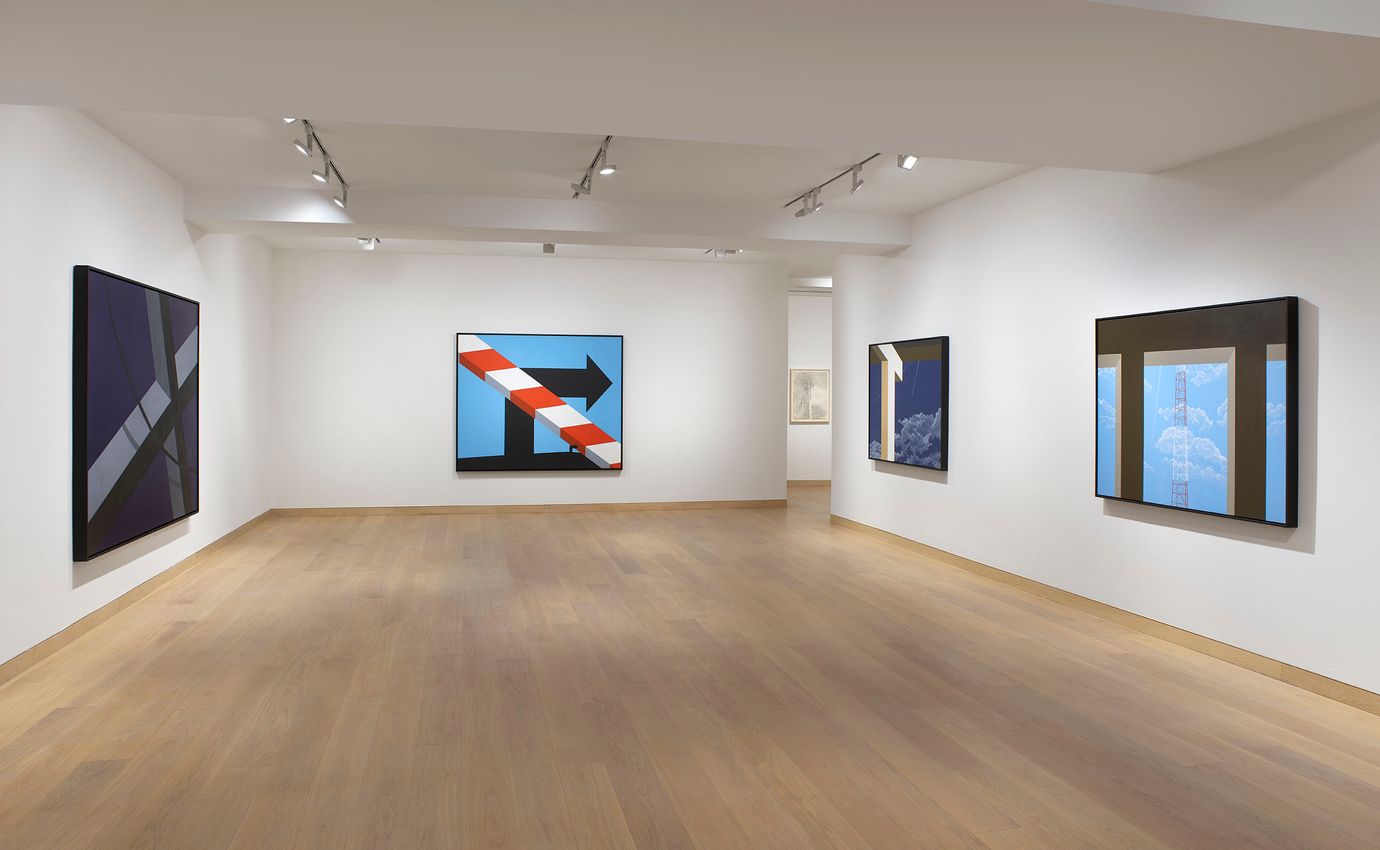
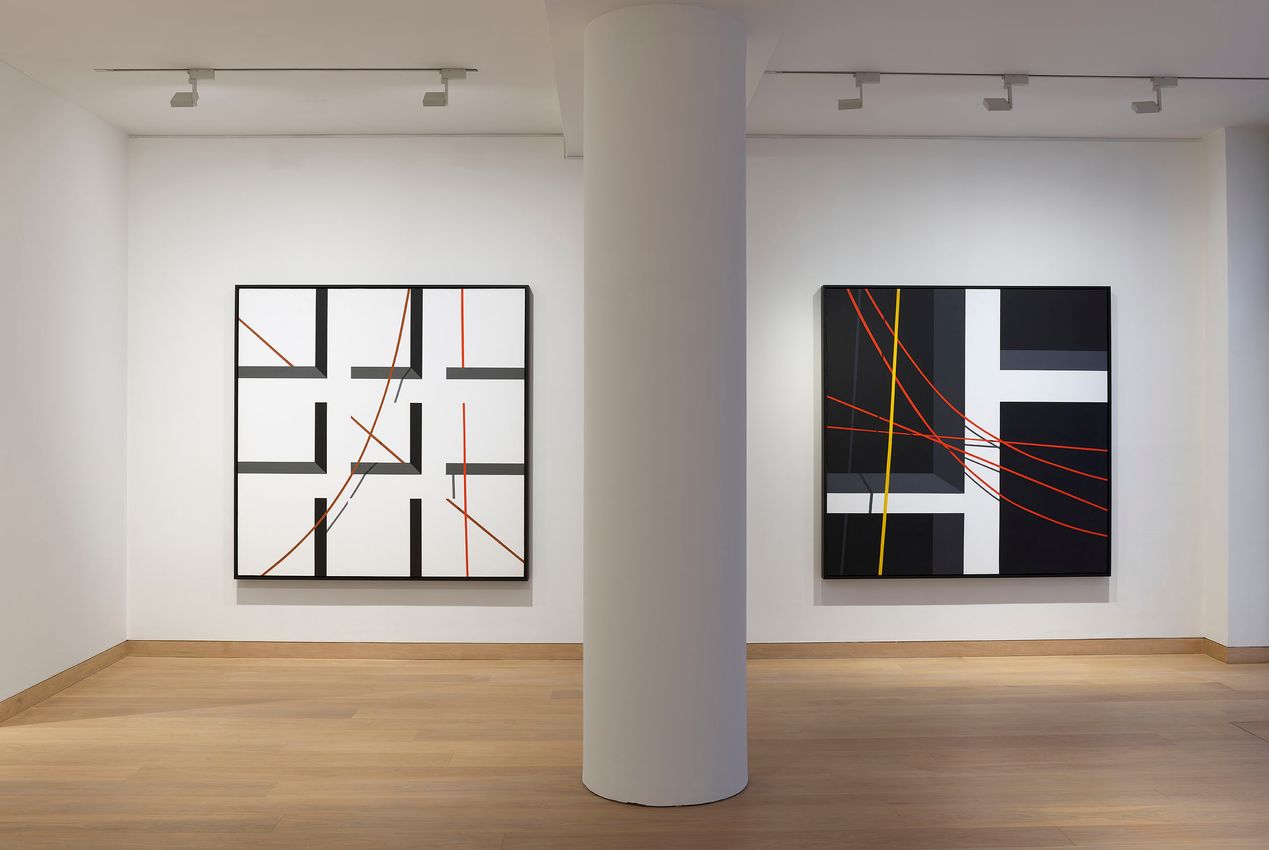
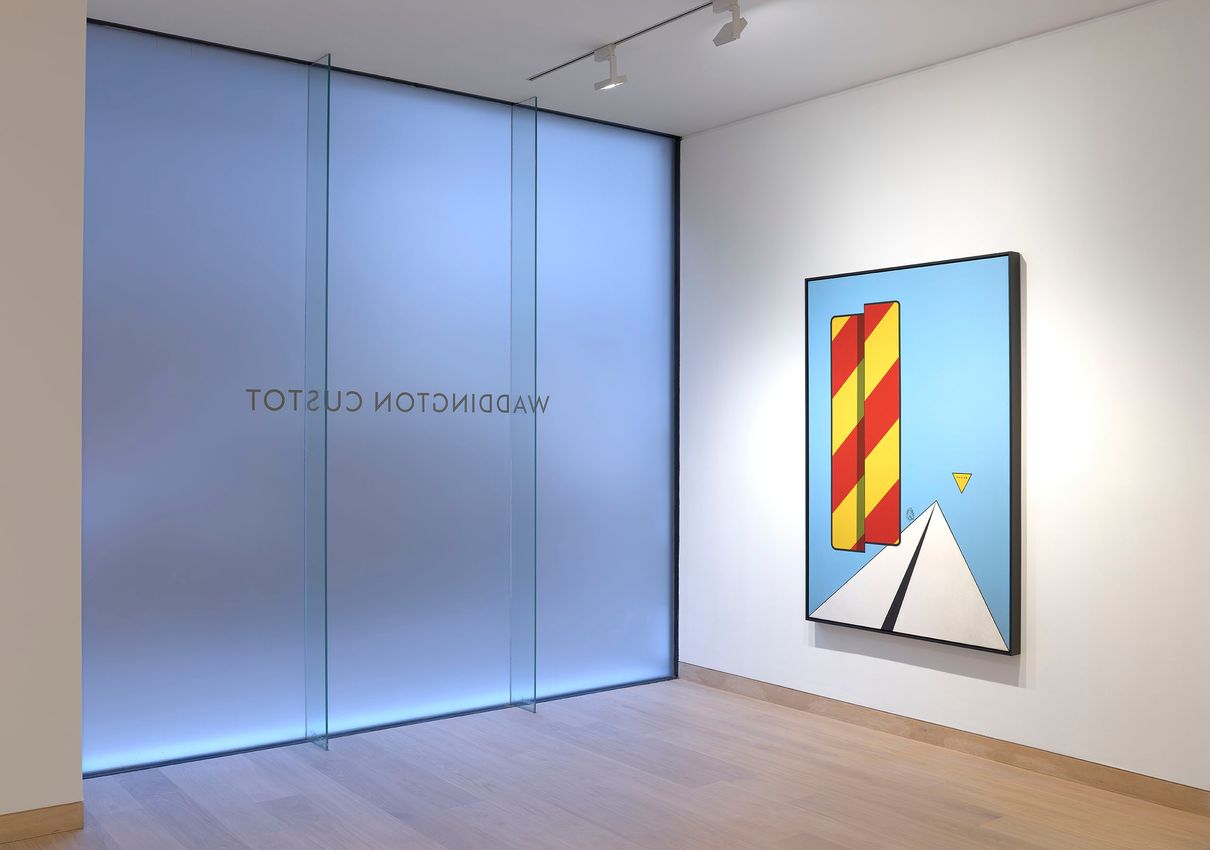
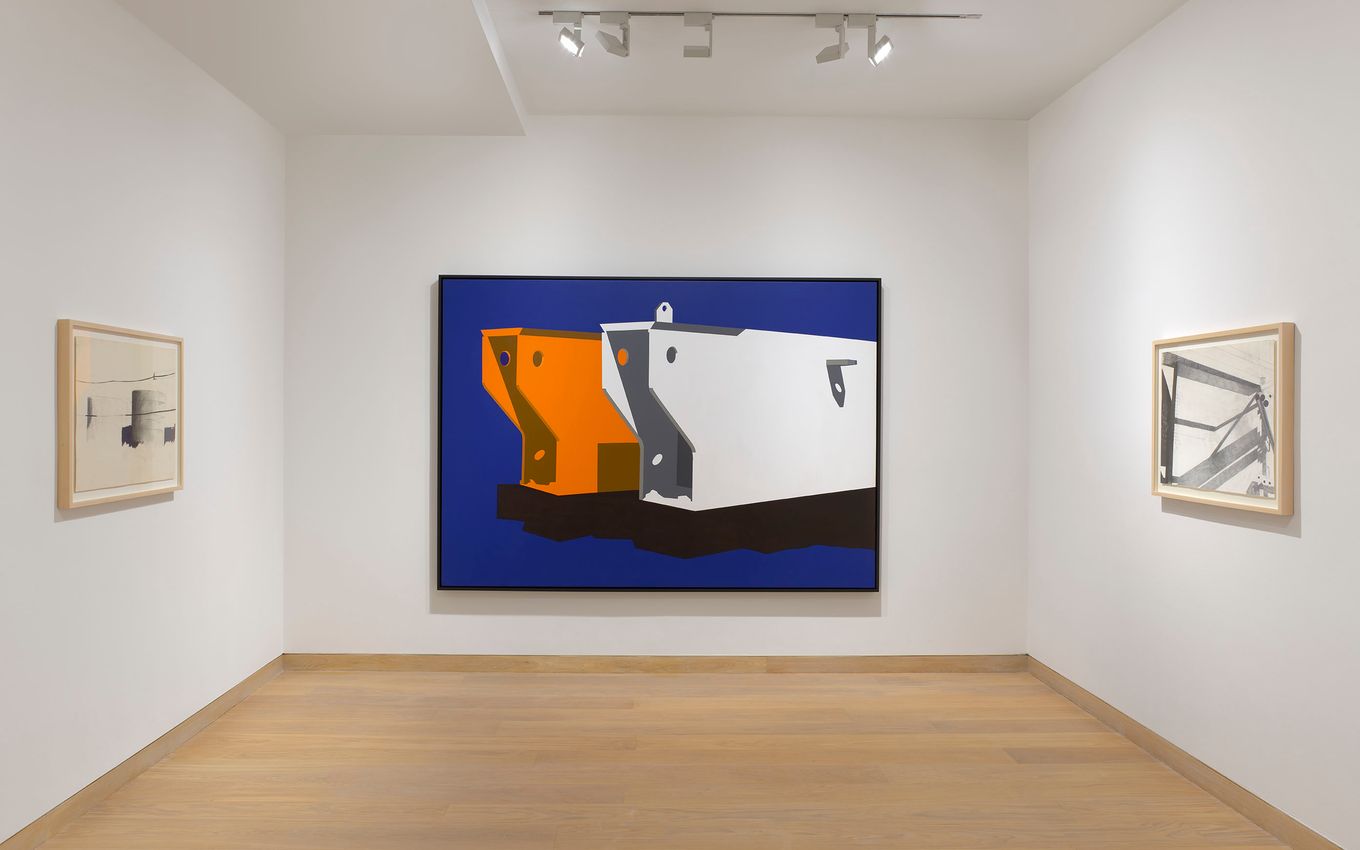
Waddington Custot is delighted to announce that the gallery now represents the Estate of Allan D’Arcangelo (1930–1998) and will present the artist’s first UK solo exhibition, Pi in the Sky, in January. The exhibition brings together paintings and drawings from the late sixties to early eighties, all shown in London for the first time. The selection of works focuses on the artist’s landscape painting which, utilising the monuments of the road, is rooted in a collective American experience.

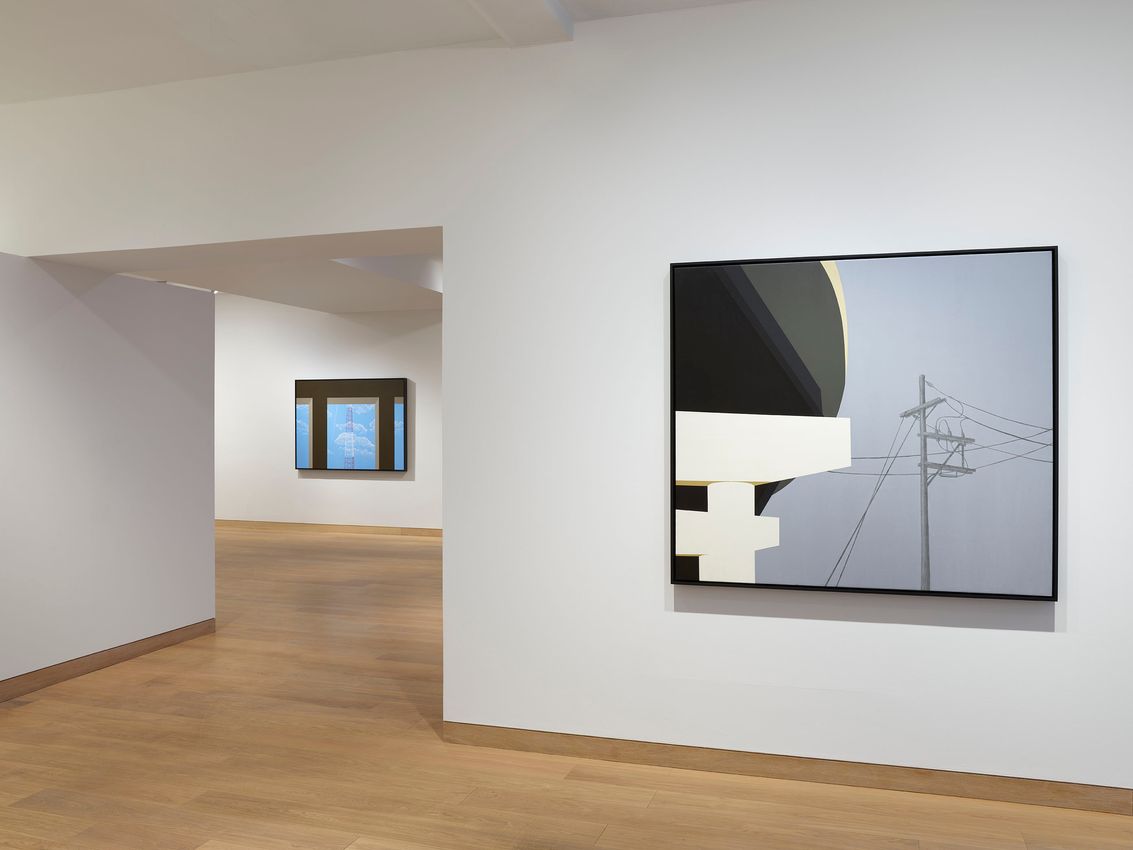
D’Arcangelo painted contemporary landscapes from his memory. A road, a pylon or the sky glimpsed through an overpass are his subjects and the Sublime root of landscape paintings, with its intrinsic links to nature, is not of concern. The paintings from this period tend to depict scenes of post industrialisation, devoid of human presence. Often suggestive of an upward gaze, they particularly reference the view from a car window. The one-point perspective and intentional flatness used by D’Arcangelo allows for a democratisation of the picture plane, removing any hierarchical elements within the landscape: road, pylon and sky are all equal..

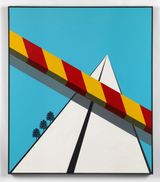
The works in the exhibition play with the idea of landscape to varying degrees. Rail & Bridge, 1977, looks up at part of a highway interchange but, intentionally, the complete visual information of this landscape is not given. The sense of landscape is almost lost in paintings such as Untitled Landscape, 1967. The work is diagonally obstructed by a red and white barrier blocking the view. An arrow behind, within the wider landscape of a bright, artificial blue, offers a clue of direction but is intersected. The flatness of this landscape is taken to an extreme; with the removal of one-point perspective, these roadside signals float into abstraction.

The suggestion of movement and fractured framing also seems to reference the idea of a film still, a suggestion that the painting is one in a sequence, an abstracted part of a whole. The works are intentionally imbued with a non-specific location emphasising the anonymity of the road-side landscape. D’Arcangelo states that ‘we are horribly separated from ourselves and this separation increases at 90mph’.

The suggestion of movement and fractured framing also seems to reference the idea of a film still, a suggestion that the painting is one in a sequence, an abstracted part of a whole. The works are intentionally imbued with a non-specific location emphasising the anonymity of the road-side landscape. D’Arcangelo states that ‘we are horribly separated from ourselves and this separation increases at 90mph’.

The works are important in their unique depiction of the American landscape. Using carefully chosen iconography and repeated signs, the works ask questions about the American psyche in a modern, changing America.

‘We are honoured by this opportunity to work with the Estate of Allan D’Arcangelo. His unique take on the American experience makes him an important addition to our roster of American artists, a long-standing focus for the gallery, and we are very proud to present the first solo exhibition of his work in the UK’ - Stephane Custot, Chairman of Waddington Custot

The catalogue published to accompany the exhibition will include a newly commissioned essay by Barry Schwabsky, and an archive conversation between the artist and Marco Livingstone from 1988.

Read More

Installation Views

About the Artist

Allan D’Arcangelo (b. 1930, Buffalo, New York; d. 1998, Manhattan, New York) is well-known for his paintings of landscapes deeply embedded in the American experience. His work from the early 1960s references American highway culture and the semiotics of road signage; later using vernacular imagery to render desolate urban industrial landscapes. His painting is in part a reaction against the mysticism of Abstract Expressionism, but also recalls the representational abstraction of the American Precisionists in the 1920s, such as Ralston Crawford and Charles Sheeler, who were using European Cubist and Futurist tropes to explore industrial America. D’Arcangelo is retrospectively associated with Pop art through his use of contemporary imagery, flatness of image, and conceptual approach to picture-making, however D’Arcangelo’s work is more serious and politically engaged. He was concerned with exploring the notion of the image, and constructed visual illusions that specifically critiqued the changes happening within contemporary American society. His early highway paintings refer to the road as a symbol of man’s intervention in the natural world, our increasing separation from it and ultimately ‘from ourselves’.

View Artist Profile

Also Exhibiting at Waddington Custot

About the Gallery

Waddington Custot was formed through the partnership of French art dealer Stephane Custot and long-time London art dealer Leslie Waddington, in 2010. Located in Cork Street since 1958, formerly as Waddington Galleries, the gallery has a rich heritage and an international reputation for quality and expertise in works by modern and contemporary masters, with a particular focus on monumental sculpture.

View Gallery Profile
Address
11 Cork Street
London
United Kingdom
Opening Hours
Monday – Friday
10am – 6pm
Saturday
11am – 6pm
(1)
London 11 Cork Street
Waddington Custot
11 Cork Street, London, United Kingdom

Opening hours
Monday – Friday
10am – 6pm
Saturday
11am – 6pm
The art world in focus