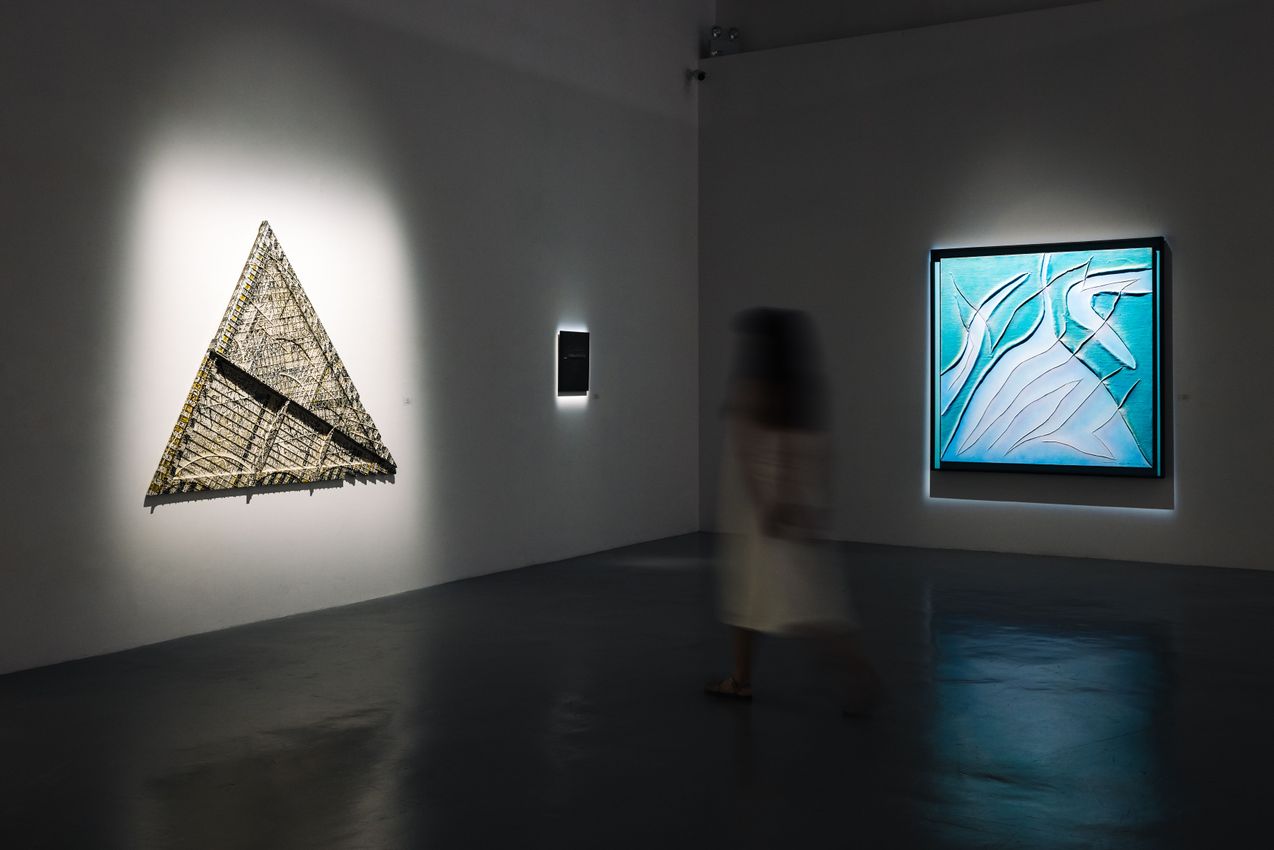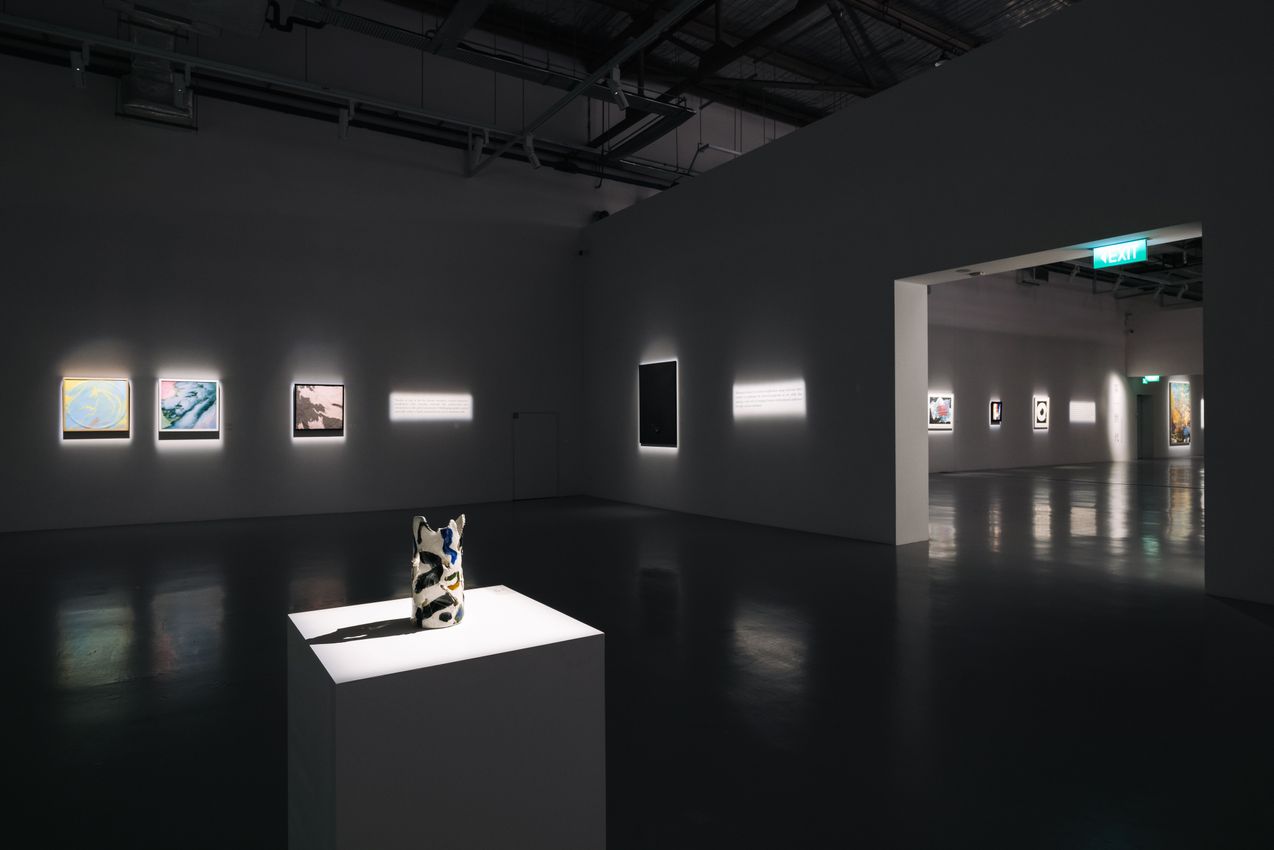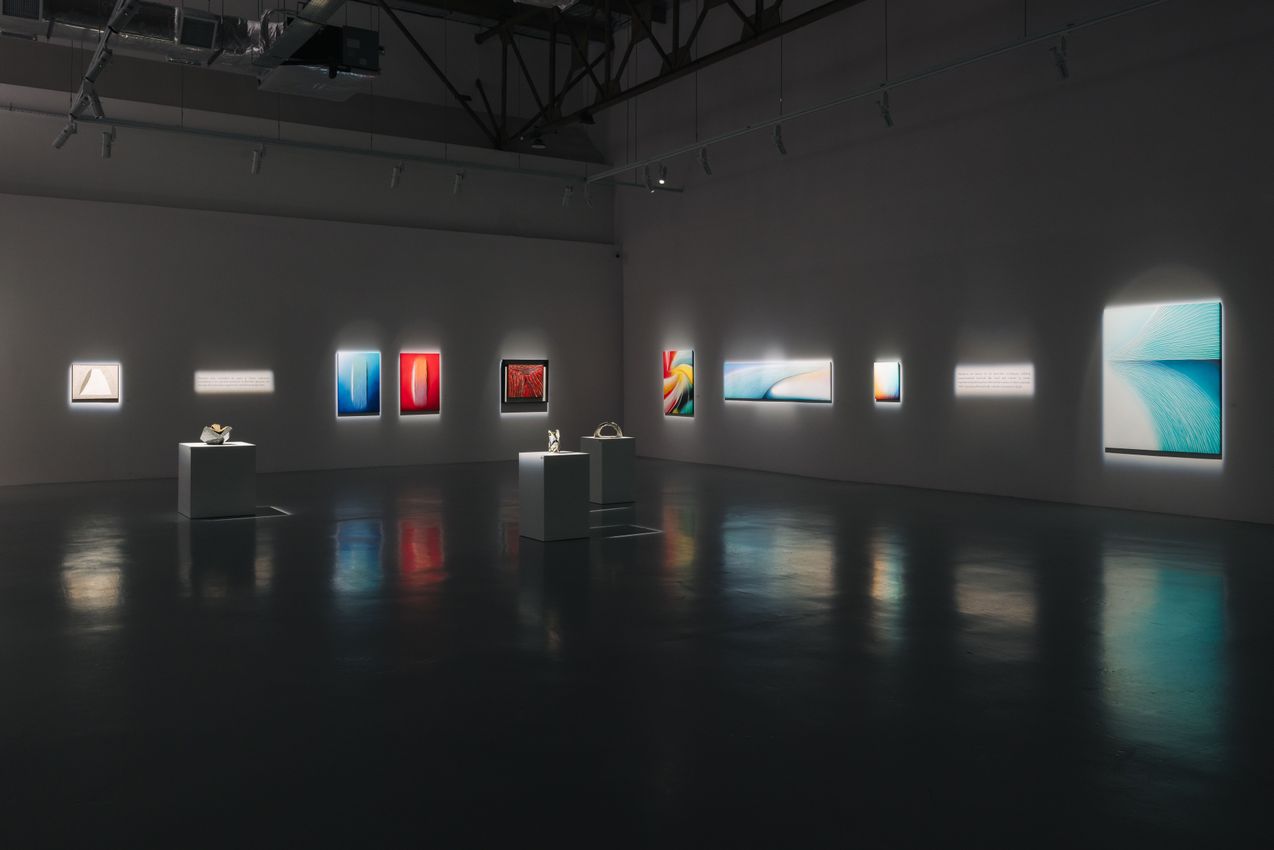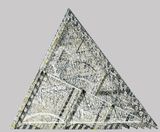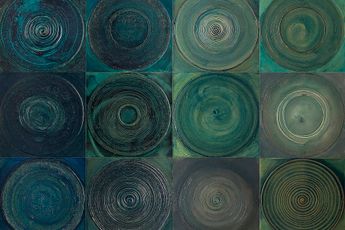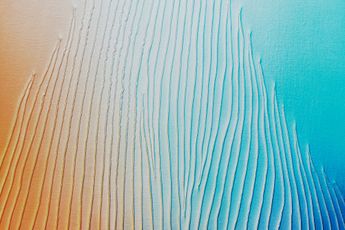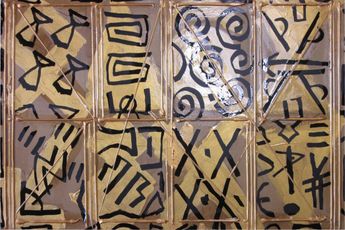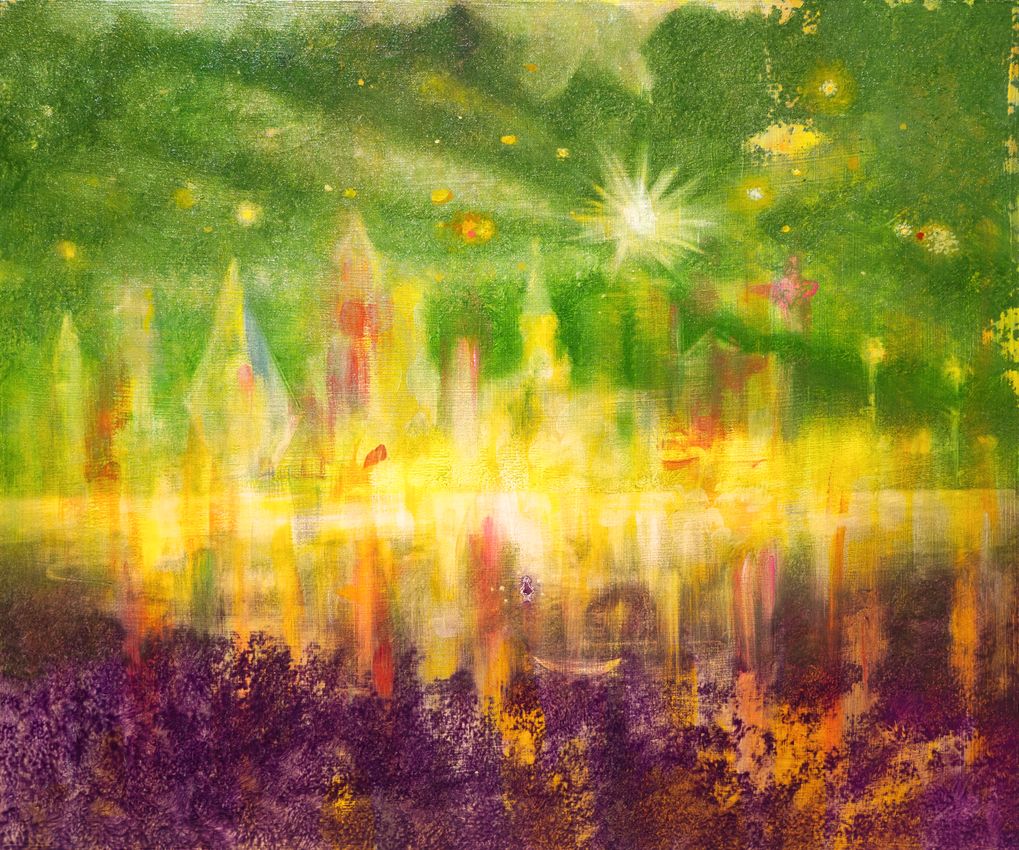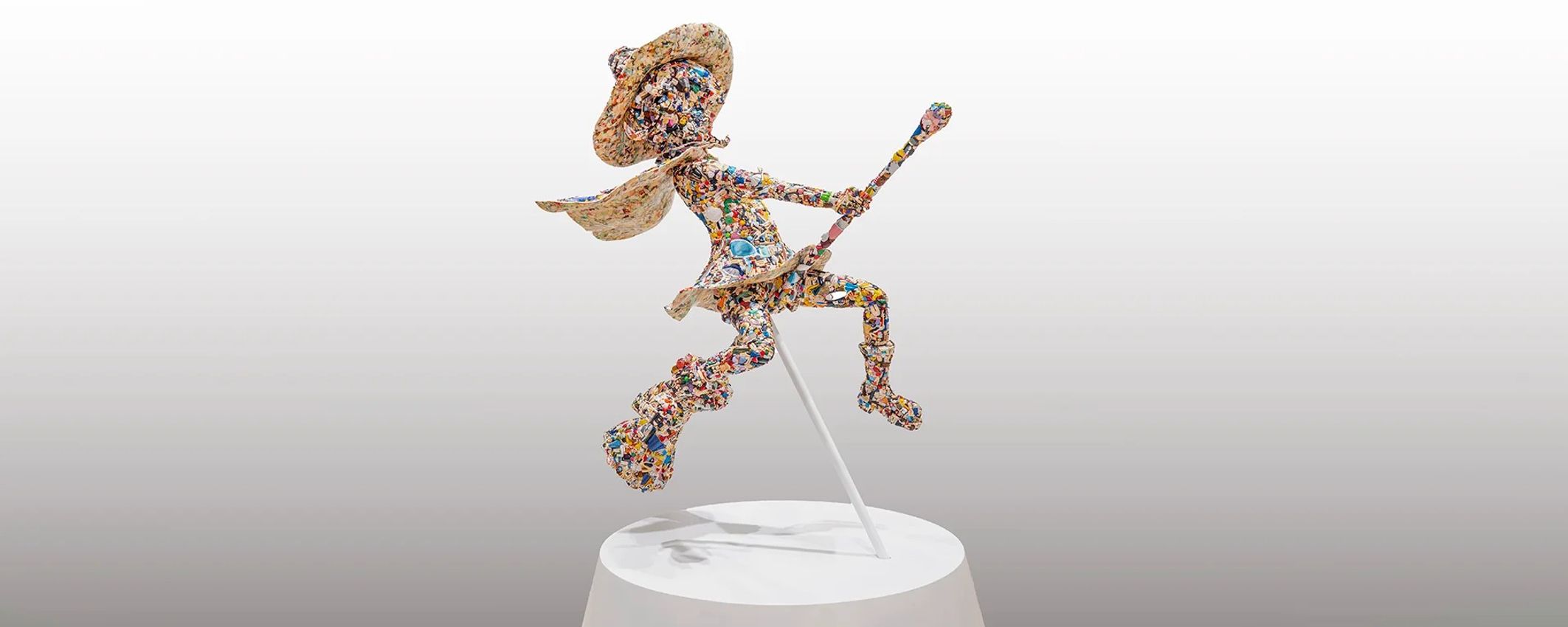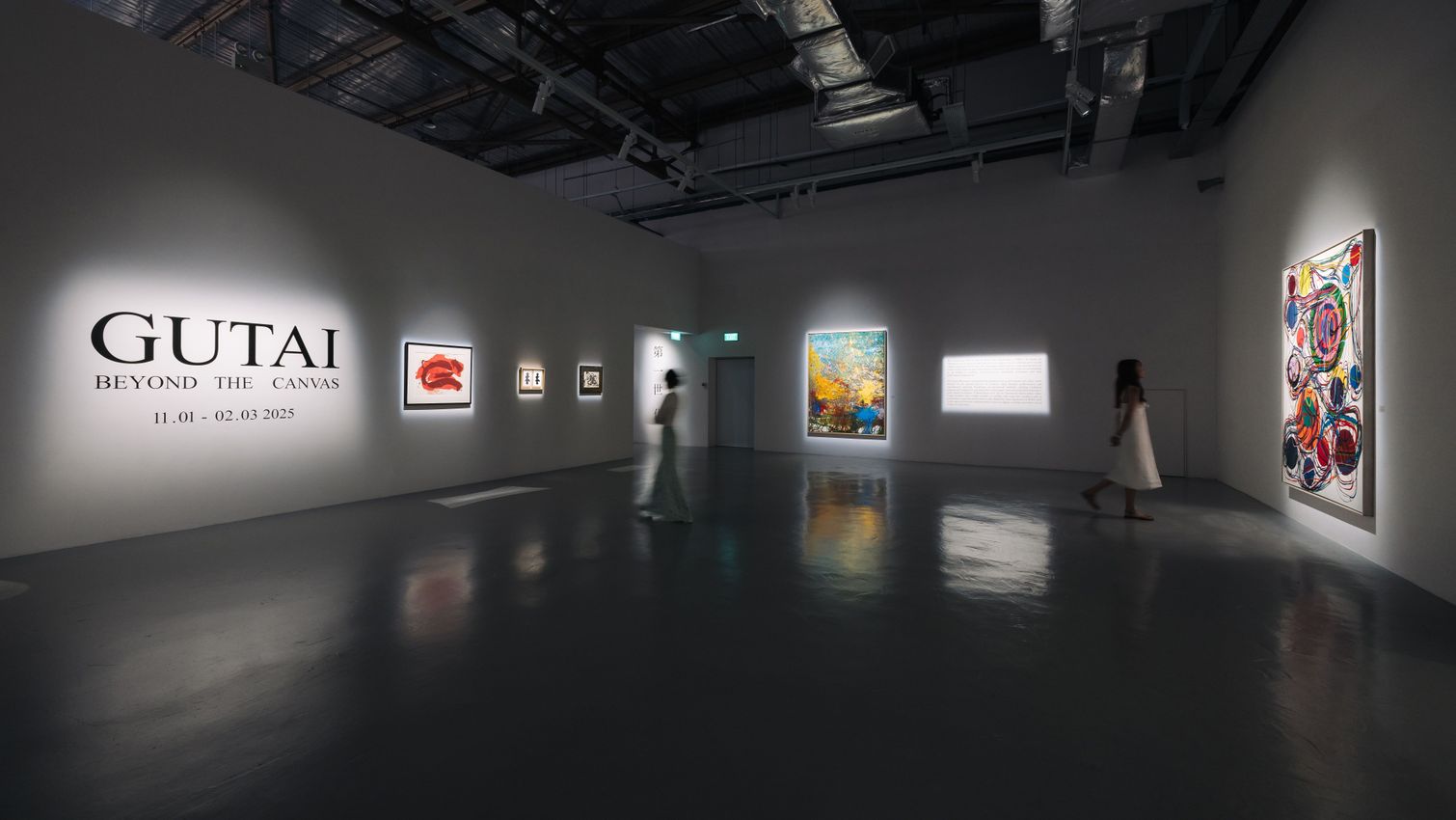
Whitestone Gallery Singapore is proud to present our first Gutai Movement showcase; GUTAI: Beyond the Canvas.
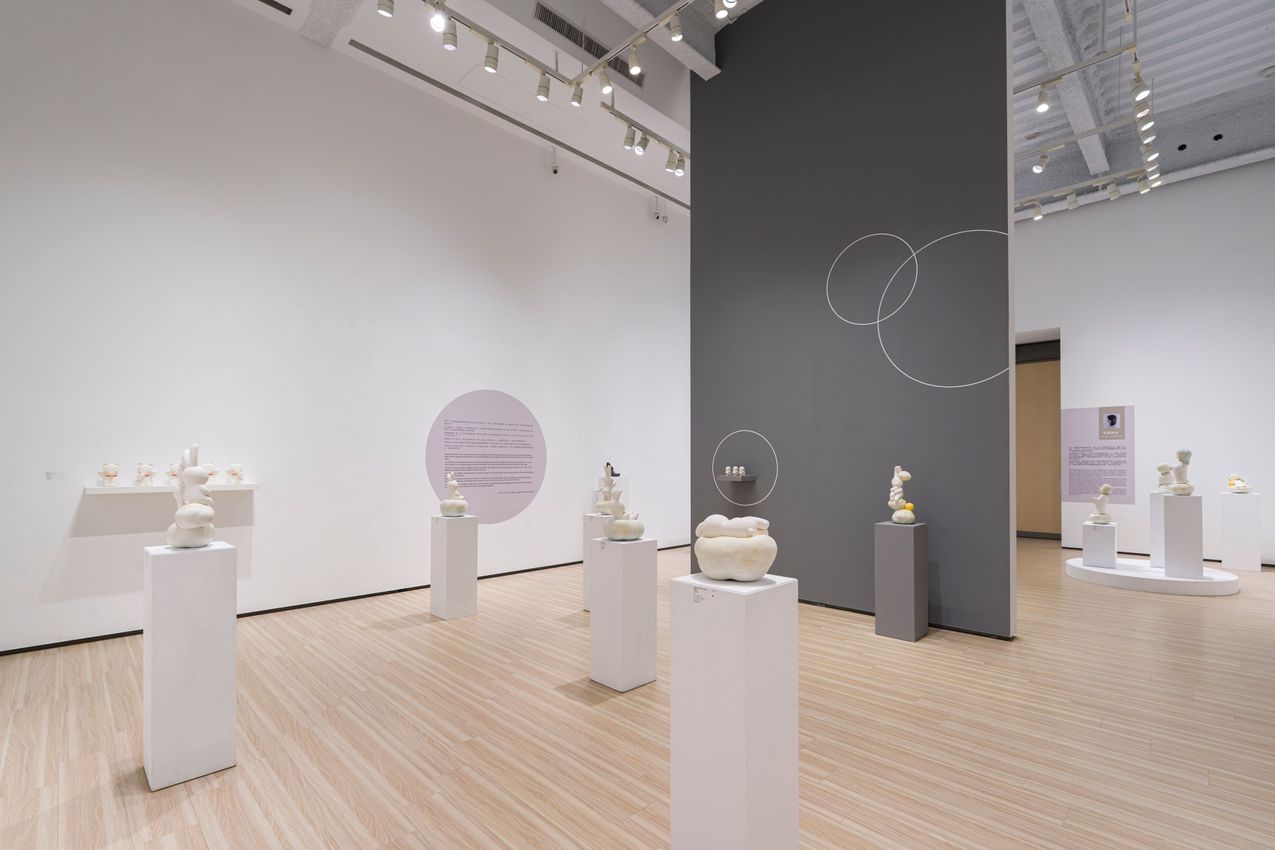
After our first exhibition, Japanese Post-War Avant-Garde in New Art Museum Singapore, we are delighted to announce the upcoming show GUTAI: Beyond the Canvas.
Tearing of paper, muddling paint with their feet, throwing bottles of paint, work focused on colour and gesture, bold and energetic brushstrokes to express raw, emotional power and even wearing a dress composed of electric bulbs. This compilation of eccentricities and performances became characteristics of the Gutai movement.
First founded in 1954 by Yoshihara Jirō after World War 2 (WW2), the Gutai Art Movement was an Avant-Garde collective that sought to break traditional art forms and experiment with techniques. Its philosophy emphasised the connection between art matter and the human spirit, advocating for innovation and unrestraint in art— remaining as an emblem of creativity, characterised by unthinkable techniques and deep philosophical engagement.
Gutai’s first generation members consisted of Yoshihara Jirō, the founder of Gutai, along with Shozo Shimamoto, Kazuo Shiraga, Chiyu Uemae, Atsuko Tanaka, Tsuroko Yamazaki, Yasuo Sumi and Sadamasa Motonaga. Their pioneering transformed the landscape of contemporary art, emphasising the act of creation itself as a performative, physical process.
By using their bodies as tools in the creative process, they broke away from traditional artistic conventions. Using their experimental approaches to materials, often incorporating unconventional substances like metal, textiles, and even electricity, their focus on material experimentation and engagement pushed the boundaries of what art could be. Motivating viewers to be active participants in the creative process, these artists laid the groundwork of Gutai for not only their future members, but future movements in performance, installation, and conceptual art.
A second generation of artists later joined Gutai, merging innovative techniques with philosophical engagement. They distinguished themselves by addressing post-war themes such as identity, individual expression, freedom, and materiality, emphasising artistic processes and community gatherings.
Featuring iconic works from Tsuyoshi Maekawa, Shuji Mukai, Takesada Matsutani, and Yuko Nasaka, this exhibition consists of innovative techniques and social themes ingrained into the Gutai movement where viewers will be able to encounter the works of these artists who navigated the complexities of contemporary life in changing Japan.
Tsuyoshi Maekawa (1936, Osaka, Japan), had revolutionised the art scene by making use of abnormal materials such as linen cloth, sand and cement, crafting experimental paintings which captured the essence of his materials. His works invite his viewers to reflect on conventional ideals that may have underpinned the movement.
Shuji Mukai (1940, Kobe, Japan), became the group’s youngest member when he joined in 1961, at 21 years old. He introduced the performative dimension to Gutai and implored audience interaction and collaboration. His exhibitions challenged traditional perceptions of art and showcased the continuous dynamic evolution of Gutai movement.
Takesada Matsutani (1937, Osaka Japan), dedicated himself to the exploration of materials, utilising vinyl and diverse textures to highlight the infinite physical properties of art. His efforts were pivotal in bringing Gutai to the global art scene through various prestigious exhibitions.
Yuko Nasaka (1938, Osaka, Japan), was one of the few female members of the group. She created immersive installations using everyday materials, highlighting the unnoticed connection between art, life, and the environment. Her work and presence alone challenged gender norms within a predominantly patriarchal art society during Gutai’s active period, making a significant statement in the landscape of contemporary art in the 1970s as an independent female artist with undeniable contributions made to Gutai.
Even in the realm of contemporary art today, the Gutai movement still stands as an icon of creativity, renowned for its groundbreaking techniques and amount of philosophical engagement despite the decades that have passed it by.
Join us in their ongoing dialogue surrounding their creativity and expressions to this day through our exhibition GUTAI: Beyond the Canvas.


A respected voice in contemporary art discourse.
Focusing on ambitious storytelling and insightful art-world commentary. Ocula Magazine publishes in-depth interviews, critical essays and timely analysis on the artists, exhibitions and ideas driving the global art world.
Learn more about Ocula Magazine
Showcasing the best of the art world.
Ocula partners with galleries from around the world to highlight their artists, artworks and exhibitions. Gallery membership is by application and invitation, with each member vetted by an independent panel.
Learn more about Ocula Membership

Specialises in the sale of major artworks.
Led by a team with deep ties to the world’s leading auction houses, galleries and collectors. Ocula’s advisory team offers bespoke services to high-net-worth clients from around the world who are looking to acquire the best of contemporary and modern art.
Learn more about our team and services