Press Release

Keyhole [noun]: a hole in a lock into which the key is inserted.

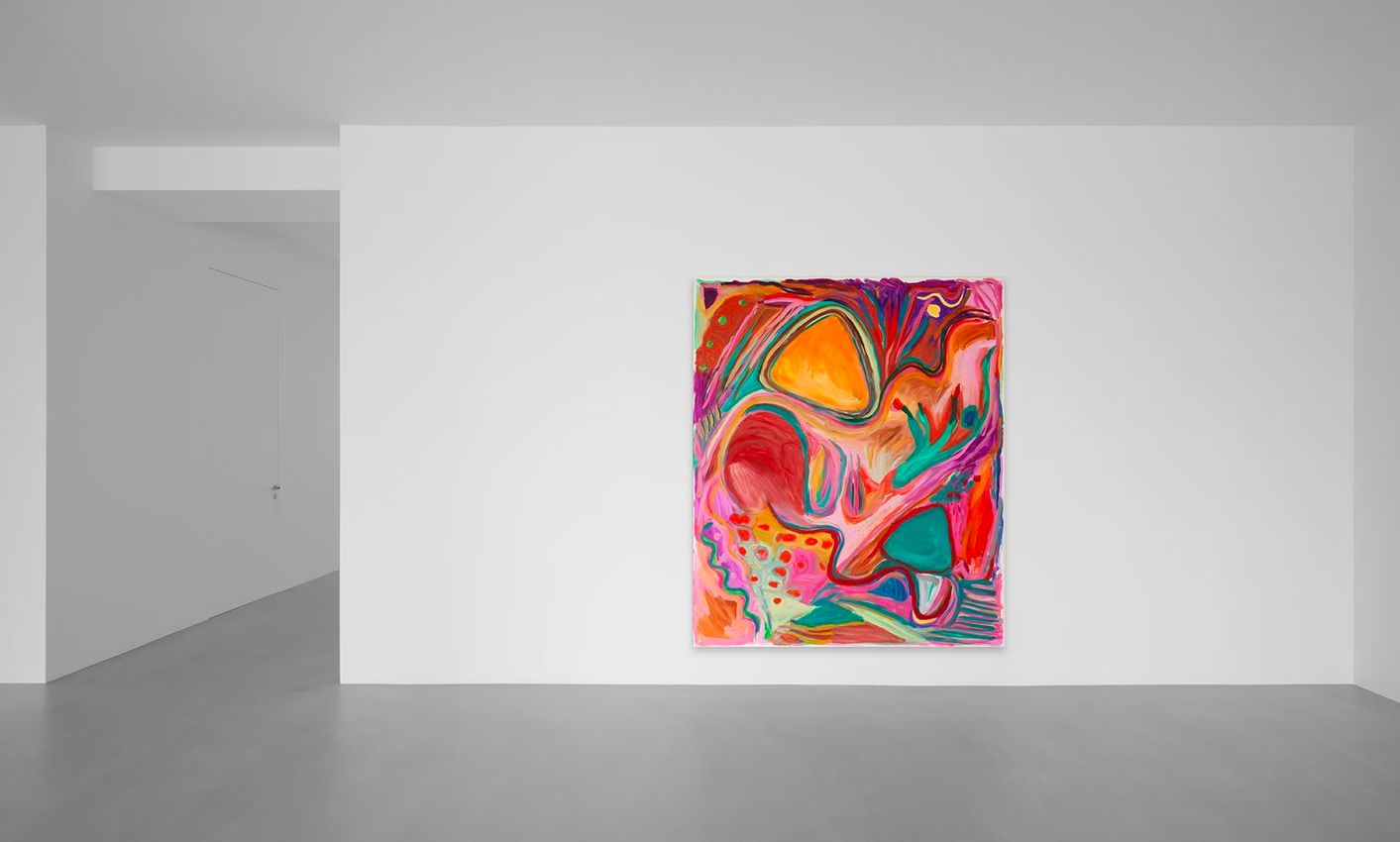
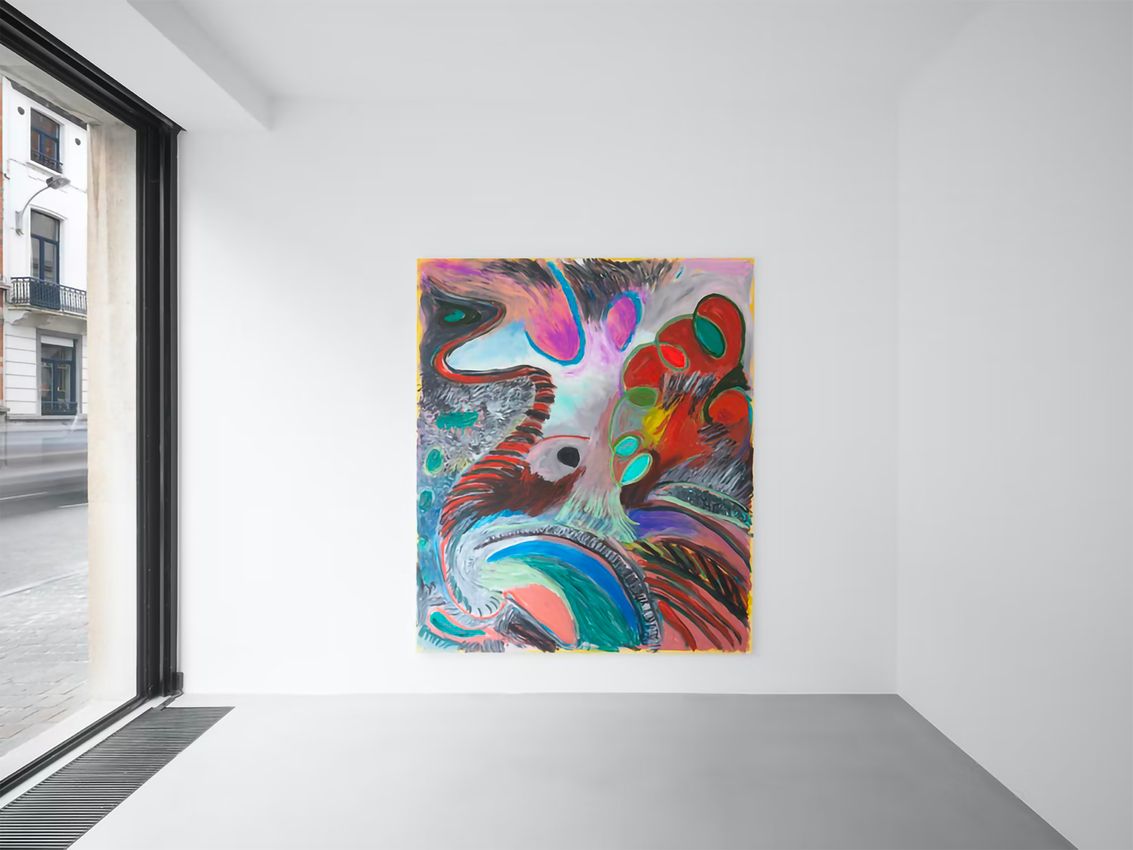
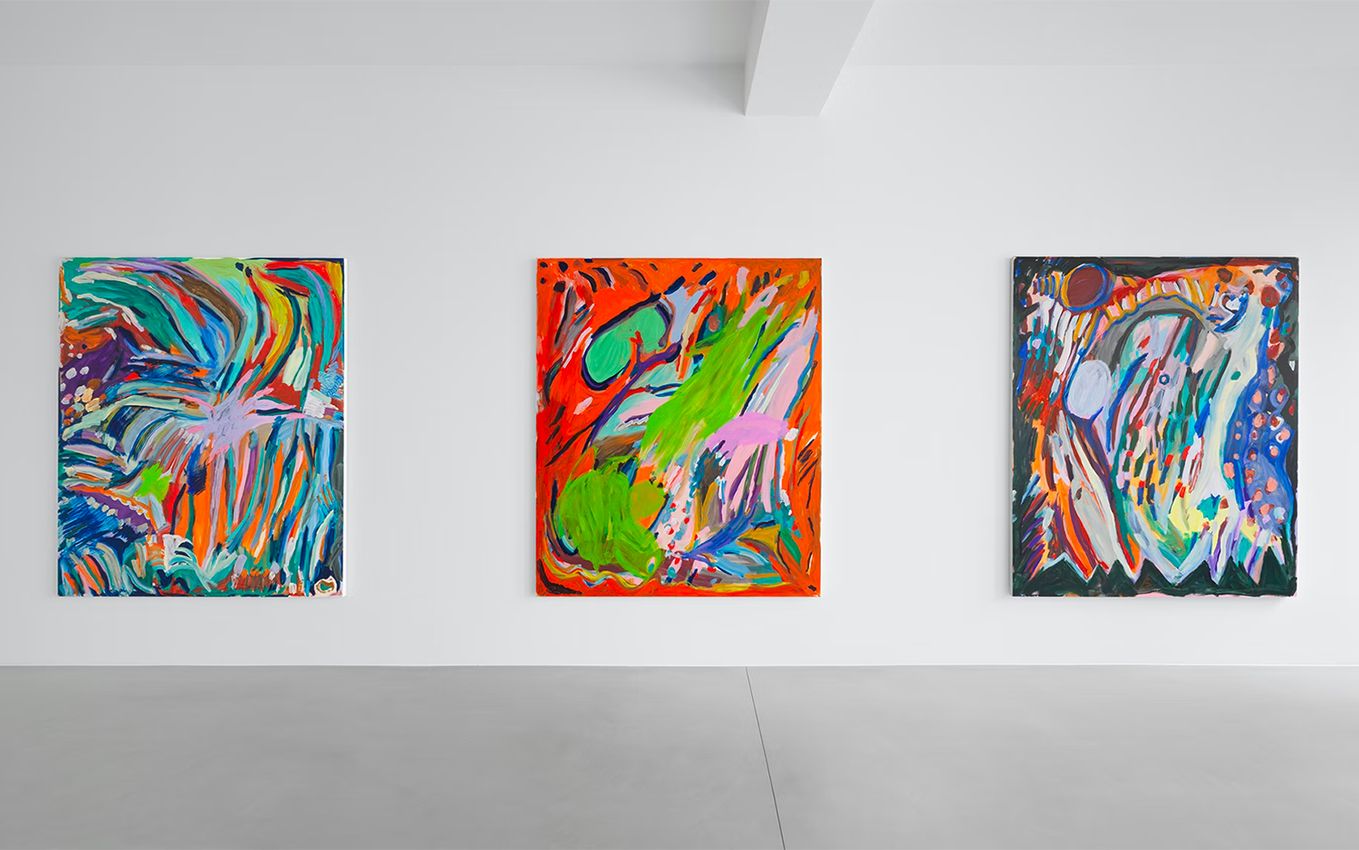
In an exhibition spanning both gallery spaces, Josh Smith presents a new series of abstract paintings together with an ensemble of recent figurative monotypes. In this diverse installation, the artist explores the impact of colour, gesture and form across a range of motifs, some of which are familiar while others represent a new thematic departure.

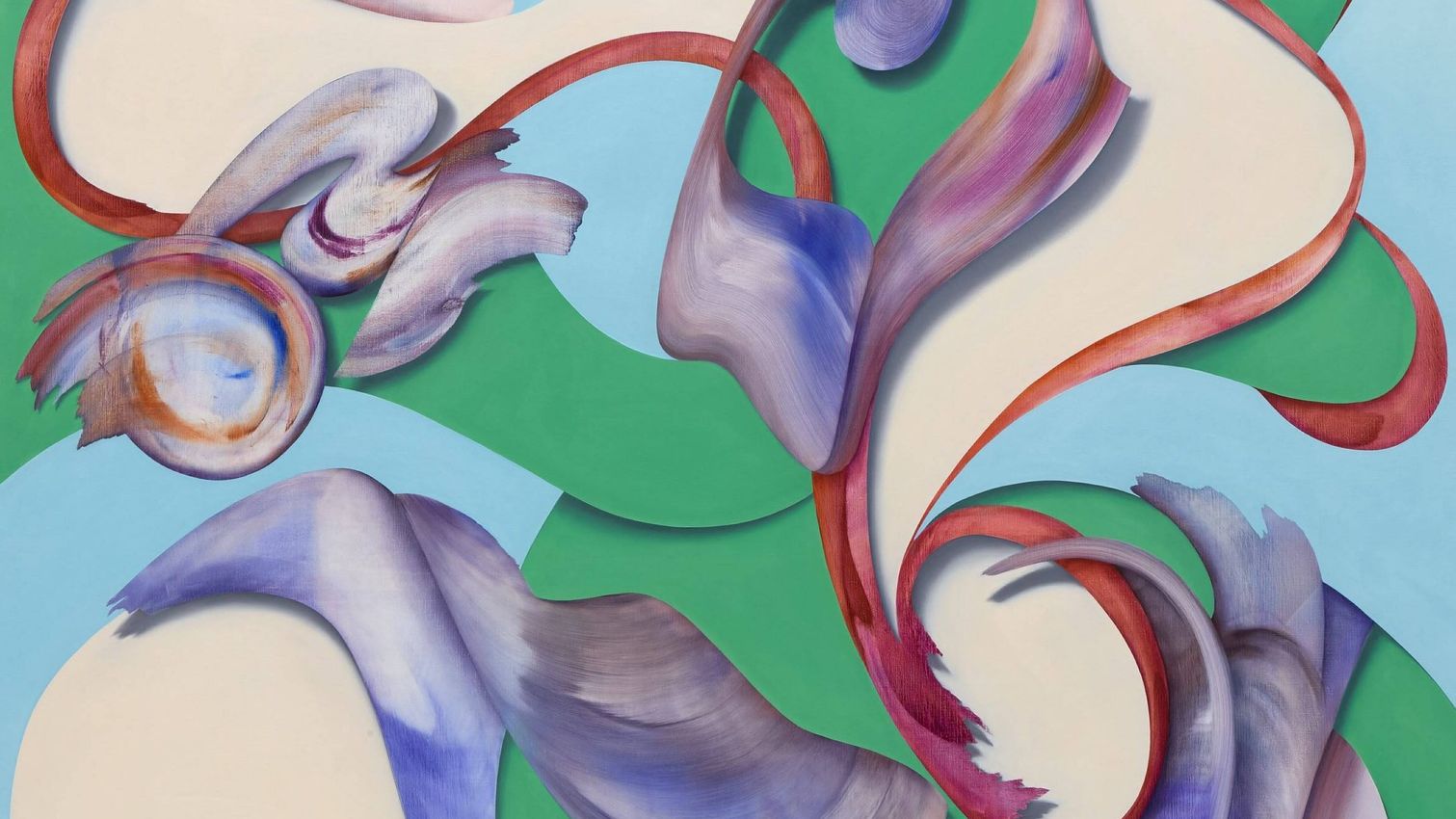
The paintings created for Keyhole revisit a recurrent thread in Josh Smith’s work–the language of abstraction–but amplified in terms of scale and energy. Smith has long been fascinated by the non-prescriptive nature of this painting style: that such works can mean everything and nothing; that any attempt at interpretation is purely subjective. With no predefined rules for creating such images, the path lies open for boundless experimentation. And it is within this exploratory field that Smith creates a space for both himself (abstraction, perhaps more than any other genre, is thought to express an artist’s emotions) and the viewer. In a certain sense, his abstract paintings are akin to poems or signals: the transmission of a creative energy that seeks to ignite a spark in the beholder, be that one of exhilaration, empathy, joy or recognition. Effortlessly navigating between abstraction’s openness of potential and the continuity of the tradition, his new paintings openly celebrate the joy of making, creating and, above all else, looking at art.

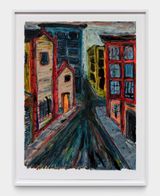
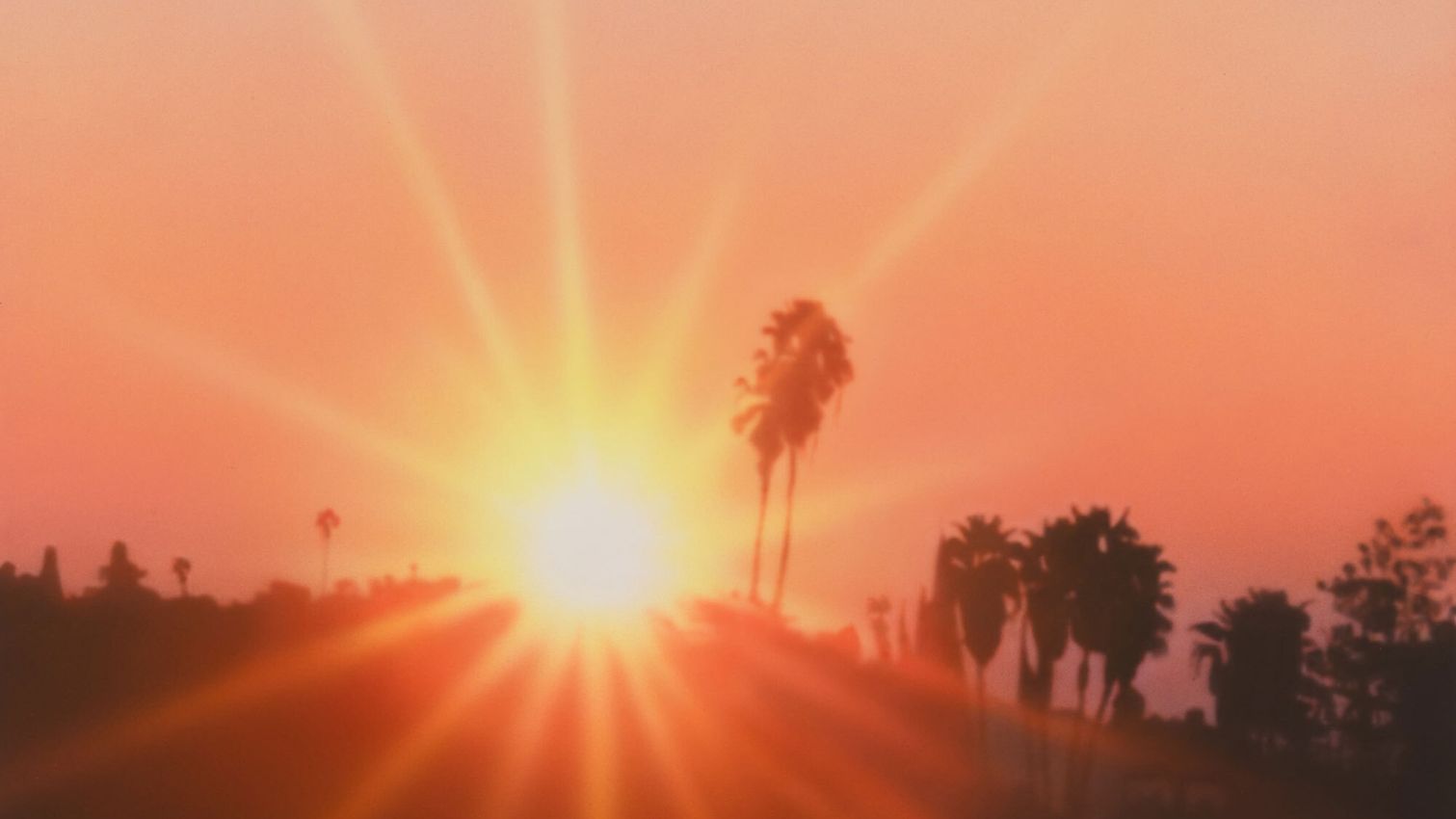
The works on paper depict a familiar range of subjects from Smith’s practice, all of which function as catalysts for his rigorous and serialised investigations into colour, aesthetics, and the mechanics of printmaking. Motifs include fish, devils, turtles, and palm trees–all images that are open-ended and recognisable but free of rules as to how they should (or shouldn’t) be depicted. In Keyhole, Smith brings different motifs into a mutual dialogue, leading us to consider the relationships between repetition, representation and association. Making their debut are the double skeletons that resemble medieval tomb effigies or archaeological illustrations: cool, sober and yet, in a whimsical way, deeply expressive. The recent cityscapes, created during the lockdown, capture the desolate streets of New York–on which they are loosely based–devoid of all extraneous details. In these works, Smith focuses on the structure of the architecture and networks of roads, sans people, street lamps, manhole covers, bins, street signs, or mailboxes. The works on paper are unique monotypes, created by applying the ink to a smooth plate, pressing the paper onto the image and pulling it away. The use of Plike paper–which has a plastic-like texture (hence its name)–is not only innovative but also visually intriguing: the inks do not seep into the paper but sit on the surface, bright and luminous.

In bringing these large-format paintings and prints together in Keyhole, Smith grants the viewer an unparalleled insight into the varied nature of his practice and, on a more personal level, the wellspring of ideas that fuels his art. The title is telling in this respect, which could just as easily allude to the images as being the ‘keys’ to a lock (the artist’s mind?) as to the aperture through which one glimpses another world.

Josh Smith (b. 1976, Okinawa) lives and works in New York. Solo exhibitions include Josh Smith, Bonner Kunstverein, Bonn, Germany (2016), Josh Smith, Museo d’Arte Contemporanea Roma, Italy (2015), The American Dream, Brant Foundation Art Study Center, Greenwich, Connecticut (2011) and Hidden Darts, Museum Moderner Kunst Stiftung Ludwig Wien, Vienna, Austria (2008).

Read More

Installation Views

About the Artist

American artist Josh Smith is renowned for the diversity of his artistic practice and for the wide range of different styles in which he works. Originally trained as a printmaker, but primarily known for his paintings, Smith also makes sculptures, ceramics, books, prints and posters, and is a consummate draftsman. His art is deeply subjective and, by questioning contemporary tastes and norms, often counter-cultural. Typically working in series, and freely borrowing from the vocabulary of modern painting, his canvases are expressionistic, gestural and colourful. Smith works prolifically, but also strategically and methodically. Yet for all their apparent spontaneity, his canvases are ultimately the product of an intense psychological process, with some pieces taking years to complete. Smith has said that he ‘thinks in paint’ and, to this end, his art can be seen as a vehicle for the testing of ideas and as a form of interrogation, be it about the creative process itself, what it means to be an artist, or the vagaries of everyday life.

View Artist Profile

Also Exhibiting at Xavier Hufkens

About the Gallery
Xavier Hufkens is one of Europe’s leading galleries for contemporary art. Located in Brussels, the gallery maintains a diverse exhibition programme with solo exhibitions of the gallery artists as well as group exhibitions and special projects. The gallery deals in a distinctive combination of painting, drawing, sculpture, photography, video and installation-based work.

The origins of the gallery date back to 1987, when Xavier Hufkens opened a gallery space in an un-refurbished warehouse in the neighbourhood of the South Station (Midi) in Brussels. During the early years, the focus of the gallery was upon mid-career and emerging artists and the gallery is known for having introduced some of the most influential contemporary artists to Brussels at a time when they were still relatively unknown. British sculptor Antony Gormley, who is still affiliated with the gallery, Felix Gonzalez-Torres and Rosemarie Trockel all showed in Belgium for the first time with Xavier Hufkens (Gormley in 1987; Gonzalez-Torres in 1991 and Trockel in 1993).

In 1992, the gallery moved to a 19th-century townhouse at 6 rue Saint-Georges, close to the Avenue Louise. Completely renovated by Belgian architects Paul Robbrecht, Hilde Daem and Marie-José Van Hee, the house quickly gained a reputation for being not just one of the most beautiful contemporary art spaces in the Belgian capital, but also one of the most interesting. The expanded exhibition programme coincided with the additional representation of a number of established artists from Belgium and abroad, including Richard Artschwager, Thierry De Cordier and Jan Vercruysse. In 1997, Hufkens expanded the gallery further by annexing the adjacent building and a number of new artists joined the gallery, including Louise Bourgeois, Roni Horn and Thomas Houseago.

A second space in the same street, at 107 rue Saint-Georges, opened in spring 2013. Located in the Galerie Rivoli, a mixed-use commercial development from the 1970s, the new gallery space was designed by Swiss architect Harry Gugger, who was previously in partnership with Herzog and De Meuron. Slegten & Toegemann, Brussels, managed the project.

An eclectic but very clear vision underpins all of the gallery’s activities: ‘The definition of the gallery was established from the start. The common thread, then and now, is quality over and above everything else, which I find more intellectually challenging than a forced definition. From the early days I juxtaposed established artists such as Michelangelo Pistoletto with someone like Felix Gonzalez-Torres when he was totally unknown. Today I still mix my work: I have no problem showing Malcolm Morley … alongside Robert Ryman, or Willem de Kooning.’ [Xavier Hufkens in The Art Newspaper, Issue 220, January 2011, published online: 20 January 2011]

Xavier Hufkens represents some thirty artists from different generations. He was part of the six-member selection committee for Art Basel during seven years and also participates in up to five international Arts Fairs annually. The gallery has partnerships with the estates of Louise Bourgeois, Willem de Kooning, Robert Mapplethorpe and Alice Neel.
View Gallery Profile
Address
Van Eyck & Rivoli
Opening Hours
Tuesday – Saturday
11am – 6pm
(1)
Brussels 44 rue Van Eyck, Van Eyckstraat
Xavier Hufkens
44 rue Van Eyck, Van Eyckstraat, Brussels, Belgium

Opening hours
Tuesday – Saturday
11am – 6pm
The art world in focus