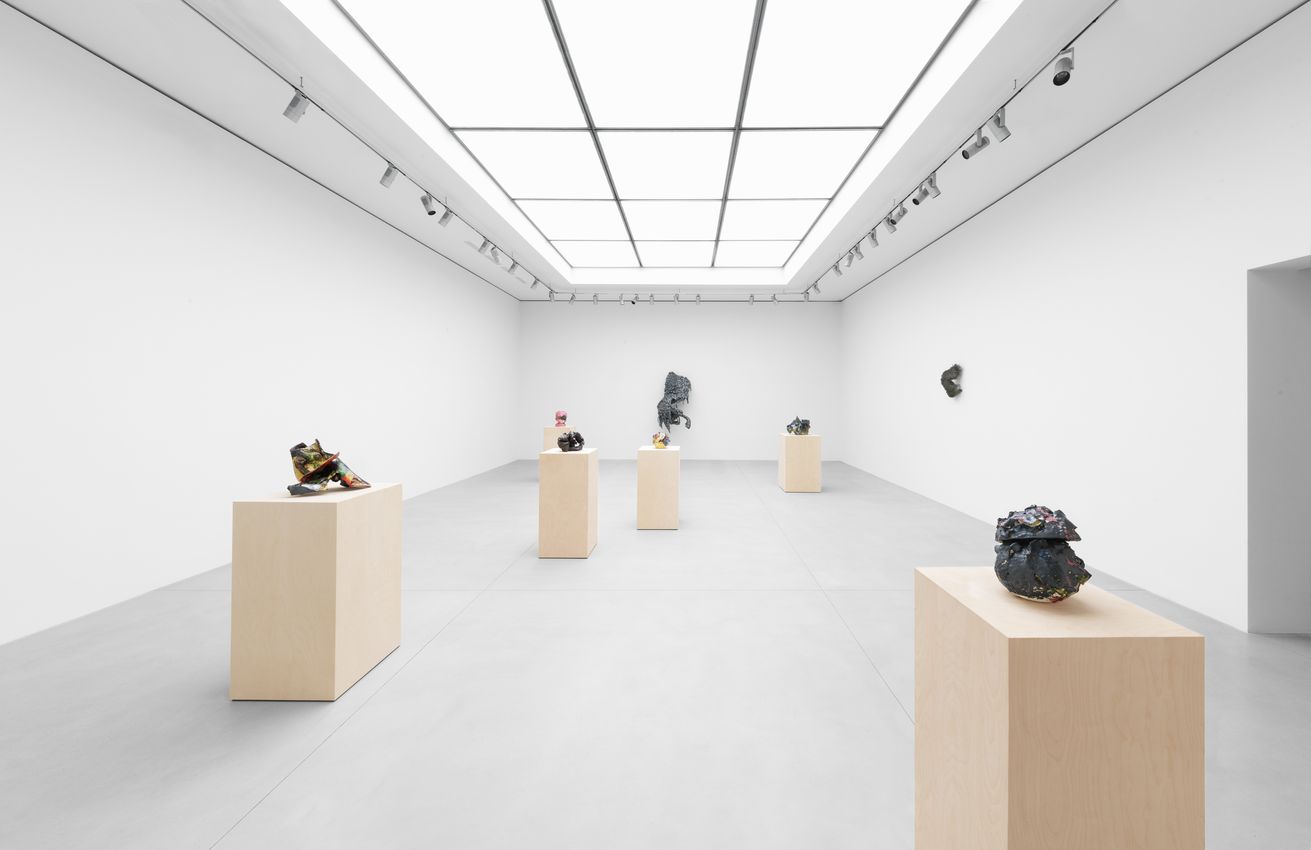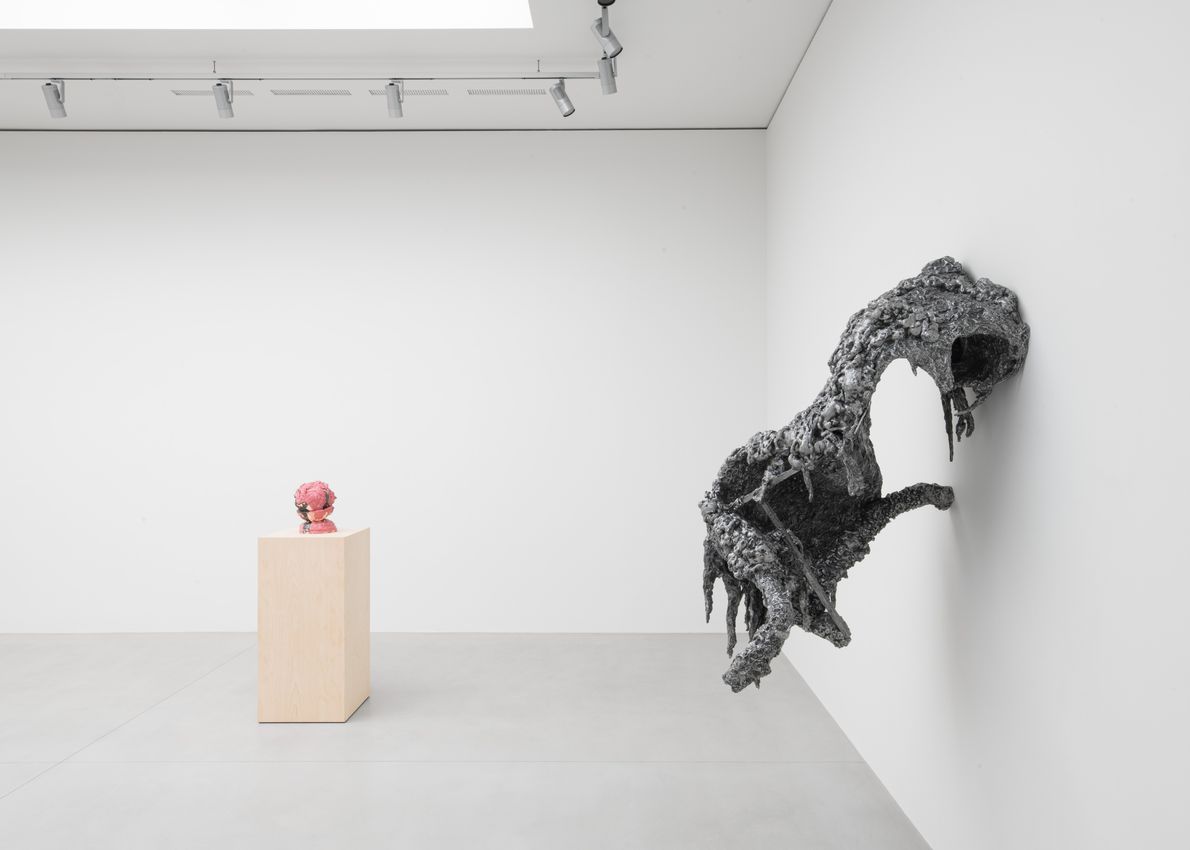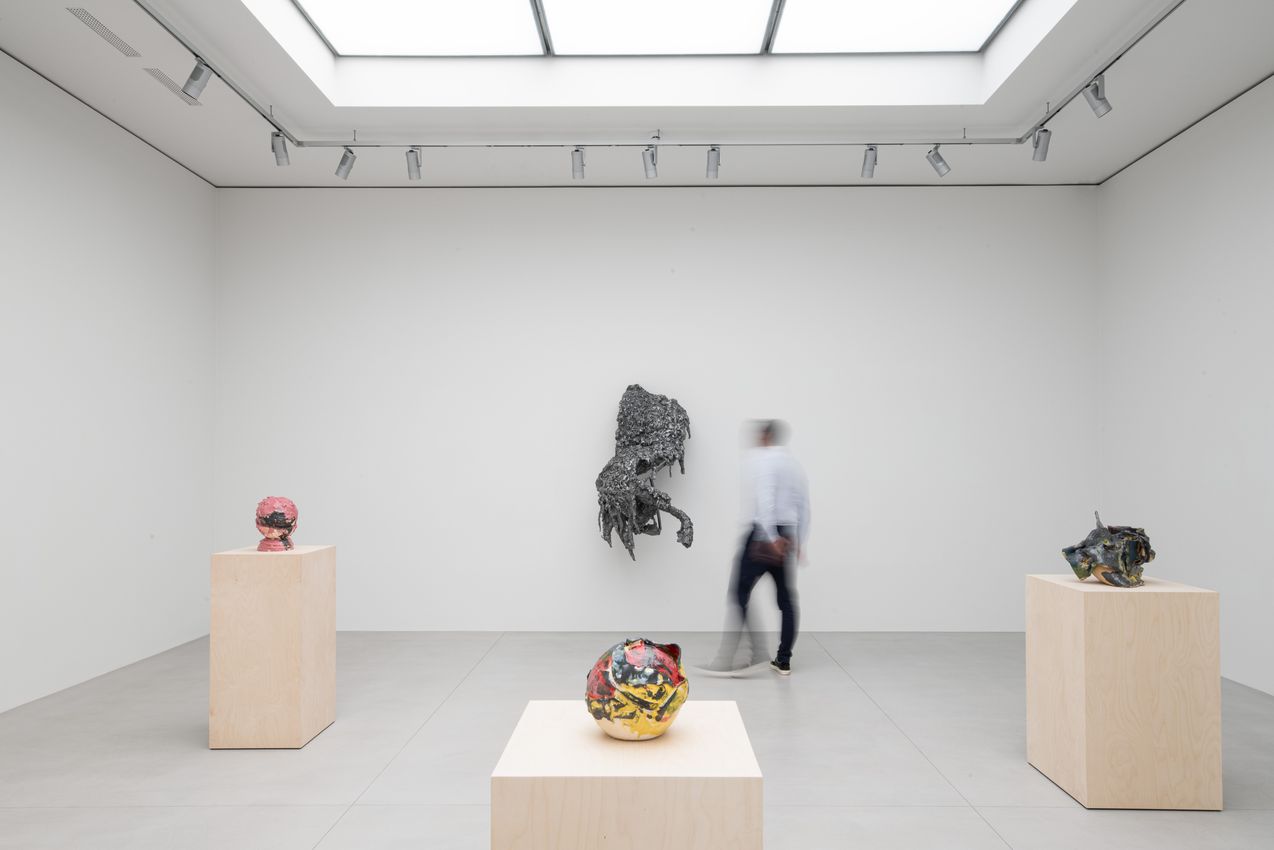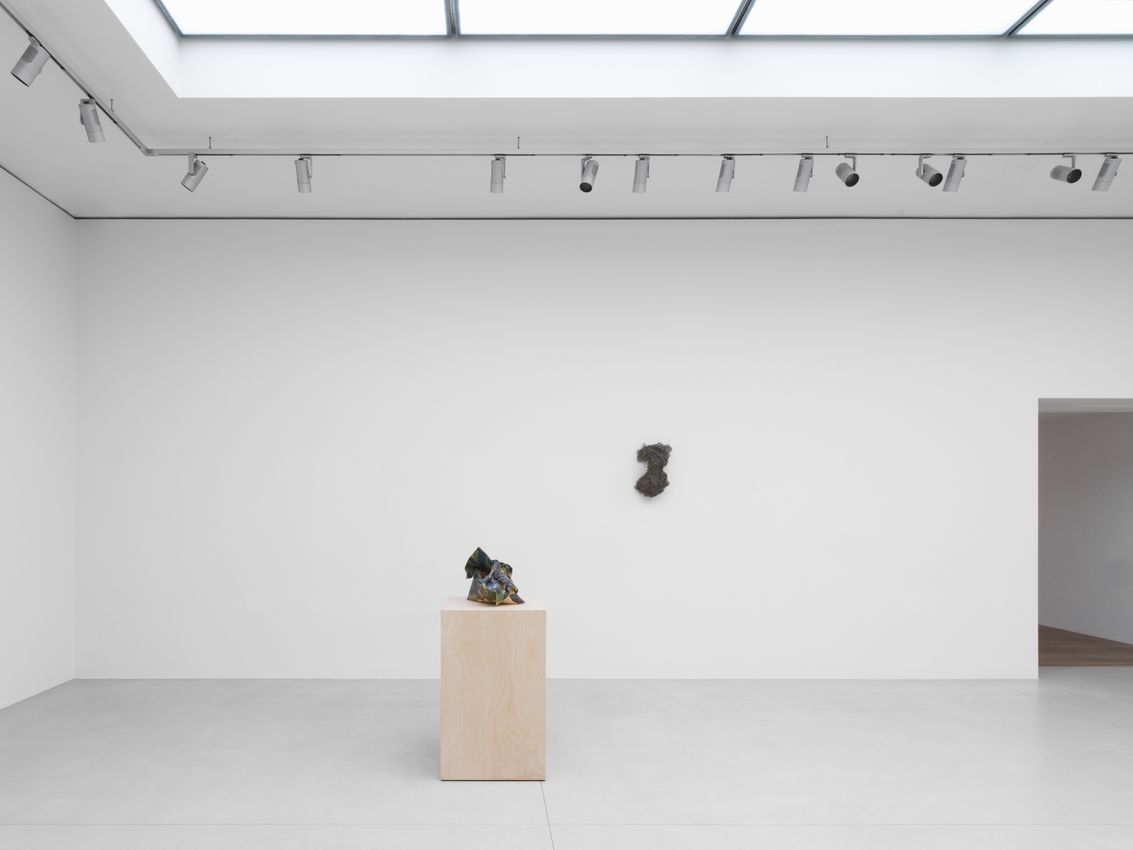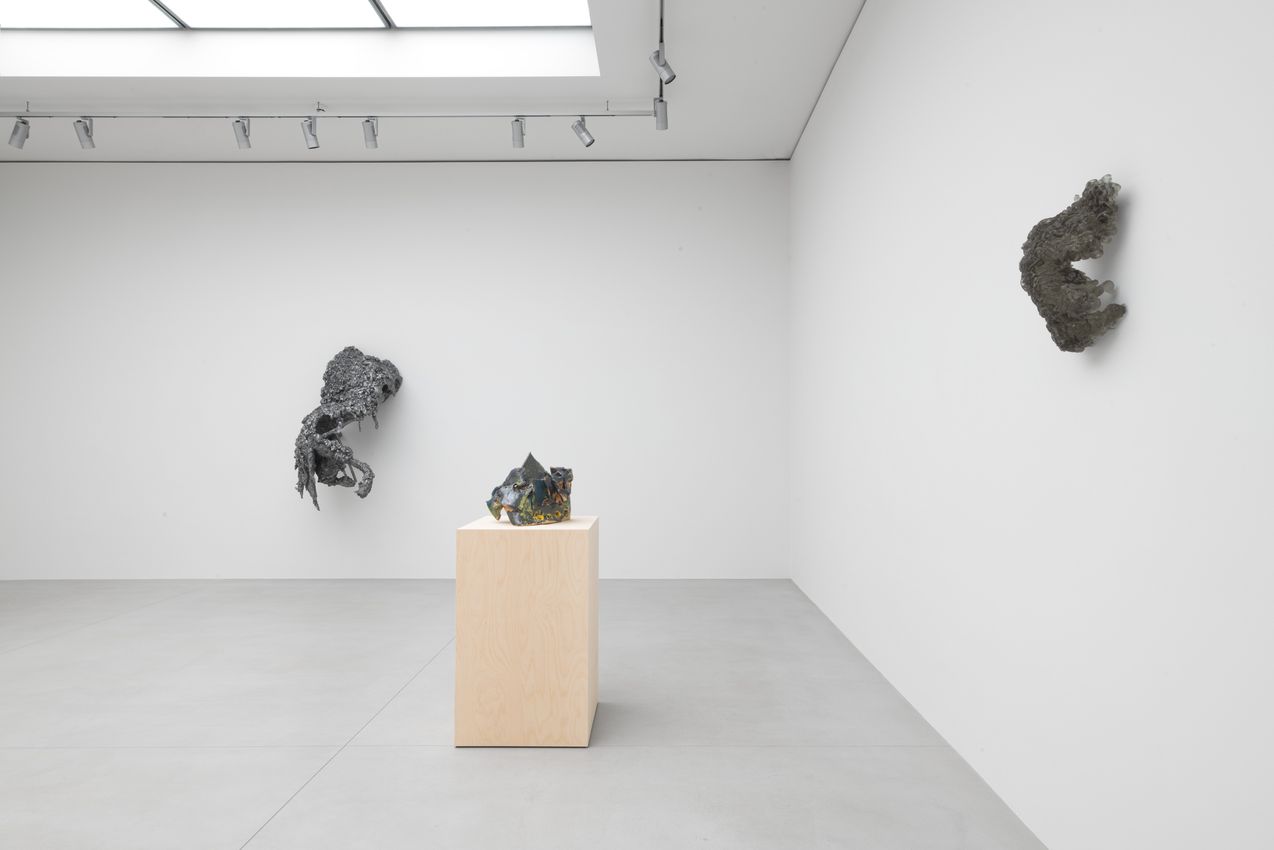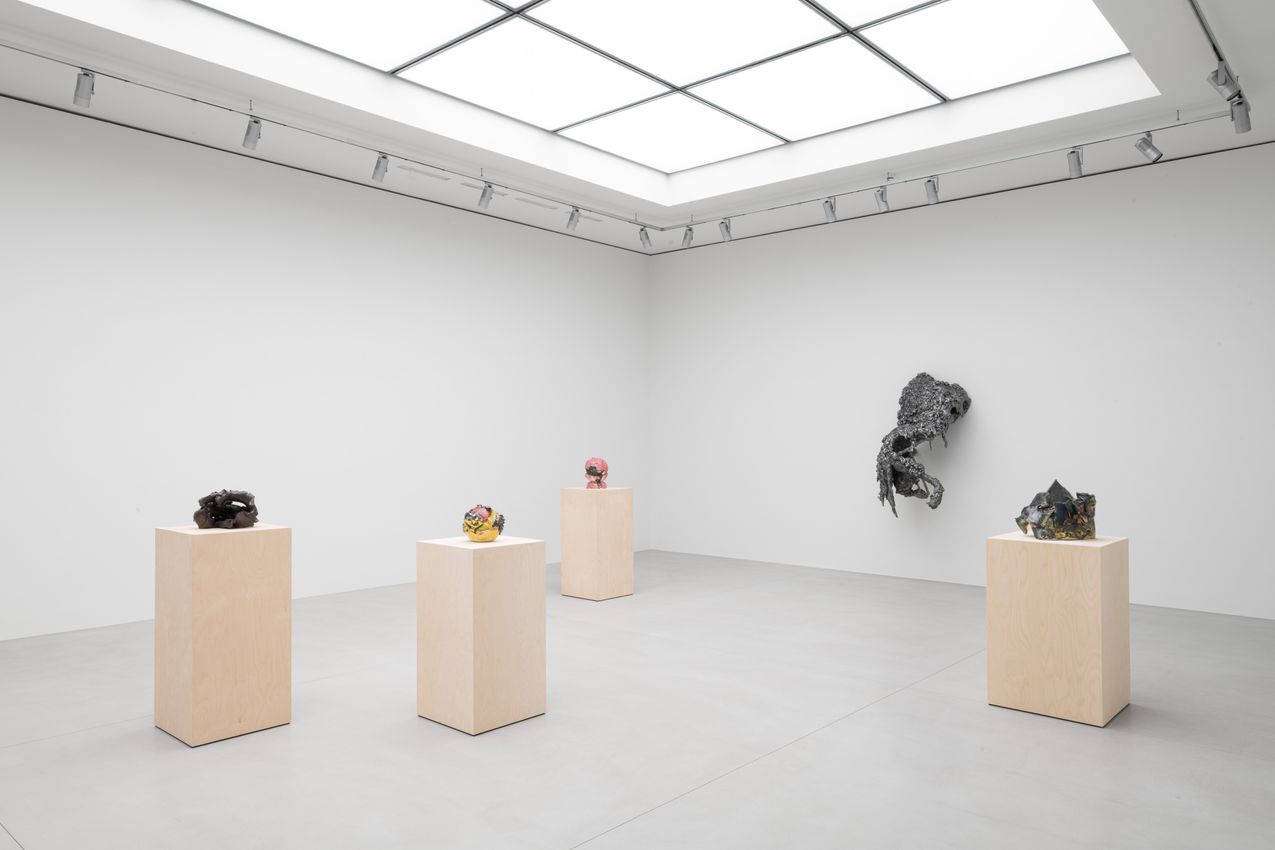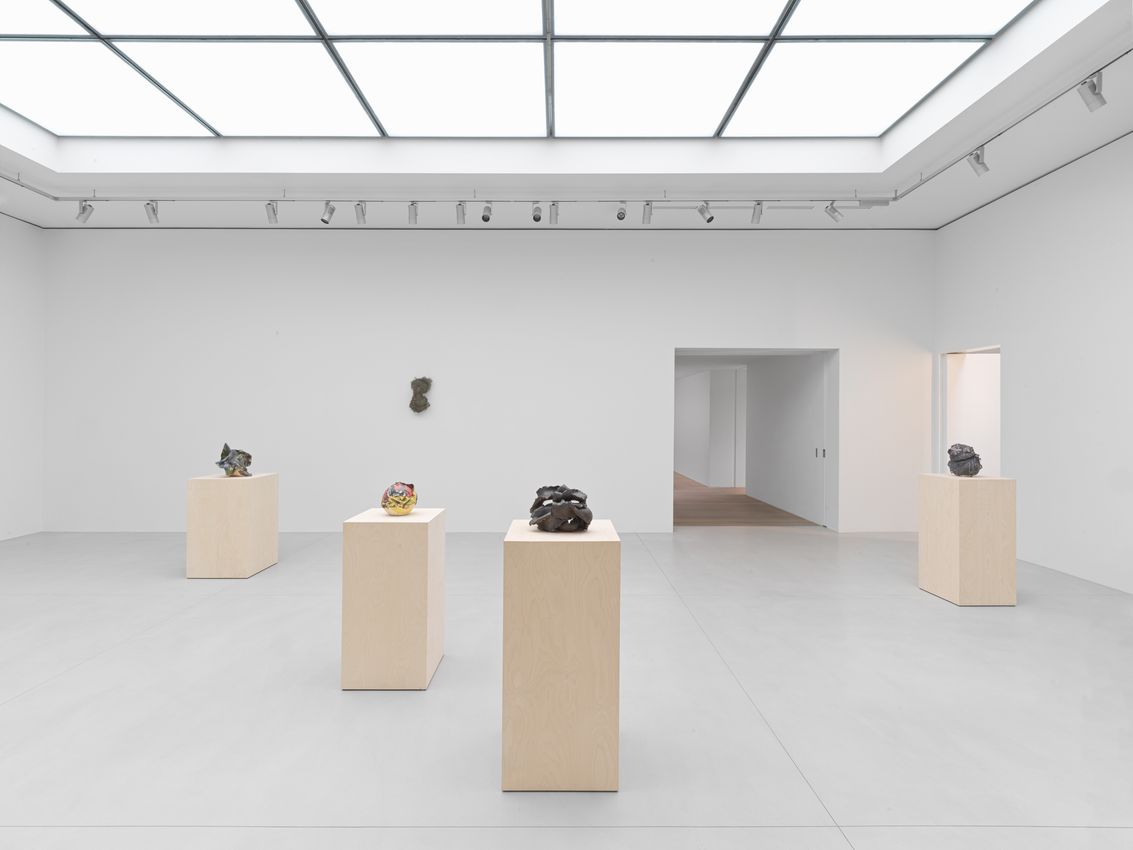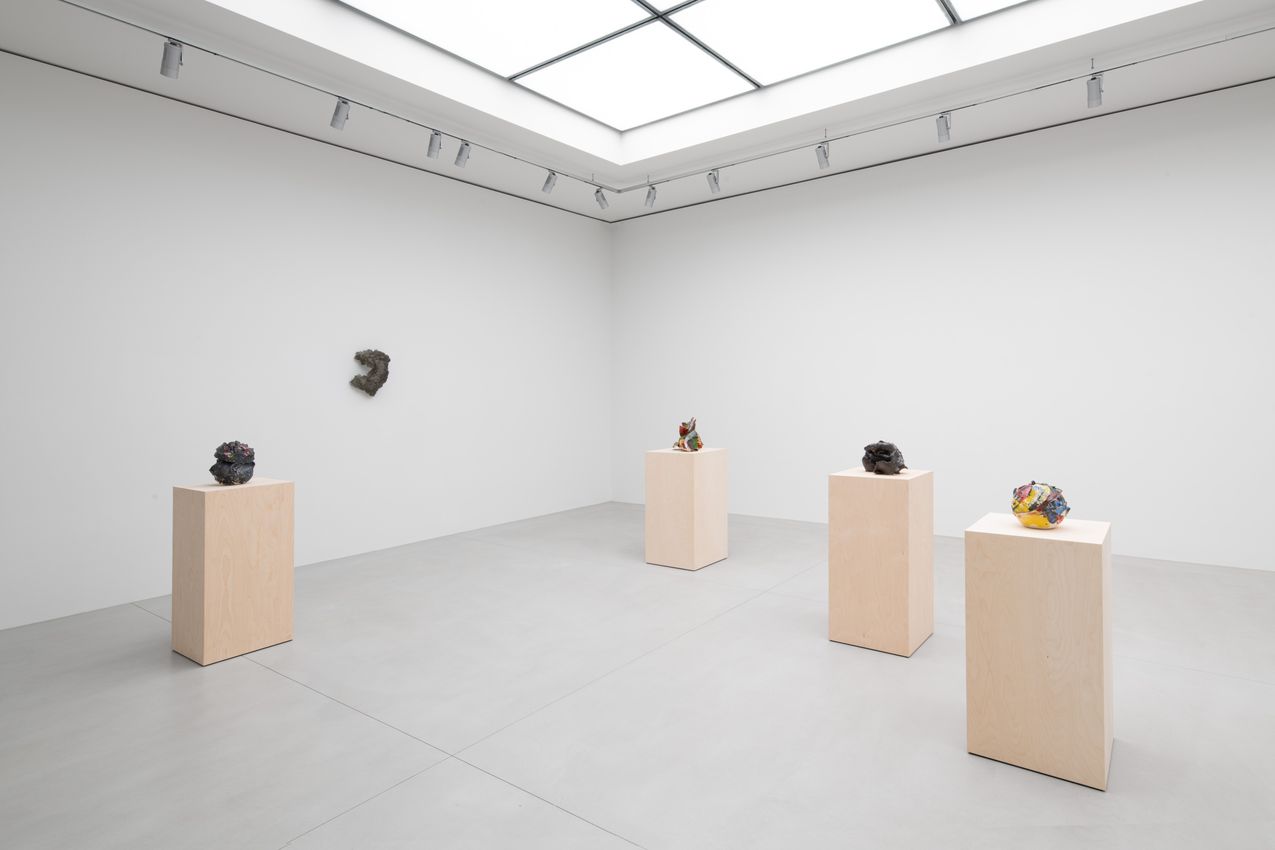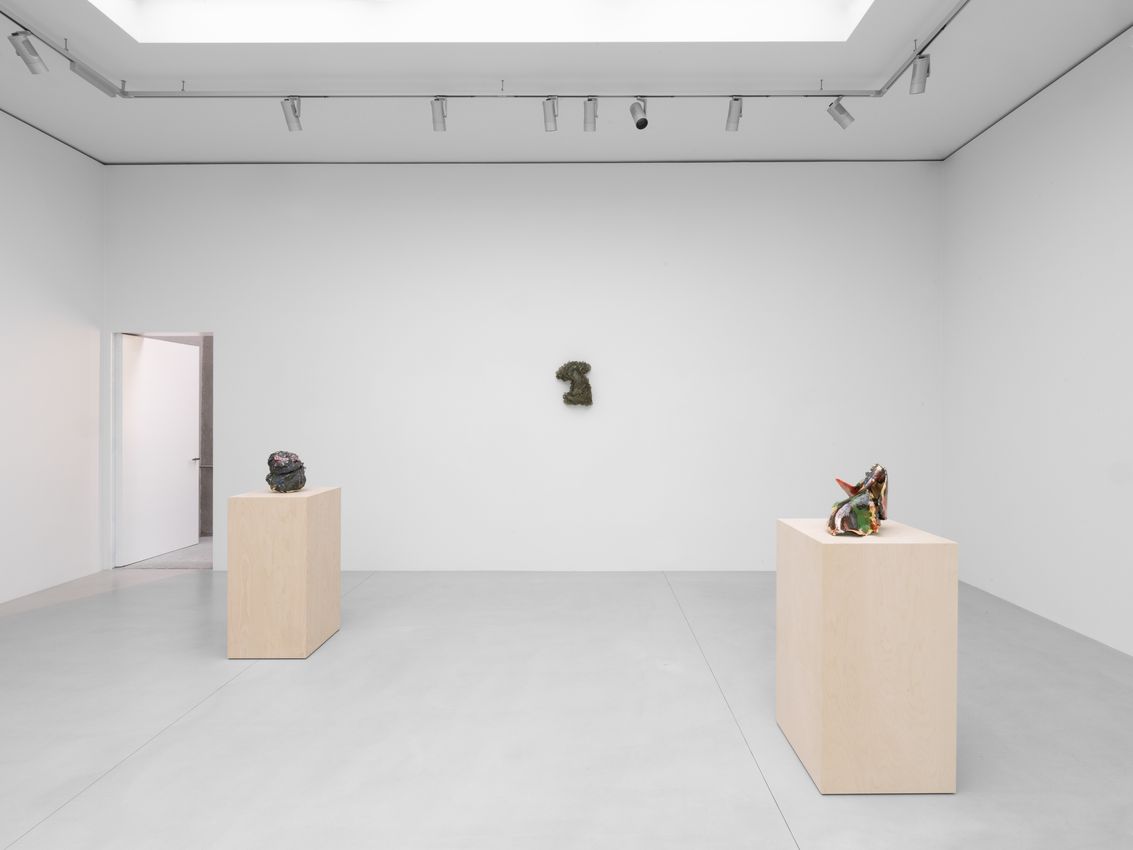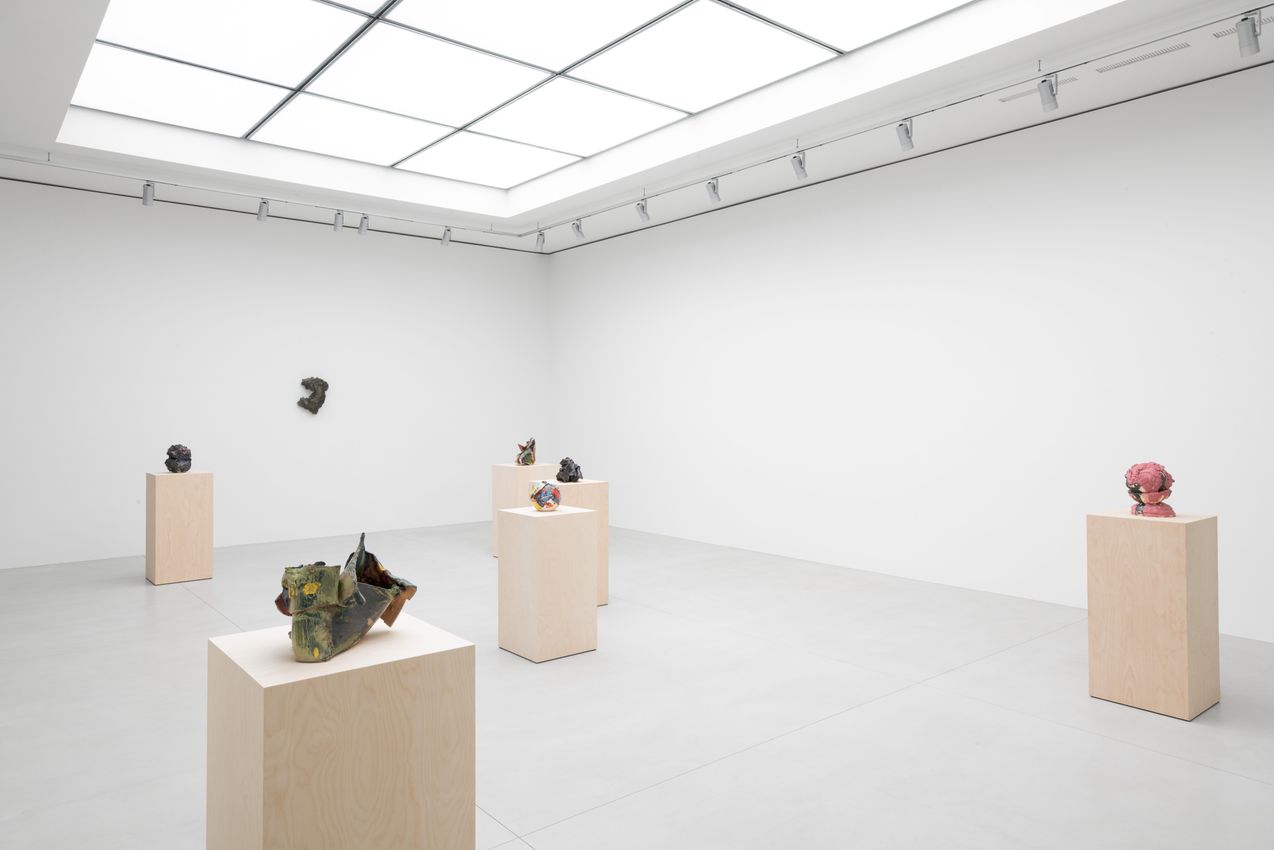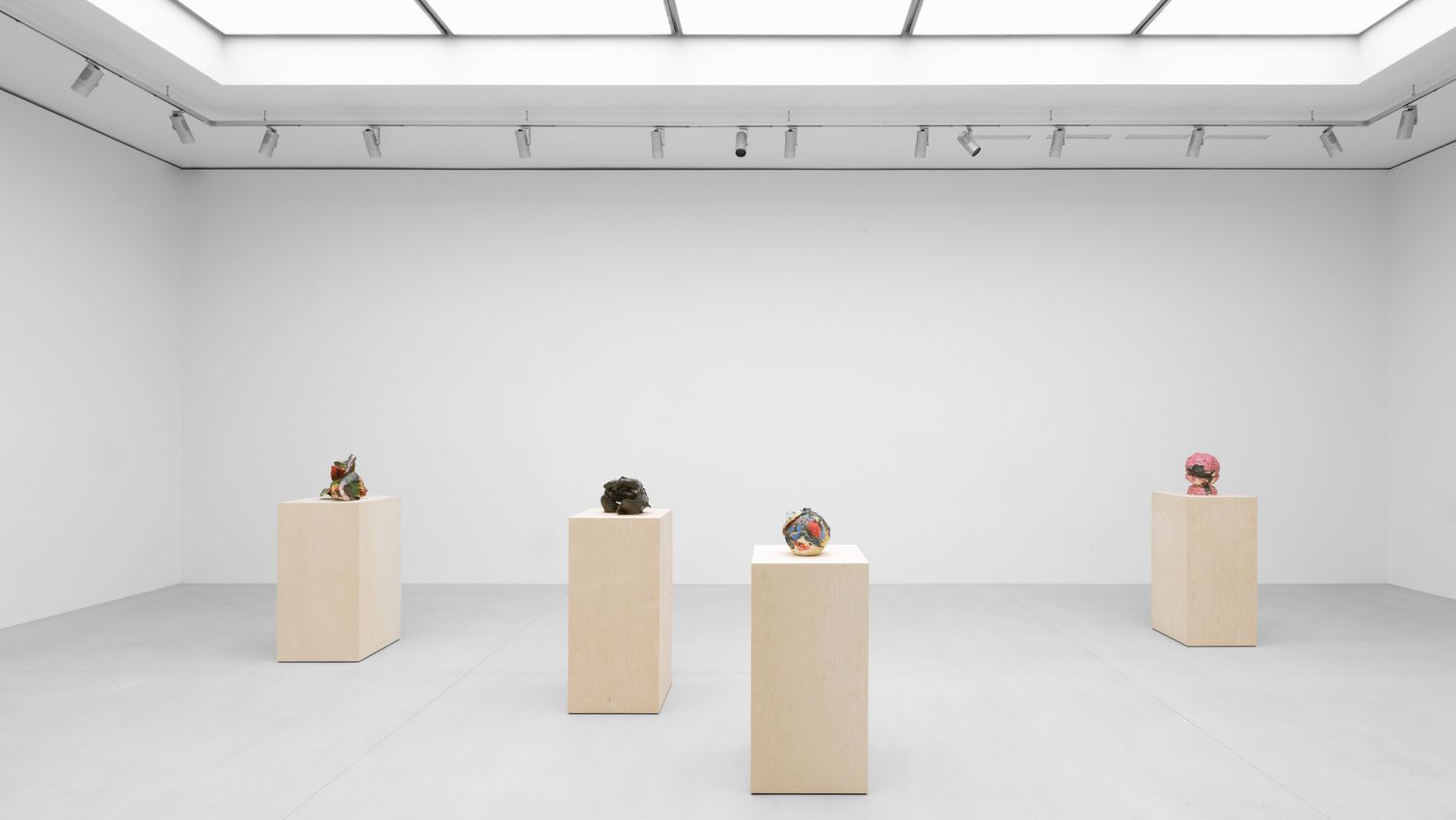
WHAT IF? brings together recent work by Lynda Benglis in a wide range of media. Ceramics enter into a dialogue with cast polyurethane sculptures, foam paintings and a new, never previously exhibited work in aluminium, Relic (2014-2023). The selection showcases Benglis’s versatility across different techniques and materials, while also highlighting the dynamic interaction between apparent contradictions, such as organic and synthetic, fluidity and solidification, permanence and transience. The works further emphasise her abiding interest in motion, metamorphosis and the physical act of creation.
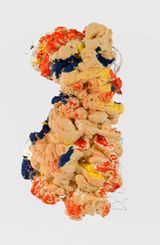
Lynda Benglis’s ceramics are the ultimate embodiment of physicality. They are also the works in which the artist’s hand is most evident. She embraces the primal qualities of clay, its tactile immediacy and organic mutability. Benglis eschews conventional tools and takes a manual approach to working the material. She twists, pokes, pulls, folds and pushes the clay into shape using her bare hands. Benglis explains: “The process includes me holding the material, which is important. When I do ceramics, I feel a need to kind of wrestle with the material and be integrated with the form and surface. I can only tell you that the thinking in it is so fast. It’s a dance. I feel the clay; I am the clay, so to speak. I feel this in all my work, that I am the material and what I am doing is embracing it and allowing it to take form.”
Inspired by natural shapes, such as geological structures, human anatomy and landscapes, the ceramics can also be read as ‘frozen gestures.’ Specifically used in connection with Benglis’s oeuvre, the term refers to her sculptural works that capture the fluidity and dynamism of a motion or action in a permanent form. Their earthy textures evoke the timeless quality of the natural world, while the vibrant colours, glazes and slips, ranging from matte to glossy, draw inspiration from abstract painterly traditions. Meanwhile, Benglis’s titles reference both her birthplace, Louisiana, and her studio in New Mexico; Choctaw and Moctobi are the names of two Native American tribes from the Mississippi region; Iberville and Bienville are parishes in Louisiana that are named after early French governors of the region; while Tewa pays homage to the linguistic family of the Pueblo Native Americans settled along the Rio Grande.
A contrasting body of work brings synthetic materiality to the fore. Benglis is renowned for her cutting-edge use of industrial substances, achieving fame in the 1960s with her poured latex sculptures. The exhibition highlights her recent explorations with spray foam and the many directions in which she has taken this medium. To craft these pieces, Benglis initially applies the foam to metal armatures, often fabricated from chicken wire. Similar to sculpting with clay, motion and expression play a vital role. Spraying is almost like drawing in three dimensions. After drying, these shapes serve as forms for casting in various media, such as polyurethane or aluminium, or they can function as supports for paintings. All of these works investigate the concept of metamorphosis. In the cast polyurethane pieces, for example, liquid polyurethane hardens into ethereal sculptures with alluring and glossy surfaces. The contrast between artificiality and sensuality is most evident in Hot Lips (2020), the title of which evokes a myriad of associations, from the 1973 film Le feu aux lèvres by Pierre Kalfon to the popular TV series M*A*S*H, featuring ‘Hot Lips’ Houlihan. It is also a reminder of Benglis’s early works, when she broke down gender stereotypes via a radical series of videos, advertisements and sculptures.
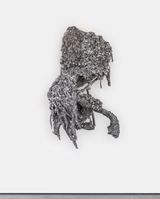
Benglis’s Cloud Shadow sculptures (2007), on the other hand, are crafted from transparent, glassy polyurethane, which creates an entirely different visual effect. These sculptures draw inspiration from the transient and ever-evolving shapes of clouds. As art critic Brenda Richardson notes: “These are forms that shift and shimmer in light and space, very much like the ghosts, shadows, clouds, and other shape-shifters, their titles evoke.” Benglis’s new sculpture Relic (2014-2023) was also cast from a foam sculpture, only into aluminium instead of polyurethane. The shift is now from an artificial, airy and light-absorbing substance to a substantial, yet mirror-like, natural one. Organic, oozing, semi-molten shapes, whose surfaces seem alive, contrast starkly with the rigidity of the metal. The crux of this transformation is the transition from ephemerality to endurance.
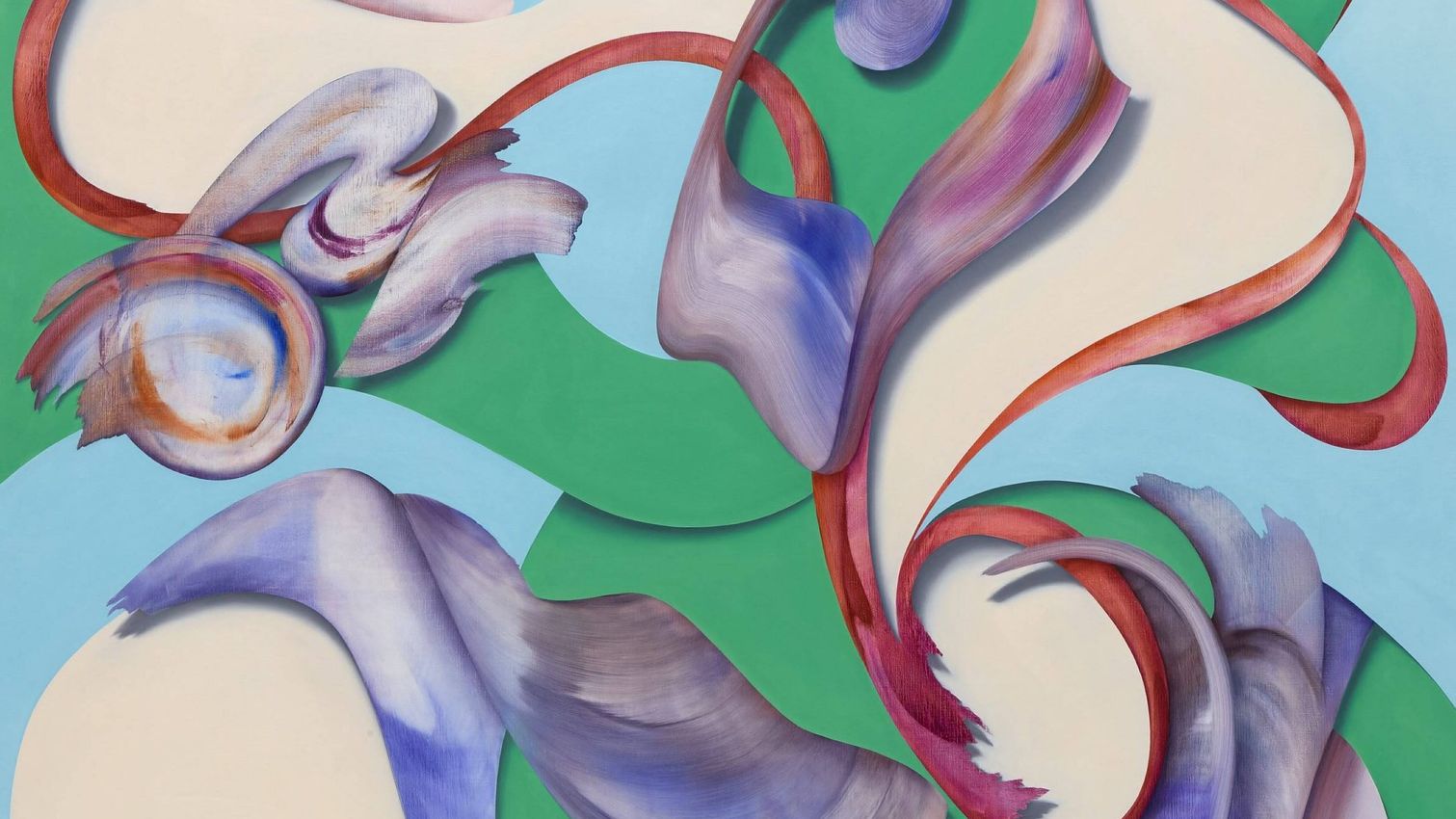
Sprayed polyurethane also translates into artworks that defy categorization and straddle the boundary between painting and sculpture. In her Foam Paintings, Benglis replaces traditional, organic linen canvases with synthetic, three-dimensional supports. The painted surfaces of these works are vibrant, gestural and expressive, as per the ceramics, but also phosphorescent. Benglis pays meticulous attention to the ‘skin’ of her works. She says: “For me, the surface is primary, and the surface describes the form. You’re describing the form through the process.” Their shimmering details, visible only in the dark, represent yet another way of creating and working with light, offering a sensory experience that contrasts with the synthetic medium. Phosphorescence evokes bioluminescence and the sea, recurring themes in the artist’s oeuvre. Benglis’s Foam Paintings expand the boundaries of painting and sculpture by synthesizing contrasting elements and qualities into unified works with profound emotional resonance.
Lynda Benglis (b. 1941, Lake Charles, Louisiana) is recognised for an oeuvre that has consistently challenged art-historical and technical conventions while treading new and experimental ground. Driven by an inventive and interrogative approach to both the physical and aesthetic properties of her chosen materials, she works in a broad range of media including beeswax, latex, polyurethane, glitter, luminous paint, plaster, metal, glass, porcelain and paper. With sculpture as a primary focus, Benglis creates pure, abstract works that are typically inspired by natural and organic forms. She often combines an element of visual seductiveness—reflective or sparkling surfaces, transparency, vivid hues—with atypical shapes, challenging the relationship between painting and sculpture and their respective modes of presentation. As a young artist in the mid-1960s, Benglis explored such issues by throwing brightly-coloured liquid latex onto the floor to create large ‘poured’ works that expanded the prevailing discourse around minimalism and the legacy of abstract expressionism. Working in photography and video primarily in the 1970s, Benglis created radical images that sought to undermine gender stereotypes and discrimination against women artists within male-dominated artistic circles. More recently, she has harnessed technology to arrest waves of polyurethane foam in mid-air, thereby transforming them into solid, three-dimensional objects and continuing her exploration of the ‘frozen gesture’.


A respected voice in contemporary art discourse.
Focusing on ambitious storytelling and insightful art-world commentary. Ocula Magazine publishes in-depth interviews, critical essays and timely analysis on the artists, exhibitions and ideas driving the global art world.
Learn more about Ocula Magazine
Showcasing the best of the art world.
Ocula partners with galleries from around the world to highlight their artists, artworks and exhibitions. Gallery membership is by application and invitation, with each member vetted by an independent panel.
Learn more about Ocula Membership

Specialises in the sale of major artworks.
Led by a team with deep ties to the world’s leading auction houses, galleries and collectors. Ocula’s advisory team offers bespoke services to high-net-worth clients from around the world who are looking to acquire the best of contemporary and modern art.
Learn more about our team and services