



Press Release

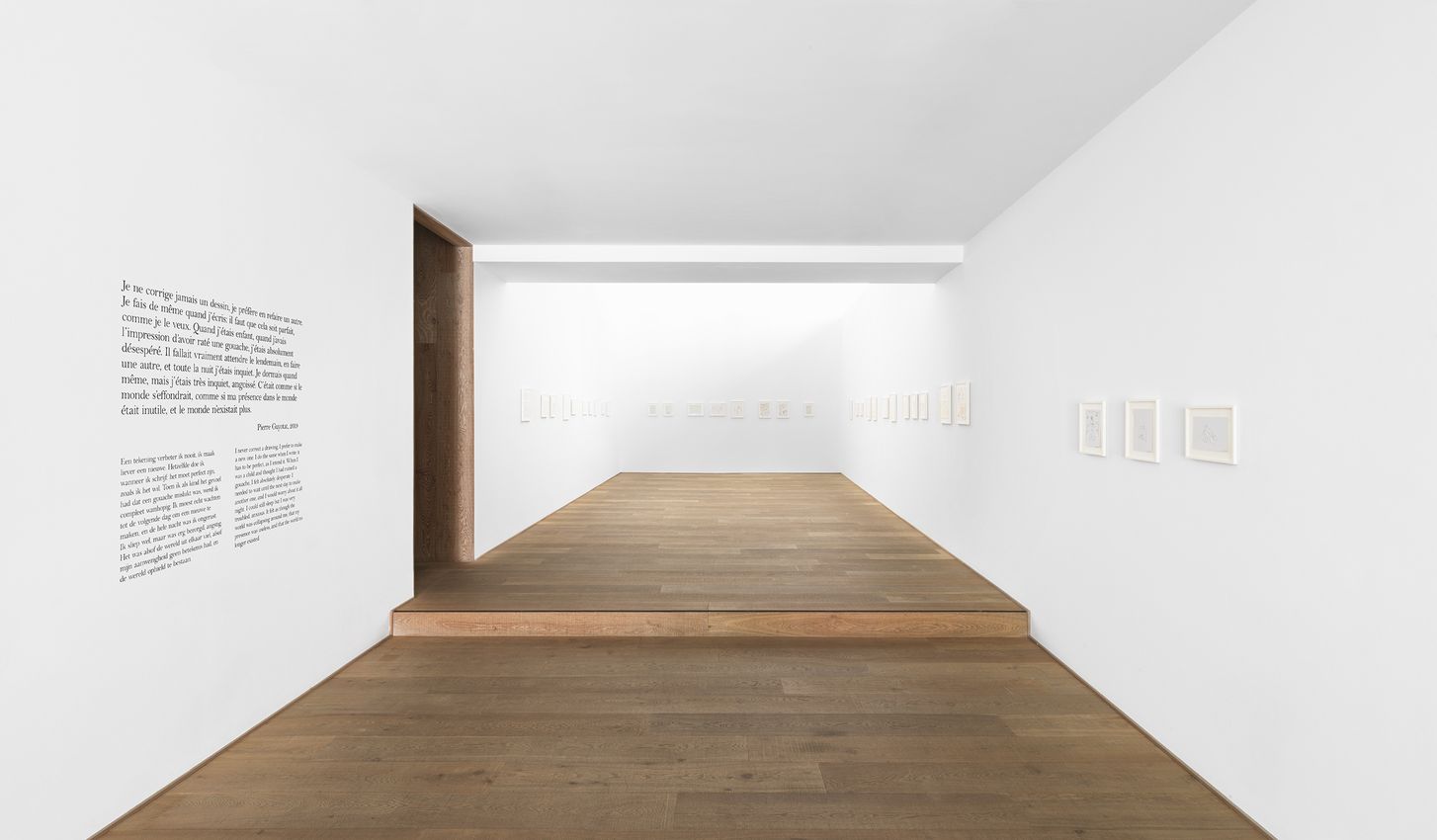
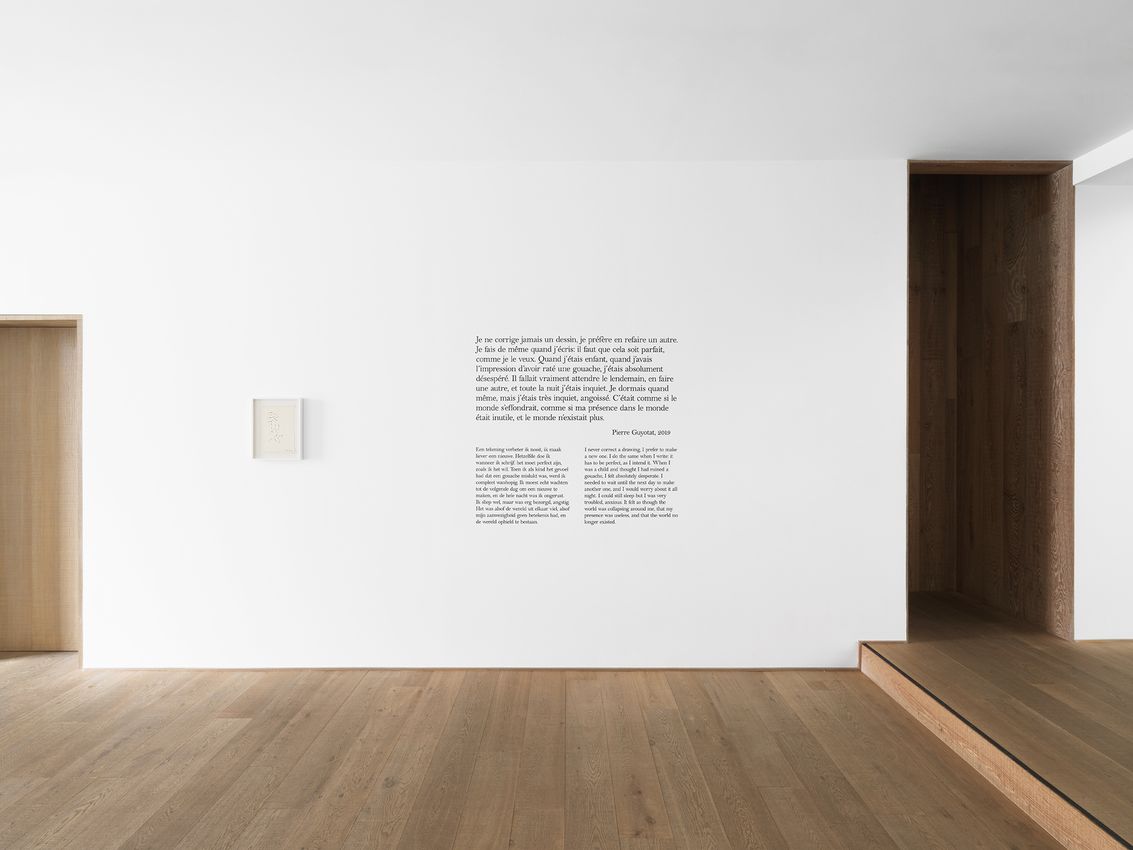
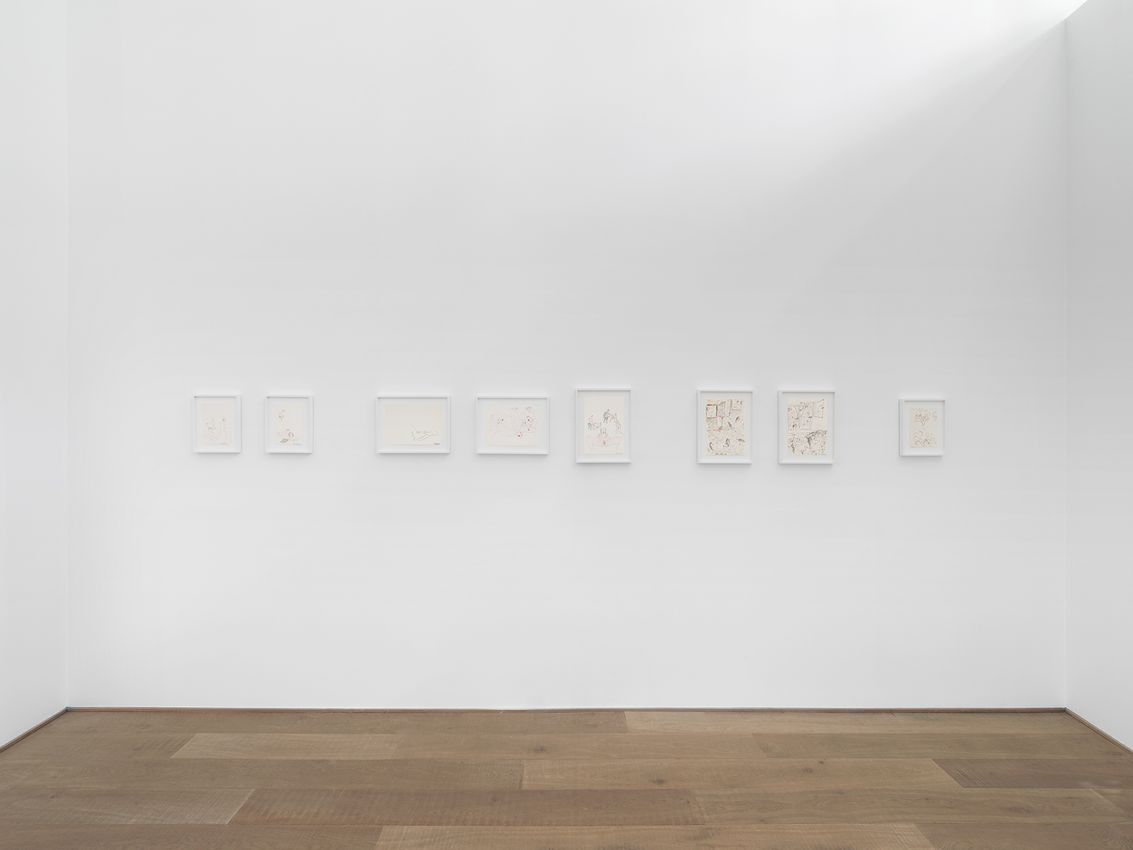
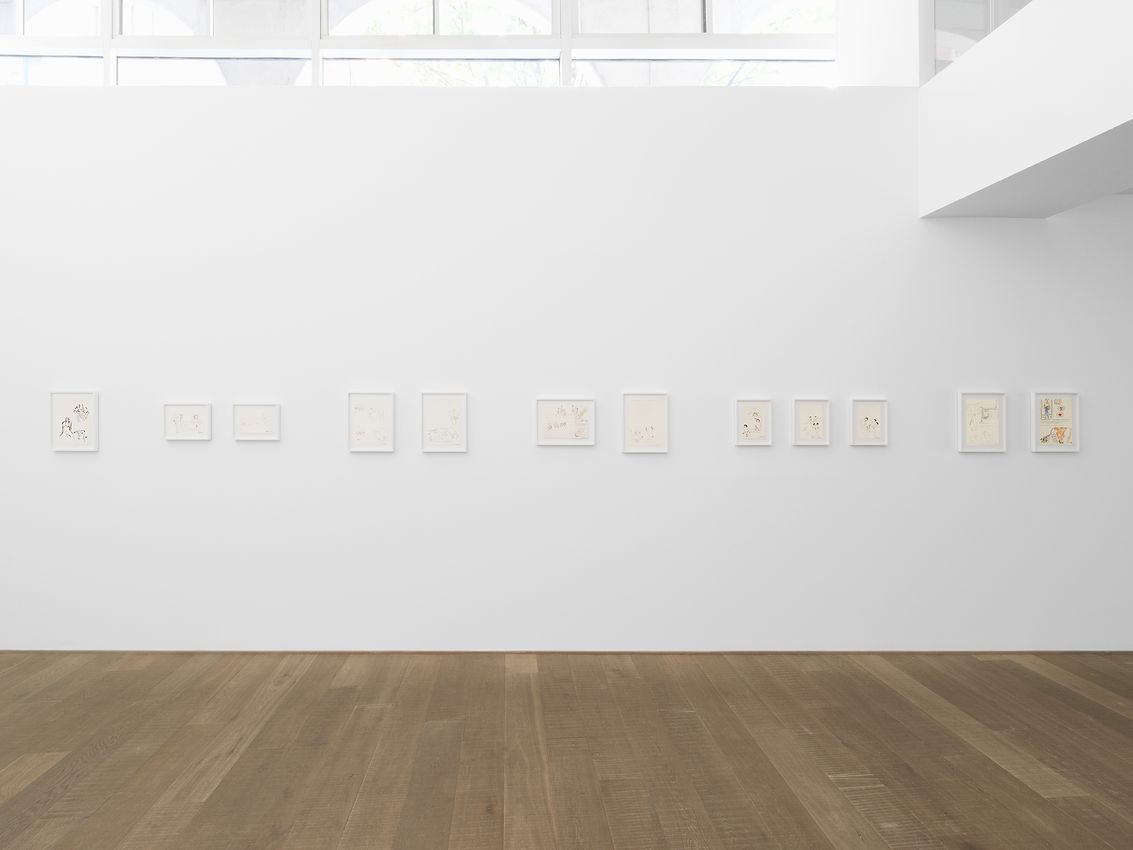
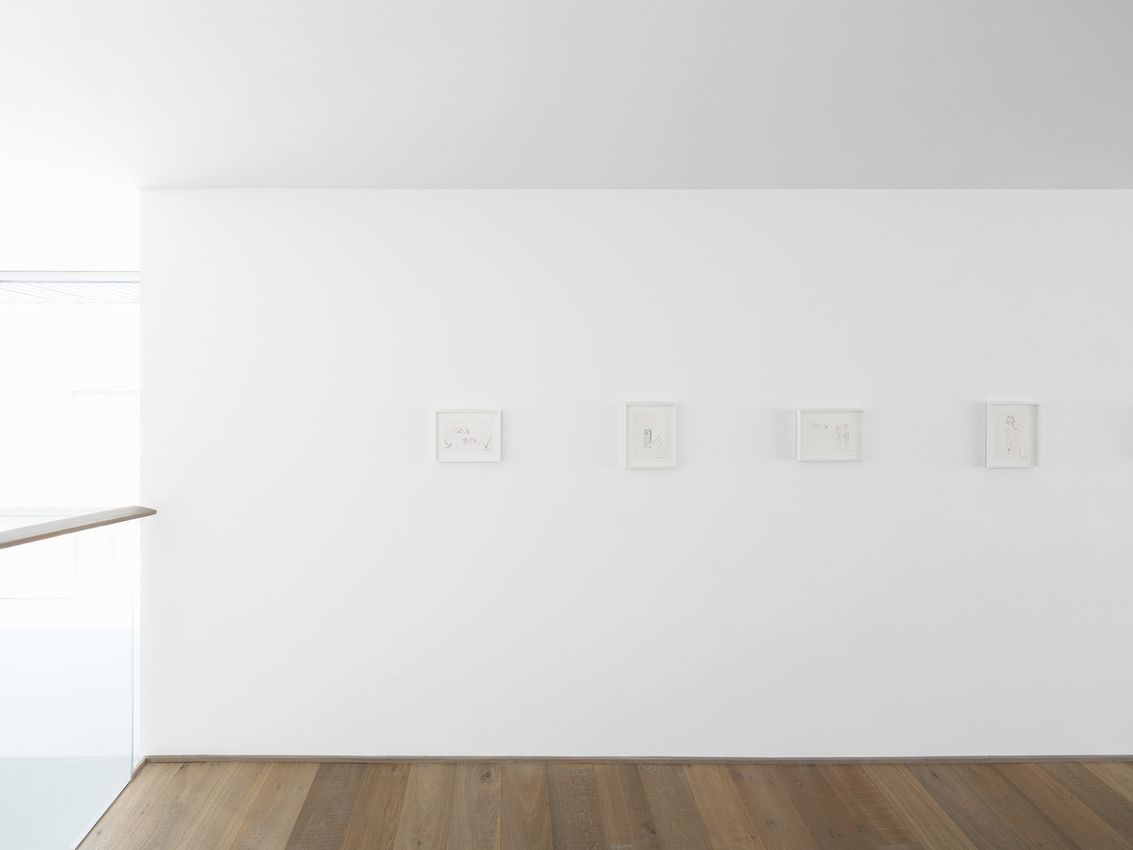
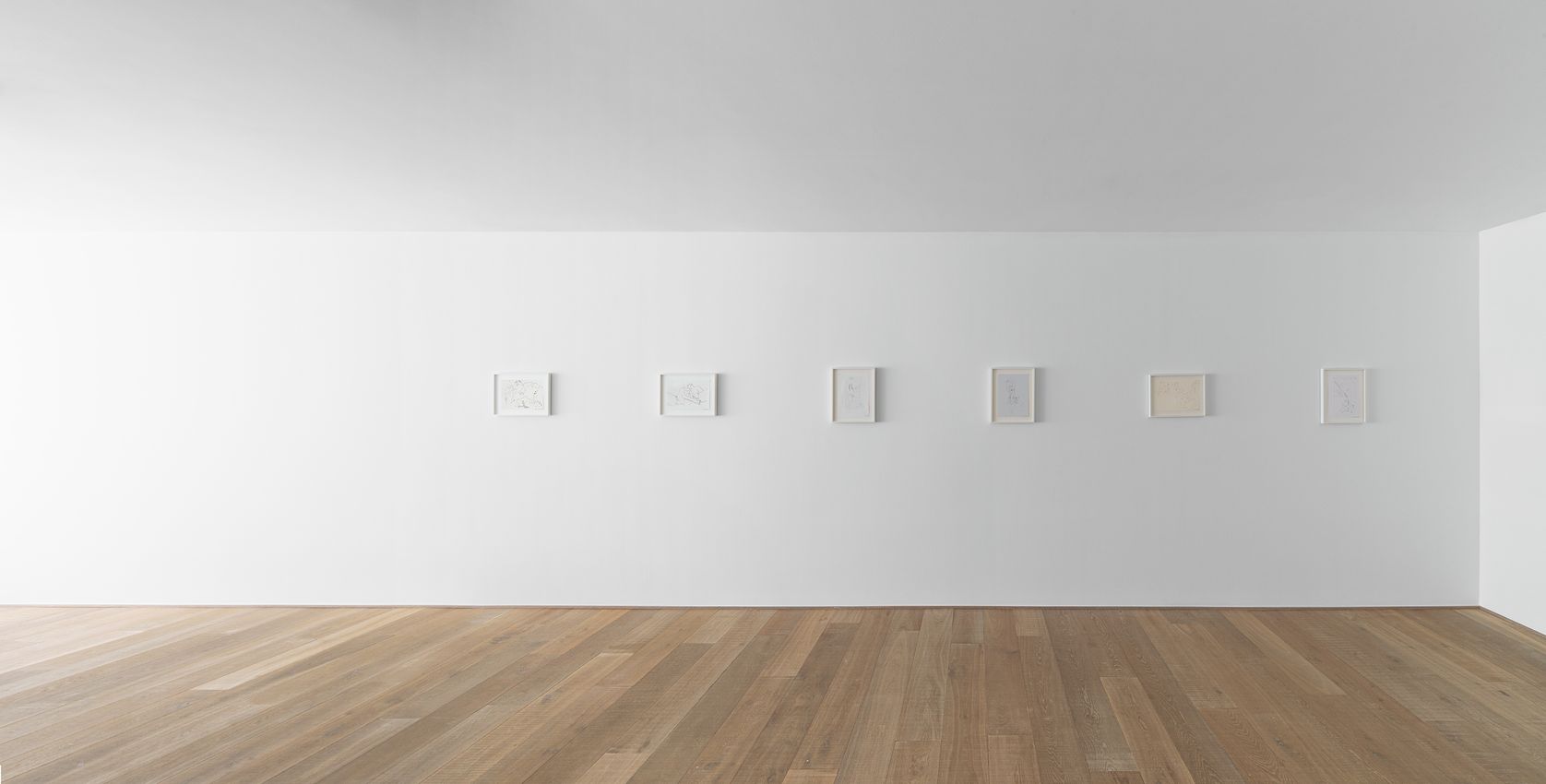
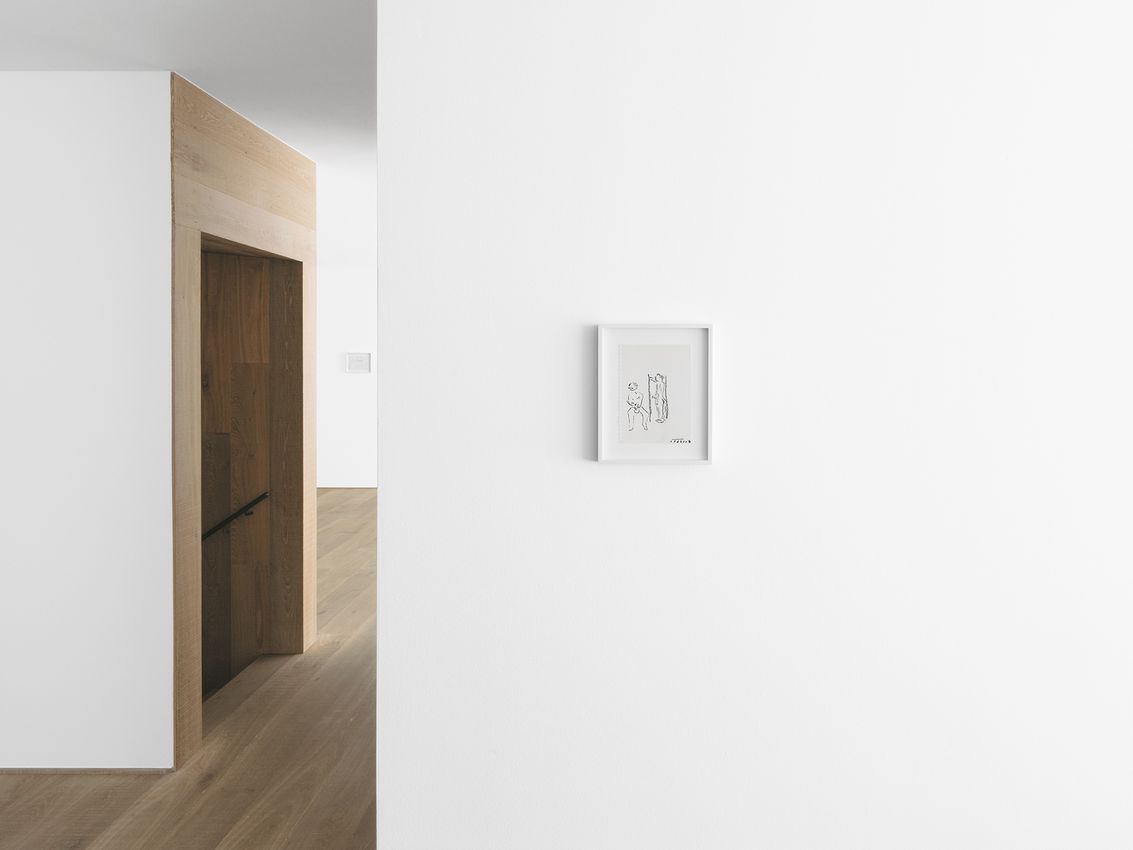
Xavier Hufkens is honoured to present an exhibition of drawings by Pierre Guyotat (1940–2020). The exhibition was conceived with the author and artist who passed away on 7 February 2020. This is the largest presentation of his works to date, encompassing close to sixty drawings from 2016, when he returned to drawing after a near 40 year hiatus, to his last works in 2019.

Guyotat is primarily known as a radical and subversive author. For over fifty years, since the original French publication of Tomb for 500,000 Soldiers (1967), and Eden, Eden, Eden (1970, which was immediately censored upon its release), he brought revolution into poetry, altering the very structures of language and culture. His visions of war and sexual exploitation, as well as his account of the cosmological nature of existence, have given many artists new ways to express themselves. His heroic stature as an uncompromising artist and poet makes him a model for creatives of all generations. His recent books, Coma (2006), In the Deep (2010) and Idiocy (2018), have presented to readers the existential risks Guyotat himself took to make radical art. In the Deep evokes the hesitations of the young Guyotat, who was torn between becoming a painter or a poet. His archive is held at the Bibliothèque nationale de France.

Guyotat collaborated with a number of visual artists such as Wifredo Lam, in the 1960s; Klaus Rinke in the 1970s; Sam Francis and Daniel Buren in the 1990s; Eric Rondepierre in the 2000s; Michael Dean for a posthumous project. He also kept a performative reading practice, working with choreographers and stage directors, famously performing at the reopening of the Centre Georges Pompidou in 2001. His manuscripts—such as the one for the 1984 epic Le Livre (The Book)—are visual works of art in their own right.

Even though he preserved drawings from his teenage years throughout his life and continued to draw until the 1980s, his practice long remained a secret. Eden, Eden, Eden’s frontispiece is a watercolour and gouache work of art. Almost all of his early drawings are lost and after the physical and personal collapse he experienced in the early 1980s, later evoked in Coma, he stopped drawing altogether. In 2016, his admirer and friend Azzedine Alaïa organised an exhibition titled Pierre Guyotat, la matière de nos oeuvres, dedicated to the influence of his writing on visual artists (with the participation of Juliette Blightman, Daniel Buren, Elijah Burgher, Miquel Barceló, Bernard Dufour, Paul McCarthy, Jean-Luc Moulène, Eric Rondepierre, Christoph von Weyhe, Cerith Wyn Evans). Guyotat started drawing again at the end of 2015, and on the occasion of the exhibition, these new works were shown alongside his manuscripts and in dialogue with the works of the artists he inspired.

Between 2015 and 2019, he developed a remarkable drawing practice. These works were not attempts at depicting the world he imagined through his writing, but rather, they presented scenes and figures, insights into creatures that were often more abstract. Drawing from memory and symbolism, they weave an extremely complex and yet direct language: they present scenes of sexuality, freedom, joy and exploitation. He did not consider himself as a writer but rather as an artist, and he devoted the same consideration and thought to each creative output, with a view to, as he said, ‘lay a hand on the shoulder of those suffering’.

The breadth of this ensemble offers insight into how his practice developed and expanded: using gouache, pencil, drawing, revisiting lost drawings made more than 30 years prior, inventing new scenes, trialing new ways of depicting figures and faces. They are uninhibited and extremely elaborate, created with great care, and at times full of humour. His drawings, Guyotat said, had to be ‘thought’: each of them took weeks to conceive before being realised. They have an underpinning narrative, only a piece of which is made into an image; they sometimes draw on mythological figures, or stem from the world he created himself, a world of symbolic (masculine) ‘whores’, which in their own exploitation embodied the destiny of humankind.

Pierre Guyotat’s drawings were first exhibited in Paris at Azzedine Alaïa’s exhibition space in 2016, then again in 2017. Other exhibitions were held at Cabinet, London (2017); Yvon Lambert, Paris (2018); diaphanes, Berlin (2018); Villa Medici, Rome (2019) and The Box, Los Angeles (2019). Each presentation gathered a few months of the artist’s drawings. This exhibition is the first to provide an entry into the diversity and richness of his work during the last, and perhaps most intense, years of his drawing practice.

Read More

Installation Views

Also Exhibiting at Xavier Hufkens

About the Gallery
Xavier Hufkens is one of Europe’s leading galleries for contemporary art. Located in Brussels, the gallery maintains a diverse exhibition programme with solo exhibitions of the gallery artists as well as group exhibitions and special projects. The gallery deals in a distinctive combination of painting, drawing, sculpture, photography, video and installation-based work.

The origins of the gallery date back to 1987, when Xavier Hufkens opened a gallery space in an un-refurbished warehouse in the neighbourhood of the South Station (Midi) in Brussels. During the early years, the focus of the gallery was upon mid-career and emerging artists and the gallery is known for having introduced some of the most influential contemporary artists to Brussels at a time when they were still relatively unknown. British sculptor Antony Gormley, who is still affiliated with the gallery, Felix Gonzalez-Torres and Rosemarie Trockel all showed in Belgium for the first time with Xavier Hufkens (Gormley in 1987; Gonzalez-Torres in 1991 and Trockel in 1993).

In 1992, the gallery moved to a 19th-century townhouse at 6 rue Saint-Georges, close to the Avenue Louise. Completely renovated by Belgian architects Paul Robbrecht, Hilde Daem and Marie-José Van Hee, the house quickly gained a reputation for being not just one of the most beautiful contemporary art spaces in the Belgian capital, but also one of the most interesting. The expanded exhibition programme coincided with the additional representation of a number of established artists from Belgium and abroad, including Richard Artschwager, Thierry De Cordier and Jan Vercruysse. In 1997, Hufkens expanded the gallery further by annexing the adjacent building and a number of new artists joined the gallery, including Louise Bourgeois, Roni Horn and Thomas Houseago.

A second space in the same street, at 107 rue Saint-Georges, opened in spring 2013. Located in the Galerie Rivoli, a mixed-use commercial development from the 1970s, the new gallery space was designed by Swiss architect Harry Gugger, who was previously in partnership with Herzog and De Meuron. Slegten & Toegemann, Brussels, managed the project.

An eclectic but very clear vision underpins all of the gallery’s activities: ‘The definition of the gallery was established from the start. The common thread, then and now, is quality over and above everything else, which I find more intellectually challenging than a forced definition. From the early days I juxtaposed established artists such as Michelangelo Pistoletto with someone like Felix Gonzalez-Torres when he was totally unknown. Today I still mix my work: I have no problem showing Malcolm Morley … alongside Robert Ryman, or Willem de Kooning.’ [Xavier Hufkens in The Art Newspaper, Issue 220, January 2011, published online: 20 January 2011]

Xavier Hufkens represents some thirty artists from different generations. He was part of the six-member selection committee for Art Basel during seven years and also participates in up to five international Arts Fairs annually. The gallery has partnerships with the estates of Louise Bourgeois, Willem de Kooning, Robert Mapplethorpe and Alice Neel.
View Gallery Profile
Address
107 rue St-Georges
St-Jorisstraat
Brussels
Belgium
Opening Hours
Tuesday – Saturday
11am – 6pm
(1)
Brussels 107 rue St-Georges
Xavier Hufkens
107 rue St-Georges, St-Jorisstraat, Brussels, Belgium

Opening hours
Tuesday – Saturday
11am – 6pm
The art world in focus
