





ANGEL OTERO
b. 1981, Puerto RicoAngel Otero is a Puerto Rican-born painter known for redefining what contemporary art can be through a radical ‘oil skin’ technique. Otero’s innovative process transforms oil paint into sculptural collage that bridges personal history, memory, art history, and the tactile atmosphere of Caribbean life.
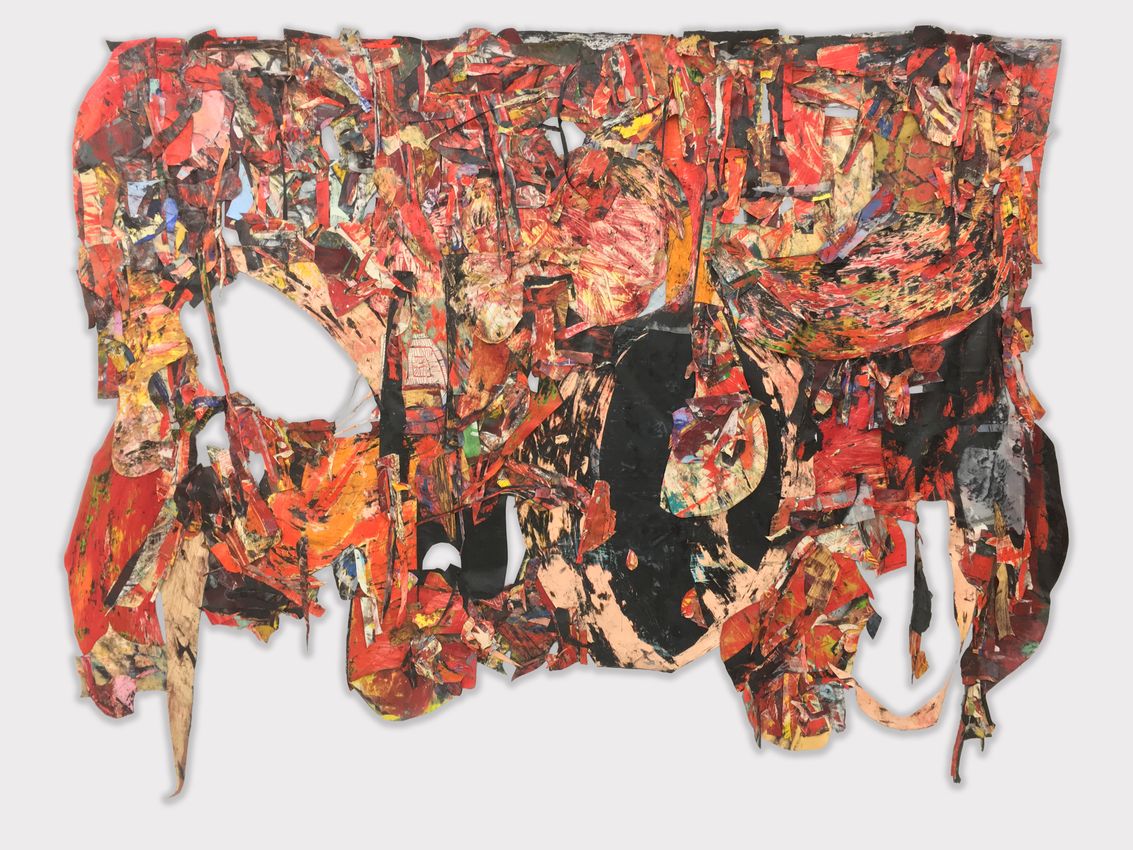
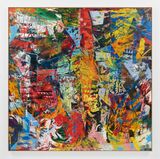
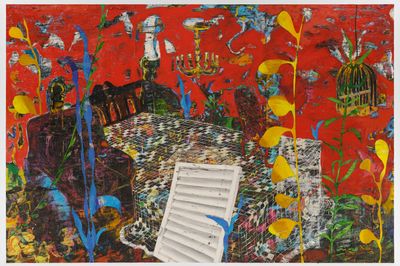
Among his most illustrative bodies of work are his so-called ‘paint skins,’ which are made by painting on glass then, once dry, scraping off the paint in sheets like peeled layers of skin. Those peeled paint skins can then be rearranged on a canvas to create a layered, textured abstract composition, which can be interpreted as a re-mixed material memory of its own creation.
In another body of work, Otero employs silicone and powdered pigments to create fragile abstract impressions on canvas. Known as the Transfer Series, this body of work takes imagery from Otero’s personal history and distills it down to a line pattern evocative of a traditional woodcut print. Following the lines with silicone and dusting the canvas with raw pigment, Otero transfers the images between canvases in an act that is simultaneously creative and destructive, forming new abstract images while the original is destroyed in the transfer.
With these processes, Otero showcases the physicality of his materials beyond their historical uses as image-making mediums, making the materials and processes the subjects of the work.
Early Years
Angel Otero was born in 1981 in Santurce, San Juan, Puerto Rico. Raised in a close-knit family home filled with the textures of Caribbean domestic architecture and Catholic iconography, Otero’s early environment would later become a lasting influence on his art. He initially studied finance at Universidad del Sagrado Corazón, but soon pivoted to pursue art, moving to Chicago to attend the School of the Art Institute of Chicago (SAIC), where he completed both his BFA (2007) and MFA (2009).
In 2009, Otero featured in his first major solo exhibition at Kavi Gupta Gallery in New York. It was the same year that the artist appeared in an institutional show: Constellations (2009) at Chicago’s Museum of Contemporary Art. Curated by Julie Rodrigues Widholm, the show explored various and unique approaches to painting dating from the 1940s to the present.
Otero now lives and works between Brooklyn, New York and Puerto Rico, often sourcing materials and ideas from his childhood home.
Angel Otero Artworks
Otero’s practice is distinguished by his transformation of the oil painting medium, turning paint into collaged, three-dimensional surfaces emblematic of personal memory and displacement.
Oil Skin Paintings (2009–2013)
Otero’s signature ‘oil skin’ method, developed while a graduate student, involves painting images on glass, partially drying them, and peeling the paint ‘skins’ to reapply to canvas in new, abstracted forms. Early works such as Four Corners (2010) demonstrate Otero’s fusion of Baroque sensibility and expressive abstraction, disrupting familiar narratives through process.
Transfer Series and Memory (2015–2017)
In the Transfer Series, Otero began using silicone and powdered pigment to physically transfer family snapshots and domestic scenes onto canvas, capturing both the ephemerality and endurance of personal history within fragmented surfaces.
Domestic Structures and Materiality (2018–2022)
During this period, Otero incorporated materials such as window grilles, upholstery fabric, and physical fragments of furniture directly onto his canvases, as in the exhibition Diario (Kemper Museum of Contemporary Art, 2019–2020). These artworks evoke the architecture and emotional resonance of Puerto Rican homes, while deepening his sculptural approach.
Return to Figuration and Narrative (2023– )
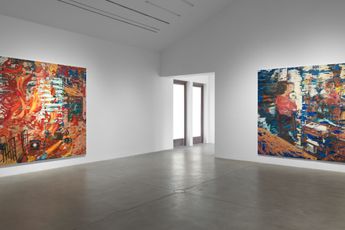
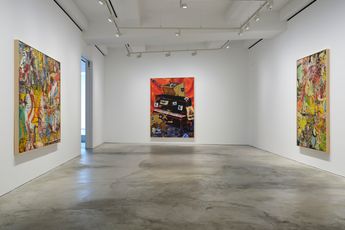
Recent exhibitions, including The Ocean in My Room (Vito Schnabel Gallery, 2023–2024) and That First Rain in May (Hauser & Wirth, 2024), reveal a renewed embrace of figuration, vibrant colour fields, and overt references to Otero’s Caribbean heritage. Here, layered oil skins are combined with motifs from nature, childhood, and domestic interiors, resulting in complex compositions that are both poetic and tactile.
Select Public Commissions
- Latidos (2022), public sculpture at Carnegie Mellon University, which references the vibrant geometry of San Juan’s built environment.
- Permanent artwork at Louis Armstrong New Orleans International Airport, connecting the experience of travel to roots and memory.
Select Awards and Accolades
- Leonore Annenberg Fellowship in the Visual and Performing Arts, 2009
- Ford Foundation Latinx Art Futures Symposium Fellow
Exhibitions
Angel Otero has presented both solo and group exhibitions at important galleries and major institutions. Notable shows include:
Solo Exhibitions
- That First Rain in May, Hauser & Wirth, Los Angeles, 2024
- The Ocean in My Room, Vito Schnabel Gallery, St. Moritz, 2023–2024
- Diario, Kemper Museum of Contemporary Art, Kansas City, 2019–2020
- Elegies, The Bronx Museum of the Arts, New York, 2017
- Everything and Nothing, Contemporary Arts Museum Houston, 2016–2017
- Angel Otero, SCAD Museum of Art, Savannah, 2015
Group Exhibitions
- The Other Side of Now, Pérez Art Museum Miami, 2019
- Visual Memory, Istanbul Modern, 2010
- 30 Americans, Cincinnati Art Museum, 2013
- Constellations, Museum of Contemporary Art Chicago, 2009
Angel Otero FAQs
Where can I view Angel Otero’s artworks in person?
Angel Otero’s artworks are held in the public collections of the Solomon R. Guggenheim Museum, New York, Kemper Museum of Contemporary Art, Kansas City, Istanbul Modern, Bronx Museum of the Arts, and DePaul Art Museum, Chicago. His public commissions can be seen at Carnegie Mellon University and the Louis Armstrong New Orleans International Airport.
What is Angel Otero best known for in contemporary art?
Angel Otero is best known for his innovative “oil skin” process, which peels dried oil paint from glass and reassembles it on canvas to form layered, collaged surfaces referencing memory, home, and cultural transition1.
How does Angel Otero create his artworks?
He paints images on glass or plexiglass, lets them partially dry, then peels and reconfigures the paint in new compositions—a process that fuses destruction and creation. He also uses silicone transfers, textile inserts, and found materials in his installations.
What influences Angel Otero’s contemporary artworks?
Caribbean architecture and interiors, family photographs, Baroque and Abstract Expressionist painting traditions, and the experience of cultural migration all deeply inform Otero’s material and thematic choices.
Are there any interesting facts about Angel Otero?
Otero did not begin painting until his twenties, after initially pursuing finance, making his swift rise in art especially notable. He often sources his fabrics and domestic motifs directly from his childhood home in Puerto Rico.
How do I pronounce Angel Otero?
Angel Otero is pronounced: AHN-hel oh-TEH-roh.
Ocula | 2025

Works at Hauser & Wirth





Recently Exhibited



Works Elsewhere




Explore and Follow Artists Shaping Contemporary Art
A respected voice in contemporary art discourse.
Focusing on ambitious storytelling and insightful art-world commentary. Ocula Magazine publishes in-depth interviews, critical essays and timely analysis on the artists, exhibitions and ideas driving the global art world.
Learn more about Ocula Magazine
Showcasing the best of the art world.
Ocula partners with galleries from around the world to highlight their artists, artworks and exhibitions. Gallery membership is by application and invitation, with each member vetted by an independent panel.
Learn more about Ocula Membership
Specialises in the sale of major artworks.
Led by a team with deep ties to the world’s leading auction houses, galleries and collectors. Ocula’s advisory team offers bespoke services to high-net-worth clients from around the world who are looking to acquire the best of contemporary and modern art.
Learn more about our team and services