




CHEN FEI
b. 1983, ChinaChen Fei is a contemporary Chinese artist known for his highly stylised figurative paintings that fuse cinematic drama with meticulous detail, blending pop culture, art history and autobiography into visually arresting tableaux.
Early Years
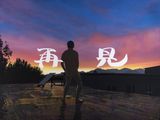
Born in Hongtong County, Shanxi Province, Chen Fei studied at the Fine Art Department of the Beijing Film Academy, graduating in 2005. His academic training in film is a defining influence on his artistic practice—his paintings often resemble frames from an imaginary movie, where narrative and composition are precisely constructed.
Chen lives and works in Beijing, where he is part of a generation of artists redefining contemporary Chinese painting by drawing from both traditional techniques and global pop references.
Artworks
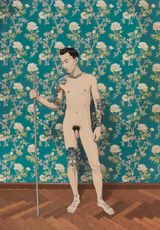
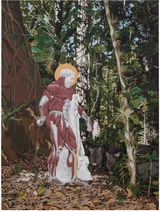
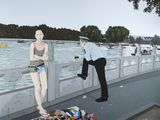
Chen Fei’s artworks are characterised by hyper-realistic technique, luminous colour palettes and a cinematic sensibility that captures moments suspended between humour, desire and menace.
Cinematic Realism and Early Works
Chen Fei’s early paintings demonstrate a keen cinematic eye, cultivated during his training at the Beijing Film Academy. Works like The Meat Murder (2005) and I Am Not Your Friend (2008) depict exaggerated, often violent self-portraits that recall stills from psychological thrillers. These paintings are not only technically accomplished but conceptually provocative—exploring themes of emotional alienation, performative masculinity and social estrangement through hyper-realistic figures and tightly composed mise-en-scène. Rendered with a glossy, near-photographic finish, they blur the lines between reality and fiction, offering early insight into the artist’s obsession with control, fantasy and the artifice of representation.
Pop Culture and Personal Mythology
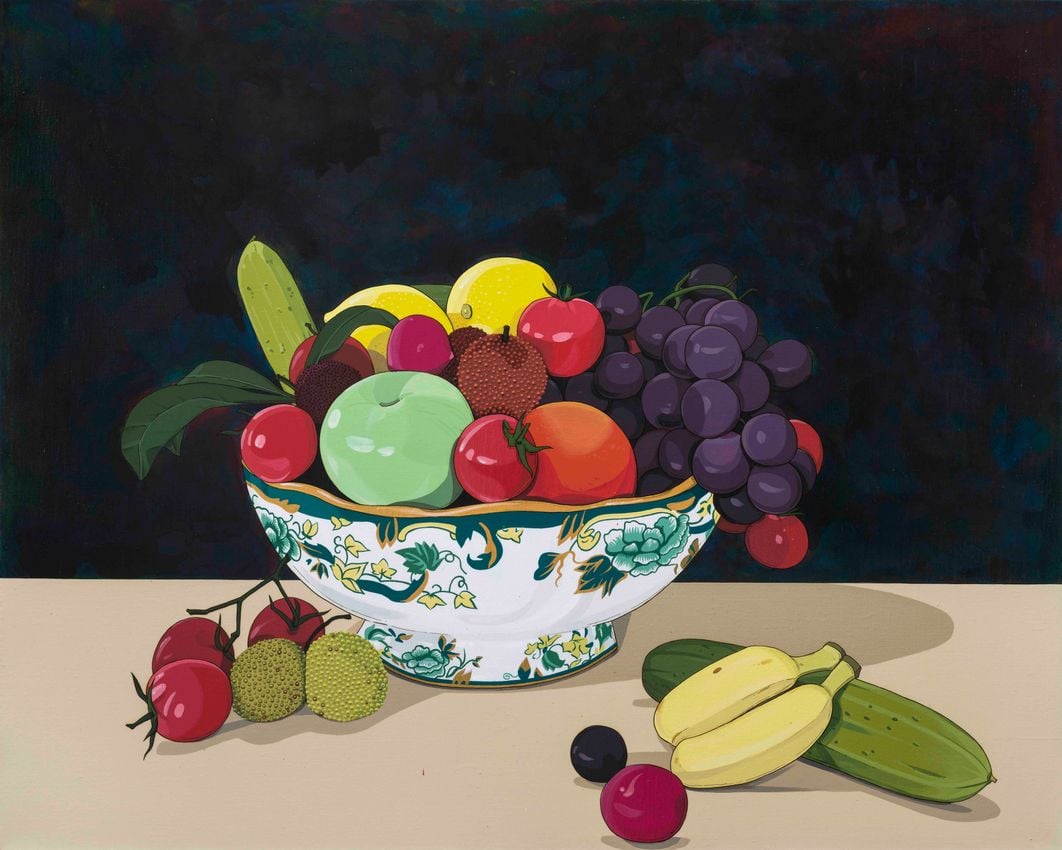
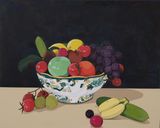
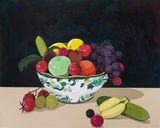
Throughout the 2010s, Chen Fei developed a painterly language that freely mixed elements of pop culture, youth subcultures and personal iconography. In works like Bad Friends Series (2011) and I’m Crazy About You (2015), comic book aesthetics collide with eroticised still-life arrangements and surreal portraiture. Characters drawn from manga, martial arts films, and anime inhabit exaggerated domestic scenes, punctuated by meat, fruit, sneakers and body parts. While often humorous and seductively detailed, these paintings convey a darker psychology beneath their glossy surfaces—critiquing consumerism, voyeurism, and the fragmentation of identity in a world saturated with visual excess and stylised performance.
Art Historical References
In more recent years, Chen Fei has increasingly woven art historical references into his work, layering his compositions with nods to European painting traditions while maintaining his distinctive visual language. In Do Not Disturb (2019), a reclining nude evokes Titian’s Venus of Urbino or Manet’s Olympia, but the setting—a sterile hotel room cluttered with soda cans, a smartphone and takeaway boxes—displaces any classical idealism. These paintings do not merely quote the past; they satirise it, reframing canonical poses through the lens of millennial ennui. By fusing East-West visual traditions, Chen challenges the hierarchies of taste and authority embedded in the history of art.
Psychological Tension and Formal Control
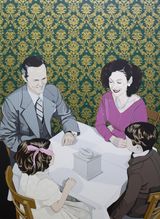
Underlying Chen Fei’s work is a pervasive sense of psychological tension. His figures often appear frozen mid-gesture, their expressions detached, their bodies too perfect, their surroundings too composed. Paintings such as Every Happy Family (2020) depict domestic scenes that border on the uncanny: families dining in silence, pets observing like sentinels, knives and forks aligned with military precision. The hyperreal clarity of the scenes intensifies their emotional ambiguity, creating a palpable unease. For Chen, formal control is not only an aesthetic strategy but a thematic one—expressing the pressures of conformity, repression and self-surveillance within contemporary life and visual culture.
Exhibitions
Chen Fei has been the subject of both solo and group exhibitions at important institutions. A selection of important exhibitions are provided below.
Solo Exhibitions
- Father and child, The Watari Museum of Contemporary Art, Tokyo (2025)
- Grand Lobby, Le Consortium Museum, Dijon (2025)
- Morning Market, Yuz Museum, Shanghai (2021)
- Stranger, Today Art Museum, Beijing (2011)
- Chen Fei Solo Oil Painting Exhibition, Beijing Film Academy, Beijing (2004)
Group Exhibitions
- The Decameron, ZHI Foundation, Beijing (2205)
- China, a new generation of artists, Centre Pompidou, Paris (2024)
- New Artistic Styles Of Contemporary Painting, National Art Museum Of China, Beijing (2024)
- Looking at the Stars, G Museum, Nanjing (2023)
- On Sabbatical, West Bund Museum, Shanghai (2020)
- Painting as Strait Gate: Post-80s Artists Invitation Exhibition, Hive Center for Contemporary Art, Beijing (2016)
Chen Fei’s Instagram can be found here.
Critical Reception
Chen Fei’s practice has been featured in leading publications including Artsy and The Financial Times.
Chen Fei FAQs
What is Chen Fei known for?
Chen Fei is best known for his meticulously rendered figurative paintings that combine cinematic composition with pop cultural symbolism. His works often feature glossy, hyperreal surfaces and explore themes such as identity, fantasy, desire and control. Drawing from film, comics, classical art and consumer culture, Chen creates psychologically charged scenes that are both seductive and unsettling. He is widely recognised within contemporary Chinese art for his unique visual language and narrative complexity, and for bridging fine art with visual storytelling.
What is in Chen Fei’s famous toy collection?
Chen Fei is an avid collector of designer toys, action figures and memorabilia, which play a significant role in his artistic practice. His collection includes everything from Japanese anime figurines and martial arts icons to American pop culture characters like Batman and Star Wars figures. These objects frequently appear in his paintings as symbols of nostalgia, fantasy, and constructed identity. For Chen, toys represent both childhood imagination and adult obsession, blurring the line between innocence, fetishism and cultural iconography.
How does film influence Chen Fei’s artwork?
Chen Fei’s background in film studies profoundly shapes the visual and conceptual structure of his artwork. Trained at the Beijing Film Academy, he approaches painting much like a director would frame a shot—controlling lighting, perspective and composition with cinematic precision. Many of his paintings resemble storyboard stills or paused scenes from imagined movies. Through filmic techniques such as dramatic lighting, visual sequencing and narrative tension, Chen imbues his static images with a sense of psychological drama, voyeurism and narrative suspense.
Ocula | 2025

View Chen Fei's Artworks





















Explore Chen Fei's Exhibitions






Explore and Follow Artists Shaping Contemporary Art
A respected voice in contemporary art discourse.
Focusing on ambitious storytelling and insightful art-world commentary. Ocula Magazine publishes in-depth interviews, critical essays and timely analysis on the artists, exhibitions and ideas driving the global art world.
Learn more about Ocula Magazine
Showcasing the best of the art world.
Ocula partners with galleries from around the world to highlight their artists, artworks and exhibitions. Gallery membership is by application and invitation, with each member vetted by an independent panel.
Learn more about Ocula Membership
Specialises in the sale of major artworks.
Led by a team with deep ties to the world’s leading auction houses, galleries and collectors. Ocula’s advisory team offers bespoke services to high-net-worth clients from around the world who are looking to acquire the best of contemporary and modern art.
Learn more about our team and services