





EDUARDO CHILLIDA
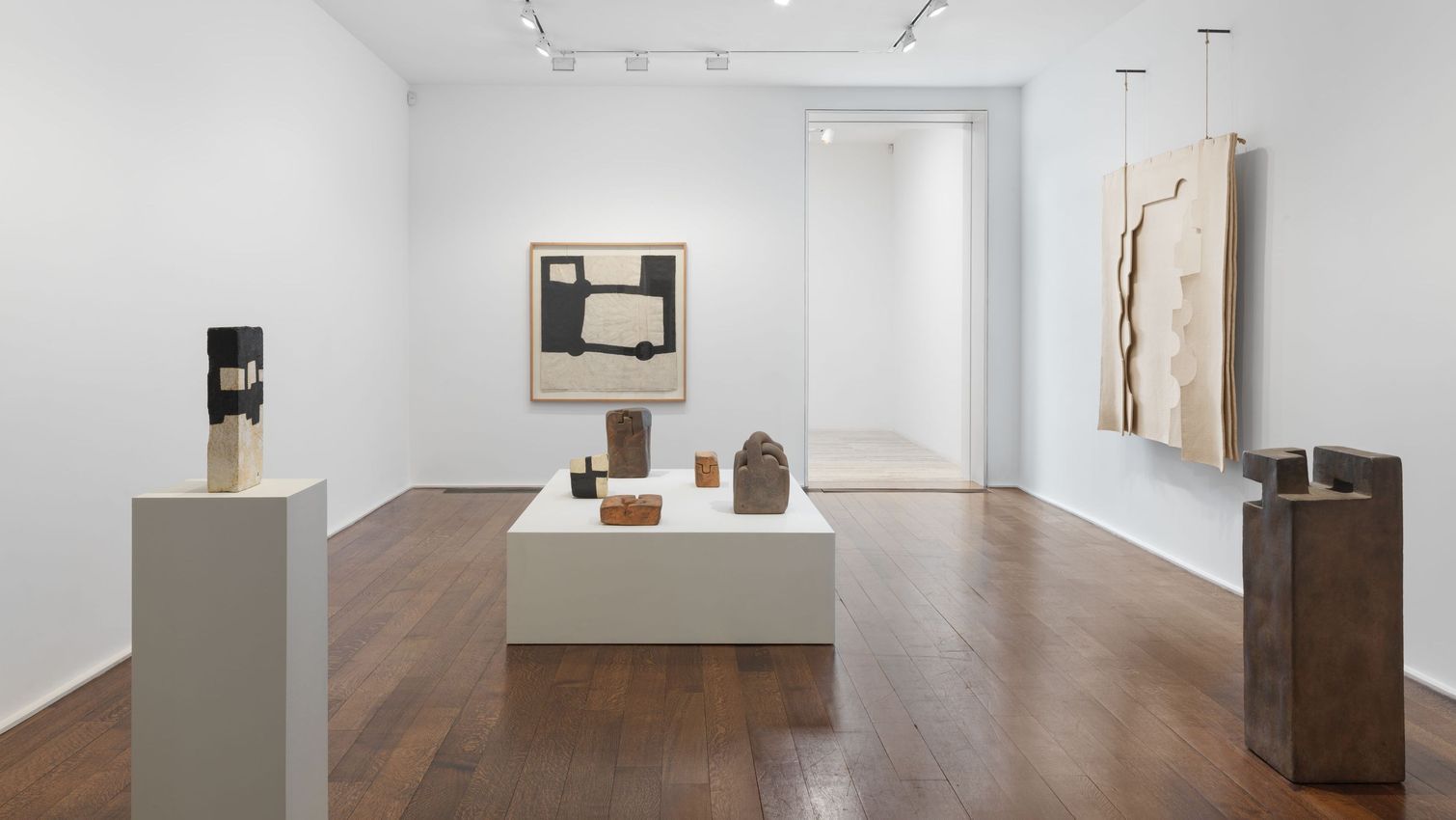
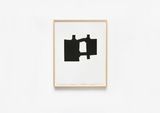
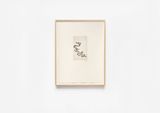
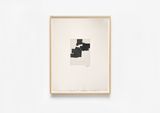
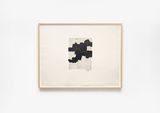
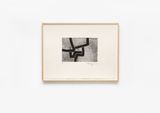
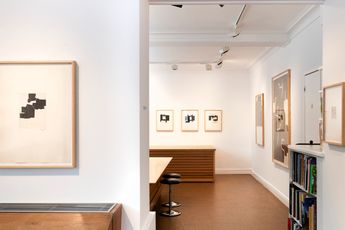
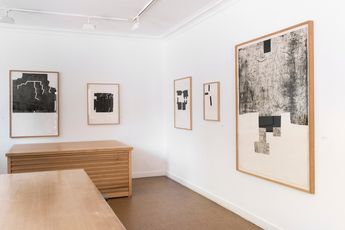
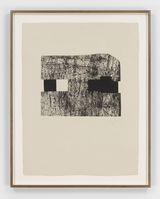
1924-2002, SpainEduardo Chillida is perhaps best known for his huge iron and stone sculptures, but the artist also made etchings, lithographs and woodcuts, all exploring form, line and space. His abstract sculptural pieces are installed around the world.
Early Years
Eduardo Chillida was born in San Sebastián in 1924. He played in goal for Real Sociedad before a knee injury curtailed his football career, so in 1943 he went to the University of Madrid to study architecture. However, in 1947 he quit the architecture degree and started drawing for the Fine Arts Circle in Madrid and attending José Martínez Repullés’ sculpture workshop, making his first pieces in clay. In 1948 he moved to Paris and started making sculptures from plaster. In 1949, his sculpture Forma was selected for the Salon de Mai. He married Pilar Belzunce in 1950 and they moved back to the Basque Country in 1951, the year he also made his first artwork in iron.
Eduardo Chillida: Artworks
Chillida’s early iron sculptures were made from materials he found at scrapyards and using rural tools such as axes and pitchforks. By 1959, having had works exhibited at the Solomon R Guggenheim Museum in New York City and documenta in Kassel, he began printing etchings.
Light plays a huge role in Chillida’s work. In 1963 he toured Greece with his wife, the French gallerist and philanthropist Jacques Dupin and his wife and the French art dealer and critic Louis Clayeux. Chillida became fascinated by the light—a contrast to the light in the Basque region—and this inspired him to explore the concepts of light and lightness, as well as working in alabaster. A notable examples is Lo Profundo es el Aire (How Profound is the Air) (1996), which diffuses light by allowing it to shine through the sculpture in “windows”.
- Chillida started the steel Piene del Viento (Comb of the Wind) series in 1952 and eventually made 23 pieces. Perhaps the most well-known is in the sea at La Concha Bay in San Sebastián, a piece Chillida gifted to the city in 1977. In a 1997 interview, he said: “The sea has been my master and I have learned much from it. When I was young... I watched the waves and thought, ‘Where do they come from?’”
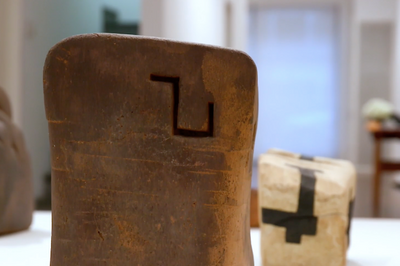
- Between 1954 and 1966, Chillida made Anvil of Dreams, a series of small sculptures exploring the idea of making work in a forge. Blocks of wood become “anvils” while steel forms are “hammers”.
Eduardo Chillida: Select Awards
- International Grand Prize for Sculpture, Venice Biennale (1958)
- Carnegie Prize for Sculpture (with Willem de Kooning), United States of America (1964)
- Wellington Sculpture Prize, Spain (1970)
- Europe Prize in Fine Arts (1983)
- Praemium Imperiale, Japan (1991)
- Lifetime Achievement Award, International Sculpture Centre, United States of America (1998)
- Medal of the Arts, Musée des Arts et des Traditions Populaires, France (2002)
- Medal of the Order of Constitutional Merit, Spain (2004)
Eduardo Chillida: Select Public Commissions
- Alrededor del vacío V (Around the Void V), World Bank, Washington DC (1969)
- Lugar de encuentros IV (Meeting Place IV), Bilbao (1973)
- Estela a Rodríguez Sahagún (Stele to Rodríguez Sahagún), Madrid, 1993
- Buscando la luz II (Searching for Light II), Pinakothek der Moderne, Munich (1997)
- Buscando la luz IV (Searching for Light IV), Quatar University (2001)
Eduardo Chillida: Select Exhibitions
Select Solo Exhibitions
- Eduardo Chillida. Chillida in Menorca, Hauser & Wirth, Menorca (2024)
- Memory, Mind, Matter. The Sculpture of Eduardo Chillida, The Meadows Museum, Dallas (2018) (and touring)
- Eduardo Chillida. From Iron to Light, Ordovas, London (2013)
- Chillida. Reflexión—Materia, Centro Fundación Unicaja de Cádiz (2009) (and touring)
- Chillida, Museum of Contemporary Art, Monterrey (2002) (and touring)
- Chillida 1948–1998, Museo Nacional Centro de Arte Reina Sofía, Madrid (1998)
- Eduardo Chillida, Fundacío Joan Miró, Barcelona (1986)
- Eduardo Chillida, Solomon R Guggenheim Museum, New York City (1980) (and touring)
- Eduardo Chillida, National Gallery of Art, Washington DC (1979)
- Eduardo Chillida, Galerie Buchholz, Munich (1973)
- Eduardo Chillida, Galerie Maeght, Paris (1968)
Select Group Exhibitions
- Chillida-Ortega Muñoz, Bilbao Fine Arts Museum (2024)
- Sections / Intersections. 25 Years of the Guggenheim Museum Bilbao Collection (2022)
- Summer Show, Royal Society of Sculptors, London (2018)
- Osas Plus in the Vasarely Museum, Museum of Fine Arts, Budapest (2012)
- Arte español, Galerie Rieder, Munich (2006)
- The Object of Art, Museum of Contemporary Spanish Art, Palma de Mallorca (1998)
- 44th Venice Biennale (1990)
- 43rd Venice Biennale (1988)
- documenta 6, Kassel (1977)
- Dix Ans d’Art Vivant, Maeght Foundation, Saint-Paul-de-Vence (1967)
Further Reading
- Official website Biography at the Solomon R Guggenheim Museum, New York City
- Obituary in The New York Times
Eduardo Chillida FAQs
Did Eduardo Chillida take part in the Venice Biennale?
Yes, in 1958 he exhibited 18 sculptures in the Spanish Pavilion. That year, he won the International Grand Prize for Sculpture (Gran Premio Internationale per la Scultura). He also took part in the 1988 and 1990 editions of the Biennale.
How is Eduardo Chillida connected to philosophy?
In his consideration of the relationship between humans and space, and how sculpture reveals the character of a space, Chillida shared intellectual ground with Martin Heidegger. In particular, Heidegger’s 1969 book The Art and the Space explores this idea—Chillida created seven litho-collages for the publication. For Chillida’s first solo exhibition at Galerie Maeght in Paris, where he showed 27 wrought iron sculptures, the philosopher Gaston Bachelard wrote an essay, The Cosmos of Fire.
What are Eduardo Chillida’s “Homages”?
During his career, Eduardo Chillida created works (more than 80 sculptures and 58 prints) honouring people he admired and respected. Artists for whom he created works included Joan Miró and Constantin Brancusi, while musicians he honoured included Johann Sebastián Bach and Antonio Vivaldi. Among the philosophers and poets for whom he created works were Martin Heidegger, Pablo Neruda and Gaston Bachelard.
How does the Basque region influence Eduardo Chillida’s work?
When Chillida moved back to the Basque Country in 1951, he used steel and wood for his sculptures, which represented Basque agricultural, architectural and industrial traditions. He also described the regional landscape of the area as having a “dark light”.
Ocula

Works at Galerie Lelong








Recently Exhibited


Works Elsewhere





Eduardo Chillida in Ocula Magazine







Explore and Follow Artists Shaping Contemporary Art
A respected voice in contemporary art discourse.
Focusing on ambitious storytelling and insightful art-world commentary. Ocula Magazine publishes in-depth interviews, critical essays and timely analysis on the artists, exhibitions and ideas driving the global art world.
Learn more about Ocula Magazine
Showcasing the best of the art world.
Ocula partners with galleries from around the world to highlight their artists, artworks and exhibitions. Gallery membership is by application and invitation, with each member vetted by an independent panel.
Learn more about Ocula Membership
Specialises in the sale of major artworks.
Led by a team with deep ties to the world’s leading auction houses, galleries and collectors. Ocula’s advisory team offers bespoke services to high-net-worth clients from around the world who are looking to acquire the best of contemporary and modern art.
Learn more about our team and services