





EMMET GOWIN
b. 1941, United StatesEmmet Gowin is a contemporary American photographer known for black-and-white images that connect domestic intimacy with large-scale environmental change. He is best known for his photographs of his wife, Edith Morris, and her family, as well as aerial landscapes of sites transformed by industry, conflict, and natural disaster.
Gowin’s work has been shown in institutions such as the Museum of Modern Art in New York, the Philadelphia Museum of Art, and the Princeton University Art Museum, and is represented by galleries including Pace Gallery. Based in Newtown, Pennsylvania, he has influenced generations of photographers through his decades-long teaching at Princeton University. His work is included in the permanent collections of many major institutions, including The Museum of Modern Art in New York, the J. Paul Getty Museum in Los Angeles, and the Art Institute of Chicago.
Early life and education of Emmet Gowin
Emmet Gowin was born in 1941 in Danville, Virginia, and grew up in the American South, an environment that later shaped his sensitivity to family and place. After a period studying business administration, he shifted towards art, enrolling at the Richmond Professional Institute (now Virginia Commonwealth University), where he studied drawing, painting, graphic design, and art history, earning a BFA in 1965.
In 1966, Gowin entered the graduate photography programme at the Rhode Island School of Design, studying under Harry Callahan, whose emphasis on personal subject matter and formal clarity had a lasting impact, and he also formed a key friendship with photographer Frederick Sommer. He received his MFA from RISD in 1967 and, within a few years, began exhibiting widely, with early solo shows at the Dayton Art Institute and, in 1971, at the Museum of Modern Art in New York.
Gowin went on to teach photography at Princeton University for more than 35 years, becoming a central figure in the school’s programme and shaping the development of younger photographers. His academic role ran alongside an active international career, with solo exhibitions across the United States and Europe from the 1970s onwards.
Emmet Gowin artworks and style
Emmet Gowin’s artworks and style centre on how personal experience, landscape, and ecological systems can be made visible through photography. His practice moves from intimate family portraits to aerial views of altered terrain and close studies of moths and tropical ecosystems, maintaining a consistent concern with the poetic and ethical dimensions of seeing.
Early works and developments, 1960s–1970s
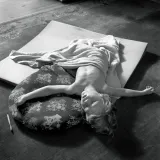
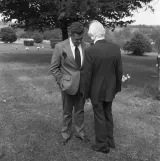
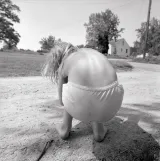
Gowin first gained recognition in the late 1960s and 1970s for small, carefully printed black-and-white photographs of his wife, Edith, and her extended family in and around Danville, Virginia. Made in modest interiors and backyards, these images treat everyday life as a field of allegory and spiritual reflection, and exhibitions at the George Eastman House in 1970 and the Museum of Modern Art in 1971 established him as a leading figure of intimate American photography.
During this period, he developed printing processes and compositions that emphasise tonal richness and often circular or centrally focused formats, gathering the work in influential early monographs. These books demonstrated how photography could sustain deeply personal yet broadly resonant narratives and helped secure his place within the history of contemporary photographic practice.
Mature practice and key series, 1980s–2000s
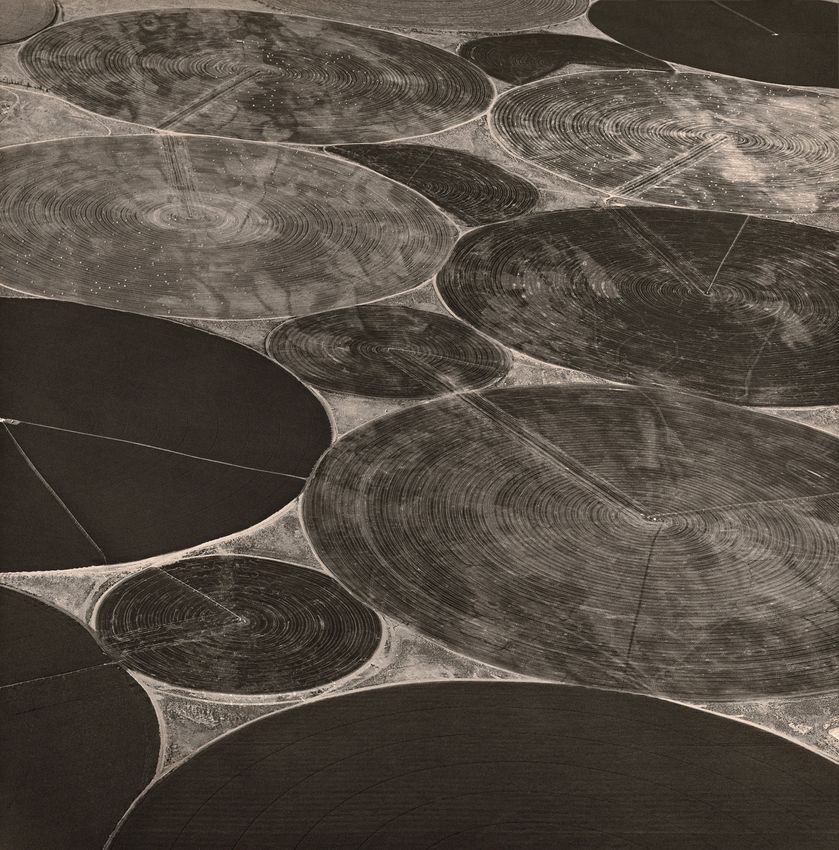
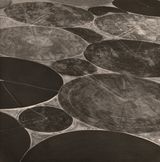
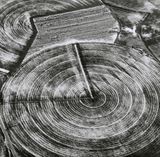
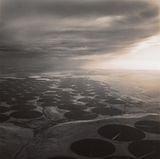
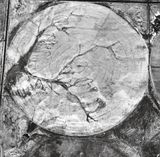
From the late 1970s and especially the 1980s, Gowin turned to landscape, making aerial photographs of sites in the American West and beyond marked by military testing, industrial use, and large-scale agriculture. Photographing from small aircraft, he depicted places such as the Nevada nuclear test site, the Hanford Nuclear Reservation, Mount St. Helens, and pivot-irrigated fields as images that read both as abstract patterns and as documents of environmental impact.__
These works balance formal beauty with unsettling subject matter: circular fields, toxic ponds, and cratered test grounds form intricate designs while registering contamination, extraction, and ecological vulnerability. Exhibitions including a travelling retrospective from the Philadelphia Museum of Art in the early 1990s and the “Changing the Earth” project consolidated his reputation for redefining landscape photography in relation to environmental change.
In tandem, Gowin continued to refine his printing, producing luminous silver gelatin prints that heighten the tension between abstraction and documentation. His mid- and late-career work sustains an interest in how photography can register the scale of human intervention in the land while inviting slow, meditative viewing.
Recent projects and ongoing themes, 2000s–
From the 2000s, Gowin extended his focus to biodiversity and scientific observation, collaborating with entomologists to photograph moths and other insects, particularly in Central and South American tropical ecosystems. Made largely from live specimens drawn to light traps and set against dark grounds, these images reveal intricate patterns and delicate structures that speak to evolutionary complexity and the fragility of species under pressure.
Awards and honours of Emmet Gowin
- Behrman Award for Distinguished Achievement in the Humanities, Princeton University, 2006****
- President’s Award for Distinguished Teaching, Princeton University, 1997**.**
- Pew Fellowship in the Arts, Philadelphia, 1993**.**
- Two National Endowment for the Arts Fellowships, United States, 1977 and 1979**.**
- Guggenheim Fellowship, United States, 1974**.**
**
Exhibitions of Emmet Gowin**
Emmet Gowin has exhibited widely in the United States and internationally, with major museum retrospectives and important gallery presentations across his career. His exhibitions trace the arc from intimate family photography to globally recognised landscape and environmental work.
Select solo exhibitions
- Emmet Gowin, Museum of Modern Art, New York, 1971.
- ****Emmet Gowin, Corcoran Gallery of Art, Washington, D.C., 1983.
- ****Mid-career retrospective organised by the Philadelphia Museum of Art, touring multiple venues, 1990–1993.
- ********Emmet Gowin: Changing the Earth, Aerial Photographs, Michener Art Museum, Doylestown, Pennsylvania, 2004.
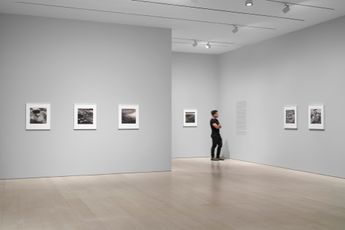
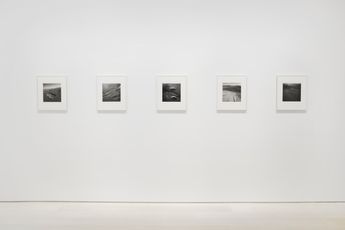
- Emmet Gowin: Baldwin Street: Photographs 1966–1994, Pace Gallery, New York, 12 March–25 April 2026.
Emmet Gowin FAQs
Who is Emmet Gowin?
Emmet Gowin is an American photographer born in 1941 in Danville, Virginia, known for intimate family portraits of his wife Edith and her relatives, as well as aerial landscapes and ecological studies made over six decades. Gowin studied at Richmond Professional Institute and the Rhode Island School of Design, taught for more than 35 years at Princeton University, and is widely recognised for connecting personal, spiritual, and environmental themes in contemporary photography.
What is Emmet Gowin best known for?
Emmet Gowin is best known for his early black-and-white photographs of his wife, Edith, and her extended family in Virginia, and for later aerial photographs of landscapes transformed by industry, war, and natural disasters. These two strands—domestic intimacy and environmentally attuned landscape work—are linked by a consistent concern with how photography can reveal the emotional and ethical dimensions of ordinary lives and altered terrains.
What type of art does Emmet Gowin make?
Emmet Gowin makes primarily black-and-white photographic work, ranging from small, carefully printed family portraits to large-scale aerial images and detailed studies of moths and ecosystems. His art combines formal precision with attention to the effects of human activity and the richness of natural forms, situating him within both the history of personal documentary photography and environmentally engaged landscape practice.
What themes does Emmet Gowin explore in his work?
Emmet Gowin’s work explores themes of family, memory, spirituality, environmental transformation, and biodiversity, often moving between the intimate scale of domestic life and the vastness of altered landscapes. In his aerial and ecological projects, he addresses the visual consequences of nuclear testing, industrial contamination, agriculture, and species vulnerability, while his moth photographs emphasise the complexity and fragility of non-human life.
Where can I see work by Emmet Gowin?
Work by Emmet Gowin can be seen in major public collections including the Museum of Modern Art in New York, the Philadelphia Museum of Art, the Los Angeles County Museum of Art, and the Princeton University Art Museum. His photographs are also held by institutions such as Fundación MAPFRE and the Michener Art Museum, and have been exhibited and sold through galleries including Pace Gallery and Jackson Fine Art.
Ocula | 2026




























Explore and Follow Artists Shaping Contemporary Art
A respected voice in contemporary art discourse.
Focusing on ambitious storytelling and insightful art-world commentary. Ocula Magazine publishes in-depth interviews, critical essays and timely analysis on the artists, exhibitions and ideas driving the global art world.
Learn more about Ocula Magazine
Showcasing the best of the art world.
Ocula partners with galleries from around the world to highlight their artists, artworks and exhibitions. Gallery membership is by application and invitation, with each member vetted by an independent panel.
Learn more about Ocula Membership
Specialises in the sale of major artworks.
Led by a team with deep ties to the world’s leading auction houses, galleries and collectors. Ocula’s advisory team offers bespoke services to high-net-worth clients from around the world who are looking to acquire the best of contemporary and modern art.
Learn more about our team and services