






LIONEL WENDT
1900-1944, Sri LankaLionel Wendt was a pioneering modern photographer, writer, and advocate for arts and culture in Sri Lanka. His experimental approach to evolving analogue technologies can be observed in his landscapes, portraits, still lifes, and abstract compositions.
Early Years
Wendt was born in Colombo in Sri Lanka, known then as Ceylon, and hailed from the Burgher community, a mixed race, prominent elite minority descended from European men who settled in Ceylon. He studied law at the Honourable Society of the Inner Temple in London and trained as a concert pianist at the Royal Academy of Music from 1919 to 1924. Wendt formally began exploring photography in the 1930s upon returning to Sri Lanka, where he co-founded the Photographic Society of Ceylon.
Wendt was a founding member of the 43 Group, a collective of artists who shared a conviction for the development of a modernist Sri Lankan aesthetic that departed from popular academic and Victorian styles of the period. Though much of his work was lost or destroyed, Wendt’s practice, as well as his advocacy for Sri Lankan arts and culture, gained increasing recognition after his death.
Lionel Wendt Artworks
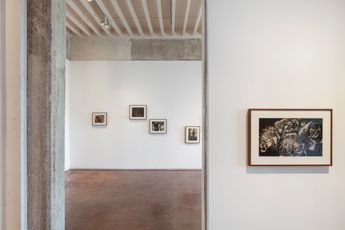
One of Asia’s formative modern photographers, Wendt developed a distinctive style that drew from Surrealism yet was grounded in Sri Lankan identity. His silver gelatin prints were composed through a range of photographic techniques including photomontage, photogram, solarisation, and double printing.
Wendt’s Portraits
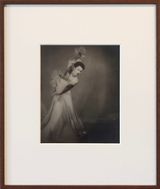
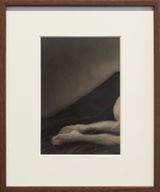
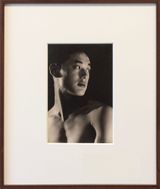
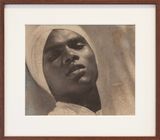
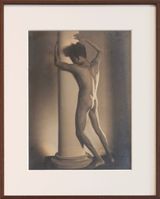
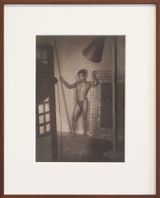
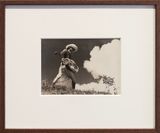
Wendt’s portraits ranged from the documentary – with images such as Untitled (Singer in Sunshine) (c. 1935) capturing cultural figures in early 20th century Ceylon – to the surreal or erotic, as seen in Right side of nude man (c. 1935). He was influenced by the photographs of surrealist artists such as Man Ray, whose images he shared with peers in Sri Lanka.
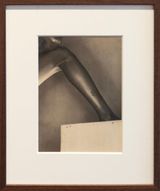
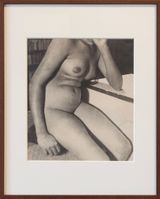
Wendt would often frame the figure through various degrees of cropping to explore the body in relation to form, performance, or sexuality. Untitled (Nude Male Torso) (c. 1930–44) presents a sensual close-up of a nude seated figure from the head down, highlighting the tone and form of the twisted body.
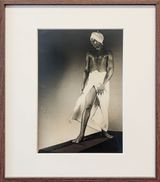
Wendt’s experimental approach to evolving analogue methods was reflected in the way he would often combine multiple techniques in a single image. Untitled (Portrait and Profile with Turban) (c. 1930) was produced through the combination of solarisation and montage techniques to present a layered double close-up portrait of the same male model in a single photograph, each rendition showing a slightly different profile view. Similarly, Opiate dreams/Nudes (c. 1936) shows a standing nude woman gazing upward, with a translucent close-up of her upper body in the same position superimposed on the full-length view to surreal effect.
Still Lifes and Other Images
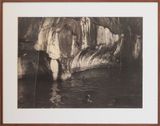
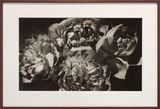
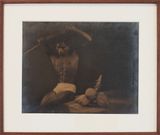
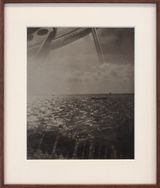
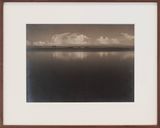
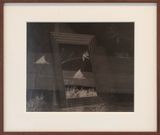
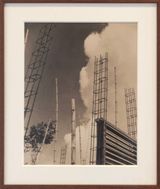
In addition to portraits, Wendt composed photographs of still lifes, landscapes, and abstract imagery which continued his experimentation with different techniques and framing. Untitled (Frame on the Seaside) (c. 1935) demonstrates a collage-like approach to image making, where a picture frame is layered over a seaside landscape, while Untitled (Head Among Twigs) (c. 1942), an eerie shot of a model head partially buried in a mass of twigs, suggests a consideration of symbolism or narrative.
Song of Ceylon
Wendt played a key role in the development of the experimental documentary film Song of Ceylon (1934), from British director Basil Wright. Wendt provided the voiceover narrative for the film, which chronicled the cultural life and histories of Ceylon and Sinhalese people.
Exhibitions
Since his death, Lionel Wendt’s works have been exhibited in solo and group shows around the world.
His work has been shown internationally, including, most recently at Wrightwood 659, Chicago (2025); Lionel Wendt Art Centre, Colombo (2024); Tate Modern, London (2024); Al Mureijah Art Spaces, Sharjah (2023); Michael Werner, London (2022); Deichtorhallen, Hamburg (2022); Tate Modern, London (2022); The Metropolitan Museum of Art, New York (2021); Tate Britain, London (2020); MASP, São Paulo (2017); Huis Marseille, Amsterdam (2017); Documenta 14, Athens (2017); Dhaka Art Summit, Dhaka (2016); 10th Gwangju Biennale, Gwangju (2014).
Collections
Wendt’s work is included in numerous important collections, including Qatar Museums; Kiran Nadar Museum of Art, New Delhi; Metropolitan Museum of Art, New York; Minneapolis Institute of Art, Minneapolis; National Gallery of Canada, Ottowa; Sharjah Art Foundation, Sharjah; Tate Modern, London; The National Gallery of Australia, Canberra; and The Rijksmuseum, Amsterdam.
Legacy
The Lionel Wendt Centre for the Arts was opened in the 1950s in the artist’s hometown of Colombo in recognition of his legacy. Their website can be found here.
Misong Kim | Ocula | 2022

View Lionel Wendt's Artworks




















Explore Lionel Wendt's Exhibitions





Explore and Follow Artists Shaping Contemporary Art
A respected voice in contemporary art discourse.
Focusing on ambitious storytelling and insightful art-world commentary. Ocula Magazine publishes in-depth interviews, critical essays and timely analysis on the artists, exhibitions and ideas driving the global art world.
Learn more about Ocula Magazine
Showcasing the best of the art world.
Ocula partners with galleries from around the world to highlight their artists, artworks and exhibitions. Gallery membership is by application and invitation, with each member vetted by an independent panel.
Learn more about Ocula Membership
Specialises in the sale of major artworks.
Led by a team with deep ties to the world’s leading auction houses, galleries and collectors. Ocula’s advisory team offers bespoke services to high-net-worth clients from around the world who are looking to acquire the best of contemporary and modern art.
Learn more about our team and services