






NICOLAS PARTY
b. 1980, SwitzerlandNicolas Party is a Swiss-born contemporary artist celebrated for his vividly coloured pastel paintings, surreal murals, sculptures, and installations that merge classical art history with playful, dreamlike imagery. Widely recognised for reinvigorating figurative painting, Party has exhibited internationally at major institutions and art galleries, captivating audiences with his distinctive, immersive worlds.
Early Years
Nicolas Party was born in Lausanne, Switzerland, in 1980. He studied at the Lausanne School of Art before completing his MFA at the Glasgow School of Art in Scotland in 2009. As a teenager, Party became involved in graffiti, spending time tagging trains and walls, an early experience that nurtured his interest in painting, surface, and working on a large scale. This formative engagement with public art continues to inform his practice today. He currently lives and works between New York and Brussels.
Artworks
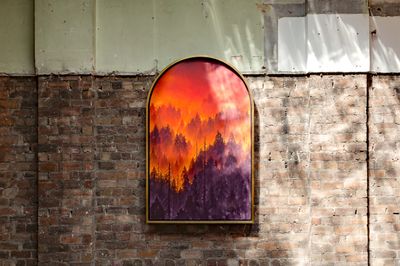
Nicolas Party’s artworks are known for their vibrant palette, meticulous pastel technique, and stylised reinterpretations of classical genres such as portraiture, still life, and landscape. His practice spans painting, sculpture, installation, and mural, often transforming exhibition spaces into total environments.
Reinventing the Classical (2010s–present)
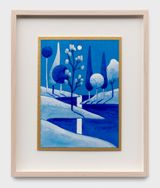
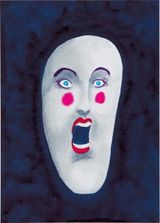
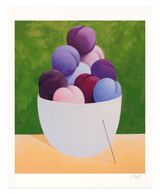
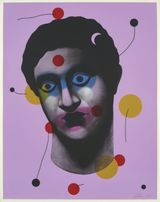
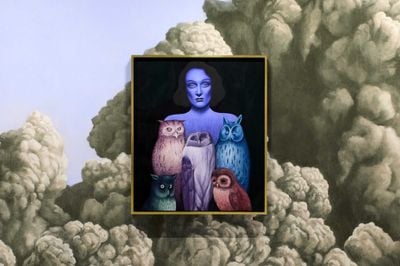
Party’s portraits, still lifes, and landscapes reimagine familiar art-historical subjects with a surreal, contemporary edge. Using soft pastel, a medium traditionally linked to 18th-century portraiture, Party creates velvety surfaces and saturated colours that heighten the artificiality of his imagery. Works like Portrait (2015) and Landscape (2018) feature simplified, almost mask-like faces and stylised natural forms, blending the decorative with the uncanny.
Site-Specific Murals and Immersive Installations
Nicolas Party is acclaimed for his transformative site-specific murals and immersive installations, which turn exhibition spaces into vibrant, otherworldly environments. Drawing on his early graffiti background, Party approaches architecture as an active canvas, enveloping walls, ceilings, and floors in bold, stylised imagery.
Notable examples include Pastel (2019) at the FLAG Art Foundation, New York, where painted walls echoed his pastel portraits, amplifying their intensity; Draw the Curtain (2021) at the Hirshhorn Museum, Washington, D.C., where Party wrapped the building’s exterior with a panoramic mural of masked faces peering through curtains; and Sottobosco (2021) at MASI Lugano, Switzerland, where forest-themed murals transformed the galleries into an enchanted woodland.
Party frequently integrates painted sculptures—trees, heads, columns—into these environments, blurring the line between two and three dimensions. His immersive approach challenges traditional art display, creating spaces where viewers are surrounded by colour, form, and atmosphere.
What are Nicolas Party’s influences?
Nicolas Party’s influences span art history, nature, and personal experience. Growing up in Lausanne, Switzerland, surrounded by the dramatic landscapes of the Alps and Lake Geneva, Party developed an early fascination with nature, colour, and form — elements that continue to shape his work today.
He draws heavily from classical painting traditions, particularly the Old Masters, including Rosalba Carriera, Jean-Baptiste-Siméon Chardin, and Ferdinand Hodler. Their use of pastel, composition, and atmosphere has profoundly influenced Party’s approach. Modern painters such as Giorgio Morandi, Félix Vallotton, and René Magritte have also left their mark on his style, particularly in his simplification of form, use of bold outlines, and incorporation of surreal and ambiguous elements.
Party’s teenage years spent engaged in graffiti and tagging trains in Switzerland also shaped his artistic path, giving him a strong connection to surface, scale, and public space. This early experience is reflected in his later use of murals and site-specific installations that transform entire architectural environments.
What materials does Nicolas Party work in?
Nicolas Party is best known for his masterful use of soft pastel, a medium historically associated with 18th-century portraiture, which he applies to canvas, panel, and wall surfaces. His pastel works are notable for their intense colour saturation and velvety matte finish, which he achieves through meticulous layering and blending.
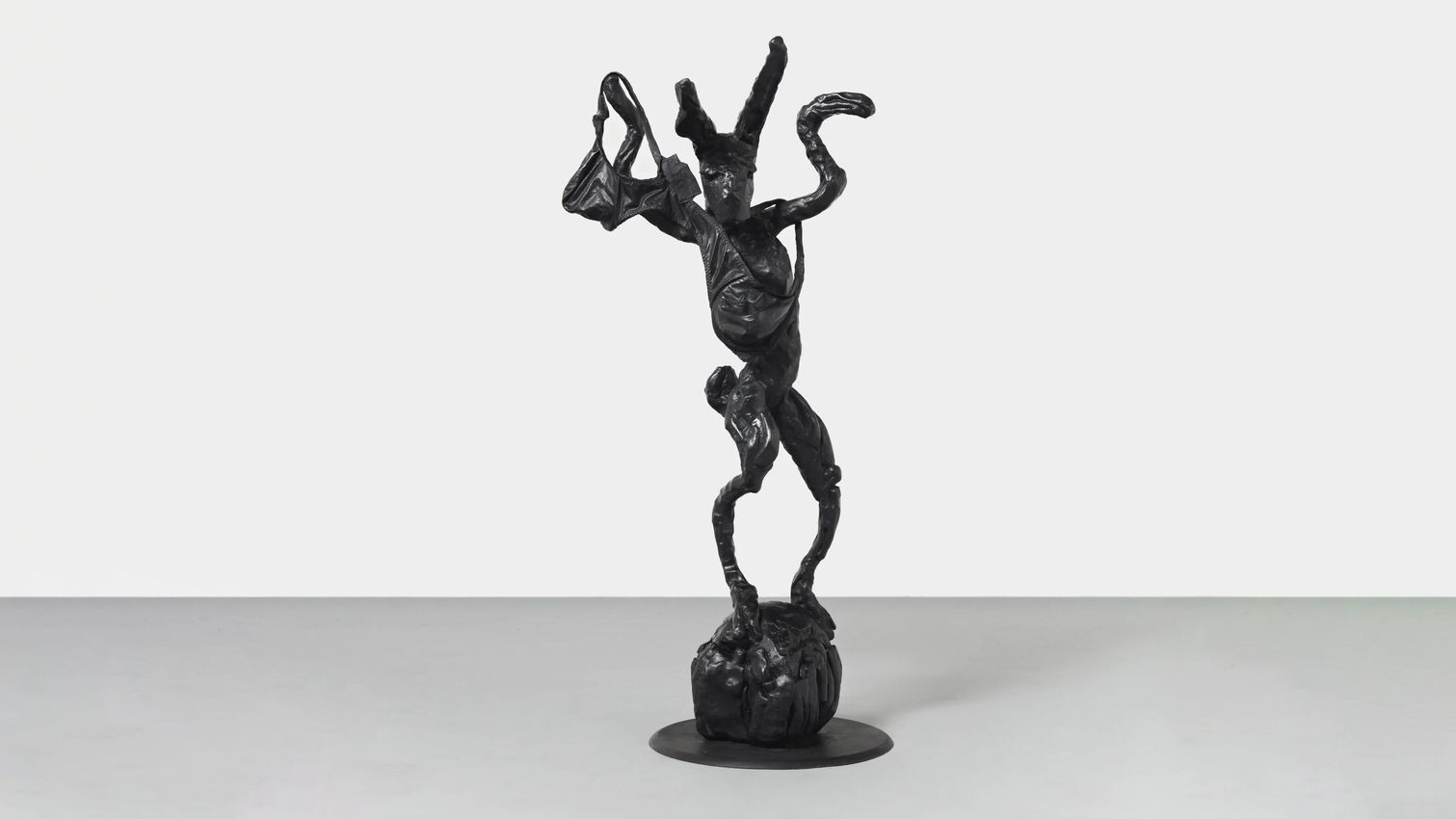
In addition to pastel, Party frequently creates large-scale frescoes and site-specific wall murals, where he paints directly onto architectural surfaces, transforming exhibition spaces into immersive environments. His practice also includes oil on canvas, where he explores similar themes of portraiture, landscape, and still life with a different material sensibility. Sculpture is another key component of Party’s work. He produces painted sculptures in materials such as plaster, bronze, wood, and ceramic, often shaped into trees, heads, or columns.
Exhibitions
Nicolas Party has been the subject of both solo exhibitions and group exhibitions at important institutions.
Solo Exhibitions
- Dust, Hoam Museum of Art, Yongin, South Korea (2024)
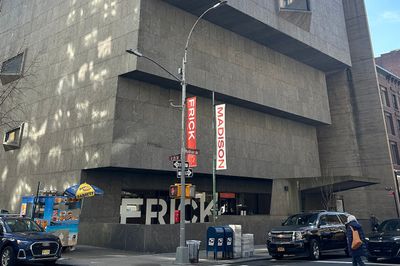
- Nicolas Party and Rosalba Carriera, The Frick Collection, New York (2023)
- Nicolas Party: Triptych, Poldi Pezzoli Museum, Milan (2022)
- Boilly, Le Consortium, Dijon (2021)
- Rovine, MASI Lugano, Lugano, Switzerland (2021)
- Arches, M WOODS, Beijing (2018)
- Dinner for 24 Sheep, Gallery MET, New York (2017)
- Hammer Projects: Nicolas Party, Hammer Museum, Los Angeles (2016)
- Pathway, Dallas Museum of Art, Dallas (2016)
Group Exhibitions
- A Rose Is, FLAG Art Foundation, New York (2025)
- Apropos Hodler, Kunsthaus Zürich (2024)
- Shanshui: Echoes and Signals, M+ Museum, Kowloon, Hong Kong (2024)
- Two by Two, Together, Montreal Museum of Fine Arts, Montreal (2024)
- Forbidden Territories: 100 Years of Surreal Landscapes, Hepworth Wakefield, Wakefield, U.K. (2024)
- X Pink 101, X Museum, Beijing (2023)
- On the Razor’s Edge, Museo Jumex, Mexico City (2020)
- La Vie simple - Simplement la vie, Fondation Vincent Van Gogh Arles, Arles (2017)
- These Strangers... Painting and People, S.M.A.K., Ghent (2016)
Nicolas Party’s Instagram can be found here.
Critical Reception
The artist’s practice has been covered in leading magazines, including Art Basel, Artnet, and Ocula.
Nicolas Party FAQs
Where can I see Nicolas Party’s artworks in person?
Nicolas Party’s artworks are regularly exhibited at leading contemporary art galleries and museums worldwide. Notable past institutional exhibitions include Sunrise, Sunset at the Hirshhorn Museum and Sculpture Garden in Washington, D.C., and Magritte parti at the Magritte Museum in Brussels. To view current and upcoming exhibitions, visit Ocula’s Nicolas Party page, which lists both solo and group shows, or check the artist’s Instagram for updates on new installations and exhibitions.
What artistic mediums and techniques does Nicolas Party use in his contemporary art practice?
Nicolas Party is best known for his vibrant pastel paintings, large-scale murals, and sculptural installations. He often employs traditional genres—such as portraits, landscapes, and still lifes—but reinterprets them using a playful tone and layered approach. Party also explores the possibilities of paint across two- and three-dimensional surfaces, drawing inspiration from his background in 3D animation and digital fabrication processes.
How does Nicolas Party’s background influence his artworks?
Party’s early experiences as a street artist in Switzerland, where his murals were often painted over, fostered his interest in the ephemeral nature of art. This sense of temporality is reflected in his murals, which are typically erased after exhibitions, and in his painted rocks, which gradually wear away over time. His education at the Lausanne School of Art (BA, 2004) and the Glasgow School of Art (MA, 2009) also played a significant role in shaping his collaborative and experimental approach to contemporary art.
What are some of Nicolas Party’s most significant exhibitions or public commissions?
Among his most important solo exhibitions are Sunrise, Sunset at the Hirshhorn Museum and Sculpture Garden (2017) and Magritte parti at the Magritte Museum in Brussels (2018). Party’s installations, such as the checkerboard mural in Three Cats at The Modern Institute, Glasgow, and public murals like Landscape (2013), have also garnered international attention for their innovative use of space and materiality.
What makes Nicolas Party’s contemporary artworks unique within the art world?
Nicolas Party distinguishes himself through his use of bold colours, playful compositions, and a refusal to strictly represent reality. His works often challenge the conventions of traditional portraiture and landscape painting, creating images that are recognisable by genre but intentionally ambiguous or depersonalised. Party’s practice is also marked by a deep engagement with the materiality of paint and the environments his artworks inhabit, whether on canvas, wall, or sculptural form.
Are there any random and interesting facts about Nicolas Party?
An interesting fact about Nicolas Party is his early connection to the Belgian surrealist René Magritte. Party grew up with a Magritte poster in his kitchen, which he credits as an early influence on his fascination with mystery and image-making. He has said, ‘He’s a remarkable image-maker and a master of mystery. He will never tell you what he means’—a sensibility that resonates throughout Party’s own enigmatic works.
How do you pronounce Nicolas Party’s name?
Nicolas Party is pronounced: “Nee-co-lah Par-tee.” The emphasis is on the first syllable of each name, following the French pronunciation of ‘Nicolas’ and the English pronunciation of ‘Party’.
Ocula | 2025


Works at Baldwin Contemporary








Works Elsewhere






Nicolas Party in Ocula Magazine







Explore and Follow Artists Shaping Contemporary Art
A respected voice in contemporary art discourse.
Focusing on ambitious storytelling and insightful art-world commentary. Ocula Magazine publishes in-depth interviews, critical essays and timely analysis on the artists, exhibitions and ideas driving the global art world.
Learn more about Ocula Magazine
Showcasing the best of the art world.
Ocula partners with galleries from around the world to highlight their artists, artworks and exhibitions. Gallery membership is by application and invitation, with each member vetted by an independent panel.
Learn more about Ocula Membership
Specialises in the sale of major artworks.
Led by a team with deep ties to the world’s leading auction houses, galleries and collectors. Ocula’s advisory team offers bespoke services to high-net-worth clients from around the world who are looking to acquire the best of contemporary and modern art.
Learn more about our team and services