





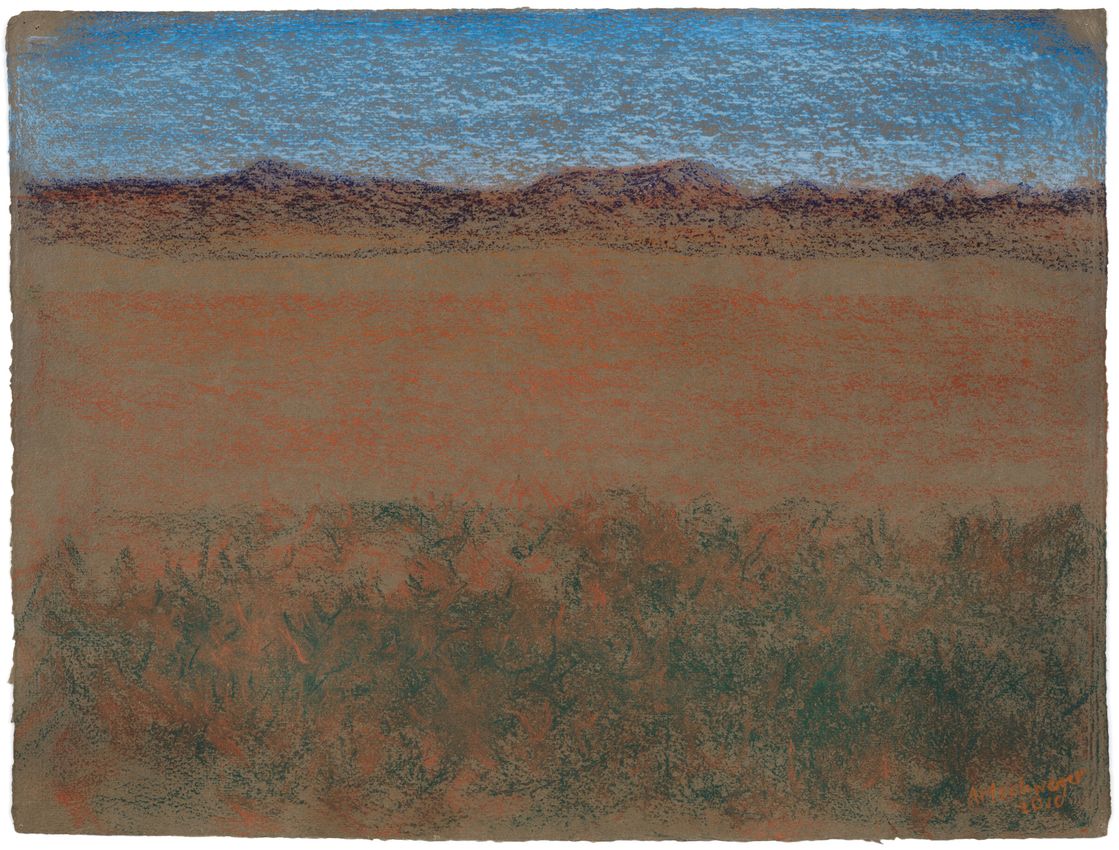
RICHARD ARTSCHWAGER
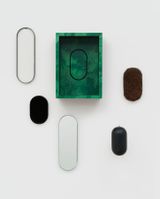
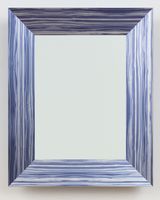
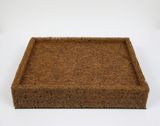
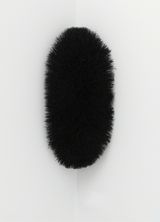
1923-2013, United StatesArtschwager has been making art for over four decades but was originally trained as a microbiologist. After serving in the army during the Second World War, he studied with the Purist painter Amédée Ozenfant in Paris. In the 1950s, he made furniture in Formica. This began as a commercial activity and evolved into a sculptural practice during the 1960s. At the same time, he also started working with found photographs, which he enlarged and used as the basis for a series of black and white paintings. Made on Celotex (a fibreboard with a pronounced texture) and placed in distinctive metallic frames, these works explored themes connected to modern buildings, interiors, domesticity, furniture and working life. They were followed, in the 1970s, with the so-called ‘quotation pieces’: two and three-dimensional representations of punctuation marks which, by analogy with their written counterparts, frame ‘space’ and give it a purpose. In the 1990s, Artschwager made a series of sculptures in the form of shipping crates that further blur the distinctions between functional objects and art. Artschwager is well known for playing with the materiality of the artwork. His use of acrylic, whitewash and pastels on Celotex, for example, creates a three-dimensional effect that makes the paintings almost tactile. Or as Artschwager puts it: “Sculpture is for the touch, painting is for the eye. I wanted to make a sculpture for the eye and a painting for the touch.”
A comprehensive travelling retrospective Richard Artschwager! was organised by the Whitney Museum of American Art, New York from 2012–2014. His work was included in Documenta, Kassel, in 1968, 1972, 1982, 1987 and 1992. Richard Artschwager first exhibited at Xavier Hufkens in 1995.
Richard Artschwager was born in 1923, Washington, DC, USA. He died in Albany, New York, in 2013.
Courtesy Xavier Hufkens

Works Elsewhere












Explore and Follow Artists Shaping Contemporary Art
A respected voice in contemporary art discourse.
Focusing on ambitious storytelling and insightful art-world commentary. Ocula Magazine publishes in-depth interviews, critical essays and timely analysis on the artists, exhibitions and ideas driving the global art world.
Learn more about Ocula Magazine
Showcasing the best of the art world.
Ocula partners with galleries from around the world to highlight their artists, artworks and exhibitions. Gallery membership is by application and invitation, with each member vetted by an independent panel.
Learn more about Ocula Membership
Specialises in the sale of major artworks.
Led by a team with deep ties to the world’s leading auction houses, galleries and collectors. Ocula’s advisory team offers bespoke services to high-net-worth clients from around the world who are looking to acquire the best of contemporary and modern art.
Learn more about our team and services