





Yan Pei-Ming
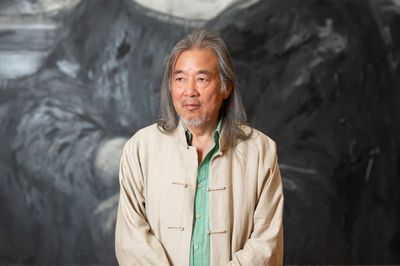
b. 1960, ChinaFamed for his monumental monochrome portraits and visceral engagement with history, artist Yan Pei-Ming is known internationally for his emotionally charged works that straddle the personal and the political.
Early Years
Born during the Cultural Revolution in Shanghai, Yan Pei-Ming was introduced to painting through propaganda art, copying images of Mao Zedong in a local youth studio. In 1980, he emigrated to France and later studied at the École nationale supérieure des Beaux-Arts in Dijon, where he continues to live and work.
Yan’s experience of cultural displacement and political upheaval remains central to his practice. From his early struggles as an immigrant to his later acclaim, his work has always interrogated systems of power, memory, and mortality through the expressive force of contemporary painting.
Artworks
Yan Pei-Ming is best known for his vast, gestural portraits rendered in a dramatic grisaille palette—typically black, white and grey—that collapse the boundary between figuration and abstraction in contemporary art.
Mao to the Self
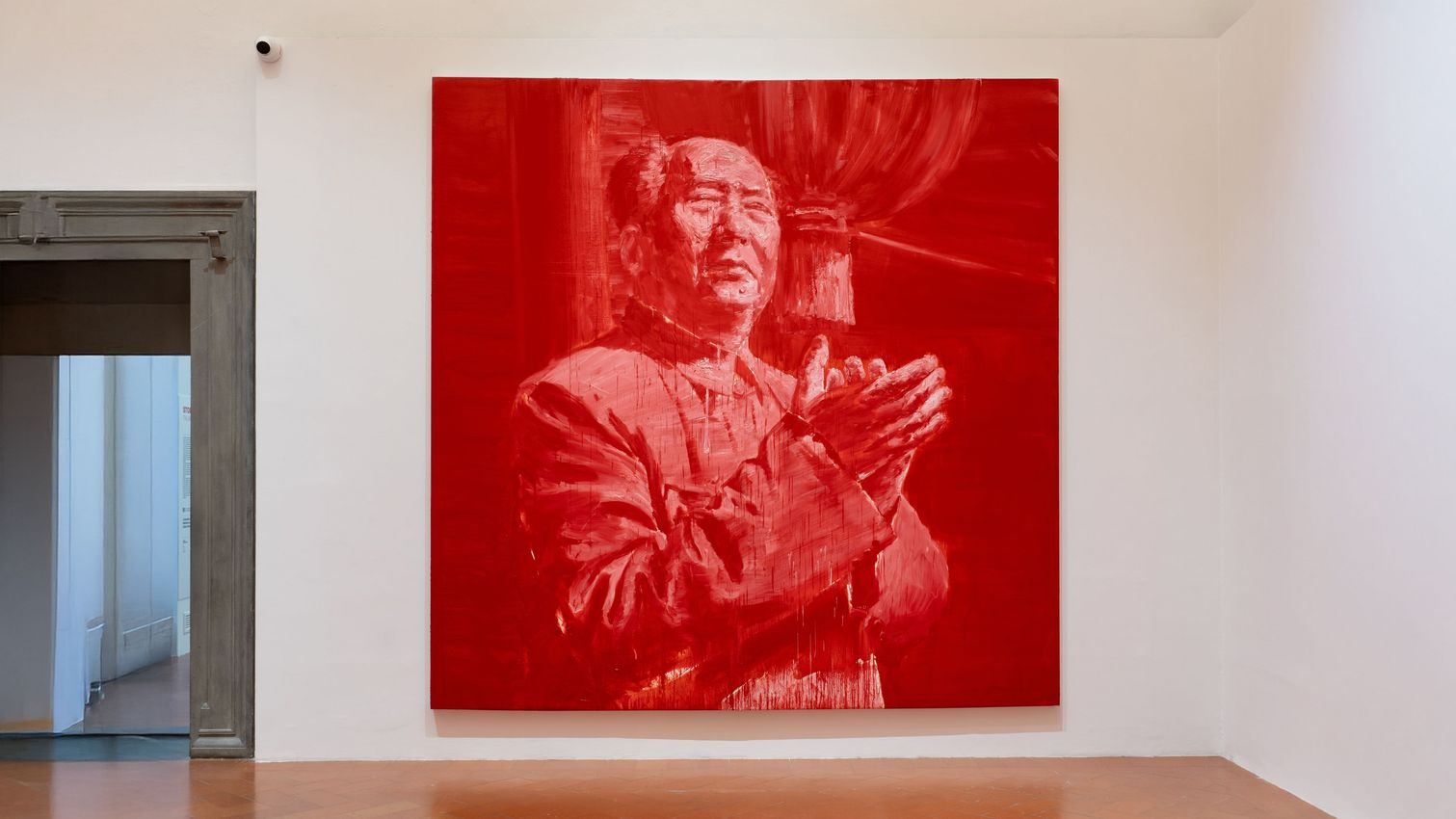
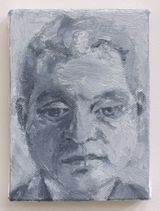
Yan Pei-Ming’s early notoriety came through colossal portraits of Mao Zedong, painted in sweeping, raw strokes that both echoed and subverted the state-sanctioned propaganda of his youth. These works appeared less as acts of homage than meditations on the power and danger of idealisation. At the same time, Yan began producing self-portraits and paintings of his father, placing his own image in parallel to political archetypes. This doubling of public and private iconography became a central theme in his work, inviting questions about subjectivity, legacy, and the limits of representation. The portraits underscore how individuals are shaped—visibly and invisibly—by power structures.
Historical Icons
In subsequent years, Yan expanded his portraiture to include figures such as Pope John Paul II, Bruce Lee, and Osama bin Laden. While wildly divergent in ideology and fame, these subjects share a cultural weight that transcends national boundaries. Yan treats each with the same rough, energetic handling, flattening distinctions between hero and villain, sacred and profane. His grey-on-grey aesthetic evokes the patina of newsprint and surveillance footage, hinting at how mass media filters and distorts memory. These paintings do not offer moral judgment but reflect instead on how the modern subject is mythologised, weaponised, or forgotten—through the mechanics of visibility.
Landscapes and War
While best known for portraiture, Yan Pei—Ming has more recently applied his powerful, gestural technique to landscapes, battle scenes, and reflections on mortality. Works such as Massacre (2008), created in response to global acts of violence, convey devastation without specificity, evoking universal suffering. His cemetery paintings and meditative seascapes use thick, swirling brushwork to suggest the inevitability of death and the passage of time. By forgoing colour, Yan removes sentimentality from these scenes, encouraging viewers to confront loss on an existential level. These paintings extend his project of bearing witness—not to individual lives alone, but to collective histories of trauma.
Exhibitions
Yan Pei-Ming has been the subject of both solo exhibitions and group exhibitions at important institutions. A selection of important exhibitions are provided below.
Solo Exhibitions
- Yan Pei-Ming: A Burial in Shanghai, Museum of Contemporary Art San Diego (2025)
- Yan Pei-Ming: Painting Histories, Palazzo Strozzi, Florence (2023)
- Yan Pei-Ming : L’Homme qui pleure, Musée des Beaux-Arts de Dijon, France (2019)
- Un Enterrement à Shanghai, Musée d’Orsay, Paris (2019)
- Crucifixion, Belvedere Museum, Vienna (2016)
- Night of Colours, Fondation Vincent Van Gogh, Arles (2014)
- Landscape of Childhood, Ullens Center for Contemporary Art, Beijing (2009)
Group Exhibitions
- Diversity United. Contemporary European Art. Moscow. Berlin. Paris., Tretyakov Gallery, Moscow, Russia; Tempelhof Airport, Berlin, Germany; Palais de Tokyo, Paris (2021)
- Truchement, Le Consortium, Dijon (2017)
- Phares, Centre Pompidou, Metz (2014)
- Through All Ages, Long Museum, Shanghai (2012)
- La Force de l’art, Grand Palais, Paris (2006)
- Z.O.U. — Zone of Urgency, Arsenal, Biennale de Venise, Venice (2003)
Critical Reception
Yan Pei—Ming’s work has been widely reviewed in publications including Art Basel, Forbes, and The Brooklyn Rail.
Writing on Yan Pei—Ming’s 2023 exhibition at Palazzo Strozzi in Ocula Magazine, contributor Stephanie Bailey wrote: ‘Every image wrestles with the fact that all of the people that Yan portrays, no matter how powerful, are as pathetically human as the rest of us.’
Yan Pei-Ming FAQs
What themes does Yan Pei—Ming explore in his art?
Yan Pei—Ming’s work revolves around themes of power, memory, mortality, and the construction of identity. His art examines how individuals—both famous and anonymous—are remembered or erased through visual culture. By painting political leaders, celebrities, and intimate family members in the same haunting monochrome style, he questions how history is mediated through images. Death, violence, and the passage of time are recurring subjects, rendered with an emotional intensity that evokes both personal loss and collective trauma.
What medium does Yan Pei—Ming use?
Yan Pei—Ming primarily works in oil on canvas, using a fast, expressive brushstroke and a characteristically monochromatic palette of black, white, and grey. This restricted colour scheme—reminiscent of old newspaper prints or surveillance footage—adds to the emotional weight of his large-scale paintings. His technique bridges figuration and abstraction, with forms often dissolving into raw painterly gesture. Occasionally, he incorporates colour into specific works, but his use of greyscale remains a signature element of his practice and visual language.
Why does Yan Pei—Ming use grey in his paintings?
Grey plays a crucial symbolic and aesthetic role in Yan Pei—Ming’s art. The absence of colour removes sentimentality, forcing viewers to engage with form, gesture, and content on a more visceral level. Inspired in part by black-and-white photography, grey evokes a documentary sensibility that connects his paintings to memory, mourning, and historical record. It also introduces ambiguity: faces fade in and out of visibility, leaving room for interpretation. In Ming’s hands, grey becomes a universal, emotionally charged language of contemporary art.
Ocula | 2025










Explore and Follow Artists Shaping Contemporary Art
A respected voice in contemporary art discourse.
Focusing on ambitious storytelling and insightful art-world commentary. Ocula Magazine publishes in-depth interviews, critical essays and timely analysis on the artists, exhibitions and ideas driving the global art world.
Learn more about Ocula Magazine
Showcasing the best of the art world.
Ocula partners with galleries from around the world to highlight their artists, artworks and exhibitions. Gallery membership is by application and invitation, with each member vetted by an independent panel.
Learn more about Ocula Membership
Specialises in the sale of major artworks.
Led by a team with deep ties to the world’s leading auction houses, galleries and collectors. Ocula’s advisory team offers bespoke services to high-net-worth clients from around the world who are looking to acquire the best of contemporary and modern art.
Learn more about our team and services