





ZAO WOU-KI
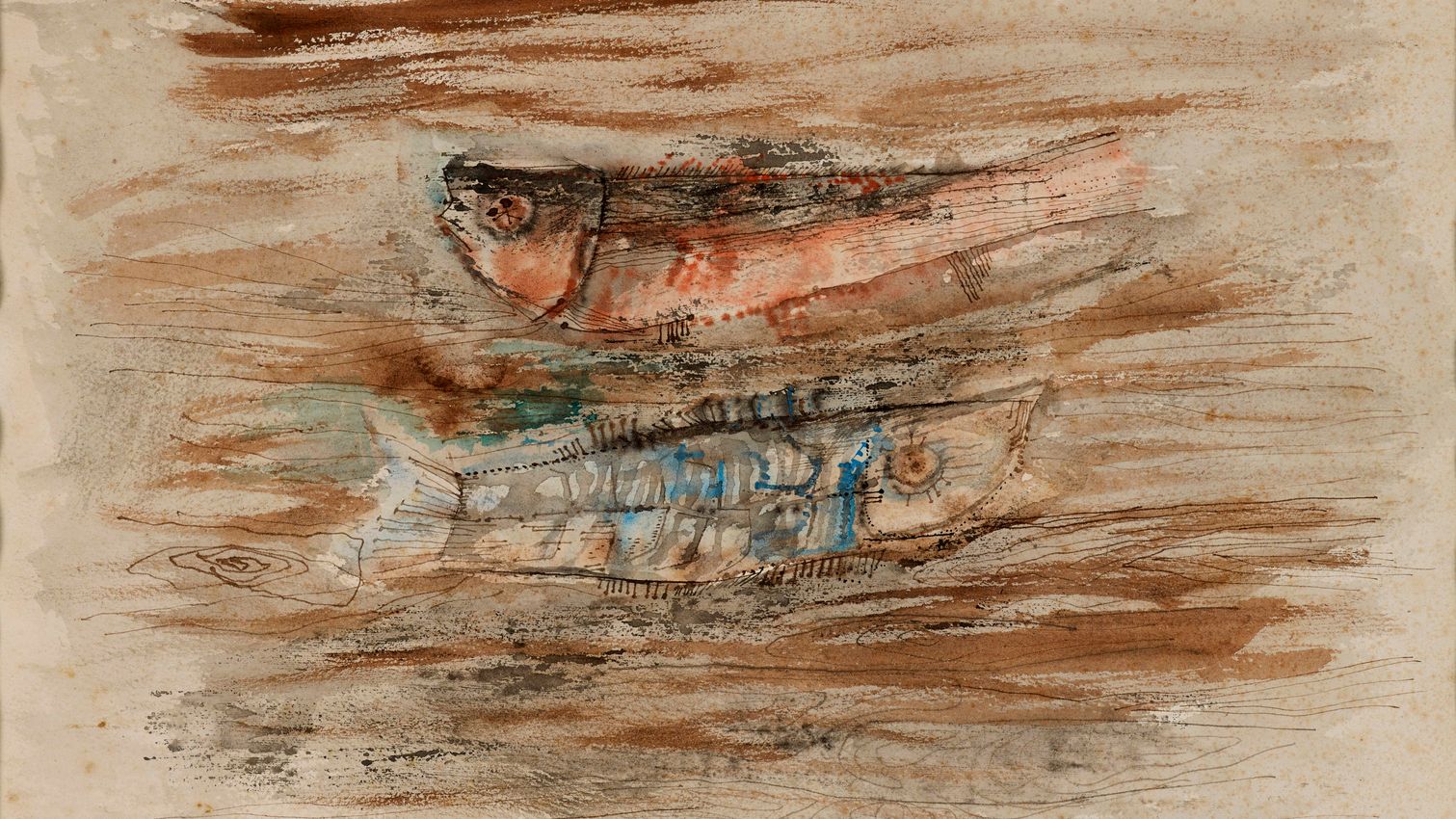
1920-2013, ChinaZao Wou-Ki’s artistic practice blended Chinese and Western traditions, using oils, watercolour, Chinese ink, lithography and engraving to produce works that continually challenged established cultural norms. Throughout his career, he continually evolved his style, experimenting with abstraction, post-Impressionism and Chinese techniques.
Early Years
Zao Wou-Ki was born in Beijing in 1920. His intellectual family respected art and encouraged him to draw and paint—his grandfather taught him to draw the characters in the Chinese alphabet. Aged 15, Zao Wou-Ki enrolled at Hangzhou School of Fine Art, learning from Chinese and Western teachers including Lin Fengmian (although he started painting with oils, which wasn’t on the curriculum). Graduating in 1941, he worked as an assistant teacher at the school, and also staged his first exhibition in Chongqing. In his artistic practice, he was influenced by Cézanne, Matisse and Picasso, whose works he saw in American magazines. In 1948, he moved to Paris with his first wife, Lalan.
Zao Wou-Ki: Artworks
Zao’s early works, produced in Hangzhou, show his interest in combining Western and traditional Chinese forms—Untitled (Tennis Players) (1945) is a dream-like composition featuring tilted ground planes and ghostly figures. Living in Paris allowed Zao Wou-Ki to learn new disciplines, including lithography (from Desjobert)—at this point his practice also moved towards abstraction when he became friends with artists including Joan Miró and Alberto Giacometti. His interest in abstract expressionism grew further when he visited New York City in 1957 following the break-up of his marriage and spent time with Franz Kline.
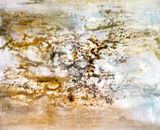
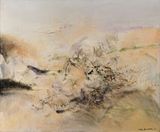
- The years 1959–1972 are considered Zao’s “Hurricane Period”, when his output was prolific and his synthesis of Western and Chinese styles melded calligraphy and abstraction. Bold contrasts and complimentary colours reflected the universe’s voids and matter. Date-titled works including 10.12.60 (1960) and 22.6.63 (1963) combine expressive brushstrokes with calligraphic lines, reflecting Zao’s interest in landscape and the environment.
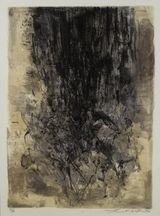
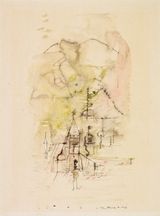
- During the 1970s, Zao revisited working in ink, but not to the traditional Chinese method. Instead he considered how ink moves on paper, and lithographs such as 1974’s Untitled blend green and yellow brushstrokes with brown lines and blank areas.
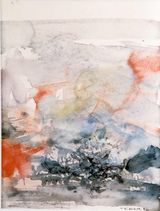
- Zao’s later works are lighter and more diluted, but no less powerful. His 2002 piece 24.12.2002—Diptyque is a diptych featuring subtle layers of turquoise, fuchsia and brown.
Zao Wou-Ki: Select Awards
- Commandeur de la Légion d’Honneur (1993)
- Praemium Imperial (1994)
- Elected to the French Academy of Fine Arts (2002)
- Grand Officier de l’Ordre de la Légion d’Honneur (2006)
Zao Wou-Ki: Select Exhibitions
Select Solo Exhibitions
- Zao Wou-Ki: Infinite Dialogues, Phillips Hong Kong (2026)
- Zao Wou-Ki: Master Printmaker, M+, Hong Kong (2025)
- Zao Wou-Ki. Un giardino di segni, Museo Casorella, Locarno (2025)
- Zao Wou-Ki—Les allées d’un autre monde, Franciscaines, Deauville (2024)
- Zao Wou-Ki—Watercolours and Ceramics, Dixon Gallery and Gardens, Memphis (2023)
- Zao Wou-Ki, Alisan Fine Arts_, Hong Kong (2022)
- Zao Wou-Ki: The Eternal Return to China, Villepin Gallery, Hong Kong (2021)
- Zao Wou-Ki: Inks and Watercolours 1948–2009, Kamel Mennour Gallery, Paris (2019)
- Zao Wou-Ki: Watercolour, Ink on Paper, Porcelain, Marlborough Gallery, New York City (2018)
- _Zao Wou-Ki Collectionneur, Musée de l’Hospice Saint-Roch, Issoudun (2016)
- Zao Wou-Ki: Dans l’ultime bonheur de peindre, 2000–2010, Musée des Beaux Arts, Rouen (2012) (and touring)
- Zao Wou-Ki: Estampes et livres illustrés, Bibliothèque Nationale de France, Paris (2008)
- Zao Wou-Ki: Peintures et encres de chine, 1948–2005, Espace Bellevue, Biarritz (2005)
- Zao Wou-Ki, Alisan Fine Arts, Hong Kong (2003)
- Zao Wou-Ki: Chine, la gloire des empereurs, Petit-Palais, Musée des Beaux-Arts de la Ville de Paris (2000)
- Zao Wou-Ki: 60 ans de peintures, 1935–1998, Shanghai Art Museum (1998) (and touring)
- Zao Wou-Ki, Ishibashi Museum of Art, Kurume (1995)
- Zao Wou-Ki: Oleos-aguadas, Fondation Calouste Gulbenkian, Lisbon (1992)
- Zao Wou-Ki: Dix encres, Galerie Kutter, Luxembourg-Ville, Luxembourg (1990)
- Zao Wou-Ki: Encres, Centre Culturel Français, Rome (1986)
- Zao Wou-Ki: Traces, encres de chine, Galerie Jan Krugier, Geneva (1984)
- Zao Wou-Ki ou se libérer du connu, Musée Ingres, Montauban (1983)
- Paintings by Zao Wou-Ki: 1954–1981, Hong Kong Arts Centre (1982)
- Zao Wou-Ki: Paintings and Drawings, 1976–1980, Pierre Matisse Gallery, New York City (1980)
Select Group Exhibitions
- The Chinese Avant-Garde in Paris, Alisan Fine Arts, Hong Kong (2026)
- Shanshui: Echoes and Signals, M+, Hong Kong (2024)
- Transformation: Arts Crossing Borders in the 19th and 20th Centuries, Artizon Museum, Tokyo (2022)
- Midcentury Abstraction: A Closer Look, Yale University Art Gallery, New Haven (2022)
- Extra Large: Tapestries from Picasso to Louise Bourgeois, Kunsthal Rotterdam (2021)
- Art Turns, World Turns: Exploring the Collection of the Museum of Modern and Contemporary Art, Museum of Contemporary Arts in Nusantara, Jakarta (2017)
- Monet et l’abstraction, Museo Nacional Thyssen-Bornemisza, Madrid (2010)
- Hommage to Chillida, Guggenheim Bilbao 2000 Chine: La gloire des empereurs, Musée des Beaux-Arts de la Ville de Paris (2006)
- Yves Bonnefoy: Art and Poetry, French Cultural Services, New York City (1995)
- La gravure en France de 1945 à nos jours, Musée des Beaux-Arts et d’Archéologie, Libourne (1994)
- China-Paris: Seven Chinese Painters who Studied in France 1918–1960, Taipei Fine Arts Museum (1988)
- Paris-Paris: Créations en France 1937–1957, Pompidou Centre, Paris (1980)
- Art Contemporain 3, Pompidou Centre, Paris (1976)
- Les grands graveurs contemporains, Galerie du Club Francais du Livre, Paris (1971)
- International Exhibition of Contemporary Painting and Sculpture, Carnegie Institute, Pittsburgh (1964)
- Peinture française contemporaine, Musée d’Art Contemporain, Montreal (1961)
- School of Paris, Walker Art Centre, Minneapolis (1959)
- Dix ans d’art français, Musée des Beaux-Arts, Grenoble (1956)
- Exposition de peintures chinoises contemporaines, Musée Cernuschi, Paris (1946)
Further Reading
- The Zao Wou-Ki Foundation
- The Zao Wou-Ki Foundation’s Instagram Profile at Alisan Fine Arts
- Profile at Christie’s
Zao Wou-Ki FAQs
What does “Wou-Ki” mean in English?
Wou-Ki translates as “no boundaries”, perhaps an apt name for an artist whose work transcends boundaries of geography, culture and nationality.
What does Zao Wou-Ki have to do with the pyramids at the Louvre?
Zao met the architect IM Pei in Paris in 1951 and they collaborated on several projects, as well as helping each other’s careers. In 1982, Zao introduced Pei to the French minister of culture, Emile Biasini, which led to Pei’s glass pyramids in front of the Louvre.
Which artists were friends with Zao Wou-Ki?
Zao Wou-Ki formed many solid friendships with artists throughout the world, whose practices undoubtedly influenced his career. These included Henri Michaux, Pierre Soulages, Franz Kline, Conrad Marca-Relli, Philip Guston, Adolph Gottlieb, William Baziotes, Saul Steinberg, James Brooks and Hans Hoffman.
Where did Zao Wou-Ki live?
Although he regularly visited China, Zao Wou-Ki settled in France. He was granted French nationality in 1964 with the support of the then French minister of culture, André Malraux, for whom he had made 10 lithographs to illustrate the book La Tentation de l’Occident (The Temptation of the West) (1926). Zao died at his home in Switzerland in 2013.
Ocula

Exhibiting Elsewhere

Works Elsewhere













Zao Wou-Ki in Ocula Magazine









Explore and Follow Artists Shaping Contemporary Art
A respected voice in contemporary art discourse.
Focusing on ambitious storytelling and insightful art-world commentary. Ocula Magazine publishes in-depth interviews, critical essays and timely analysis on the artists, exhibitions and ideas driving the global art world.
Learn more about Ocula Magazine
Showcasing the best of the art world.
Ocula partners with galleries from around the world to highlight their artists, artworks and exhibitions. Gallery membership is by application and invitation, with each member vetted by an independent panel.
Learn more about Ocula Membership
Specialises in the sale of major artworks.
Led by a team with deep ties to the world’s leading auction houses, galleries and collectors. Ocula’s advisory team offers bespoke services to high-net-worth clients from around the world who are looking to acquire the best of contemporary and modern art.
Learn more about our team and services