Press Release

Lines of Flight brings together documents from Nilima Sheikh’s archive to explore the importance of travel and artistic techniques in her practice. Based in Baroda, India, Sheikh has reflected on questions of tradition, historical lineage, and cosmopolitanism in Asia for over fifty years. The exhibition presents her travels as a method through which she builds research, and her artistic techniques as a way of transforming material cultures and histories across national borders.

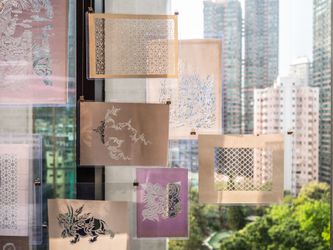
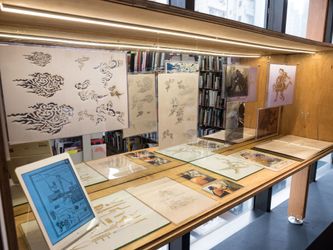
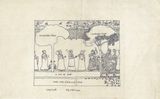
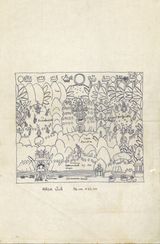
The presentation opens with a selection of stencils from Sheikh’s archive that have been created by her over the past two decades, in collaboration with a family of traditional stencil-makers from the temple town of Mathura, India. Sheikh has amassed a large archive of stencils that draw on images from art history and citations from various genres of literature. Conventionally seen as finished images, the stencils presented here perform multiple roles—as tools, documents, and images.

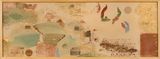
The stencils are juxtaposed with Sarhad 2, a tempera painting from 2014, which sheds light on the range of references and techniques in Sheikh’s painting. Here, the artist uses stencils to depict figurative elements such as trees; parts of stencils of butterfly wings that shape the contours of the landscape; as well as a citation from Mirza Waheed’s The Collaborator (2011), which inspired this work. The painting also introduces Sheikh’s engagement with ideas of home, belonging, and separation.

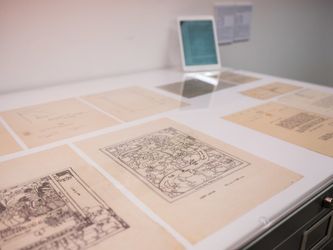
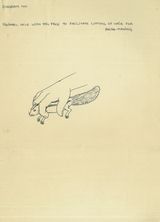
The exhibition spotlights Sheikh’s travels in the 1980s to research the living traditions of art in India, with an emphasis on the Pichhwai paintings of Nathdwara, Rajasthan. Focusing on this art form passed on from masters to apprentices, this research followed soon after Sheikh’s introduction of miniature and traditional narrative forms to her visual repertoire. The research also informed her prolific use of natural pigments and the organisation of pictorial space in her work. Correspondences with other artists and institutions of cultural heritage also reveal Sheikh’s efforts to advocate for the preservation of living traditions in Asia. In addition, her research into traditional art forms paved the way for experimentations with scale and performative aspects that Sheikh undertook in her work for theatre design from 1989 to 2000.

Sheikh’s archive shows her long-standing engagement with a range of visual and textual sources and techniques from across Asia. These source materials range from Turkish, Persian, and Indian manuscript painting to the scroll and mural paintings of China and Japan; from the poetry of Mahmoud Darwish, Lal Ded, and Li Bai to the writings of Mirza Waheed, Salman Rushdie, and Chitralekha Zutshi. These materials not only reveal the work process of the artist, but act as media for the transmission of knowledge.

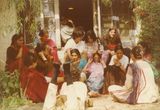
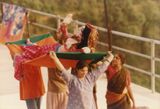
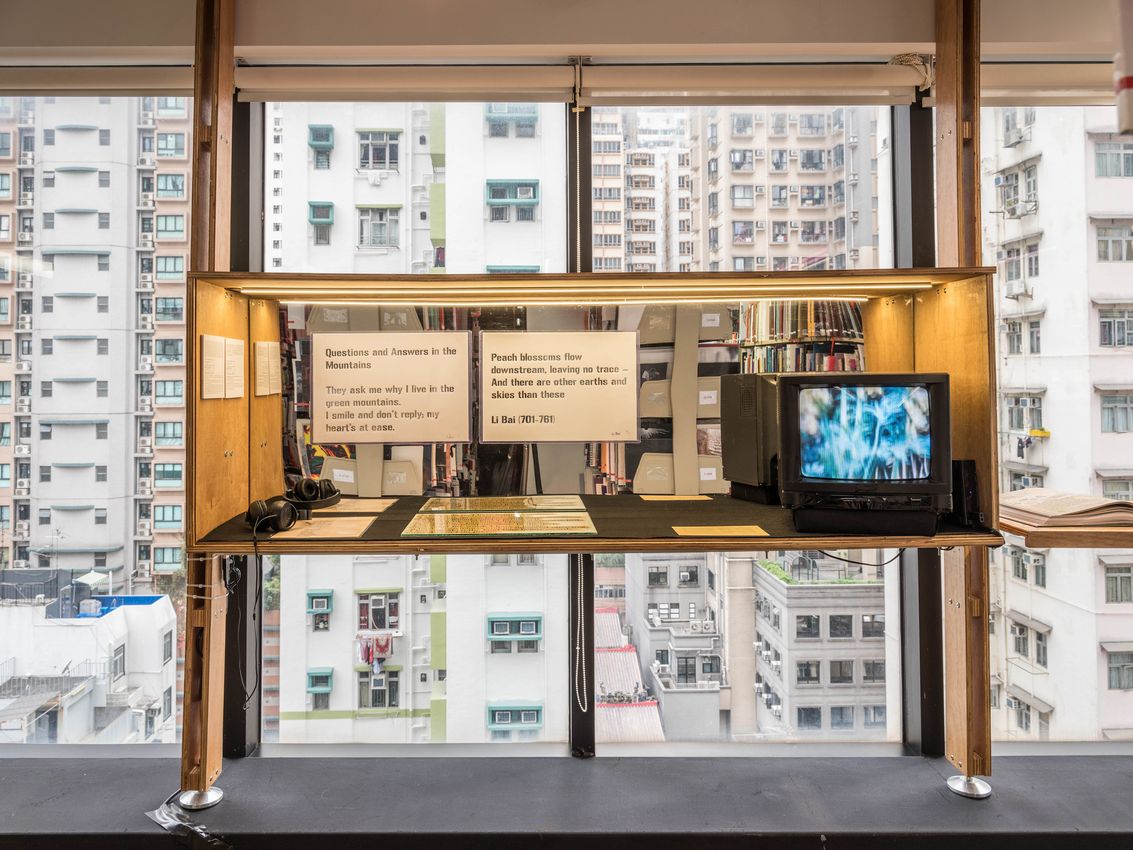
The exhibition also introduces excerpts from 8mm film footage taken by Leila Dhanda, Sheikh’s mother, during family trips to Kashmir in the 1950s. The camera captures the scale of the mountains, the flow of the rivers, and the changing horizon lines as the family moves through the landscape. These repeated visits to Kashmir were formative for Sheikh’s understanding of space and scale, writing that her mother taught her ‘to love to travel to new places’ and ways to re-map ‘the familiar.’ The video is juxtaposed with stencils of poems by Li Bai and Mahmoud Darwish. These motifs of movement and flight suggest a search for a sense of belonging toward shared histories and cultures.

Read More

Installation Views

Nilima  Sheikh Conversation Nilima Sheikh I like my paintings to have place for different times and different geographies. In that sense, I use history as an alibi. History maybe not just as an alibi but also as a way of structuring my work. Read the story
About the Artist

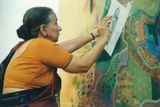
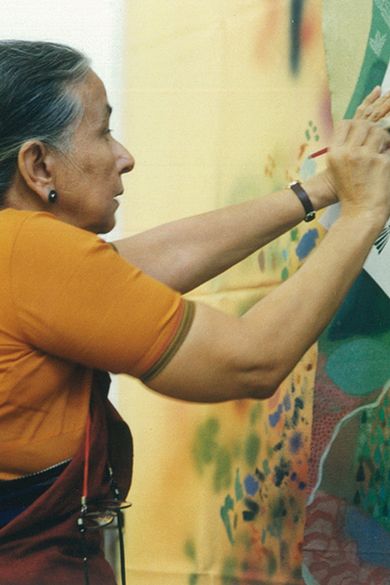
Borrowing from and translating the vocabulary of Indian painting traditions, Nilima Sheikh‘s artworks have ranged from small paintings reminiscent of Mughal and Rajput miniatures, to vertical scrolls rooted in East Asian customs. Over her 50-year career, the Baroda-based artist has woven into her work her concerns with femininity, tradition, violence, poetry and national politics.

View Artist Profile

Also Exhibiting at Asia Art Archive

About the Gallery

Asia Art Archive (AAA) is an independent non-profit organisation in Sheung Wan, Hong Kong, dedicated to documenting and sharing the recent histories of art from across Asia within a global context.

Founded in 2000 by Claire Hsu, Johnson Chang, and Ronald Arculli, AAA has grown into one of the most comprehensive publicly accessible collections of research materials on contemporary art in the region. Its library and archive, housed on Hollywood Road and freely open to the public, anchor a wider platform of digital resources that reach researchers, artists, and educators worldwide.

View Gallery Profile
Address
11/F Hollywood Centre
233 Hollywood Road
Sheung Wan
Hong Kong
Hong Kong
Opening Hours
Monday – Saturday
10am – 6pm
Closed Public holidays
(1)
Hong Kong 11/F Hollywood Centre, 233 Hollywood Road
Asia Art Archive
11/F Hollywood Centre, 233 Hollywood Road, Sheung Wan, Hong Kong, Hong Kong
+852 2844 1112
http://www.aaa.org.hk

Opening hours
Monday – Saturday
10am – 6pm
Closed Public holidays
The art world in focus