



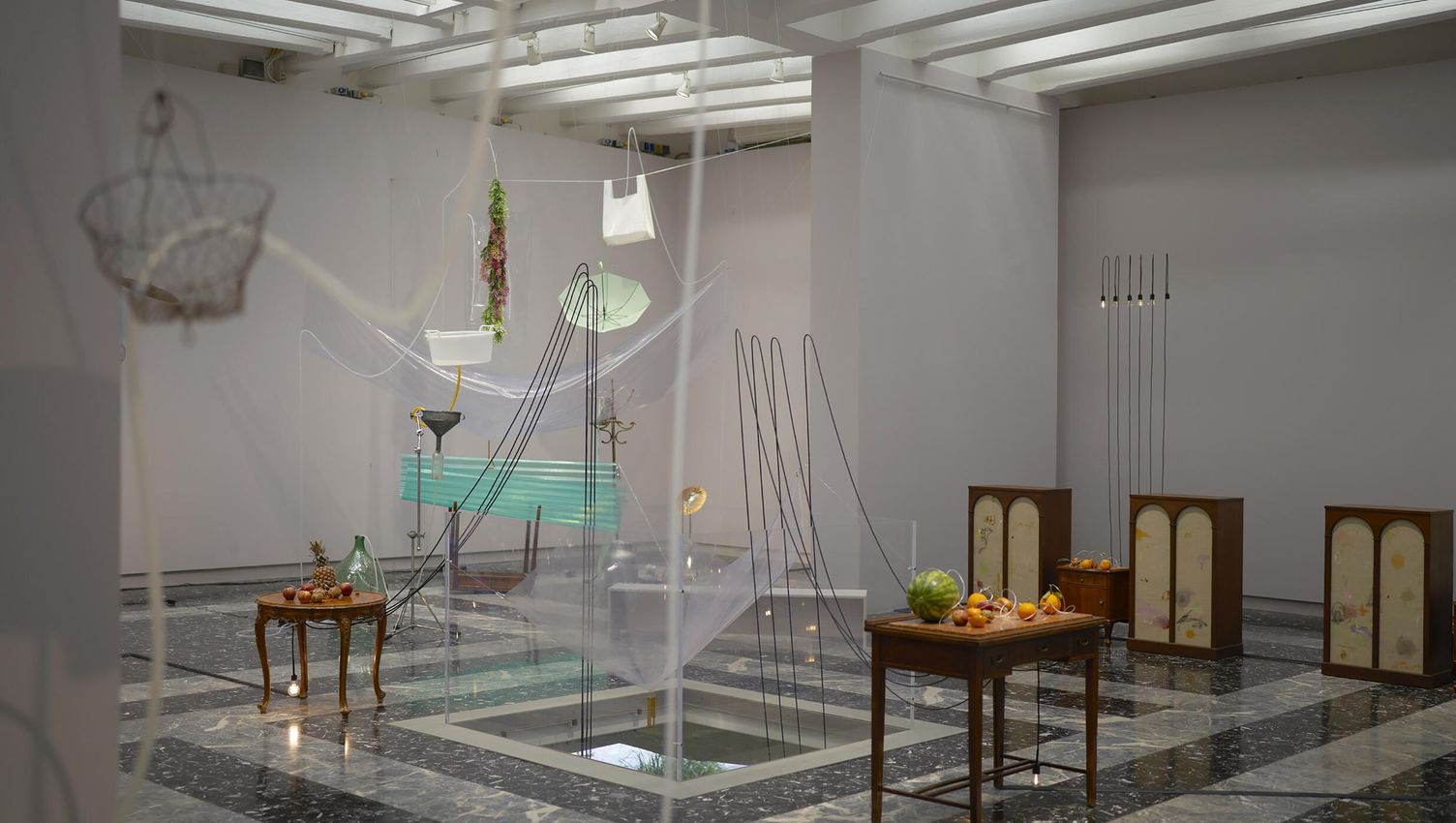
In October 2026, the Barbican will present an exhibition by the multidisciplinary Japanese artist Yuko Mohri, whose dynamic practice – spanning kinetic sculpture, sound, film, photography and painting – embraces chance and imperceptible phenomena to make us radically attuned to our immediate surroundings, and the interconnectedness of our planetary crises.
For The Curve, Mohri will create a new, site-specific installation responding to the unique architecture of the gallery, its environmental conditions and the presence of visitors. Often repurposing found and everyday objects, Mohri triggers chains of reaction activated by “unstable elements” – including magnetism, electricity, gravity, dust and water – to humorous and surprising effect. Rather than present a finished composition, she choreographs porous environments where changing inputs generate improbable outputs, manifesting as sound, motion and scent in continuously transforming installations.
The anarchic, DIY sensibility of Mohri’s work draws on her background in experimental punk-rock music, philosophies of impermanence and art historical traditions of Mono-ha, surrealism and dadaism. Foregrounding improvisation and entropy, her practice resonates with the ecological and social precarity of our time, channelling a material exploration of human and non-human entanglements into poetic prompts for collective resilience.
This exhibition is supported by the Barbican Commissioning Council.
Yuko Mohri is an installation artist. Her kinetic sculptures, using reconfigured everyday objects and machine parts, highlight various facets coming from the encounter between objects and invisible energies such as magnetism, gravity, wind, or light. She authorises uncontrollable and nonhuman elements to conduct within their networks, which are often compared to a self-contained ‘ecosystem’, incessantly channeling the surrounding environment.


The Barbican is a world-renowned arts and learning hub in the City of London, celebrated for its striking Brutalist architecture and multidisciplinary programming. Opened in 1982 as part of the larger Barbican Estate, it has become a cultural landmark, bringing together visual arts, music, theatre, dance, film, and education under one roof.
A respected voice in contemporary art discourse.
Focusing on ambitious storytelling and insightful art-world commentary. Ocula Magazine publishes in-depth interviews, critical essays and timely analysis on the artists, exhibitions and ideas driving the global art world.
Learn more about Ocula Magazine
Showcasing the best of the art world.
Ocula partners with galleries from around the world to highlight their artists, artworks and exhibitions. Gallery membership is by application and invitation, with each member vetted by an independent panel.
Learn more about Ocula Membership

Specialises in the sale of major artworks.
Led by a team with deep ties to the world’s leading auction houses, galleries and collectors. Ocula’s advisory team offers bespoke services to high-net-worth clients from around the world who are looking to acquire the best of contemporary and modern art.
Learn more about our team and services