Press Release

The family was by no means an immutable model and evolved throughout the 19th century in line with the era’s political, social and moral disruptions. Regulated by the Civil Code, upheld by the bourgeoisie and impacted by first-wave feminism and romantic shifts in the notion of the couple, it became an ideal observatory for examining the tensions in modern society. Artists, as much actors in as they were witnesses of these changes, provided sometimes idealized sometimes critical and occasionally deeply ambiguous depictions of them.

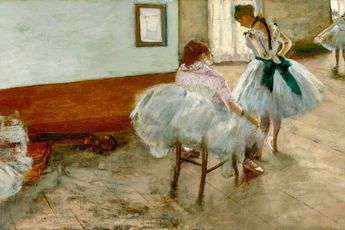
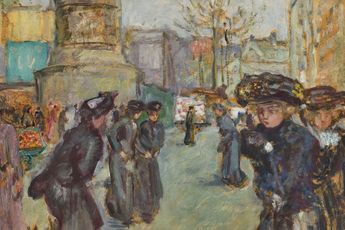
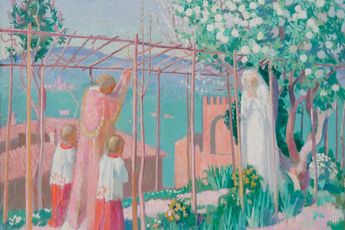
Based on the Musée d’Orsay’s extensive collections, the exhibition brings together paintings, sculptures, photographs, films, drawings and archives focusing on the many ways of “being a family” in France between 1848 and 1914. From Edgar Degas to Pierre Bonnard, from Victor Hugo to Nadar, from the Lumière brothers to Alice Guy and from Camille Claudel to Rosa Bonheur, these works tell stories of love, filiation, transmission, domination, rivalry and emancipation.

The exhibition opens on the inherent links between family and politics, before unfolding in five thematic sections. “Home Sweet Home” explores the house as a place of family embodiment and domestic intimacy, from Degas’, Tissot’s and Bazille’s large-scale portraits of extended families to the destitute homeless families captured by Daumier and Stevens. Rosa Bonheur and the large menagerie she kept in Thomery, as well as the 20th century’s first films portraying emotional alliances between animals and human beings, were already paving the way for alternative models.

“Be a mother and keep quiet” focuses on the burden of motherhood and the roles assigned to women. Whether they were mothers or wet nurses, workers or artists, young or in the prime of life, “old maids” or grandmothers, in their flesh and fantasies alike, women experienced pregnancy and breastfeeding, old age and barrenness, adoption, abandonment and the loss of one or more of their children. The ambivalent approach to motherhood evident in Berthe Morisot’s works and the Countess of Castiglione’s fascinating persona paint a complex picture of maternity.

With “In the name of the father”, the exhibition highlights the omnipresence of the patriarchal system, constantly nourished and bolstered by the mechanics of transmission: the passing on of the family name, paternal authority and material legacy. Through examples of the loving father, a figure that emerged in the late 19th century, from Émile Zola to Léopold Chauveau, visitors also acquaint themselves with the role of various objects of affection (photograph albums, phonograph cylinders and cuddly toys), which, by embodying the family, make it exist in return.

A fourth section devoted to “Sibling attachments” addresses horizontal ties: solidarities, rivalries, mourning and successions. The conflicts between the Tournachon brothers over ownership of the Nadar pseudonym, the tenderness on display in Alfred Stevens’ Frère et sœur devant la mer à Honfleur [Brother and Sister by the Sea at Honfleur] and Odilon Redon’s pastels giving form to the grief felt at the death of a child before the birth of his second son, go to show how much the family was also an area of conflicting emotions.

Finally, “Couple arrangements” explores the tensions and adjustments between marriage, love, desire and social conventions. Maurice and Marthe Denis, Pierre Bonnard and Maria Boursin, Camille Claudel and Auguste Rodin, Claude Monet and Camille Doncieux, Misia Natanson, and Verlaine and Rimbaud show proof of passionate unions, hidden desires and power relationships, as well as refusal of marriage or of exclusivity in a society where marital norms were often questioned, sometimes subverted and certainly transformed.

Between happy memories, painful secrets, conflicts and attachments, the exhibition sees the family as an embodied, living place, filled with conflicting feelings and aspirations, and undergoing deep-seated metamorphoses. It also creates a dialogue between that 19th century whose heirs we are and the present day, thanks to “cartes blanches” entrusted to a number of contemporary figures, who have been invited to cast a sensitive or critical eye on works that tell us yesterday’s family stories. By doing so, they also speak to us about today’s families.

Read More

Artists Exhibiting

Also Exhibiting at Musée d'Orsay

About the Gallery

The history of the museum, of its building is quite unusual. In the centre of Paris on the banks of the Seine, opposite the Tuileries Gardens, the museum was installed in the former Orsay railway station, built for the Universal Exhibition of 1900. So the building itself could be seen as the first “work of art” in the Musee d’Orsay, which displays collections of art from the period 1848 to 1914.

View Gallery Profile
Address
Esplanade Valéry Giscard d'Estaing
Paris
France
Opening Hours
Tuesday – Sunday
9.30am – 6pm
Closed Monday
(1)
Paris Esplanade Valéry Giscard d'Estaing
Musée d'Orsay
Esplanade Valéry Giscard d'Estaing, Paris, France

Opening hours
Tuesday – Sunday
9.30am – 6pm
Closed Monday
The art world in focus