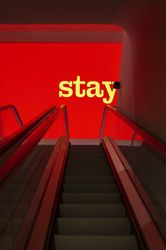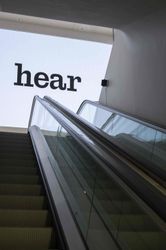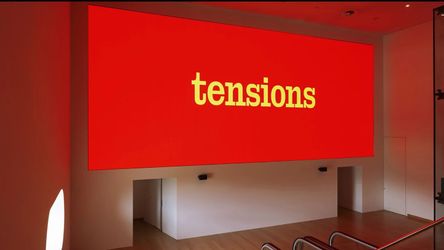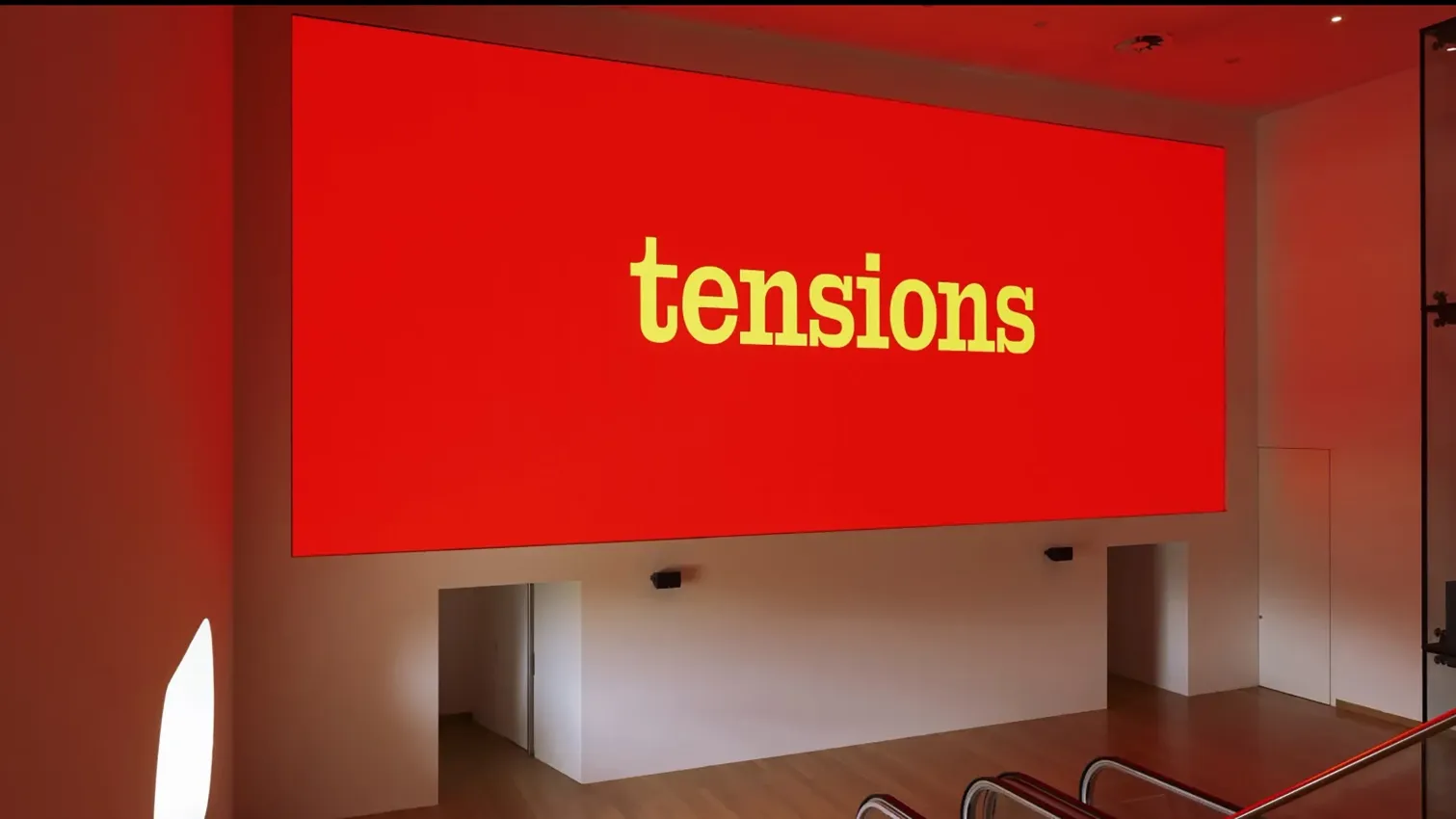
The Stedelijk is launching IN SITU, a new series in the mezzanine of the new building. A new generation of artists has been commissioned to create experimental works for one of the museum’s largest intermediate spaces. Nora Turato inaugurates the series with a video and sound installation that examines how we use language and how language influences our identity and ways of communicating.
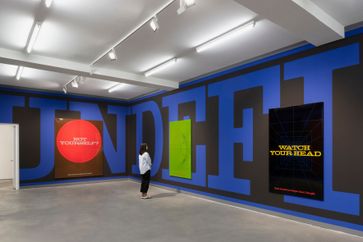
Language plays a central role in Nora Turato’s work. The artist collects texts from seemingly banal sources: emails and WhatsApp messages, social media posts, YouTube tutorials, online lectures, museum texts, advertisements, conversations overheard in restaurants. Turato deconstructs this endless flow of messages and uses it to shape her own narrative. Her work spans multiple disciplines, including performances, books, videos, murals, and 2D-works.
For her new work on the mezzanine, Turato examines the impact of language on our self-image, expression, and identity—from how we learn to speak as children to how we constantly adopt the words of others. By combining language and typography, she questions how much control we truly have over how we communicate. For her site-specific work, Turato is developing a custom-made typeface and a script for her own monumental moving billboard. She explores how rhythm, pronunciation, design, and typography influence the power, ambience and character of language.


Amsterdam-based artist Nora Turato is recognised for her spoken-word performances, posters, artist’s books, and installations based on contemporary texts from a plethora of sources. In 2015, Turato performed at an event hosted by the Lithuanian Pavilion at the 56th Venice Biennale.

The Stedelijk Museum is the place where everyone can discover and experience modern and contemporary visual art and design 365 days a year. The Stedelijk Museum was founded in 1874 by a group of private citizens in Amsterdam, led by C.P. van Eeghen, who donated funds and their art collections to establish a museum in the capital of the Netherlands that would be devoted to modern art. The collection, housed at first at the Rijksmuseum, was moved in 1895 into the Museum’s own building, designed by A.W. Weissman.
A respected voice in contemporary art discourse.
Focusing on ambitious storytelling and insightful art-world commentary. Ocula Magazine publishes in-depth interviews, critical essays and timely analysis on the artists, exhibitions and ideas driving the global art world.
Learn more about Ocula Magazine
Showcasing the best of the art world.
Ocula partners with galleries from around the world to highlight their artists, artworks and exhibitions. Gallery membership is by application and invitation, with each member vetted by an independent panel.
Learn more about Ocula Membership

Specialises in the sale of major artworks.
Led by a team with deep ties to the world’s leading auction houses, galleries and collectors. Ocula’s advisory team offers bespoke services to high-net-worth clients from around the world who are looking to acquire the best of contemporary and modern art.
Learn more about our team and services