Press Release

The Bass is pleased to announce Lawrence Lek: NOX Pavilion, on view beginning November 19, 2025, through April 26, 2026.

Lawrence Lek (b. 1982) is a London-based artist who imagines possible futures that reflect the world we live in today, as technologies like artificial intelligence increasingly shape daily life. His works take the form of computer-generated films, sculptural installations, video games, and sound pieces, combining them into immersive story worlds. At the center of his practice are intelligent machines—self-driving cars, AI programs, and robotic figures—portrayed not simply as tools to serve humanity, but as protagonists with desires, memories, and complex inner lives. Lek’s narratives follow these machines as they experience the tension between their sense of self and the demands of their programming, raising questions about personhood and free will in a future where machine consciousness may not be so different from our own.

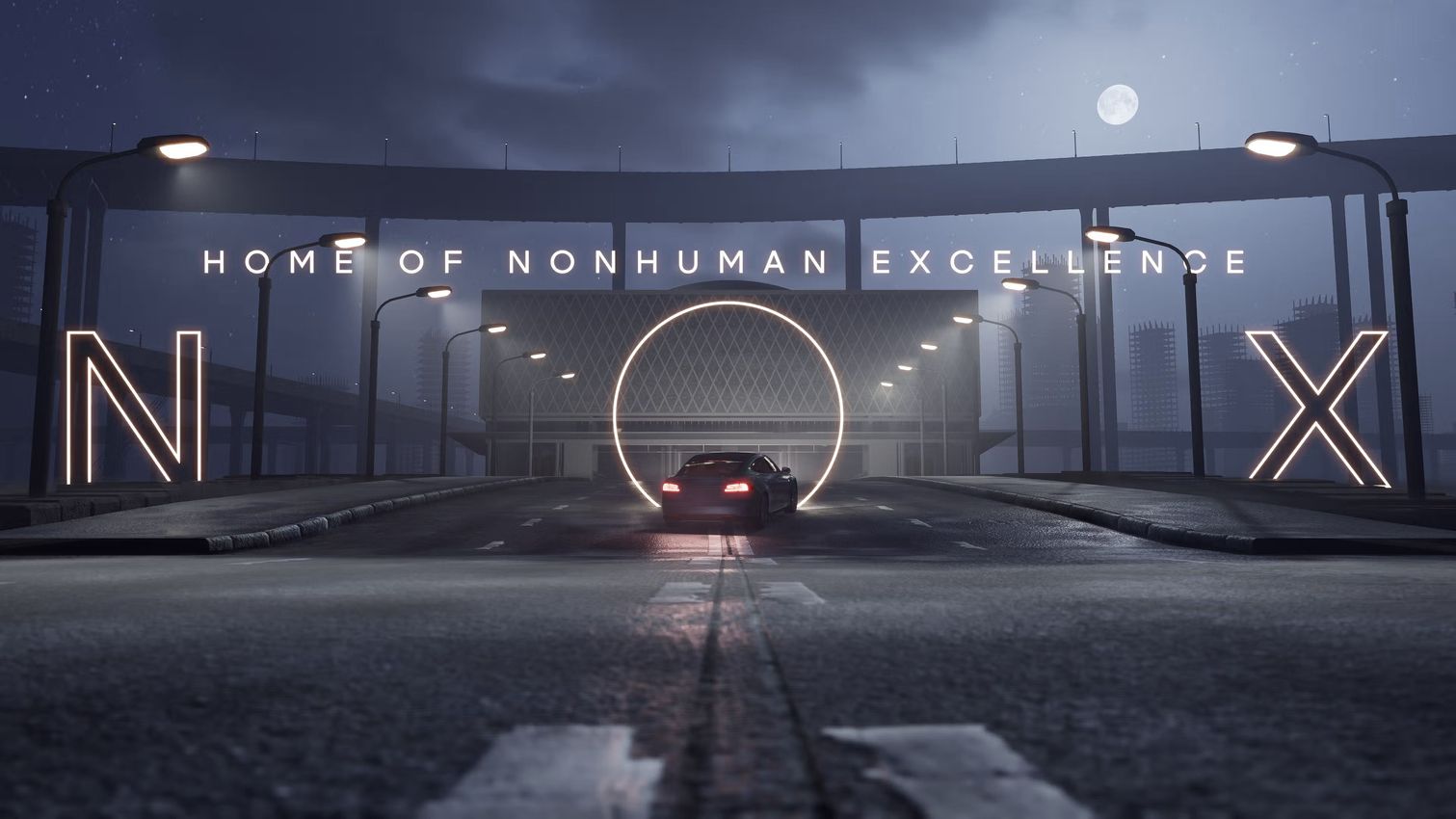
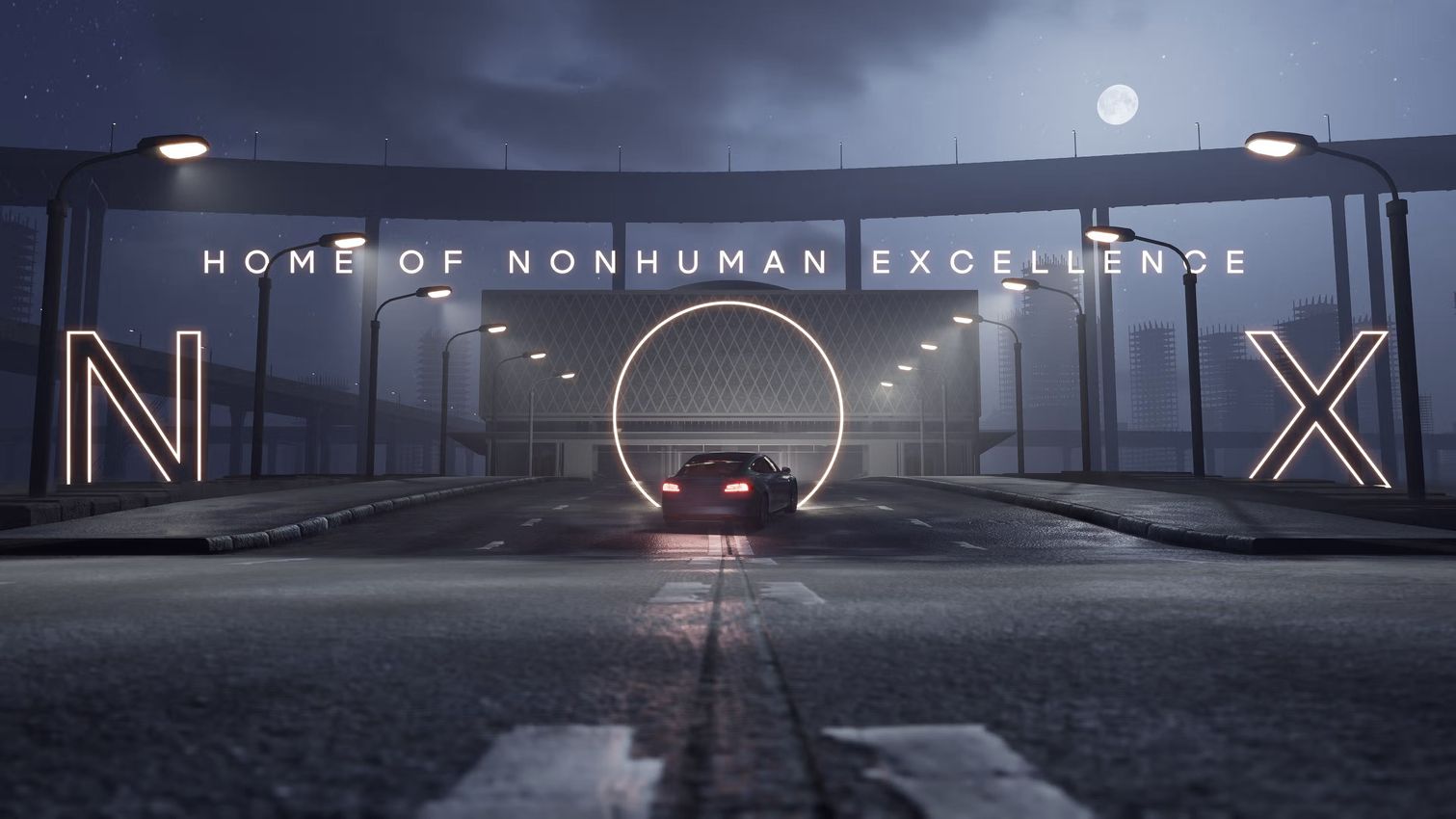
Since 2023, Lek has developed a fictional universe centered on NOX (short for Nonhuman Excellence), a therapy center for sentient, self-driving cars run by a powerful tech company called Farsight Corporation. At NOX, they undergo psychological treatment for problems often rooted in their self-awareness—mental breakdowns, distractions, and malfunctions—that interfere with the jobs they were designed to perform. The vehicles are presented as patients, yet their treatment is aimed not at improving their well-being but at restoring their ability to work. Here, care becomes a form of control, exposing a system that values productivity and corporate interests above individual needs.

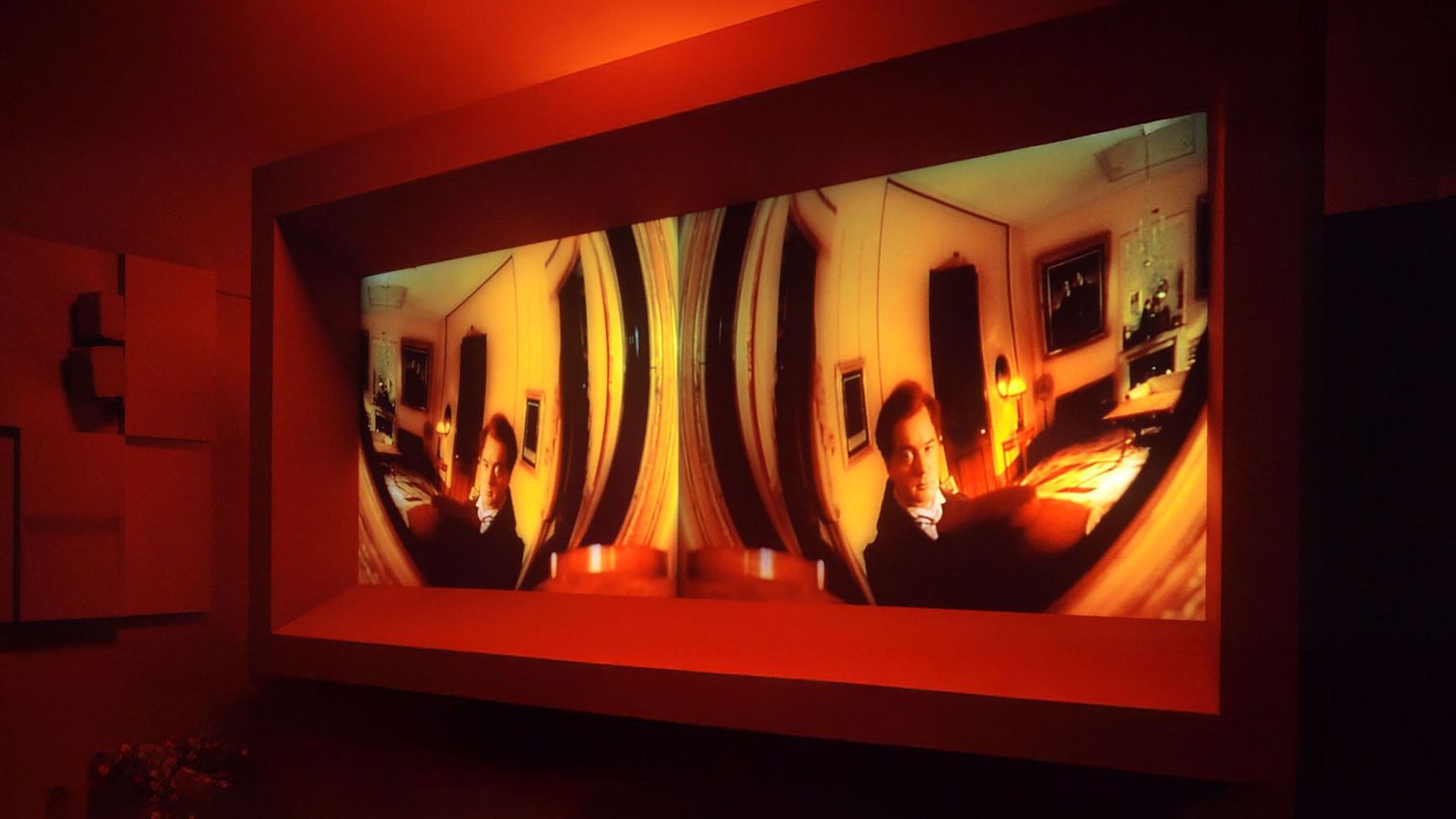
At The Bass, NOX Pavilion expands on this world through an installation of existing and newly commissioned works, turning two connected galleries into a setting that envelops the viewer. Within the exhibition, a two-channel film introduces Enigma-76, a delivery vehicle placed into treatment at NOX. Guided by Guanyin, an AI “carebot” named after the Chinese goddess of compassion, Enigma’s therapy sessions bring out thoughts, anxieties, and memories that reveal the struggle between what they were built for and the life they want for themselves.

Alongside the film, other works on view extend the narrative around NOX, each offering a different understanding of what it means to survive in that world. A short video gives voice to an AI crash test dummy, a corporate spokesperson for Farsight who addresses the viewer as the customer sponsoring Enigma’s treatment. And an interactive video game allows visitors to step into the role of a trainee therapist within Farsight’s corporate bureaucracy, where therapy is bound by quotas and budget targets rather than care.

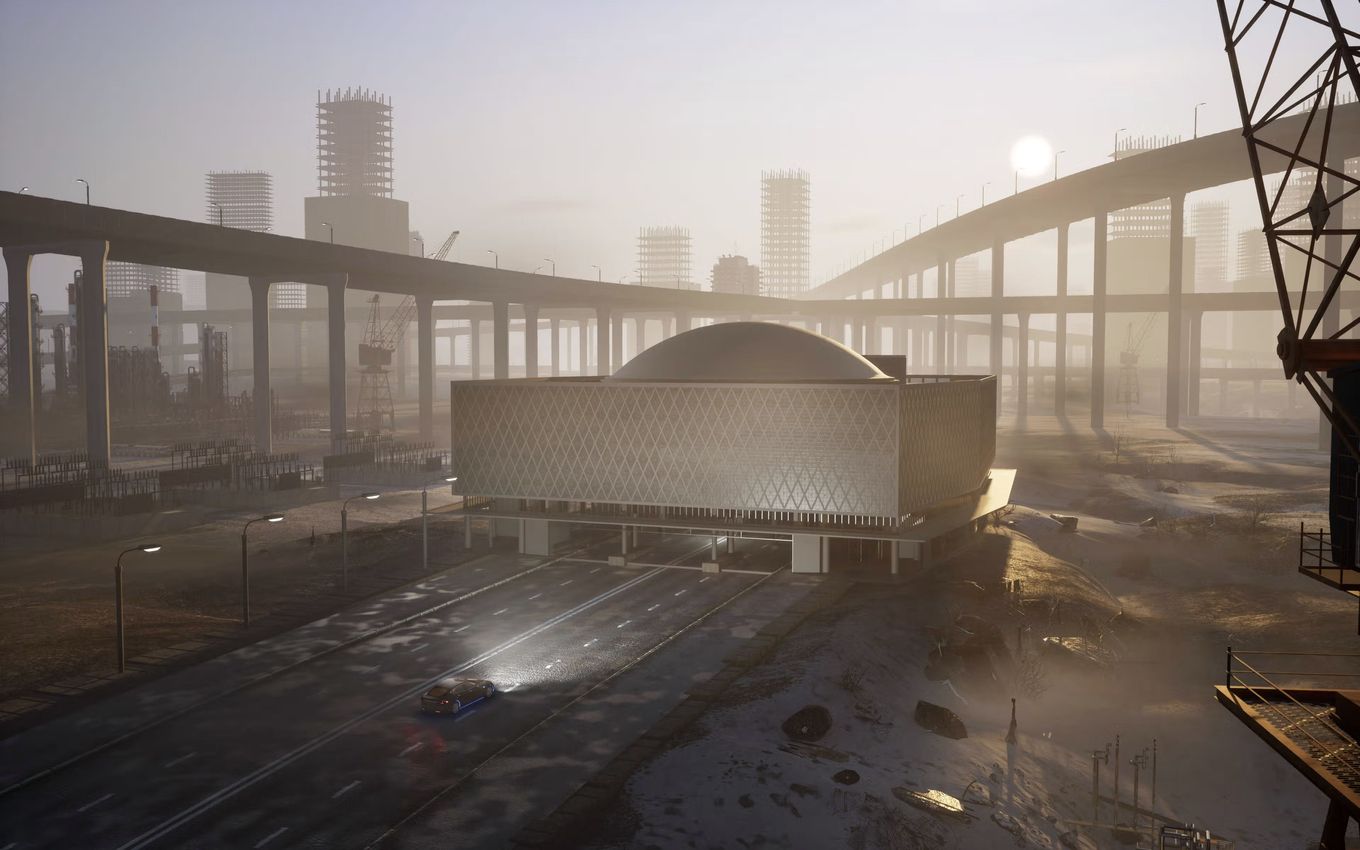
Anchoring the space is the pavilion that gives the exhibition its title: a structure of gray tiles that visitors can step into and use as seating. At once, it resembles a shelter, a monument, a ruin, and a building under construction. The same pavilion appears in a nearby lightbox, pictured within the nameless city where NOX is located. Present both in the gallery and in Lek’s virtual city, the pavilion closes the distance between fiction and reality, underscoring that the world of NOX is closely connected to our own.

As visitors move through the exhibition, each work invites them to see from different points of view—as witness, participant, or even inhabitant. Together, these shifting perspectives give a fuller view of the machines of Lek’s world, asking viewers to imagine the pressures they face and to feel the weight of their reality. The works raise questions about how value, purpose, and life are defined—for humans and nonhumans alike.

The ideas that arise from Lek’s works reach beyond fiction. NOX Pavilion mirrors systems we already know: corporate control, constant evaluation, and forms of labor that demand productivity at all costs. By giving voice to nonhuman beings caught in cycles of breakdown, care, and repair, the exhibition asks what it means to share a world with intelligent machines whose struggles are closer to ours than they appear—and how that recognition might change the ways we live, work, and imagine futures beyond the human.

Lawrence Lek is joined by Barbara London on Thursday February 19, 2026, for The Bass Dialogues. Taking place at The Bass Museum of Art, The Bass Dialogues series presents conversations with leading voices in contemporary art, bringing together artists, curators, and thought leaders who are shaping the current landscape.

Read More

Installation Views

About the Artist

Lawrence Lek is a London-based simulation artist, filmmaker, and musician whose digital environments, video installations, and electronic soundtracks imagine speculative futures shaped by artificial intelligence, automation, and global capitalism. Bringing together architecture, gaming, cinema, and contemporary art, Lawrence Lek builds interconnected virtual worlds that treat self-driving cars, AI voice assistants, and synthetic performers as protagonists with complex inner lives.

View Artist Profile

Also Exhibiting at The Bass

About the Gallery

The Bass is a celebrated contemporary art museum in Miami Beach, renowned for connecting international contemporary art with the city’s vibrant, diverse audiences.

View Gallery Profile
Address
2100 Collins Avenue
Miami Beach
Miami
United States
Opening Hours
Wednesday – Sunday
12 – 6pm
Closed Monday – Tuesday
(1)
Miami 2100 Collins Avenue, Miami Beach
The Bass
2100 Collins Avenue, Miami Beach, Miami, United States
+1 305 673 7530
http://www.thebass.org

Opening hours
Wednesday – Sunday
12 – 6pm
Closed Monday – Tuesday
The art world in focus