


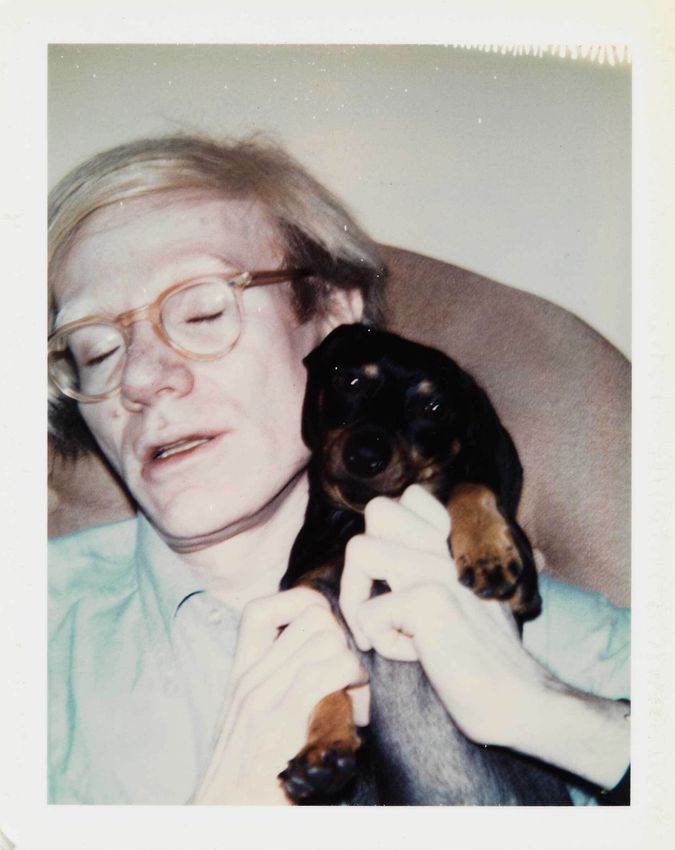
Few American artists have shaped modern visual culture as profoundly as Andy Warhol (1928–1987), whose experimentation with mass media helped define what it means to be an artist in an image-saturated age. Photography was central to Warhol’s philosophy and his obsession with self-representation. He carried a camera with him wherever he went, taking hundreds of thousands of photographs during his career. Warhol purchased his first Polaroid in the mid-1960s, and by the early 1970s, it would become his tool of choice: both the Big Shot model, ideal for close-ups with its fixed lens and bright flash, and the more versatile, portable SX-70. This technology was instrumental to his process—forming the first stages of his commissioned silkscreen portraits and a mode through which he could document compulsively, treating his own life as material.
Andy Warhol Family Album presents a collection of Polaroids from 1972 to 1973 that captures Warhol’s immediate world of collaborators, celebrities, and friends. These photographs come from one of six Holson albums containing hundreds of snapshots Warhol maintained as a personal archive and named for the brand’s generic product type: the “family album.” Together the images—ranging from posed portraits and candid shots of guests visiting his home in Montauk, Long Island, to documentation of his travels to Europe and even pictures of his dog Archie—offer a varied glimpse into Warhol’s day-to-day life.
Andy Warhol Family Album is part of an ongoing initiative to present rarely seen works from the Whitney’s collection, following exhibitions of Wanda Gág, Jeanne Moutoussamy-Ashe, and Claes Oldenburg.
Andy Warhol Family Album is organized by Jennie Goldstein, Marion Boulton “Kippy” Stroud Curator of the Collection, and Roxanne Smith, Jennifer Rubio Assistant Curator of the Collection.
Significant support for Andy Warhol Family Album is provided by Susan and John Hess.


Andy Warhol was a leading figure in the American Pop Art movement, renowned for exploring consumer culture, mass media, and celebrity. Working across painting, printmaking, photography, film, and sculpture, he reflected the commonplace imagery of mid-century American popular culture and advertising in numerous iconic artworks.
The Whitney Museum of American Art is a landmark cultural institution located in New York‘s vibrant Meatpacking District, at 99 Gansevoort Street. Designed by renowned architect Renzo Piano, the museum’s striking asymmetrical structure integrates cutting-edge architecture with sweeping skyline views and direct access to the High Line, making it an essential destination for anyone interested in American art and culture.

A respected voice in contemporary art discourse.
Focusing on ambitious storytelling and insightful art-world commentary. Ocula Magazine publishes in-depth interviews, critical essays and timely analysis on the artists, exhibitions and ideas driving the global art world.
Learn more about Ocula Magazine
Showcasing the best of the art world.
Ocula partners with galleries from around the world to highlight their artists, artworks and exhibitions. Gallery membership is by application and invitation, with each member vetted by an independent panel.
Learn more about Ocula Membership

Specialises in the sale of major artworks.
Led by a team with deep ties to the world’s leading auction houses, galleries and collectors. Ocula’s advisory team offers bespoke services to high-net-worth clients from around the world who are looking to acquire the best of contemporary and modern art.
Learn more about our team and services
