





Ai Weiwei Will Re-enact Prison Detention in 24-Hour Performance

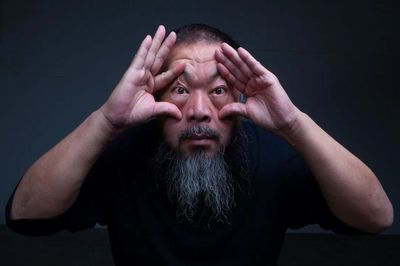
Ai Weiwei. Photo: Gonçalo F Santos.

Fifteen years ago Ai Weiwei was detained in a Chinese prison cell for 81 days. This July, the artist and activist will return to a faithful reconstruction of that 26-square-metre space for a 24-hour performance.
Between 3–4 July, audiences at Manchester’s Aviva Studios, home of the arts organisation Factory International, will be able to watch Weiwei sleep, eat, exercise, write, wash and be interrogated (by actors). Visitors will also be able to observe him—as his prison guards once could—through footage shown on CCTV cameras.
Speaking to The Observer about his experiences of imprisonment, Ai said: “I remember every detail. The floor and walls, the details of the sanitary system, and also those who guarded me as armed police, as well as the interrogator… For a long time afterwards, it returned to me in different forms in my nightmares.”
The work, titled Sewing a Button, takes its name from a poignant moment during his detention: after two months without a button to hold his trousers up, a guard finally brought a needle and thread to mend them.
The performance, which is the first time Ai Weiwei has re-enacted his incarceration, condenses this and many other experiences from his time in prison into just one day, which audiences can witness during two-hour timed slots.
The piece is a companion to the exhibition Button Up!, the artist’s largest site-specific installation to date, which also opens at Factory International in July. The show will explore the legacies of British imperialism, Chinese and British relations and the rise of globalisation.
In a statement, Ai said: “I’m not interested in making very big things just for the sake of it. But in Manchester, that wonderful warehouse space calls for monumental work.
“Visiting the city for this exhibition—the birthplace of the Industrial Revolution—and reflecting on Britain’s global territorial expansion made me realise I had to explore that history and understand how it connects to the forces driving today’s wars and global crises.”
The exhibition will feature two major new commissions: Eight-Nation Alliance Flags, for which the artist has emblazoned a collection of flags with half a million buttons, and a new iteration of History of Bombs, a mural made from over one million toy bricks.
These new works will sit alongside large-scale pieces going on show in the UK for the first time, including Law of the Journey (2017), a 47m-long inflatable boat containing hundreds of human figures and Wang Family Ancestral Hall (2015), a Ming dynasty ancestral temple reassembled from 1,500 individual wooden pieces. The former is a comment on migration, while the latter is Weiwei’s largest artwork to date.
“The world today is deeply divided, with tragedy all around,” the artist said. “Understanding history goes hand in hand with standing up for truth and justice.”








A respected voice in contemporary art discourse.
Focusing on ambitious storytelling and insightful art-world commentary. Ocula Magazine publishes in-depth interviews, critical essays and timely analysis on the artists, exhibitions and ideas driving the global art world.
Learn more about Ocula Magazine
Showcasing the best of the art world.
Ocula partners with galleries from around the world to highlight their artists, artworks and exhibitions. Gallery membership is by application and invitation, with each member vetted by an independent panel.
Learn more about Ocula Membership
Specialises in the sale of major artworks.
Led by a team with deep ties to the world’s leading auction houses, galleries and collectors. Ocula’s advisory team offers bespoke services to high-net-worth clients from around the world who are looking to acquire the best of contemporary and modern art.
Learn more about our team and services