





Ai Weiwei Responds to Vandal Who Smashed ‘Porcelain Cube’
Courtesy Ai Weiwei's Instagram.

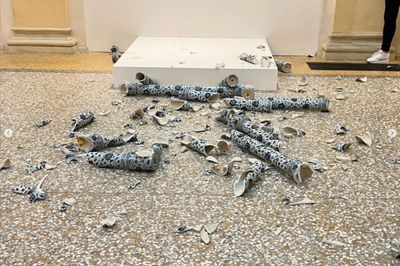
Ai Weiwei‘s Porcelain Cube (2009) was smashed during the opening of his solo exhibition Who am I? at the Palazzo Fava in Bologna, Italy, on Friday.
‘The sound of the destruction was so loud, resembling an explosion, that I initially thought it was a terrorist attack,’ Ai told artnet.
While its form resembles PVC pipes used in modern plumbing, the blue and white cube was meticulously crafted using traditional techniques in Jingdezhen—the same city where Ai had his sunflower seeds made.
Ai said the work ‘required numerous attempts and a lot of experiments to produce’ and that he does not plan to recreate it. A spokesperson for Palazzo Fava said it would be replaced with a life-sized print of the sculpture.
Porcelain Cube was reportedly smashed by 57-year-old Czech man Vaclav Pisvejc two days after he approached Ai with some 20 pages of notes on the artist’s book 1,000 Years of Joys and Sorrows (2021).
‘I felt the request was odd and told him I wasn’t prepared to read the notes,’ Ai said. ‘I encounter people like this from time to time. I wasn’t interested in engaging with him. I handed his notes to the staff of Galleria Continua and thought nothing more of it, though I often saw him sitting alone in the café.’
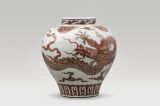
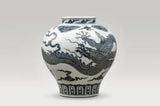
While Ai famously documented himself smashing a Han dynasty urn, Pisvejc has his own history of destruction. He was arrested for climbing the statue of Hercules and Caus in Florence naked last year, and for setting alight a shroud surrounding a copy of Michelangelo’s David in 2022. In 2018, he spraypainted a work by Urs Fischer and whacked Marina Abramović over the head with a painting. He told her he ‘had to do it for his art’.
‘Regardless of the motives, I believe that destroying an artwork on display is unacceptable,’ Ai told The Art Newspaper. ‘Such acts not only undermine the museum’s role as a public space but also pose potential physical threats, beyond merely damaging the meaning an artwork carries.’
‘This act raises larger questions about the trust we place in art and the way it is shared,’ he continued. ‘Such destruction is a reflection of the growing divisiveness, irrationality, and violence in society.’
Last year, I asked Ai how his litany of losses and traumas impacted him. He said ‘adversities and traumas stand as an inseparable part of life.’
‘An individual dwelling in times of peace and ease is not necessarily exempt from experiencing trauma,’ he went on. ‘In fact, the very tranquillity and comfort might be trauma itself.’ —[O]
Main image: Courtesy Ai Weiwei's Instagram.





A respected voice in contemporary art discourse.
Focusing on ambitious storytelling and insightful art-world commentary. Ocula Magazine publishes in-depth interviews, critical essays and timely analysis on the artists, exhibitions and ideas driving the global art world.
Learn more about Ocula Magazine
Showcasing the best of the art world.
Ocula partners with galleries from around the world to highlight their artists, artworks and exhibitions. Gallery membership is by application and invitation, with each member vetted by an independent panel.
Learn more about Ocula Membership
Specialises in the sale of major artworks.
Led by a team with deep ties to the world’s leading auction houses, galleries and collectors. Ocula’s advisory team offers bespoke services to high-net-worth clients from around the world who are looking to acquire the best of contemporary and modern art.
Learn more about our team and services