






Gallery Climate Coalition Calls for Culture Shift in New Report
Coalition chair Frances Morris stresses the need ‘to recognise our conventions and challenge our orthodoxies: how we make exhibitions, collect, or even interact’. Save to My OculaAs international delegates are gathered in Belém, Brazil, this month for COP30, representatives of the Gallery Climate Coalition (GCC) propose ways for the art world to be a role model for climate action with the release of a new stocktake report.
The ‘Five-Year Review of Climate Action in the Visual Arts’ is the first report of its kind for the GCC, a London-based environmental charity and membership organisation that aims to guide the sector toward greater sustainability through collective action, advocacy, and industry-specific resources.
The report identifies freight, air travel, and energy as the main culprits, accounting for 80 to 95 percent of total operational carbon emissions among reporting GCC members. Additionally, the largest 22 percent of art organisations are reported to generate half of the sector’s total emissions.
At the report’s launch at Christie’s in London on Friday, GCC environmental advisor Danny Chivers described the art world’s outsized influence, noting that ‘emissions are disproportionately high for the size of the sector’ and highlighting the relatively small number of players actively working to become more sustainable, despite a wider interest in doing so.
But all that seems to be changing, with GCC membership having grown tenfold since its inception in 2020, from 200 London-based commercial galleries to 2,000 sector-wide members from more than 60 countries. Among them are institutions like the Guggenheim Museum Bilbao and New York’s Museum of Modern Art, global fair Art Basel, and nonprofit Arts Initiative Tokyo.

Of the coalition’s reporting members, 89 percent reported tangible reductions to their carbon footprints over the last five years.
Speakers at the report’s launch emphasised the need for a change not only in the art world’s carbon footprint, but in its culture and behaviours. Chivers, for example, highlighted the potential for switching from air to sea freight or flying in lower classes for business trips.
Such measures were supported by Christie’s head of sustainability David Finley, who said that switching to renewable energy sources, scaling down catalogue publishing, and introducing a more ‘sensible’ travel policy, among other initiatives, had helped the auction house reduce its carbon emissions by 69 percent from 2019 to 2024.
Around four fifths of early GCC members were ‘on track’ to meet the coalition’s target of halving industry emissions by 2030, which would save five million tonnes of carbon dioxide equivalent each year if adopted across the visual arts sector.
GCC chair Frances Morris stressed the need for the sector ‘to recognise our conventions and challenge our orthodoxies: how we make exhibitions, collect, or even interact’. She hopes to ‘scale up’ the GCC to increase its global reach and support more organisations in need of a helping hand to reach their sustainability goals.
Morris was formerly the director of Tate Modern. During her tenure, in 2017, BP ended its 26-year-long sponsorship of Tate following years of campaigning from groups such as Liberate Tate for the institution to divest from the oil giant, though BP cited an ‘extremely challenging business environment’ as the reason for its withdrawal. —[O]
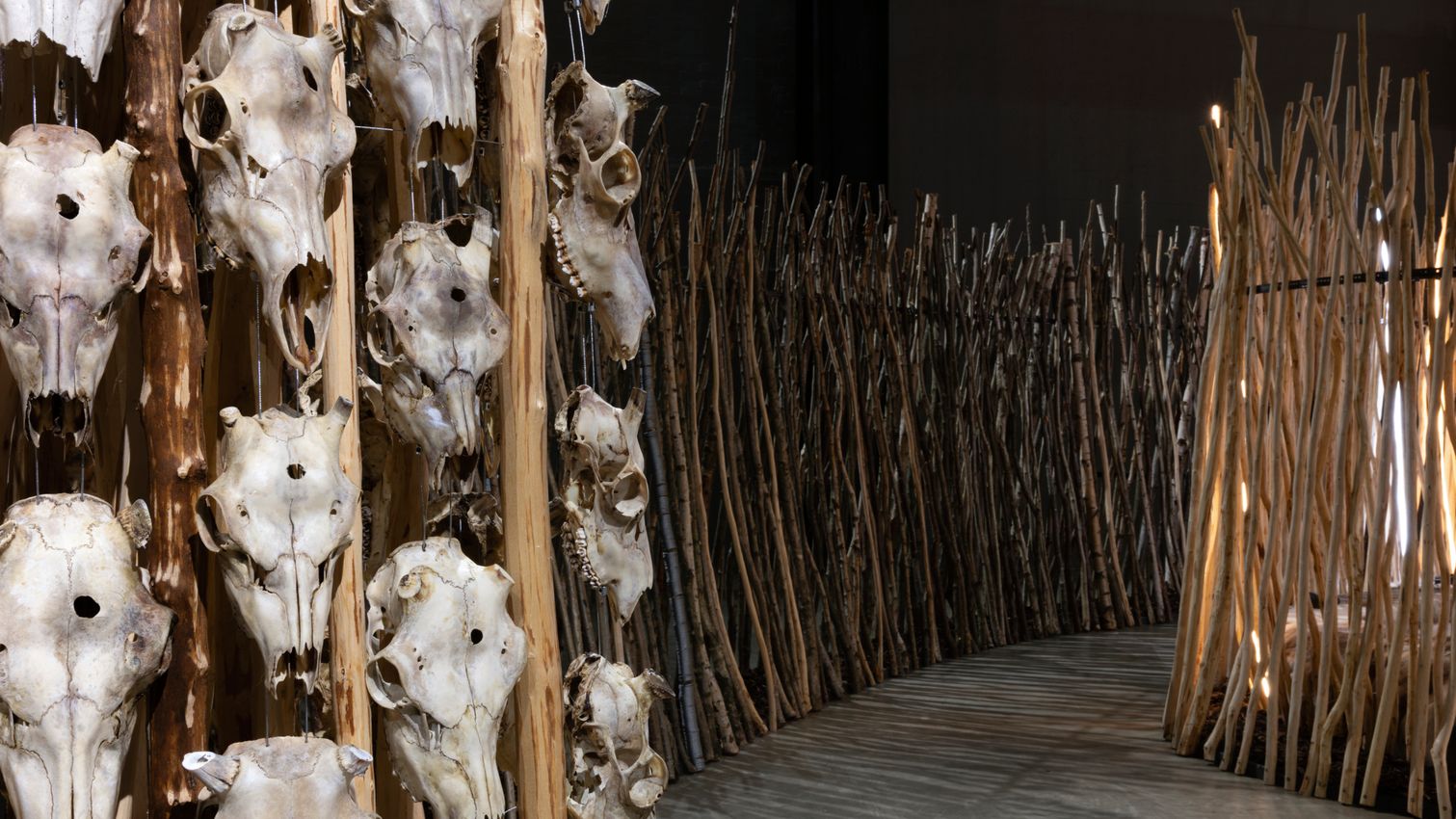
Main image: Exhibition view: Hyundai Commission: Máret Ánne Sara: Goavve-Geabbil, Tate Modern, London (14 October 2025–6 April 2026). © Máret Ánne Sara. Photo: © Tate (Sonal Bakrania).





A respected voice in contemporary art discourse.
Focusing on ambitious storytelling and insightful art-world commentary. Ocula Magazine publishes in-depth interviews, critical essays and timely analysis on the artists, exhibitions and ideas driving the global art world.
Learn more about Ocula Magazine
Showcasing the best of the art world.
Ocula partners with galleries from around the world to highlight their artists, artworks and exhibitions. Gallery membership is by application and invitation, with each member vetted by an independent panel.
Learn more about Ocula Membership
Specialises in the sale of major artworks.
Led by a team with deep ties to the world’s leading auction houses, galleries and collectors. Ocula’s advisory team offers bespoke services to high-net-worth clients from around the world who are looking to acquire the best of contemporary and modern art.
Learn more about our team and services