






Could Anish Kapoor Be Prosecuted for ‘BUTCHERED’?
The Turner Prize‑winning artist pushed the boundaries of protest art last week with BUTCHERED, a provocative collaboration with Greenpeace that carefully distinguished the creative act from the criminal one. Save to My Ocula

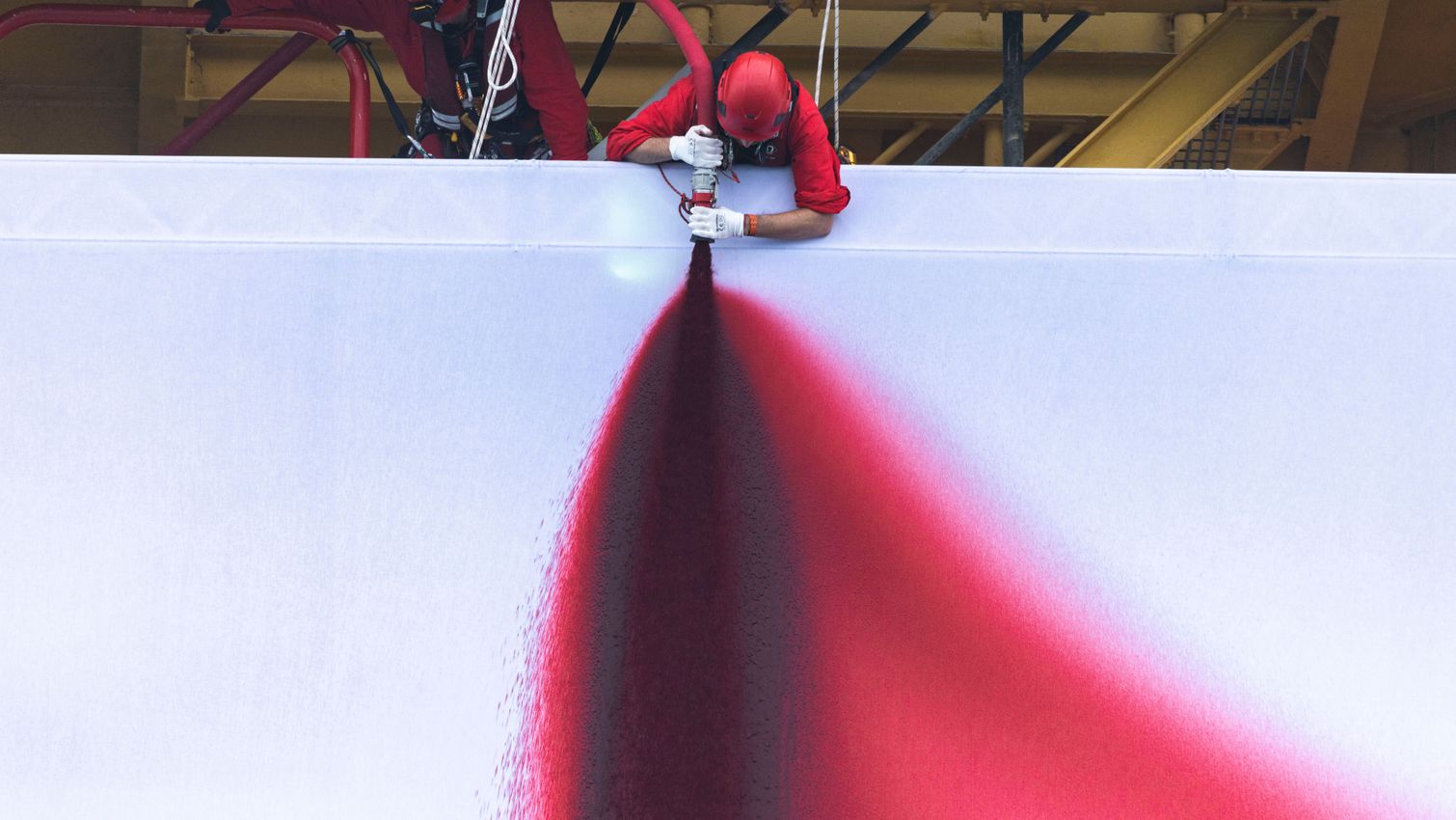
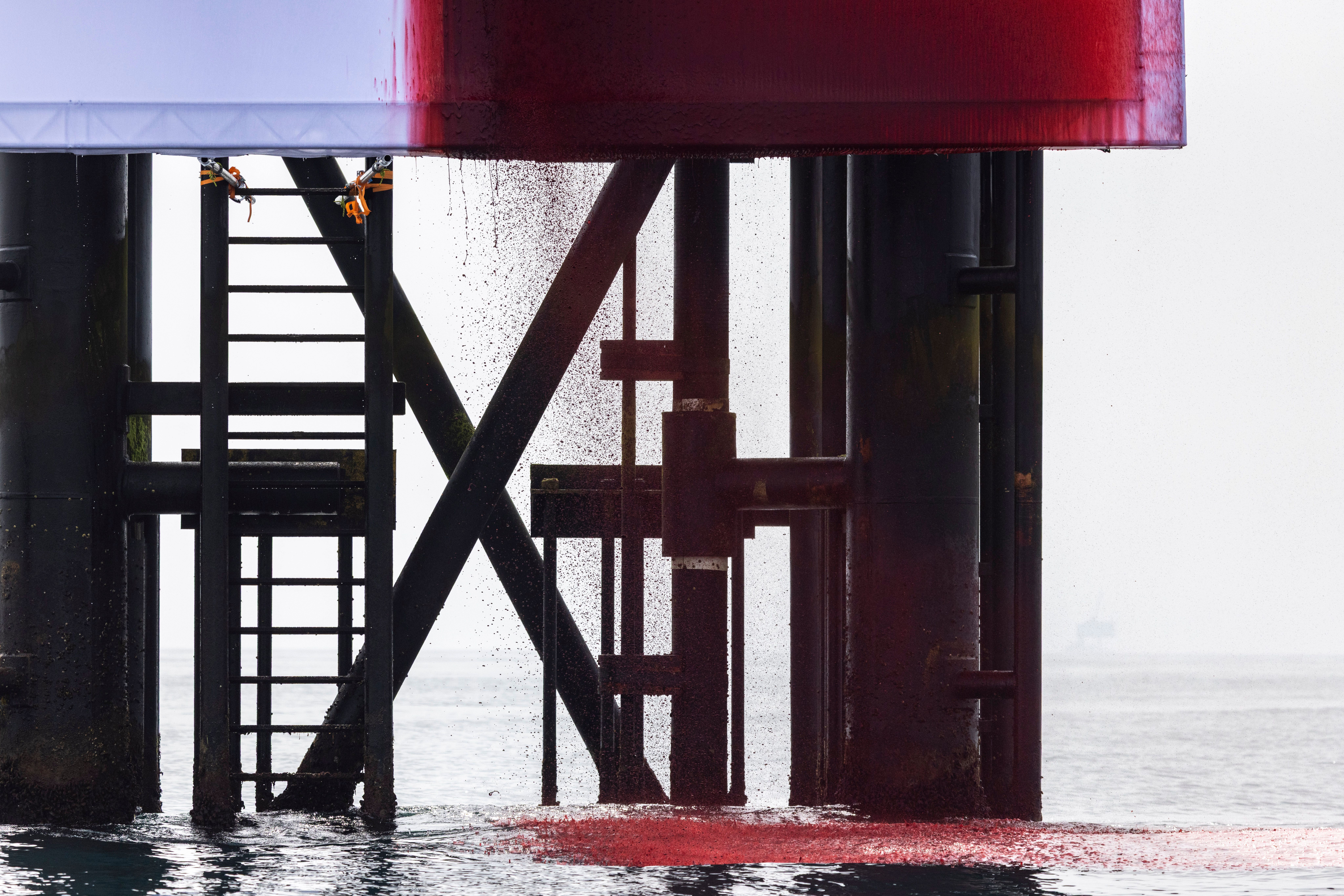
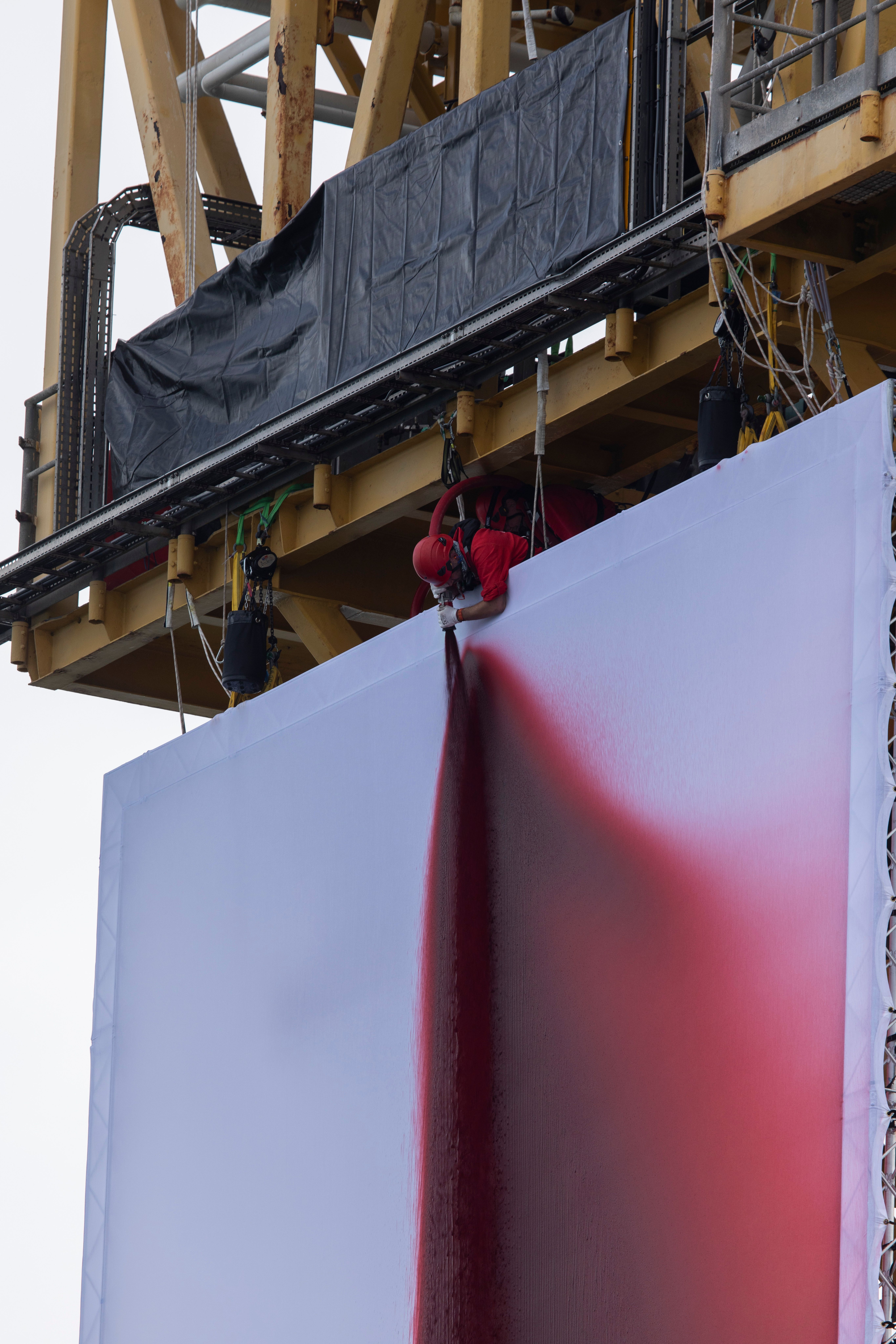
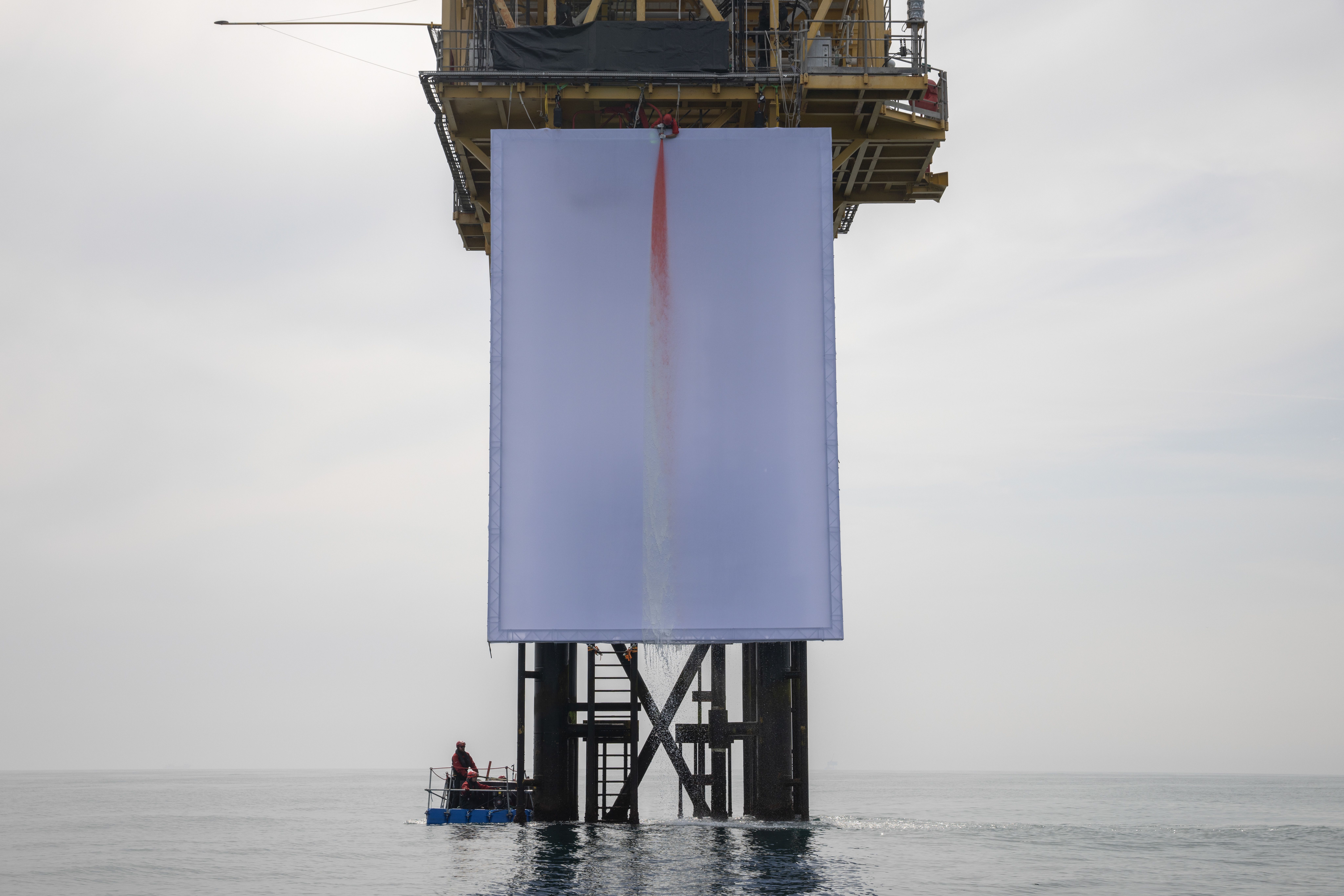
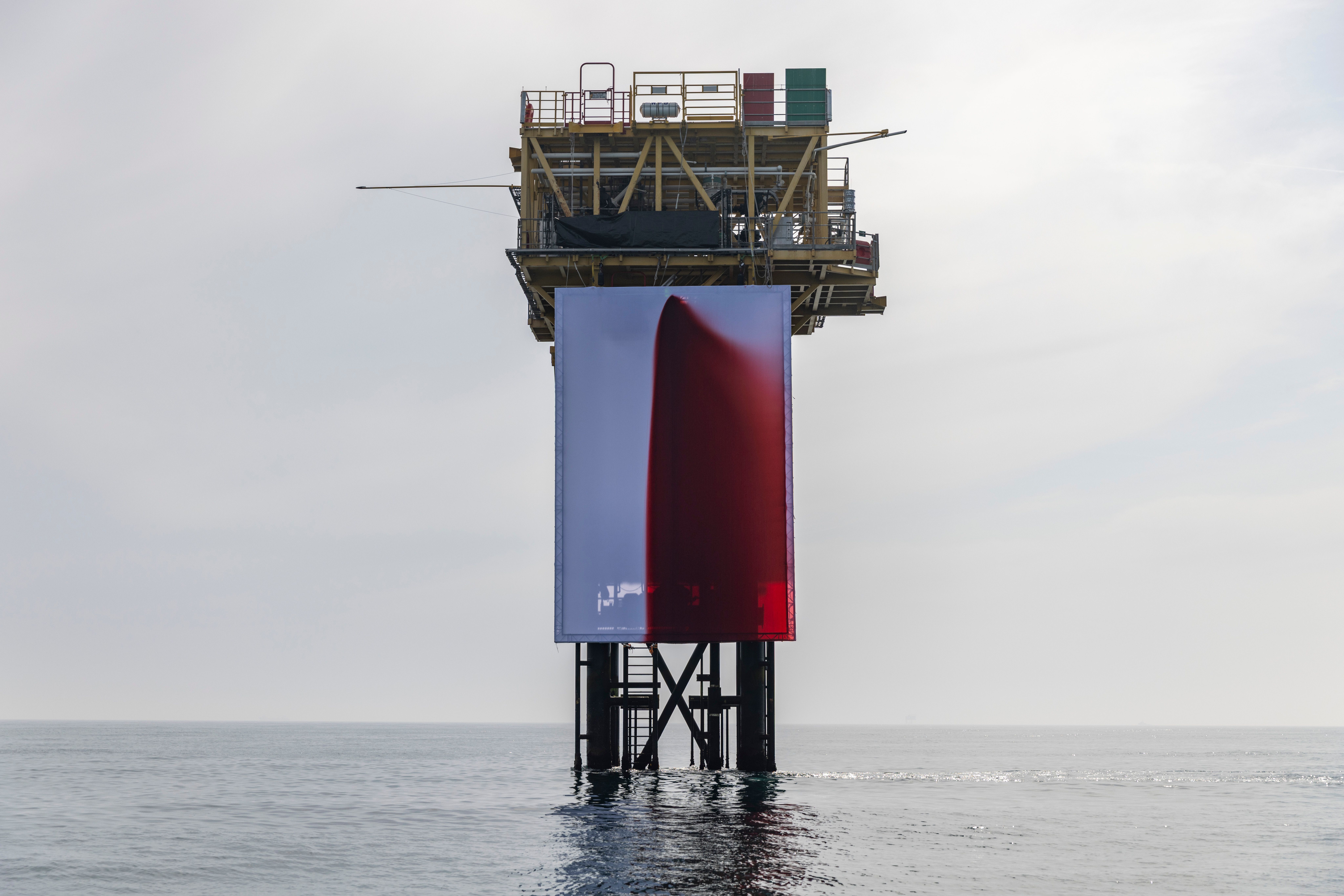
Last Friday morning, a group of Greenpeace activists sailed to a Shell-owned gas platform in the North Sea some 45 nautical miles from the Norfolk coast, before scaling the rig and unfurling an enormous 12-by-8-metre canvas, onto which they unleashed 1,000 litres of a blood-red mixture made of seawater, beetroot powder, organic coffee granules, and non-toxic pond dye.
The cascading liquid created a dramatic stain across the surface—directly confronting fossil fuel extraction at its source. It was a visceral ‘visual scream’ created by the artist Anish Kapoor, who collaborated with Greenpeace to realise the work in response to the escalating climate crisis worldwide.
As Kapoor explained to Channel Four, BUTCHERED is a reaction to what he calls ‘this criminal, morally corrupt thing’ continuously happening. He framed the installation on an active oil rig as not ‘overtly readable as a political act’, yet, by virtue of its site, becoming one. His phrasing suggests a distinction between the act of creation and the act of installation. Asked whether he was declaring war, Kapoor replied ‘yes’, urging other artists to use their platforms to address environmental issues and protect the planet. If artists are to heed this call, they may need to move quickly towards more sophisticated strategies—negotiating the line between creative and criminal acts
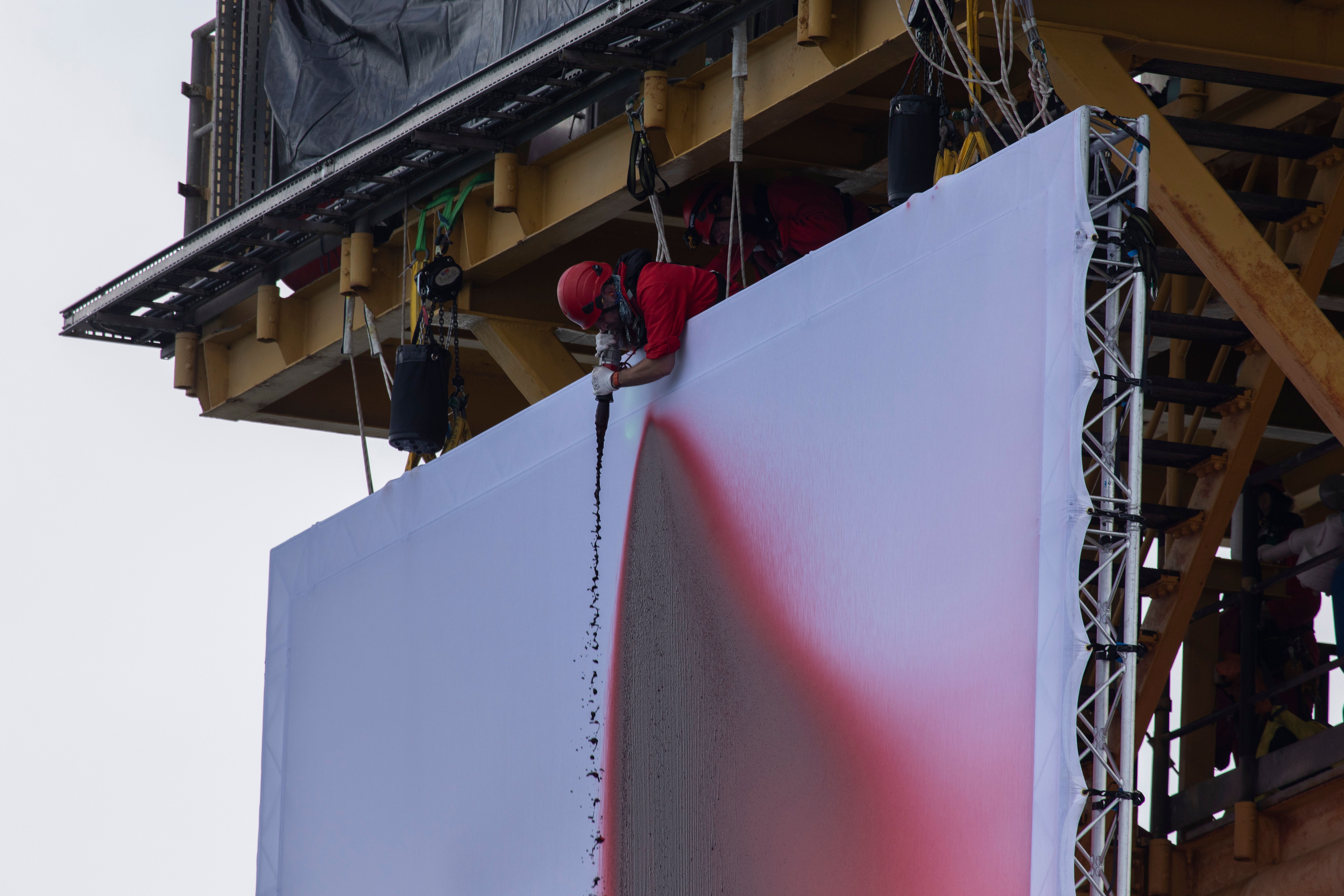
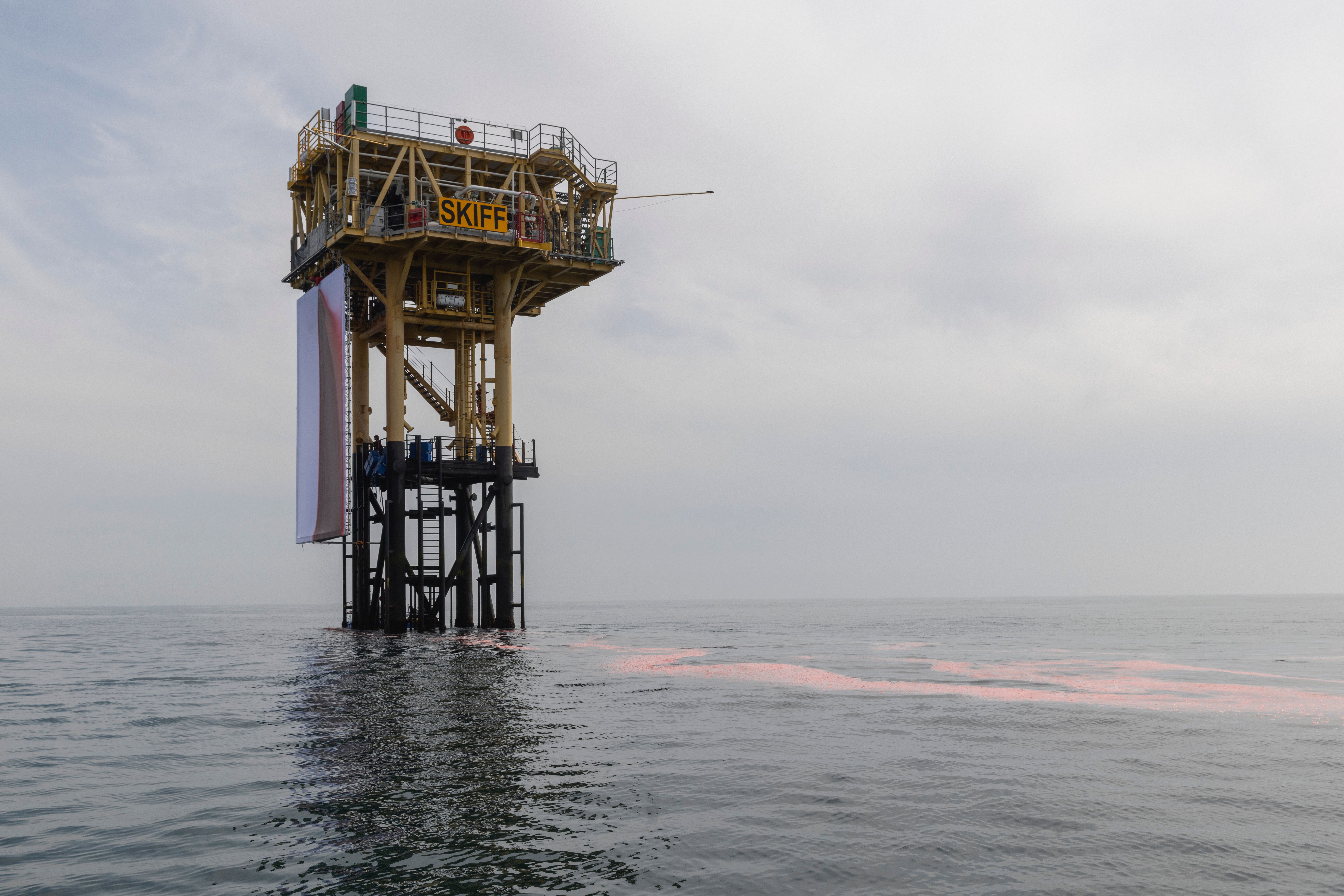
Shell U.K. was quick to condemn the protest, describing it as ‘illegal trespassing’ and ‘extremely dangerous’ while citing violations of U.K. maritime and safety laws. The Petroleum Act 1998 established a 500-metres safety zone around offshore platforms to protect personnel and prevent accidents, and unauthorised entry constitutes a prosecutable offence. Additional legislation may also apply including the Criminal Damage Act 1971 (if damage can be demonstrated), the Health and Safety at Work Act 1974 (where worker safety is at risk), and, in more serious cases, conspiracy or joint enterprise laws where planning or incitement is established.
Historically, Greenpeace campaigns in the North Sea have led to threats of severe penalties, including imprisonment and multi-million-pound settlements with Shell and other corporations. In practice, Greenpeace often negotiates with authorities, accepting fines and, at times, restrictions on future protest locations. Penalties for activists can include up to two years’ imprisonment, substantial fines, or both.
At present, there is no indication that Kapoor faces direct legal action. U.K. law typically targets those who physically carry out unlawful acts—such as trespass or disruption—rather than conceptual contributors. Kapoor’s role as the originator of BUTCHERED affords a degree of legal distance, with the distinction between artistic authorship and direct criminal activity remaining central.
Greenpeace has taken public responsibility for both the installation and its legality, distancing Kapoor from direct involvement in the trespass. Nevertheless, the high-profile nature of BUTCHERED alongside Kapoor’s explicit endorsement of the protest, may complicate this separation. While conspiracy charges against artists are theoretically possible, such cases remain rare without clear evidence of planning or incitement.
The installation occurs amid a broader global tightening of legislation around protest, particularly in relation to environmental activism. For now, those who physically installed BUTCHERED are most likely to face immediate legal consequences, whether in the form of trespass charges, fines, or other penalties. Yet the collaboration with Kapoor ensures sustained public attention.
The event may ultimately test the limits of legal tolerance for artistic civil disobedience in highly regulated environments, raising questions for future art–activist collaborations: will artists face greater scrutiny and risk? Could legal frameworks expand to encompass those whose creative work catalyses direct action? For now, these questions remain open. —[O]






A respected voice in contemporary art discourse.
Focusing on ambitious storytelling and insightful art-world commentary. Ocula Magazine publishes in-depth interviews, critical essays and timely analysis on the artists, exhibitions and ideas driving the global art world.
Learn more about Ocula Magazine
Showcasing the best of the art world.
Ocula partners with galleries from around the world to highlight their artists, artworks and exhibitions. Gallery membership is by application and invitation, with each member vetted by an independent panel.
Learn more about Ocula Membership
Specialises in the sale of major artworks.
Led by a team with deep ties to the world’s leading auction houses, galleries and collectors. Ocula’s advisory team offers bespoke services to high-net-worth clients from around the world who are looking to acquire the best of contemporary and modern art.
Learn more about our team and services