





Spirituality and Sex Appeal: On the Ground at the 2026 Venice Biennale
A former porn star and the Catholic Church stole the show at the opening week of this year’s Venice Biennale. Just try not to fall into the lagoon, writes Roisin Agnew. Save to My Ocula
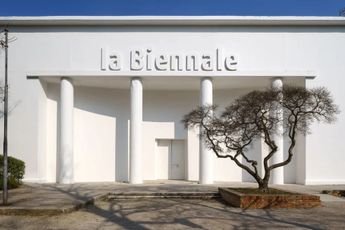
Never have I been more ripped off, nor have politics felt more frontal (or death more present), than at this year’s Venice Biennale. It stood as a concentration of the malaise beyond the city, fuelled by warring political leaders and the insidious march of technology, that has become a daily reality in recent years. It is this very ailment that the late curator Koyo Kouoh hoped to steer us away from when inviting artists and audiences alike to engage with silence and the liminal spaces of unknowability, the in-between, in the biennale’s central exhibition, In Minor Keys.
But war, death, and lack of funds have never gotten in the way of a good time, and this year’s biennale was (despite the mixed critical reception) a standout for me as the opening of the fifth consecutive edition that I’ve found myself at over the past decade.
Act of God
In a climate of renewed militarisation, which has seen most countries present at the biennale assign bigger quotas of their GDP towards defence, the usual distaste for having to engage with artists’ presentations through the prism of the nation state felt particularly pointed. So it’s unsurprising that the big winner this year was not a country but an organised religion.
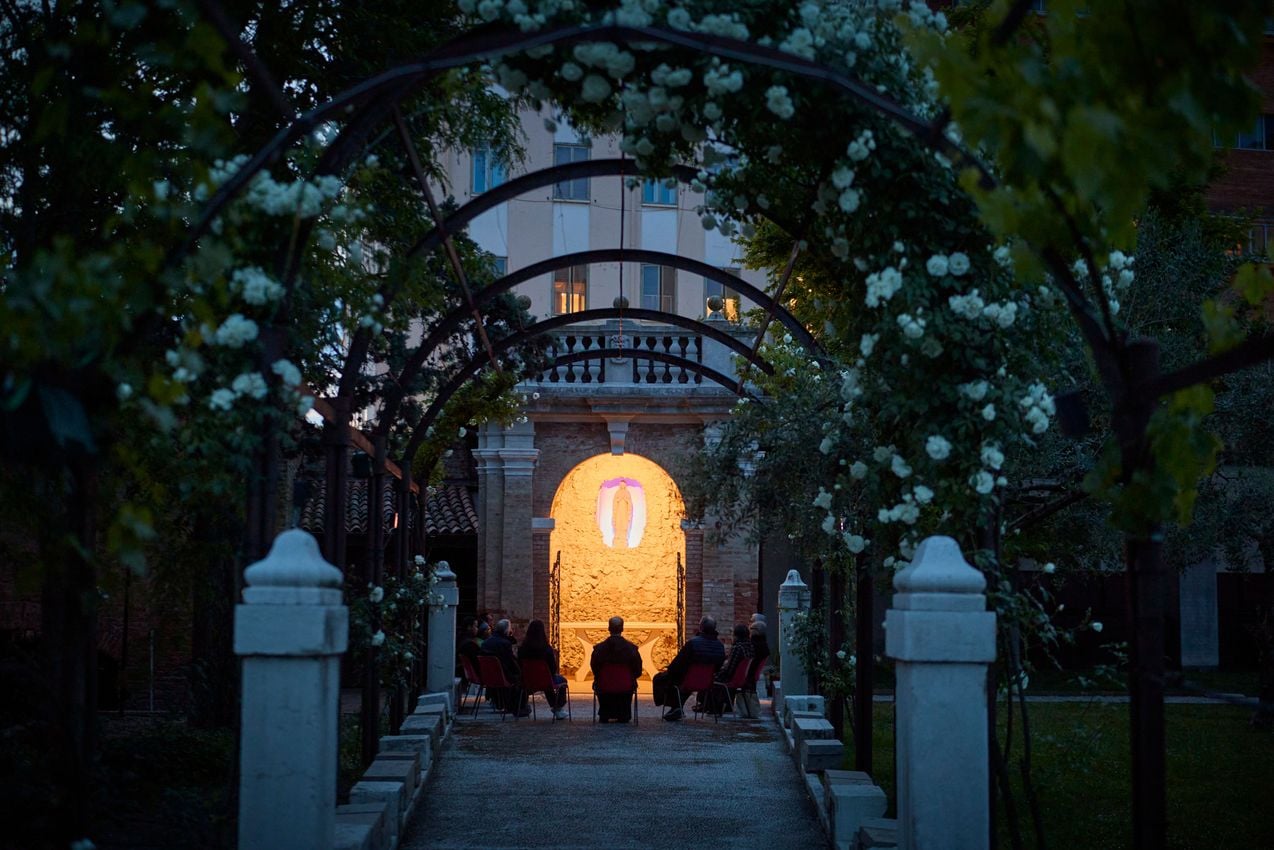
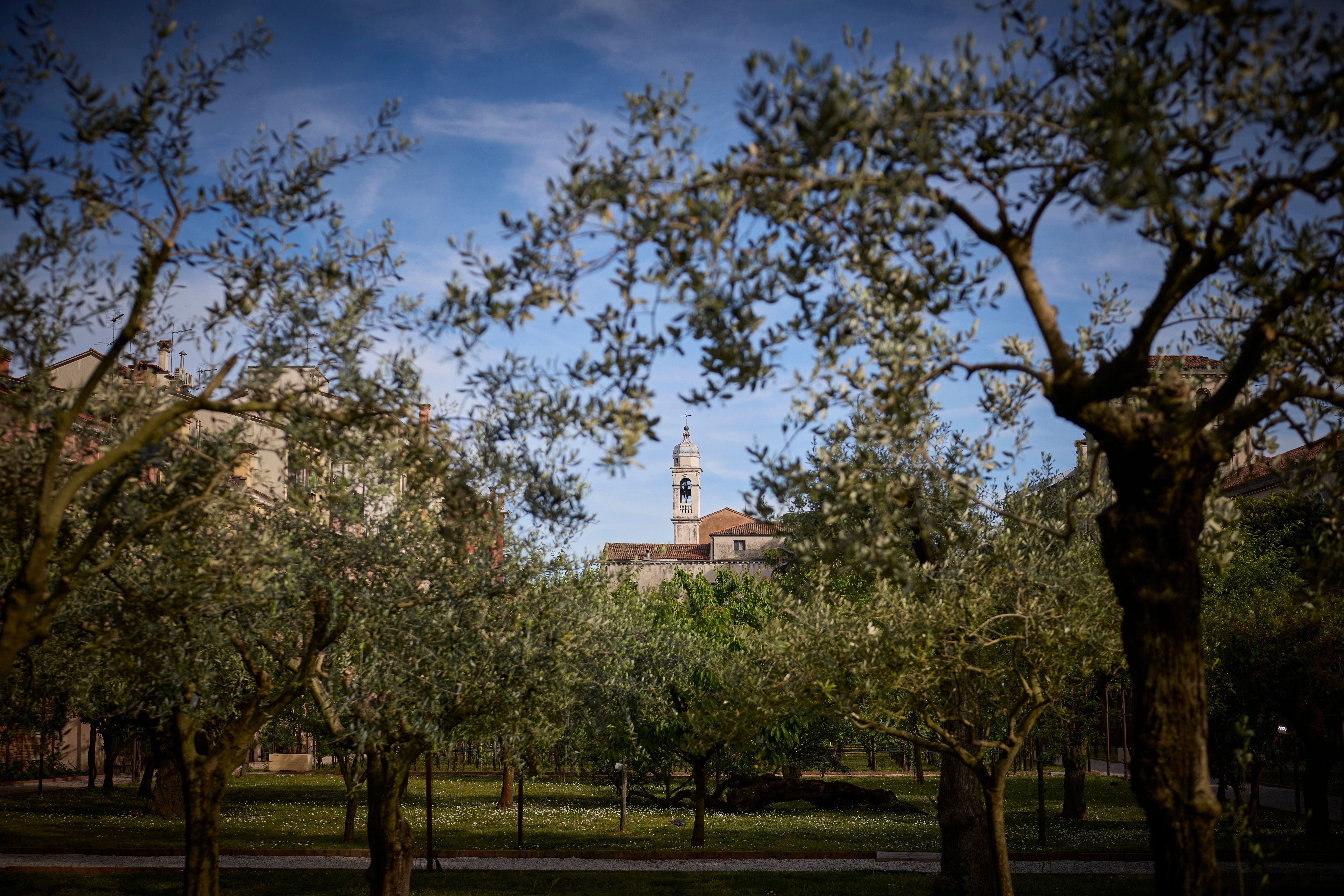
Catholicism has had a good year (see Leo “owning” Trump) and it stole the show at this year’s Venice Biennale. The Holy See Pavilion, curated by Hans Ulrich Obrist, Ben Vickers, and a team of bishops and cardinals who work on the Vatican’s cultural output year-round (I’ve seen the WhatsApp group), delivered a technically complex and deeply affecting experience in the Giardino Mistico dei Carmelitani Scalzi.
“Catholicism has had a good year, and it stole the show at this year’s Venice Biennale”
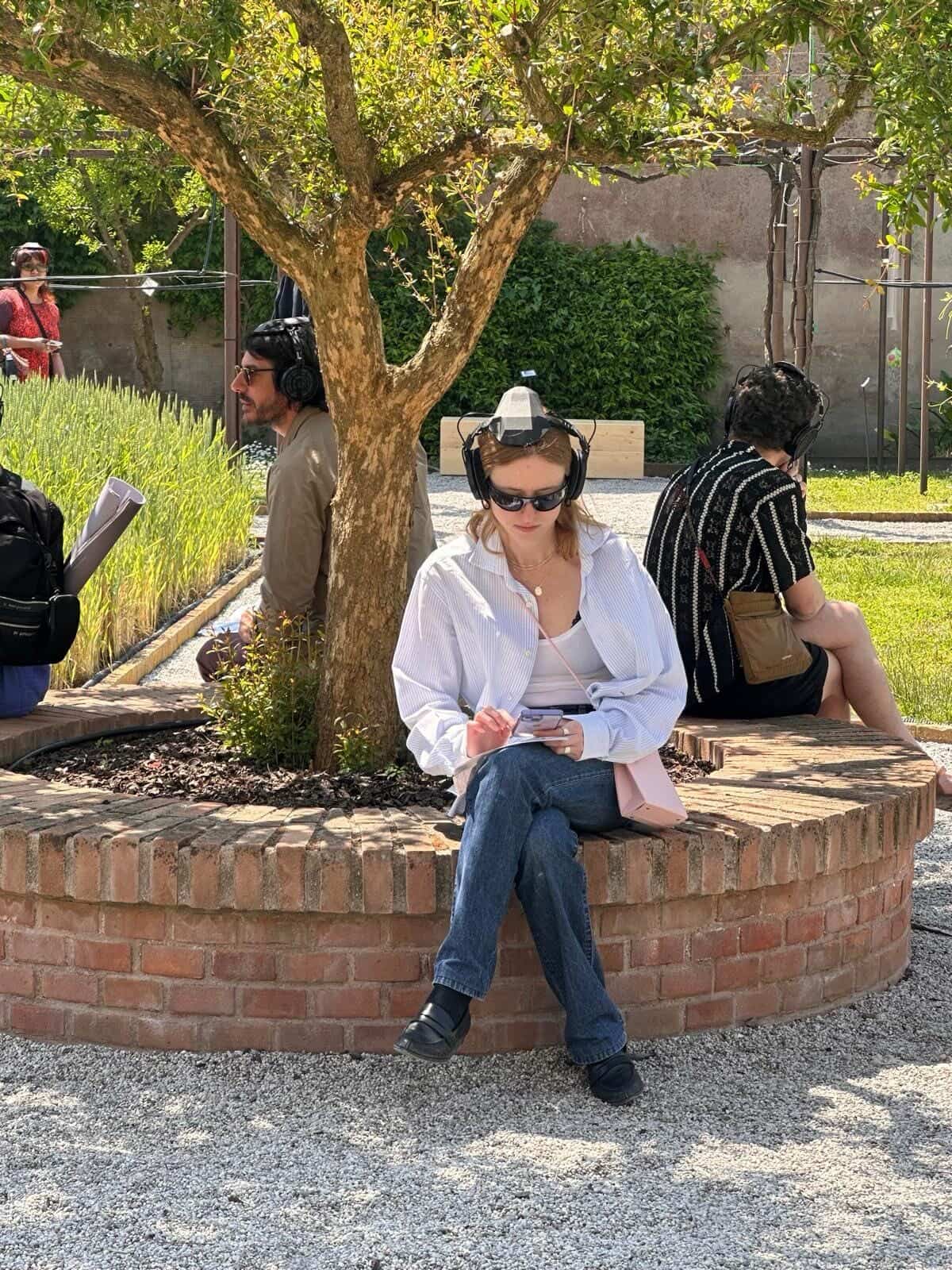
The Ear Is the Eye of the Soul draws on musical polymath Hildegard von Bingen’s teachings. Visitors are invited to contemplate the monks’ herb and fruit gardens in a quiet corner of Cannaregio while wearing headpieces that play a musical tapestry of new commissions by artists and musicians including Holly Herndon, Kali Malone, Patti Smith, Brian Eno, FKA Twigs and Devonté Hynes, all of which have been produced with sound artists Soundwalk Collective.
What could have been in danger of being overwhelmed by the celebrity factor in fact acted as a humbling moment of unison between nature and experience, space and sound. As I listened, I was transported far from the Giardini and Arsenale, both literally and spiritually.
Hell or High Water
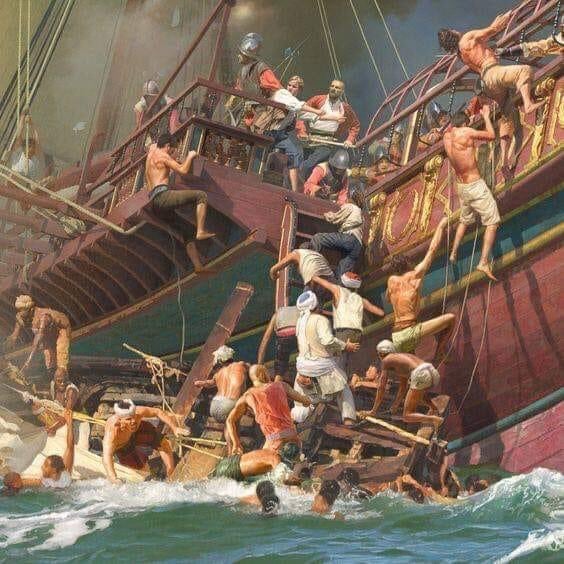
Last Venice Biennale it was fashion designer Rick Owens’ party and the Iceland-Ireland Bjork party that guests were clawing at each other to get into. This year, things went nautical, and the hottest party of the opening week was the Mendes Wood party, dubbed the “Pirate Ship”. I didn’t have it in me and stayed at the “Cretin Pavilion”, as one journalist put it, aka the cosy, wood-panelled Bar Al Campanile, where I received my intel from the rejects later.
Mendes Wood founder Felipe Dmab apparently adopted a Roman emperor-like approach to proceedings as he presided over a strictly enforced guest list. His gate-keeping led one particularly desperate would-be party-goer (a waitress from St John’s restaurant in London, as word has it) to climb through a window of the moored boat, only to be summarily thrown out by security. As she exited in front of the assembled crowd (several of whom were beginning to threaten violence on the door staff), she announced loudly that they ought not to not bother over such a boring party.
“Through a fateful miscalculation of distance, the artist fell into the lagoon”
According to The Specator’s arts editor Igor Toronyi Lalic, this did not prevent another young British artist nearby from deciding to attempt to board yet another nearby yacht in the hope of catching a glimpse of a Basquiat painting rumoured to be on display in its living room. Through a fateful miscalculation of distance, the artist fell into the lagoon. But help was at hand. Two writers from Plaster magazine came to his assistance and were pulling him ashore. That is, until someone taking a photo of them prompted them to pose and let the young British artist fall straight back into the lagoon.
A Thing of the Past
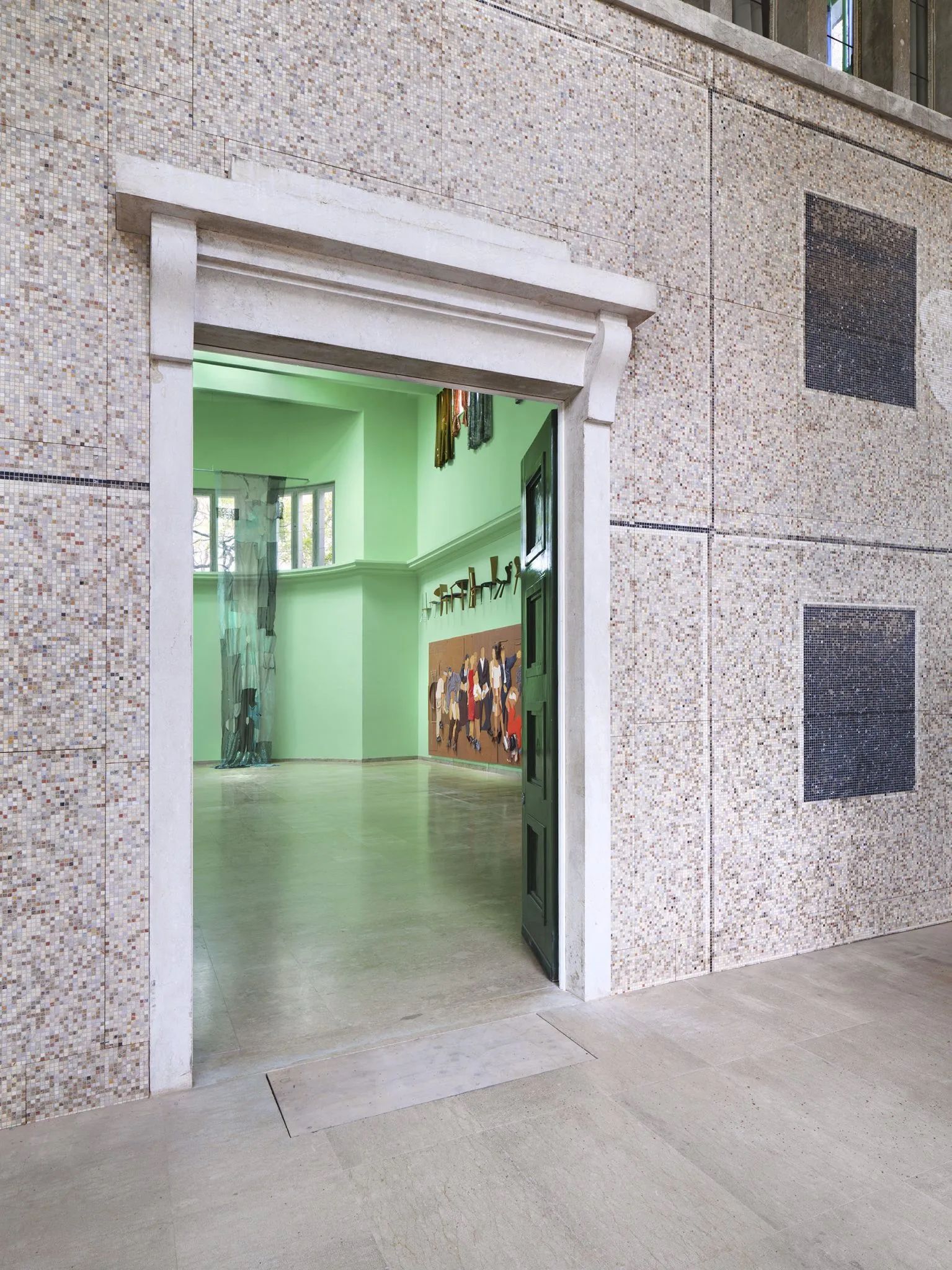
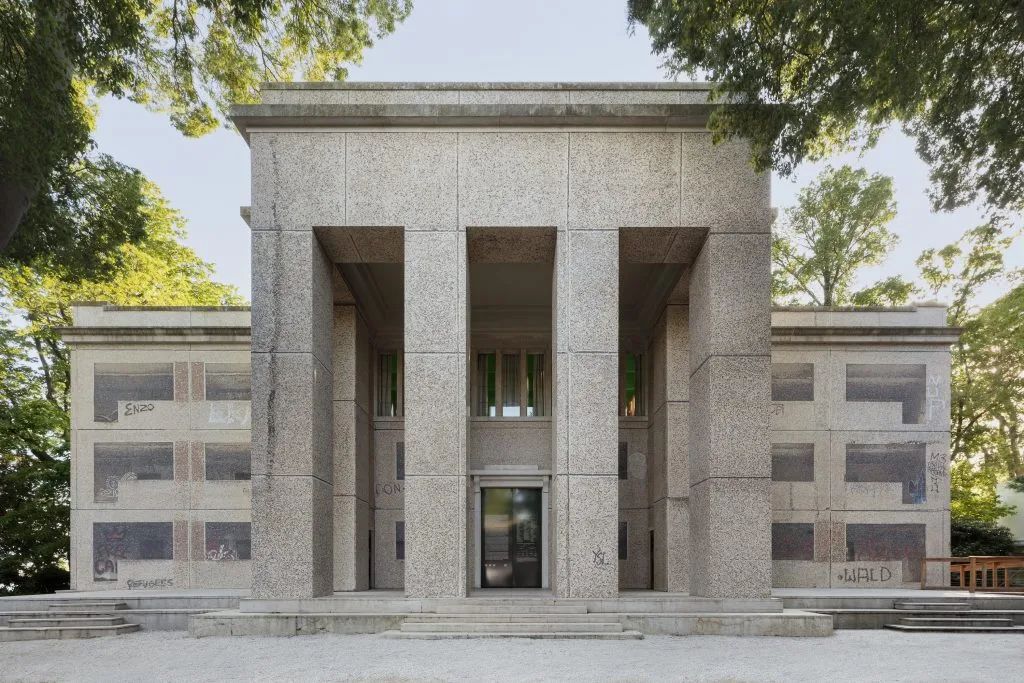
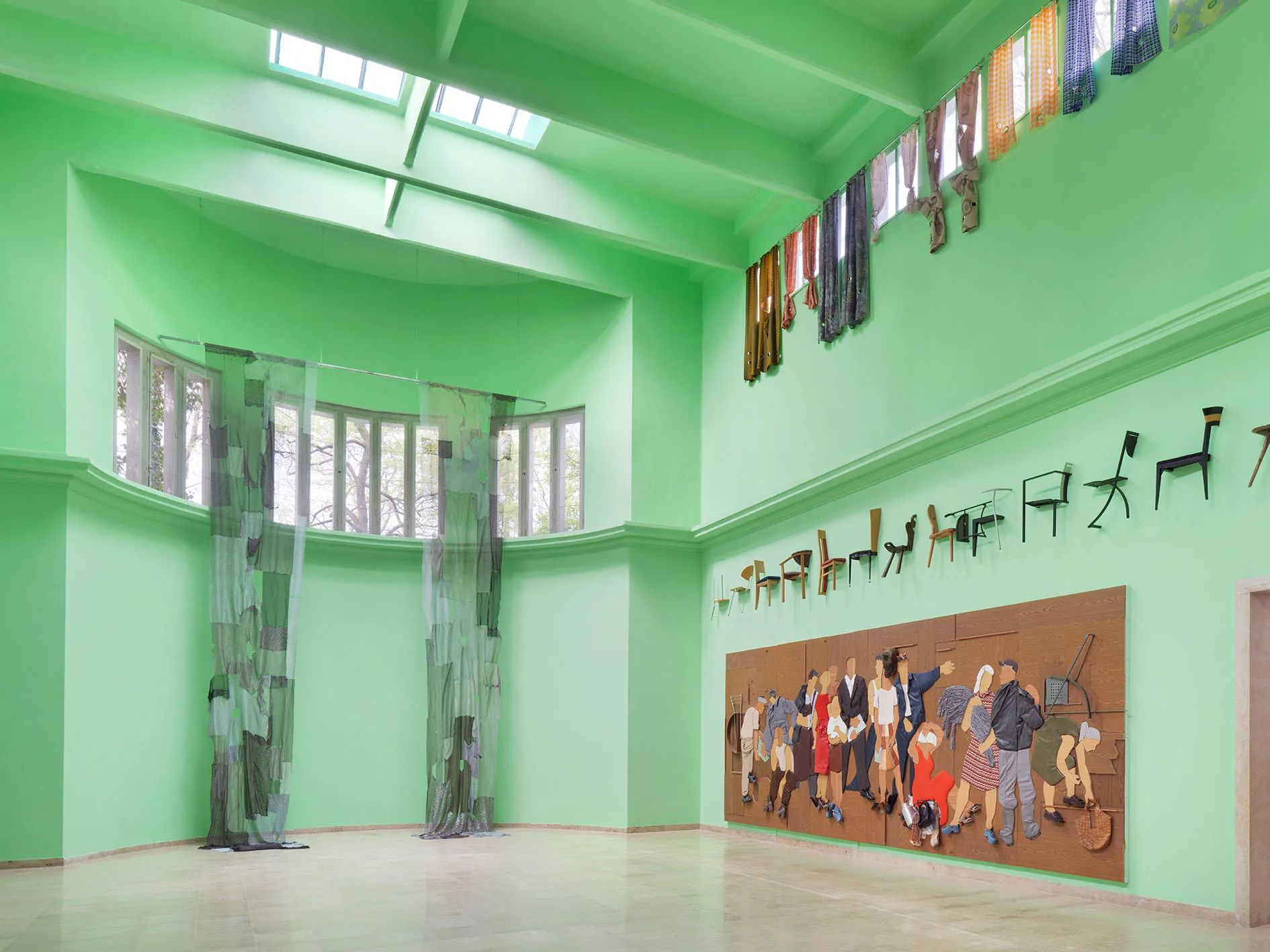
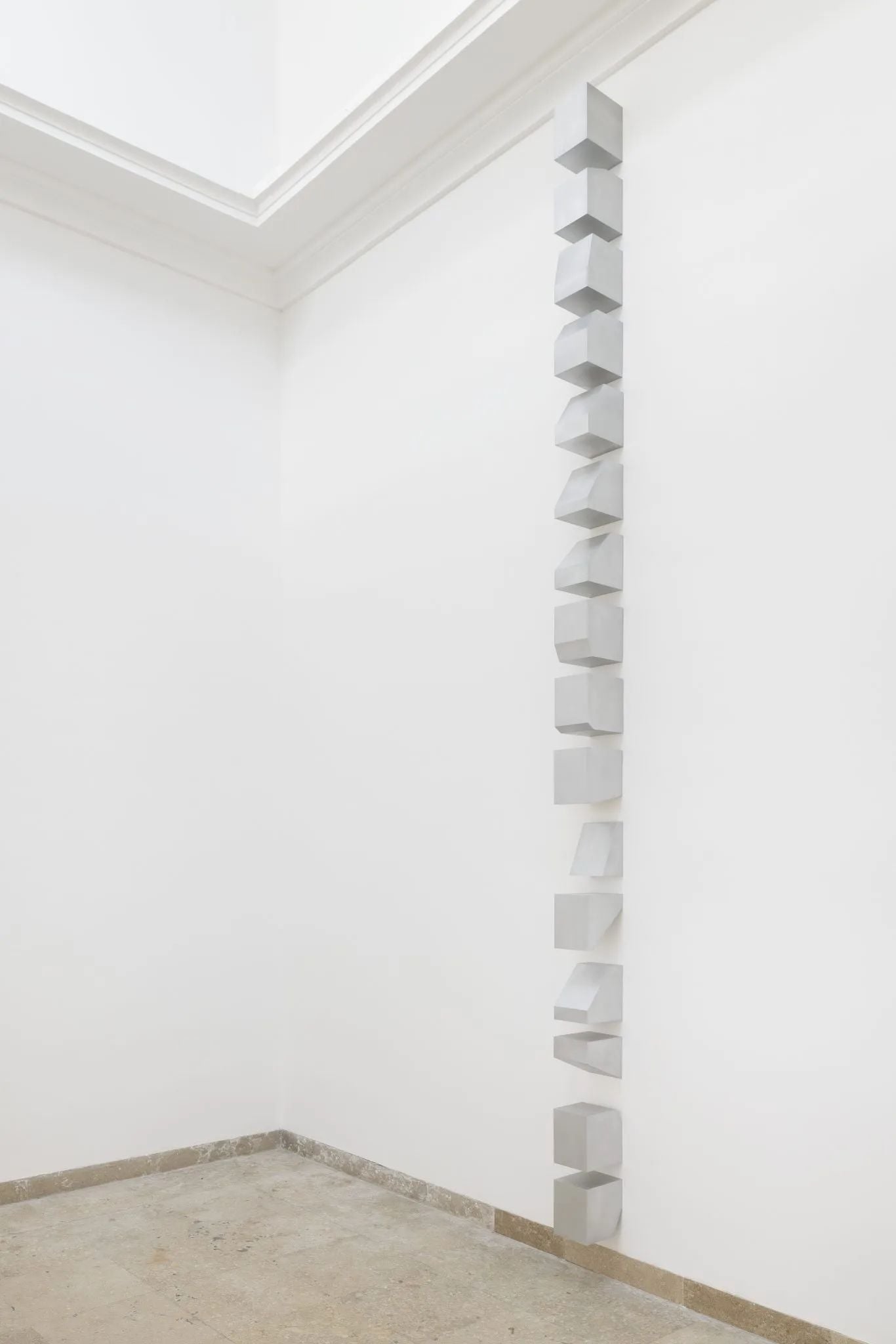
I absolutely loved Henrike Naumann’s work in the German pavilion, as well as Sung Tieu’s subtle and humorous anti-fascist mosaic on the front facade of the pavilion. Somewhere between set design and material enquiry, it captured history through the banal language of objects to embed the everyday within the very walls of the pavilion. Ugly curtains hang from the high ceilings of the 1938 Nazi-designed pavilion and chairs seem to emerge from the walls, acting as mental trampolines back to visions of the GDR and barely-remembered scenes from a Fassbinder film. The weight of history and its toll on the present saturated every single throwaway object in Naumann’s Ruin.
As I walked through the presentation, I thought of the loss of Naumann herself, who died of an aggressive stomach cancer just weeks before the show’s completion, meaning she never got to see it. This biennale was haunted by death, most notably the absence of curator Kouoh herself.
Fashion in the Biennale
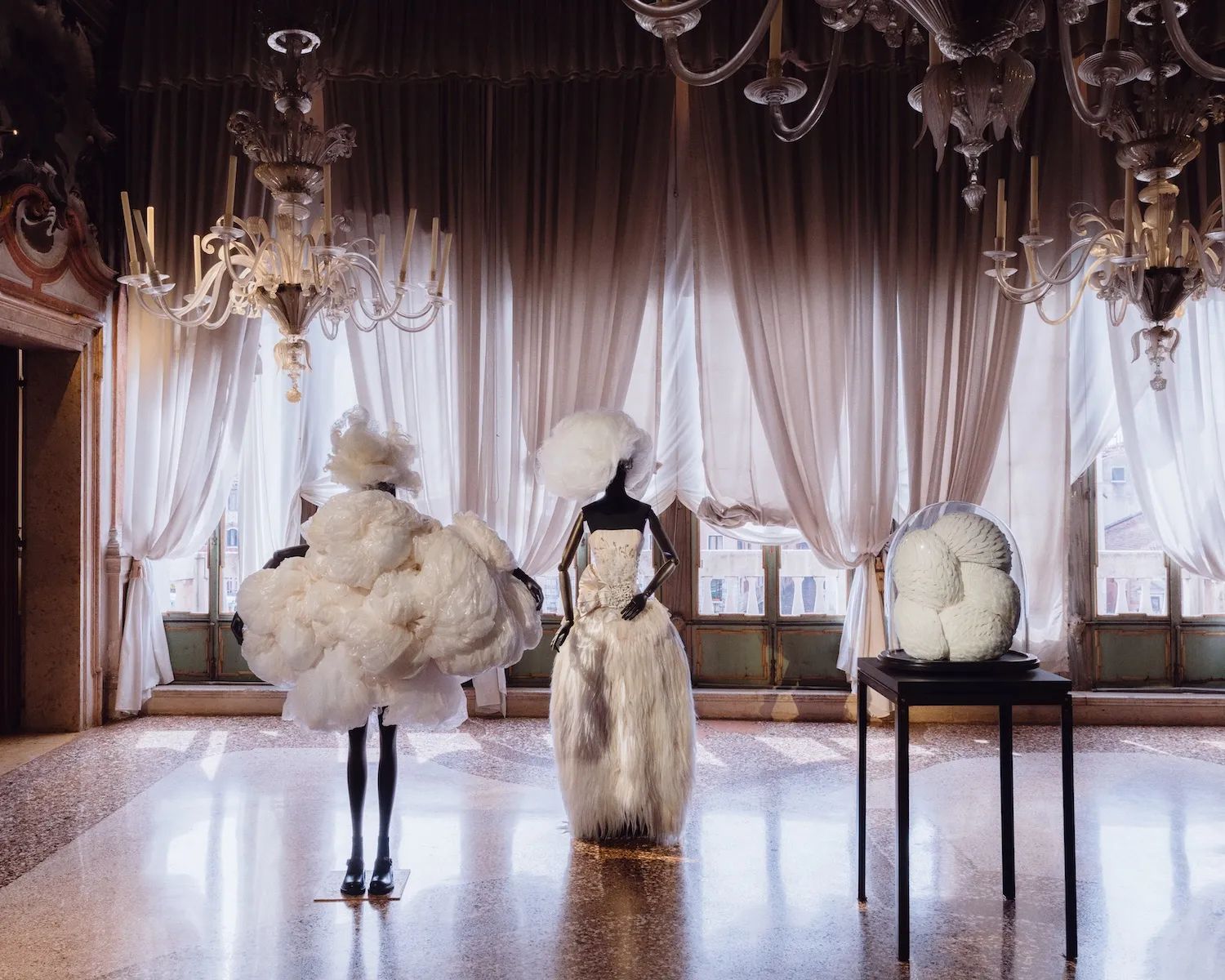
One of the most prominent slogans this year, plastered on Vaporetto (water bus) stops and emblazoned on tote bags, was “The Only True Protest Is Beauty”, courtesy of the inaugural exhibition staged at the newly established Fondazione Dries Van Noten. Noten is the latest fashion designer to open an arts foundation in one of Venice’s centuries-old palazzos. The show’s inane, aphoristic title only served to heighten my awareness of the often tone-deaf presence of fashion during the opening week of each edition of the Venice Biennale.
“Fashion patronage dominates the agenda, and represents the ‘fondazionification’ of the biennale”
We have Fiorucci, Prada, Bulgari, and now Dries Van Noten fondaziones in Venice. Fashion patronage dominates the agenda. It represents the ‘fondazionification’ of the biennale, according to e-flux editor George Macbeth. This is a moment when fashion patronage no longer bridges the gap (as public institutions might once have done), but instead creates its own subtle, elevated economy of difference. According to George, “the most obvious of these is sheen and ‘finish’, where the impromptu, the ad-hoc, and the messy modes of art-making are crowded out.” I would add that it seems to foster a shallow aesthetics of gesture that never seems to rise to an affective plain.
Fashion at the Biennale
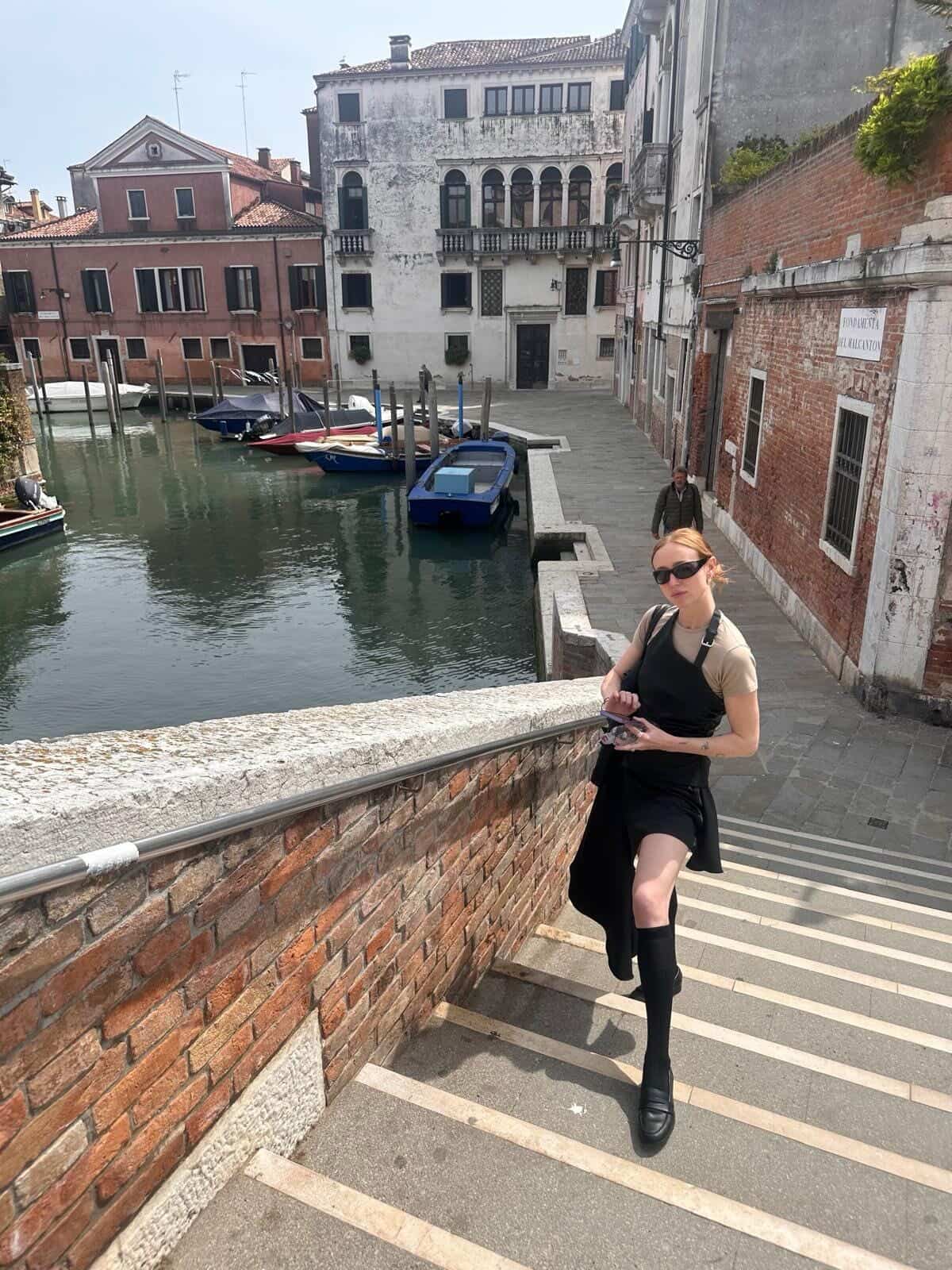
Every year the people are hotter and the fashion gets better: sue me. The weather helped this year, delivering ideal ‘mezza stagione’ (mid-season) wardrobe options after the monsoon conditions of Wednesday had dissipated. Most brands on show were the usuals: ubiquitous Tabis, lots of Comme Des Garcons and Margiela, Issey Miyake among the grown-ups, Prada Red Label skirts. There was a lot more Eckhaus Latta—a reflection of the huge NYC contingent in Venice this year. Most-spotted bag was the beautiful Jil Sander Cannolo Iconic… divine.
“Every year the people are hotter and the fashion gets better: sue me”
See the Light
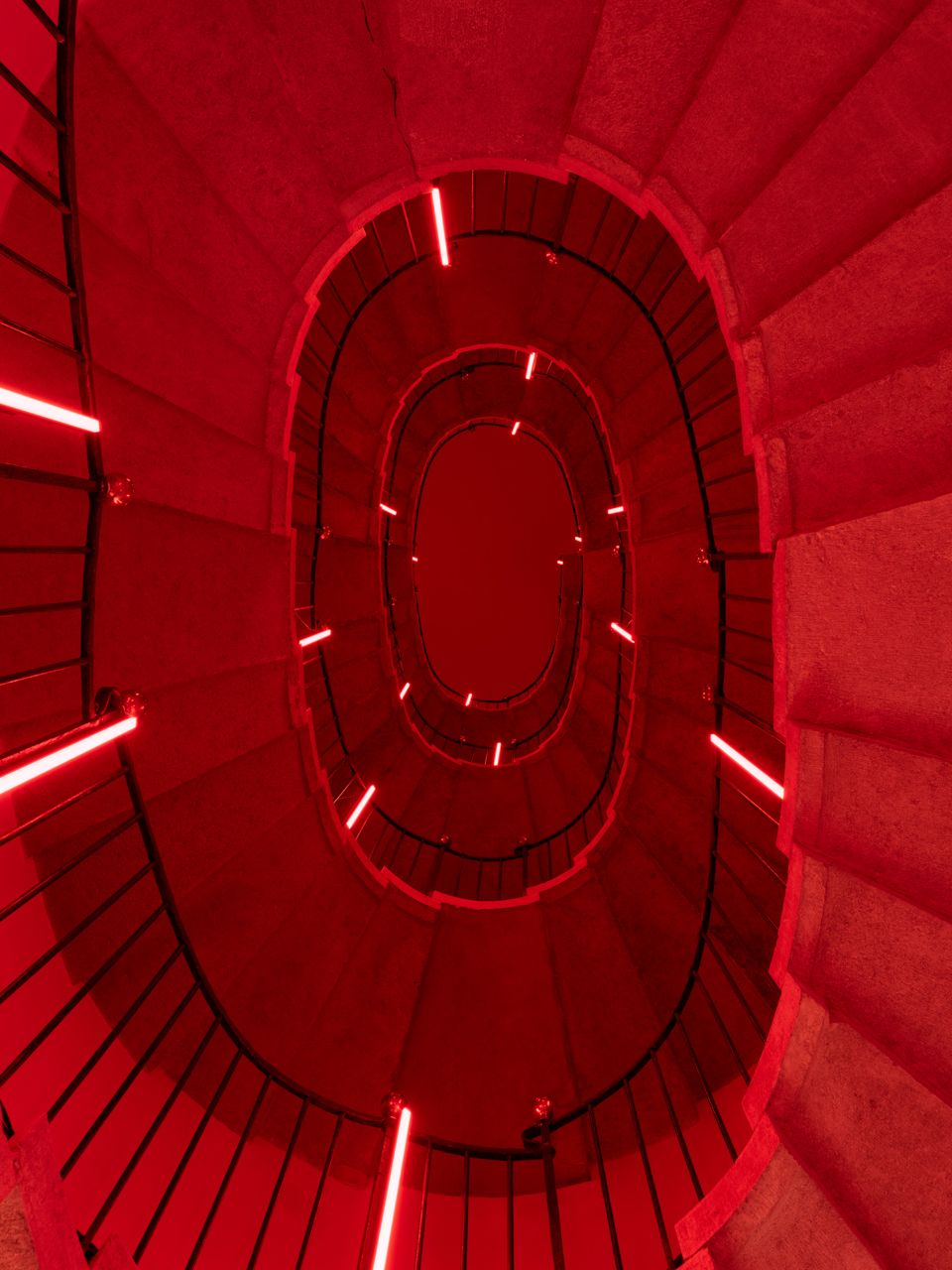
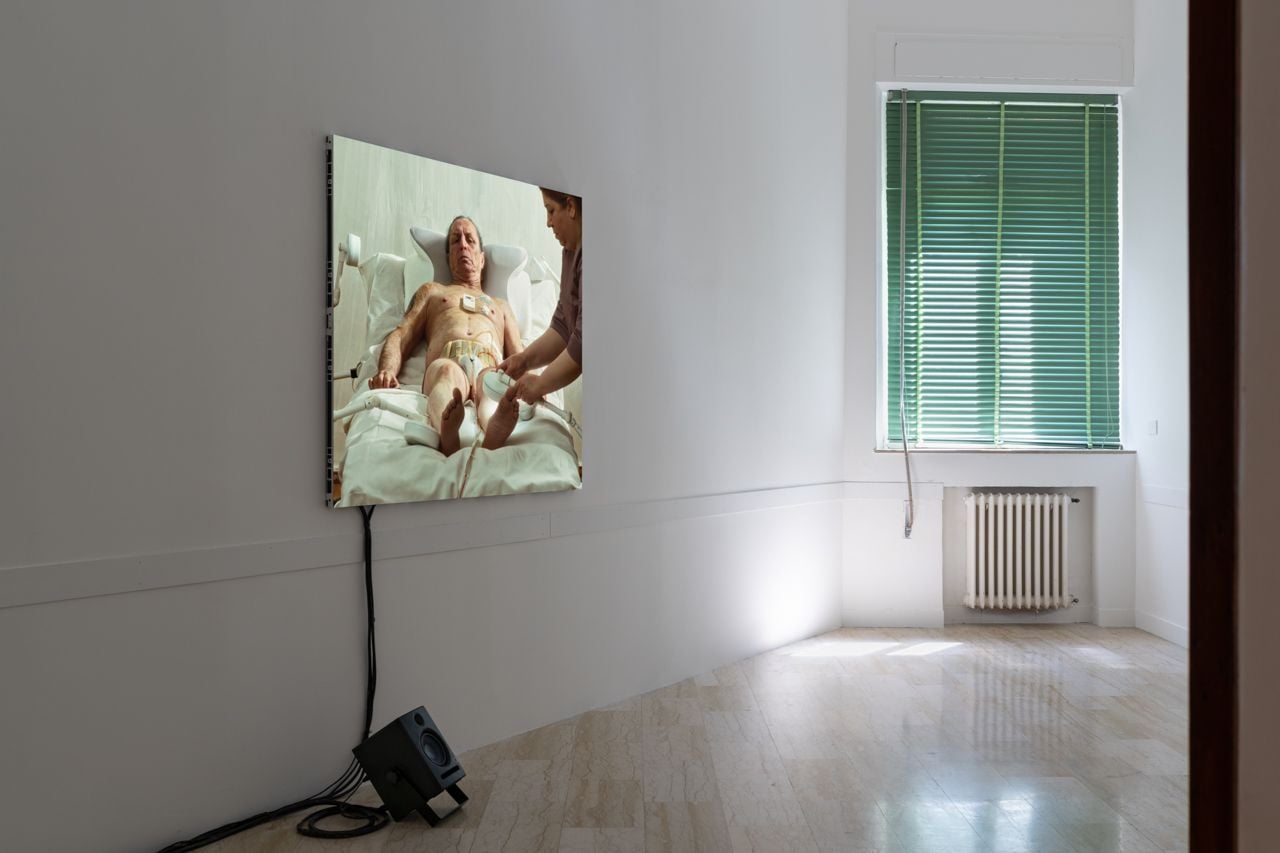
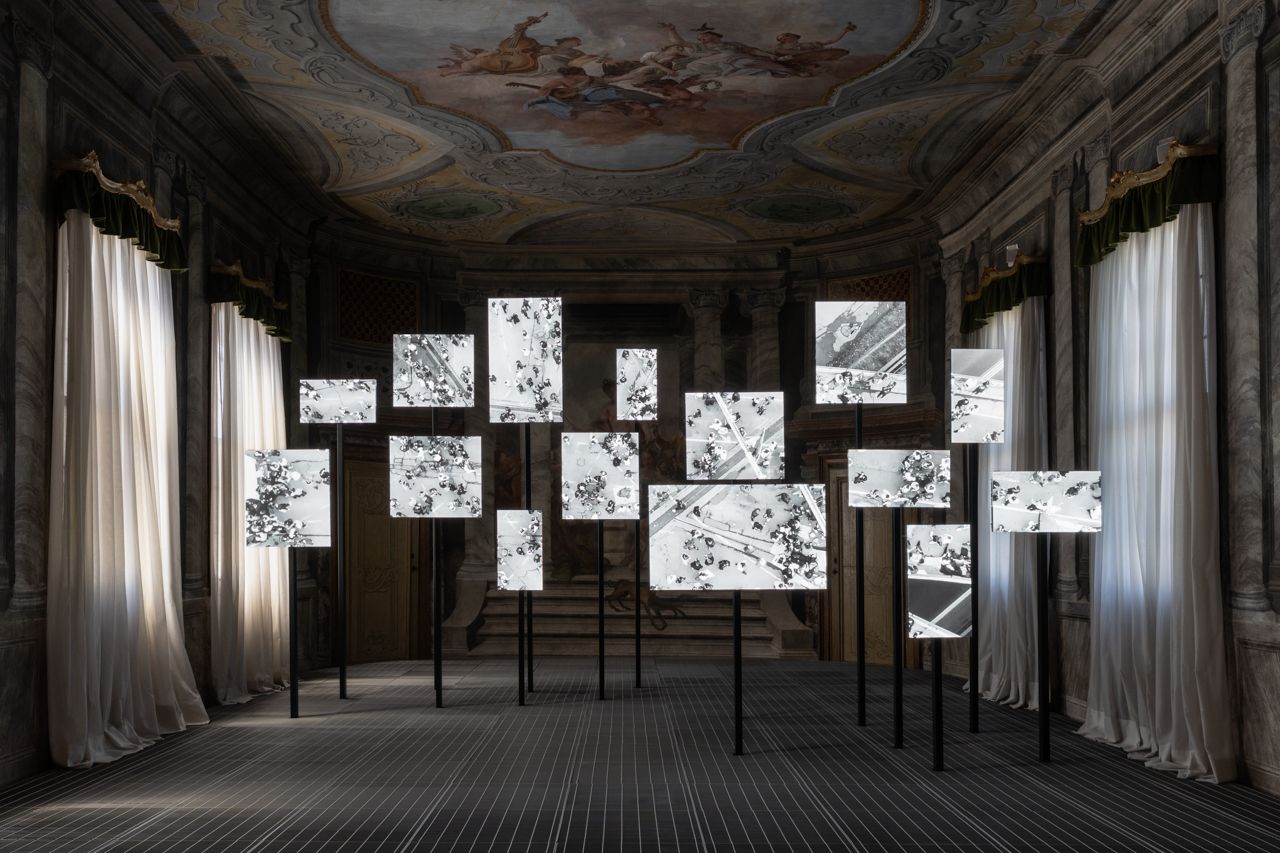
Fondazione Between Art and Film, the Bulgari-funded off-site exhibition of newly commissioned artist films has been a consistent highlight of the biennale since 2022. This year’s exhibition of eight new moving image works, Canicula, was no exception. The Complesso dell’Ospedaletto remains one of the most breathtaking venues and wonderfully designed installations in Venice, originally a church that links to the nearby (and still functioning) hospital.
Three works stood out. Lawrence Abu Hamdan’s extension of his practice as a “private ear” into Serbia’s recent (and largely ignored) protests where sonic deterrents were used on protesters. P Staff’s arresting and confounding assault, in which the artist uses film as “a potent materiality that impresses itself upon the body, causing it to wince, squint, and recoil”, as pal and curator Iarlaith NiFeorhais described it. Impressive, too, were the works of Ukrainian filmmakers Roman Khimei and Yarema Malashchuk, who used actors to restage interviews with injured soldiers while using light and framing to recall renaissance portraiture, all displayed on astonishingly vivid LED screens.
After My Transgressions
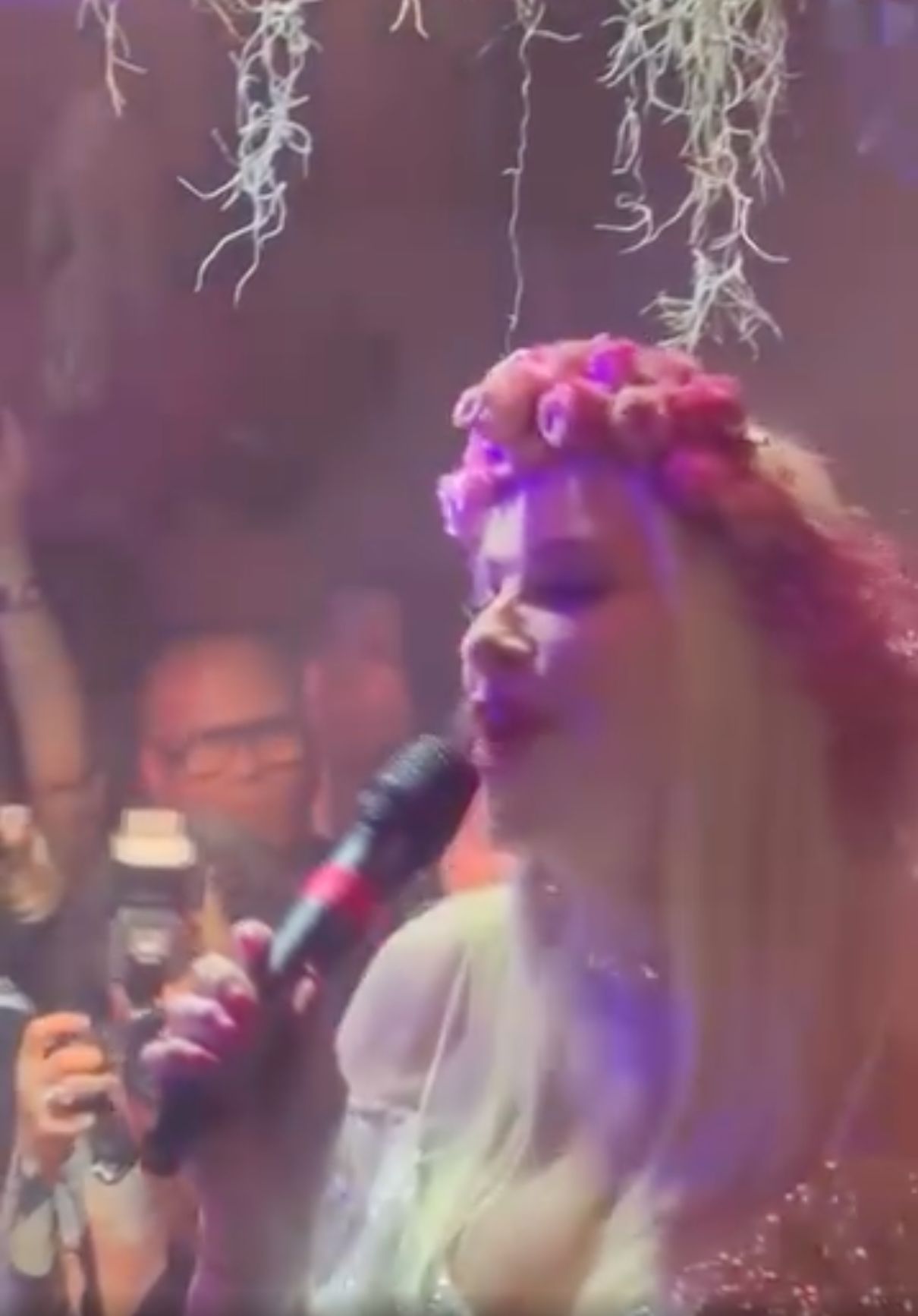
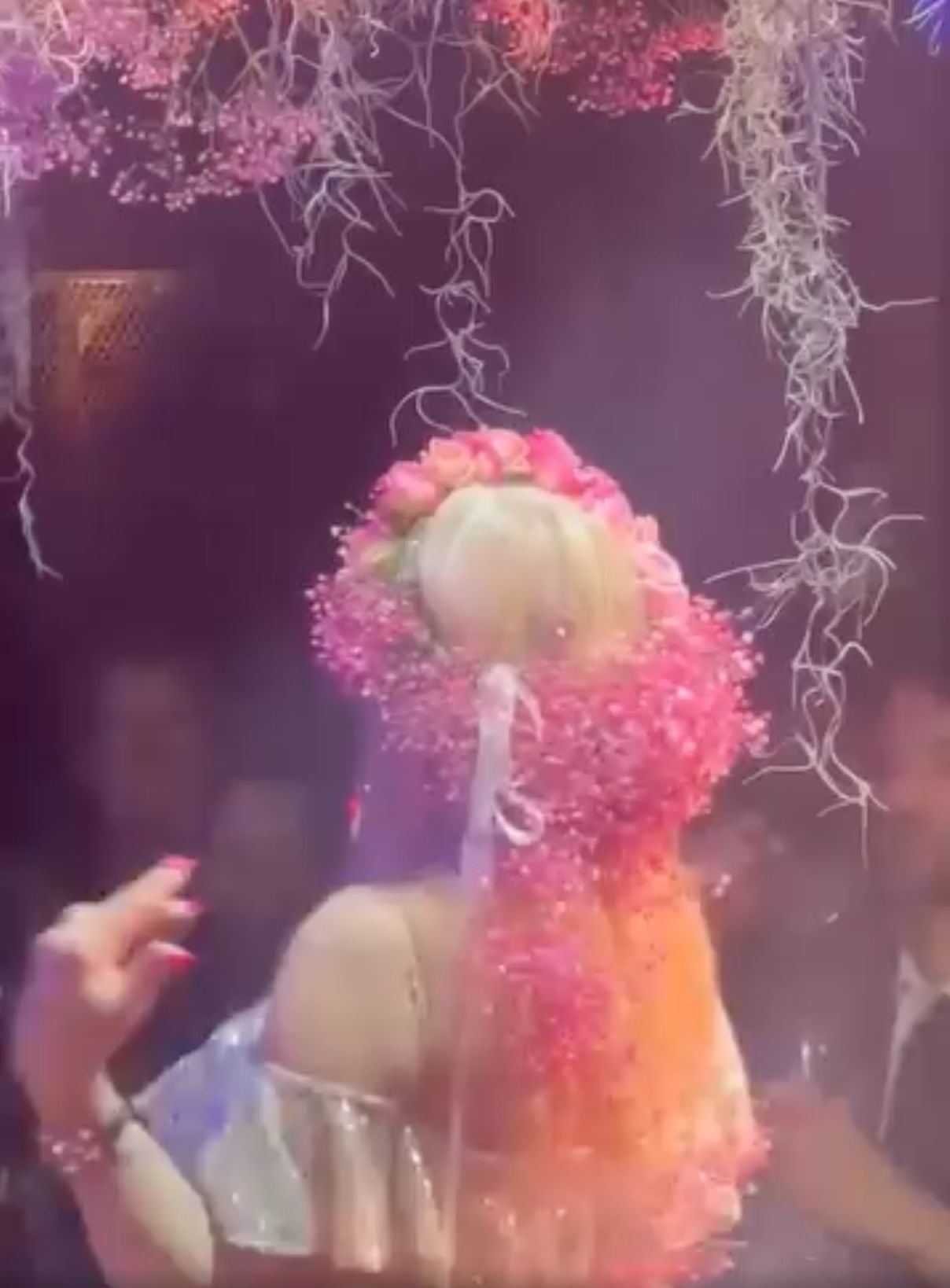
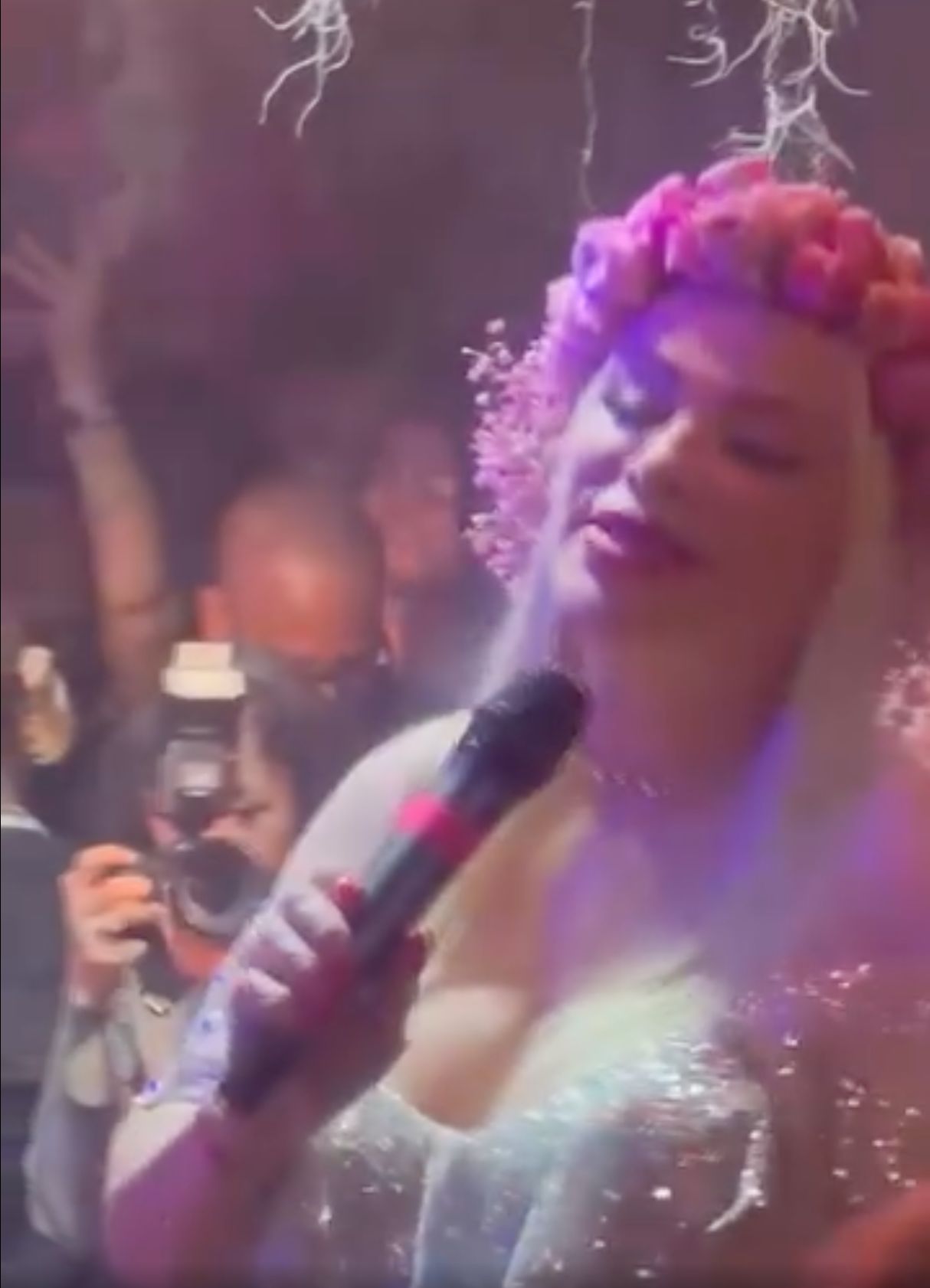
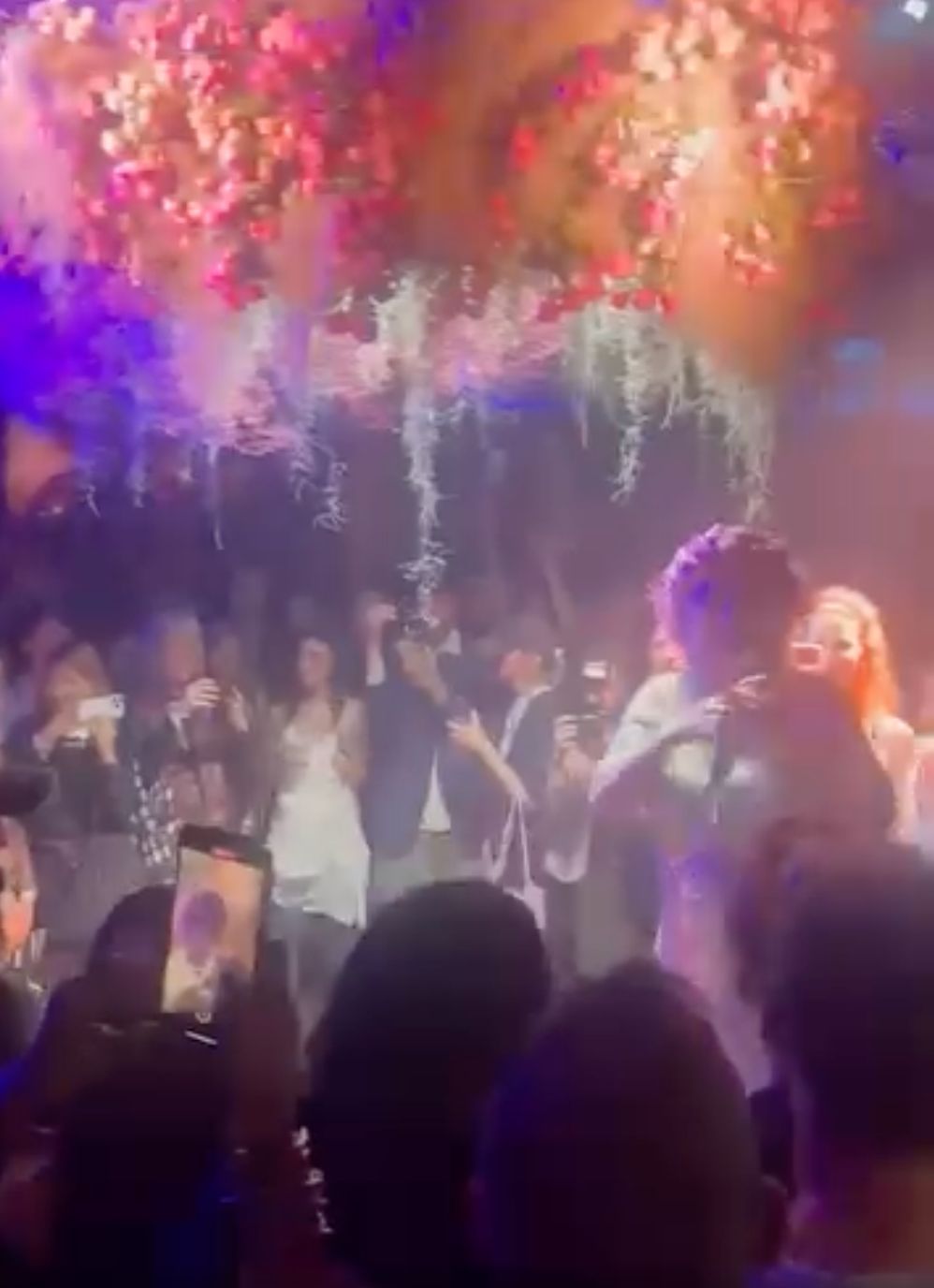
Two things defined my childhood. I can’t remember the other, but one was definitely Cicciolina (the stage name of Ilona Staller, the former porn star, politician, and singer). The announcement of a rare performance by Cicciolina, organised by Danish pavilion artist Maja Malou Lyse, triggered something of a stampede. I eventually made it in after being squeezed with such violence by the heaving queue behind me that I thought I was having a panic attack, but not before overhearing a desperate woman bleat something in Danish to the tattooed bouncer on the door which turned out to be: “I’m the curator of the Danish Pavilion, please let me in.”
“Two things defined my childhood. I can’t remember the other, but one was definitely Cicciolina”
Inside, the stage was set up under a crown of roses synonymous with Cicciolina and her cult appearances in Italian and German porn in the 1980s and 90s. There was a lot of alcohol and a lot of fun, principally thanks to music by Felicita and a conversation about not having babies with author Lauren Oyler, who was in town to interview Florentina Holzinger of the Austrian (poopy high-jinx) pavilion. When Cicciolina finally appeared, ad-libbing over some of her best-known pop songs (she went on to have a career as a politician and pop star after pornography), there was nothing much left to say, since everything had been said in Muscolo Rosso, her song that talks methodically about all the different things she might do with ‘il cazzo-o-o-o’ (the cock).
Palestine and Venice FC
One of the magical things about the Venice Biennale is how the mixture of work, installations (shout out to the technicians), and venues make you feel like you’ve passed over into another dimension, composed of 15th-century palaces, frescos filled with cherubs, and watery dead-ends. It has the feeling of summer camp: here you reconnect with people that you only see at the biennale, and nevertheless form a real connection over the years.
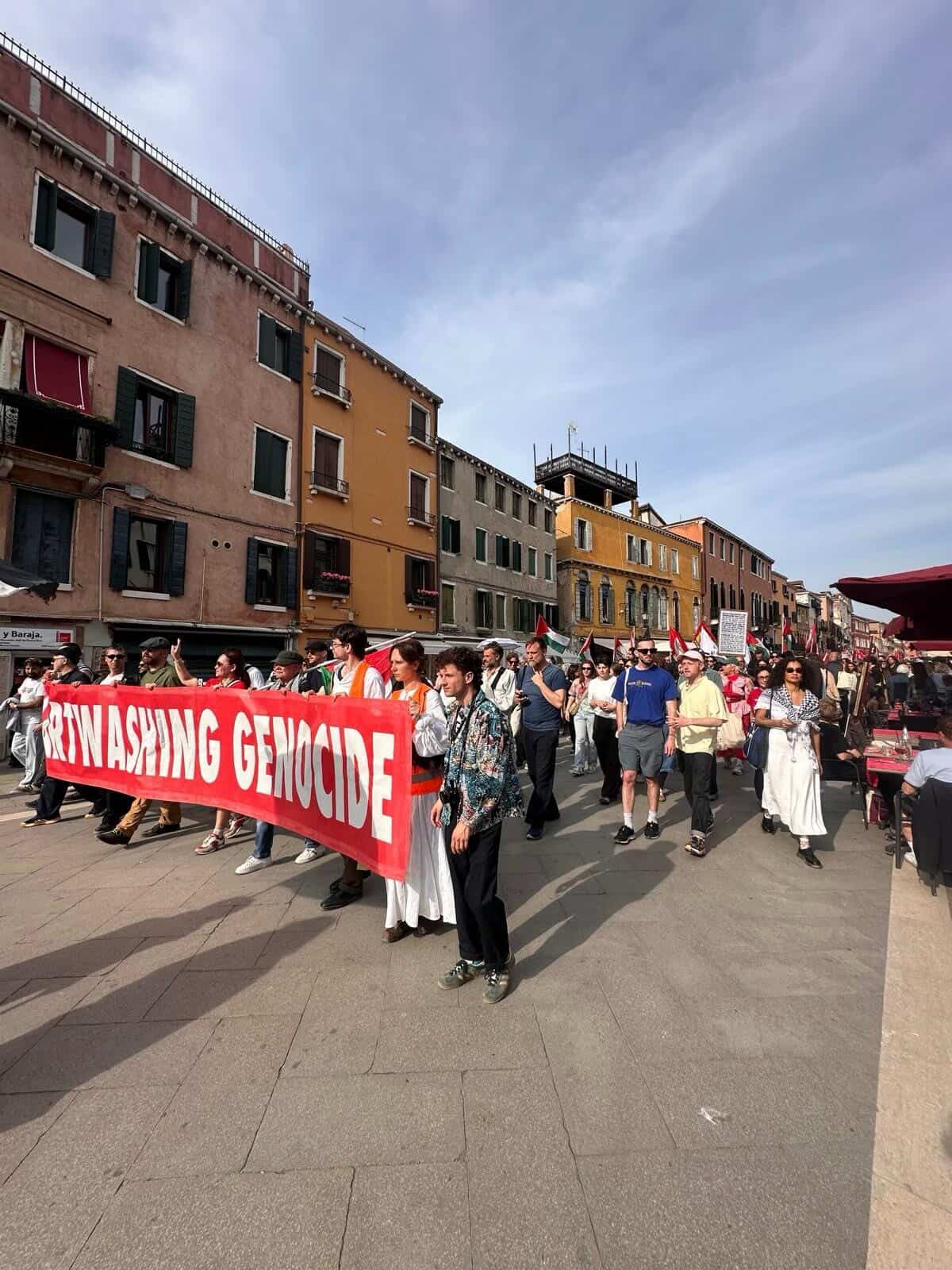
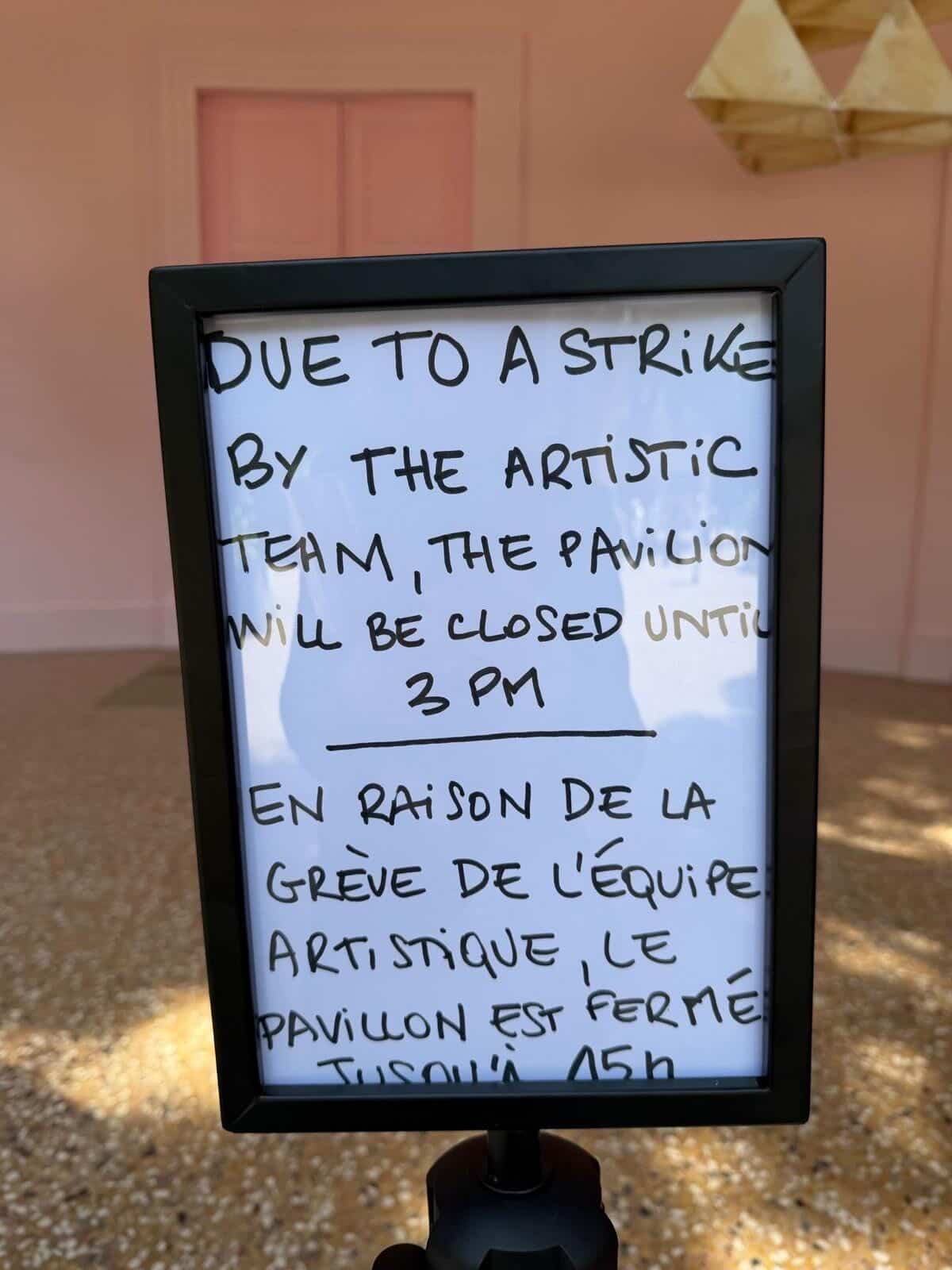
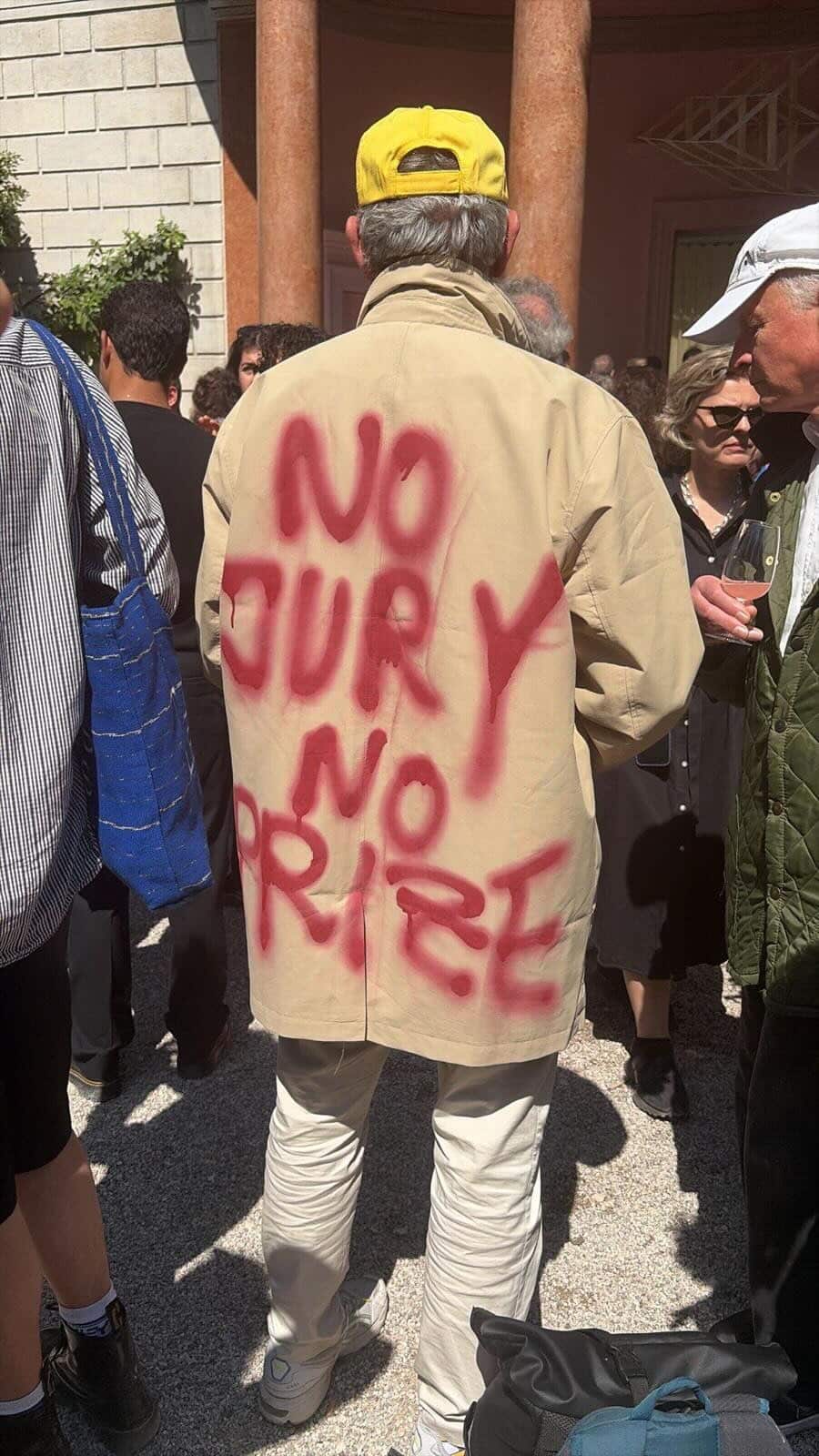
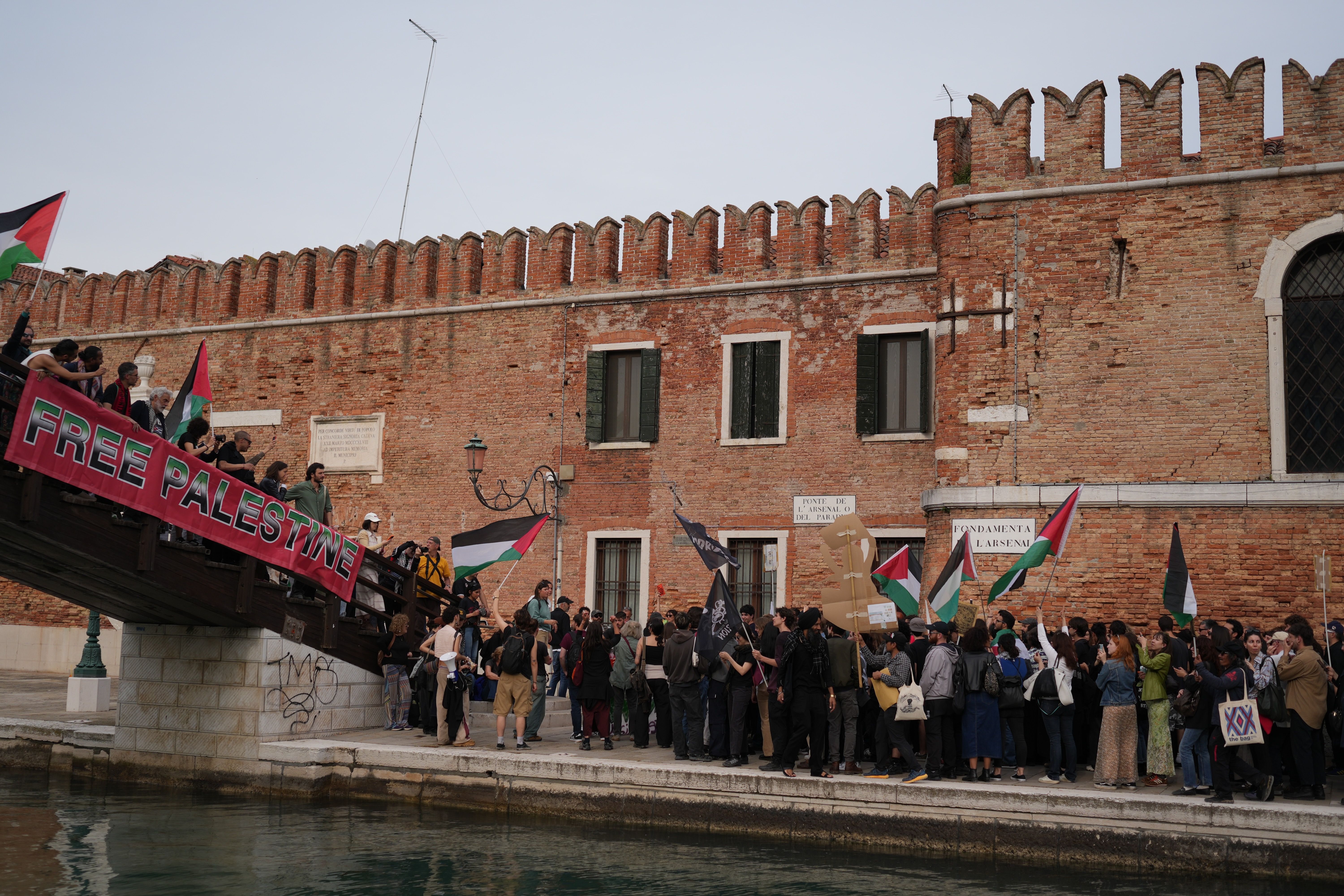
It is also a cloistered, privileged world that has a parasitic relationship with the city it takes over. So there is a real pleasure in the moments when reality erupts into the magic of biennale. This came in the form of the biennale workers’ strike on Friday, which saw 27 of the pavilions close and an enormous crowd take to main thoroughfare Via Garibaldi in protest against the Israeli pavilion’s presence this year.
As the protesters marched along the side of the Arsenale and dispersed into the city, football fans watched Venice FC’s win in Serie B (meaning they now pass into Serie A after two years of relegation), leading to fireworks and a parade on the Grand Canal to celebrate. —[O]
Main image: The Pavilion of the Holy See, The Ear is the Eye of the Soul (2026). Giardino Mistico, Venice. Photo: David Levene.






A respected voice in contemporary art discourse.
Focusing on ambitious storytelling and insightful art-world commentary. Ocula Magazine publishes in-depth interviews, critical essays and timely analysis on the artists, exhibitions and ideas driving the global art world.
Learn more about Ocula Magazine
Showcasing the best of the art world.
Ocula partners with galleries from around the world to highlight their artists, artworks and exhibitions. Gallery membership is by application and invitation, with each member vetted by an independent panel.
Learn more about Ocula Membership
Specialises in the sale of major artworks.
Led by a team with deep ties to the world’s leading auction houses, galleries and collectors. Ocula’s advisory team offers bespoke services to high-net-worth clients from around the world who are looking to acquire the best of contemporary and modern art.
Learn more about our team and services