






In Taichung’s Museumbrary, Ambition Elevates a Public Space
Taiwan’s newest municipal art museum shares space with a library, and this combined civic vision has the potential to uplift creative displays beyond the gallery format. Save to My Ocula
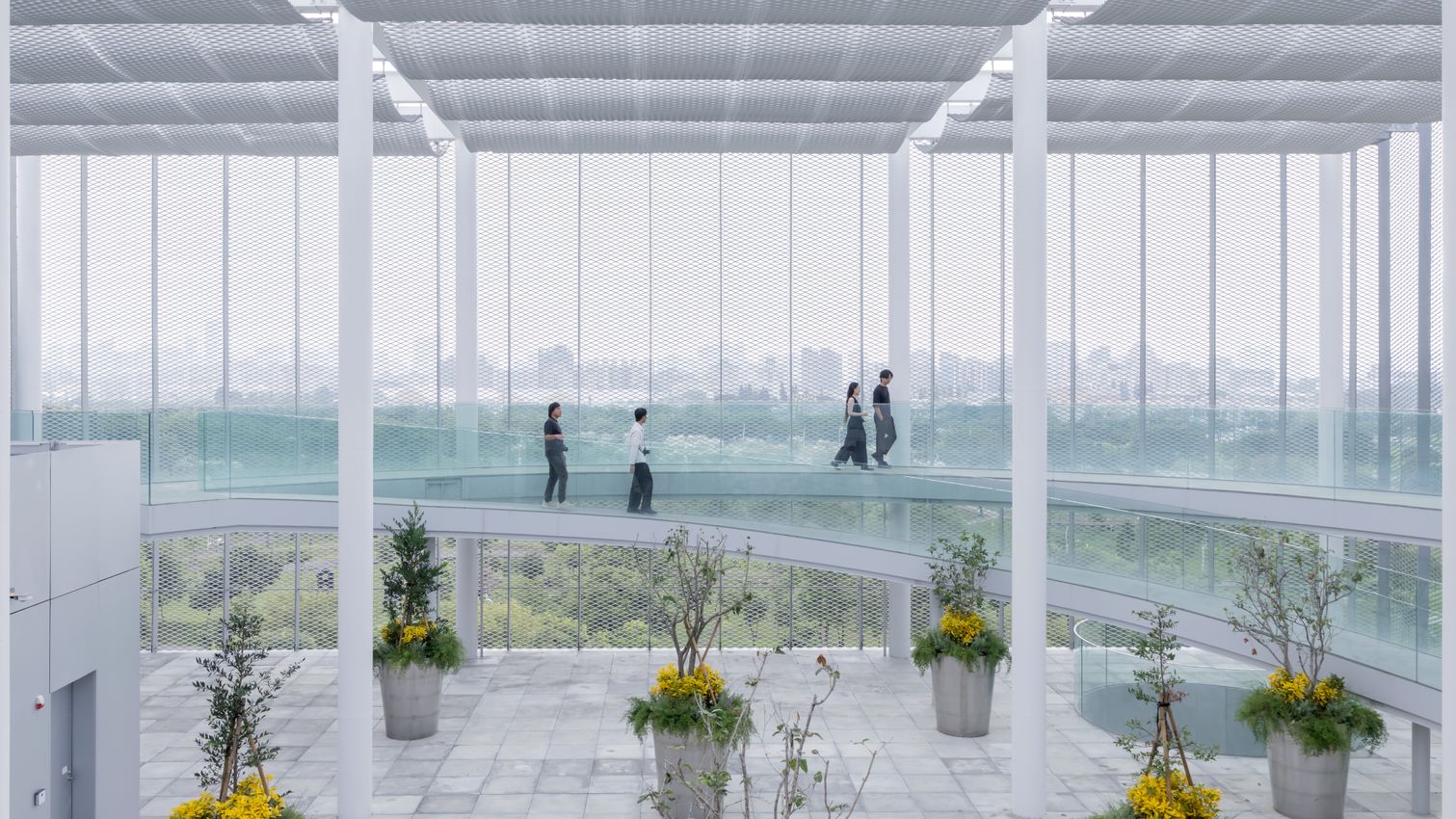
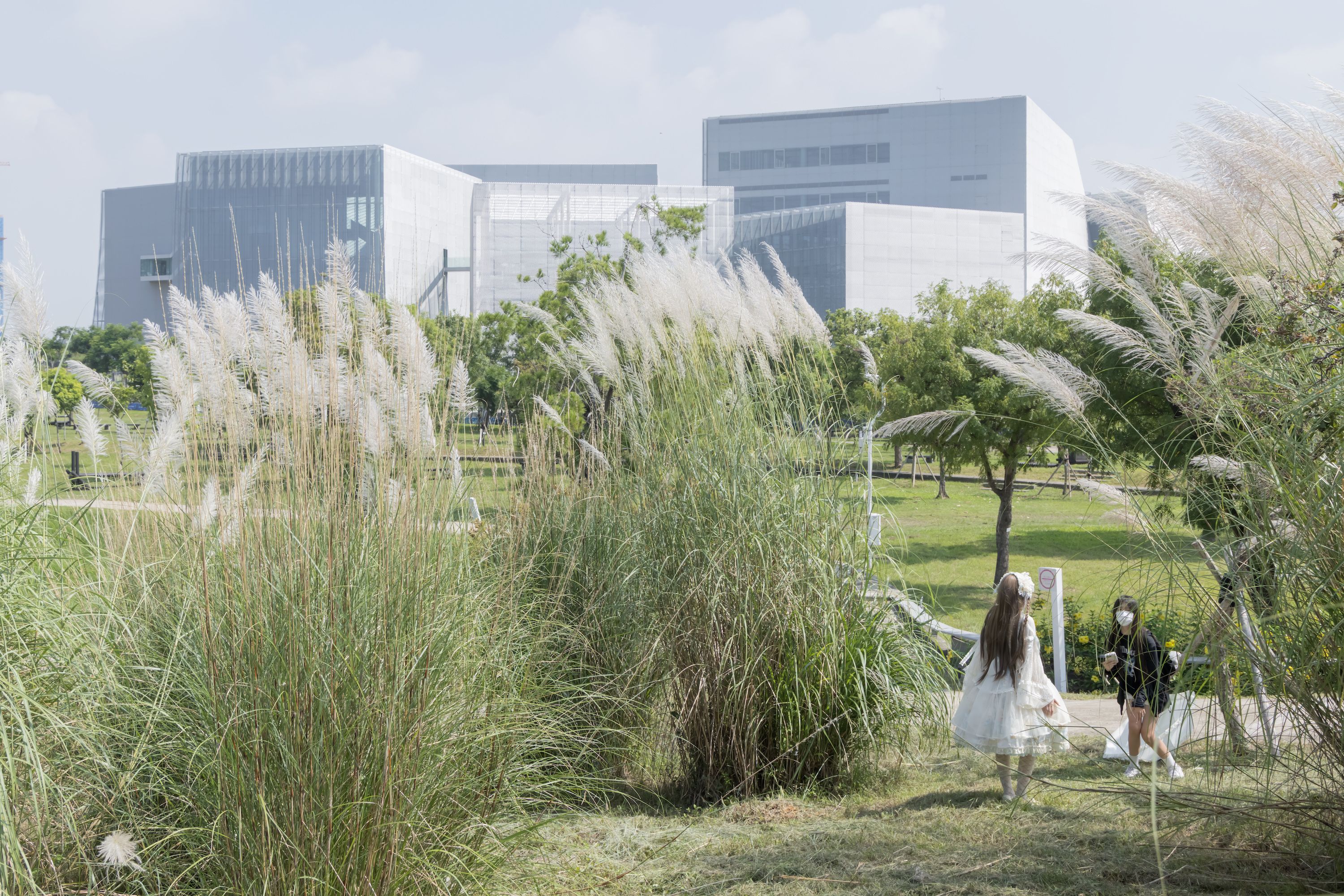
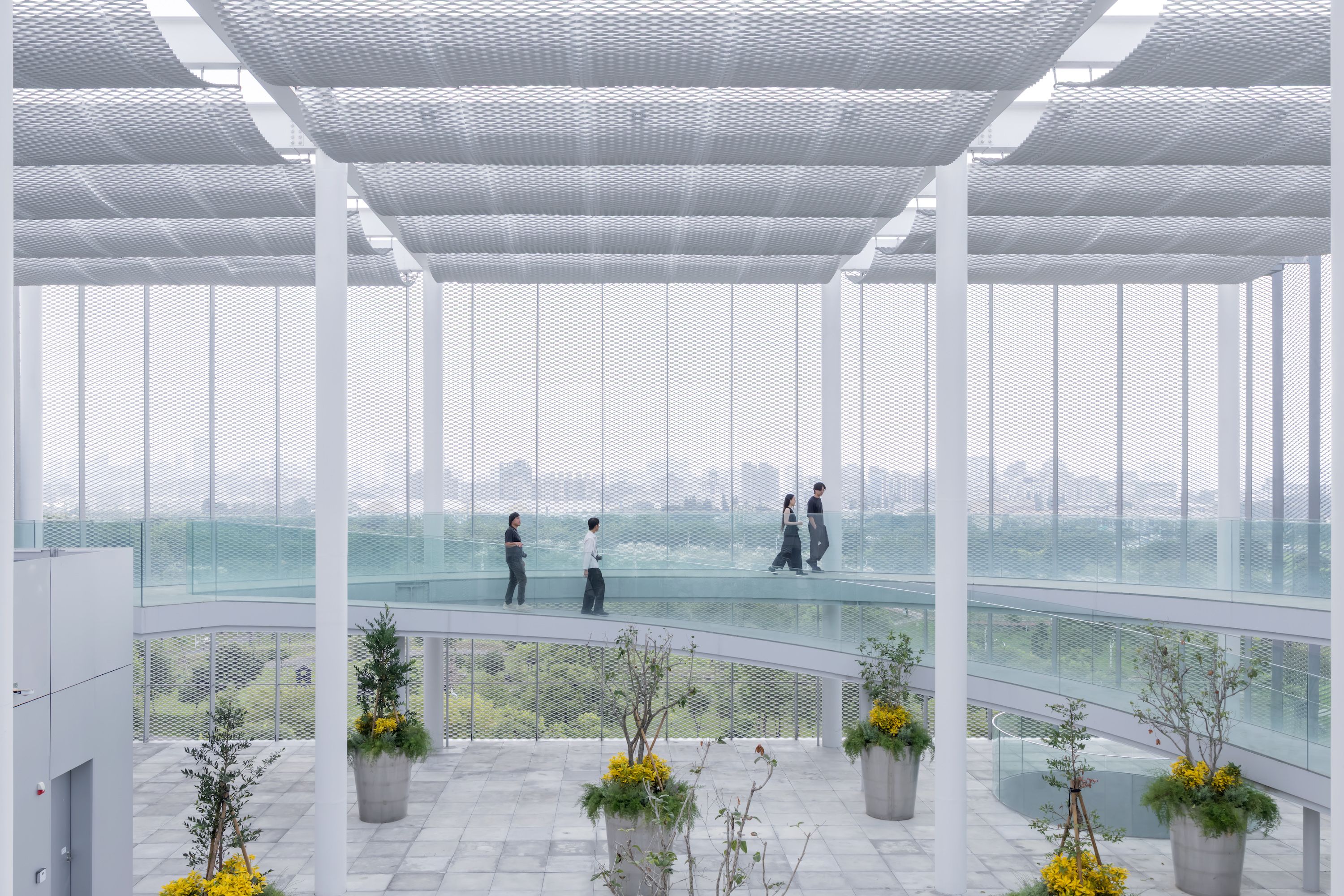
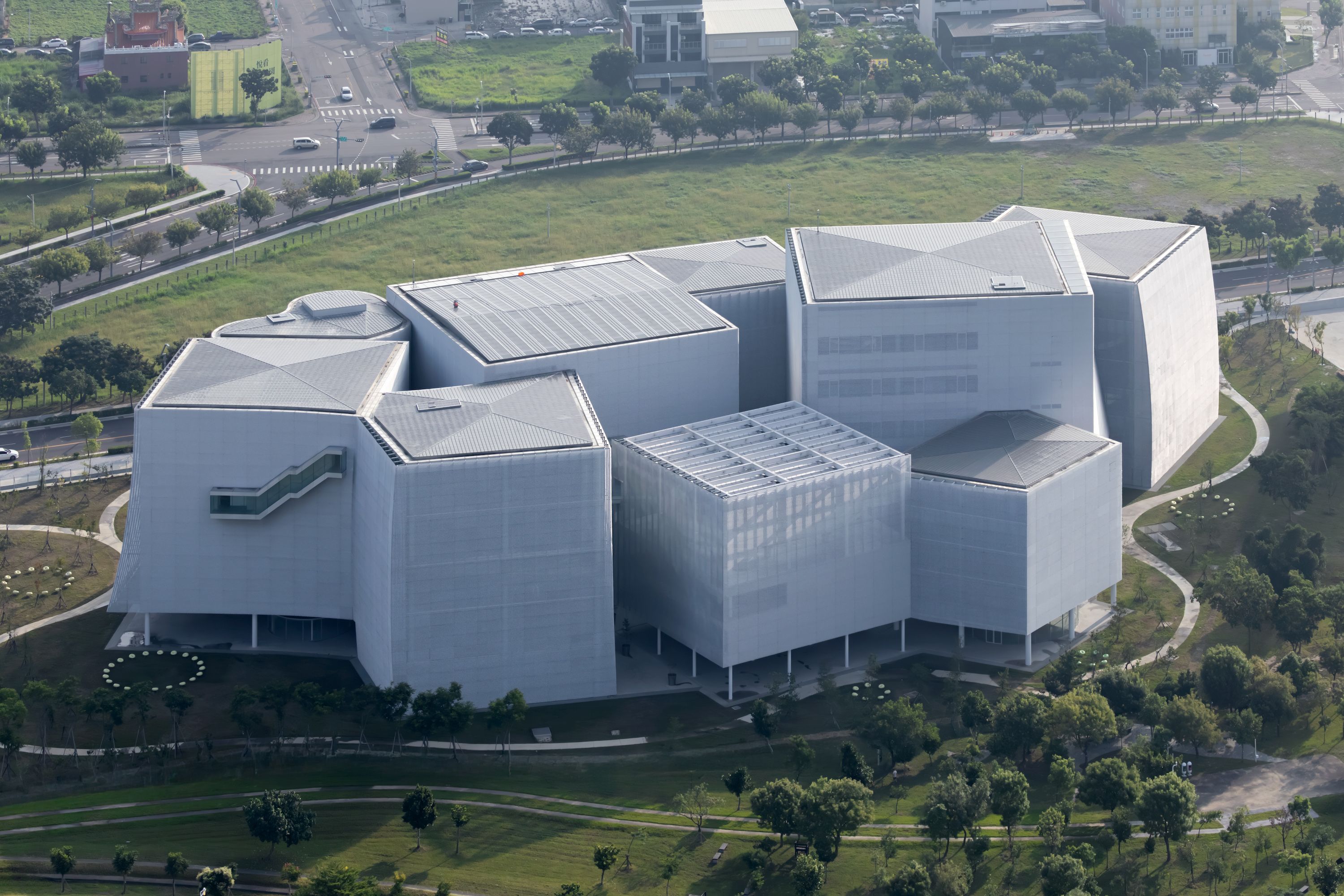
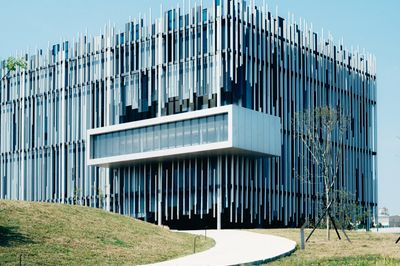
Billed as ‘a library in a park and an art museum in a forest’ by its Pritzker Prize-winning architects Kazuyo Sejima and Ryue Nishizawa, the Taichung Green Museumbrary is the first public building in Taiwan to combine an art museum and a library. Wrapped in a diaphanous metal-mesh façade, the SANAA-designed complex comprises eight translucent spaces linked by elevated walkways, allowing visitors to move through reading rooms, galleries and landscaped terraces with minimal interruption. The architecture advances the studio’s signature exploration of permeability, where movement, sightlines and atmosphere remain fluid rather than fixed.
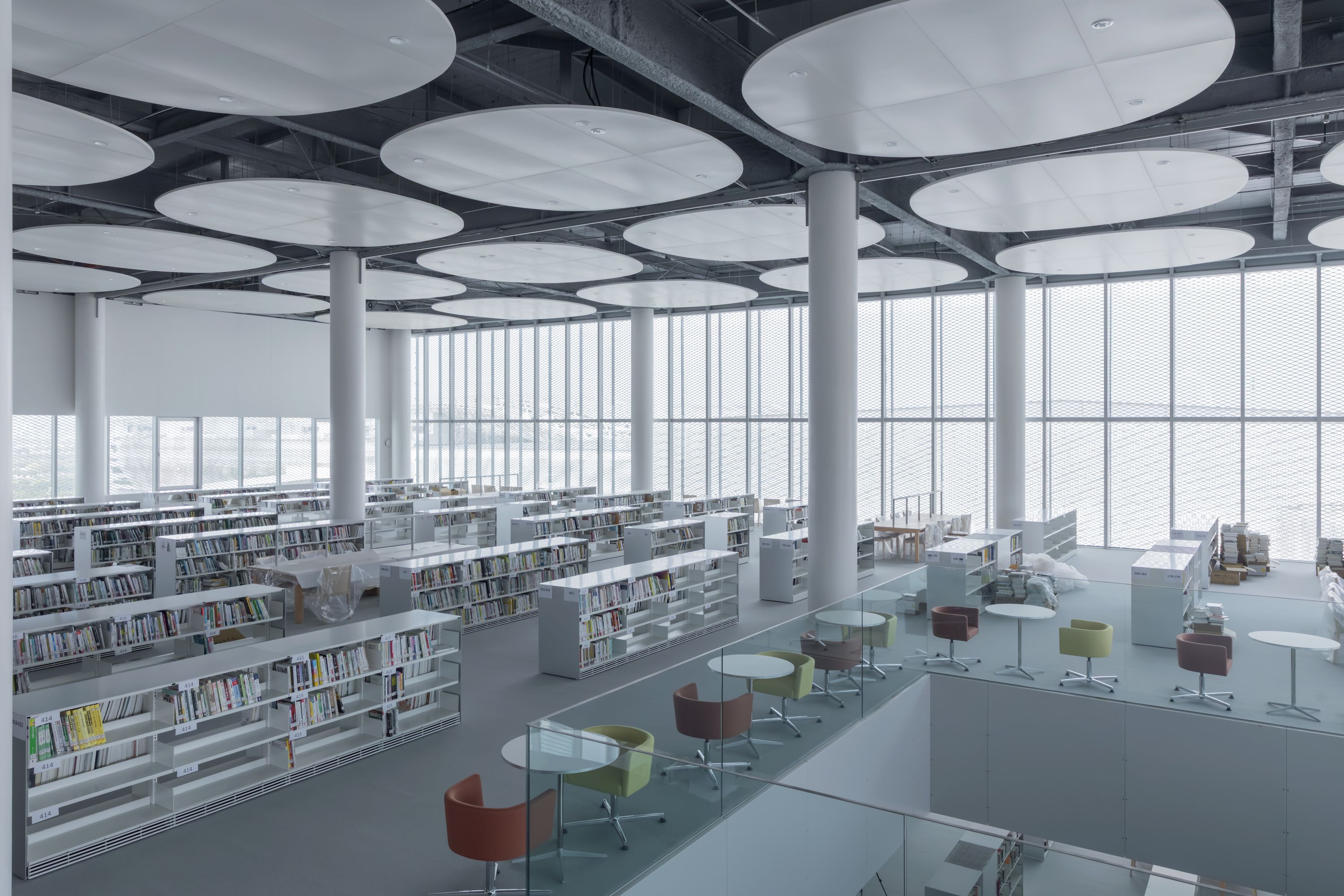
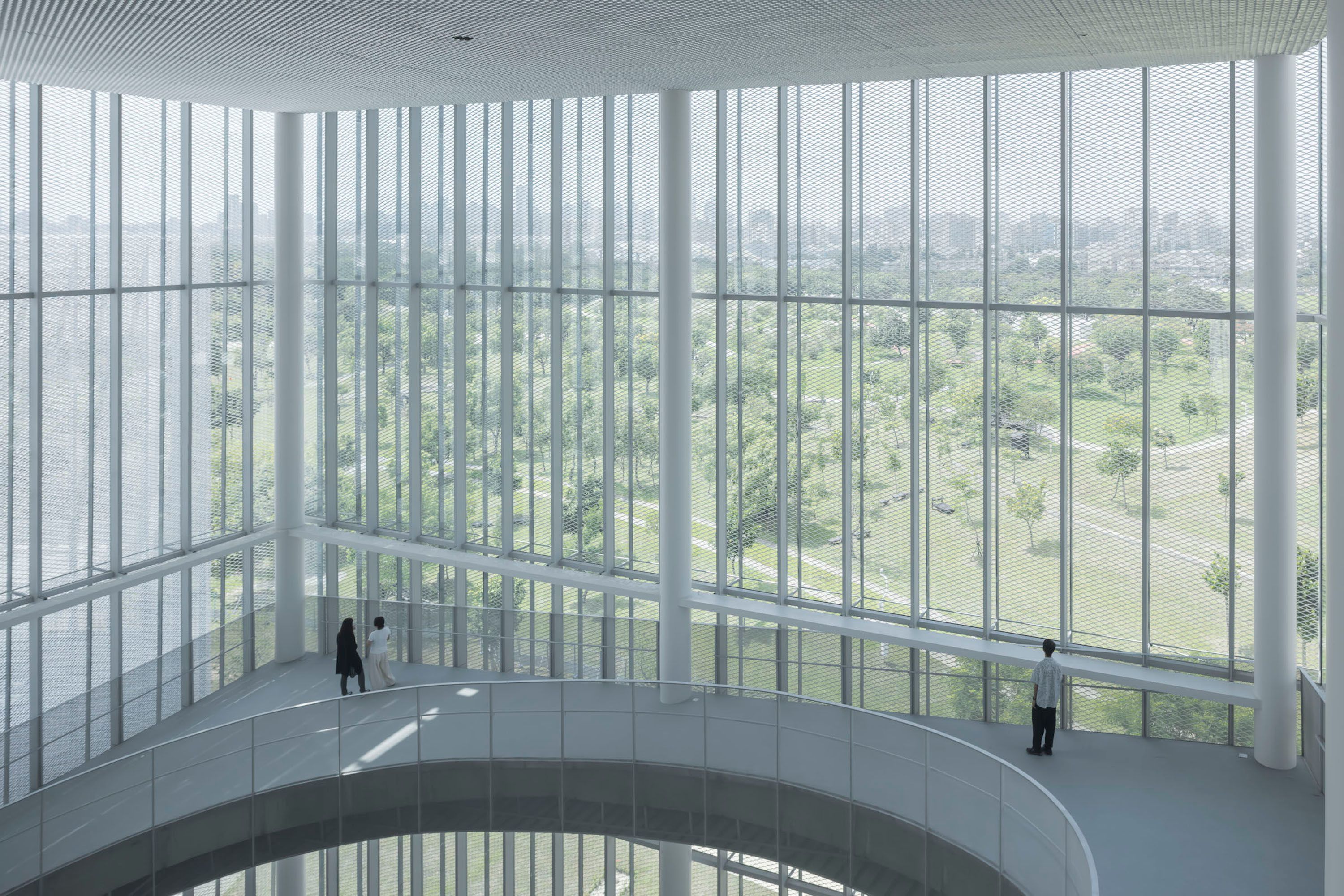
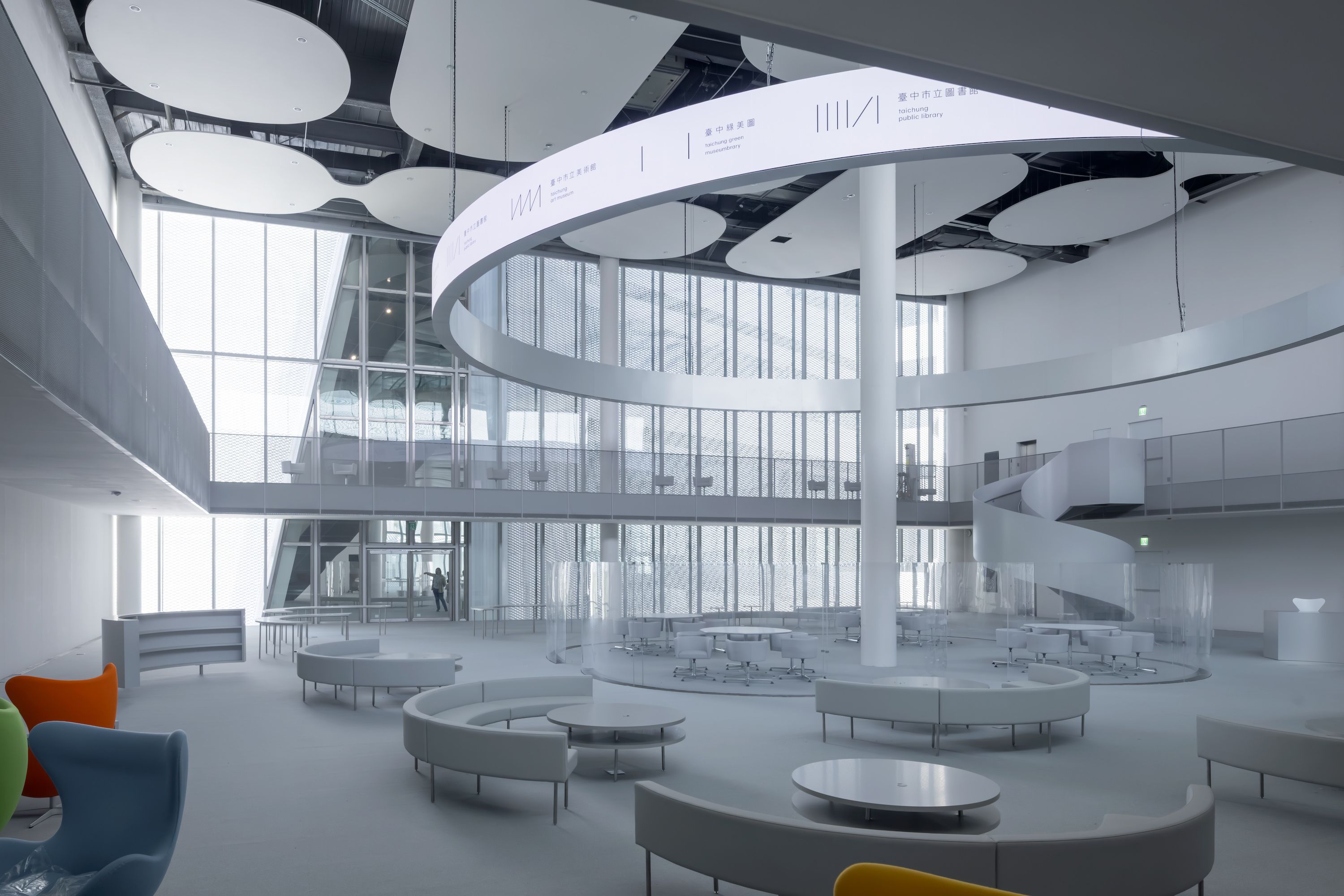
The Taichung Art Museum opened on 13 December. It’s Taiwan’s newest municipal art museum and follows the inauguration of the New Taipei City Art Museum and the closure of Taipei’s longest-running alternative space, IT Park (1988–2025), marking a shift from artist-run autonomy to municipal oversight and a reconfiguration of exhibition production in the country.
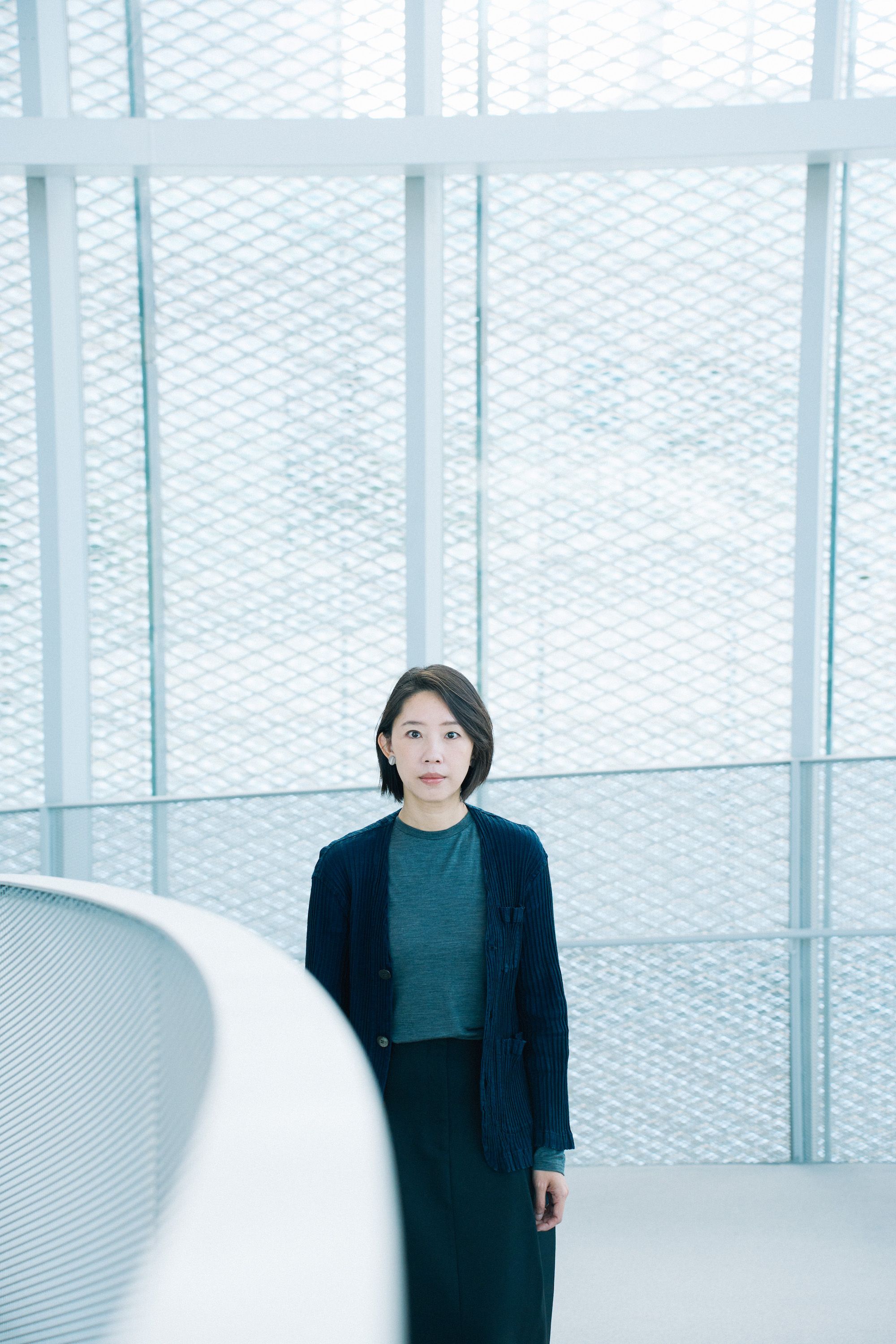
Director Yi-Hsin Lai positions the new museum as a civic space for thinking collectively about the citizen and the city. ‘It inspires us to work across disciplines,’ Lai reflects, ‘knowing that visitors don’t come only to see an exhibition. They read, wander, rest, idle and explore. We try to create spaces where people can drift and discover for themselves, shaping their own experience.’
Within this framework, the museum has launched the TcAM Art Commission, a biennial programme designed to connect architectural dialogue with local ecological and cultural contexts. The inaugural commissions are site-specific works by artists Haegue Yang and Michael Lin, both responding to SANAA’s architecture and the building’s ecological frame.
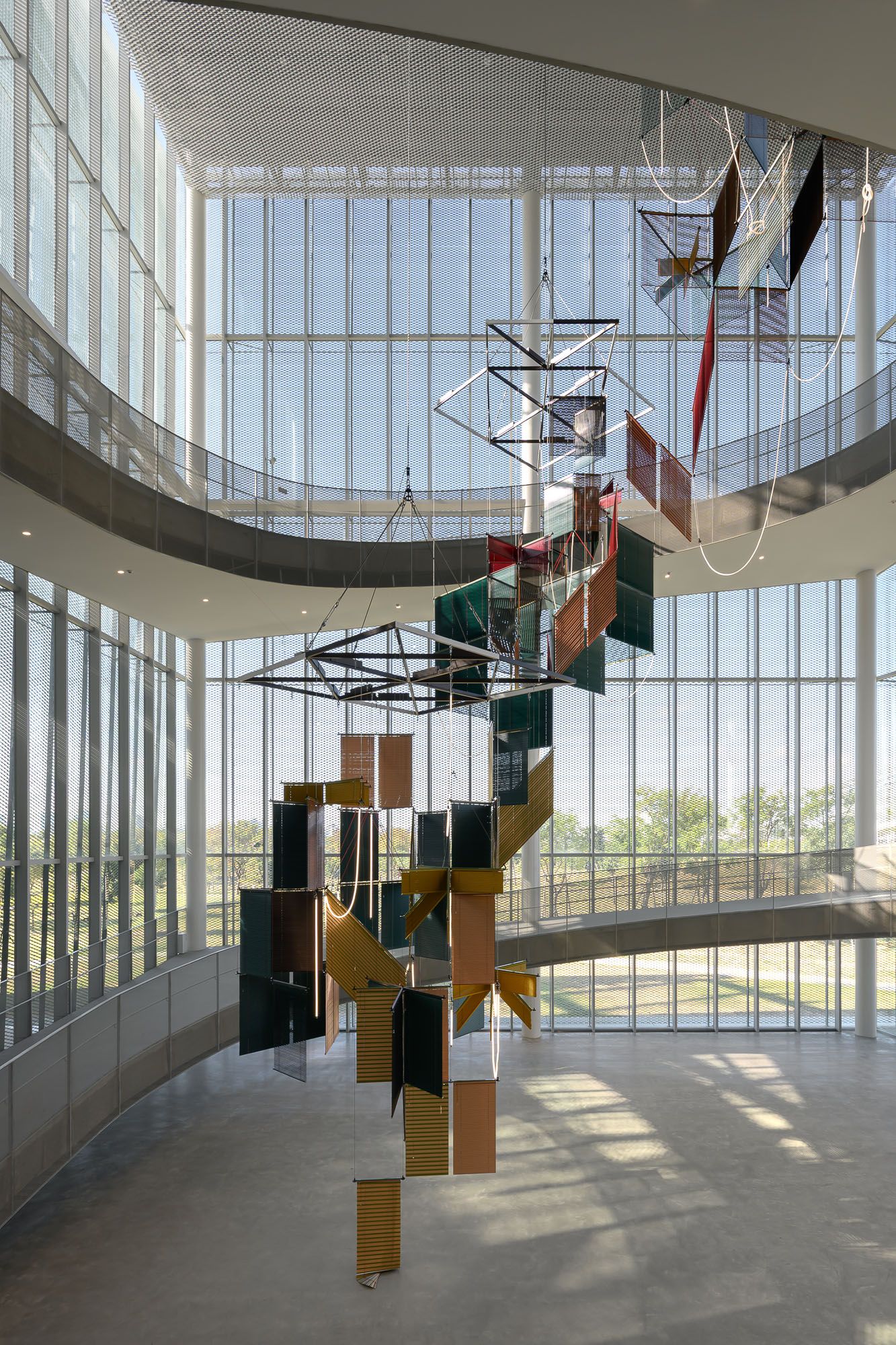
Yang’s Liquid Votive–Tree Shade Triad (2025) suspends three cascading Venetian-blind structures through the 27-metre-high atrium, transforming light and shadow across day and night. ‘It’s a rare platform where artworks can appear vividly after dark,’ Yang notes, linking the work to her research into communal memory and the more-than-human world.
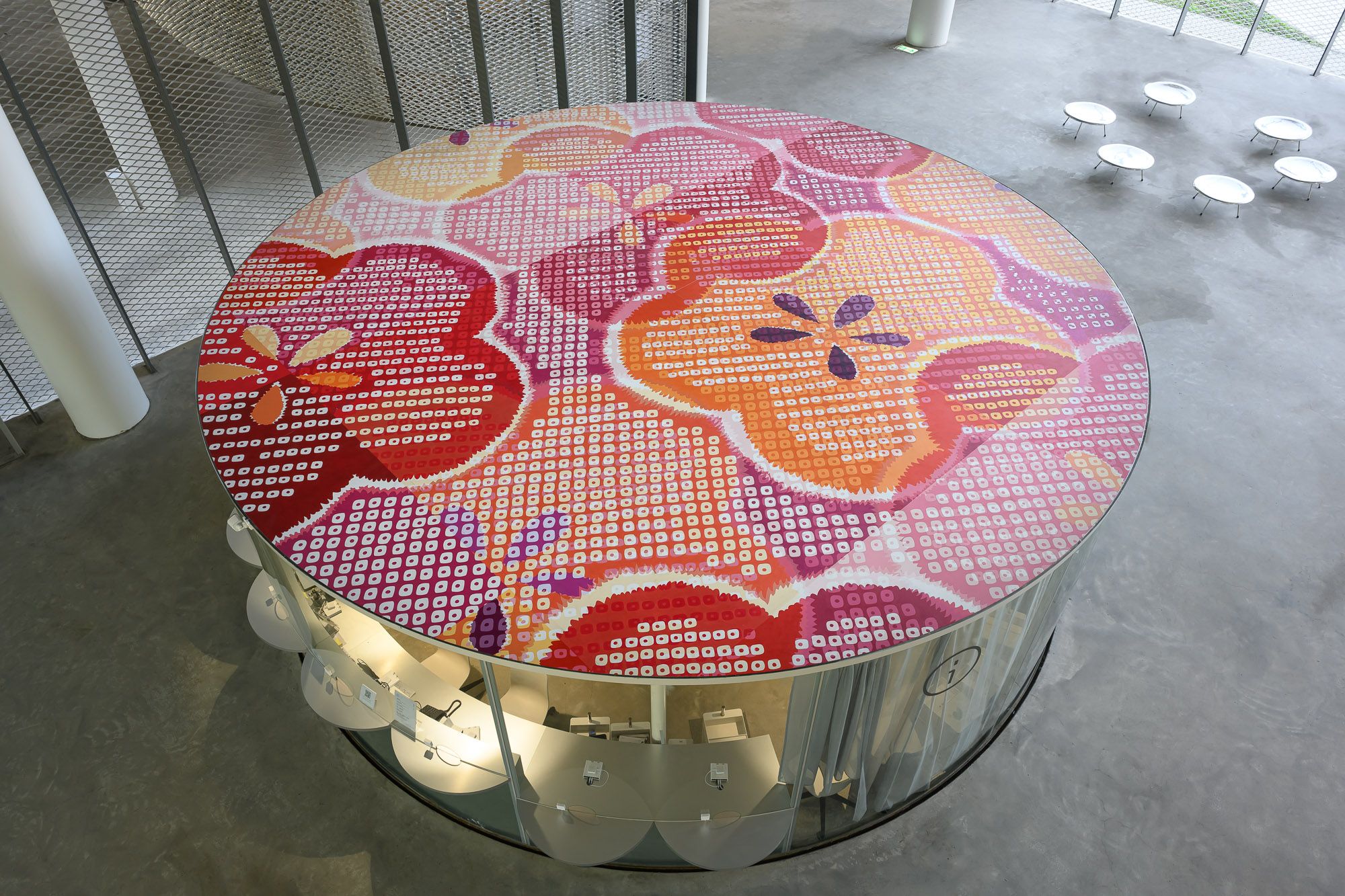
Tucked into two quieter corners of the atrium, Lin’s Processed (2025) unfolds through layered, hand-painted plum blossom motifs—one smaller and precise, the other larger and subtly misaligned—reflecting his long-standing engagement with printmaking aesthetics and relational perception.
‘Commissioning large-scale works in a municipal context is never straightforward,’ Lai observes. ‘It remains relatively new for local public sectors. With Lin and Yang, we have begun to set a precedent—demonstrating what is required, in terms of resources and time, to realise ambitious, multi-year commissions that explore space and audience in relational terms.’
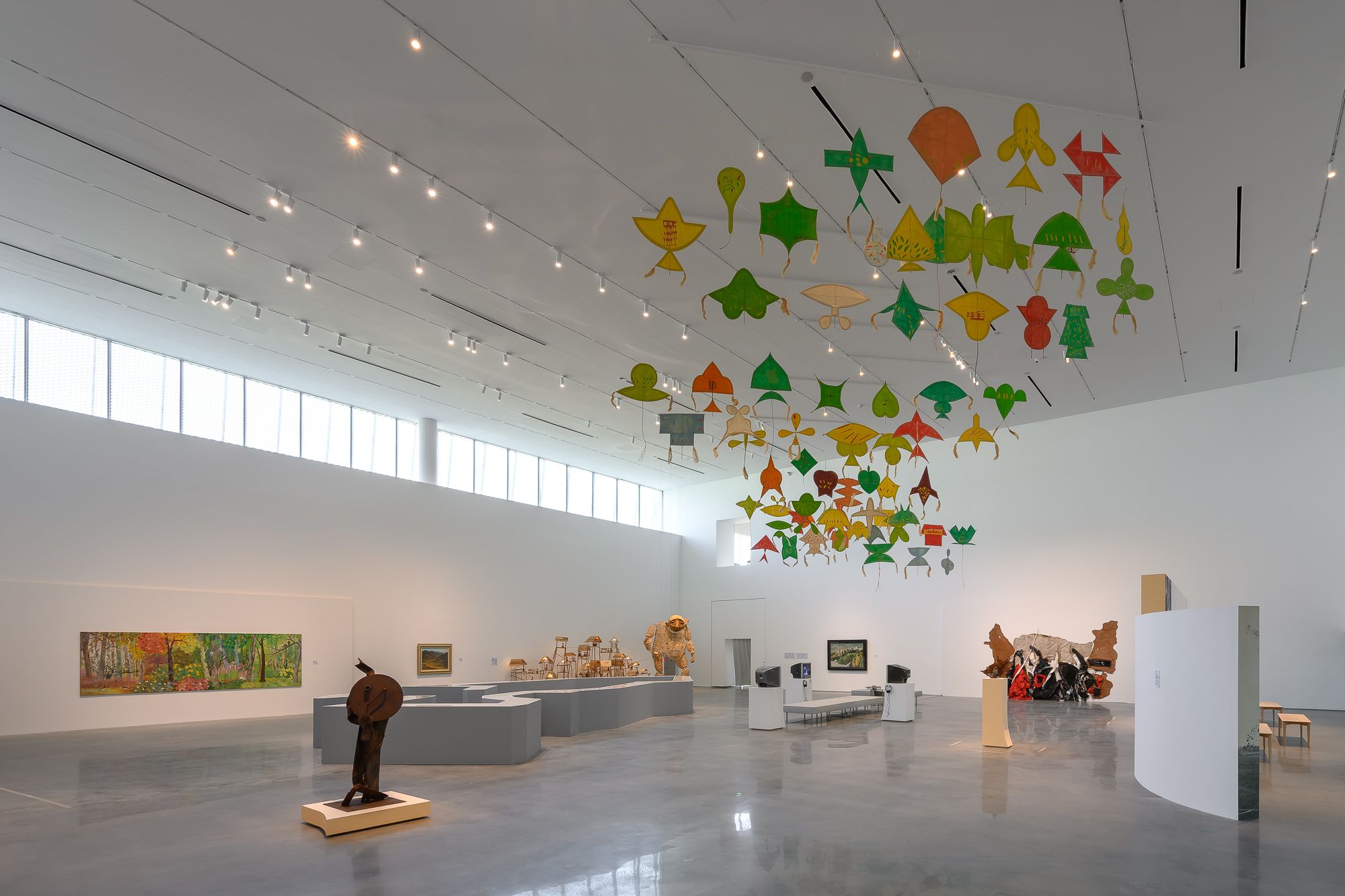
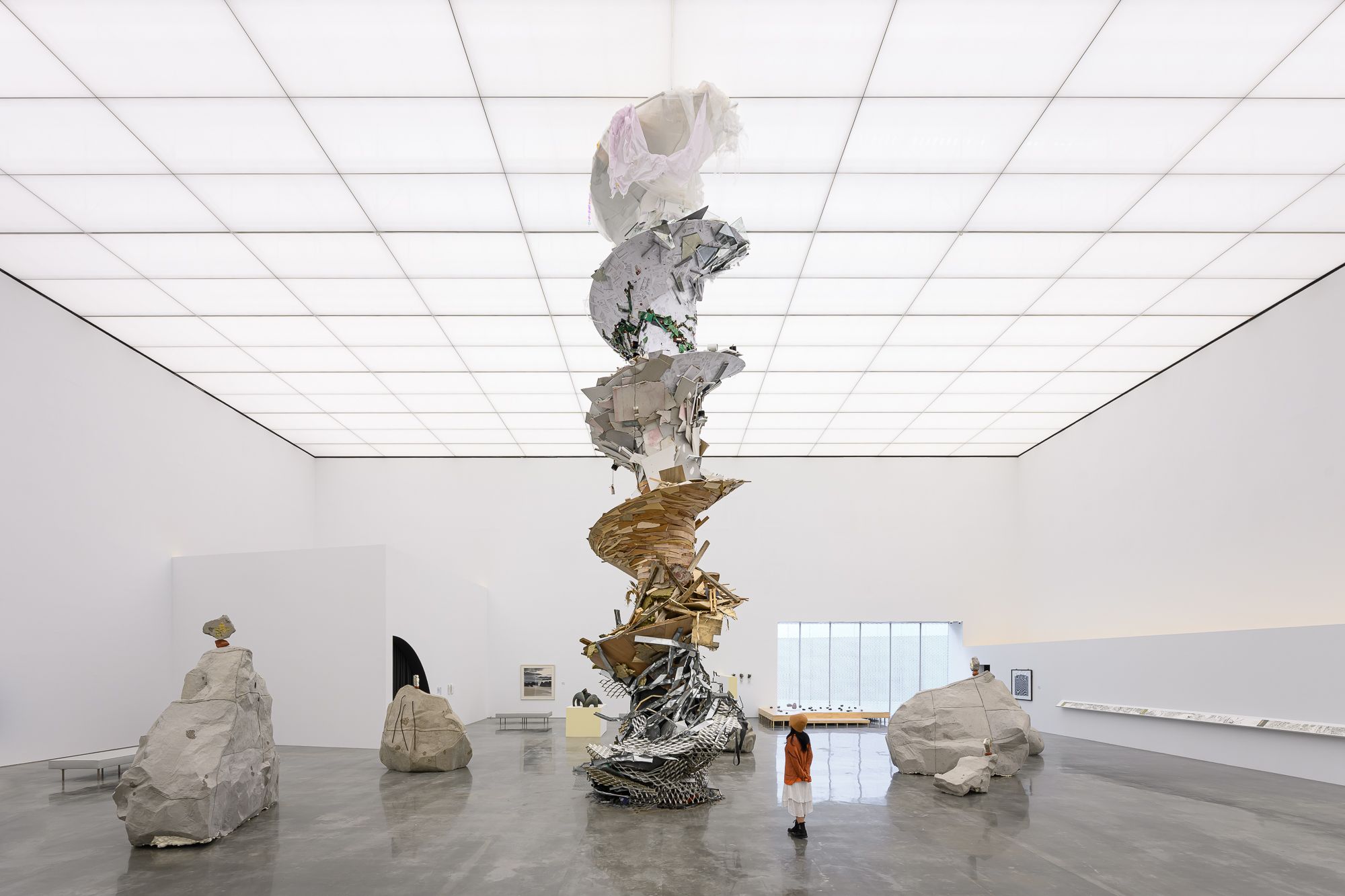
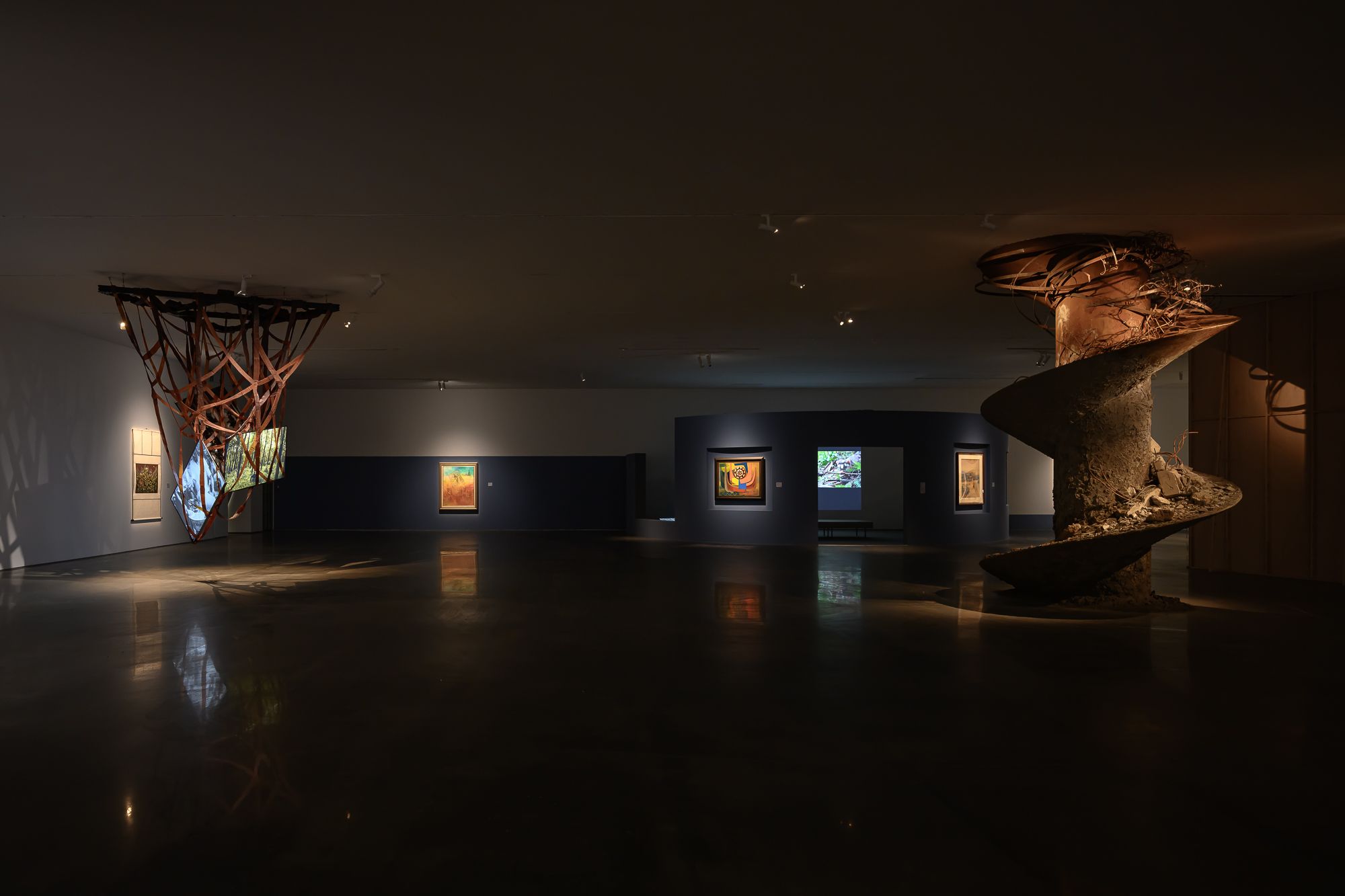
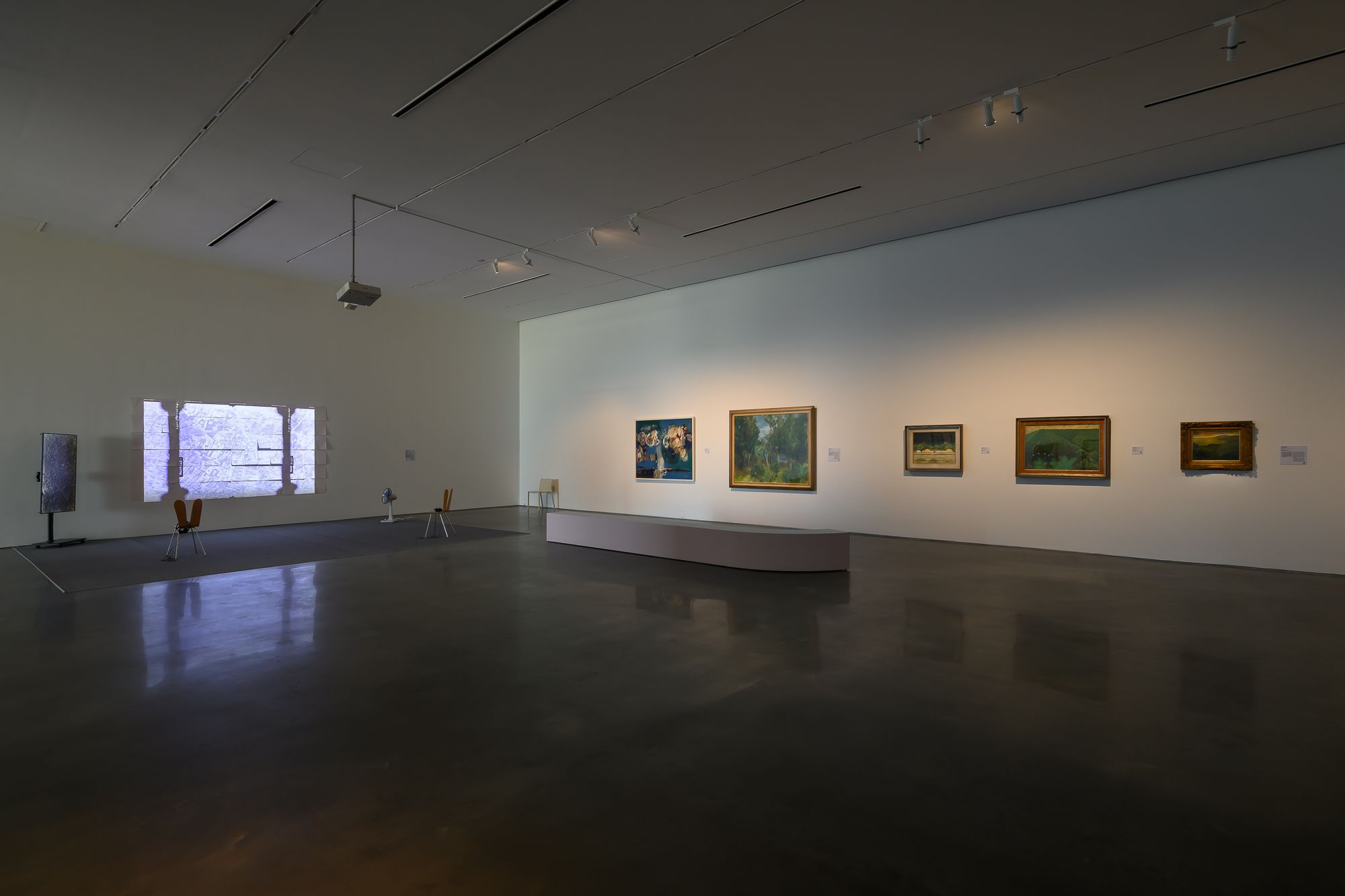
The museum also opens a close dialogue with its immediate surroundings, drawing from the relationship between Taichung Central Park—the shared site of the public library and art museum—and the city it inhabits. Its inaugural exhibition, A Call of All Beings: See You Tomorrow, Same Time, Same Place (13 December 2025–12 April 2026), brings together 70 artists from 20 countries, weaving Indigenous cosmologies, Daoist thought, and non-Western methodologies into a multivocal inquiry into human-nature relations.
Expanding the museum-library ecosystem, Taichung Art Museum is also developing a cross-institutional residency programme. Rather than confining outcomes to gallery presentations, the initiative will invite writers, musicians and choreographers whose practices can unfold across reading rooms, public spaces and performance contexts—testing new models of knowledge production within civic institutions.
For municipal museums, the challenge now lies in generating the kind of dialogic energy once fostered by alternative spaces—cultivating audiences for work that unfolds slowly, resists instant legibility, or privileges process over spectacle. In an attention-driven cultural economy, Lai argues, such practices ‘require care, thoughtful framing, and a commitment to time’—conditions the new institution hopes to nurture through its integrated architectural, curatorial and civic vision. —[O]
Main image: Taichung Green Museumbrary, designed by SANAA Architects. Courtesy Taichung Art Museum. Photo: © Iwan Baan.




A respected voice in contemporary art discourse.
Focusing on ambitious storytelling and insightful art-world commentary. Ocula Magazine publishes in-depth interviews, critical essays and timely analysis on the artists, exhibitions and ideas driving the global art world.
Learn more about Ocula Magazine
Showcasing the best of the art world.
Ocula partners with galleries from around the world to highlight their artists, artworks and exhibitions. Gallery membership is by application and invitation, with each member vetted by an independent panel.
Learn more about Ocula Membership
Specialises in the sale of major artworks.
Led by a team with deep ties to the world’s leading auction houses, galleries and collectors. Ocula’s advisory team offers bespoke services to high-net-worth clients from around the world who are looking to acquire the best of contemporary and modern art.
Learn more about our team and services