





Wilma Woolf’s Billboards Highlight the Realities of Domestic Abuse

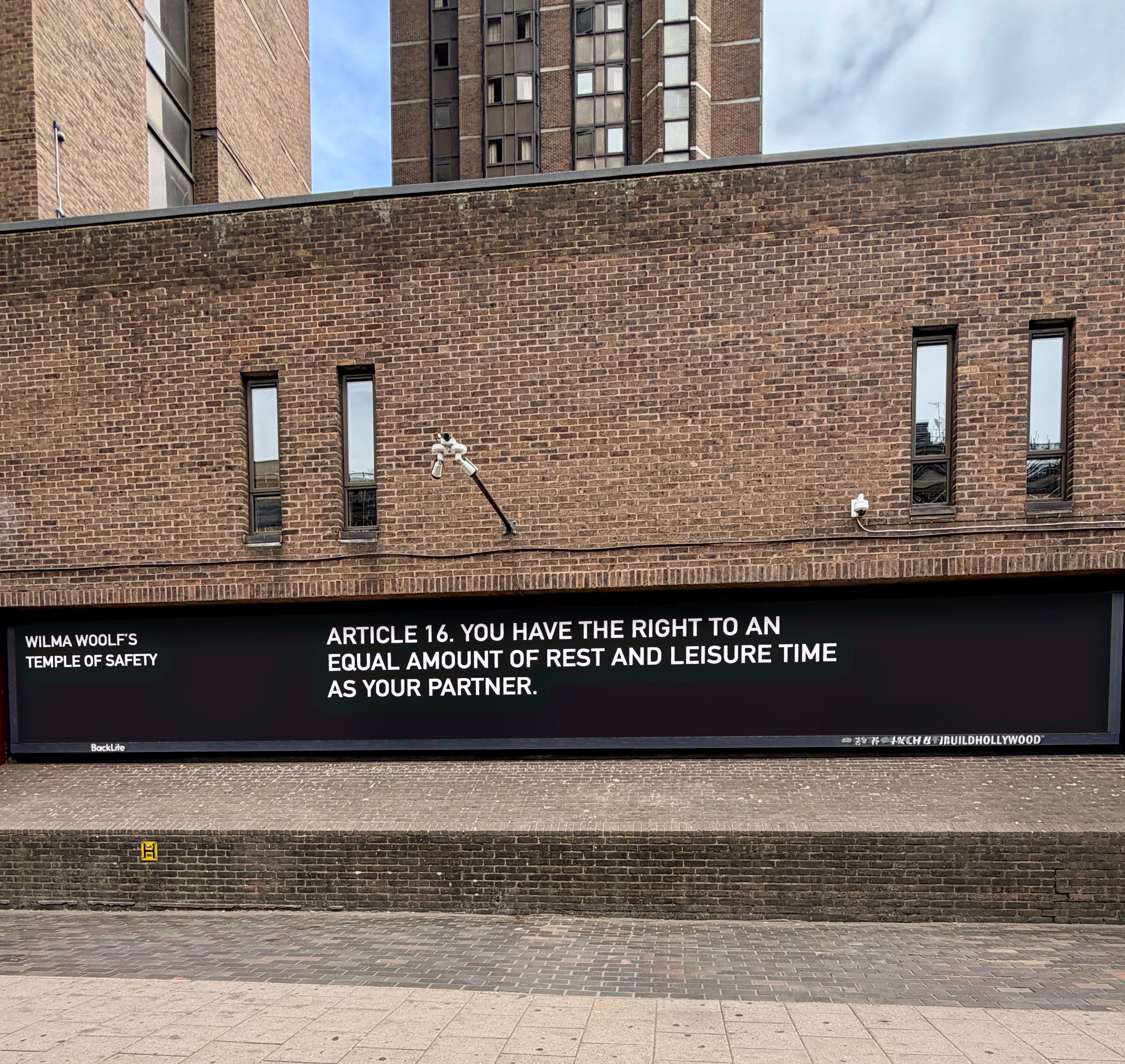
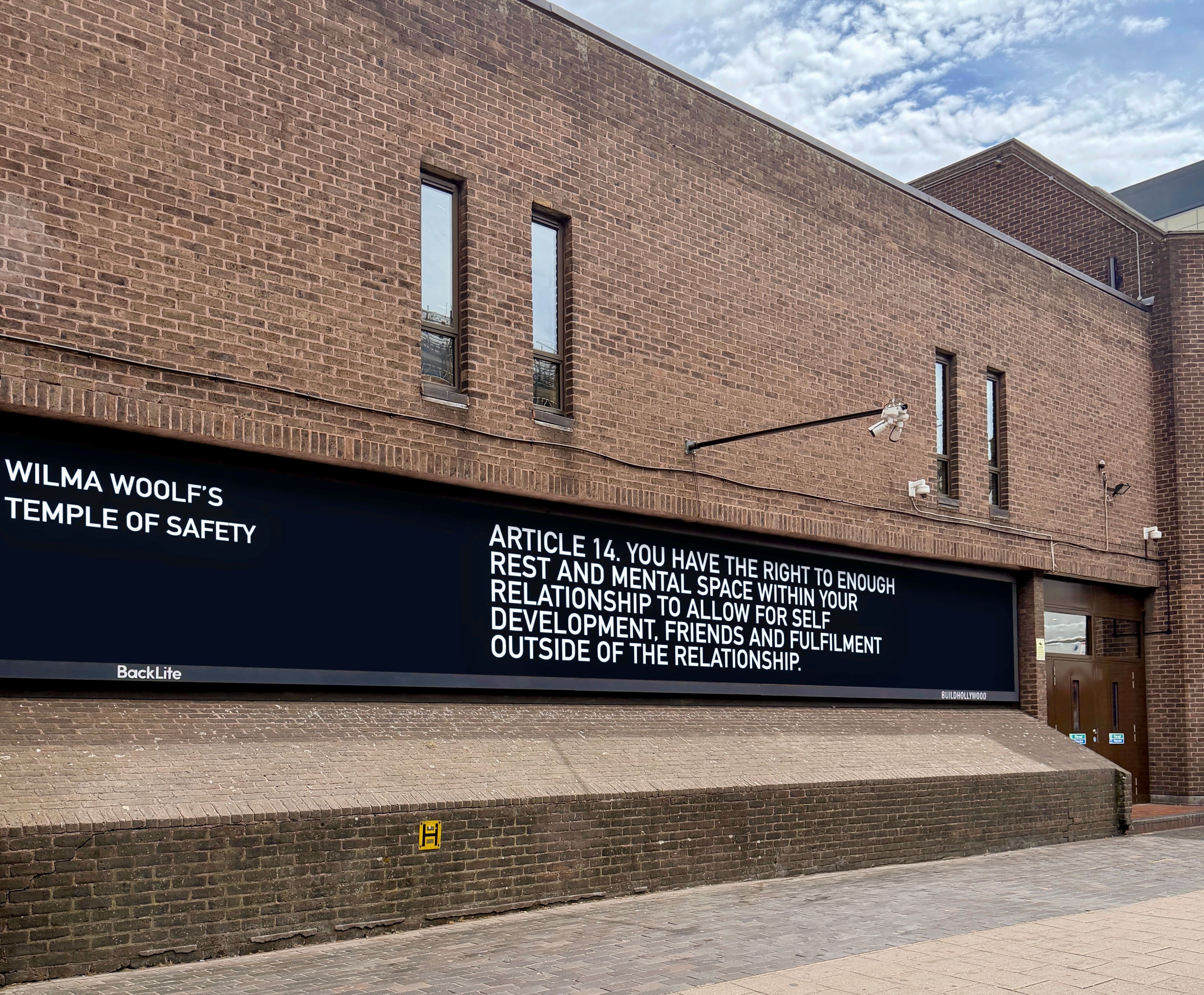
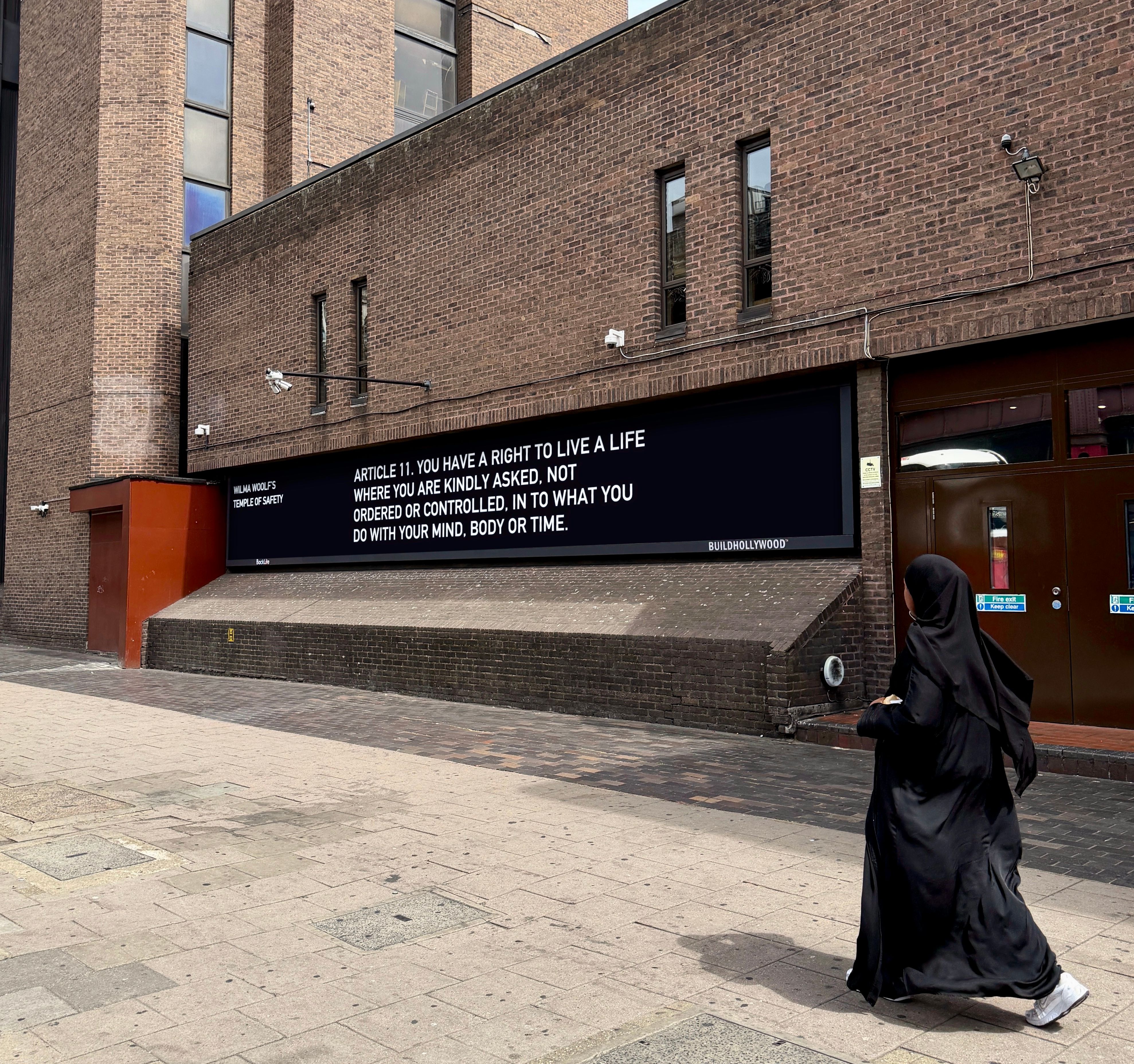
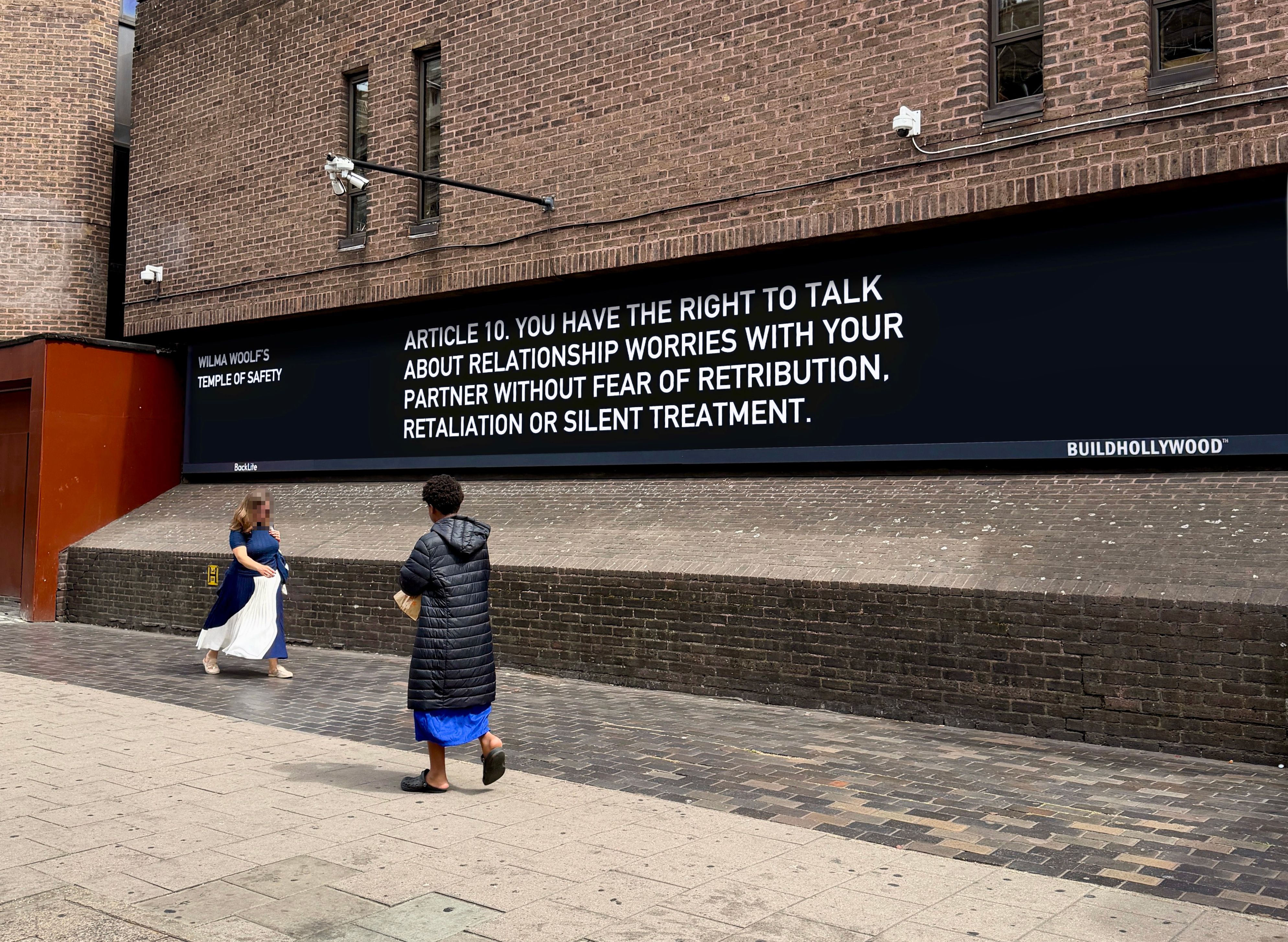
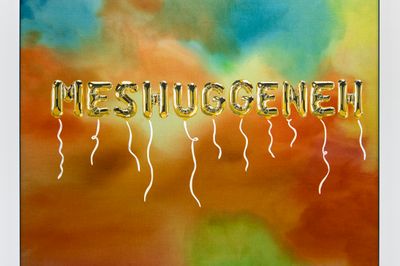
Wilma Woolf, Temple of Safety, Waterloo, London (2026) © Wilma Woolf. CourtesyRichard Saltoun Gallery.
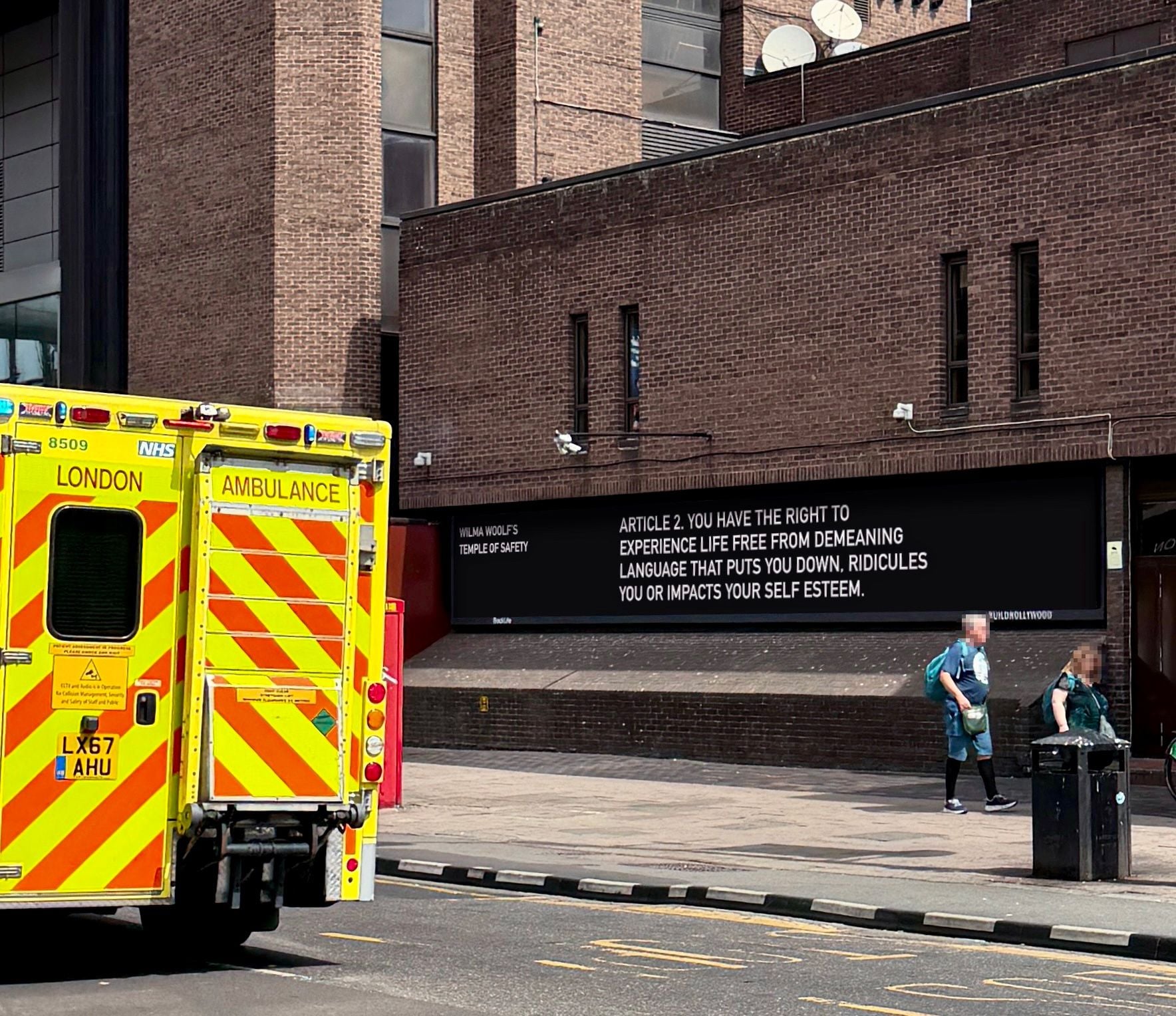
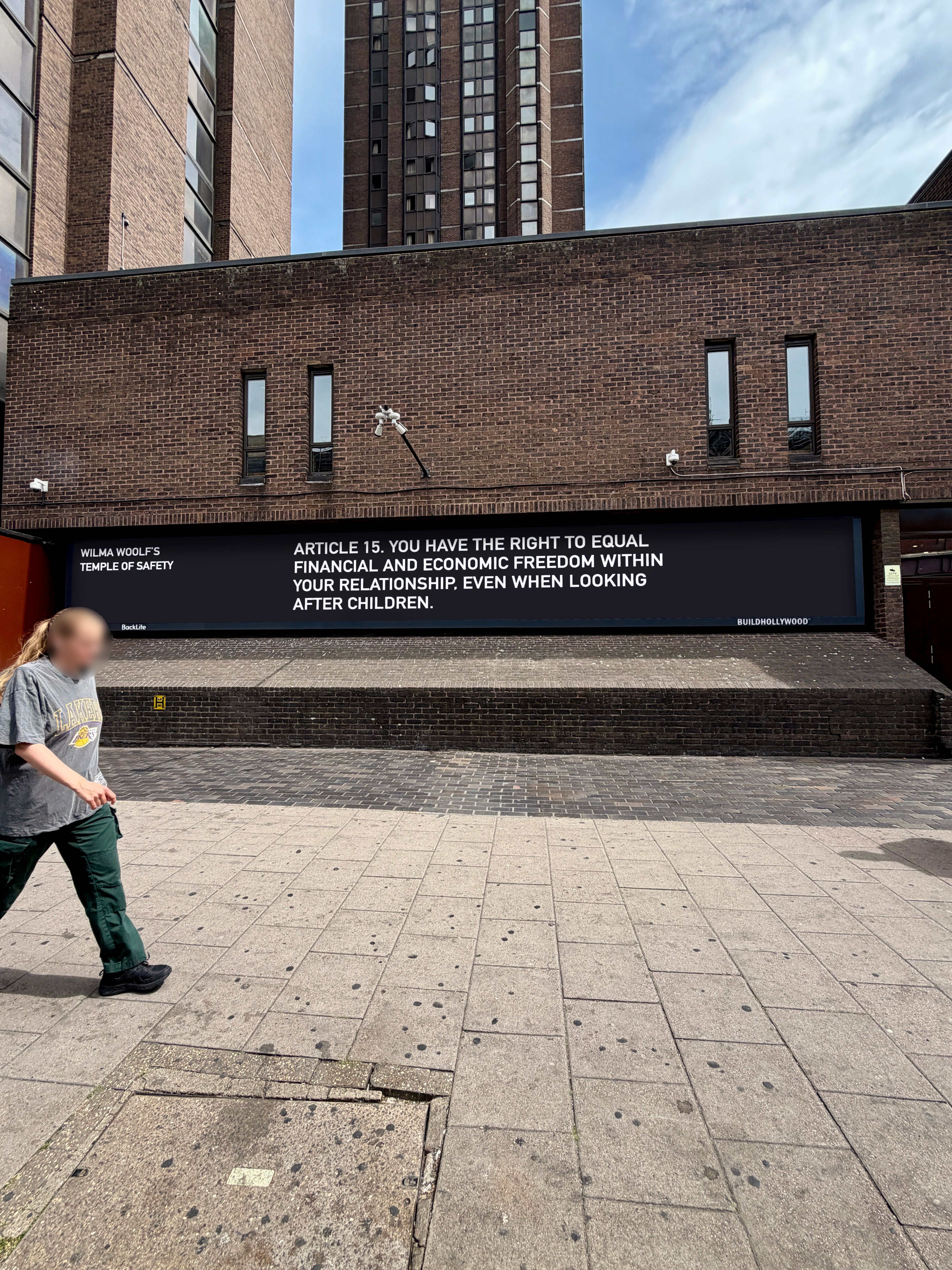
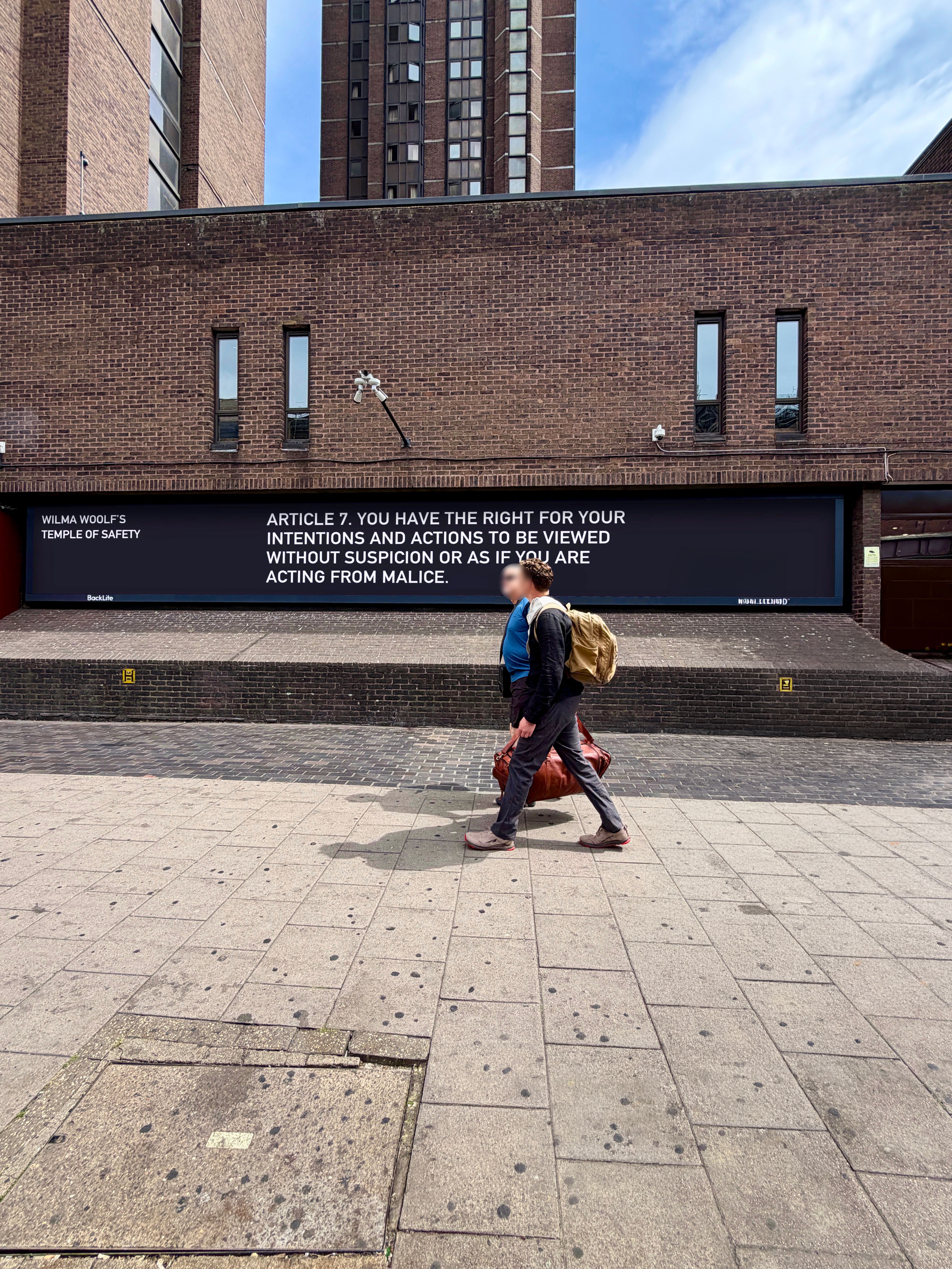
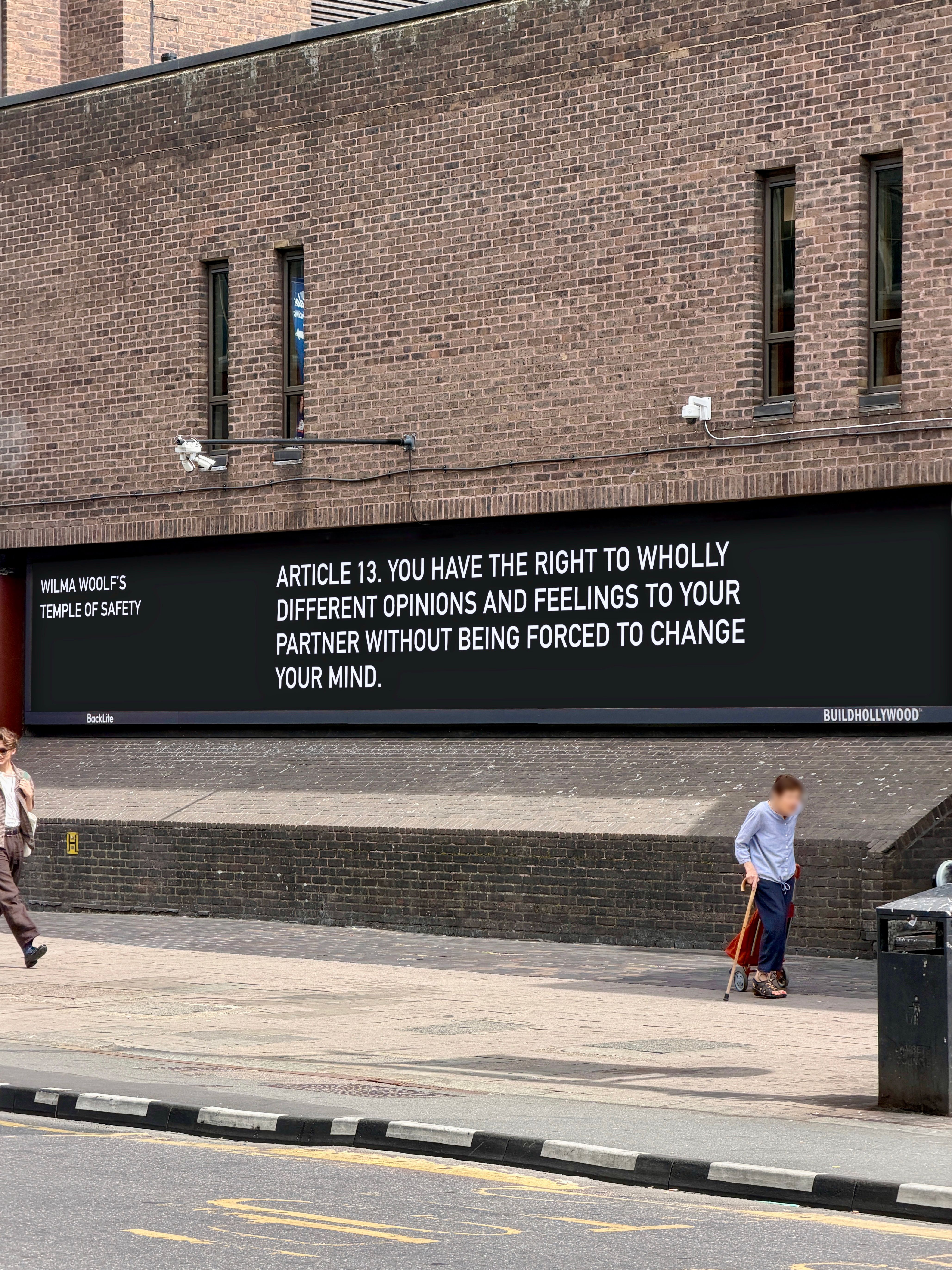
Wilma Woolf’s Temple of Safety, made up of 16 newly created text-based works that explore the definition of a person’s rights within a relationship, were this weekend installed across several billboards close to London’s Waterloo station.
This public artwork, which is based on Woolf’s extensive research into the drafting of the United Nations Declaration of Human Rights, highlights the parameters of domestic abuse and coercive control. Each text has been ratified by experts in the field, including those who have survived abuse.
One billboard reads: “You have the right to experience life without anger being directed at you in an intimidating or scary way.” Another says: “You have the right to experience life free from demanding language that puts you down, ridicules you or impacts your self esteem.”
“You do not have to do anything to achieve, keep or deserve these rights within a relationship,” a statement on Woolf’s website explains. “They are yours simply from the result of being alive and entering into a relationship with another person. The articles are drafted to form a Temple of Safety, within which all can walk in and [safely] reside.”
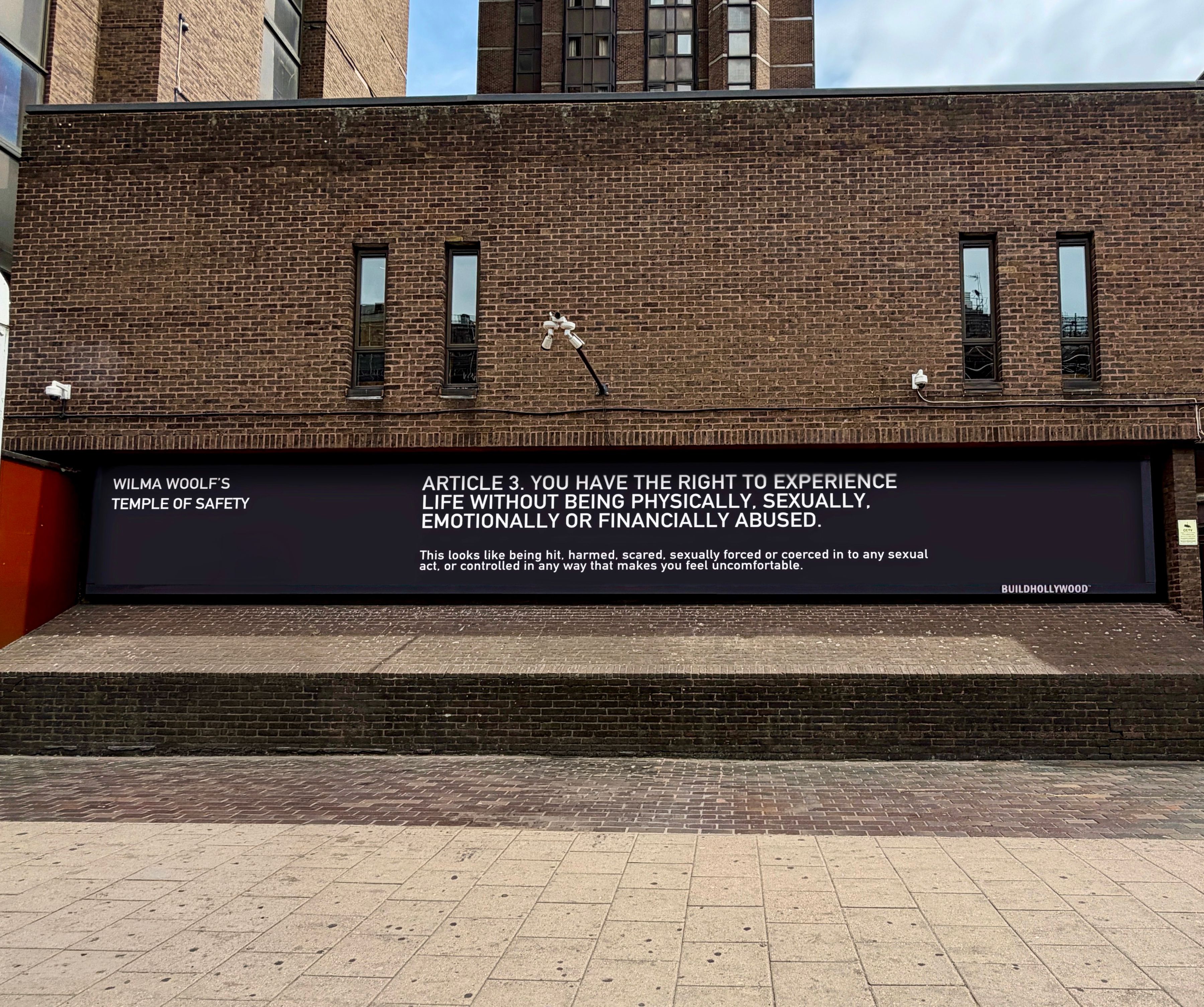
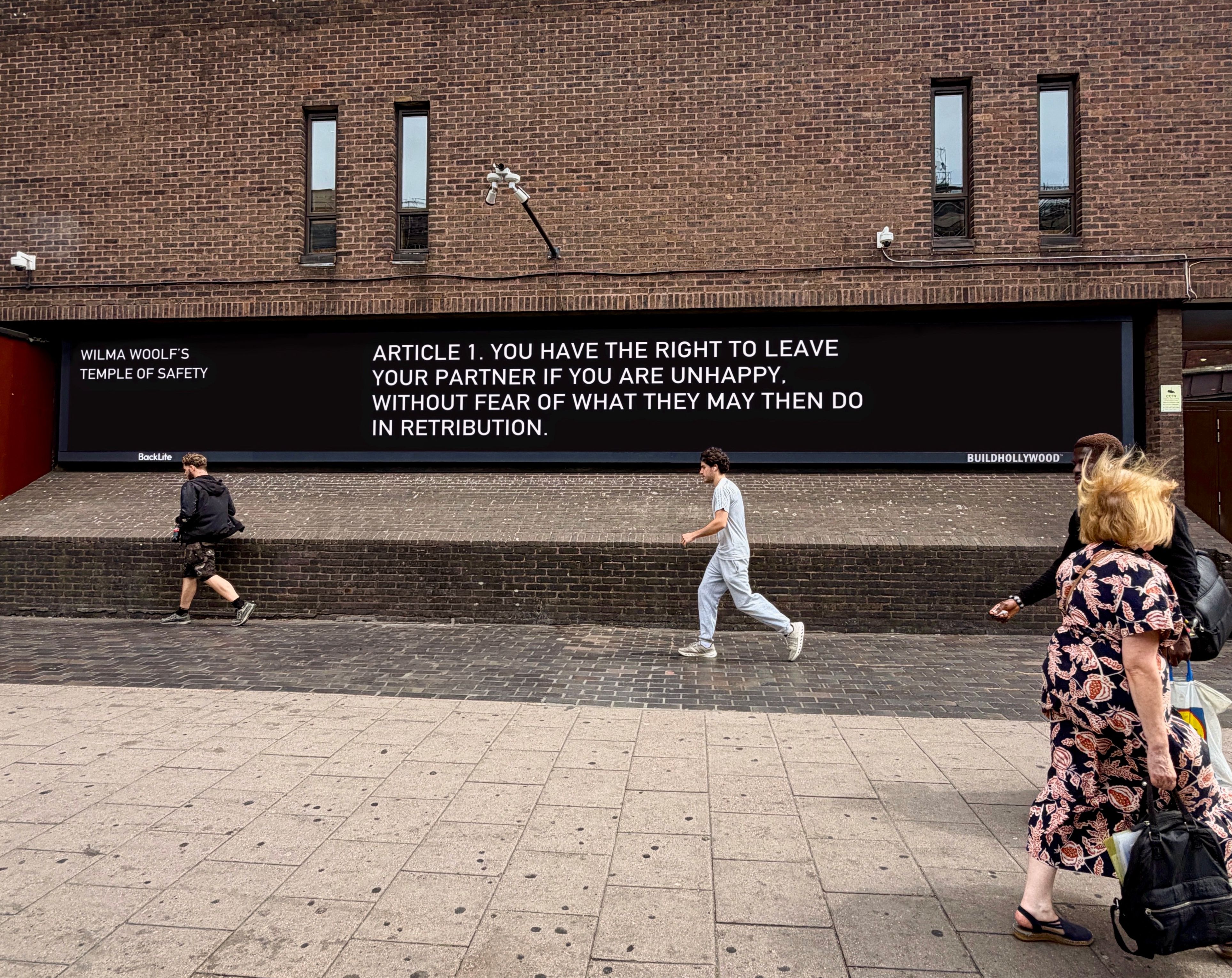
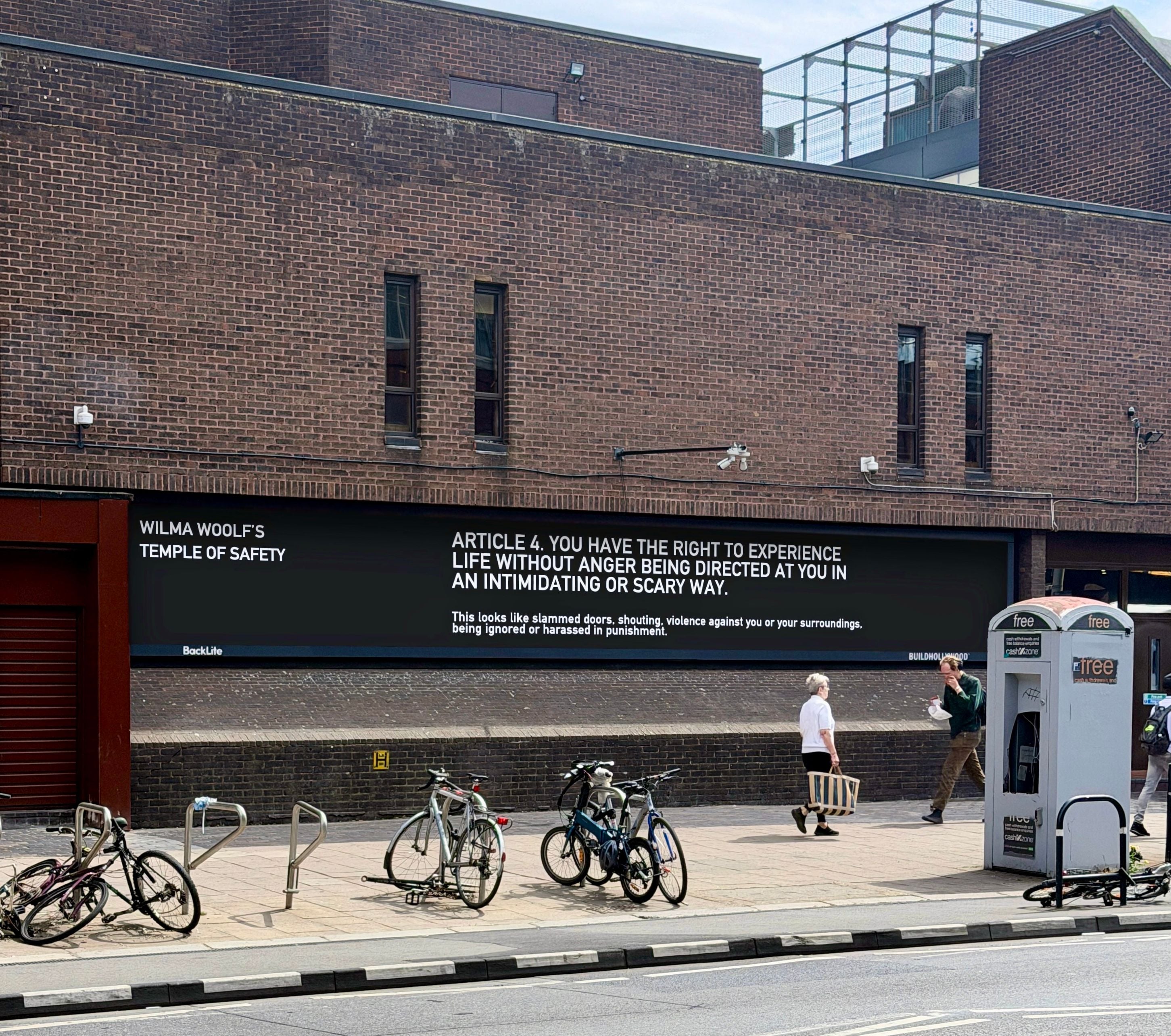

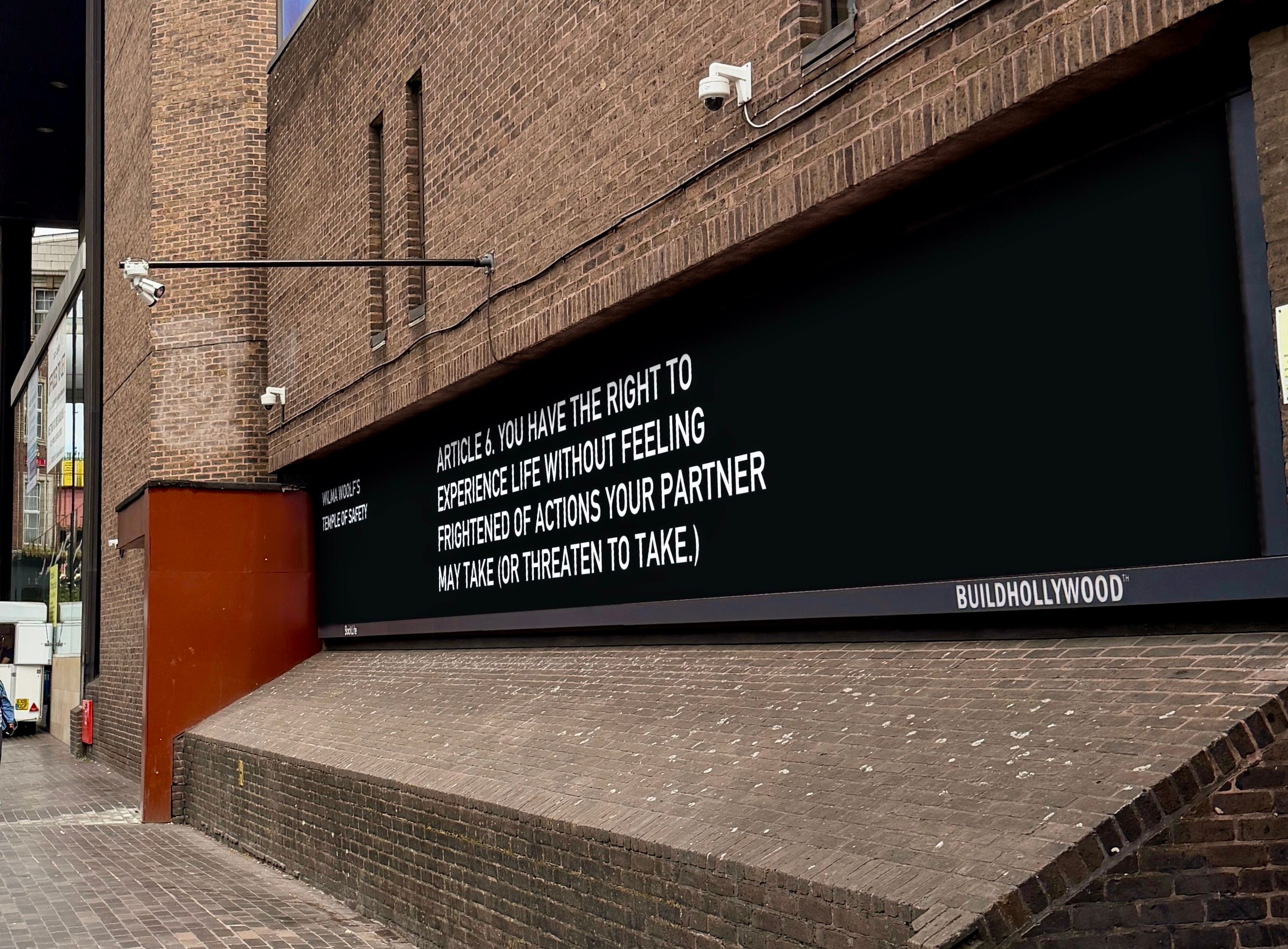
According to UK-based legal aid charity the National Centre for Domestic Violence, one in four women and one in six–to–seven men will experience domestic abuse during their lifetime. According to the Office for National Statistics, there were 49,557 offences of coercive control recorded by the police in England and Wales in the year ending March 2025.
Temple of Safety first appeared in London November last year—coinciding with the International Day for the Elimination of Violence Against Women—on six travelling billboard vans across the city. One of the 16 works, Article 4, will go on display at this year’s Summer Exhibition at the Royal Academy (opening 16 June).
Woolf’s previous work has also been the subject of public display and attention. The installation Domestic (2020) saw eight plates displayed on a black, reflective dinner table, each presenting data on the number of women killed by male violence in the UK during each year since 2013.
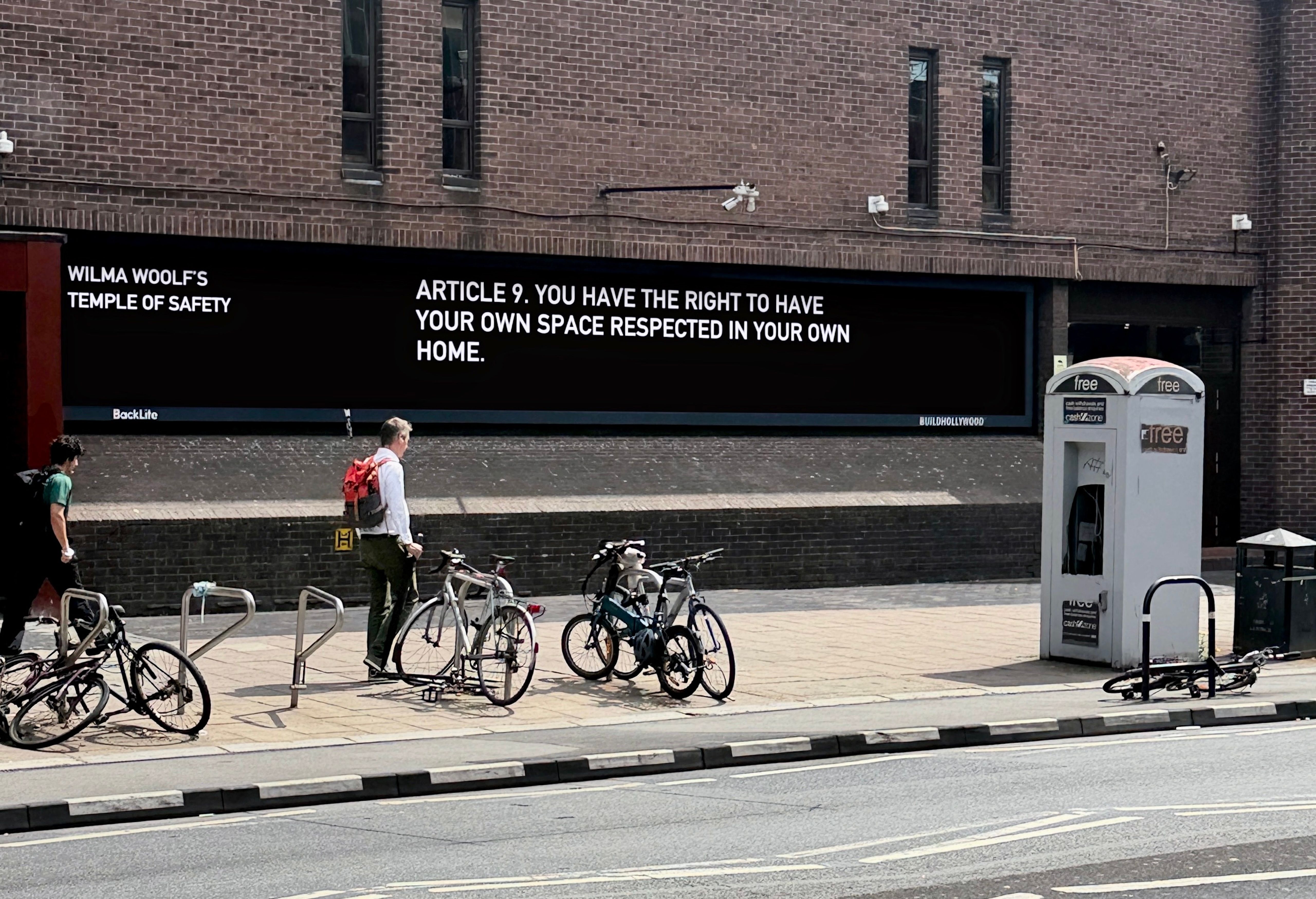
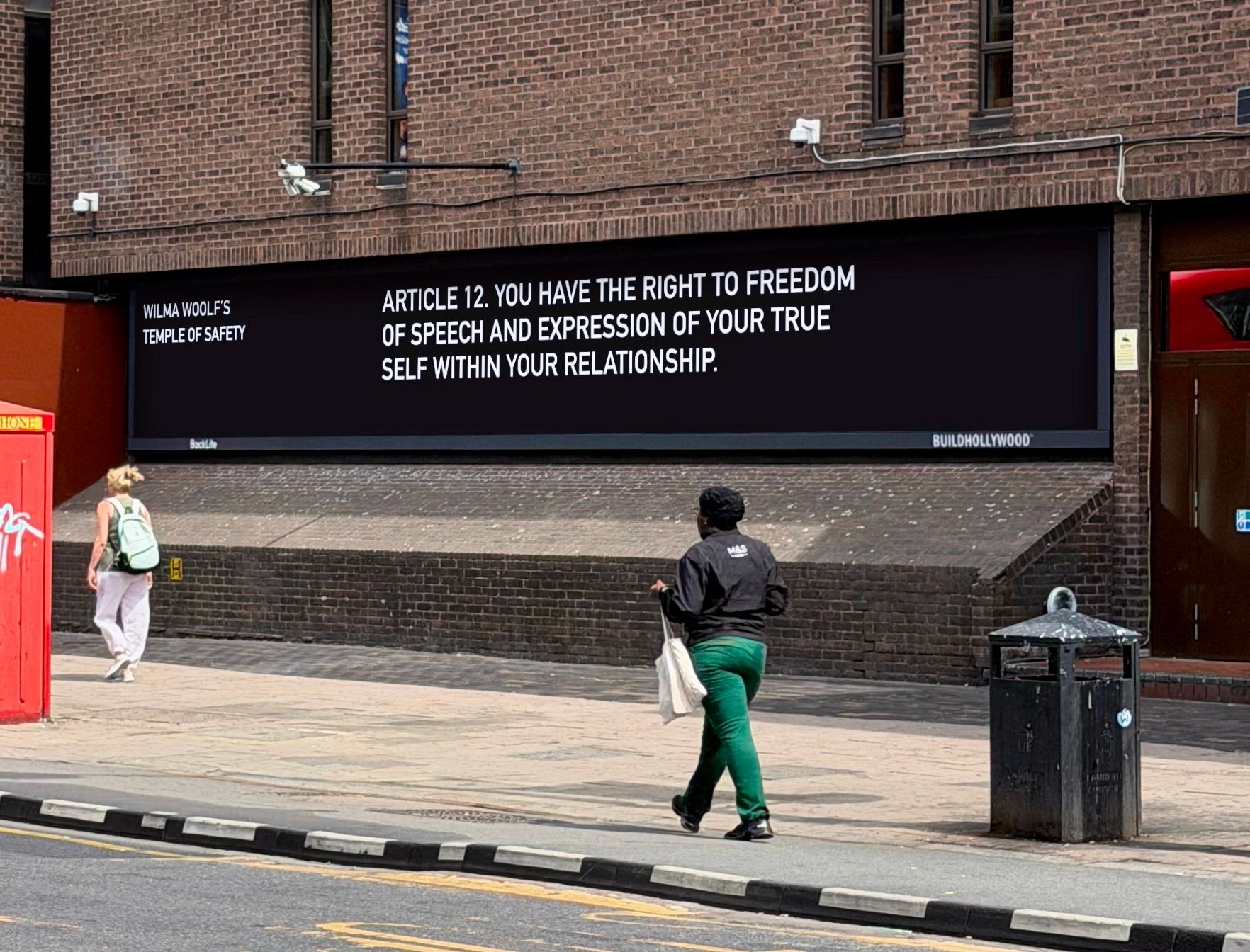
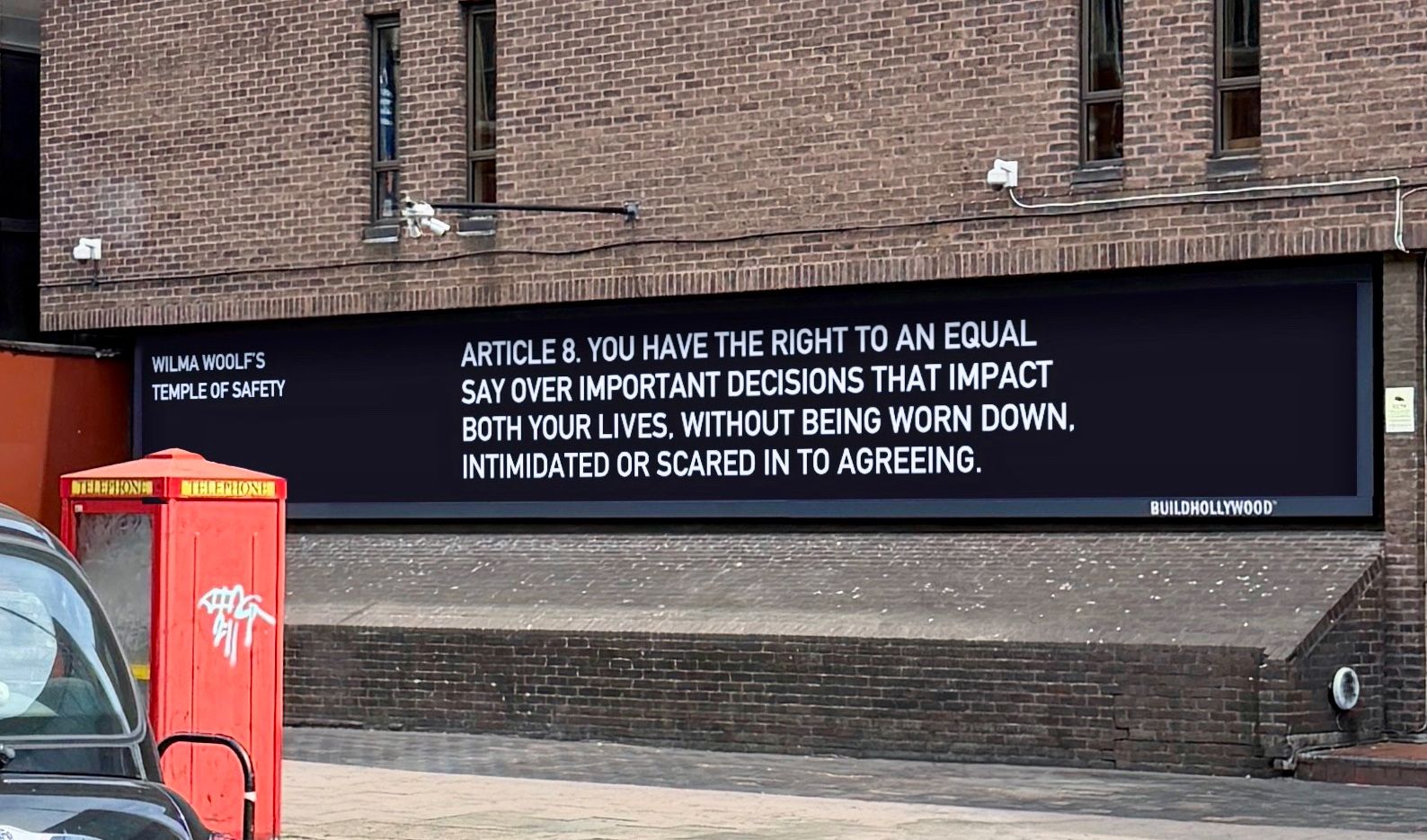
In 2022 the work was shown in the Houses of Parliament by invitation of Labour Member of Parliament and former Minister for Safeguarding Jess Phillips, and was later discussed in a House of Commons debate held for International Women’s Day. In a powerful Instagram caption at the time discussing Domestic, Woolf explained that the work was present in Parliament at the request of two families campaigning on behalf of their daughters who had seen it on display at Richard Saltoun Gallery, where it was first shown.
In a statement on her website, the artist says: “The aim of this piece of work is dualistic. It is to remember the women who have needlessly lost their lives and also to highlight the institutionalised and systemic acceptance of this human rights abuse often regarded as an inevitable part of men and women co-existing.
“This piece of work allows us all to visualise and understand this crime as one continuous crime, not a series of inevitable, unstoppable incidents.”







A respected voice in contemporary art discourse.
Focusing on ambitious storytelling and insightful art-world commentary. Ocula Magazine publishes in-depth interviews, critical essays and timely analysis on the artists, exhibitions and ideas driving the global art world.
Learn more about Ocula Magazine
Showcasing the best of the art world.
Ocula partners with galleries from around the world to highlight their artists, artworks and exhibitions. Gallery membership is by application and invitation, with each member vetted by an independent panel.
Learn more about Ocula Membership
Specialises in the sale of major artworks.
Led by a team with deep ties to the world’s leading auction houses, galleries and collectors. Ocula’s advisory team offers bespoke services to high-net-worth clients from around the world who are looking to acquire the best of contemporary and modern art.
Learn more about our team and services