The art world in focus
Subscribe to our newsletter for news and insights on artists, galleries and exhibitions.

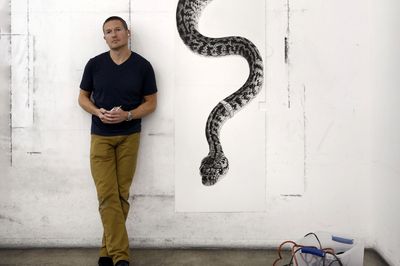
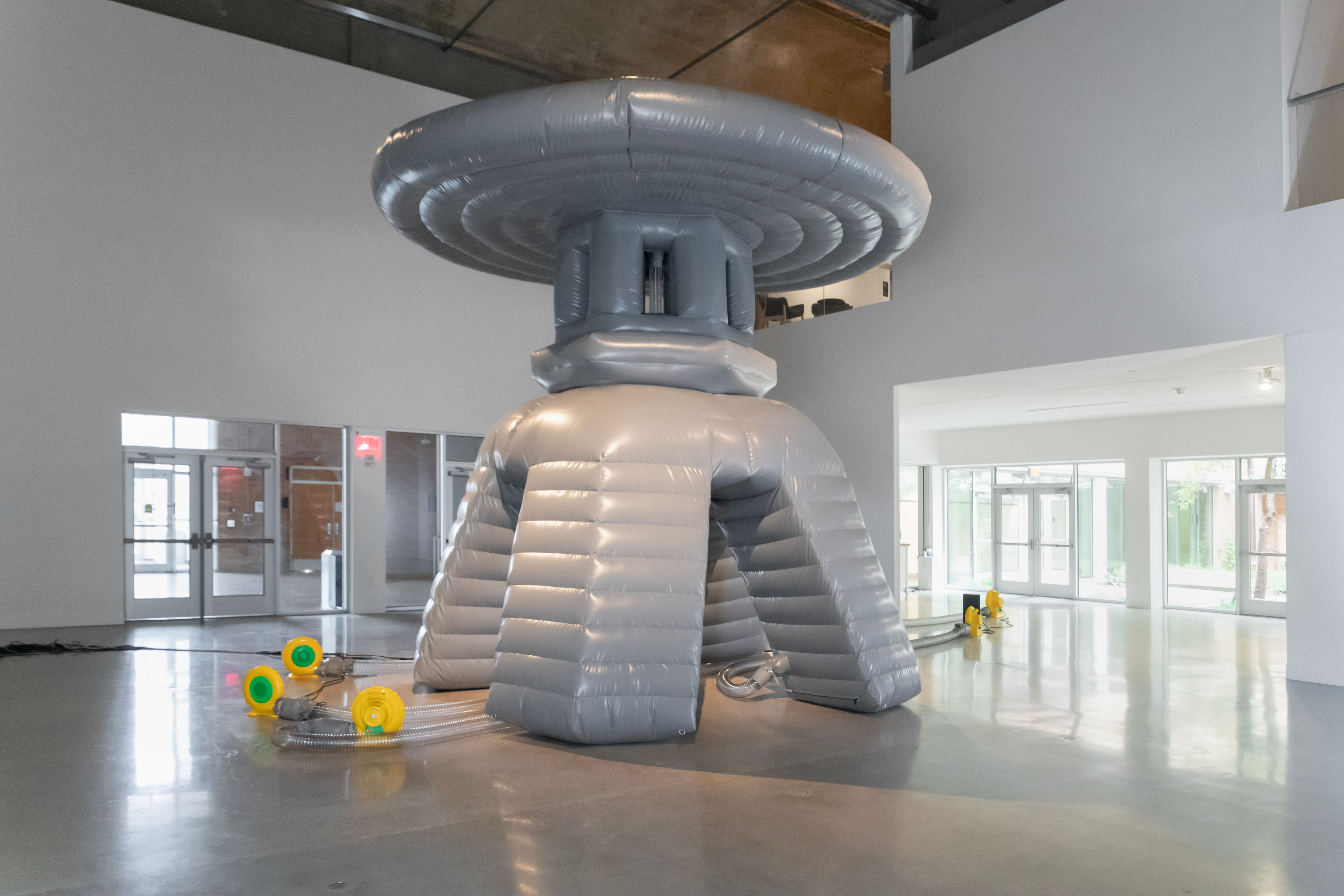
For nearly two decades, Los Angeles-based Jacqueline Kiyomi Gork has used sound as a sculptural and architectural medium, as well as sculpture and architecture as acoustic structures to support and manipulate sound. After an early career in noise music, she sidestepped into making installations that incorporate her complex sound works to powerful and atmospheric effect.
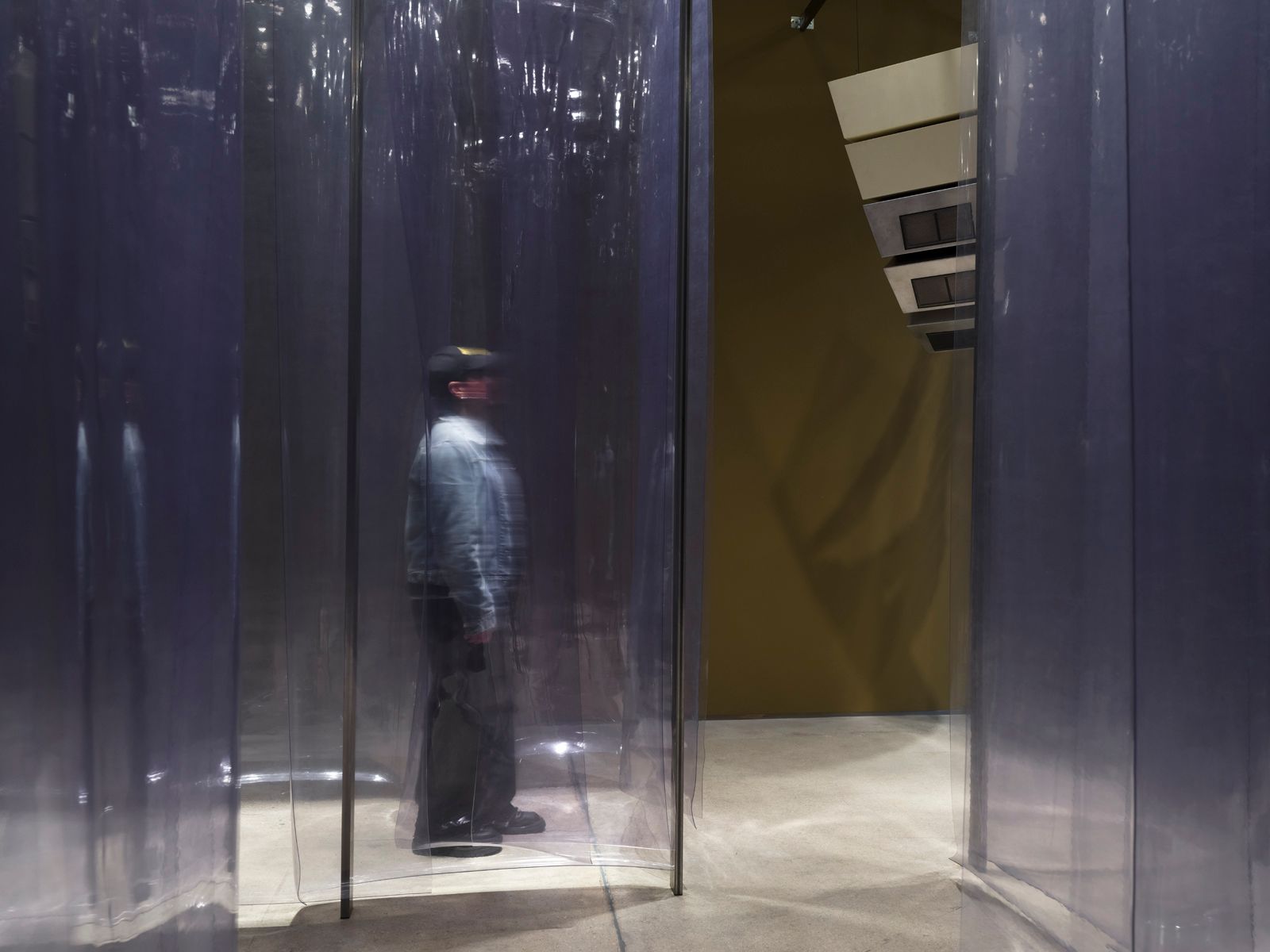
For an exhibition at the Institute of Contemporary Art, Los Angeles, in 2023, for example, Kiyomi Gork created a maze from hanging materials such as plastic sheeting and sound-deadening blankets. Into this environment she fed digitally modified sounds generated in real time from the ambient noises of the gallery next door. Speakers were located throughout the maze, so that sounds emerged differently as visitors explored the installation. ‘What you hear affects how you move and how you move affects how you hear,’ the artist observed, describing in bodily terms the phenomenon of a sonic feedback loop.
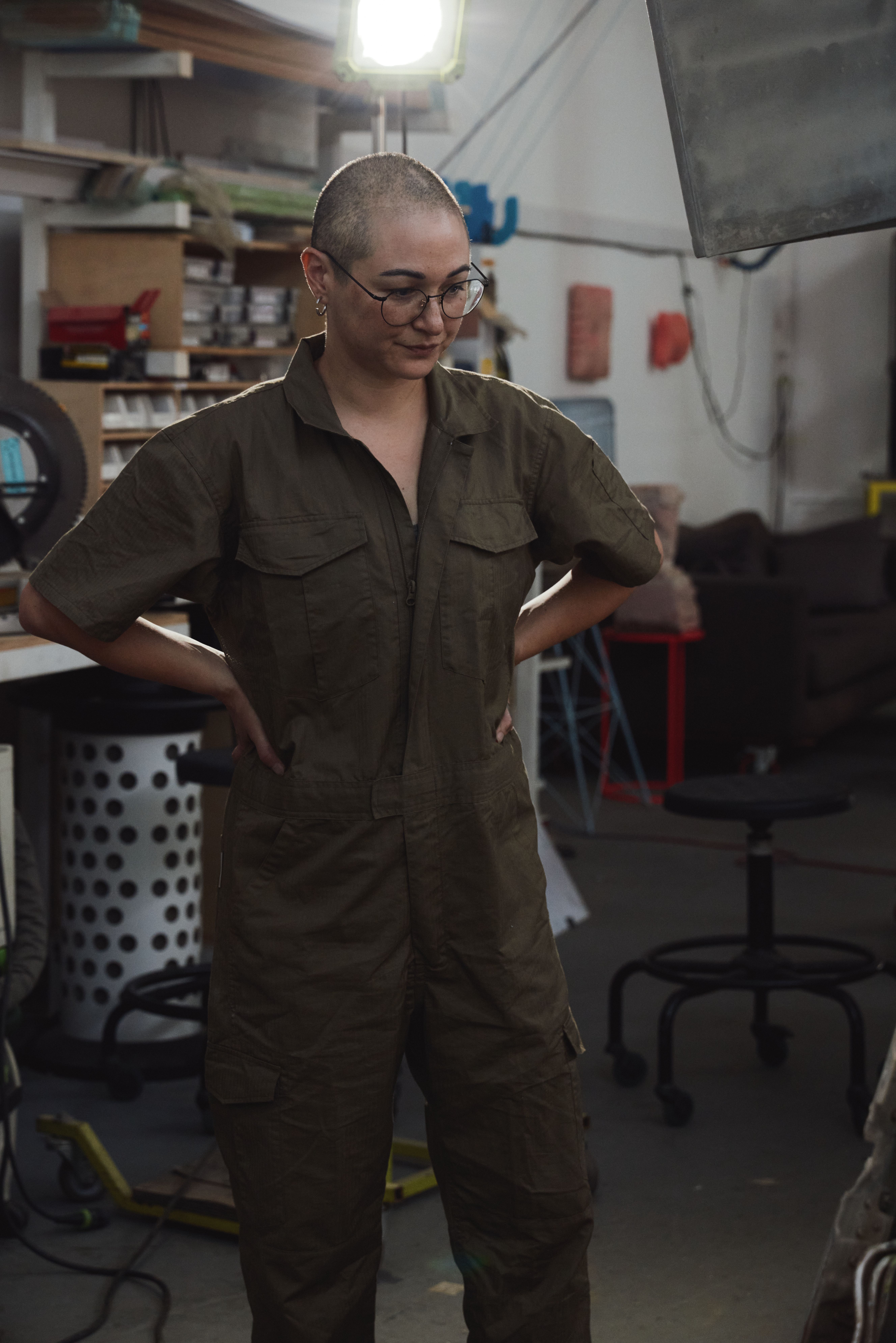
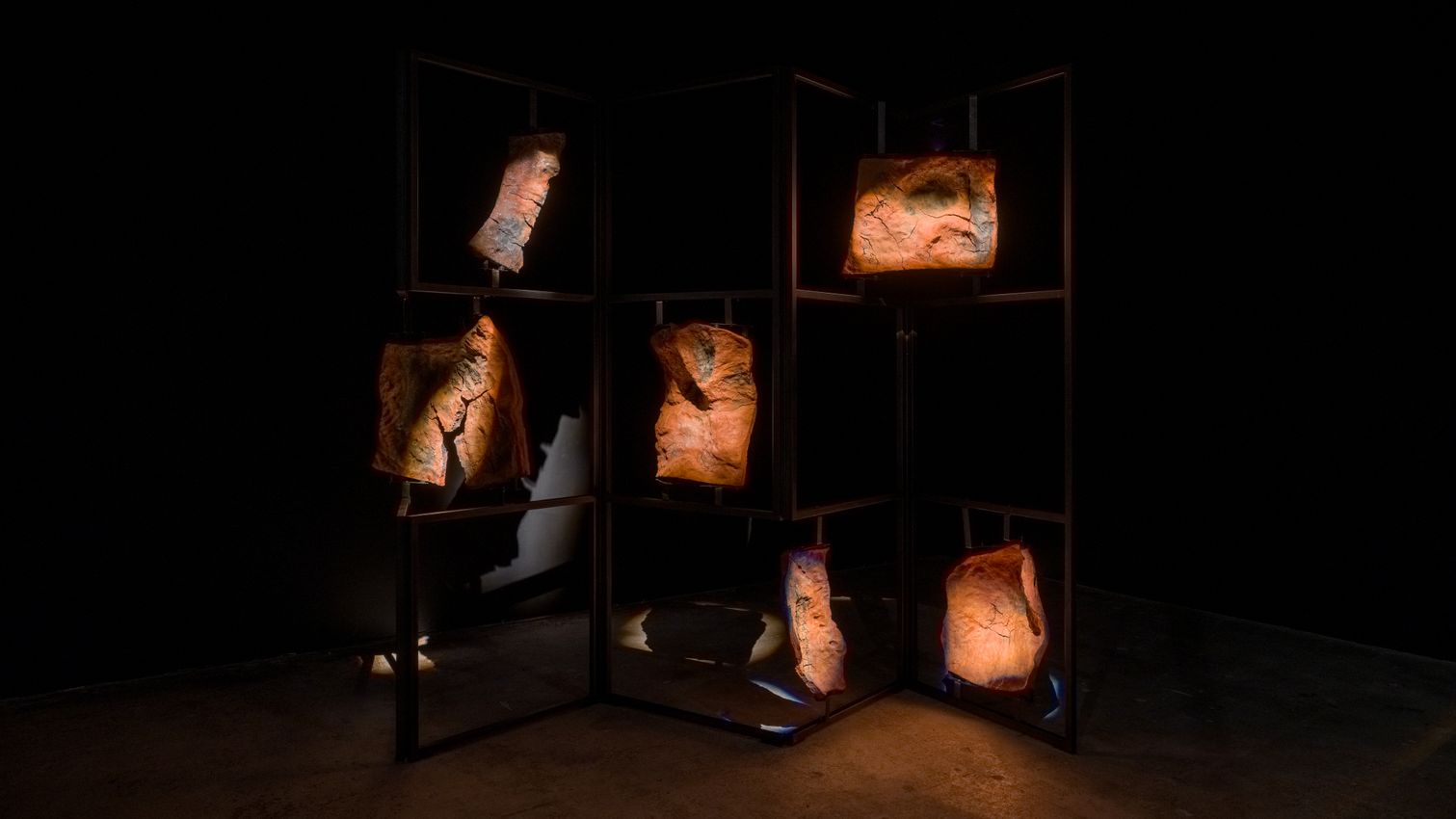
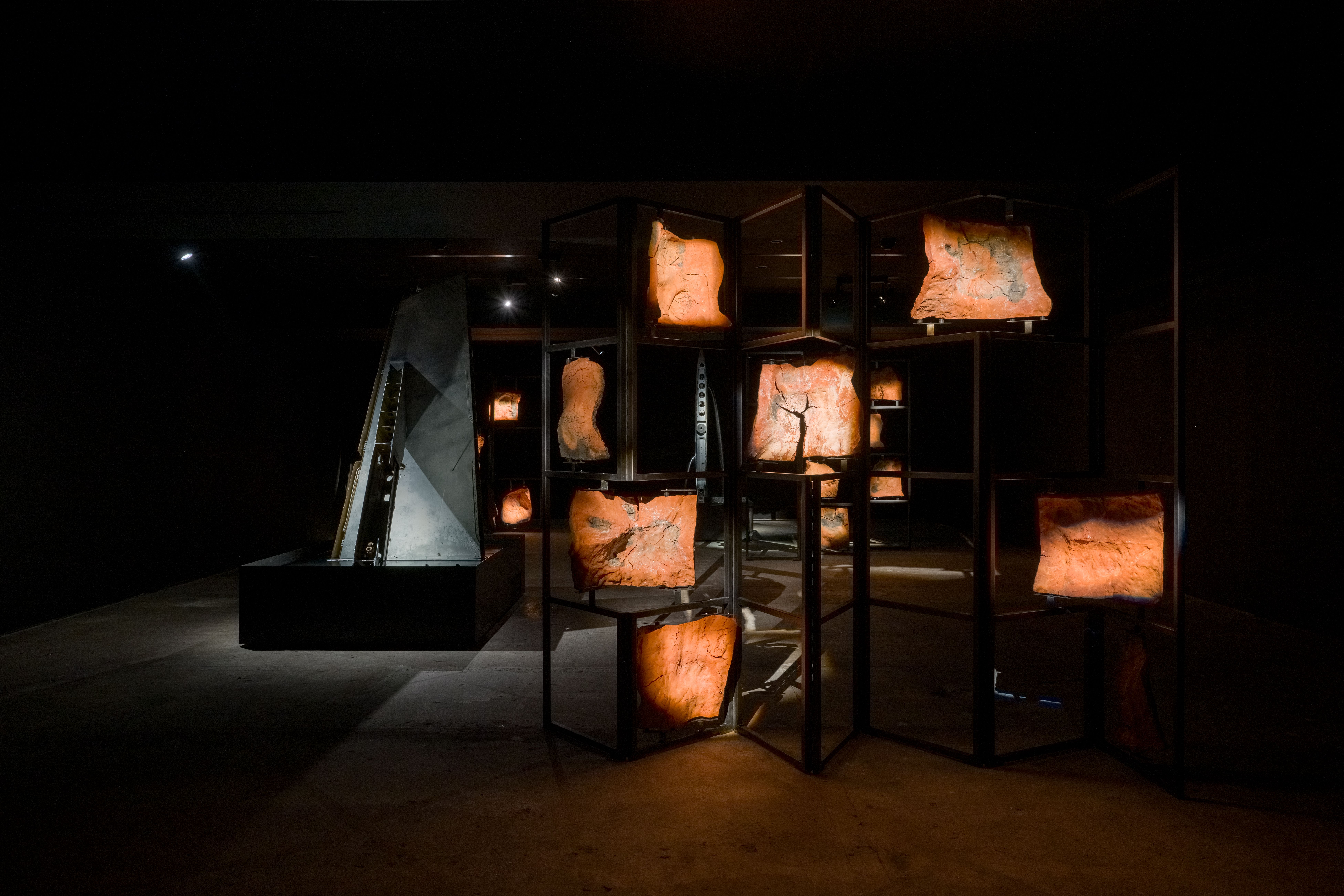
On 27 September, she opened a solo exhibition at Hong Kong’s Empty Gallery, her third in the black-box space and a recognition of the gallery’s tenth anniversary. The exhibition, Gama, centres on a series of sculptures made from parts of military aeroplanes, which are activated by pumps that trickle water over them and into receptacles at their bases. This sound is then amplified and modified by the artist, to powerful effect. Also placed in the gallery are freestanding metal structures that hold irregular sections of cracked brown clay; referred to as ‘diffusion tiles’ by Kiyomi Gork, these absorb and deflect the sound from the speakers.
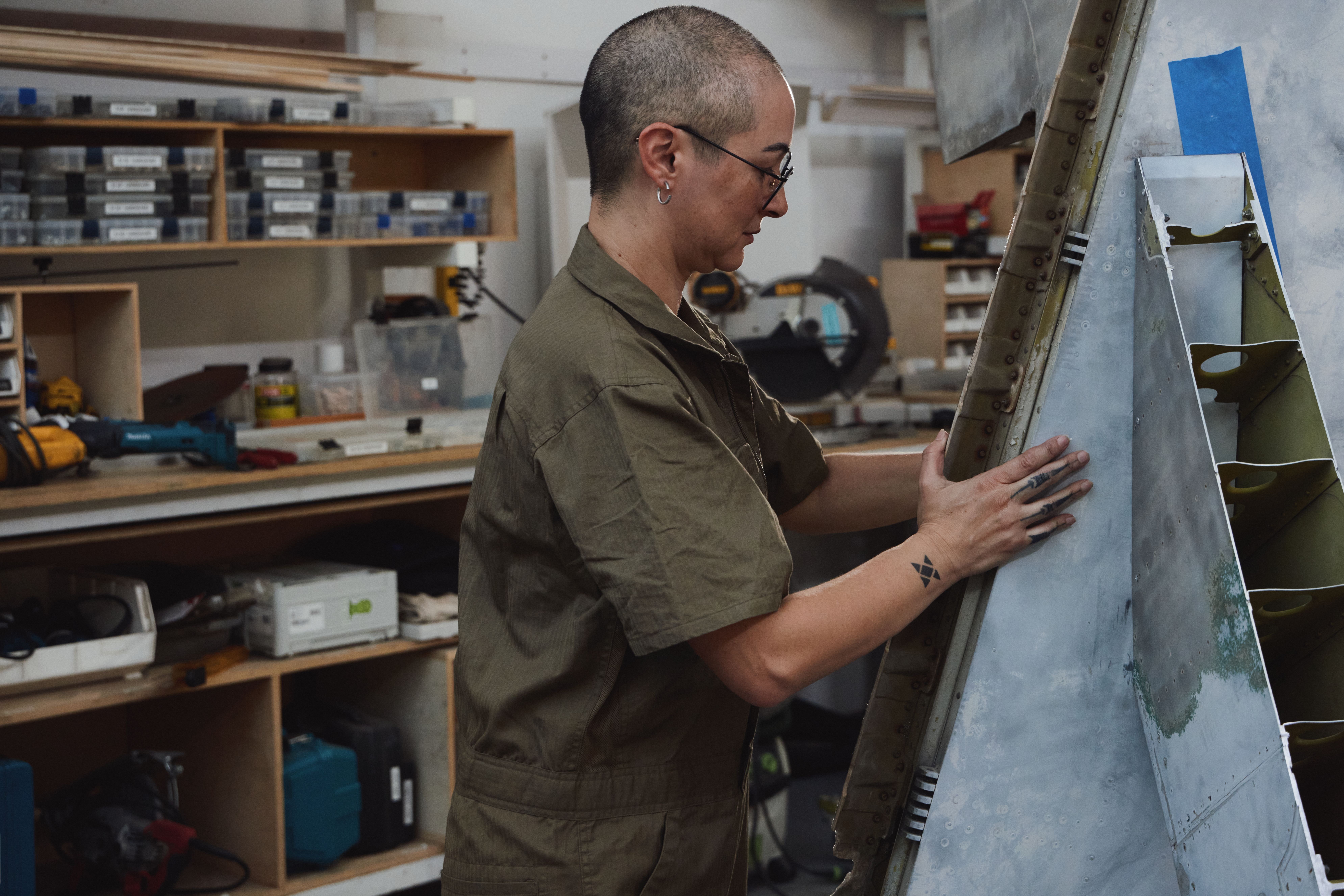
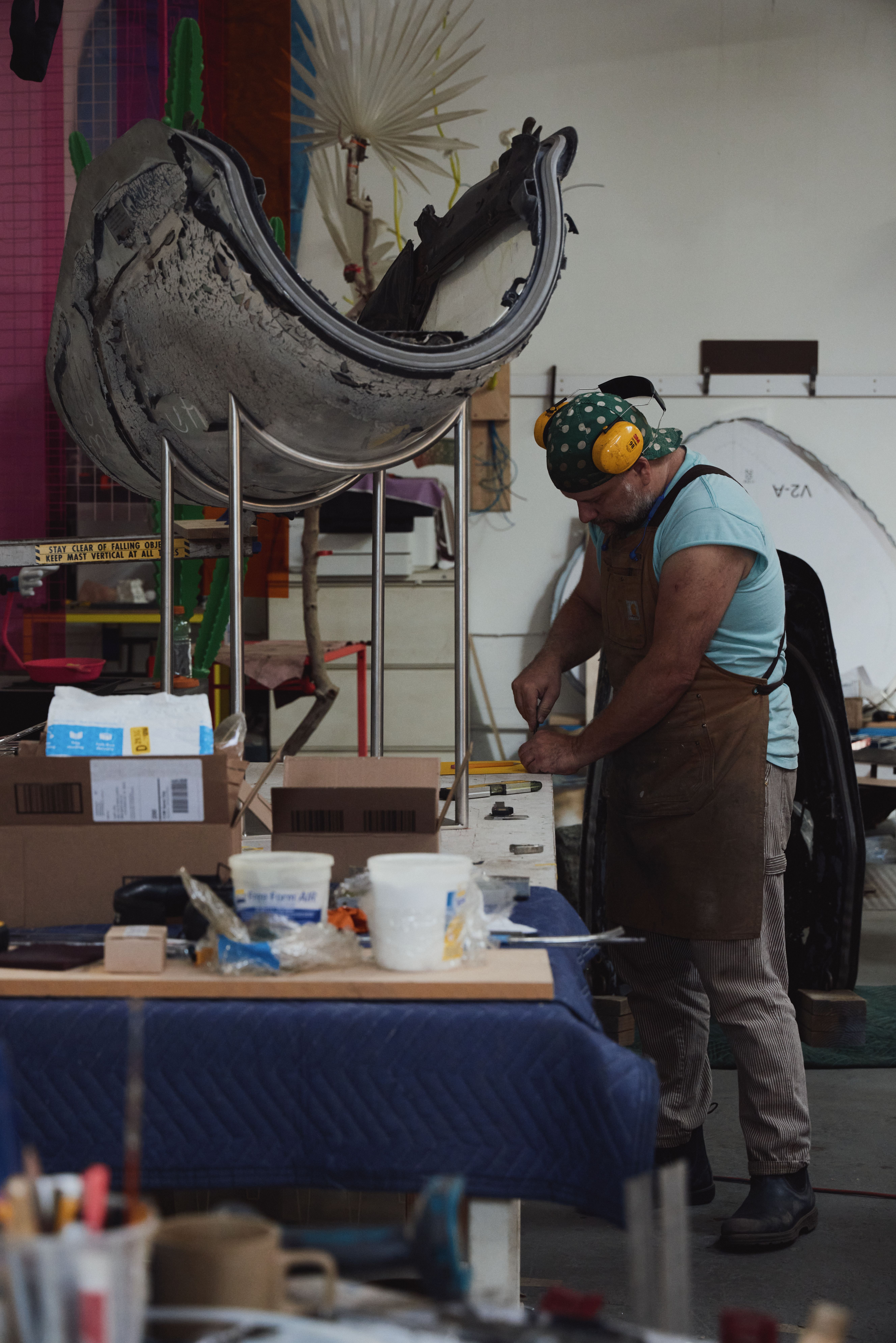
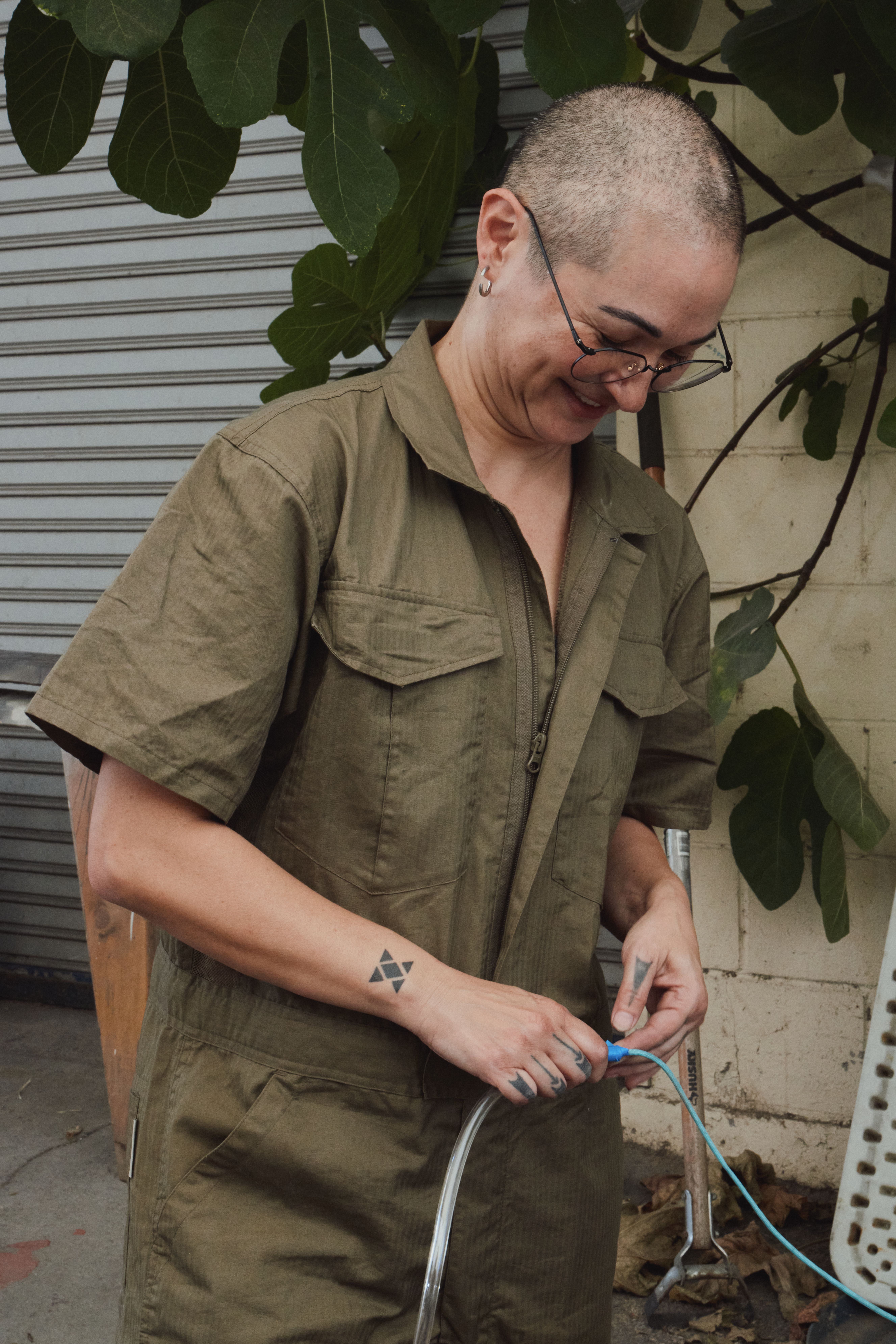
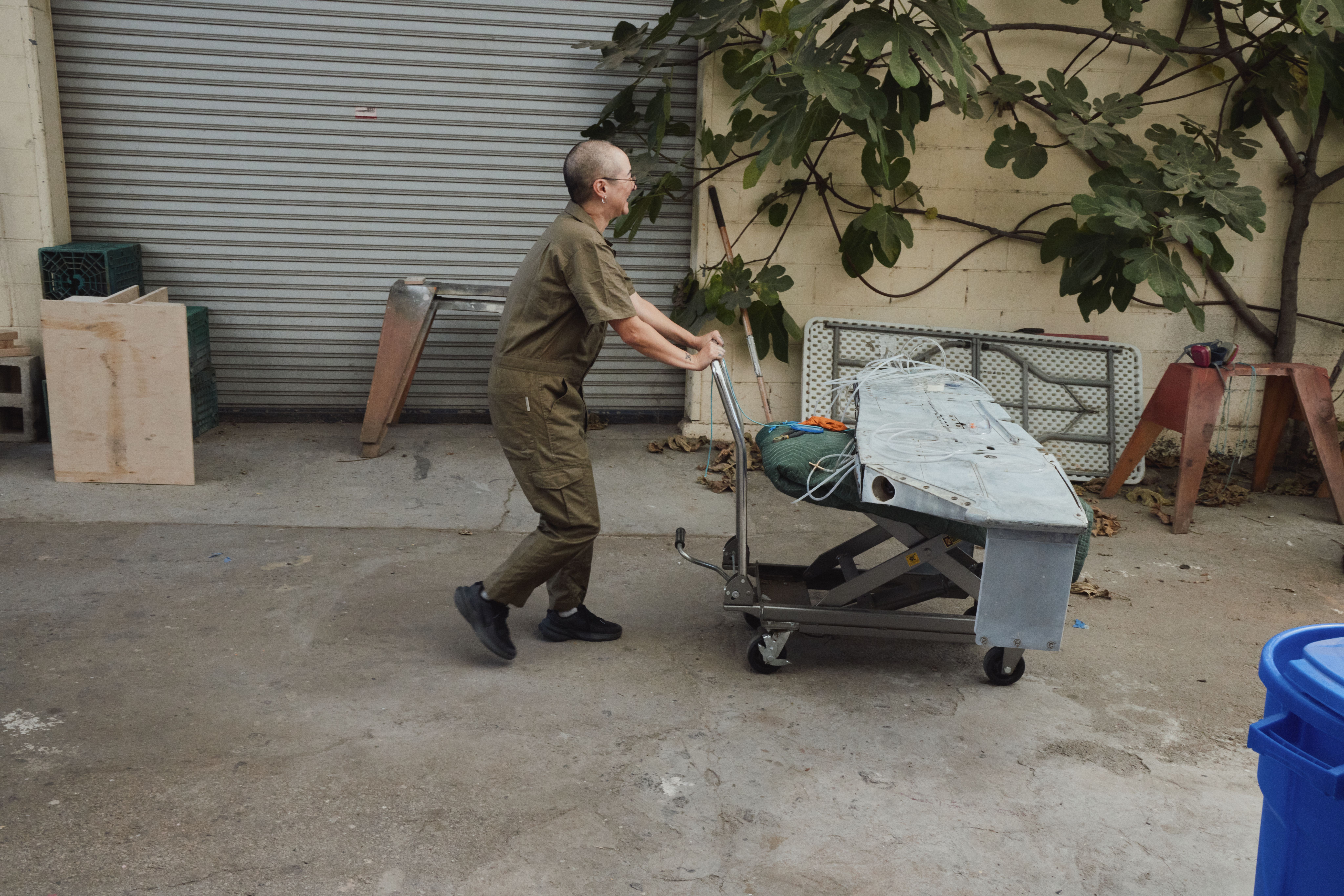
At a fabrication studio in east Los Angeles, where new sculptures for the show were nearing completion, Kiyomi Gork explained to Ocula how this new body of work marks an important development in her practice, even while it explores themes that have followed her since childhood.
JKG: A combination of things. I’ve been thinking about American industrial military technology since I was an undergrad student. That’s connected to my family background, which is a part of myself I felt moved to confront after October 7, 2023. And since 2022, I’ve been researching the caves in Okinawa. I’m interested in underground architectures, both natural and manmade, because they slip between being spaces of safety and confinement. Also, the acoustics are wild.
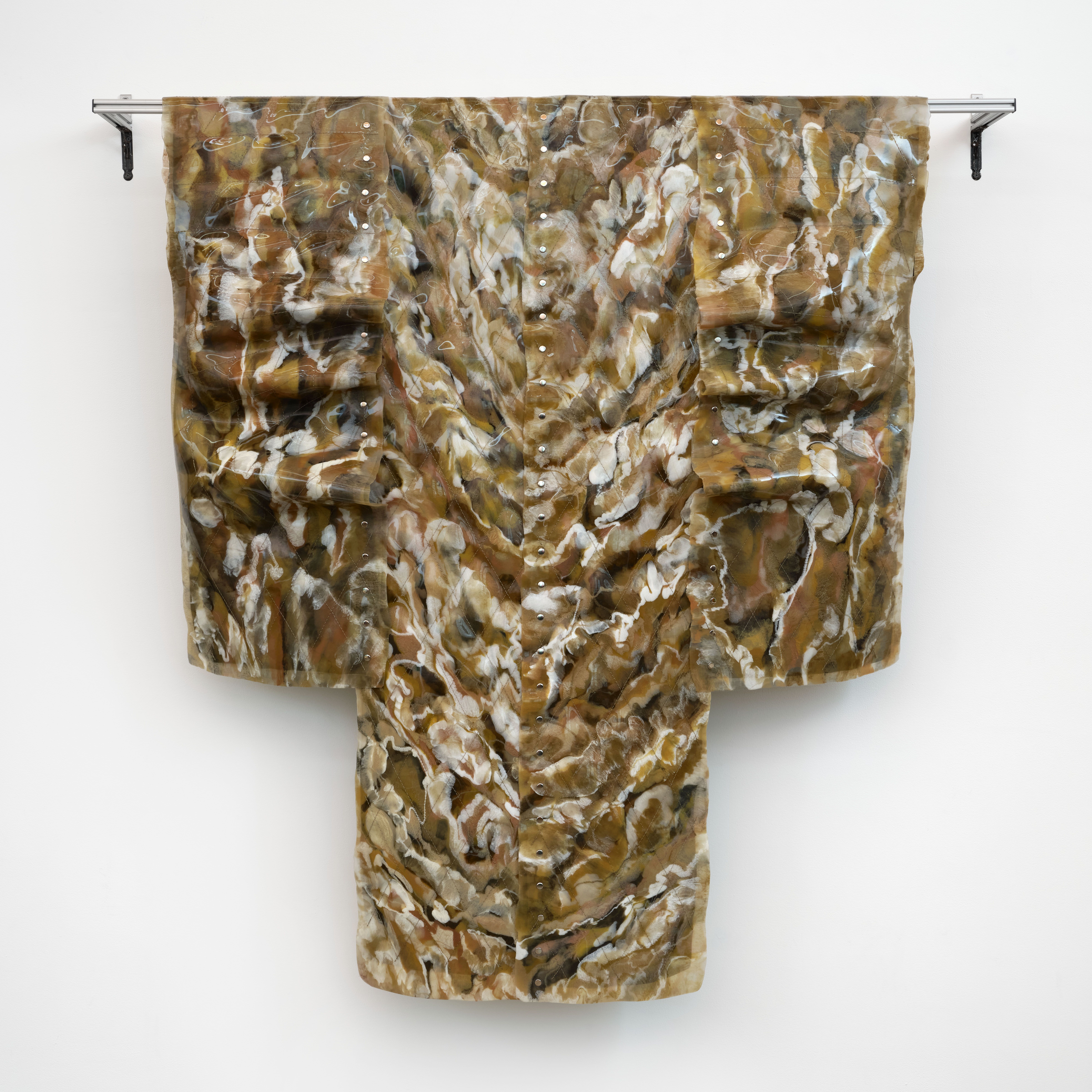
JKG: My ancestry is Okinawan, on my mother’s side. Okinawa is a collection of islands about 400 miles south of Japan that was once its own kingdom, but was colonised by Japan in 1879. It was the location of a battle in 1945 between Japan and the United States, during which Okinawan civilians sheltered in the island’s extensive cave systems. A third of the local population died in the battle. When the war in Gaza started, it echoed aspects of the Battle of Okinawa.
JKG: I’m half Jewish, on my father’s side. It’s something I don’t truly identify with, I am 10,000 percent pro-Palestine, but my grandparents were Zionists. My grandfather worked in aerospace, and came to Los Angeles from New York after the war to work for a company called Aerojet, started by Jack Parsons and Theodore von Kármán. That’s the industry that my dad ended up going into. So I grew up around a lot of aerospace stuff. I was not interested in it growing up; I thought that it was too escapist or techno-utopian.
JKG: In college I started getting into cybernetics and Cold War systems of surveillance, but never addressed my family’s involvement.
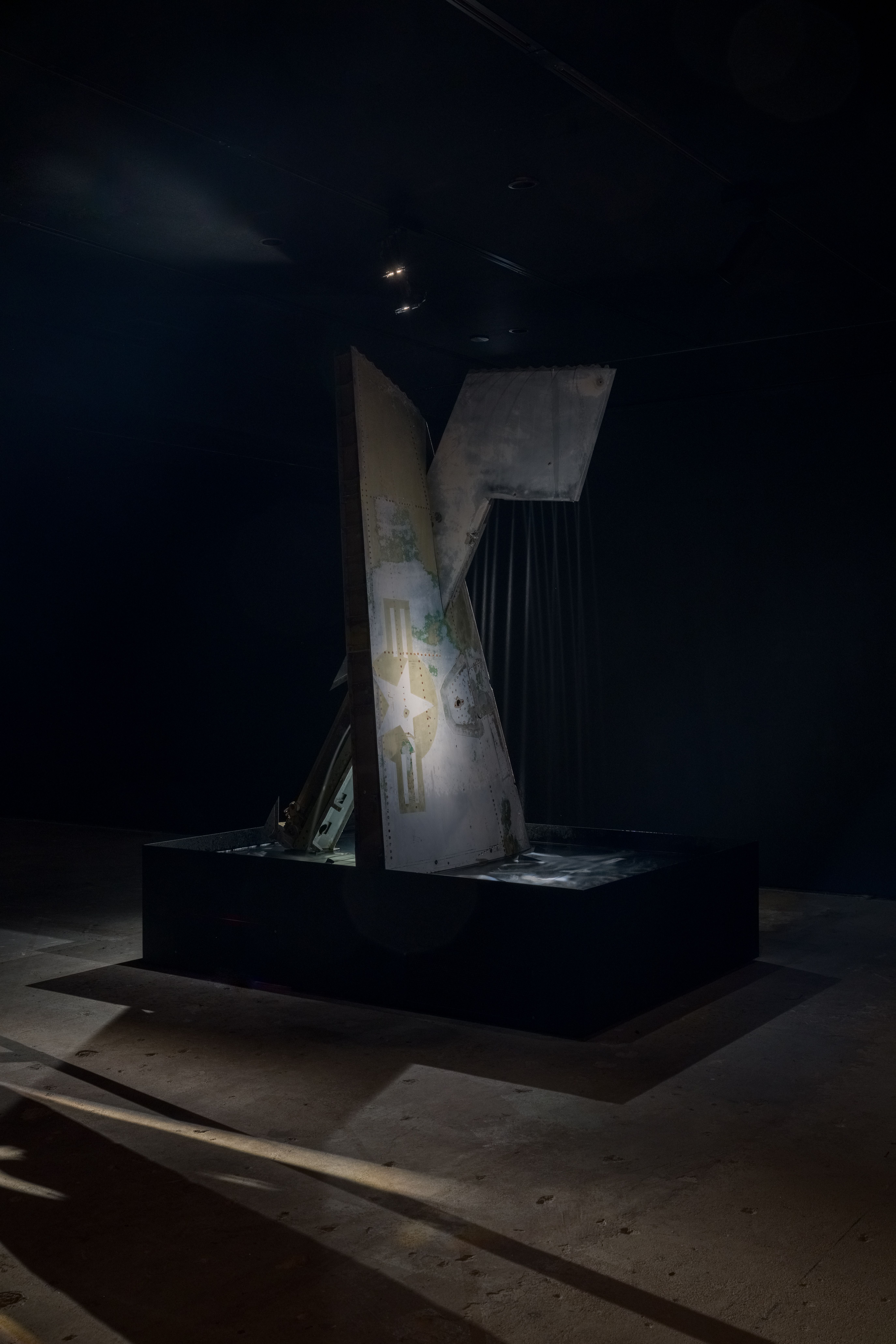
JKG: No. They’re pieces of A4 and A7 fighter jets from the seventies that I got in an aerospace ‘boneyard’ in Arizona. Planes like these were used in the Vietnam War and the first Gulf War. I’m thinking of these materials like they are natural resources of the U.S.; something foundational and inherent to this country is war.
JKG: That’s where escapism can come in. Treating the scrap like marble or stone, and juxtaposing it with a kind of corporate, Westernised Zen aesthetic. If you Google ‘Zen fountain’, you find endless versions of quasi-minimalist fountains. ‘Zen’ in this case is just a marketing term.
JKG: Yeah, most Zen ideas that we are familiar with in the West are misinterpretations. And Zen Buddhism is actually highly problematic.
JKG: The microphones turn what could be a kind of relaxing, meditative sound into something more abrasive.
JKG: To me, everything I make is either an instrument or an acoustic object to support sound.
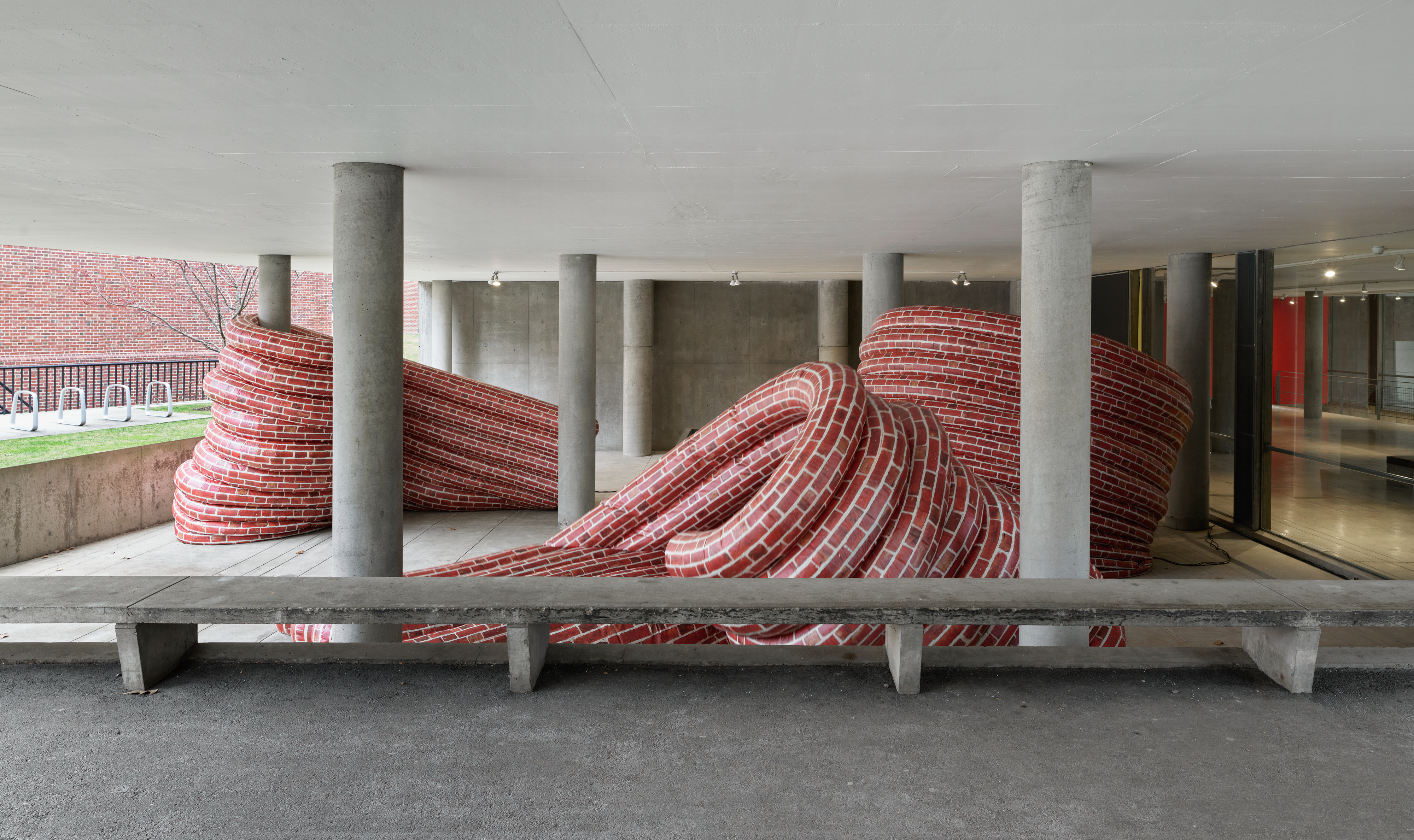
JKG: They relate to the ceramic diffusion tile works I’ve made over the past ten years or so, but are very different in their subject. Diffusion is a principle in which sound bounces off of a varied surface, and the sound waves go in all different directions. It can be perceived as absorbing sound. It’s why caves sound the way they do, but it’s also used in the design of concert halls and music studios. These ceramic tiles were cast from impressions of cave walls in Okinawa.
JKG: Yes, when I visited Shimuku Gama, one of the caves where people survived. There were around 1,000 civilians inside this cave, and the American military were trying to force them out. Japanese soldiers told people that if they surrendered, they would be raped, enslaved, or killed. They were encouraged to take their own lives instead of surrender, which had happened in other caves. The story goes that two local men who had previously lived in Hawai‘i and were familiar with American military policies vouched for the people’s safety, and everyone survived. It’s one of the few positive stories about what happened in Okinawa.
JKG: It’s huge and has many chambers. It is very, very quiet. There’s no reverb, just the sound of a stream that runs through it. I was sitting far back in the darkness, thinking about these stories and listening to the space. I’d never heard water sound menacing before. I think it’s biological how we almost universally find the sound of water attractive. It’s part of our humanity—we need water. Doesn’t matter how ugly the fountain is—it’s going to sound nice. Immediately, this piece came into my head. I didn’t know how it would look or manifest; I just wanted to make water sound menacing.
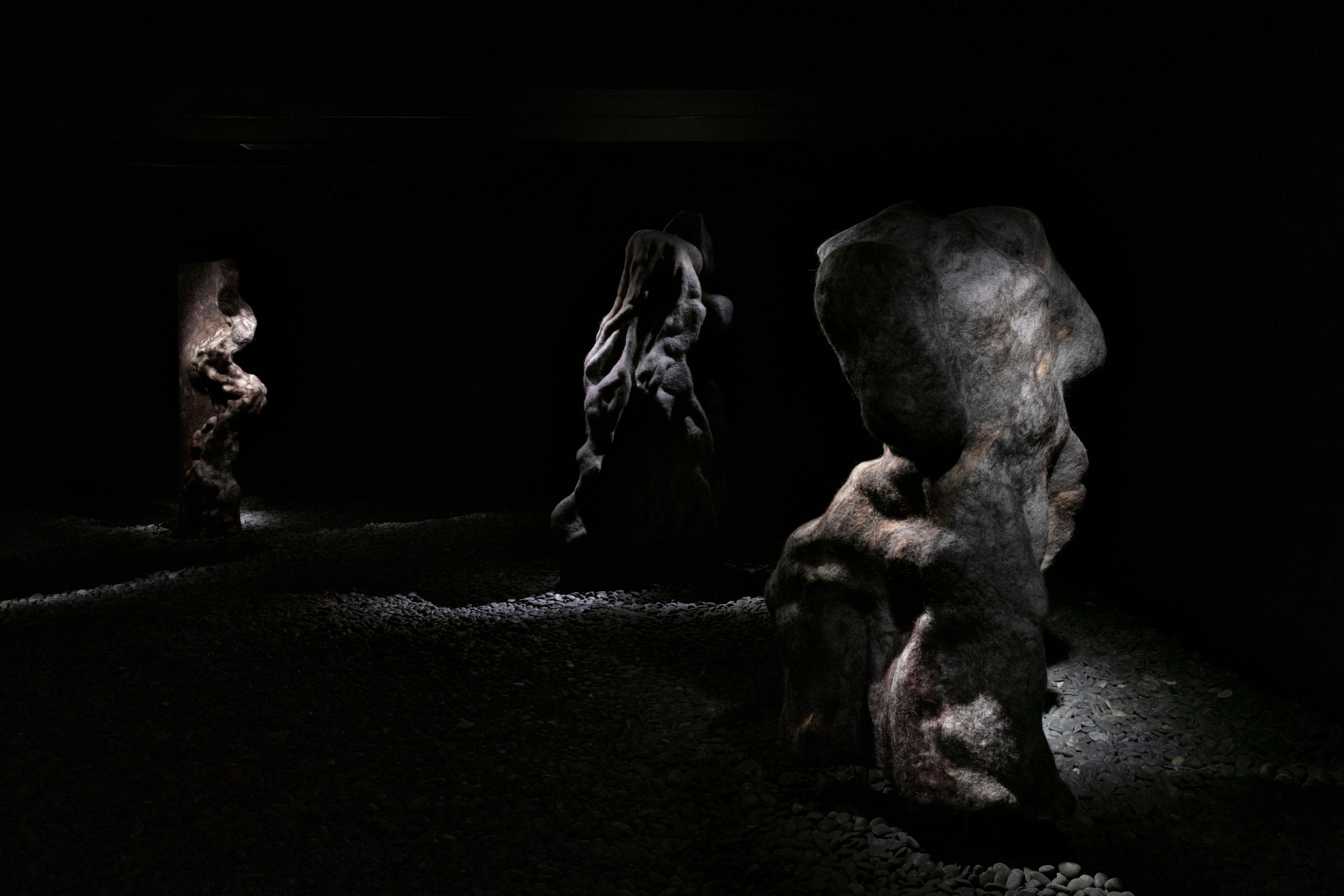
JKG: Both! I’m very much a ‘both/and’ person. When I was a student in the early 2000s, I remember experiencing a sound installation presented as eight speakers on the walls of a gallery. It was a 40-minute loop, and I really wanted to listen to it, but I just physically couldn’t stay. It was so uncomfortable to stand in a white room with no place to sit, no place for my body. That was an important early experience for me. I became interested in making installations where the body was accepted and comfortable, to some degree, but where the sound changes your perception of the space.
JKG: Now I prefer to help others run sound. I’m a sound system person. I don’t like my physical body being seen in the hierarchical order of a performance setting. I think of myself as a listener, so I always put myself into positions of listening. —[O]
A respected voice in contemporary art discourse.
Focusing on ambitious storytelling and insightful art-world commentary. Ocula Magazine publishes in-depth interviews, critical essays and timely analysis on the artists, exhibitions and ideas driving the global art world.
Learn more about Ocula Magazine
Showcasing the best of the art world.
Ocula partners with galleries from around the world to highlight their artists, artworks and exhibitions. Gallery membership is by application and invitation, with each member vetted by an independent panel.
Learn more about Ocula Membership
Specialises in the sale of major artworks.
Led by a team with deep ties to the world’s leading auction houses, galleries and collectors. Ocula’s advisory team offers bespoke services to high-net-worth clients from around the world who are looking to acquire the best of contemporary and modern art.
Learn more about our team and services