






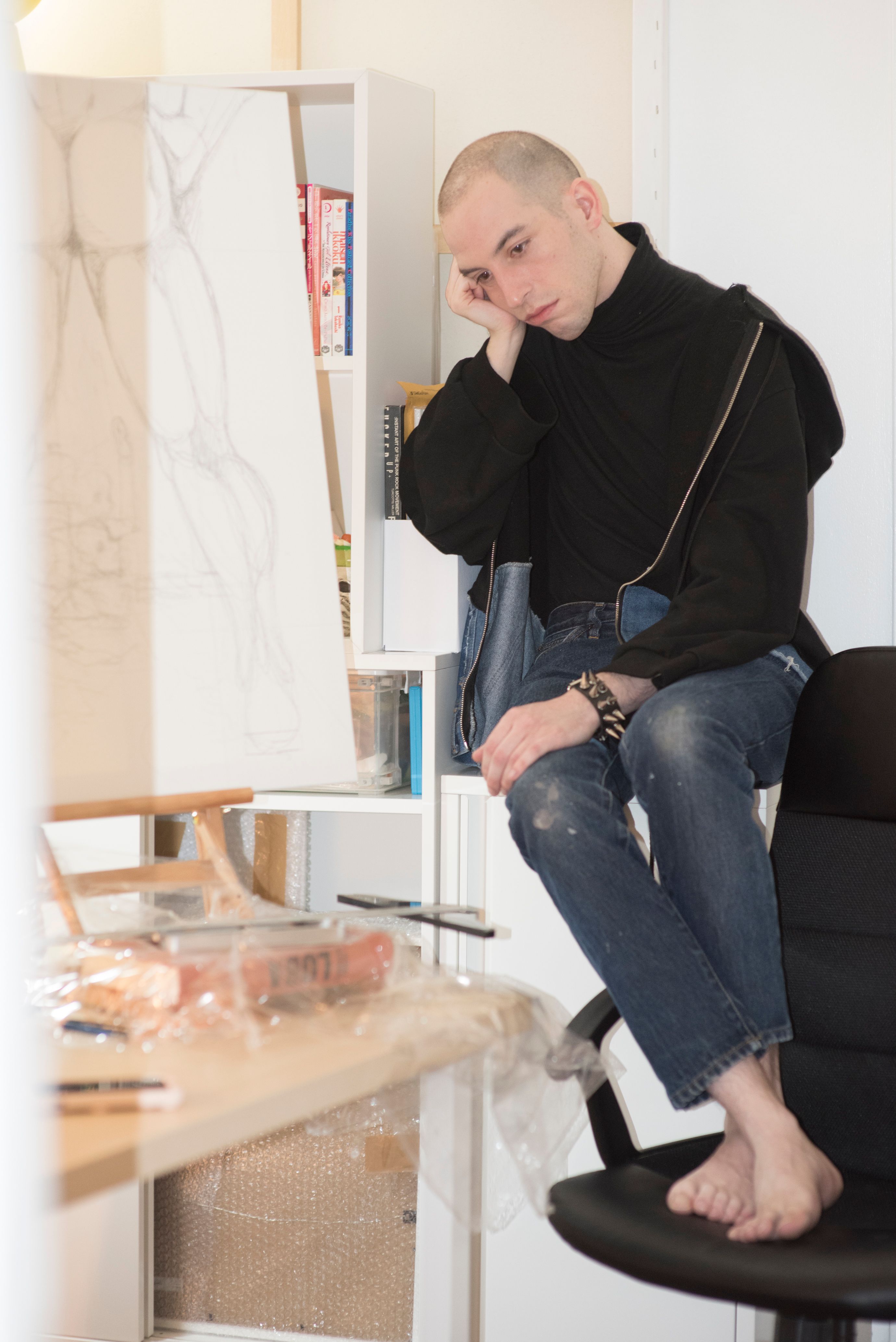
Julien Ceccaldi: ‘It’s Not Pure Optimism’
The artist on his characters, the history of gay cruising culture and his new display at MoMA’s viewing window. Save to My Ocula
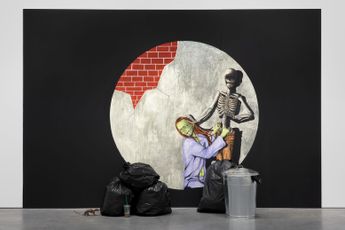
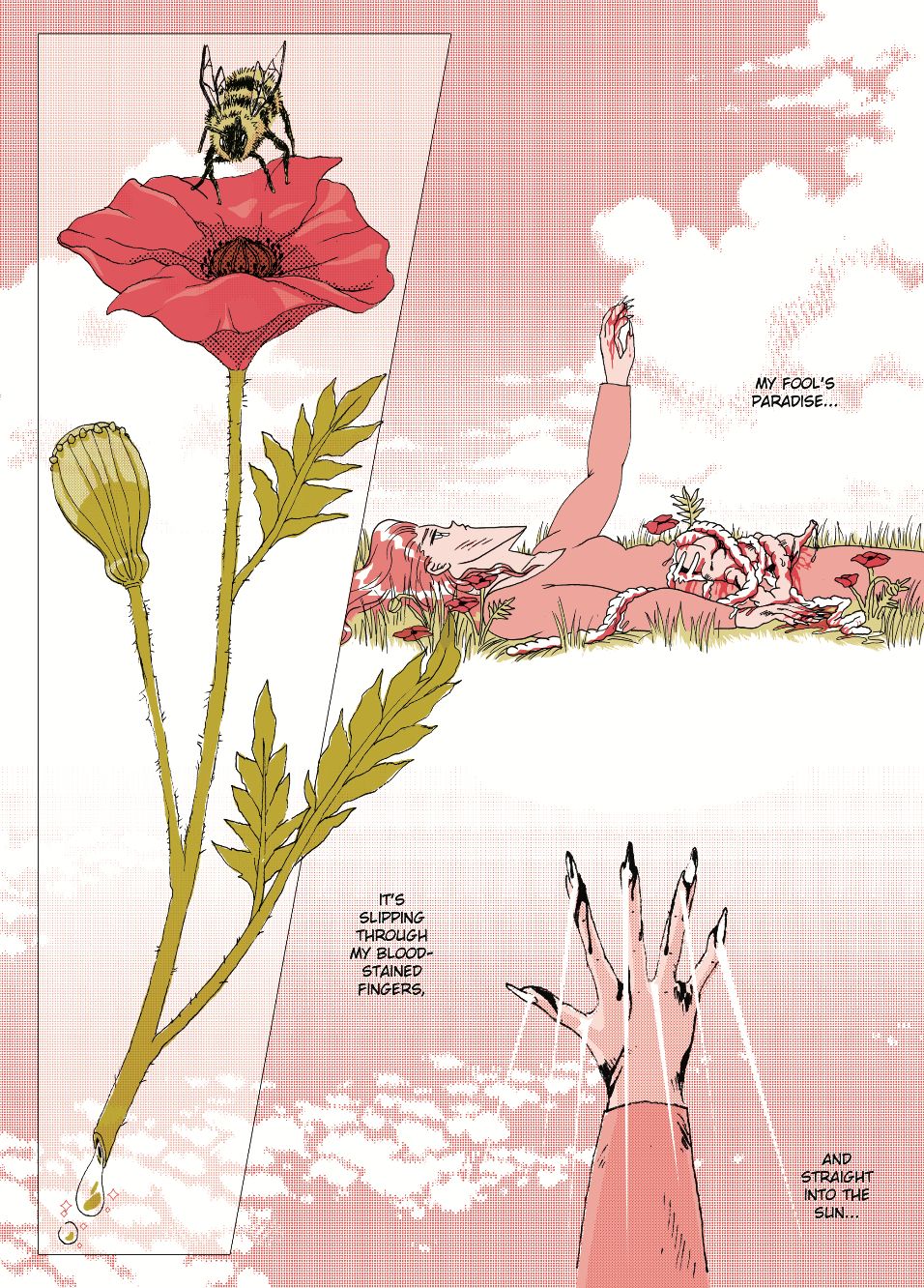
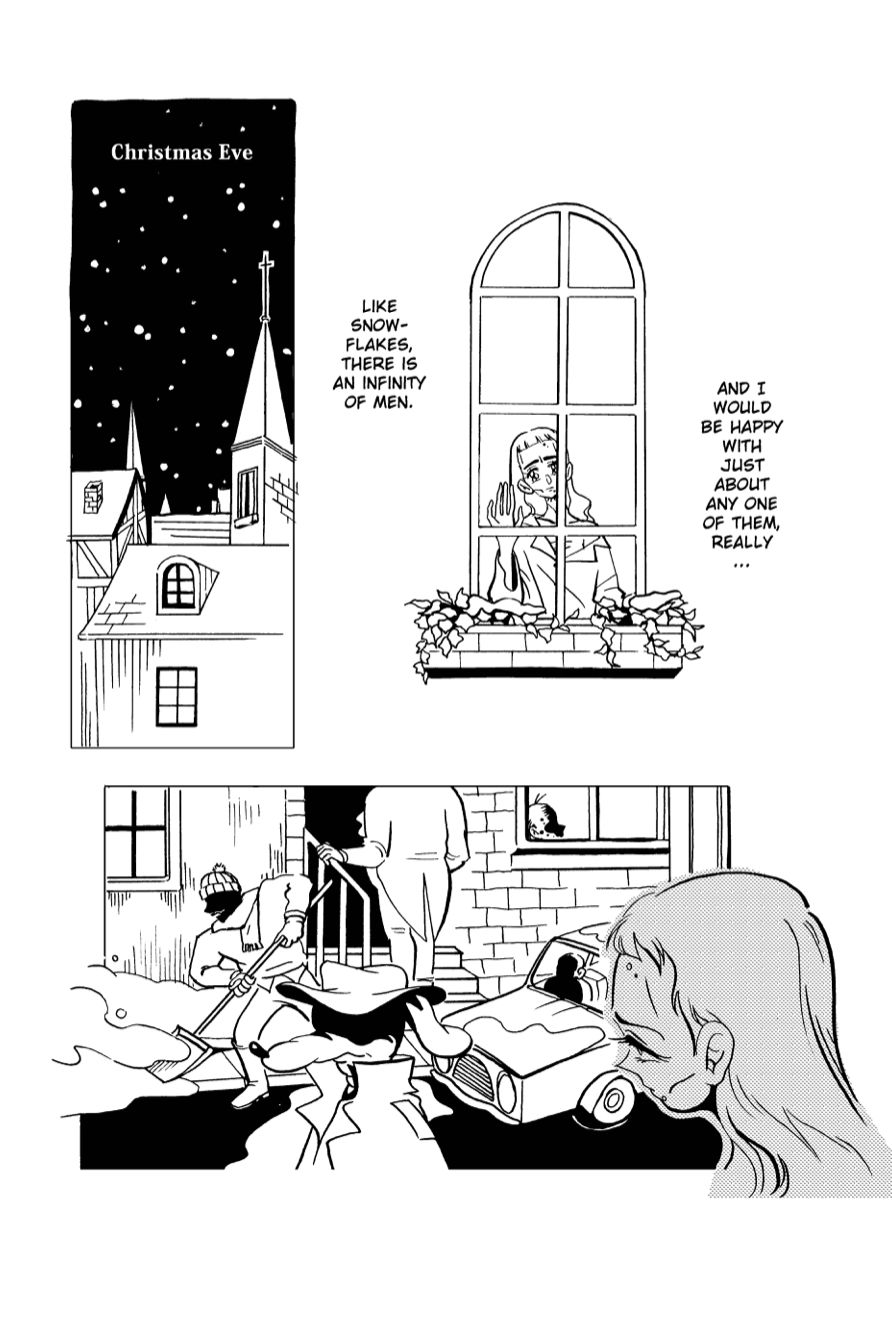
A painting by the French-Canadian artist Julien Ceccaldi might drop references to Marie Antoinette, gay cruising culture, Catherine Breillat’s writing on sex and death, underground comix makers from the 1960s and 1970s, and 19th-century Bavarian castles. The result is his large-scale “figurative cartoons with manga influence” as he describes them, which have all the visual fecundity of a Wagner opera.
Ceccaldi is a comic-maker by trade. His “anxious anime” have been part of the art world for more than a decade: his breakthrough was a comic drawing of a conversation between two women competing over their levels of happiness, which ran on the cover of Artforum in 2014. Since he began exhibiting, Ceccaldi has worked at a larger scale, including solo shows at Galerie Tenko Presents in Tokyo (2024–2025), Modern Art in London (2022) and Lomex in New York (2017). I first saw his work at the solo exhibition Adult Theater at MoMA PS1 in 2025. As the title denotes, it was theatrical, featuring giant murals depicting homo-erotic re-imaginings of a bathhouse at Pompeii and voyeuristic scenes of female friends observing his love life—all of which recalled the trompe l’oeil effects of the backdrops used in theatre productions.
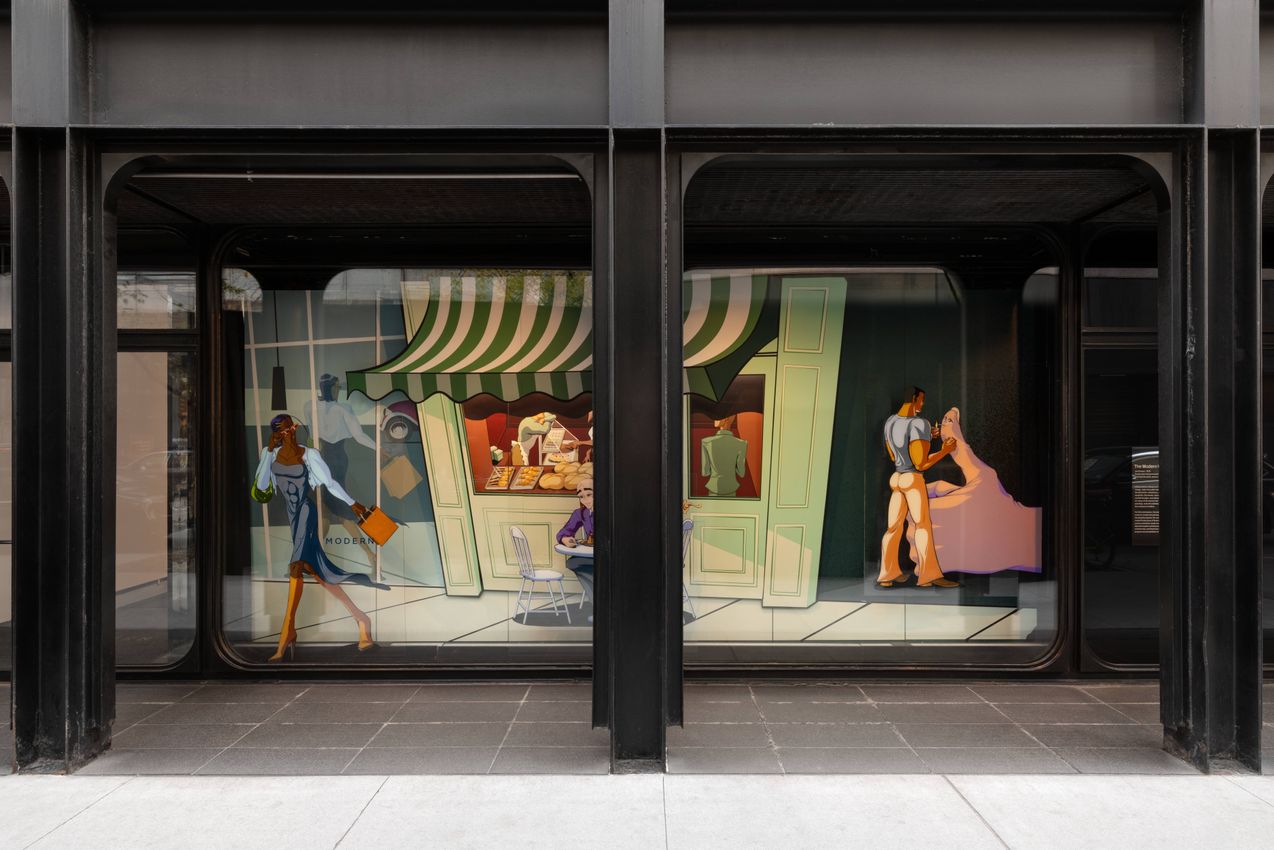
For his latest work, currently displayed at The Modern Window at MoMA, Ceccaldi drew inspiration from the street scenes in the museum’s collection of Modernist paintings. The resulting mural explores flâneurism, flirting and urban life.
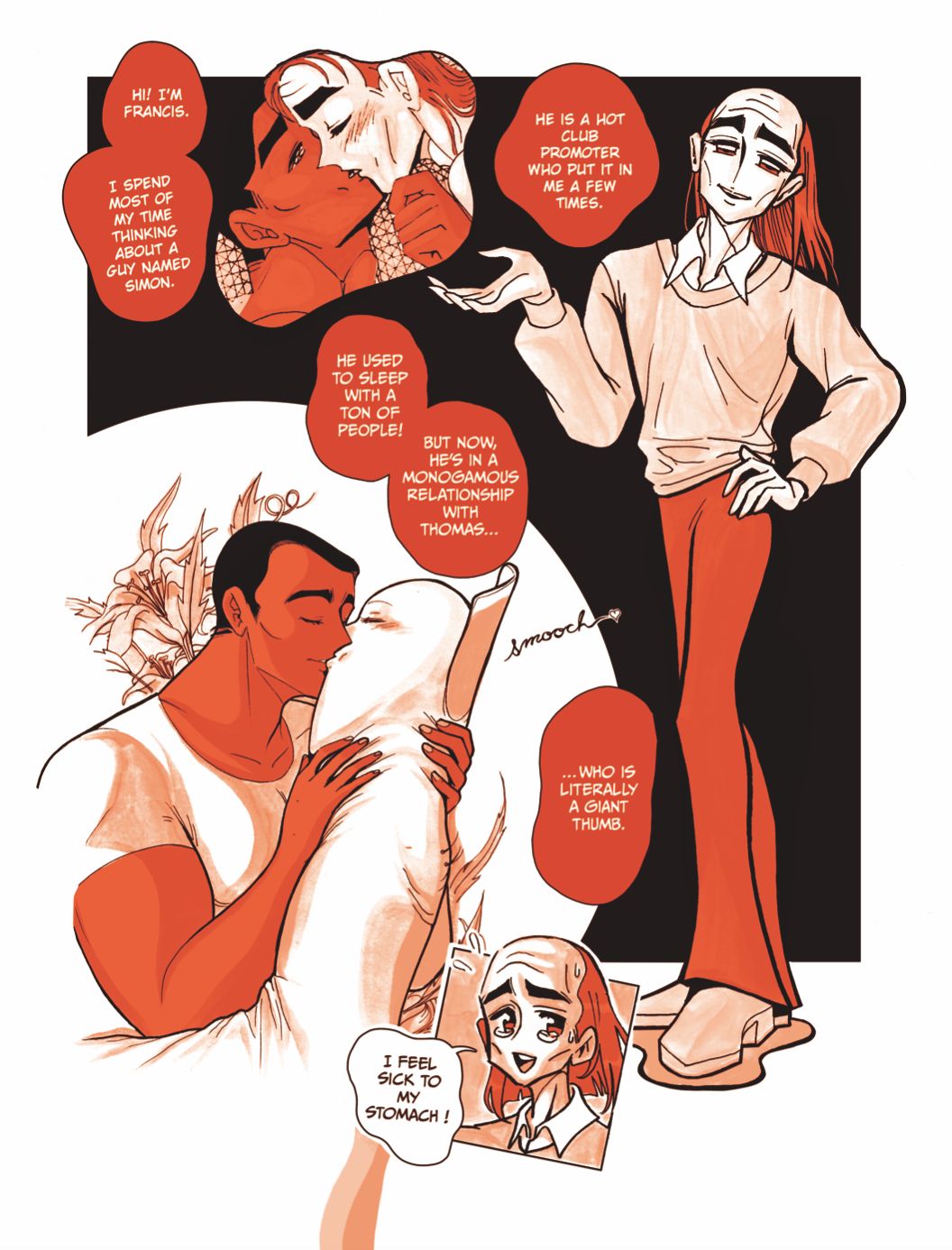
His worldbuilding is all part of illustrating the psychosexual interior experiences of his cast of comic-book players. As inspiration for these characters, Ceccaldi cites the fantastical world of Japanese Yaoi (やおい), also known as “Boys’ Love”, a genre of anime depicting sexual relationships between male characters which is usually aimed at young women. Humorous, acerbic and sometimes crass, his comics include: Human Furniture (2017) a short story about the sadomasochism of perpetuating unrequited love and introducing the character of Francis; Solito (2018), which details the life of a boyish, 30-year-old virgin who lives with his parents, and Tasteful (2024–2025), which records Francis’s humiliating experiences on gay dating apps.
Over Zoom, we discussed our mutual collectors’ impulse for erotic anime (he shows me the cover of a new manga from Toy Box Coffin Bookstore in NYC), his female friend’s curiosity about gay hook up culture and his fantasy of being in Pompeii before the Vesuvius eruption.
LET: For your current display at MoMA, you drew inspiration from street scenes in Modernist paintings from the museum’s collection. Which of MoMA’s paintings drew your attention, and why?
JC: This is an installation behind glass and on public display, so I wanted it to be like an uplifting mirror for passers-by on the sidewalk. Each character has aspirational qualities: a confident demeanour, being gay, having a lovely dessert. This idea applies to the background as well: a Midtown street, but simple and clean.
I looked at the paintings and drawings of Stuart Davis for the flat geometric shapes that ended up inspiring background art of cartoons in the 1950s—especially at UPA, the Disney rival. Decades earlier he painted New York and Paris with his modern American interpretation of Cubism. You can see a bit of his mural Men without Women (1932) and the drawing Hotel Café (1928–1929) in my artwork. It’s not pure optimism about progress, and it feels like the flat coloured shapes could swallow people up.
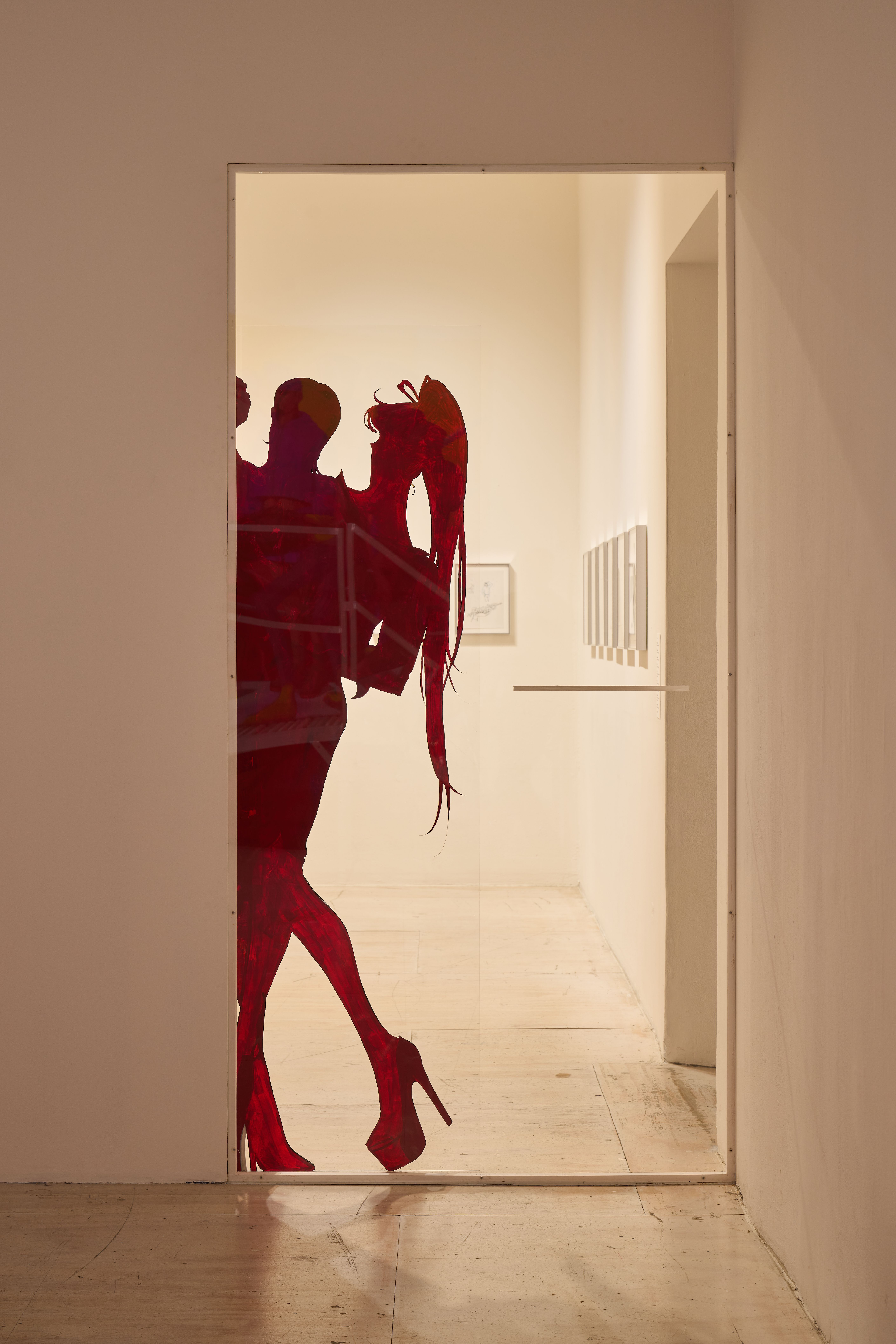
LET: In pieces like the silhouette of women peering around a door in Adult Theater, you imply an interaction that extends beyond the gallery moment and into the personal. How do you formulate those moments of theatrical immersion?
JC: That specific install is intended to reflect a real-life experience I have—wondering how my female girlfriends experience my tales of gay hook-up culture. It’s this idea of peering in, curiosity and witnessing—but also not being fully inside the world of this thing you’re looking into. Theatricality has heavily influenced my work; it began with painting backdrops during a school play because I had a crush on one of the actors.
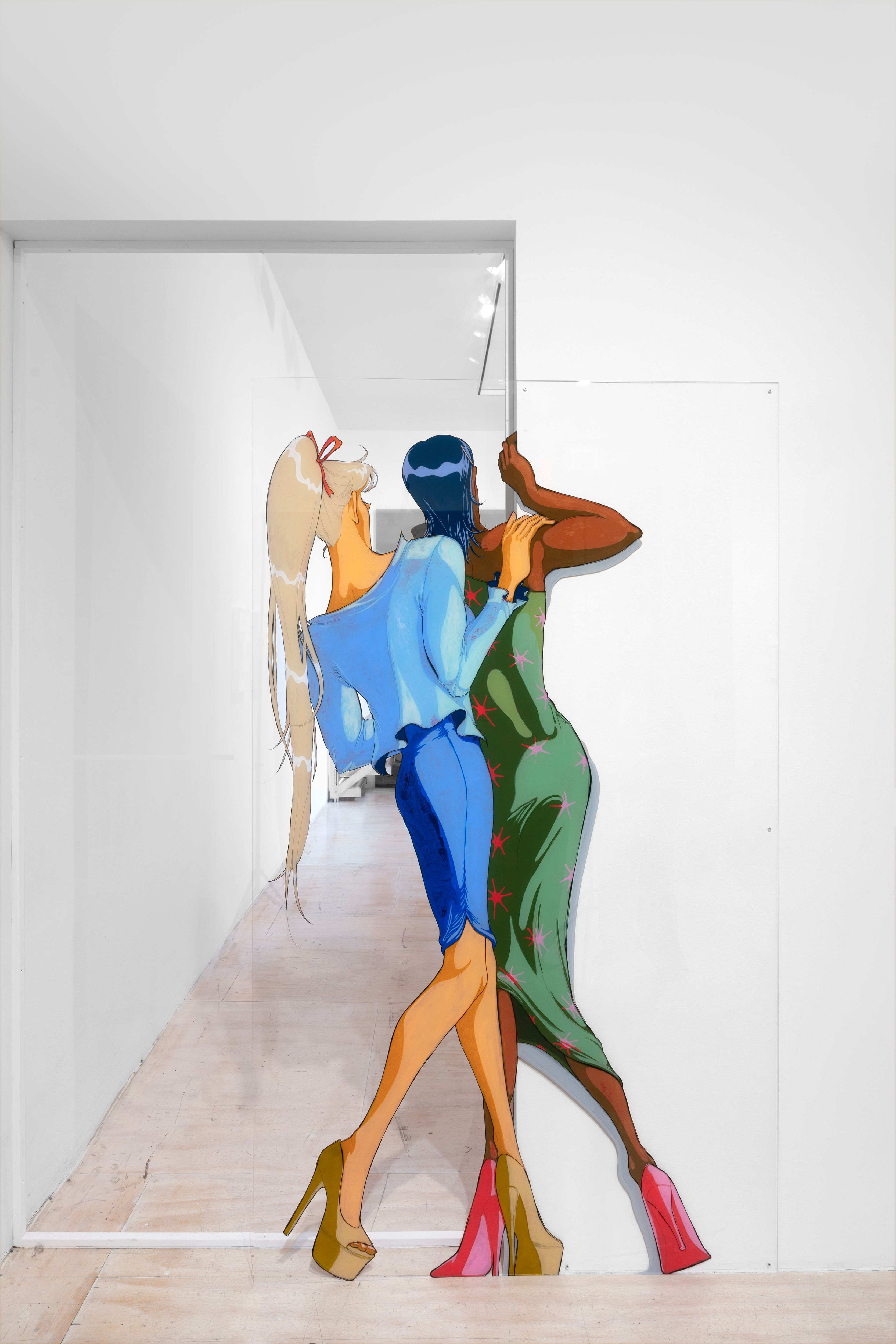
“It’s this idea of peering in, curiosity and witnessing — but also not being fully inside the world of this thing you’re looking into”
LET: In your MoMA PS1 show, a gigantic mural depicts Frances’s head enlarged, gargantuan and grotesque next to a line of suitors. Can you tell me about that piece?
JC: The mural is related to the accompanying comic. Francis is greeting a revolving door of suitors. He is at once Louis XIV in Versailles, receiving visitors at the court; he is also trash, in a way, which is why the industrial incinerator appears in the background. The mural is a metaphor for hook-up apps—that parade of suitors meeting Francis, and then leaving right away, symbolises the feelings he has in the comic book for the men he meets casually. It was important to me that the men were all presented as different from each other, a kind of variety, and I modelled them after the four horsemen of the apocalypse.

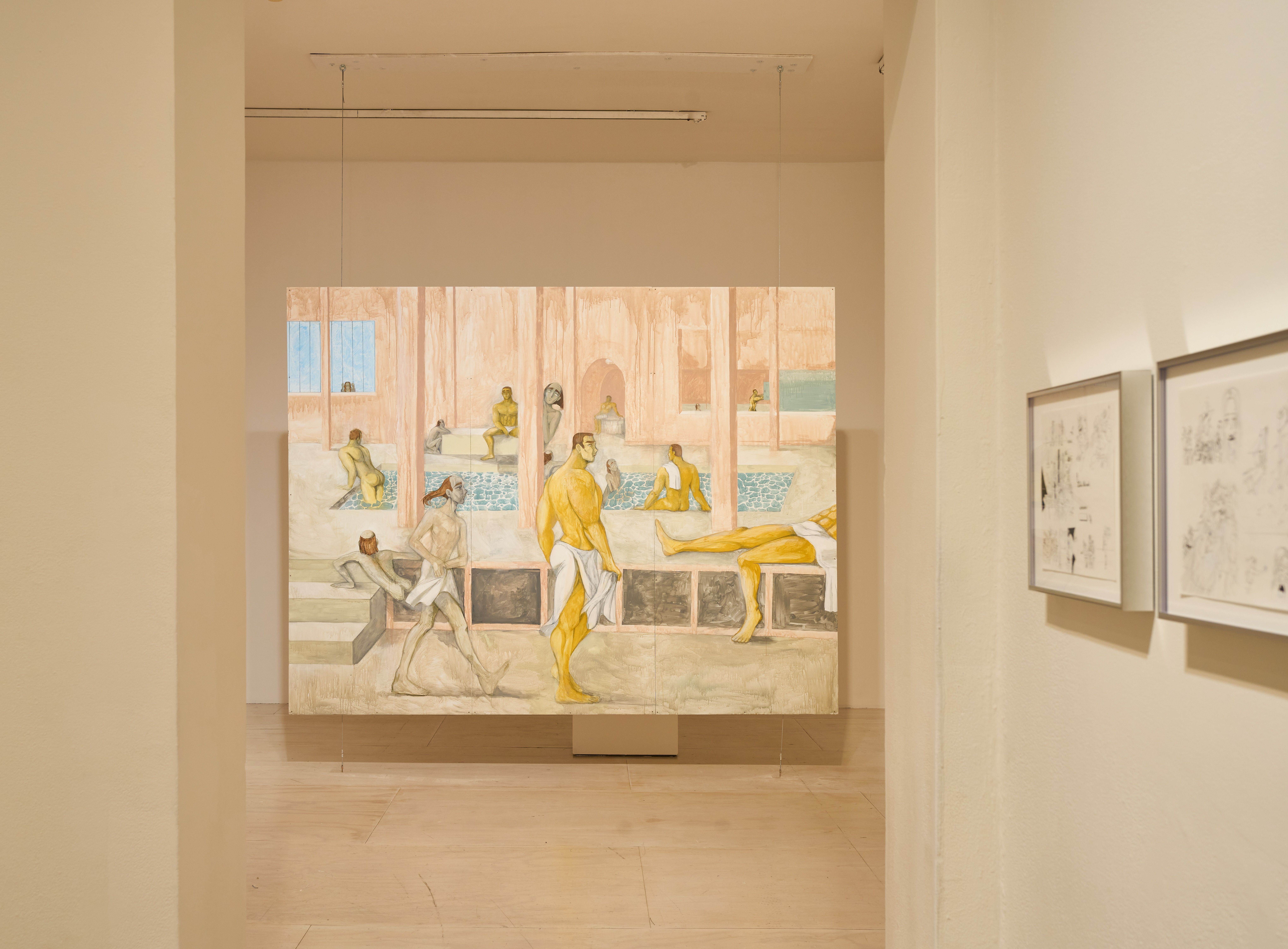

“The mural is a metaphor for hook up apps — that parade of suitors meeting Frances, and then leaving right away”
LET: What’s your favourite erotic book? Either fictional or graphic.
JC: Catherine Breillat’s book Le livre du plaisir (1999). In my work, I have always ended up thinking about death and sex together. And this is not just related to the AIDS crisis, although that has some impact—it also relates to Breillat’s writing. In the first chapter she discusses virginity, and then there’s a chapter on masturbation, affiliation, anal sex, and it’s a graduation, towards health.
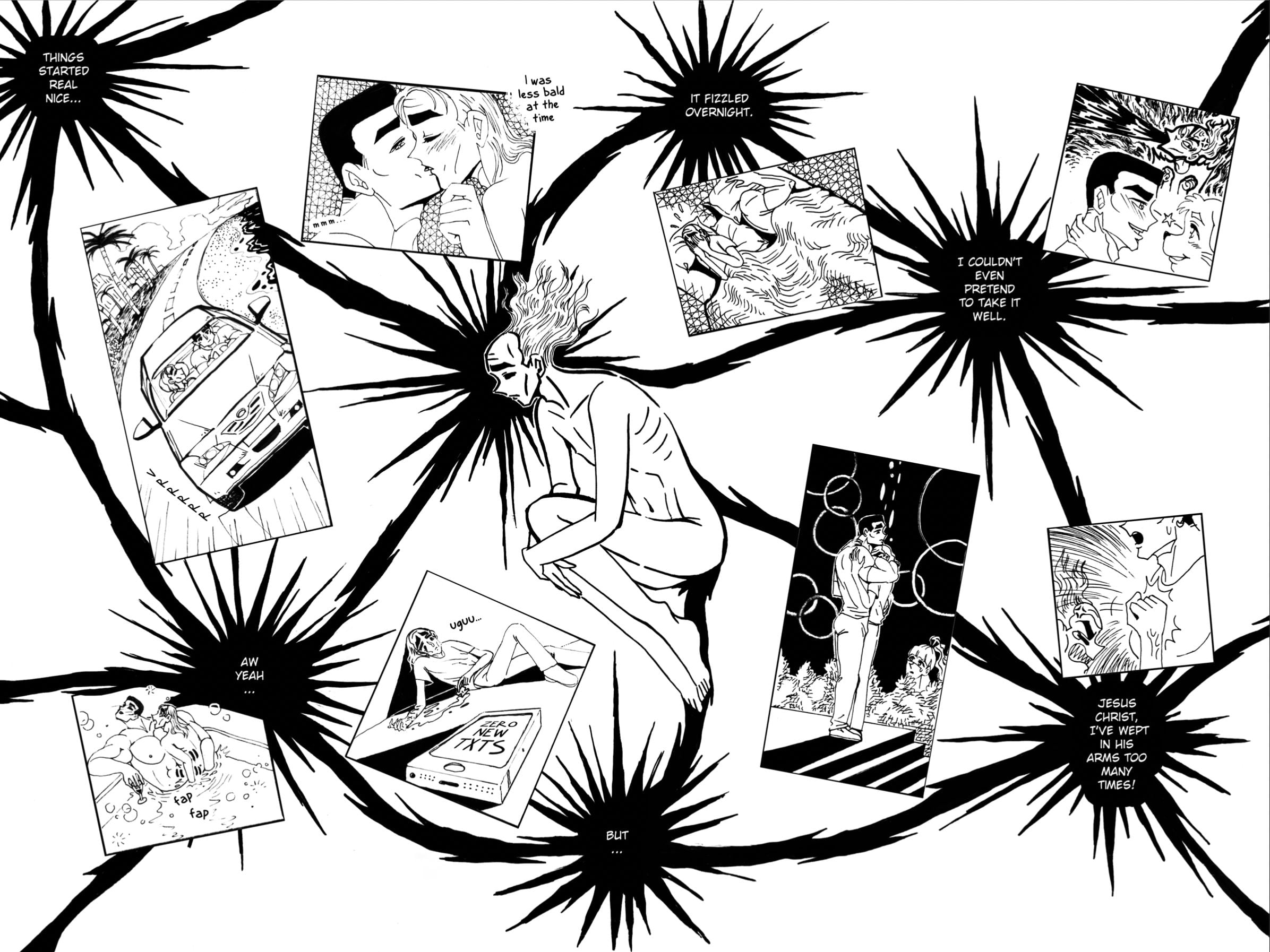
LET: That’s a very French obsession, sex and death. Is there a connection between sex and death to cruising, specifically, which you explore repeatedly in your works, which feature skeletal iterations of your comic-book characters or figures lying in coffins?
JC: A lot of modern apps are based upon prior practices and culture - from the 70s and 80s. There’s a blueprint. A lot of the characters in my work — their fashion references leather culture, or imagery generated around it.
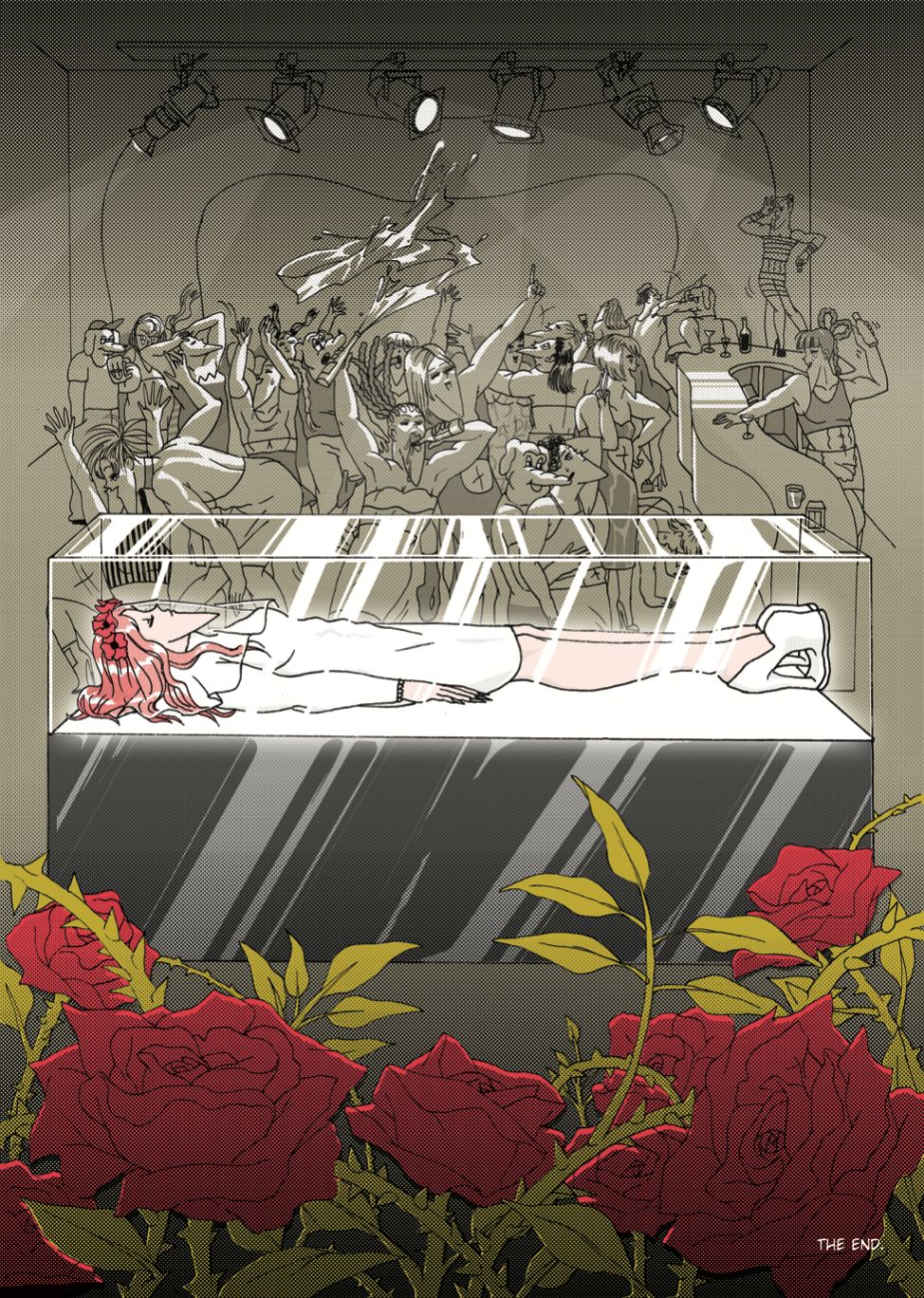
LET: All time favourite anime?
JC: OK, so, Only Samurai—the best ever of all time. For the 1990s, Neon Genesis Evangelion (1995–1996). For the 2000s, Paradise Kiss (2005).
LET: If you had to experience a historical period as an artist, which would it be?
JC: I’m happy enough experiencing life as an artist today, but I’d love to be a fly on the wall and witness the Pompeii art scene before the Vesuvius eruption, or spy on the editorial meetings of June magazine in 1980s Tokyo. —[O]
The Modern Window: Julien Ceccaldi, is on view at MoMA until 30 September, 2026.
Palette Cleanser is a weekly interview series with the artists you need to watch, as selected by our editors.
Main image: Just Dessert, The Modern Window, 2025Acrylic paint and permanent marker on plexiglass, aluminum composite panel, and digital vinyl print.Courtesy MoMA



A respected voice in contemporary art discourse.
Focusing on ambitious storytelling and insightful art-world commentary. Ocula Magazine publishes in-depth interviews, critical essays and timely analysis on the artists, exhibitions and ideas driving the global art world.
Learn more about Ocula Magazine
Showcasing the best of the art world.
Ocula partners with galleries from around the world to highlight their artists, artworks and exhibitions. Gallery membership is by application and invitation, with each member vetted by an independent panel.
Learn more about Ocula Membership
Specialises in the sale of major artworks.
Led by a team with deep ties to the world’s leading auction houses, galleries and collectors. Ocula’s advisory team offers bespoke services to high-net-worth clients from around the world who are looking to acquire the best of contemporary and modern art.
Learn more about our team and services